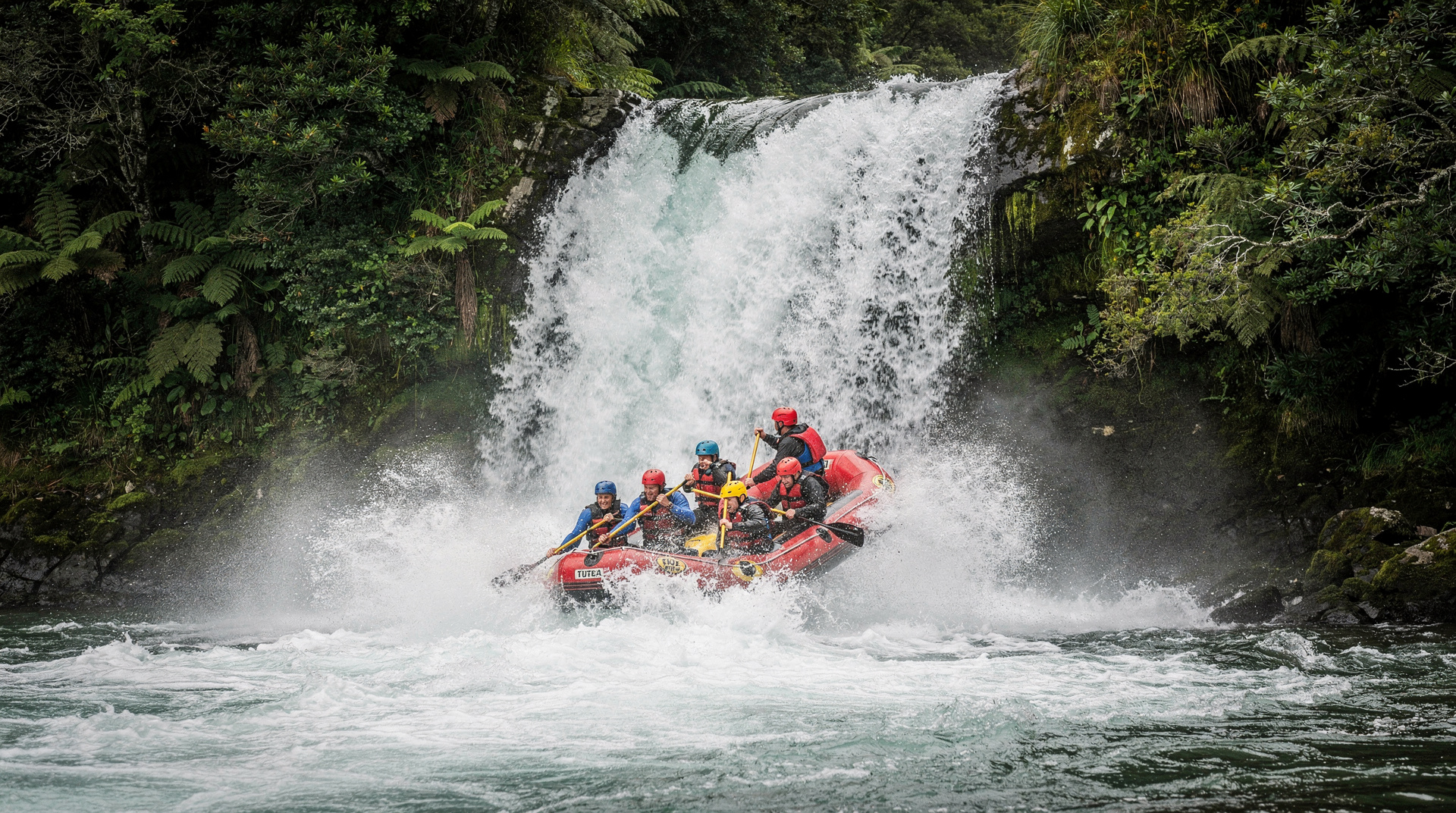
White-water rafting in Rotorua — Kaituna Falls and Grade 5 rapids
How much does white-water rafting on the Kaituna River cost?
NZD 99–145 / USD 59–87 / EUR 54–80 depending on operator and package. The Kaituna River near Rotorua includes Tutea Falls — a 7-metre drop that is claimed to be the highest commercially rafted waterfall in the world. Grade 5 experience, highly recommended.
The world’s highest commercially rafted waterfall — 7 metres straight down
The Kaituna River drains Lake Rotoiti near Rotorua and drops 140 metres over 14 kilometres before reaching the bay. The most significant drop is Tutea Falls — a 7-metre vertical plunge that you go over in the raft. Not around it. Not beside it. Over it, in the raft, dropping vertically, with the person next to you.
This makes the Kaituna uniquely intense among commercial rafting operations in New Zealand. The Shotover River in Queenstown is technically demanding and dramatically beautiful. The Rangitata in Canterbury has continuous Grade 4–5 water. But Tutea Falls has the specific claim — a commercially operated raft over a 7-metre drop — that puts Kaituna in a category of its own.
The overall run is graded 5 on the International Scale of River Difficulty (out of 6). No prior rafting experience is required — you’re guided by an experienced river guide, and the raft is designed to self-rescue if it flips (which occasionally happens and is part of the experience).
Verdict: Worth it. For NZD 99–145, the Kaituna is among the best-value adventure activities in the North Island. The Falls alone justify the trip.
| Where | Trout Pool Road, Okere Falls, 28 km from Rotorua |
| Cost | Around NZD 99-145; sauna add-on around NZD 25-30 |
| Time needed | 2-3 hours on the water; half a day including transport |
| Getting there | Operator transport from Rotorua, or self-drive (25-30 min) |
| Best time | Year-round; winter for atmosphere, summer for warmth |
The Kaituna rafting run
The standard commercial run takes 2–3 hours and covers approximately 7 km of the Kaituna River. It includes:
- Multiple Grade 3–4 rapids warming up the group
- Tutea Falls (7m vertical drop — the centrepiece)
- Okere Falls (4m drop in a tight gorge section)
- Several technical Grade 4–5 sections between the major drops
- A slower exit section for recovery before takeout
Groups are typically 6–8 per raft with one guide. Guides are stationed at the front of the raft and provide stroke commands during rapids. Listening to these matters — flipping in Grade 5 water is manageable but not comfortable.
Operators on the Kaituna
Two well-established operators run the Kaituna from Rotorua:
Kaituna Kayaks / Raft Rotorua operates with experienced local guides and smaller group sizes. Their gear is maintained to high standards. They also offer a post-rafting sauna option at their base — welcome after being wet in winter.
River Rats runs larger operations with a higher-volume throughput. More commercially efficient but the group experience can feel more factory-like in peak season.
Both are competent and safe. The guide assigned to your raft has more impact on the quality of the experience than which operator you choose.
Kaituna River and Tutea Falls Whitewater Rafting Rafting Rotorua: Kaituna River White Water Experience (3.5h)The sauna addition
Raft Rotorua operates a wood-fired sauna at their base on the Kaituna — after the rafting run, 20 minutes in the sauna before driving back to town. This is particularly valuable in winter (June–August) when the river water temperature drops to 10–12°C. The sauna experience adds NZD 25–30 to the base price.
Rotorua Rafting: Kaituna River Rafting Experience - Free SaunaCombining Kaituna with Lake Tarawera
A multi-activity option combines the Kaituna rafting with a post-raft kayak or boat trip on Lake Tarawera — the crater lake on the flanks of Mt Tarawera, which erupted in 1886 and destroyed the famous Pink and White Terraces. The lake is stunning and the geology is dramatic. This combination is a full-day activity from Rotorua.
Rotorua: Kaituna Rafting & Mt. Tarawera Hiking ComboRafting in Rotorua vs Queenstown
| Feature | Kaituna River, Rotorua | Shotover River, Queenstown |
|---|---|---|
| Grade | 5 | 5 |
| Key feature | Tutea Falls (7m drop) | Canyon sections, darkness tunnels |
| Duration | 2–3 hours | 2–3 hours |
| Scenery | Native bush | Schist canyon |
| Price (NZD) | 99–145 | 145–175 |
| Crowds | Moderate | High in summer |
Both are excellent. The Kaituna wins on unique features (the Falls) and price. The Shotover wins on scenery and the canyon atmosphere. If you’re visiting both North and South Island, the Kaituna in Rotorua and the Shotover in Queenstown are complementary rather than redundant.
Safety and technical considerations
Flipping: On average, rafts flip on the Kaituna multiple times per week. This is a normal part of Grade 5 rafting, not an incident. Guides know the river and the standard rescue protocols. You’ll be retrieved, the raft righted, and the run continues.
Swimming Grade 5 rapids: If you exit the raft, adopt the defensive swimming position (feet forward, on your back, arms out). Your guide will manage recovery. Life jackets are mandatory and government-certified.
Helmet impact: The tight gorge sections of the Okere Falls area mean rock contact is possible if swimming. Helmets are provided and non-optional.
Wetsuit: Provided by the operator in all seasons. Water temperature in Kaituna ranges from 12°C (winter) to 20°C (summer). Even in summer, wearing a wetsuit is standard — the spray and immersion of the Falls section will soak you regardless.
Building a Kaituna day around other Rotorua adventure
Because the Kaituna run is only 2-3 hours including transport, most visitors pair it with something else the same day. Ziplining in Rotorua works well as a morning activity before an afternoon raft, since both are based within a short drive of town and neither requires much recovery time.
If you’re weighing Rotorua’s adventure options against Queenstown’s, the Shotover in Queenstown is the closest South Island equivalent in grade and intensity — see the Shotover Jet Queenstown guide for how the two compare beyond the table above. For a gentler day that still covers Rotorua’s other side trips, the day trips from Rotorua overview lists the geothermal and cultural options that balance out an adrenaline-heavy itinerary.
Age, weight, and health requirements
- Minimum age: 13 years (some operators allow 12 with parental consent and assessment)
- Maximum weight: 120 kg (some operators 110 kg for safety harness fitting)
- Minimum weight: 45 kg
- Physical: Can swim (mandatory). No serious cardiovascular conditions. Recent back or neck surgery excludes you.
- Pregnancy: Not permitted
- Non-swimmers: Not permitted on Grade 5 runs
Practical logistics
Location: The Kaituna River rafting departure is at Trout Pool Road, Okere Falls — 28 km from Rotorua centre. Driving time: 25–30 minutes. Operators provide transport from Rotorua; confirm when booking whether pickup is included.
What to bring: Swimwear under wetsuit, shoes that can get wet (sandals not suitable — laces preferred), a change of dry clothes for after. Leave valuables in the car or operator’s secure storage.
Season: Year-round. River levels vary — exceptionally high water after heavy rain can alter or shorten the run. Operators monitor levels daily. Winter runs are spectacular in a different way — the forest is misty, the water is cold, and the Kaituna gorge has a brooding atmosphere.
Frequently asked questions
Do I need experience to raft the Kaituna?
No prior rafting experience is required. The guide handles all technical navigation; your job is to follow paddle commands. The Falls themselves require no paddling input — you go over them whether you paddle or not. Being physically able to hold a paddle and stay seated (with a strap assist on your feet) is the only fitness requirement.
Is Tutea Falls really the world’s highest commercially rafted waterfall?
This claim appears in marketing materials for multiple Kaituna operators and has not been publicly refuted by any rival claim. A 7-metre vertical drop in a commercially operated raft is exceptional by any standard. The qualification “commercially rafted” is important — wilderness kayakers tackle larger drops, but in a guided commercial context, 7 metres is the benchmark.
What happens if our raft flips at the Falls?
Guides manage this scenario regularly. The hydraulic at the base of Tutea Falls is powerful and must be exited quickly. Guides are positioned to pull swimmers from the hydraulic zone. The experience of swimming the base of the Falls is intense but manageable — you surface downstream within seconds. Life jackets and helmets are non-optional specifically for this reason.
Can children do the Kaituna?
The minimum age of 13 reflects the physical demands and safety protocols rather than difficulty. A fit, strong 13-year-old handles the Kaituna well; a smaller 13-year-old may not meet the minimum weight requirements. For younger children (ages 7–12), the Aratiatia Rapids on the Waikato River near Taupo is a better-graded family option.
What’s the best time of year to raft the Kaituna?
Summer (December–February) for warmth and high visitor energy — the river is busy and the atmosphere is social. Winter (June–August) for drama and smaller groups — the gorge in mist with bare trees and cold water is genuinely atmospheric. Spring (September–November) for high water levels after snowmelt — the Falls run harder and faster.
More Rotorua adventures
Related guides
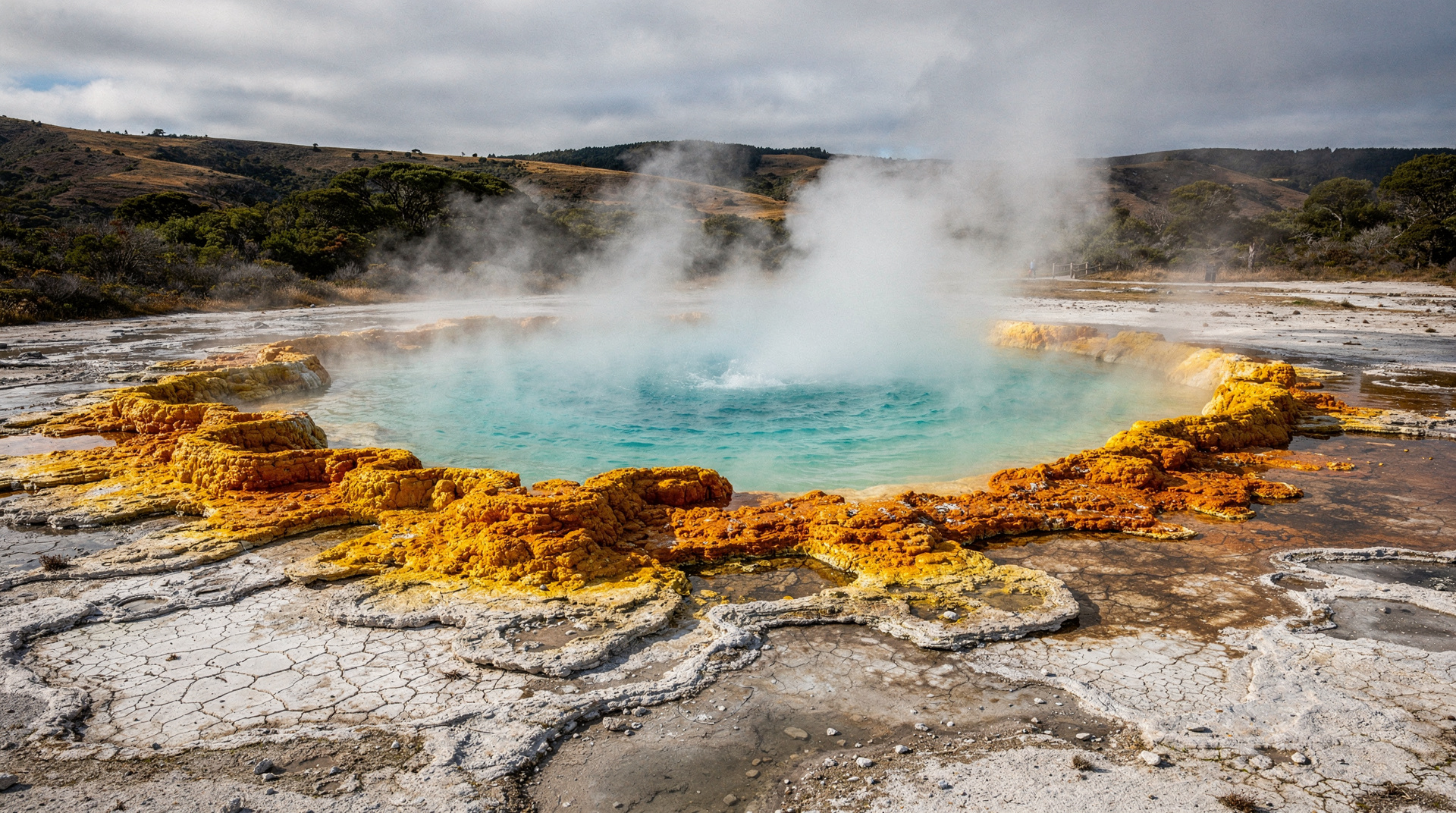
Rotorua
Honest Rotorua guide: Te Puia, Wai-O-Tapu, Polynesian Spa, Maori hangi, real prices NZD/USD/EUR, tourist traps to avoid, and best 2 days.
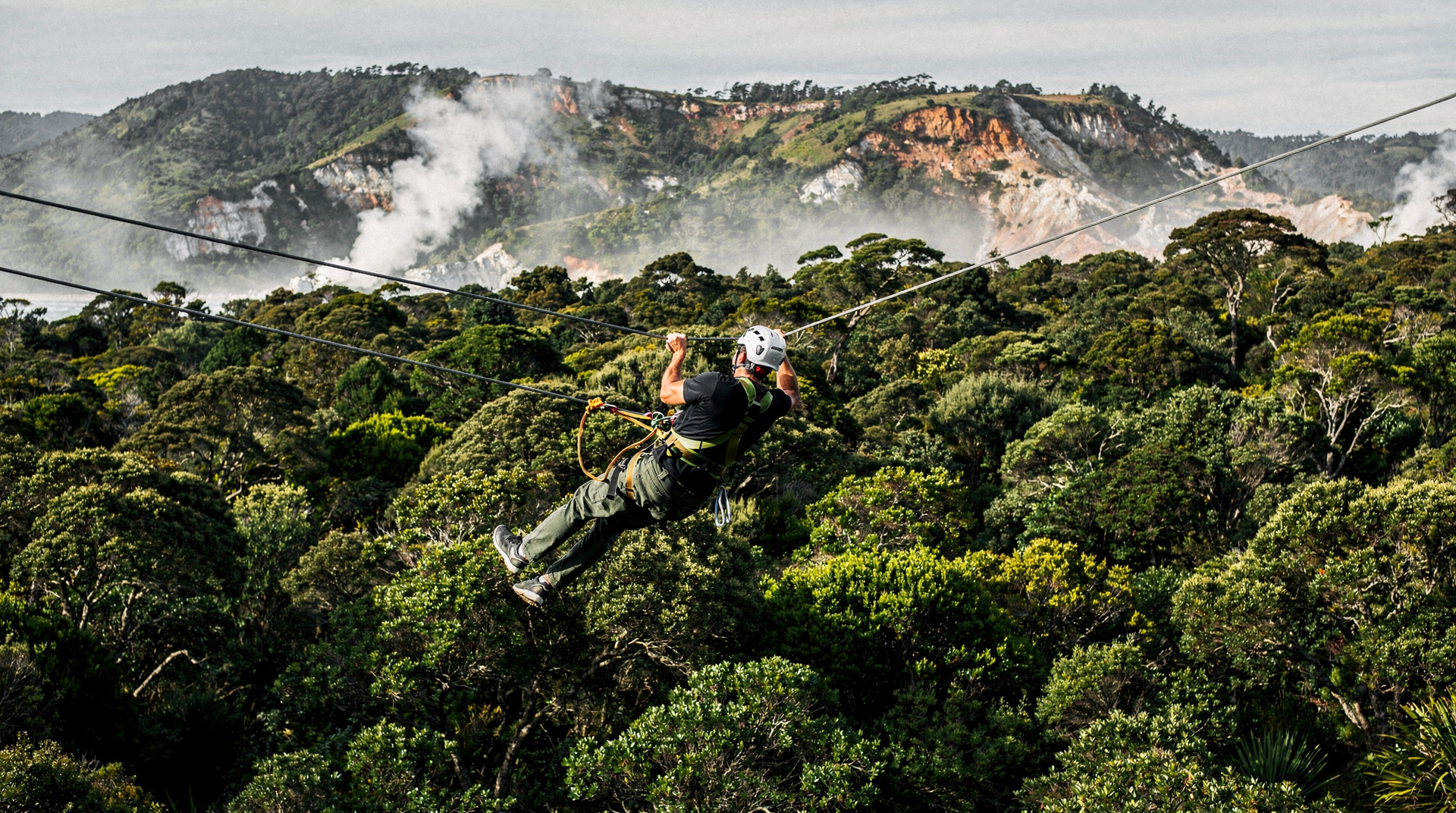
Ziplining in Rotorua — canopy tours through redwood forest
Rotorua ziplining: the Rotorua Canopy Tours through ancient redwood forest. Prices NZD/USD/EUR, conservation context, age limits, and booking tips.
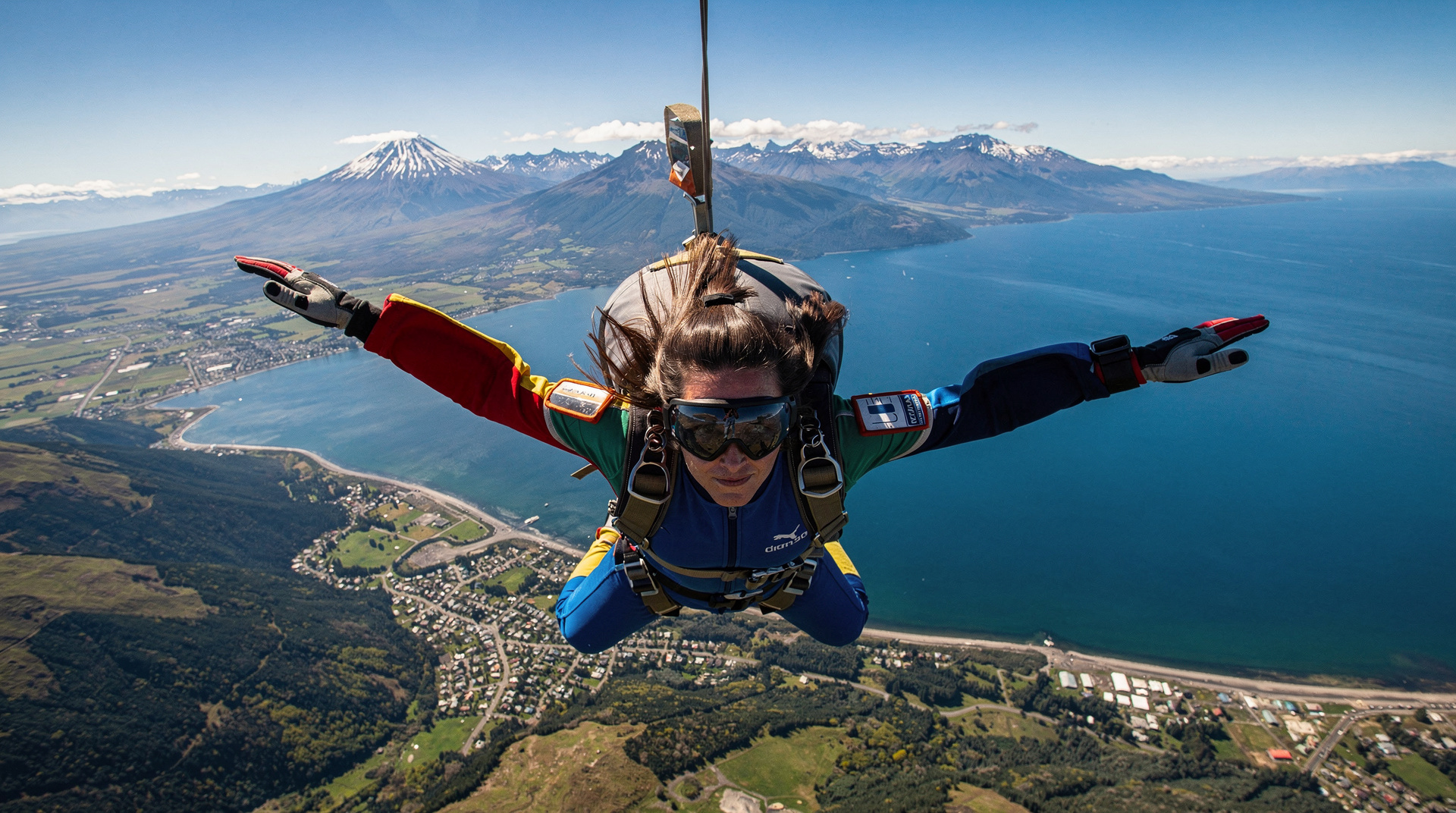
Skydiving in Taupo — New Zealand's highest tandem jump
Taupo skydiving guide: NZ's highest tandem at 15,000 ft over Lake Taupo. Prices NZD/USD/EUR, operator comparison, age limits, and best booking tips.
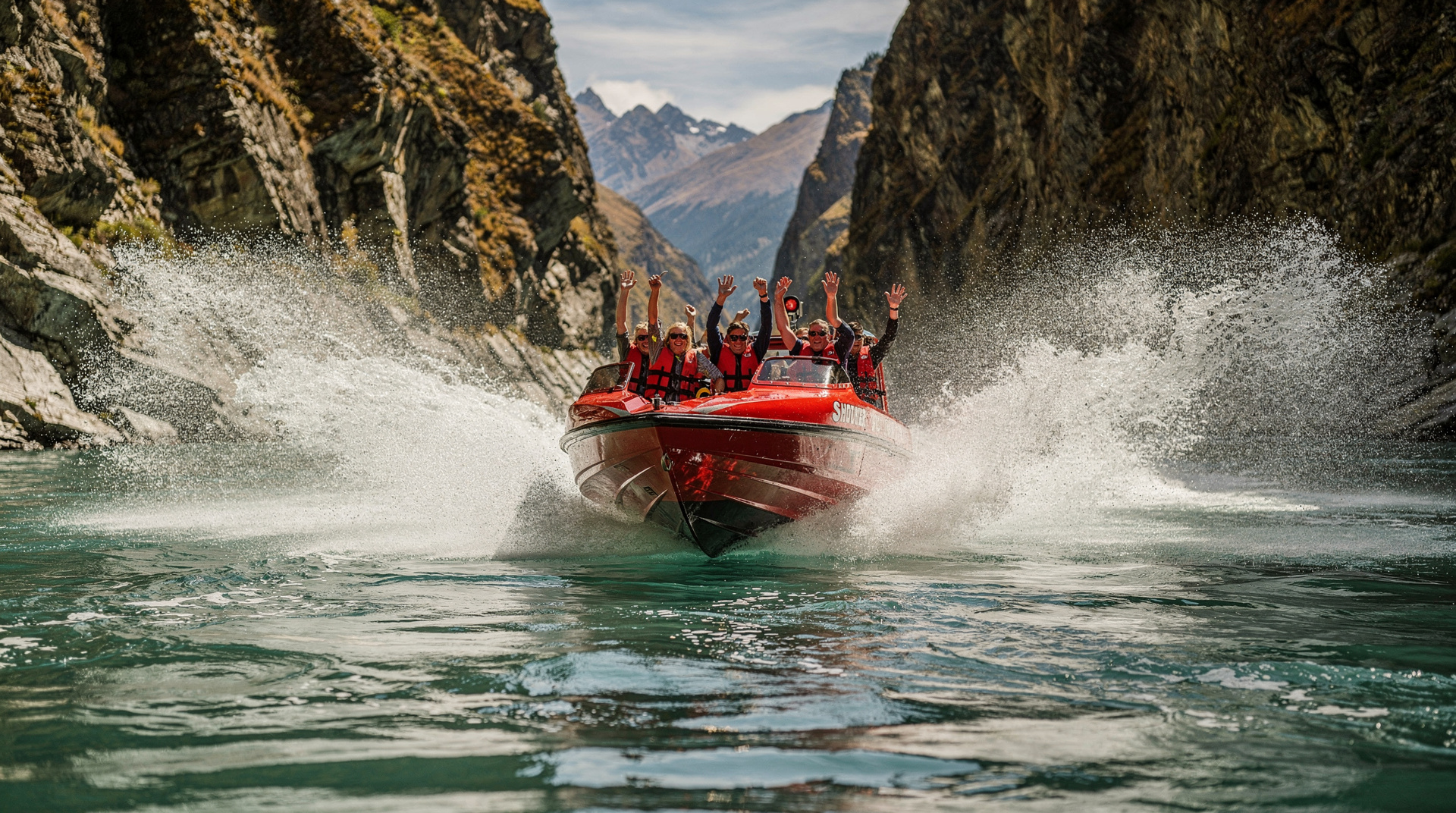
Shotover Jet — Queenstown's canyon jet boat ride
Everything about the Shotover Jet: prices, duration, canyon experience, age limits, and whether it lives up to the hype. Real costs NZD + USD + EUR.
Taupo
Honest Taupo guide: Huka Falls jet boat, tandem skydive, Lake Taupo Maori rock carvings, Tongariro access, real prices NZD/USD/EUR.
Last reviewed: