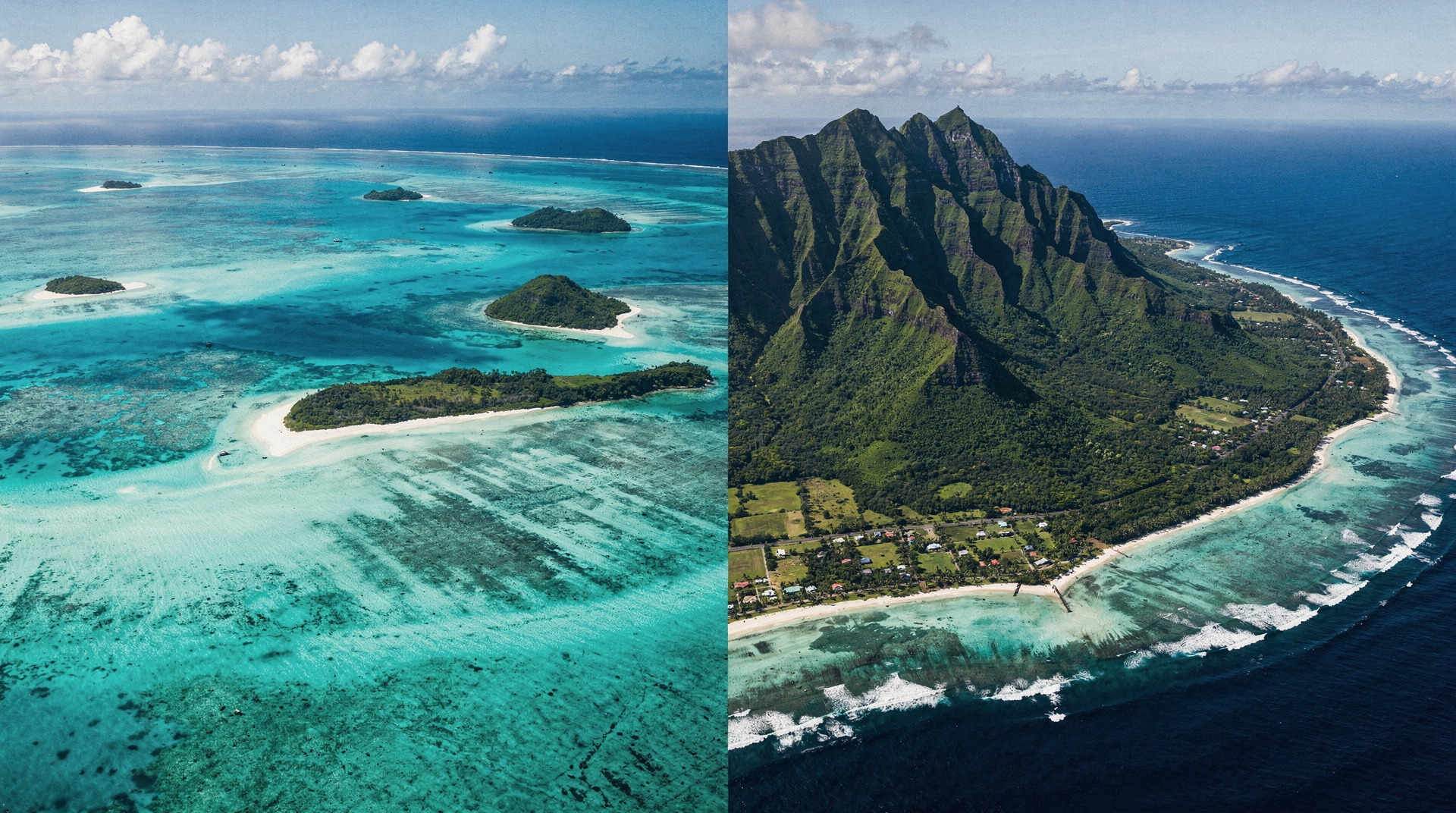
Aitutaki vs Rarotonga — which Cook Island should you choose?
The fundamental difference
Rarotonga has everything a traveller expects from a Pacific island destination: an international airport, a circumnavigation road that takes 45 minutes by motorbike, a selection of restaurants from backpacker cafés to destination dining, resorts on the lagoon, snorkelling off the beach, and a mountain interior that requires a guide and some fitness.
Aitutaki has a lagoon.
I don’t say this dismissively. The Aitutaki lagoon is one of the most photographed bodies of water in the Pacific — a vast, shallow, turquoise-blue expanse ringed by motu (small islands), with visibility so clear that you can read the sand ripples at 3 metres. It has appeared on essentially every list of the world’s most beautiful lagoons for decades. The claim is justified.
The comparison between the two islands is less a competition than a sequencing question: most people who see both agree that Aitutaki’s lagoon is the more spectacular single experience. Most people also agree that you can’t really go to Aitutaki without also going to Rarotonga.
| Rarotonga | Aitutaki | |
|---|---|---|
| Access | International flights (Auckland, Sydney, LA) | Domestic-only, via Rarotonga |
| Best for | Base, infrastructure, hiking, restaurants | The lagoon, day trip or short stay |
| Day-trip cost | — | Around NZD 600-800 / USD 432-576 pp incl. flight+cruise |
| Minimum time | 3-4 nights | Day trip; 2-3 nights if staying over |
How to get there
Rarotonga has an international airport served from Auckland, Sydney, and Los Angeles. Air New Zealand operates the Auckland route most frequently. Flights from Auckland take about 3.5 hours. Flights from Sydney around 4 hours. No visa is required for most nationalities for stays under 31 days.
Aitutaki is accessible only from Rarotonga, via Air Rarotonga. The flight is 45 minutes. It operates multiple times daily. Return flights run approximately NZD 300-400 / USD 216-288 / EUR 198-264 depending on timing and availability. Day trips from Rarotonga are common and viable — Air Rarotonga sells packages combining the flight with a lagoon cruise.
There is no direct international access to Aitutaki. This is a feature more than a bug: the extra step of the inter-island flight filters out purely logistical visitors and keeps the island at a volume it can absorb.
Book the Aitutaki flight as soon as your Rarotonga dates are fixed. Air Rarotonga’s schedule is capacity-limited on a small island route, and the mid-morning slots that pair well with a same-day lagoon cruise sell out first in peak months (July-September, December-January). Booking on arrival in Rarotonga still works most of the year, but it removes flexibility on which day you fly.
Rarotonga: what you actually get
Rarotonga is 67 square kilometres. The coast is ringed by a barrier reef that creates a lagoon — narrower and shallower on the western side, wider on the eastern side — ideal for snorkelling and paddleboarding. The main settlement, Avarua, is on the northern coast; most of the resorts are on the western and southern shores.
The snorkelling directly off the beach on Rarotonga is, in the right spots, excellent. Muri Beach on the eastern coast has shallow water and good fish diversity. Aroa Beach on the western coast is good for reef fish. Rarotonga Lagoon Cruises offer glass-bottom boat tours and snorkelling stops through the lagoon.
The Rarotonga lagoon cruise with snorkelling and BBQ is the standard half-day tourist experience. It’s well-run and gives you a proper introduction to the lagoon’s geography and marine life. For a first visit, it’s the correct starting point.
Beyond the water: the Cross-Island Track through the mountainous interior takes about 2-3 hours and requires a guide for the final section near the Needle (Te Rua Manga). The track gives you rainforest, tropical birds, and views that put the island’s scale in context. It’s one of the better hikes available in the Pacific islands.
Rarotonga also has the Cook Islands Museum (small but substantive), the Talofa Cultural Village for traditional crafts and performance, and a restaurant scene that punches above its weight for an island of 12,000 people. The Cook Islands overview guide has the fuller breakdown of where to stay on each coast and how to budget for the trip.
Aitutaki: what you actually get
Aitutaki’s draw is almost entirely the lagoon and its contents. The lagoon is approximately 50 square kilometres — almost larger than the island itself. The water is 2-6 metres deep across most of the lagoon, which means it’s both swimmable and navigable by shallow-draft boat.
The motu — small coral islands around the lagoon’s edge — include One Foot Island, which has a post office that stamps your passport for a small fee and which appears in every photograph of Aitutaki you have ever seen. The sand is white. The water is the specific shade of blue that doesn’t photograph correctly because the reality is more vivid than the image.
Aitutaki township (Arutanga) is basic: a small supermarket, a few guesthouses and small resorts, a limited restaurant selection, good local cook-style food if you know where to find it. See the full Aitutaki destination guide for accommodation options and the layout of the island.
Beyond the lagoon cruise, independent options exist for the more self-directed traveller: kayak or paddleboard hire from guesthouses near the lagoon edge, and a handful of small-boat operators who’ll run you out to a quieter motu than the standard cruise stops. These are worth arranging a day ahead through your accommodation, since Aitutaki has no real tourist information infrastructure beyond word of mouth.
For a day trip from Rarotonga: take the early Air Rarotonga flight, join the lagoon cruise (this is the standard activity — the cruise covers the key motu including One Foot Island with snorkelling stops), have lunch on the lagoon, return flight. You will see what Aitutaki is about, spend roughly NZD 600-800 / USD 432-576 / EUR 396-528 per person including flights and cruise, and be back in Rarotonga by evening.
For an overnight stay: two or three nights on Aitutaki is markedly different from a day trip. You lose the time pressure. The lagoon at different times of day is genuinely different. The calm of early morning and late afternoon is specific to staying rather than visiting. The additional cost is the accommodation — expect NZD 250-400 / USD 180-288 / EUR 165-264 per night for a decent guesthouse room.
The honest comparison
Who should go to Aitutaki and skip Rarotonga: almost nobody. The access route doesn’t allow it without significant complications.
Who should go to Rarotonga only: families with young children (better infrastructure, more varied activities), anyone on a tight budget (Rarotonga has a wider range of accommodation price points), anyone who needs reliable restaurant options.
Who should go to both: most visitors who can afford the extra day, the extra cost, and the extra air leg. The Aitutaki lagoon is the kind of place that people describe as genuinely unlike anything they’ve seen before. Whether that matters to you depends on how much a body of water moves you.
Who should stay on Aitutaki longer than a day trip: people who are specifically drawn to the Pacific slow pace, who want to kayak and paddleboard and snorkel at their own pace rather than on a boat tour schedule, and who find the simplicity of a small island restful rather than limiting.
The direct booking situation
Note that neither Aitutaki-specific tours nor the lagoon cruises appear on GetYourGuide at the time of writing. Booking for Aitutaki activities goes through Air Rarotonga (flights), Aitutaki Lagoon Resort (direct booking for their cruise), and local operators. This isn’t a problem — the booking process is simple — but it means the comparison shopping and review ecosystem is thinner than for Rarotonga.
When to visit either island
The Cook Islands sit south of the equator, so the calendar runs opposite to the northern hemisphere: the dry season (April to November) has lower humidity, less rain, and is the more comfortable window for both islands, with July to September being the busiest and most expensive due to New Zealand and Australian school holidays overlapping with winter escapes. The wet season (December to March) brings higher humidity and the small chance of a cyclone, but also quieter beaches and cheaper accommodation on both islands — Aitutaki’s lagoon looks essentially the same regardless of season, since it’s the water clarity and light, not swell, that defines the view.
Related reading
Related guides
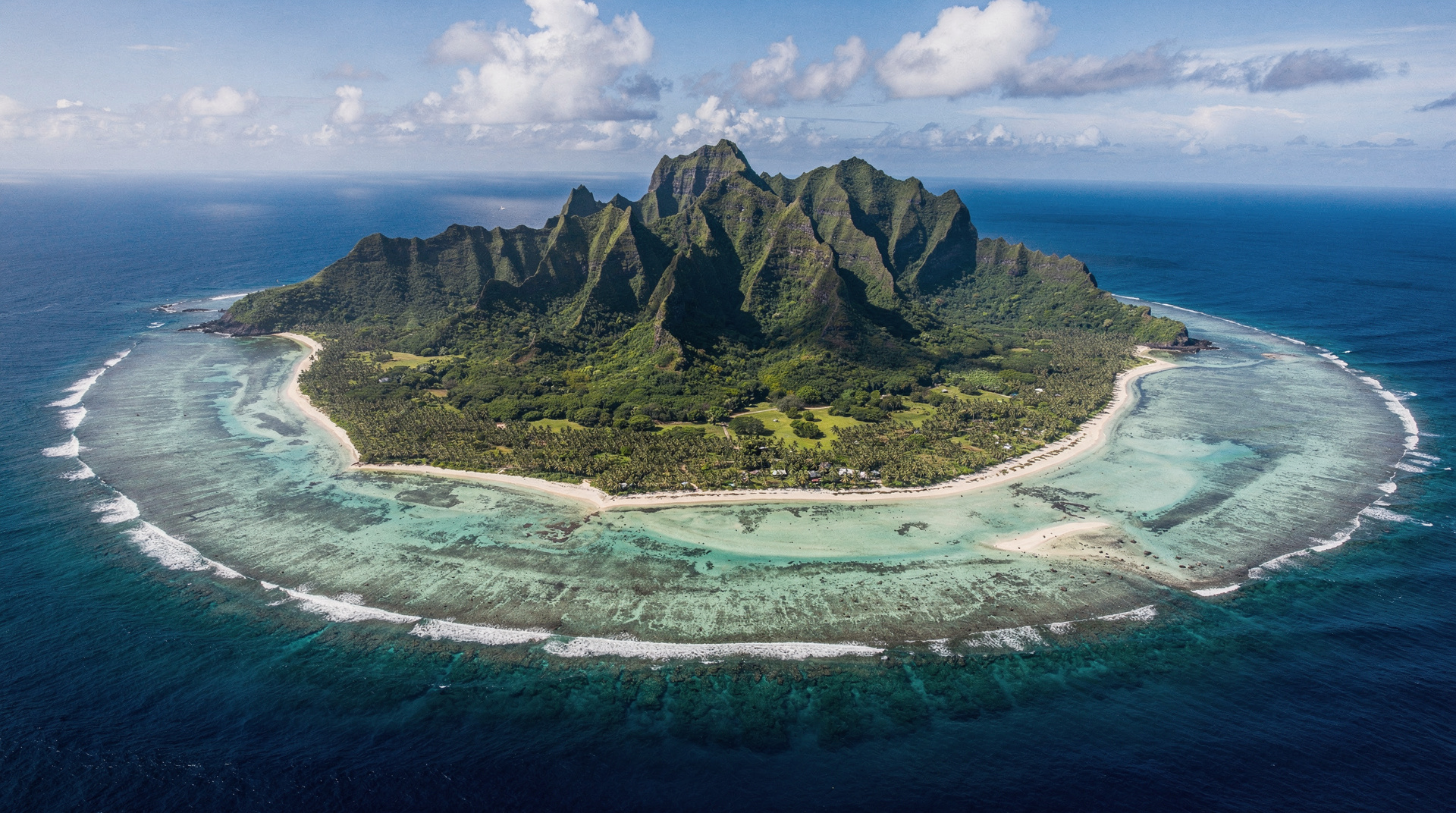
Cook Islands
Complete honest guide to the Cook Islands: 15 islands in the Pacific, NZD currency, flights from Auckland, real prices and what each island is actually like.
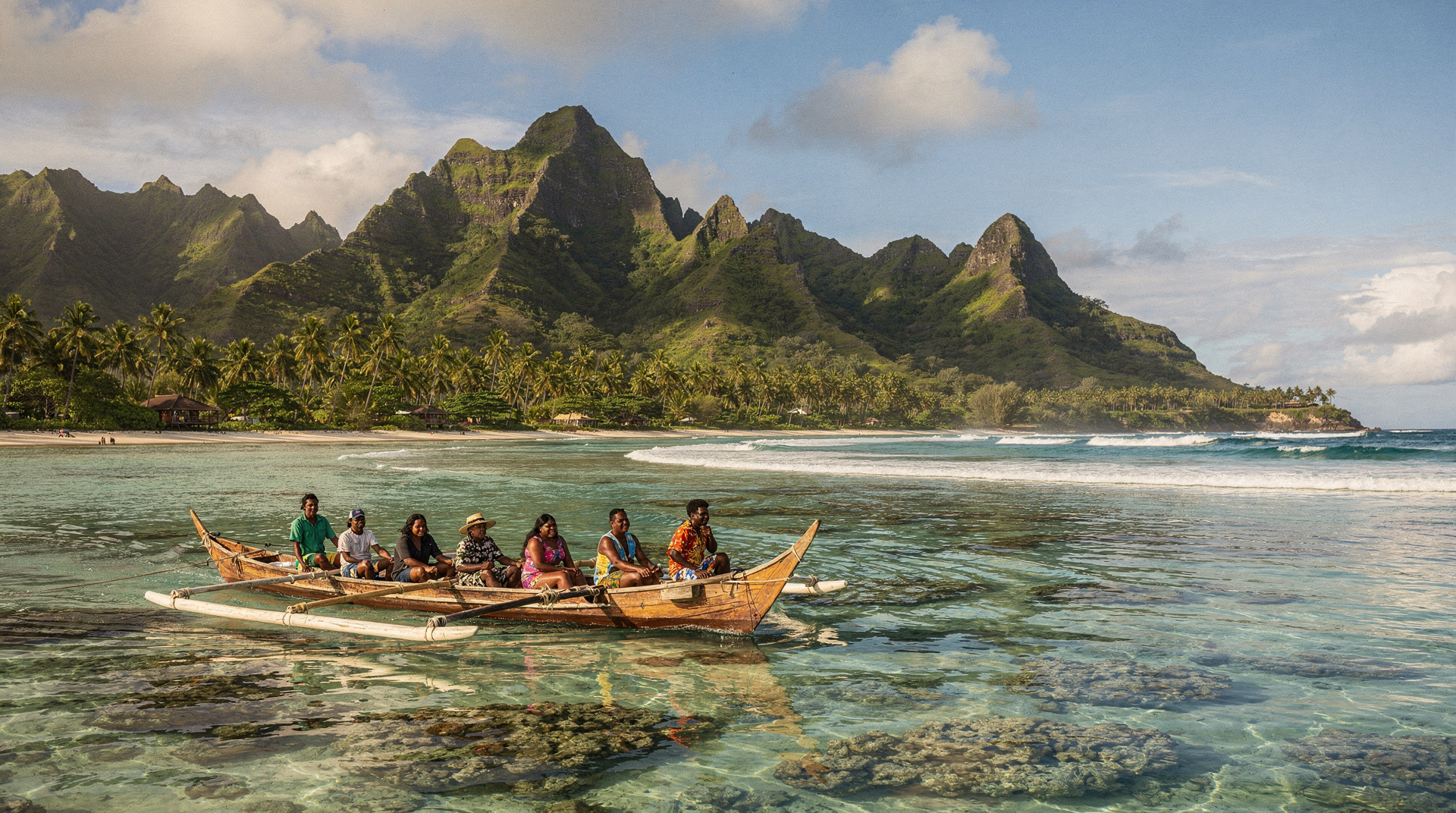
Rarotonga
Honest Rarotonga guide: Muri lagoon cruise, Cross Island Track, Te Vara Nui, best beaches, where to stay. Real prices NZD/USD/EUR.
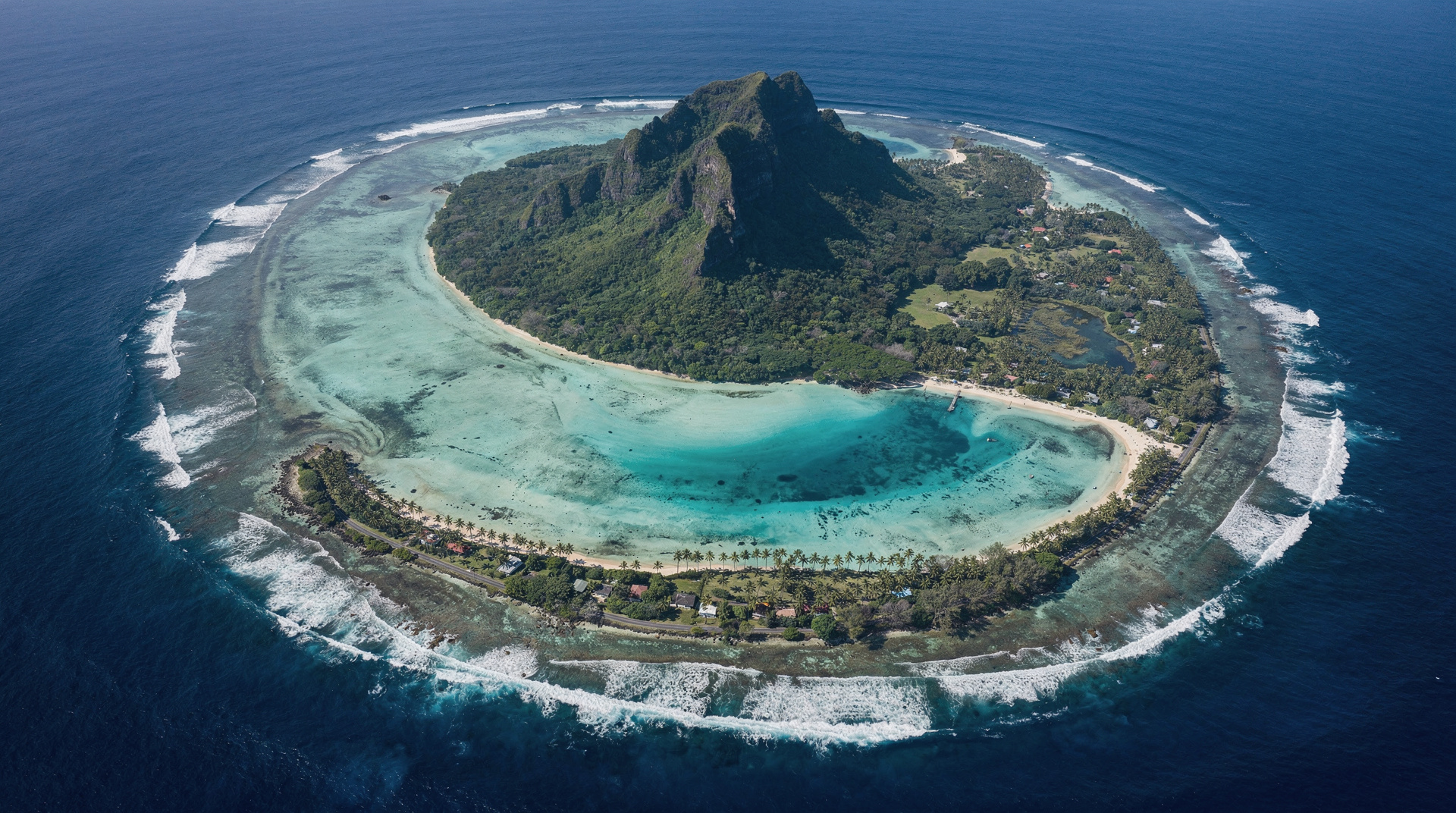
Cook Islands travel guide — Rarotonga, Aitutaki, and the outer islands
Cook Islands honest overview: Rarotonga vs Aitutaki vs outer islands, visa-free entry, real costs NZD/USD/EUR, why NZ-bound travellers should consider it.
The Cook Islands travel bubble — what happened when New Zealand opened its borders in 2021
In May 2021 NZ opened a quarantine-free travel bubble with the Cook Islands. Three months later, Delta closed it. A look at what worked and what it revealed.
Published: