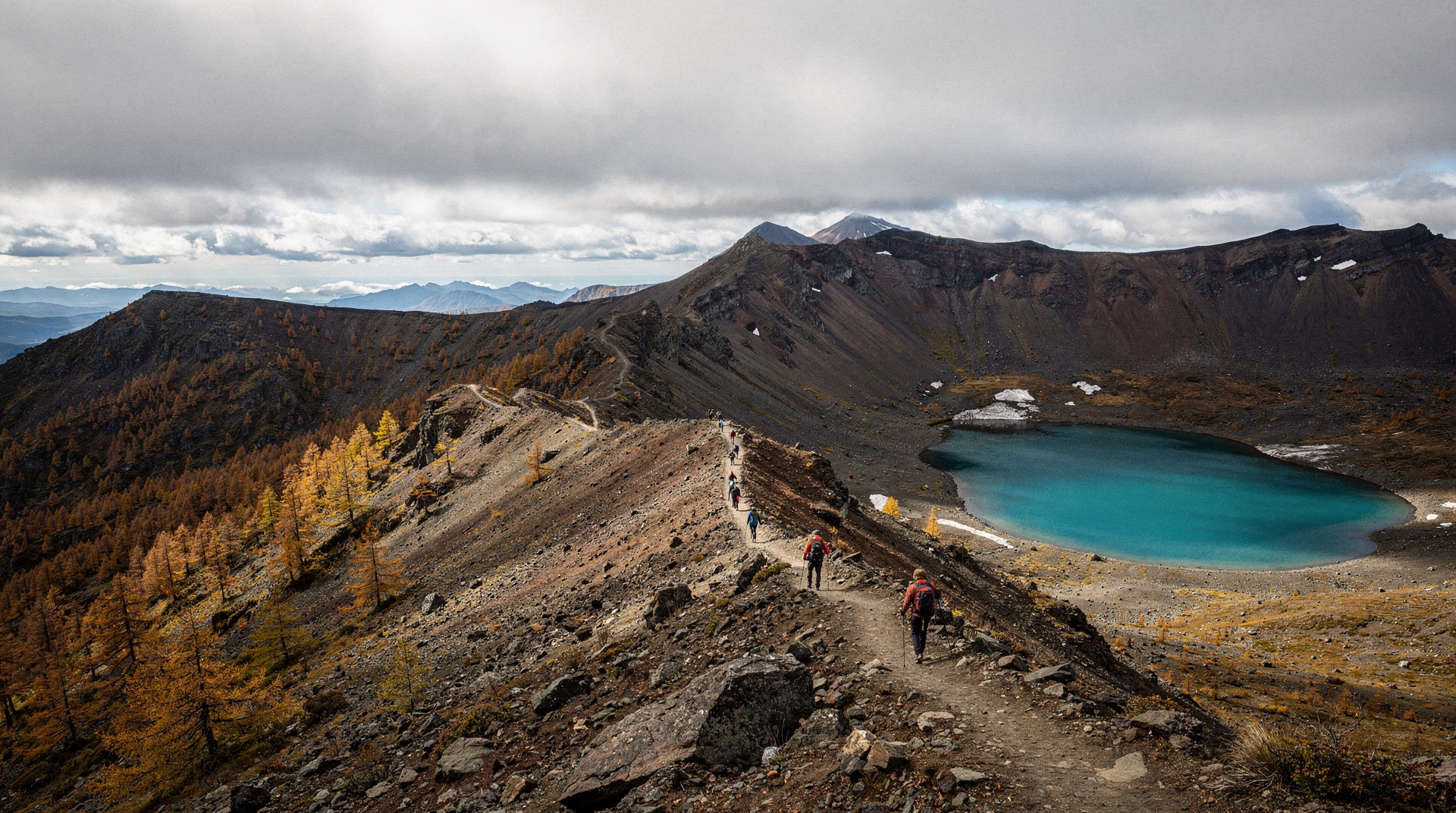
The Tongariro Crossing in shoulder season — a hard-won lesson
| Distance | ~20km, point-to-point (Mangatepopo to Ketetahi) |
| Time needed | 6–8 hours, plus a flexible buffer day in shoulder season |
| Shoulder season | March–April (autumn), October–November (spring) |
| Shuttle cost | Around NZD 25-35 per person, one-way or coordinated |
| Base towns | National Park village, Turangi, or Taupo |
The morning the mountain said no
We were parked at the Mangatepopo trailhead at 6:45am in early April. The shuttle had dropped us with seventeen other hikers. Rain was horizontal. The visibility was roughly ten metres. The DOC ranger at the trailhead was politely, firmly explaining to a group of optimists in shorts why they were not going to complete the crossing today.
This is the Tongariro Alpine Crossing in shoulder season. You will have days like this. You may have the day of your life. The difficulty is you won’t know which until you’re already there.
What shoulder season actually means on Tongariro
The Tongariro Alpine Crossing is one of the most popular day walks in New Zealand — listed frequently among the best single-day hikes in the world. The standard season is October to April, with the summer peak (December–February) bringing the highest visitor numbers and the most reliable weather. Shoulder season — March through April on the autumn side, October through November on the spring side — is a different proposition.
In April, the Tongariro region sits at around 1,100m in elevation, with the highest point of the crossing (Red Crater) at 1,868m. Autumn weather patterns are genuinely unpredictable at this altitude. A clear forecast at 7am can become a whiteout by 10am. The crossing takes 6–8 hours. You need sustained good conditions for the full traverse, not just a pleasant morning.
The technical difficulty doesn’t change with the season — the crossing itself is a well-graded track — but the alpine environment does. In poor visibility, the high plateau section between Red Crater and the Emerald Lakes becomes navigationally challenging. DOC recommends turning back from the Red Crater ascent if visibility drops below 100m and conditions are deteriorating. This is not a suggestion.
The logistics that catch people out
The crossing is a point-to-point track: you start at Mangatepopo on SH47 and finish at Ketetahi on SH46, roughly 20km northeast. You cannot do a simple out-and-back (the terrain doesn’t suit it), which means you need transport at both ends.
The shuttle ecosystem around Tongariro is well-developed. Operators run from Turangi, Taupo, and National Park village. Typical shuttle costs run NZD 25–35 / USD 18–25 / EUR 16–22 per person for a one-way or coordinated two-end service. The Tongariro Alpine Crossing shuttle transfer service books up fast in peak season and fills quickly in shoulder season when fewer services run.
Here is the lesson I learned: book flexible or refundable shuttles. The standard booking is non-refundable. If the crossing is closed or conditions make it inadvisable, you may lose your shuttle fee. Some operators have weather-related cancellation policies; many don’t. Check explicitly before booking.
On our cancelled morning, we rebooked for the following day (Wednesday), which dawned clear and cold and exactly as advertised. The crossing in those conditions — April light, thin cloud below the crater rim, the Emerald Lakes an improbable aquamarine — was extraordinary. The two-day wait was worth it.
What the crossing is actually like in April
Fewer crowds than summer. The trailhead car park doesn’t overflow. The narrow sections on the Red Crater descent aren’t queued five people deep. The Emerald Lakes get their colour from geothermal minerals and look identical in autumn to summer — the light, if anything, is better. Autumn morning light across the volcanic plateau is not something you forget.
The temperature at the summit will be 10–15°C colder than at the base. On our successful crossing day, the trailhead was 14°C and pleasant; Red Crater was 2°C with a 30km/h wind. Layering is not optional. Gloves, a wind layer, and waterproofs regardless of the forecast.
Ketetahi hut has been closed to overnight stays since 2012 due to geothermal hazard — hot water seeping under the track near the upper section of the descent. The track still passes it; the hut is available as a day shelter only. Be aware that the upper section of the Ketetahi side, near the hut, occasionally closes entirely when geothermal activity increases. Check the DOC website for current conditions the morning of your hike.
The honest verdict
April is my preferred time to do this crossing if I’m comfortable with the risk of one or two wasted days. The trade-off is real: you may drive to the trailhead and be turned around. You need a buffer day built into your itinerary. Rushing it on a marginal weather day because your accommodation is already booked further south is a genuine mistake.
Budget two days for the crossing attempt and plan your route around that flexibility. Keep a non-refundable booking in National Park village or Turangi as your base so you can hit the trailhead at first good weather.
The crossing in good April conditions is, without exaggeration, one of the finest day walks available anywhere.
What this means for your trip
If you’re visiting in April or early May and the Tongariro Crossing is on your list:
- Check DOC conditions the night before and the morning of.
- Book shuttles with cancellation flexibility or choose operators with weather policies.
- Have a backup plan — the Whakapapa Village walks and the Tama Lakes track are excellent alternatives if the main crossing is closed.
- Do not rush. A poor-weather crossing is dangerous and unrewarding. A good-weather crossing justifies two days of waiting.
Basing yourself for flexibility
Where you stay affects how easily you can pivot when the weather doesn’t cooperate. Taupo, about 90 minutes from the trailhead, gives you more to fill a wasted day with — the Lake Taupo guide covers alternatives like Huka Falls or a Taupo skydive if the crossing gets cancelled. National Park village and Turangi are closer to the trailhead but have fewer fallback options if you’re stuck waiting out weather.
If you’re combining the crossing with skiing, note that the walk and the ski season barely overlap — see the Mt Ruapehu guide for the seasonal split. And for those weighing this walk against Fiordland’s Great Walks, the Tongariro Crossing vs Routeburn and Tongariro Crossing vs Kepler comparisons cover how they stack up.
FAQ
Is the Tongariro Alpine Crossing worth doing in shoulder season? Yes, with the caveat that you need flexibility — March–April and October–November bring fewer crowds and often excellent light, but weather is less predictable than peak summer, so build in a buffer day.
How much colder is the summit than the trailhead? Expect 10–15°C colder at Red Crater than at Mangatepopo, plus wind chill — proper layers, gloves, and waterproofs are essential regardless of the forecast at the base.
Related reading
Related guides
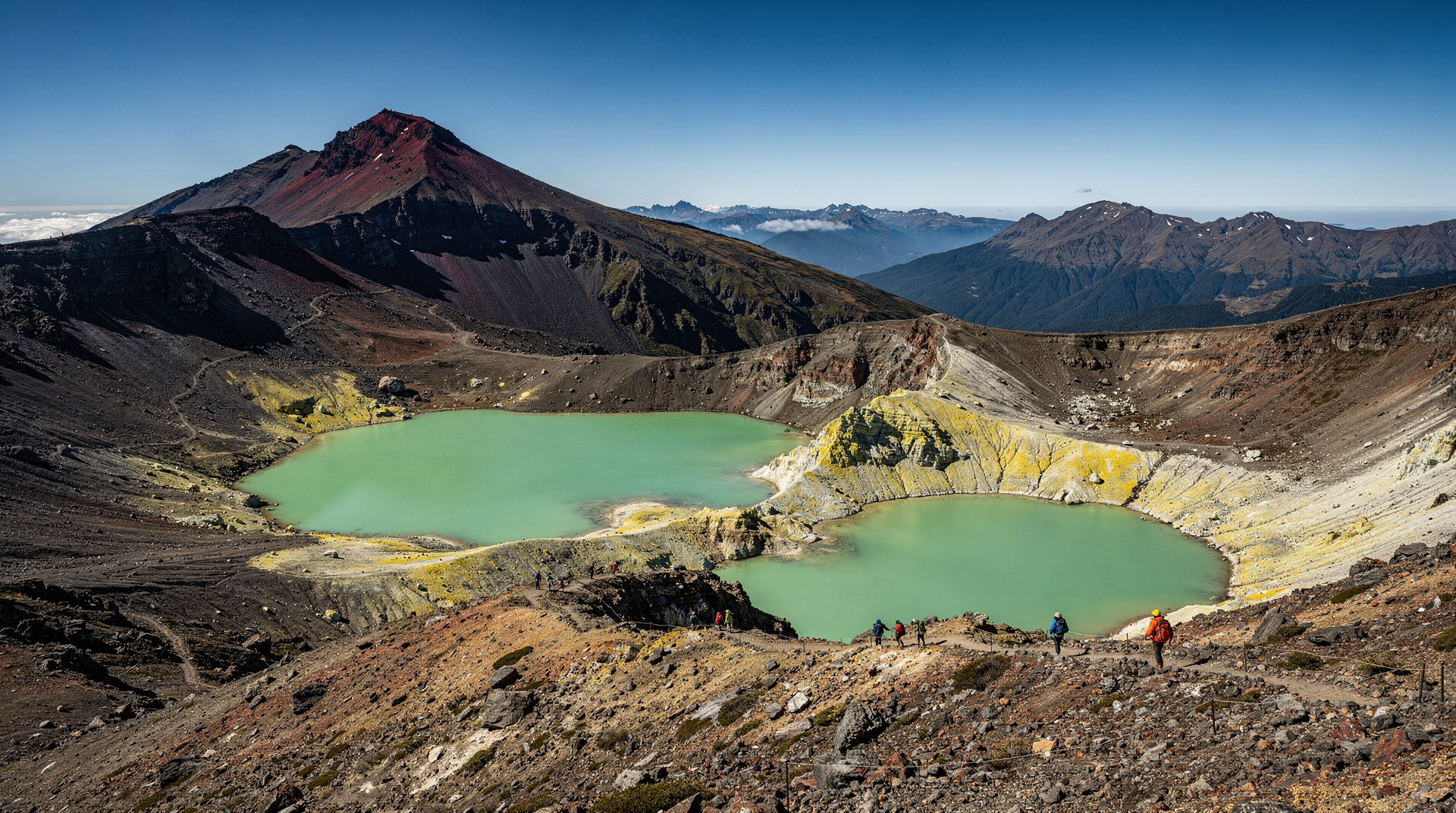
Tongariro National Park
Honest Tongariro guide: Alpine Crossing hike, Mt Ruapehu ski, Ngauruhoe, shuttle logistics, real prices NZD/USD/EUR, and what to expect on the track.
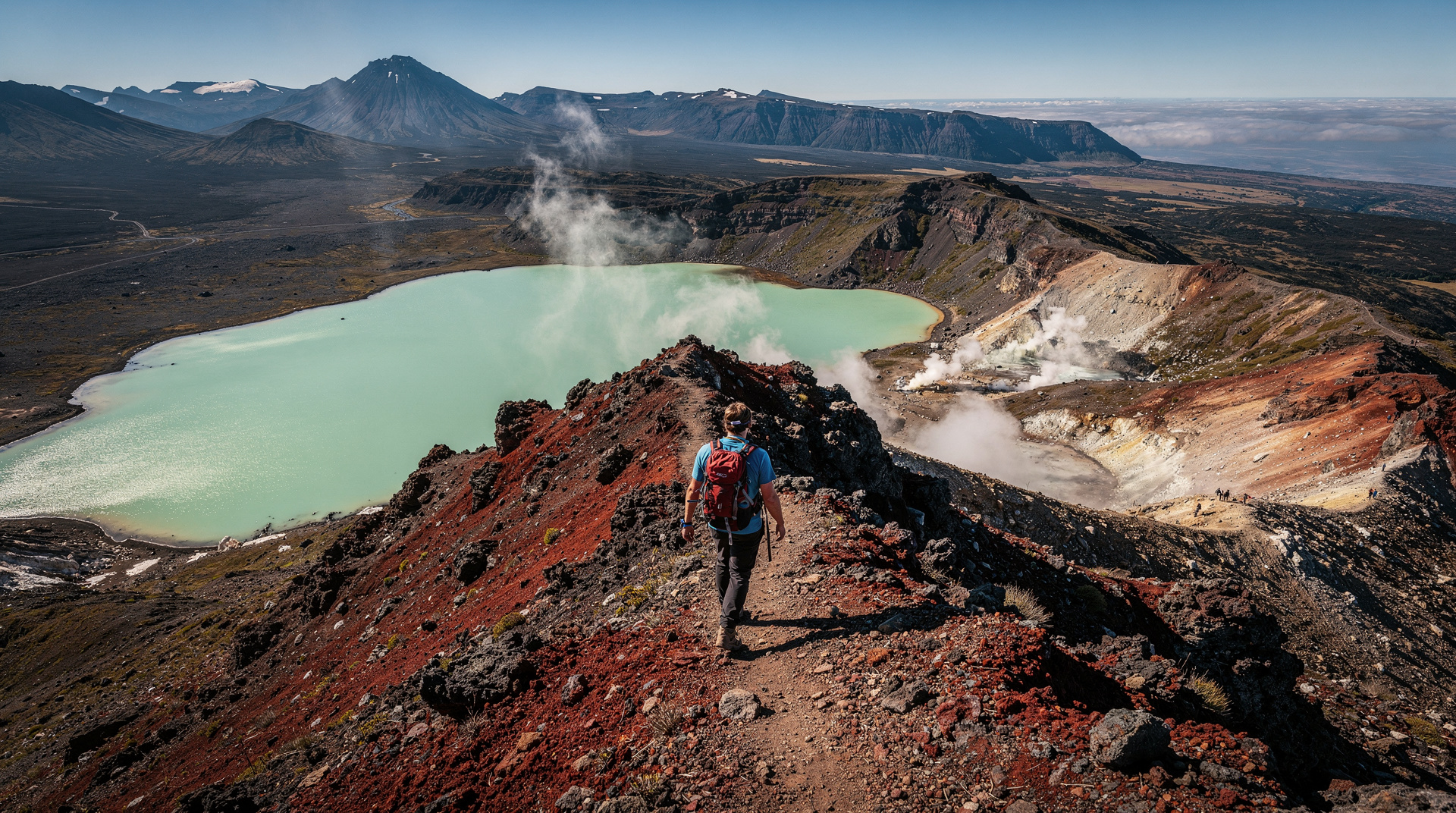
Tongariro Alpine Crossing
Honest Tongariro Crossing guide: 19.4km, 7-9 hours, shuttle logistics, gear, and why winter without a guide has killed people.
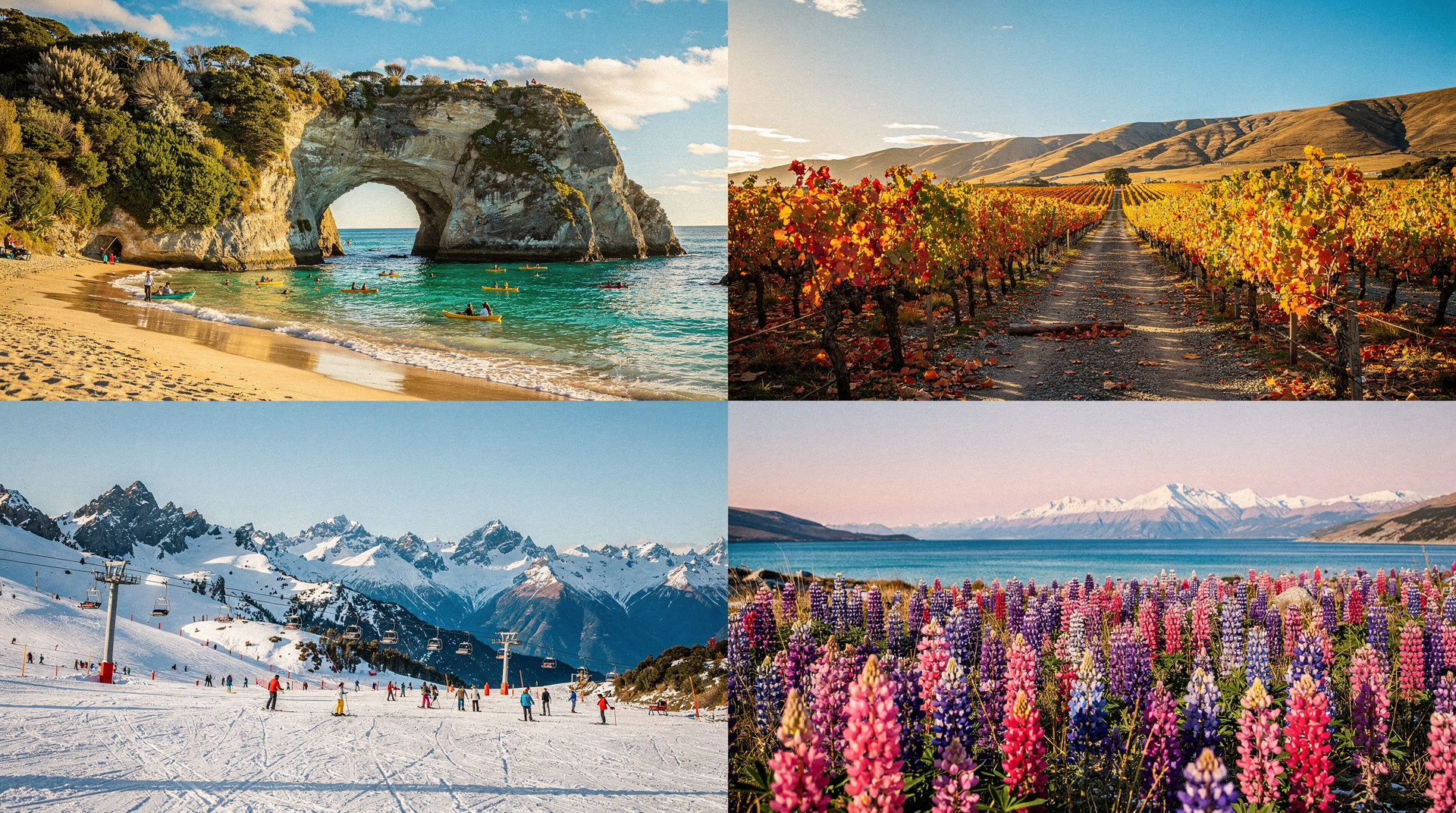
Best time to visit New Zealand
When to visit New Zealand: honest breakdown by season, region, and activity type. Summer is not always best. Spring and autumn often outperform the peak season.
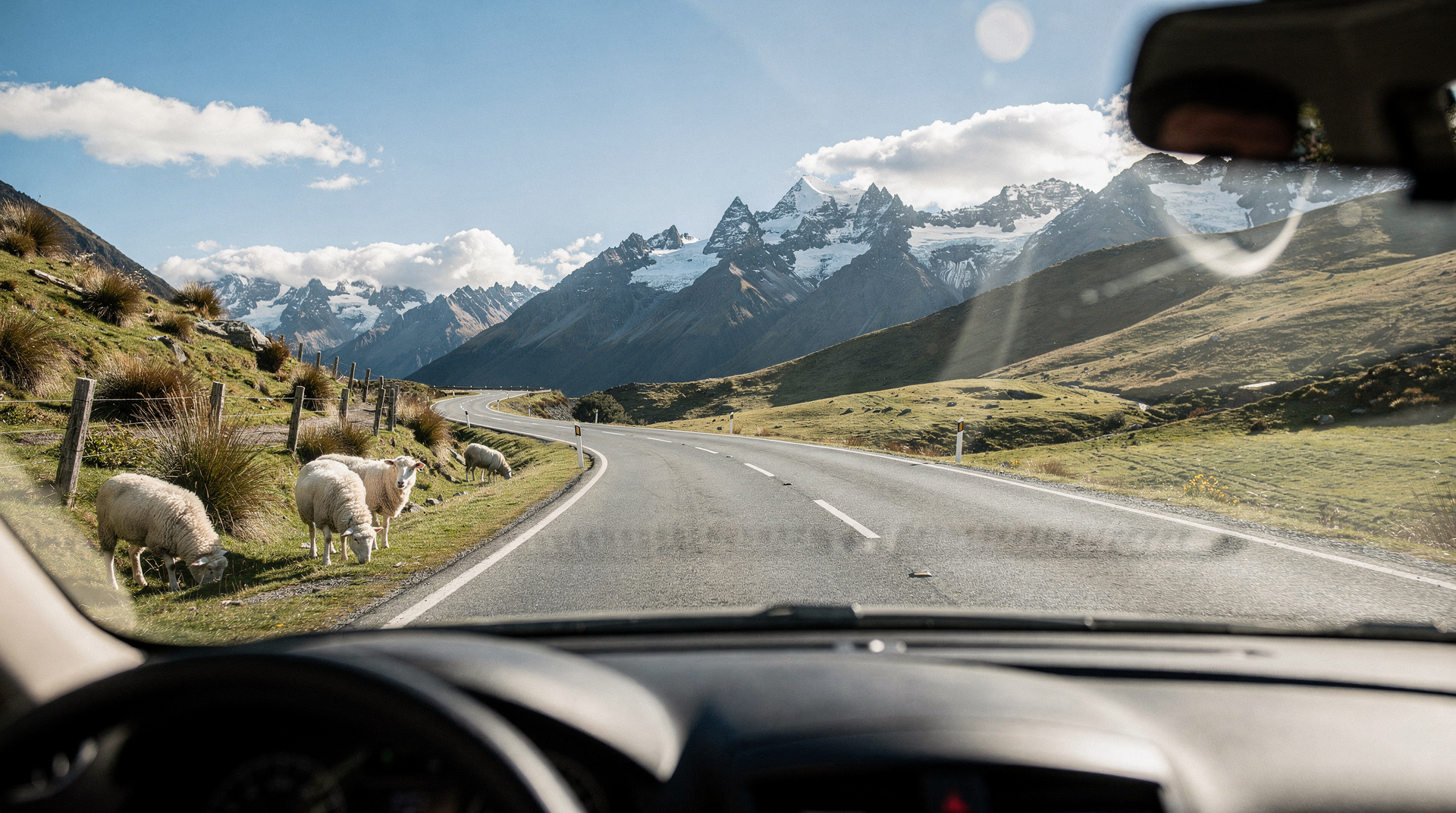
Driving in New Zealand
Honest driving guide for NZ: left-side rules, gravel road etiquette, why GPS lies, fuel costs, one-lane bridges, and what rental companies don't tell you.
Published: