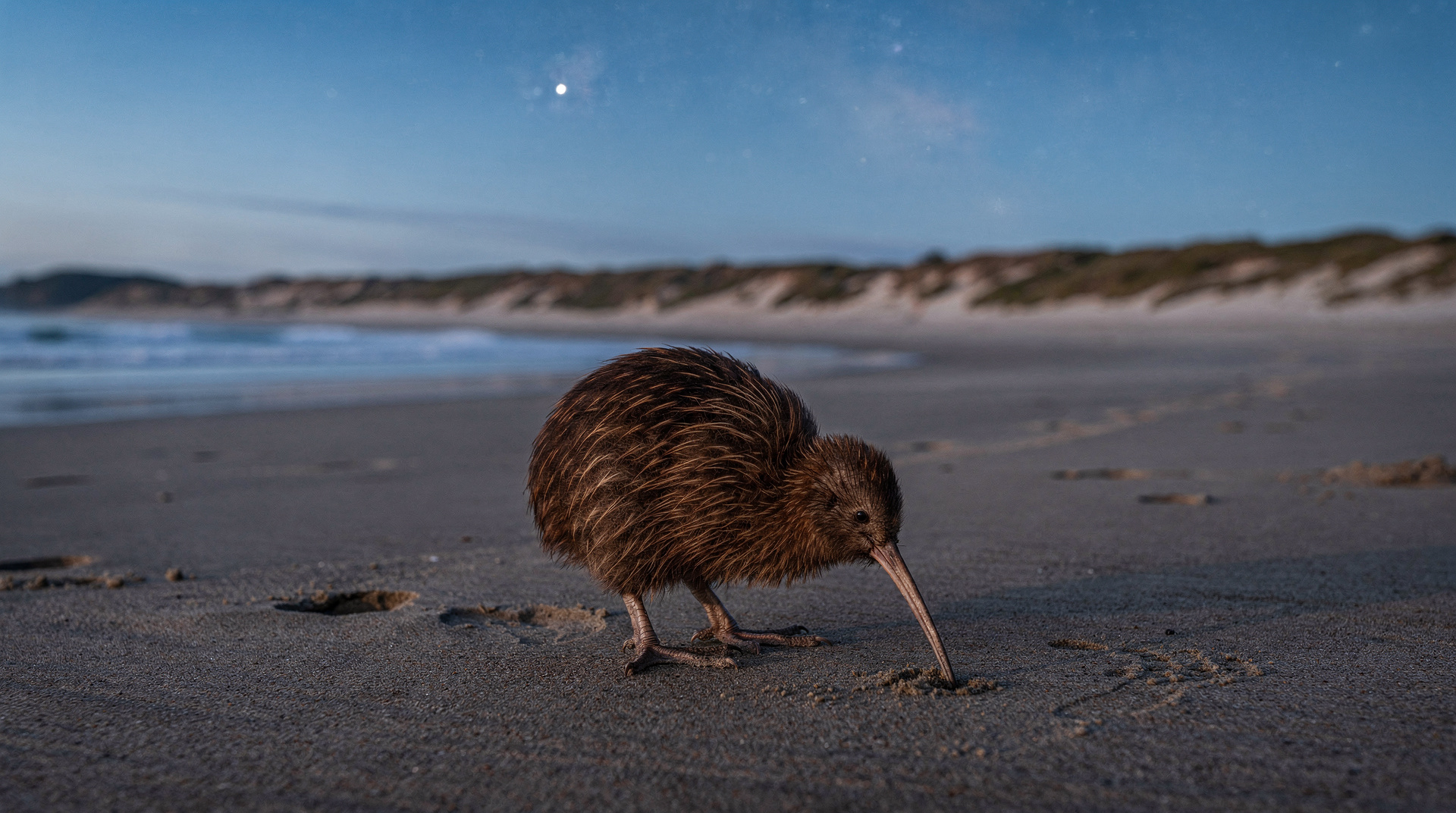
Stewart Island / Rakiura
Honest guide to Stewart Island / Rakiura: wild kiwi at night, Ulva Island bird sanctuary, Rakiura Track, Foveaux Strait ferry, real prices NZD/USD/EUR.
Quick facts
- Population
- ~400 residents, almost all in Oban village
- Access
- Ferry from Bluff (1 hour) or scenic flight from Invercargill (20 min)
- Currency
- NZD — USD ~$0.60 / EUR ~€0.55
- Great Walk
- Rakiura Track — 3-day loop, open year-round
- Famous for
- Wild kiwi spotting at night — one of NZ's best chances to see kiwi in the wild
- Maori name
- Rakiura — 'glowing skies', referring to the aurora australis
Rakiura in one minute
Stewart Island — Rakiura in te reo Maori, meaning “glowing skies” — sits 30 kilometres south of the South Island across the Foveaux Strait, and it is about as remote as New Zealand gets while still being accessible within a day. Around 400 people live here permanently, almost entirely in Oban, the island’s only settlement. There are no traffic lights, no fast food chains, and very few roads. What there is: dense podocarp forest, over 280 bird species, the strong likelihood of seeing wild kiwi at night, and one of the 11 official Great Walks in the country.
For most New Zealand visitors, Stewart Island / Rakiura is the finish line — the thing you do at the end of the South Island after Fiordland and Queenstown. That is completely reasonable. But arriving with low expectations and leaving transformed by the quiet and the birdlife is a common experience here. The island has a way of resetting people.
| Where | 30 km south of the South Island, across the Foveaux Strait |
| Cost | Around NZD 105–175 for the ferry; NZD 290 for the Wild Kiwi Encounter |
| Time needed | 2 nights minimum; 3 for the Rakiura Track or Mason Bay |
| Getting there | Ferry from Bluff (1 hour) or flight from Invercargill (20 min) |
| Best time | November–April for milder weather; year-round for aurora |
Why visit (if at all)
The honest answer is that not everyone should visit Stewart Island. If your time in New Zealand is limited to two or three weeks, you may want every day to be dense with scenery and activity, and Rakiura rewards patience rather than pace. It rains a lot. The mud is genuine. The ferry crossing on a rough day will test you.
But if any of the following apply, Rakiura justifies the effort:
Wild kiwi at night. Seeing a kiwi in the wild on the mainland is genuinely difficult — they are nocturnal, secretive, and the population is heavily concentrated in predator-managed sanctuaries. On Stewart Island, the kiwi population is large enough and the habitat undisturbed enough that guided night walks produce a sighting on the vast majority of outings. This is one of New Zealand’s most extraordinary wildlife experiences.
Ulva Island predator-free sanctuary. A 15-minute water taxi from Golden Bay, Ulva Island is entirely predator-free, and the birdsong is unlike anything on the mainland. Kaka, tui, bellbirds, South Island robin, the rare buff weka — all present and many showing no fear of humans. It is otherworldly.
Genuine remoteness without expedition logistics. The ferry from Bluff takes an hour and runs multiple times daily. You can sleep in a guesthouse and eat fresh blue cod. Remoteness here is real but comfortable if you choose it to be.
Aurora australis (southern lights). The island’s Maori name, Rakiura, is about the aurora. At latitude 47° south, Stewart Island offers some of New Zealand’s best aurora viewing on clear nights, year-round. No guarantee, but the isolation means zero light pollution.
Getting here
Ferry from Bluff (Stewart Island Experience / Real Journeys): The most common approach. Bluff is approximately 27 km south of Invercargill (30 minutes driving). The crossing takes about one hour in favourable conditions. The Foveaux Strait is notoriously rough — swells of 2–4 metres are common even in summer, and the ferry is small. Expect to feel it. One-way fare approximately NZD 105 / USD 63 / EUR 58; return NZD 175 / USD 105 / EUR 96. Book ahead in peak season. You can book the Bluff–Oban ferry via GetYourGuide.
Scenic flight from Invercargill (Stewart Island Flights): 20-minute flight over the Foveaux Strait. A legitimate alternative for those prone to seasickness or short on time. Approximately NZD 120–180 / USD 72–108 / EUR 66–99 one-way depending on season. Also available from the Invercargill airport.
Getting around on the island: There are less than 30 km of roads. Most visitors walk, hire a water taxi for island access (Ulva Island, Mason Bay), or use the handful of guided operators who work the trails. If you’re doing the Rakiura Track, you need to carry everything yourself — hut bookings through DOC are essential in peak season.
Getting here is genuinely half the experience. Commit to the crossing and the journey rather than treating it as an obstacle.
What to do
Wild kiwi encounter
This is the headline experience and it delivers. Rakiura has the highest density of southern tokoeka kiwi of any inhabited place in New Zealand. The night walk at Mason Bay — a beach on the island’s western coast accessible only by water taxi or a full-day overland walk — is the classic approach. Kiwi are active on the beach at dusk and through the night, often visible from 10 metres in torchlight.
The guided Wild Kiwi Encounter covers transport to Mason Bay, an experienced guide, and typically 2–4 hours on the beach at night. Approximate cost NZD 290 / USD 175 / EUR 160 per person. This is worth every dollar for anyone even mildly interested in wildlife. Book well in advance in summer.
For an independent approach, book the water taxi to Mason Bay (approximately NZD 150–200 / USD 90–120 / EUR 83–110 return per person), camp or stay in the DOC hut, and explore independently. The kiwi will still be there; the guide just makes sighting more reliable.
Ulva Island bird sanctuary
Ulva Island is one of New Zealand’s finest open bird sanctuaries. The 267-hectare island has been predator-free since 1997, and the birdlife is extraordinary. The guided Ulva Island Guided Wilderness Walk and Cruise takes approximately 2.5 hours and costs from NZD 140 / USD 85 / EUR 78. Alternatively, take the water taxi from Golden Bay on your own (approximately NZD 25–30 / USD 15–18 / EUR 14–17 return) and explore the marked tracks independently.
Species you are likely to see: South Island robin (which will land on your boots), tui, bellbird, kaka (NZ parrot), kiwi (daytime sightings are rare but possible), fernbird, buff weka. The forest here — mature podocarp, mixed broadleaf — has the quality of a natural cathedral. Bring good binoculars.
Rakiura Track — the Great Walk
The Rakiura Track is a 36-km loop from Oban that takes three days (two nights in DOC huts). It is the most accessible of the Great Walks in terms of terrain difficulty — there are no high alpine crossings — but it is muddy, wet, and requires full tramping gear. The reward is deep native bush, coast views, and genuine solitude. Hut fees approximately NZD 45 / USD 27 / EUR 25 per night per person.
The track is open year-round, unlike most South Island Great Walks which close huts May–October. This makes it a good shoulder-season option. October–April offers the best conditions; June–August is cold and very wet with short daylight hours. Book huts through DOC well ahead in January–February.
Guided wilderness walks
For those who want guided walking without the full three-day commitment, the Guided Wilderness Walk at Oneke / The Neck takes approximately 3.5 hours and costs from NZD 195 / USD 116 / EUR 107. It traverses one of the island’s most scenic coastal and forest sections and includes interpretive information about the island’s history and ecology. Good for those with one full day on the island.
Village and bays tour
The Village and Bays Tour (1.5 hours, approximately NZD 62 / USD 37 / EUR 34) gives an overview of Oban, the island’s history, the fishing industry, and key viewpoints. Useful orientation on arrival, particularly for first-time visitors. The driver/guide is typically a local resident with deep knowledge of the island’s character.
Ocean and fishing
Stewart Island’s fishing grounds are among New Zealand’s most productive. Blue cod is the island specialty — fresh, firm, and excellent. Some operators offer fishing charter half-days (NZD 150–250 / USD 90–150 / EUR 83–138 per person depending on group size). This is a self-booking activity with local operators in Oban.
How much time to actually allow
Two nights is the practical minimum, and it’s worth being deliberate about why: one evening for a kiwi encounter (which needs a night that’s calm and dry to be worth doing), and one full day for either Ulva Island or the start of the Rakiura Track. Trying to compress this into a single night means choosing between the kiwi walk and the daytime activities, and weather delays on the ferry or flight can eat into a tight schedule without any buffer. Three nights removes that pressure entirely and allows a genuinely unhurried pace, which is the whole point of coming here.
Where to stay
Jo and Andy’s Bed and Breakfast (Oban): Long-regarded as one of the island’s best, with knowledgeable hosts who can help organise activities. NZD 180–260 / USD 108–156 / EUR 99–143 per night.
Halfmoon Bay Cottage and Apartments: Well-appointed self-contained units with cooking facilities. Good option for those who want independence. NZD 160–240 / USD 96–144 / EUR 88–132 per night.
South Sea Hotel (Oban): The island’s pub and hotel. Rooms are basic but functional, and the bar is genuinely the social centre of the island in the evening. Expect NZD 130–180 / USD 78–108 / EUR 72–99 per night.
DOC huts (Rakiura Track and others): NZD 45 / USD 27 / EUR 25 per person per night. Mattresses and cooking facilities provided; sleeping bag required. Book via DOC website.
Camping: Limited designated sites at approximately NZD 15–20 / USD 9–12 / EUR 8–11 per person. Freedom camping is not permitted.
What to eat and drink
Oban is not a culinary destination, but it has what you need. The South Sea Hotel serves the best blue cod in town — simply battered, fresh from local waters, NZD 28–35 / USD 17–21 / EUR 15–19 for a meal. This is the honest honest recommendation. Kai Kart (takeaway at the wharf) is excellent for fresh fish and chips, typically NZD 12–16 / USD 7–10 / EUR 6–9.
Stewart Island Lodge has a more formal dining option with advance booking required. Three-course dinners approximately NZD 80–100 / USD 48–60 / EUR 44–55 per person. Best for a special evening.
Bring your own alcohol if you have preferences — the South Sea Hotel bar is the only drinking venue on the island, and it is fine but limited in range.
If you’re self-catering, restock supplies at the Oban general store before heading to a hut or cottage. Prices are higher than the mainland (everything is shipped), so bring staples from Invercargill if possible.
Skip / worth it / splurge
- Skip: Making the Foveaux Strait crossing on a day with 4-metre swells if you’re prone to seasickness — a rescheduled crossing is worth the day lost
- Skip: Spending extra time in Oban itself without an activity to structure the day — the village is lovely but very small; you need a purpose (walk, tour, boat trip)
- Worth it: The Wild Kiwi Encounter (NZD 290 / USD 175 / EUR 160) — one of New Zealand’s most memorable wildlife experiences, worth prioritising over extras elsewhere on your trip
- Worth it: A guided Ulva Island walk (NZD 140 / USD 85 / EUR 78) — even a solo water taxi trip to Ulva is worth the cost; the birdlife is extraordinary
- Worth it: Staying two nights minimum rather than one — one day feels rushed; two gives you a kiwi night and a full day for Ulva or the Rakiura Track start
- Splurge: Mason Bay overnight with a guided kiwi experience (NZD 500+ / USD 300+ / EUR 275+ for the full package including transport and guiding) — the most complete Rakiura experience available
Cultural notes — Rakiura and the iwi of the south
The Ngai Tahu iwi (the principal South Island Maori iwi) has traditional connections to Rakiura stretching back many generations. Historically, the island was a gathering place for muttonbird (titi) harvesting — the young of the sooty shearwater, still harvested by Ngai Tahu families in autumn (March–May) under a traditional licence system. Muttonbird is not typically available to tourists but is an important cultural touchstone — its mention at the South Sea Hotel will usually prompt genuine local stories.
The Maori name Rakiura (glowing skies) reflects the historical significance of the aurora australis sightings from the island. This is not a metaphorical name — on a clear night at this latitude, the southern lights are a genuine phenomenon that the island’s earlier inhabitants would have witnessed regularly.
There are no formal Maori cultural experiences or marae visits open to tourists on the island, which is actually a good thing: Rakiura’s Ngai Tahu connections are living and everyday rather than performed for visitors. If you encounter locals with connections to the island’s iwi heritage, listen rather than interrogate.
Connecting your trip
Stewart Island works best as the final stop on a South Island loop. From Queenstown (via road and ferry), you would route through Te Anau and Fiordland, continuing south through Invercargill to Bluff and the ferry. The full Southern circuit — Queenstown → Milford Sound → Te Anau → The Catlins → Invercargill → Stewart Island — takes approximately 7–9 days and is one of the most rewarding road trip routes in New Zealand.
For those exploring the Realm more broadly, Stewart Island is the southernmost point in a region that stretches north all the way to Tokelau. The contrast could not be greater: Stewart Island’s sub-Antarctic remoteness on one end, and the tropical atolls of the Pacific on the other.
Frequently asked questions about Stewart Island / Rakiura
Is the Foveaux Strait crossing really that rough?
Frequently, yes. The strait is exposed to the Southern Ocean swells and has no land barrier to the west. Swells of 2–3 metres are common year-round; 4-metre swells in winter are not unusual. The ferry is a modern catamaran designed for these conditions and the crossing is statistically safe, but for those prone to seasickness, the scenic flight from Invercargill is a serious alternative. Ask at the Bluff terminal about conditions on the day.
What is the best way to see kiwi on Stewart Island?
The guided Wild Kiwi Encounter to Mason Bay at night offers the most reliable sightings. Most guided trips result in a sighting. The independent approach (water taxi to Mason Bay, explore at dusk and after dark) is also viable but less reliable. The key factor is conditions: calm, dry nights with cloud cover (which prevents the temperature from dropping too quickly) are the best for kiwi activity on the beach.
Can I do Stewart Island as a day trip from Bluff?
Technically yes — the first ferry arrives in time for half a day of activities, and the last ferry departs late enough for a reasonable visit. But one night minimum is strongly recommended. The island’s character reveals itself slowly, and a day trip will leave you feeling you only saw the surface.
Do I need to book activities in advance?
In summer (December–February), yes. The Wild Kiwi Encounter in particular fills up weeks in advance. The ferry should be booked ahead regardless of season. For the Rakiura Track, DOC hut bookings are mandatory and should be made months in advance in peak season. Outside summer, advance booking is less critical but still advisable.
What is the mobile phone coverage like?
Oban has reasonable 4G coverage. The rest of the island has very limited or no coverage. If you are tramping the Rakiura Track or heading to Mason Bay independently, carry a personal locator beacon (PLB) — available to hire from the DOC visitor centre in Oban. This is not optional on a multi-day backcountry trip here.
Is there a DOC visitor centre on Stewart Island?
Yes, in Oban. It is the essential first stop for: track conditions, hut bookings, weather, wildlife information, water taxi contacts, and local tips. Hours vary by season. Staff are extremely knowledgeable and genuinely enthusiastic about the island.
Is Stewart Island worth it if I’m short on time in New Zealand?
Only if wild kiwi or genuine remoteness is a priority for you specifically. If your trip is under two weeks and you haven’t yet seen Queenstown, Fiordland, or the Milford Sound, those arguably deliver more per day spent. But for travellers who have already covered the highlights and want one genuinely different experience, Stewart Island is hard to match.
Should I fly or take the ferry to Stewart Island?
The ferry is cheaper and more common, but the Foveaux Strait crossing can be rough — if you’re prone to seasickness or simply want certainty, the 20-minute scenic flight from Invercargill is a legitimate and often more comfortable alternative, with the bonus of an aerial view of the strait and island on a clear day.
Top experiences: Stewart Island
See all →Guides for Stewart Island / Rakiura
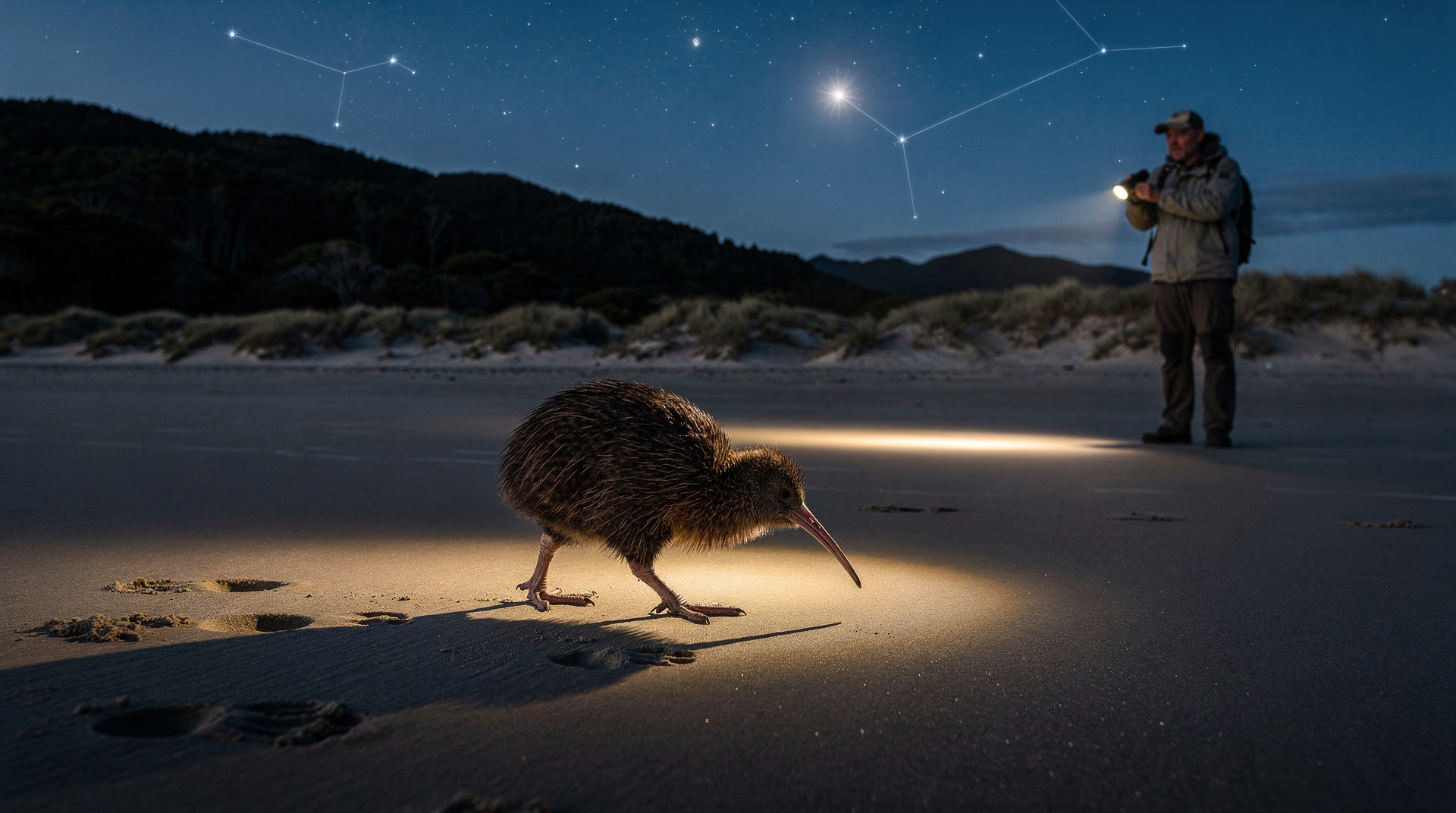
Kiwi spotting on Stewart Island/Rakiura
Stewart Island/Rakiura has New Zealand's highest kiwi density. Guided night tours, costs (NZD/USD/EUR), ferry access, and what to realistically expect.
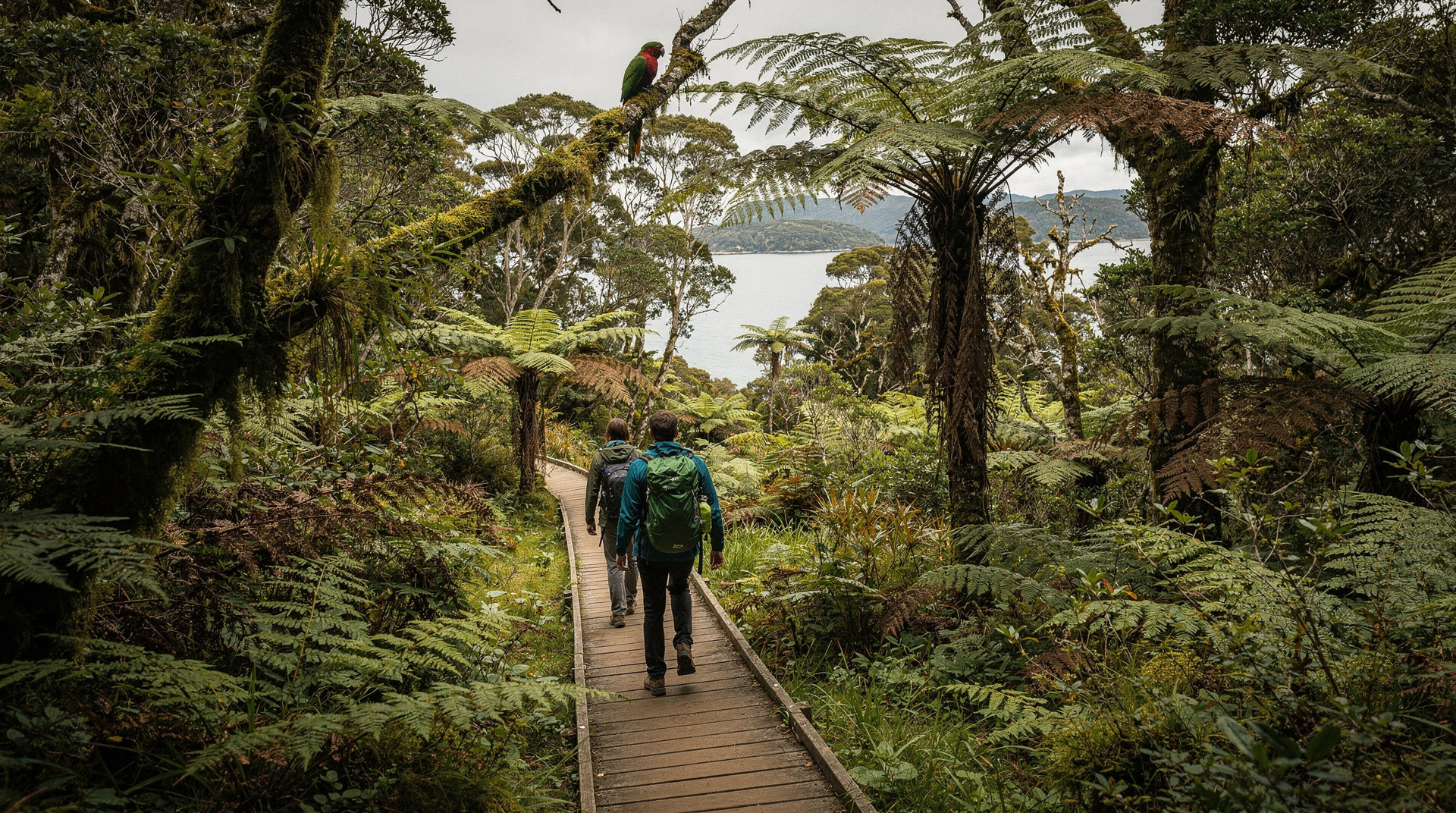
Rakiura Track — Great Walk on Stewart Island/Rakiura
Rakiura Track: 36km circuit, 3 days, open year-round. The kiwi Great Walk — real wild kiwi at night. Ferry from Bluff. Book DOC huts at doc.govt.nz.
Stewart Island kiwi spotting review — seeing wild kiwi on Rakiura
Honest review of wild kiwi spotting on Stewart Island/Rakiura: what an evening guided tour delivers, costs, travel logistics, and realistic expectations.
Related guides
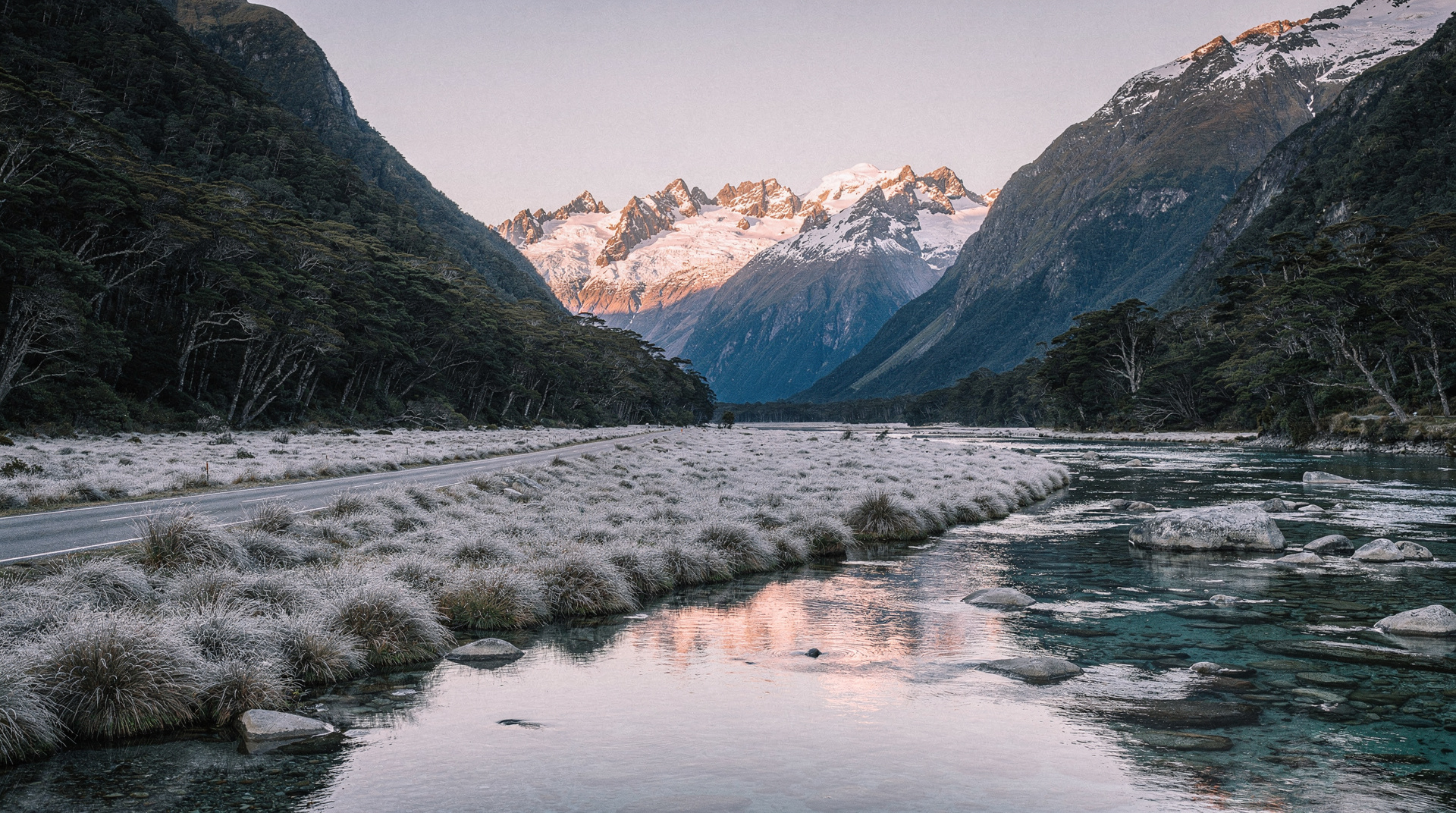
Southland
Honest Southland guide: Invercargill, The Catlins wildlife coast, Bluff oysters, gateway to Stewart Island/Rakiura. NZD/USD/EUR costs and practical logistics.
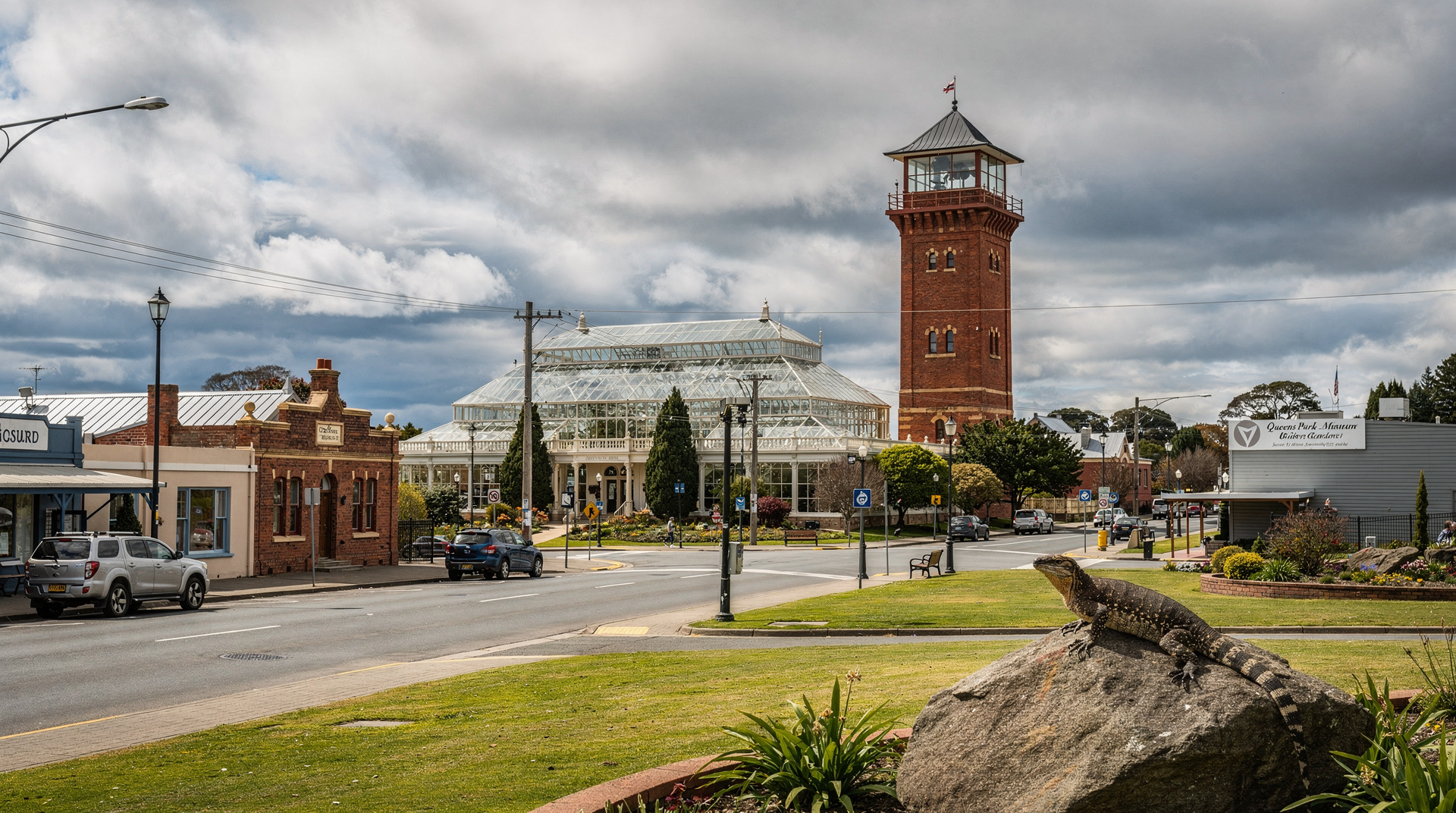
Invercargill
Invercargill: New Zealand's southernmost city, gateway to Stewart Island and the Catlins. Honest half-day guide with real costs NZD/USD/EUR.
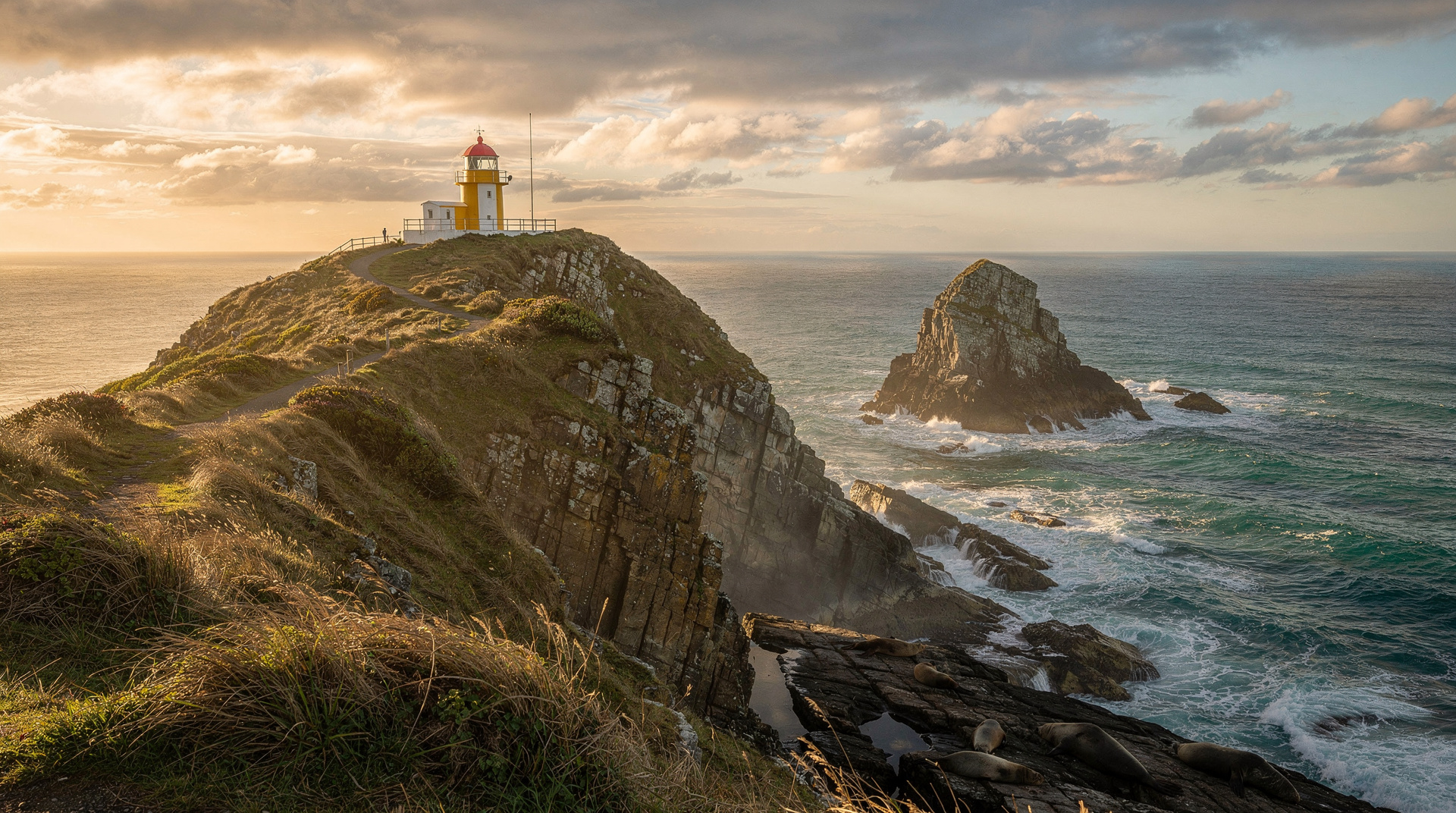
The Catlins
The Catlins: yellow-eyed penguins, Hooker's sea lions, the Curio Bay petrified Jurassic forest, and Nugget Point lighthouse. Honest guide NZD/USD/EUR.
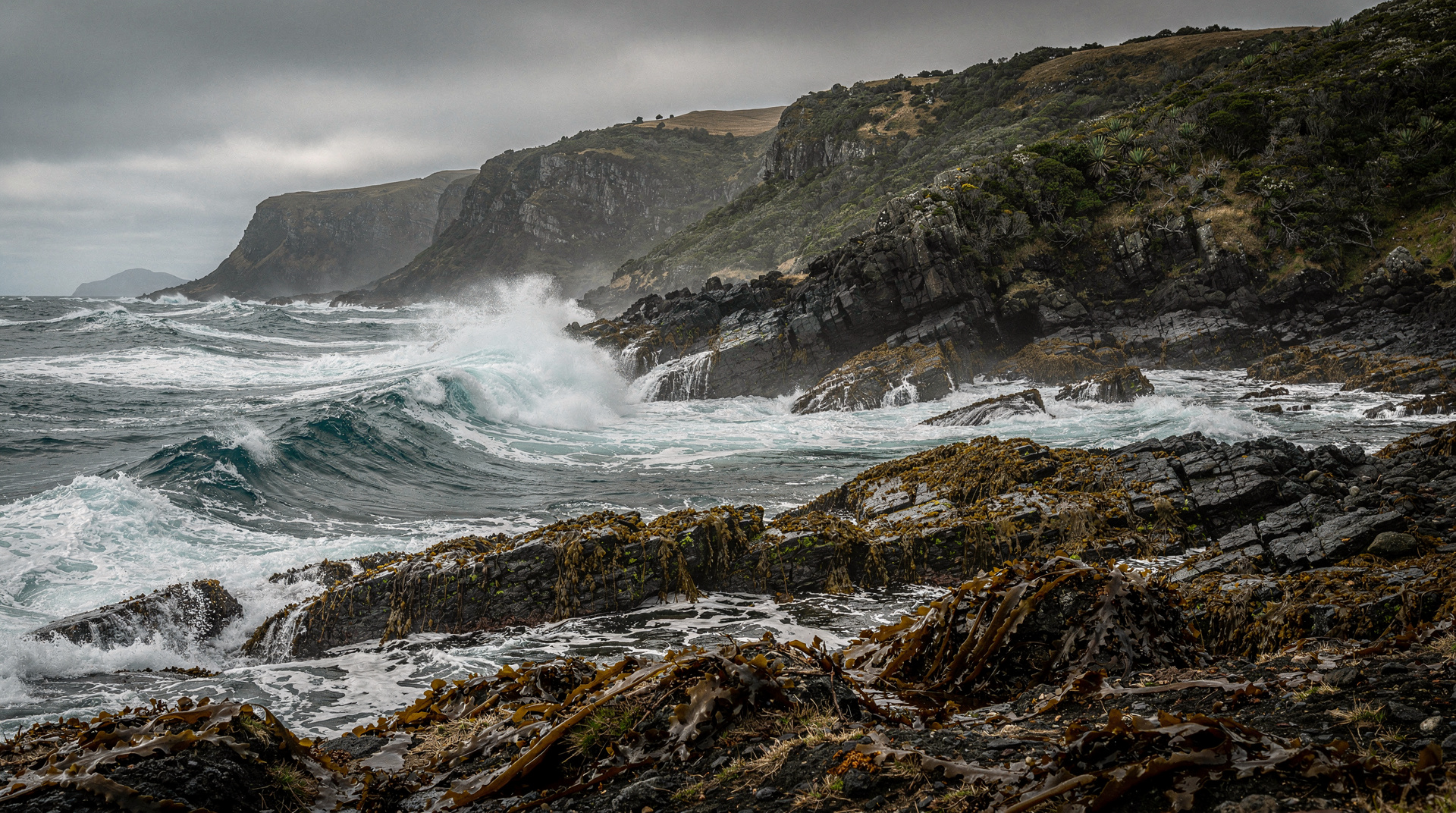
Chatham Islands
Honest guide to New Zealand's remote Chatham Islands: Moriori history, endemic birds, Air Chathams flights, real costs, and who this destination is truly for.
Rakiura Track — Great Walk on Stewart Island/Rakiura
Rakiura Track: 36km circuit, 3 days, open year-round. The kiwi Great Walk — real wild kiwi at night. Ferry from Bluff. Book DOC huts at doc.govt.nz.
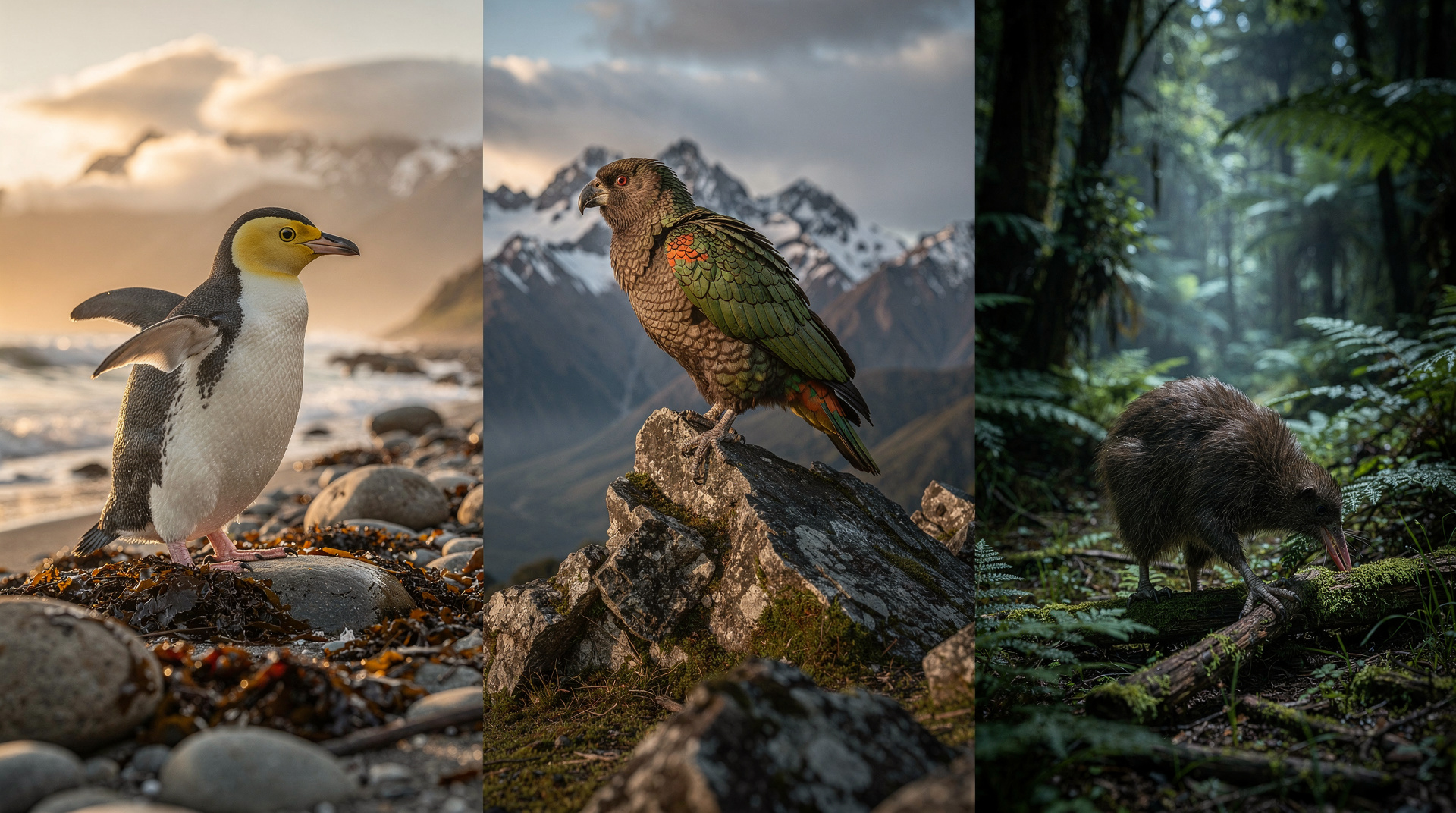
Wildlife in New Zealand — kiwi, penguins, whales, and more
Where to see NZ wildlife honestly: kiwi nights, yellow-eyed penguins, sperm whales at Kaikōura, royal albatross, fur seals. Best locations, real costs.
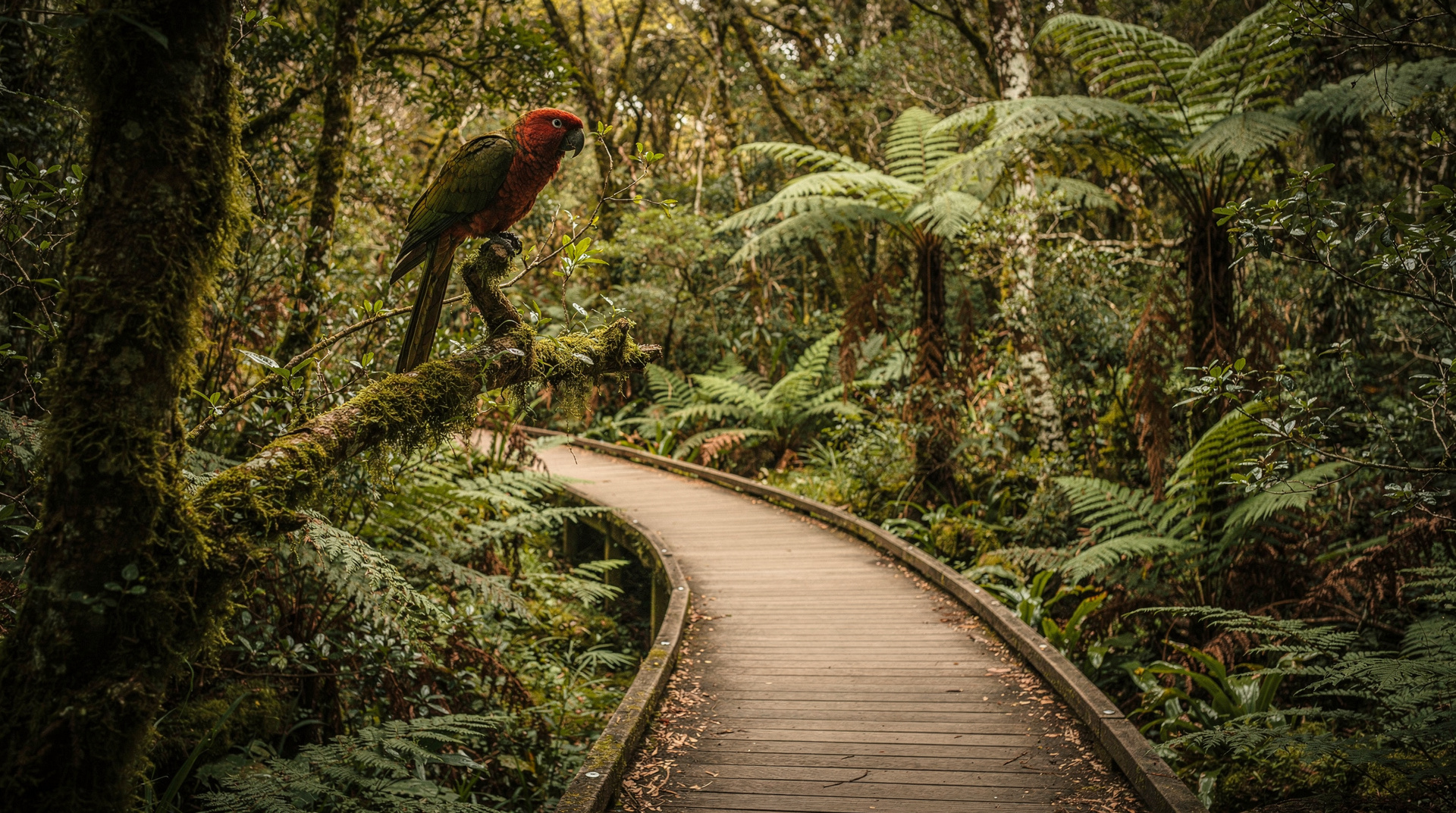
Slow travel on Stewart Island/Rakiura — three days in New Zealand's third island
Stewart Island/Rakiura in winter: no crowds, wild kiwi at dusk, and a ferry crossing that earns its reputation. A case for going further south.
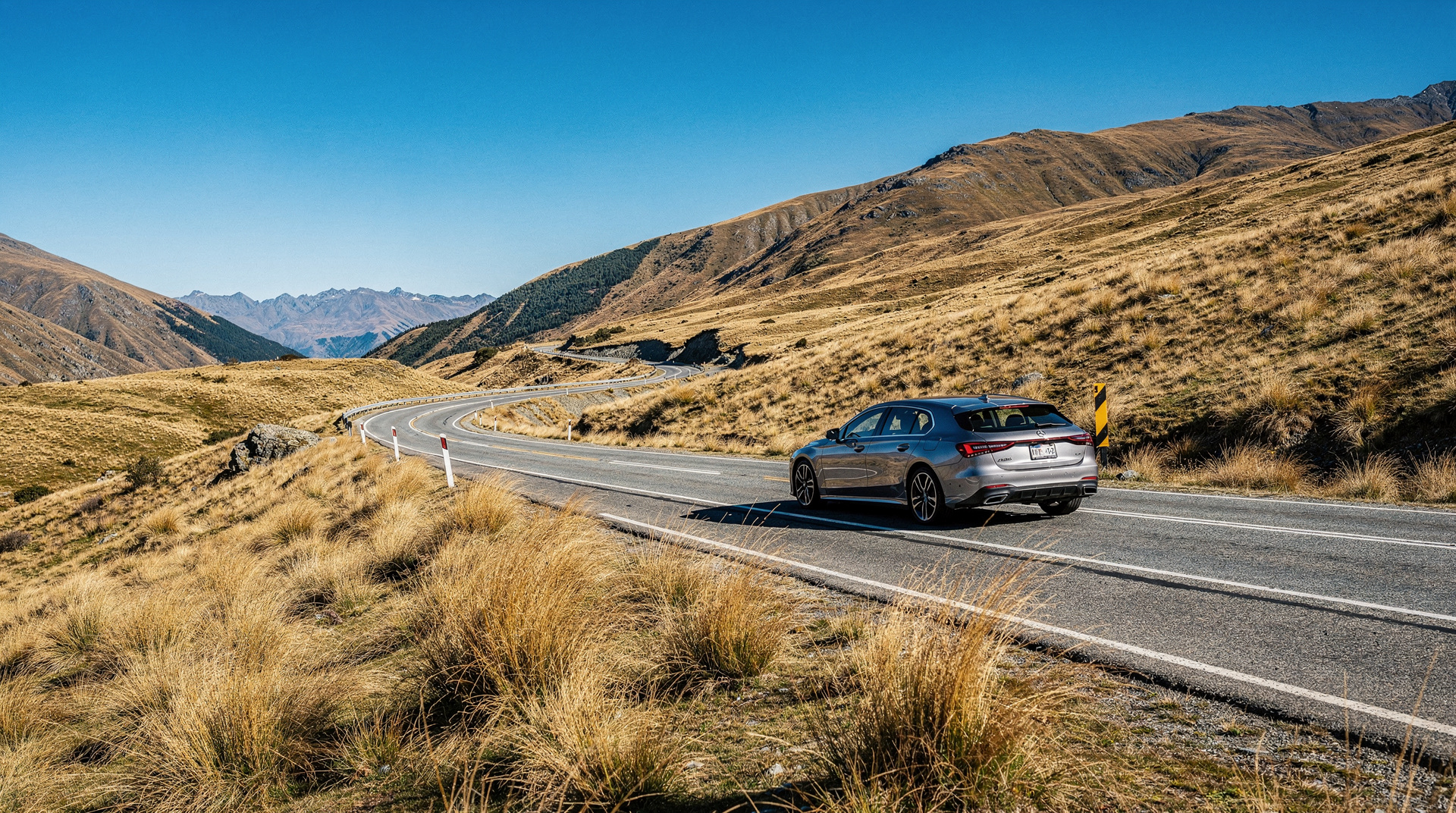
New Zealand self-drive itinerary — 14 days, car and motel
The classic 14-day NZ self-drive road trip by rental car and motels: both islands, ferry crossing, honest road times and costs in NZD, USD, and EUR.
Last reviewed: