
Air New Zealand vs Jetstar domestic — which to book in 2026
Air New Zealand or Jetstar for domestic NZ flights?
Jetstar if the price difference is over NZD 60 and you're travelling carry-on only with a flexible day. Air New Zealand for anything with checked bags, tight connections, premium seating, or when on-time performance matters. Air NZ consistently runs a better product — the question is whether that premium is worth it on your route.
The honest answer
| Dimension | Air New Zealand | Jetstar |
|---|---|---|
| Carry-on allowance | 7 kg included on all fares | 7 kg included on Starter and above |
| Checked bag (23 kg) | NZD 20–35 per bag on most fares; included on Flexi | NZD 40–65 per bag — never included on base fare |
| On-time performance (domestic) | ~82–85% on-time (2025 avg, NZ domestic) | ~72–76% on-time — consistently lower |
| Cancellation rate | Low — Air NZ has its own maintenance, better network resilience | Higher — Jetstar NZ cancelled 3–5x more flights per route in 2024 |
| Frequent flyer programme | Airpoints — earns and redeems on domestic | Qantas Frequent Flyer — minimal domestic NZ earning |
| Lounges | Air NZ lounges at AKL, WLG, CHC, ZQN (Koru Club or eligible fares) | No lounge access |
| Seat selection (free) | Included on Flexi; NZD 8–20 on lower fares | NZD 10–35 extra on all fares |
| In-flight service | Complimentary snacks and drink on most domestic flights | Buy on board only |
| Hub routes operated | AKL, WLG, CHC, ZQN, NSN, DUD, PMR, NPE, HLZ, ROT, IVC, TIU + many regional | AKL, WLG, CHC, ZQN — main trunk routes only |
| Aircraft | ATR 72 (regional), A320/A321, B787-9 (international) | A320 family — Jetstar NZ domestic fleet |
| Change/refund fee (base fare) | NZD 50–100 on lower fares; Flexi fully flexible | NZD 60–120 change fee; base fares non-refundable |
Verdict: Air New Zealand is the better product on every metric except base price. Jetstar is worth it when the price gap is large and your schedule is flexible. On routes like Auckland–Queenstown, the gap is frequently significant. On shorter routes (Auckland–Wellington), the gap often narrows enough that Air NZ makes obvious sense.
This comparison only matters because Jetstar does, occasionally, offer meaningfully cheaper fares. If Jetstar were consistently within NZD 20 of Air New Zealand on the same route, there’d be no decision to make. The reality is more variable than most travelers expect, and the real cost of each option depends heavily on what you’re bringing and how much your time is worth.
I fly domestic New Zealand around 40 times a year. Here’s what I actually think.
The domestic route map — who goes where
Air New Zealand operates the comprehensive New Zealand domestic network. If you’re flying to Nelson (NSN), Napier/Hawke’s Bay (NPE), Dunedin (DUD), Invercargill (IVC), Timaru (TIU), Whanganui (WAG), New Plymouth (NPL), Rotorua (ROT), Gisborne (GIS), Tauranga (TRG), Palmerston North (PMR) — Air New Zealand is your only commercial jet option. There is no competition on regional routes.
Jetstar New Zealand operates on four trunk routes only:
- Auckland (AKL) → Wellington (WLG) and return
- Auckland (AKL) → Christchurch (CHC) and return
- Auckland (AKL) → Queenstown (ZQN) and return
- Wellington (WLG) → Queenstown (ZQN) and return (seasonal)
Everything else is Air New Zealand (or no jet service at all).
So this comparison is only relevant if you’re flying one of those four Jetstar routes. For any other New Zealand domestic flight, book Air New Zealand.
The bag fee problem
This is where most Jetstar comparisons go wrong. The headline fare looks cheaper. The total cost often does not.
Jetstar’s base “Starter” fare includes 7 kg carry-on only. Checked baggage (23 kg) costs NZD 40–65 per bag per flight. If you’re checking a bag on a return trip, you’re adding NZD 80–130 to the Jetstar fare before any other extras.
Air New Zealand’s “Seat” fare includes 7 kg carry-on only. Their “Seat + Bag” fare adds a 23 kg checked bag for NZD 20–35, and the “Flexi” fare includes a checked bag plus full flexibility to change or cancel.
A practical example for an Auckland–Queenstown flight:
- Jetstar Starter fare: NZD 89 base + NZD 55 checked bag = NZD 144 total
- Air NZ Seat + Bag fare: NZD 149 total
On that example, Jetstar costs NZD 5 more than Air New Zealand once luggage is added. The headline fare comparison (NZD 89 vs NZD 129) is misleading.
The comparison shifts when Jetstar runs sale fares — NZD 49 or NZD 59 base fares appear several times a year, particularly on Auckland–Wellington and Auckland–Christchurch. At NZD 49 base + NZD 55 bag = NZD 104, Jetstar is genuinely cheaper than Air NZ for the same checked-bag journey.
The rule of thumb: if the price difference (including bags, seat selection, and any meals you’d buy) is under NZD 50, book Air New Zealand. If it’s over NZD 100, and your schedule is flexible, Jetstar can be worth it.
✓ Worth it Jetstar on sale fares (NZD 49–79 base) with carry-on only — genuine saving. ✕ Skip Jetstar at NZD 109+ base fare with a checked bag — usually not cheaper than Air NZ once the math is done.
On-time performance — the real cost of Jetstar delays
Domestic New Zealand flight delays matter more than they might elsewhere, because New Zealand’s inter-city ground transport alternatives are slow. If your Jetstar Auckland–Queenstown flight is delayed 3 hours, you lose 3 hours of your holiday with no easy fallback. The InterCity bus doesn’t help; the next available flight may be 6+ hours away.
Air New Zealand’s on-time performance on NZ domestic routes averages 82–85% (on-time = within 15 minutes of scheduled departure). This is reasonable for a domestic network of this complexity and weather sensitivity.
Jetstar NZ domestic on-time performance averages 72–76%. That’s not catastrophically bad, but it means roughly 1 in 4 Jetstar domestic flights departs late, compared to roughly 1 in 6 for Air NZ. Over multiple flights in a trip, the cumulative probability of a significant delay is meaningfully higher with Jetstar.
The cancellation story is more stark. Jetstar NZ has a pattern of cancelling flights with shorter notice on low-demand days, consolidating passengers onto later services. Air New Zealand has better network resilience because it operates its own maintenance, has more aircraft on standby, and faces stronger customer protection obligations as the flag carrier.
If you’re flying the day before or day of a ferry connection, a Great Walk start, a cruise departure, or a flight home — do not use Jetstar. The on-time risk is too high.
Airpoints vs Qantas Frequent Flyer
Air New Zealand’s Airpoints programme earns on domestic New Zealand flights. The structure: Airpoints Dollars (redeemable for Air NZ flights) and Status Points (toward KiwiSaver-style elite status). On a domestic NZ flight, you’ll earn small but real Airpoints — across a 10-day trip with 3–4 domestic flights, these accumulate usefully.
Jetstar NZ participates in the Qantas Frequent Flyer programme. This earns Qantas Points on domestic NZ Jetstar flights — at a modest rate for lower fare classes, and only on “Starter Plus” and above fares. For most international visitors who are not already QFF members, the Qantas Points earn on a Jetstar domestic NZ flight is marginal at best. For Australian visitors who are already QFF members, it’s worth factoring in.
Neither programme is a reason on its own to choose one airline over another for a short NZ trip. Airpoints is the more useful earn for New Zealand-focused travelers; QFF makes sense only if you’re already embedded in the Qantas ecosystem.
Lounges — who this actually affects
Air New Zealand operates domestic lounges at Auckland (AKL), Wellington (WLG), Christchurch (CHC), and Queenstown (ZQN). Access is by Koru Club membership (NZD 695/year), eligible fare class (Flexi), or airline status. For most international visitors on a single NZ trip, lounge access is not a relevant factor unless you’re already a Koru member or your booking entitles you.
Jetstar has no lounge anywhere. Full stop.
If lounges matter to you — you’re a frequent business traveler, you’re connecting internationally, you have a long layover — this is a genuine Air NZ advantage. If lounges don’t matter, it’s irrelevant.
Seat comfort and cabin product
Both airlines operate A320-family aircraft on the main trunk routes. The seat experience is comparable in economy: 31-inch pitch, 3-3 configuration, similar legroom for a 1–2 hour flight.
Air New Zealand offers complimentary snacks (small, but something) and a drink on domestic flights. Jetstar is strictly buy-on-board: water NZD 3, snacks NZD 5–8, coffee NZD 4.50. On a 2-hour Auckland–Queenstown flight, this matters modestly — at most NZD 10–15 per person if you want something.
Air New Zealand’s economy seats have a slight edge in build quality and recline consistency. This is barely noticeable on domestic flights but becomes relevant on longer hauls.
When to book Jetstar
- Sale fares: Jetstar runs sale events (sometimes called “Friday Frenzy” or specific promo windows) multiple times a year. If you’re booking months in advance and see NZD 49–79 fares on your route with carry-on only luggage, that’s genuine value.
- Budget backpacker / carry-on only travel: If you’ve genuinely committed to a 7 kg carry-on (a soft duffel, not a hard-shell suitcase), Jetstar’s base fare can save real money.
- Auckland–Wellington specifically: This is Jetstar’s strongest competitive route. Air NZ dominates, Jetstar keeps prices honest. The frequent service means a delay is less catastrophic (next available flight is often 90 minutes away).
- Day-trippers and commuters: If you’re flying to Queenstown for a ski day and returning the same evening on a flexible schedule, Jetstar’s lower price with a simple carry-on works fine.
When to book Air New Zealand
- Checked luggage: Once you add a bag, the price advantage largely evaporates and Air NZ’s reliability and product are worth the difference.
- Tight connections: Air NZ has better network protection and can rebook you onto later flights more easily when disruptions occur.
- Regional routes: Anything outside the four Jetstar trunk routes is Air NZ only.
- Flying the day before something important: Don’t risk a Jetstar delay before a ferry, a hike start, a cruise, or an international connection.
- If you have Koru access: The Air NZ lounge at any of the four airports with access is a material benefit on travel days.
- Children traveling: Air NZ’s check-in and boarding processes are significantly smoother for families with car seats, strollers, and extra luggage. Jetstar’s charging structure for extras makes family travel genuinely more expensive and more stressful.
- Reliability generally: If your holiday has a fixed endpoint (e.g., you fly home in 3 days and need to be in Auckland the day before), build in Air NZ’s better on-time record.
The price comparison in practice (2026 indicative)
| Route | Air NZ range (incl. 23 kg bag) | Jetstar range (incl. 23 kg bag) | Jetstar advantage |
|---|---|---|---|
| Auckland–Queenstown (return) | NZD 280–450 | NZD 230–420 | NZD 0–100 |
| Auckland–Wellington (return) | NZD 180–320 | NZD 140–280 | NZD 0–80 |
| Auckland–Christchurch (return) | NZD 220–380 | NZD 180–350 | NZD 0–70 |
| Wellington–Queenstown (return) | NZD 280–440 | NZD 240–400 (seasonal) | NZD 0–80 |
Note: These are indicative ranges including one 23 kg checked bag each way. Base fares without luggage have a wider gap — Jetstar sale fares can be NZD 150+ cheaper on a return without luggage.
Cost breakdown
| Item | NZD | USD | EUR | Verdict |
|---|---|---|---|---|
| — | — | |||
| — | — | |||
| — | — | |||
| — | — | |||
| — | — | |||
| — | — |
Verdict
✓ Worth it Air New Zealand for most travelers — particularly those with checked luggage, traveling on important days, or on any route not served by Jetstar.
✓ Worth it Jetstar for carry-on-only travelers on the main trunk routes when sale fares are available and the schedule is flexible.
✕ Skip Jetstar at rack rates with checked luggage — this is almost never cheaper once all fees are added, and the reliability difference makes Air NZ clearly the better choice.
The one consistent piece of advice: search both, add your actual bags and extras to each fare, and compare the total. Do not compare headline fares.
Frequently asked questions
Can I check luggage at the Jetstar counter at the same airport as Air NZ?
Yes. Both airlines operate from the same domestic terminals at Auckland, Wellington, Christchurch, and Queenstown. Jetstar uses its own check-in desks and boarding gates. No interline agreements exist — if you miss a Jetstar flight, Air NZ will not rebook you onto its service at no cost.
Does Jetstar fly to Nelson, Dunedin, or Napier?
No. Jetstar NZ operates only Auckland–Wellington, Auckland–Christchurch, Auckland–Queenstown, and (seasonally) Wellington–Queenstown. All other New Zealand domestic routes are Air New Zealand only.
Can I earn Airpoints on Jetstar flights?
No. Jetstar NZ participates in the Qantas Frequent Flyer programme, not Airpoints. You cannot earn or redeem Airpoints on Jetstar flights.
Is Air NZ’s checked bag fee worth paying over Jetstar’s?
Often yes, once you account for the total. Air NZ typically charges NZD 20–35 for a checked bag added to a Seat fare, vs Jetstar’s NZD 40–65. On a return trip, the difference in bag fees can be NZD 40–60 per bag — which often closes most or all of Jetstar’s base fare advantage.
How far in advance should I book to get Jetstar’s best prices?
Jetstar domestic NZ fares typically price lowest 6–10 weeks before departure on popular routes, or during specific sale events. Very last-minute fares are usually higher than Air NZ equivalents. Air NZ’s pricing is dynamic but generally more stable; the best Air NZ domestic fares are typically 4–8 weeks out.
Are Jetstar flights safe?
Yes. Jetstar NZ is a commercial operator subject to Civil Aviation Authority of New Zealand regulation and safety oversight. The aircraft are the same A320 family as operated by Air NZ on these routes. Safety is not a differentiator between the two.
The booking strategy that actually works
Most experienced New Zealand travelers follow the same basic approach: search Google Flights or Skyscanner with both airlines visible, then click through to each airline’s own website to complete the booking. This matters because:
-
Third-party booking sites sometimes display Jetstar fares without fully surfacing the bag fee structure. The fare appears cheap; the extras appear only at checkout. Always add your bags on the airline’s own site to see the true total before committing.
-
Jetstar’s price calendar (available on their site) shows the cheapest available fare for each day of the month. If your travel dates are flexible by 1–2 days, this tool reliably shows when the lowest fares fall — typically midweek, 6–10 weeks out.
-
Air New Zealand’s “grabaseat” platform (grabaseat.co.nz) offers discounted last-minute and promotional fares, usually for travel 2–8 weeks out. These occasionally undercut Jetstar sale fares on the same route. Worth checking before defaulting to Jetstar.
-
For trips with multiple domestic flights — say, Auckland to Queenstown on arrival and Christchurch to Auckland before departure — compare the total multi-leg cost rather than individual legs. Air NZ sometimes offers better total-trip pricing when booking multiple segments together.
The one rule that holds consistently: Do the bag math before deciding. Take the Jetstar headline fare, add NZD 55 (one-way checked bag) and NZD 10 (seat selection if you want a specific seat), then compare to Air NZ’s Seat + Bag fare for the same flight. In 2026, the result is frequently closer than the headline comparison suggests.
What international travelers often miss
Domestic check-in cut-offs: Air New Zealand closes domestic check-in 20 minutes before departure. Jetstar closes domestic check-in 30 minutes before departure. Both are firm. If you’re connecting from an international flight, build substantial buffer — 2+ hours is not excessive at Auckland International given the terminal walk between international and domestic.
The domestic terminal at Auckland (AKL): New Zealand’s busiest airport has an international terminal and a domestic terminal connected by a walkway (10–15 minutes on foot, or a free inter-terminal bus). If you’re flying internationally into Auckland and then connecting to a domestic flight, you clear customs, collect bags, and walk or bus to the domestic terminal. Both Air NZ and Jetstar operate from the domestic terminal for their NZ domestic routes.
Christchurch domestic connections: CHC domestic is compact and straightforward. Connections of 60 minutes or more are usually comfortable. Queenstown (ZQN) has one terminal serving both domestic and some international flights — clear signage, short distances, no complexity.
Wellington (WLG) in strong wind: Wellington is routinely described as the world’s windiest city, and its airport sits on a narrow strip between Cook Strait and a hillside. Crosswind landings at WLG are among the more dramatic in the country. Both airlines operate there daily regardless of conditions. Delays in strong southerlies are possible; Air NZ’s larger network gives it slightly more flexibility to absorb Wellington disruptions than Jetstar.
Queenstown weather-related delays: ZQN sits in a mountain basin and is susceptible to low cloud, fog, and strong winds, particularly in winter. Both airlines are equally affected by QTown weather — the difference is that Air NZ has more resources to rebook affected passengers and more flights per day to absorb disruptions. In winter (June–August), build a buffer day before any critical onward travel from Queenstown.
Related transport and planning guides
Related guides

Driving in New Zealand
Honest driving guide for NZ: left-side rules, gravel road etiquette, why GPS lies, fuel costs, one-lane bridges, and what rental companies don't tell you.
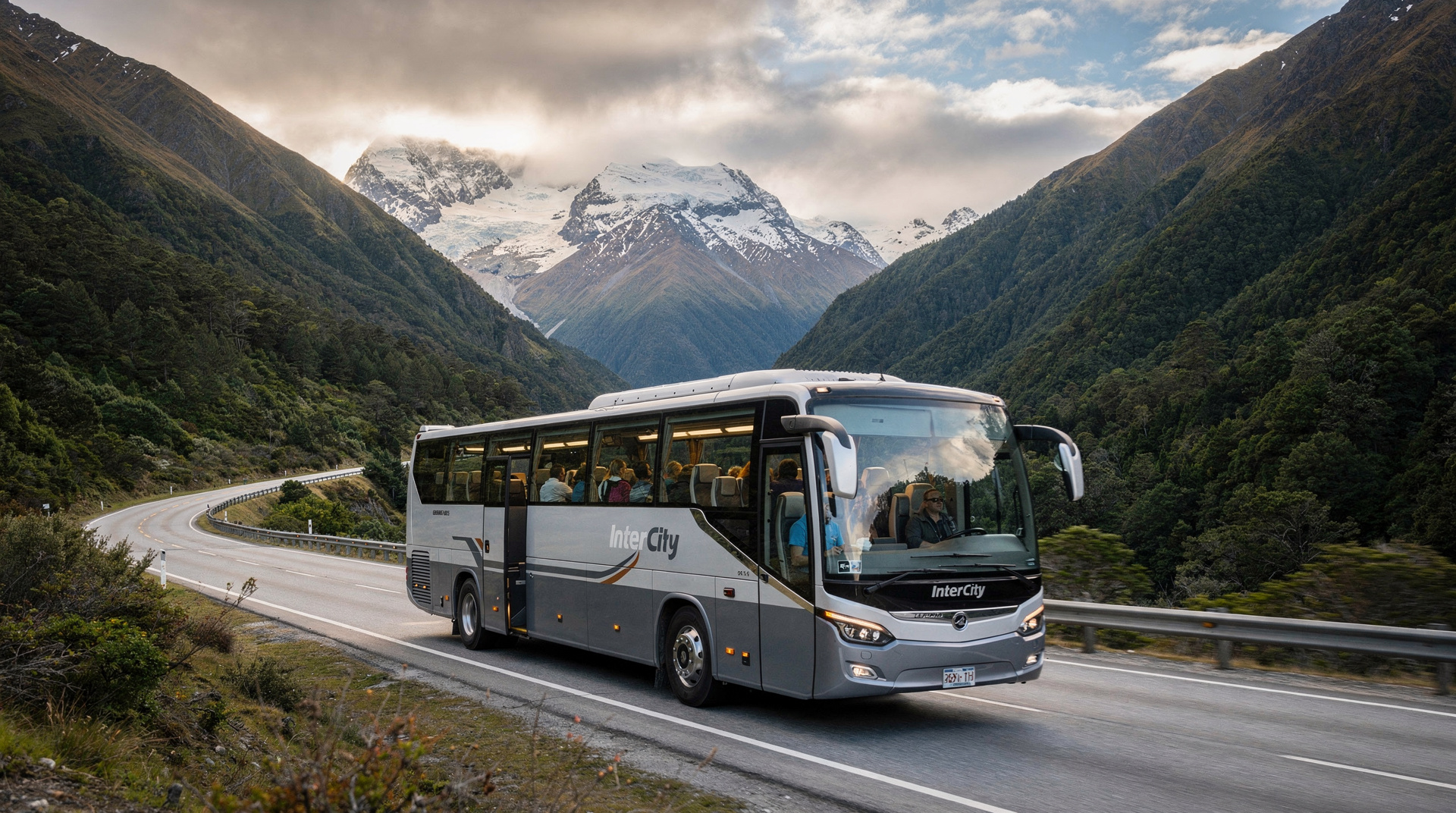
InterCity bus guide
Complete InterCity bus guide for NZ: main routes, FlexiPass vs point-to-point, actual journey times, and when the bus is smarter than renting a car.
Self-drive vs guided tour New Zealand — honest comparison
Self-drive vs guided coach tour in NZ — costs, demographics, where each works and where each frustrates. Honest verdict by traveler type.

First time in New Zealand
Complete first-timer's guide to NZ: costs, logistics, Maori culture, what to book early, and how to structure 7–21 days.
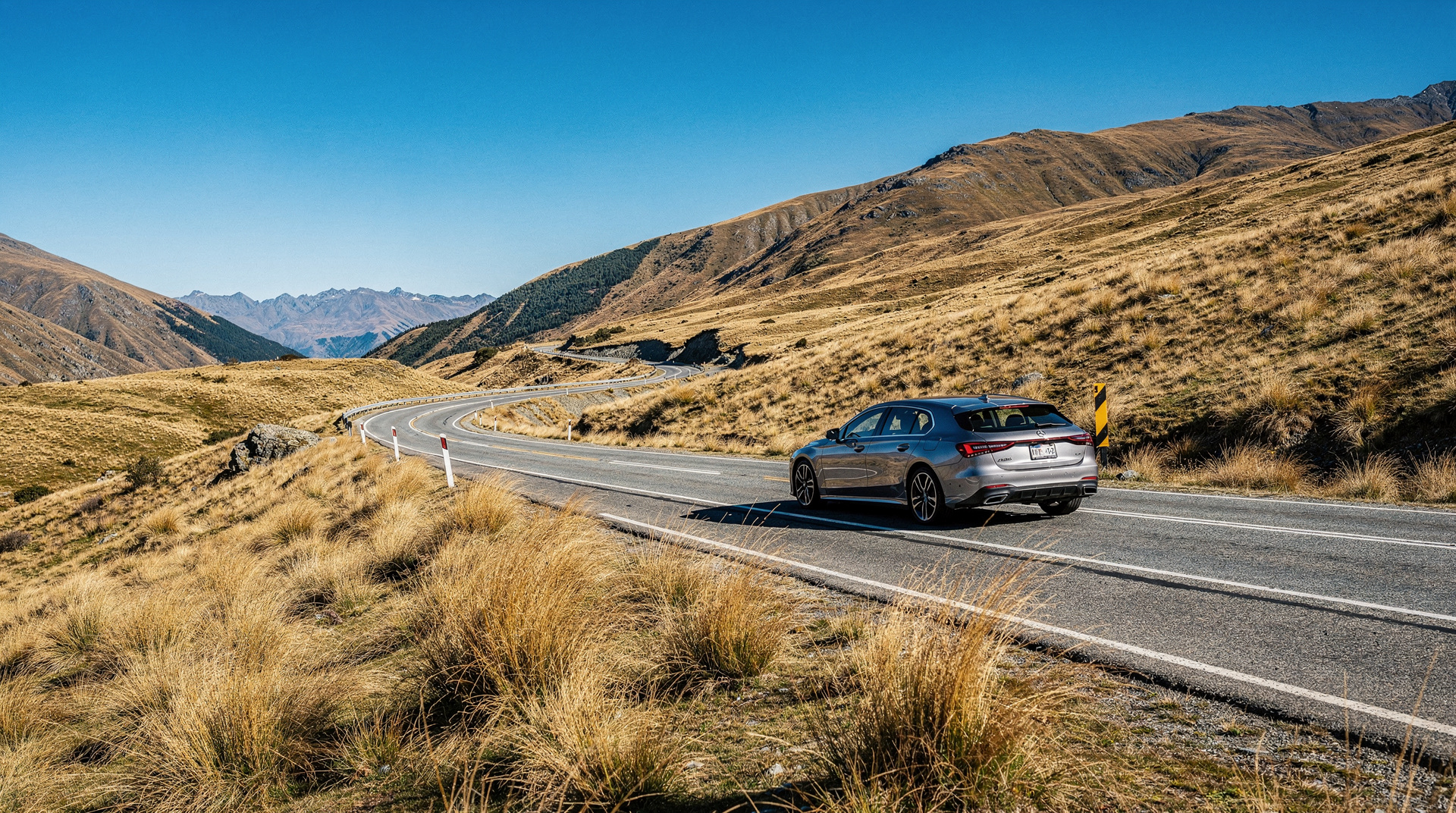
New Zealand self-drive itinerary — 14 days, car and motel
The classic 14-day NZ self-drive road trip by rental car and motels: both islands, ferry crossing, honest road times and costs in NZD, USD, and EUR.

North vs South Island for families
North Island vs South Island for families: which is easier with kids, best activities by age, costs and a clear verdict. NZD/USD/EUR prices throughout.
Last reviewed: