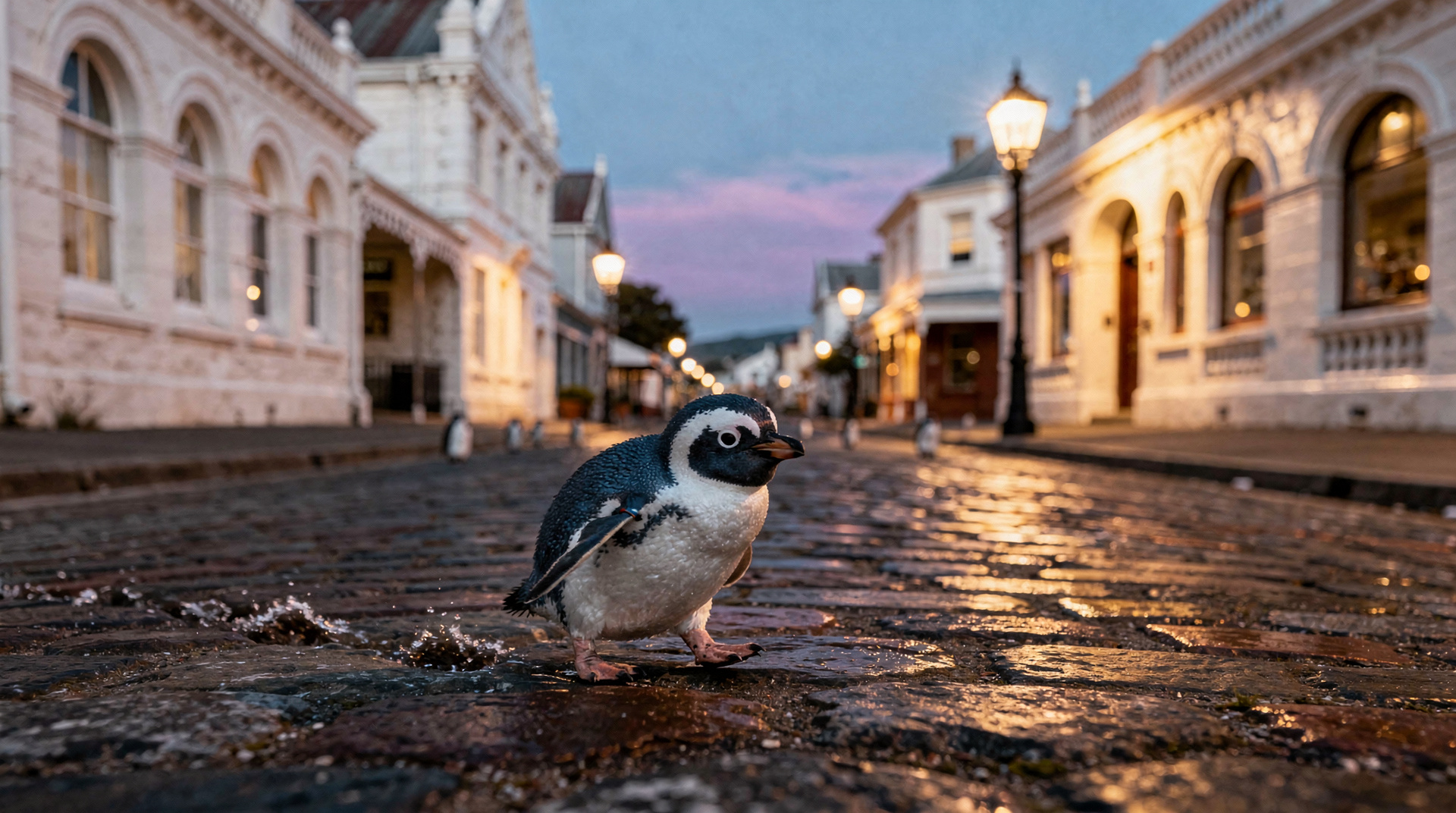
Blue penguins in Oamaru
Where can I see blue penguins in Oamaru?
The Oamaru Blue Penguin Colony in the Victorian precinct runs nightly viewing from dusk (around 5–8pm depending on season). Adult entry costs NZD 35–45 / USD 21–27 / EUR 19–25. Little blue penguins (kororā) are the world's smallest penguin species, averaging just 33 cm tall.
The world’s smallest penguin — in a Victorian harbour
Little blue penguins (Eudyptula minor), called kororā in te reo Maori, are the world’s smallest penguin species. Adults stand just 33 cm tall and weigh 1–1.5 kg — roughly the size of a well-fed pigeon. Their blue-grey dorsal feathers give them the most distinctive colouring in the penguin family, and their nesting behaviour in old stone harbours, railway sidings, and coastal scrub makes them the penguin most likely to appear in unexpected places throughout New Zealand.
Oamaru’s Victorian harbour has a resident colony of around 200 breeding pairs nesting in the old stone wharf buildings. The Oamaru Blue Penguin Colony has formalised viewing of the nightly penguin return, with tiered seating facing the beach where birds come ashore after a day of fishing in the Pacific. Every evening from dusk, groups of penguins — sometimes pairs, sometimes larger “rafts” that gather in the water before coming ashore together — emerge from the sea and waddle past the seated audience to their nesting boxes under the wharf buildings.
| Where | Oamaru Victorian harbour, 115 km S of Christchurch |
| Cost | around NZD 35-65 per adult |
| Time needed | 1-1.5 hours at dusk |
| Getting there | Self-drive SH1 or InterCity bus |
| Best time | Year-round, chick season Nov-Jan busiest |
The nightly viewing experience
The penguin parade runs every evening of the year, weather permitting. Gates open approximately 1 hour before the first arrivals; the main event runs for about an hour as multiple groups land and make their way past the viewing area.
Price: NZD 35–45 / USD 21–27 / EUR 19–25 (standard seating). Premium seating (closer, covered): NZD 55–65 / USD 33–39 / EUR 30–36. Children 5–15: approximately half the adult price.
Start time: Varies with the season — around 5:30 pm in winter, 7:30–8:30 pm in summer. Check the colony’s website for exact daily times before visiting.
What you see: penguins exiting the surf, pausing on the beach, regrouping with partners or juveniles, then walking a short distance to the nesting area. The proximity (2–5 metres for standard seating) is close enough to see individual bird markings, hear calls, and observe pair bonding behaviour. Flash photography is prohibited; the colony has dedicated red-light night viewing lamps that allow adequate visibility without disturbing the birds.
Season considerations: The colony is most active during breeding season (August–February). Chick rearing peaks November–January; by March–April chicks begin to fledge. The moult period (April–May) sees adults temporarily land-bound and less visible in the water approach. Winter viewing (June–July) is quieter but still reliable — adults forage year-round.
Self-guided viewing at Bushy Beach
Approximately 2 km from the penguin colony, Bushy Beach is a DOC public reserve where yellow-eyed penguins (hoiho) and little blue penguins both land at dusk. A public hide is positioned above the beach; viewing is free, self-timed, and requires patience.
The distinction from the colony experience: at Bushy Beach you’re watching from 30–80 metres and the birds are completely wild with no infrastructure to assist positioning. The colony experience puts you much closer, with predictable timing and lighting. Both are valuable; the beach is worth a visit even if you’ve done the colony, particularly if you want to see yellow-eyed penguins in combination.
Where else to see kororā in New Zealand
Little blue penguins are found throughout coastal New Zealand — they’re the most numerous and widely distributed of New Zealand’s native penguins. Key viewing sites beyond Oamaru:
Pohatu, Akaroa (Banks Peninsula): The largest mainland little penguin colony, with approximately 2,000 breeding pairs. Guided evening tours are strictly limited by numbers — an intimate experience but requires advance booking.
Otago Peninsula: Small numbers nest around Taiaroa Head, visible at dusk without a tour from the public carpark.
Stewart Island/Rakiura: Little penguins are common around the Halfmoon Bay waterfront at night.
Wellington harbour: Significant colony on Matiu/Somes Island (accessible by ferry). Wētā Workshop tours sometimes incorporate a Somes Island extension.
Northland coasts: Small populations along several north-facing bays; less formal viewing infrastructure.
Oamaru’s Victorian precinct
The penguin colony sits within Oamaru’s Victorian precinct, which is itself worth exploring. The town is built largely from locally quarried Oamaru stone — a white limestone that takes detail beautifully and gives the buildings a quality unusual in New Zealand’s typically wooden 19th-century architecture. The main streets (Thames Street, Tyne Street) have largely preserved their original facades, including several intact old storefronts now occupied by secondhand bookshops, antique dealers, and the occasional eccentric gallery.
Oamaru has also developed a deliberately cultivated steampunk scene — the Steampunk HQ on Itchen Street is the centrepiece, a free-to-enter-exterior installation that has spread to adjacent buildings and street furniture throughout the precinct. It’s kitsch but genuinely creative in a way that feels authentic to the town’s character.
Craft brewery: Scotts Brewing Company, based in the Victorian precinct, brews good ales in the original Scott’s Flour Mill building. Open daily for tastings.
Moeraki Boulders: easy addition from Oamaru
The Moeraki Boulders — spherical grey sandstone concretions that litter a beach 35 km north of Oamaru — are a 30-minute detour on SH1. The boulders form over millions of years through mineral accretion around a nucleus; the geological explanation is genuinely interesting. Local Maori tradition describes them as food baskets (eel baskets) washed from the great canoe Arai-te-uru when it wrecked on the coast.
The beach is accessible from a small car park; entry to the beach is free. Sunrise is the photographic sweet spot — the boulders in low light with a wet beach reflecting the sky is genuinely striking. The café at the car park serves good pies.
Conservation and why the colony matters
Little blue penguins are not endangered globally, but mainland populations face real pressure from introduced predators — stoats, cats, dogs, and ferrets take a heavy toll on eggs and chicks in unprotected colonies. The Oamaru colony exists partly because of predator control and a protected harbour structure that keeps most threats out, which is a large part of why its numbers have held steady while some unprotected mainland colonies have declined.
Entry fees at the formal viewing area go toward this predator control and habitat maintenance — a genuine conservation dividend rather than a pure tourism levy. If wildlife conservation as a whole interests you beyond penguins, the Royal albatross colony at Taiaroa Head on the Otago Peninsula runs a similarly protected model for a very different, much larger seabird.
Combining with the wider Otago wildlife coast
Oamaru sits at the northern end of a wildlife-rich stretch of Otago coastline that continues south through the Otago Peninsula to Dunedin and on to the Catlins. Travellers with 3-4 days can build a genuine wildlife circuit: Oamaru for little blue penguins, the Otago Peninsula for yellow-eyed penguins, fur seals, and the albatross colony, then the Catlins for a quieter, more remote finish with its own penguin and sea lion sightings. Trying to compress all three into a single day from Christchurch or Dunedin isn’t realistic — each stop rewards an unhurried dusk visit, and penguins don’t come ashore on a tourist’s schedule.
Getting to Oamaru
Oamaru sits on SH1, 115 km south of Christchurch and 120 km north of Dunedin. Drive times: 1.5 hours from Christchurch (allow 2 hours), 1.5 hours from Dunedin (allow 2 hours). Both are easy self-drives with no challenging terrain.
InterCity buses run daily on the Christchurch–Dunedin route and stop at Oamaru. Journey time from Christchurch: approximately 2.5 hours.
Oamaru is a viable stopover between Christchurch and Dunedin — allocate an afternoon for the Victorian precinct and stay for the penguin viewing at dusk, then continue south or north the next morning.
Costs summary (NZD / USD / EUR)
| Activity | NZD | USD | EUR |
|---|---|---|---|
| Blue Penguin Colony (standard seating, adult) | 35–45 | 21–27 | 19–25 |
| Blue Penguin Colony (premium seating, adult) | 55–65 | 33–39 | 30–36 |
| Children (5–15) | 18–25 | 11–15 | 10–14 |
| Bushy Beach (self-guided) | 0 | 0 | 0 |
| Moeraki Boulders beach access | 0 | 0 | 0 |
Exchange rate: 1 NZD ≈ 0.60 USD ≈ 0.55 EUR.
Frequently asked questions
Can children see the penguins?
Yes — it’s one of the better family wildlife experiences in New Zealand. Children 5 and over are admitted. The viewing is static (seated stands), appropriate for short attention spans, and the appearance of the penguins is engaging enough to hold young children’s interest for the full hour. Under-5s are free.
Do the penguins come at the same time every night?
The first arrivals come within a predictable window (the colony publishes daily expected times), but the main parade timing shifts seasonally. Some evenings have heavy traffic; others are quieter. The experience varies — occasionally hundreds come ashore in close succession; occasionally it’s more gradual. The colony recommends arriving 30 minutes before the published first-arrival time.
What’s the difference between blue penguins and yellow-eyed penguins?
Little blue penguins (kororā) are smaller (33 cm), more numerous (approximately 1 million in NZ), and colonial nesters — they nest in groups and often move in coordinated groups from sea. Yellow-eyed penguins (hoiho) are larger (60–70 cm), critically endangered (4,000–5,000 globally), and nest in isolation — each pair must be out of sight of its neighbours. The Oamaru area is one of the few places where both species can be seen on the same day.
Is there food available?
The colony has a small café on site. The Victorian precinct has several good restaurants and cafés within walking distance. The Scotts Brewing Company is the local highlight for drinks.
Should I do Oamaru or the Otago Peninsula if I only have time for one?
If little blue penguins specifically are the goal, Oamaru’s formal viewing is the more reliable, closer-range experience. If you want the fuller Otago wildlife set — yellow-eyed penguins, fur seals, and the albatross colony — the Otago Peninsula is the richer single stop. Many South Island itineraries manage both since Oamaru sits directly on the Christchurch-Dunedin route.
Related reading
Related guides
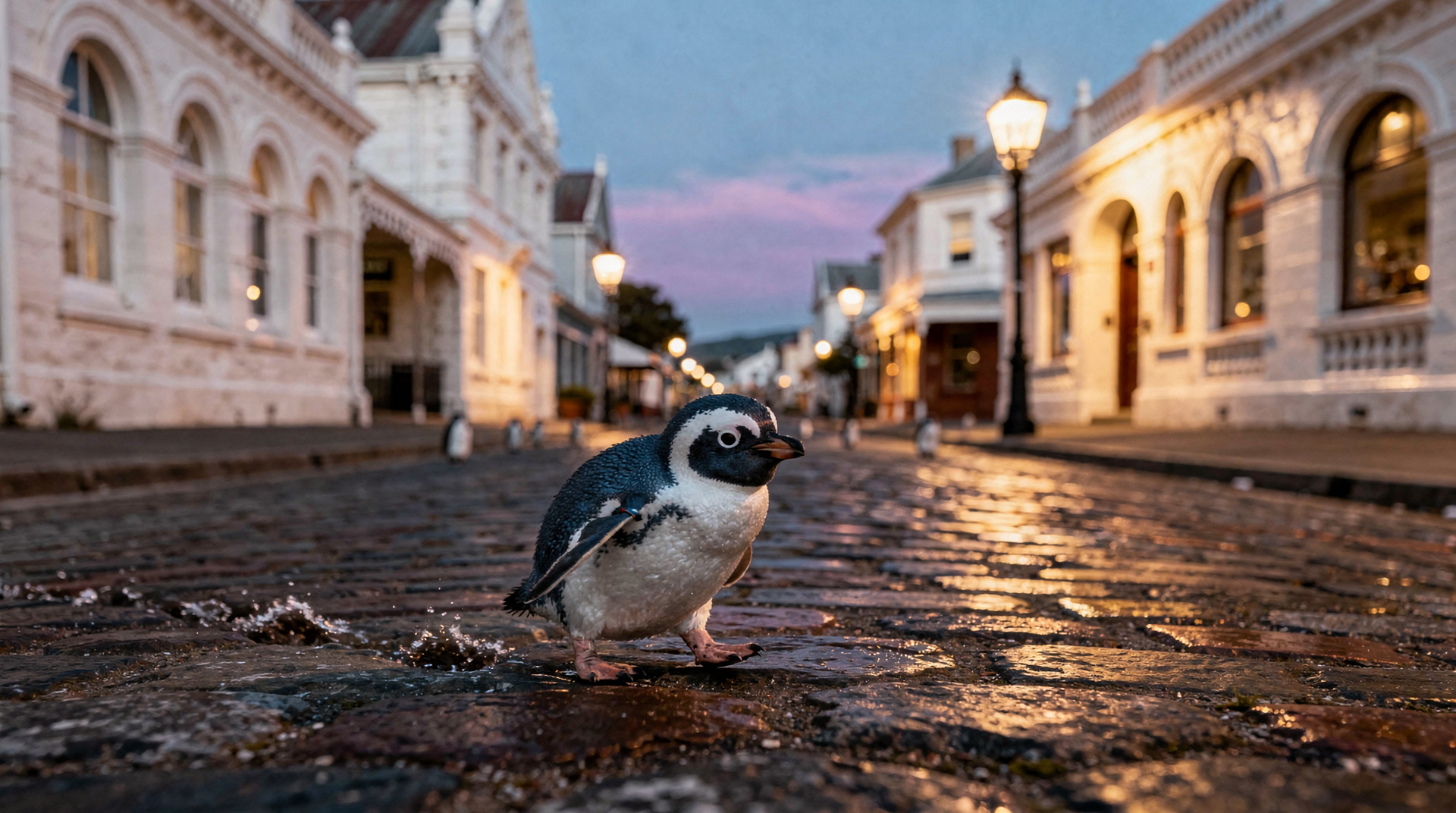
Oamaru
Oamaru: the world's most accessible little blue penguin colony, a Steampunk capital, and Victorian limestone architecture. Honest guide with NZD/USD/EUR costs.
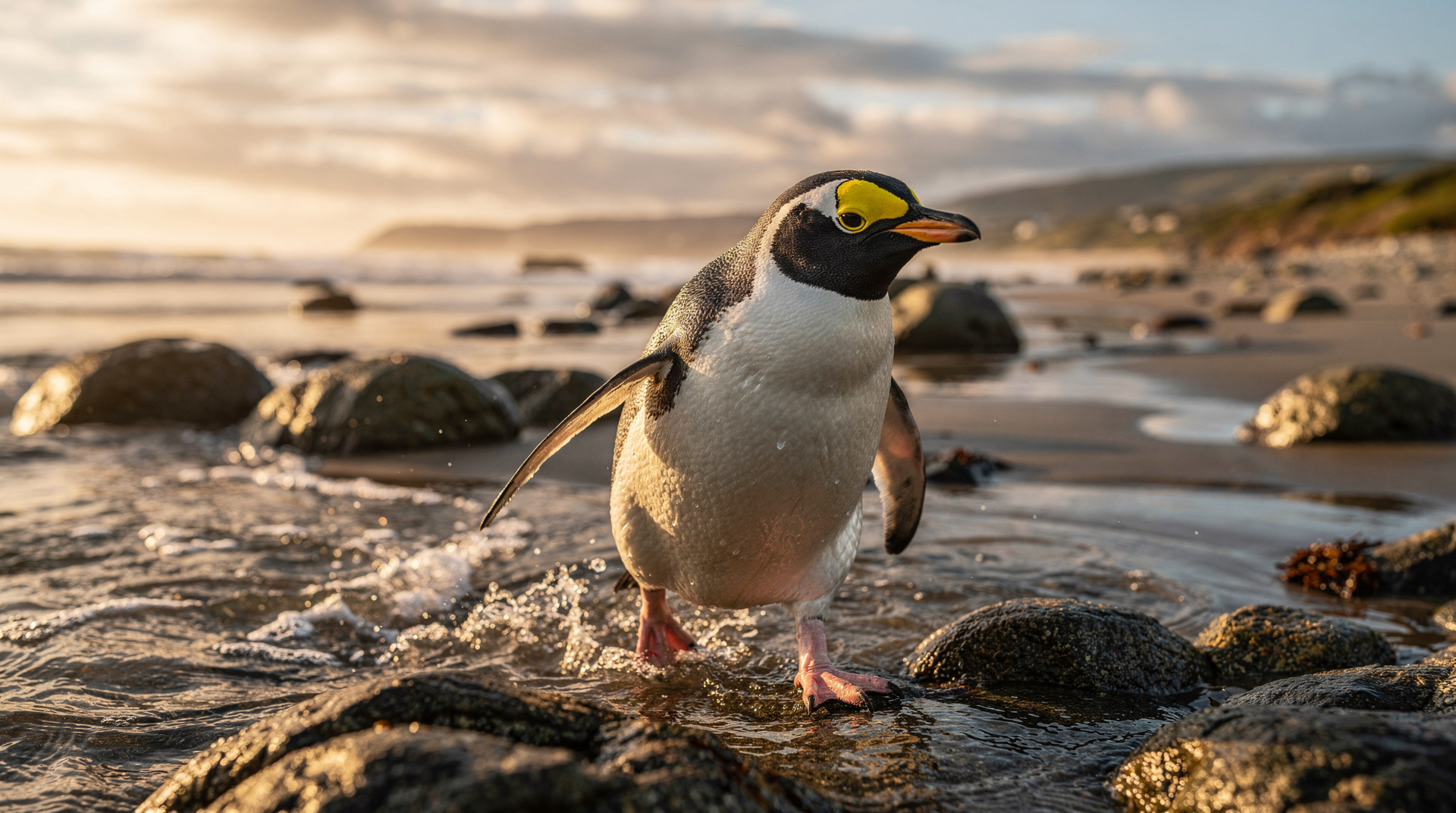
Yellow-eyed penguins on the Otago Peninsula
Hoiho (yellow-eyed penguin) are the world's rarest penguin. Where to see them wild on Otago Peninsula, ethical viewing hides, prices, and best timing.
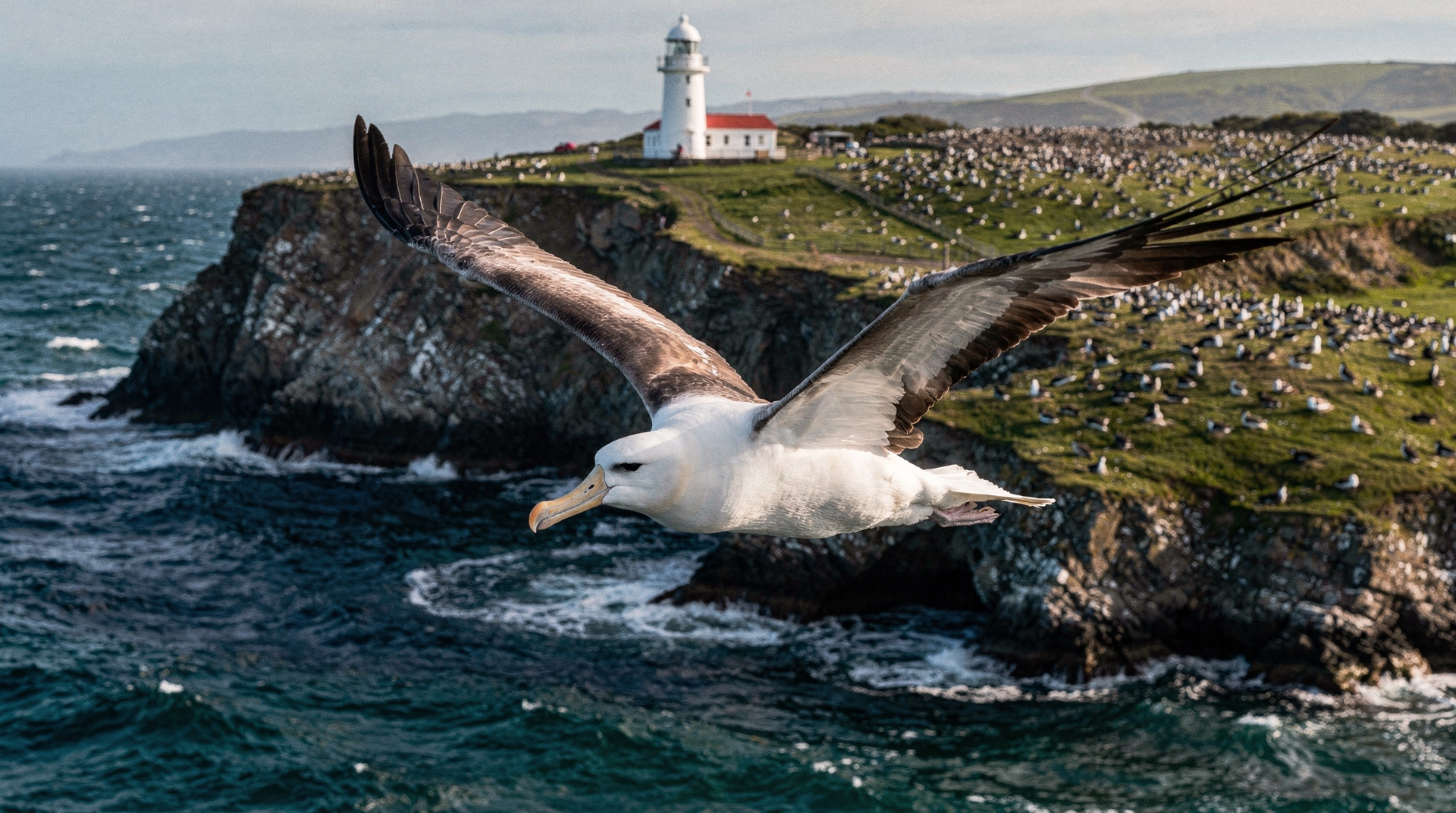
Royal albatross colony at Taiaroa Head
Taiaroa Head on Otago Peninsula hosts the world's only mainland royal albatross colony. Tours, prices (NZD/USD/EUR), best months, and what to expect.
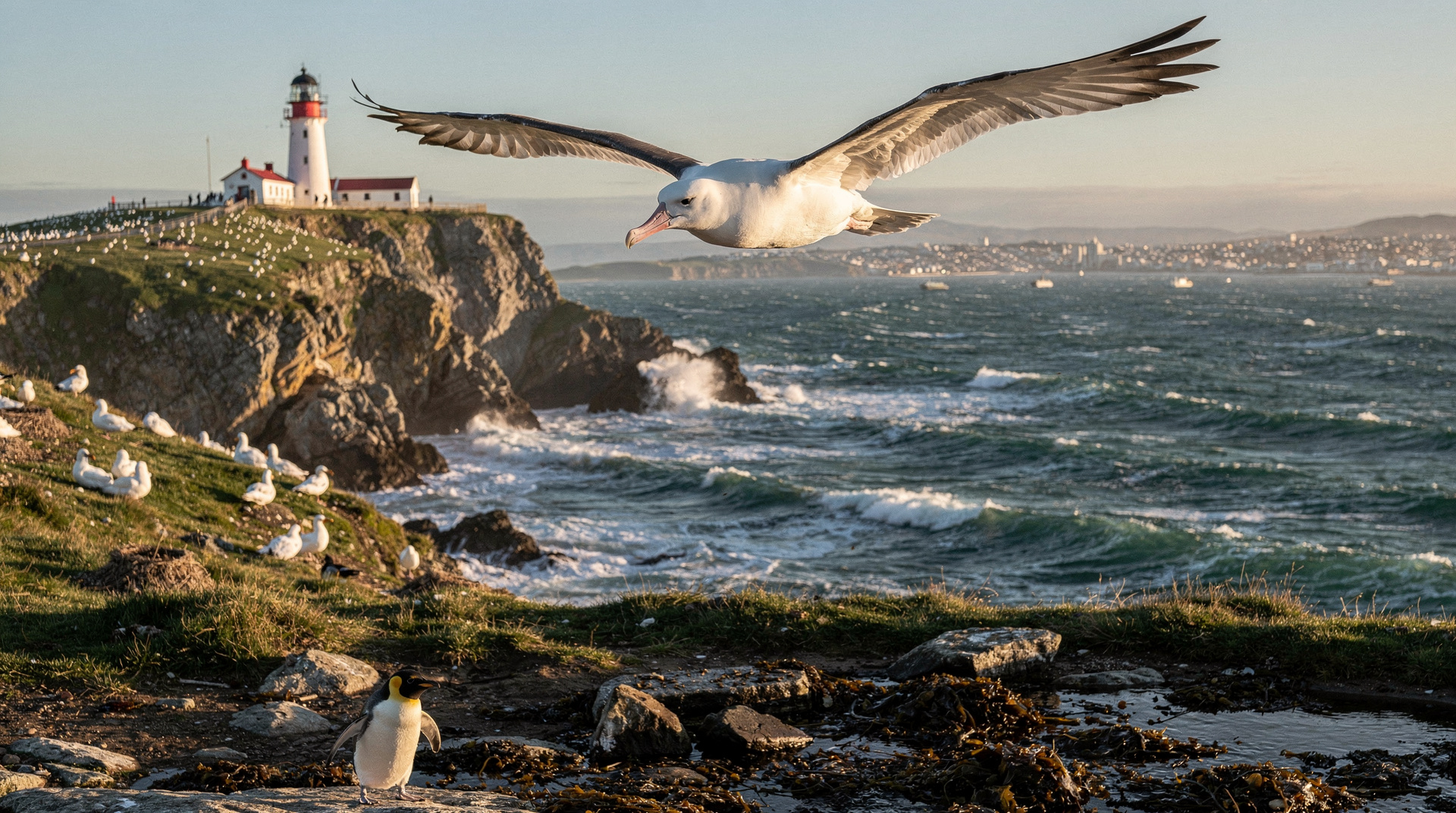
Otago Peninsula
Honest Otago Peninsula guide: albatross colony, yellow-eyed penguins, Larnach Castle — real NZD/USD/EUR prices and the best wildlife timing advice.
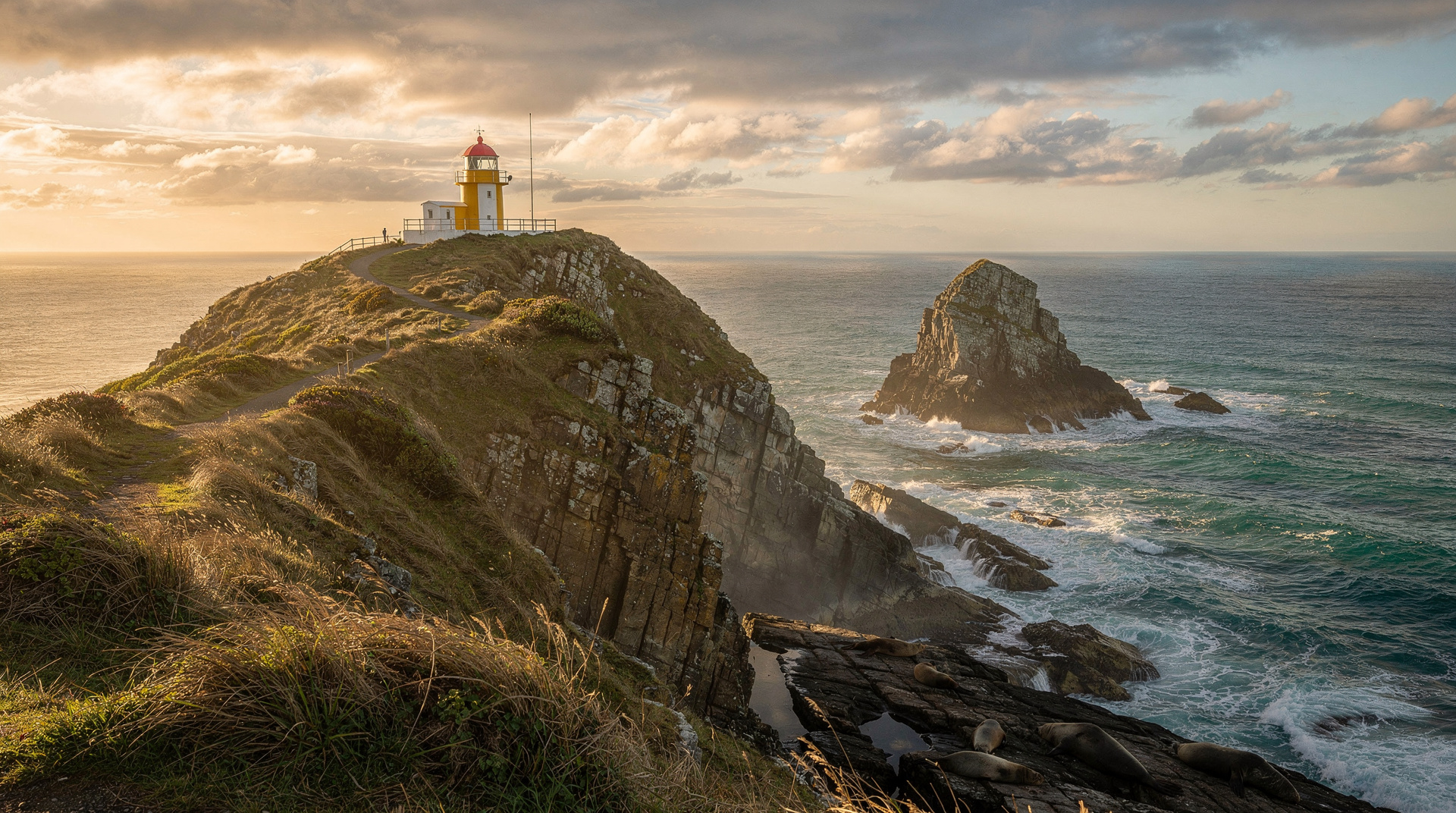
The Catlins
The Catlins: yellow-eyed penguins, Hooker's sea lions, the Curio Bay petrified Jurassic forest, and Nugget Point lighthouse. Honest guide NZD/USD/EUR.
Last reviewed: