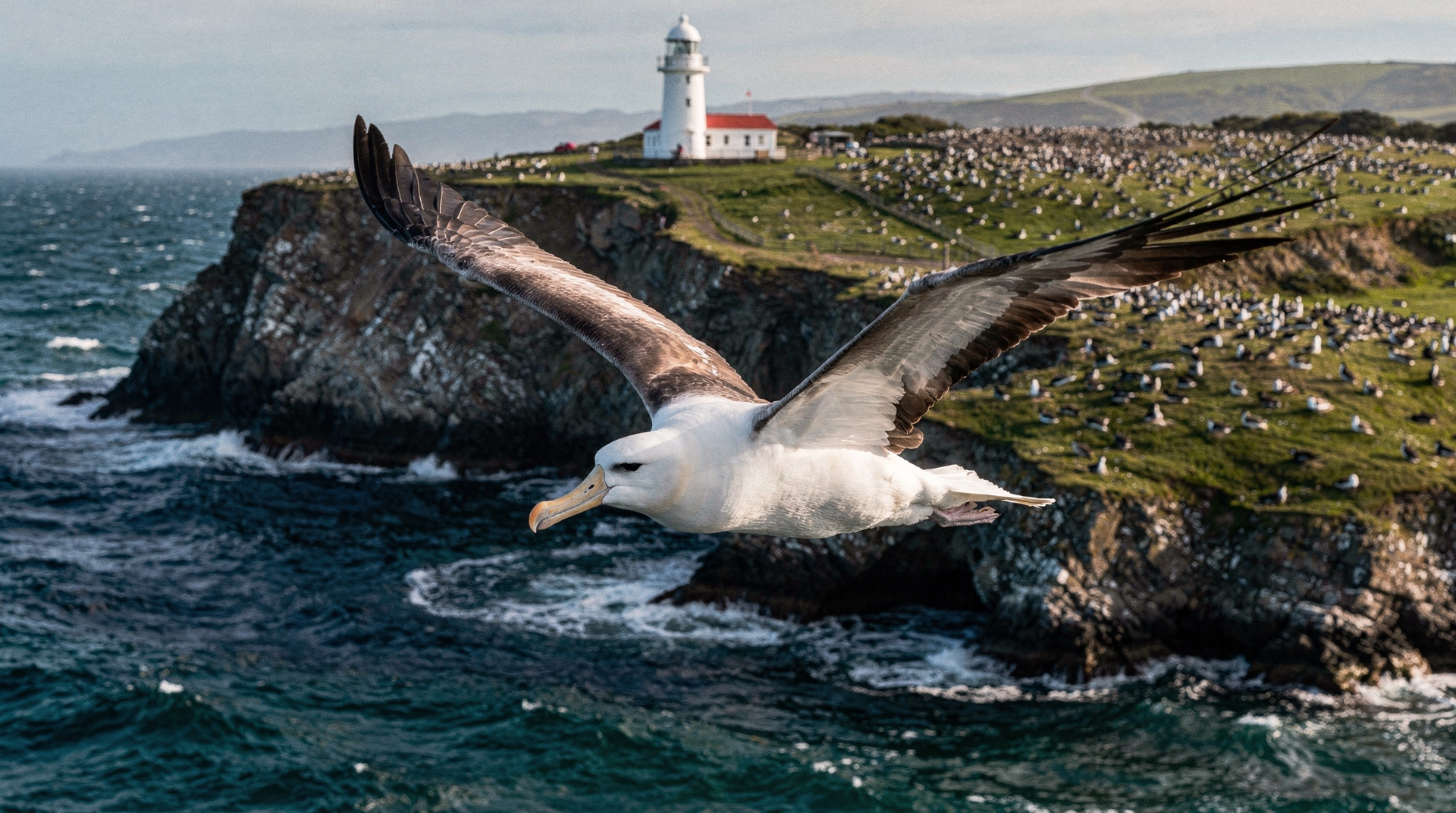
Royal albatross colony at Taiaroa Head
Can you see albatrosses at Taiaroa Head?
Yes — Taiaroa Head is the world's only mainland royal albatross breeding colony. Tours run year-round from the Royal Albatross Centre; adults cost NZD 59 / USD 35 / EUR 32. Chicks and fledglings are visible from October to September; adults present year-round.
The world’s only mainland royal albatross colony
Every other northern royal albatross colony in the world is on a remote offshore island. Taiaroa Head, at the tip of the Otago Peninsula 35 km from Dunedin, is the sole exception — the only place on earth where royal albatrosses breed on an accessible mainland peninsula. This is not a matter of degree. It is a genuine ornithological singularity, and it is reachable by road.
Northern royal albatrosses (Diomedea sanfordi) have a wingspan of up to 3.3 metres — among the largest of any living bird. They are long-lived (up to 60+ years), form lifelong pair bonds, and raise a single chick every two years. The colony at Taiaroa Head was established when a single pair first bred here in 1920; today it numbers approximately 170 birds with around 25 pairs breeding in any given season.
The site is managed by DOC (Department of Conservation) and operated for public access by the Royal Albatross Centre. Without the centre’s protection — from predators, human disturbance, and a former military installation on the headland — this colony would not exist.
| Where | Taiaroa Head, Otago Peninsula, 35km from Dunedin |
| Cost | around NZD 59/adult, NZD 25/child |
| Time needed | 90-minute tour, half-day if combined with the peninsula |
| Getting there | 50-60 min drive from Dunedin, or a guided day tour |
| Best time | Year-round; September-November for visible chicks |
The Royal Albatross Centre tour
The Royal Albatross Centre tour is the primary way to view the birds. The tour runs approximately 90 minutes and includes a guided viewing session from specially designed hides that overlook the nesting area. Guides provide context on individual birds (many are named and tracked for decades), breeding behaviour, chick development, and the conservation history of the site.
Price: NZD 59 / USD 35 / EUR 32 (adult). Children under 15: NZD 25 / USD 15 / EUR 14.
The viewing hide positions you within 50–100 metres of nesting adults and, in season, chicks. Binoculars are available from the centre; bring your own if you have them. The hide is covered and sheltered — wind on the headland can be ferocious.
Combined tours: The Dunedin city and Otago Peninsula full-day tour includes the albatross centre, yellow-eyed penguin viewing, and the return drive along the peninsula with stops at key lookouts. This is the most efficient way to combine Dunedin’s wildlife highlights in a single day if you don’t have a rental car.
When to visit
September–November (spring): New chicks are visible, still in grey downy plumage. Both parents are frequently on the nest or nearby. High activity; most photogenic period.
December–February (summer): Chicks are growing rapidly and increasingly visible. Adults make feeding flights out to sea and return. Spectacular landing approaches on windy days — albatrosses need wind to land and take off, and strong sea winds allow them to display full soaring flight at close range.
March–May (autumn): Fledglings preparing to depart. Juveniles take their first flight between September and October (having hatched the previous December); the buildup to fledging is exciting. Adults begin new breeding cycles.
June–August (winter): Non-breeding adults return. The colony has fewer birds overall but adult presence is constant and the site is far less crowded. This is arguably the best time for photography without tourist foot traffic.
Year-round: at least some adults are always present. The tour operates every day of the year.
What you’ll see on a typical tour
The hiding structure keeps visitors invisible to the birds while allowing clear sightlines. On most visits:
- 2–5 adults visible on or near nests (season-dependent)
- Gliding behaviour: albatrosses use dynamic soaring over the headland, riding the sea wind. On days with strong onshore winds, you can watch them for extended periods without flapping — the efficiency of their flight is genuinely startling
- Chicks (September to August): from small grey balls of down to large near-adult birds waiting for their first flight
- Pair bonding behaviour: the elaborate head-waving, bill-clicking, and sky-pointing displays are remarkable to observe
What you won’t see: Courtship dances are performed at sea and on the colony during alternate years. The colony is not large enough to guarantee spectacular courtship displays every visit, though they do occur.
Otago Peninsula wildlife beyond albatrosses
Taiaroa Head is one stop on a peninsula that offers some of the highest wildlife density in mainland New Zealand:
Yellow-eyed penguins (hoiho): The world’s rarest penguin species; the peninsula’s Penguin Place reserve offers guided evening viewing of wild birds returning to their nests. See yellow-eyed penguins guide for detail.
Little blue penguins (kororā): A colony at the base of Taiaroa Head is visible from the Royal Albatross Centre car park at dusk. No tour needed — bring a torch after sunset and wait.
New Zealand fur seals (kekeno): A haul-out colony on the rocks at the headland base. Visible year-round; binoculars helpful.
New Zealand sea lions (whakahao): Occasional visitors; increasingly common on Otago beaches.
Steamer ducks and cormorants: The peninsula’s sheltered harbours hold spotted shags (endemic to southern NZ) and large flocks of southern black-backed gulls.
The combination of albatrosses, yellow-eyed penguins, and fur seals makes a single peninsula day one of the richest wildlife days available in New Zealand.
Photography and viewing tips
The hides face west across the headland, which means afternoon light generally favours photography over morning visits — check the tour schedule for a session after 1pm if photography is a priority. Bring a telephoto lens if you have one; the hides are designed to keep visitors at a respectful distance from nesting birds, which is good for the colony but means a 200-400mm equivalent lens produces noticeably better results than a phone camera alone.
Wind is part of the experience, not an inconvenience to plan around. Taiaroa Head sits fully exposed to the Pacific, and the birds’ spectacular gliding displays depend on it — a still, calm day actually means less flight activity, since albatrosses need wind to soar efficiently. Dress warmly regardless of season; the headland is consistently 5-8°C cooler and windier than central Dunedin.
Comparing Taiaroa Head to other Dunedin wildlife stops
Dunedin’s wildlife circuit has three anchor experiences, and they suit slightly different interests. Taiaroa Head is the only place to see royal albatrosses and involves a structured, guided hide visit. Penguin Place, further along the peninsula, focuses on yellow-eyed penguins (hoiho) and involves a longer guided walk to trenches overlooking nesting sites. The little blue penguin colony near the Royal Albatross Centre car park requires no tour at all — just patience and a torch at dusk. Visitors with a single free afternoon usually prioritise the albatross tour since it’s the most genuinely unique of the three; those with a full day can reasonably fit all three into the Dunedin and Otago Peninsula full-day tour.
Getting to Taiaroa Head
Taiaroa Head is at the far tip of Otago Peninsula, about 35 km from central Dunedin. The Highcliff Road and Portobello Road routes both work; the more scenic Highcliff Road gives views over the harbour. Allow 50–60 minutes from Dunedin (GPS is optimistic on this winding coastal road).
Without a car: The Otago Peninsula nature day tour from Dunedin runs door-to-door from central Dunedin accommodations and is the most practical option if you’ve come to Dunedin by train or bus.
Taxis and rideshares from Dunedin city centre: approximately NZD 80–100 / USD 48–60 / EUR 44–55 each way. Not economical for solo travellers.
Costs summary (NZD / USD / EUR)
| Activity | NZD | USD | EUR |
|---|---|---|---|
| Albatross centre tour (adult) | 59 | 35 | 32 |
| Albatross centre tour (child) | 25 | 15 | 14 |
| Dunedin + Otago Peninsula full day | 145–175 | 87–105 | 80–96 |
| Otago Peninsula nature day | 120–150 | 72–90 | 66–83 |
Exchange rate: 1 NZD ≈ 0.60 USD ≈ 0.55 EUR.
Frequently asked questions
Is the albatross tour accessible for children?
Yes. Children under 5 enter free; the viewing hide is covered and relatively comfortable. The tour involves a short walk over uneven ground. Guides are accustomed to explaining the biology at different levels. Young children are typically engaged by the large chicks in early season.
Do I need to book in advance?
Booking is recommended, especially for peak summer. The tour capacity is limited to protect the colony. Walk-up tours are available when spaces remain, but you risk missing out. Book online through the Royal Albatross Centre directly or via operators.
What’s the difference between Taiaroa Head and offshore albatross colonies?
All other major albatross breeding colonies worldwide are on remote sub-Antarctic islands (South Georgia, Antipodes, Crozet, Heard Island) that require specialist expeditions to reach. Taiaroa Head is accessible by ordinary road, makes albatross viewing possible for anyone, and offers the same birds and behaviours without any expedition commitment.
Can I see albatrosses from the road without paying?
Adult albatrosses can occasionally be spotted soaring over the headland from the public car park outside the centre’s boundary. However, the nesting area and close viewing hides require tour entry. Given the significance of the site and the conservation value of the centre, paying the tour fee is the right choice.
How does the albatross tour compare to a self-drive visit with no tour?
Self-drivers can view the headland and occasionally spot soaring adults from the public car park for free, but the actual nesting hides — where the reliable, close sightings happen — are only accessible on the guided tour. There’s no way to book just hide access without the guided format; the two are sold together.
Related reading
Related guides
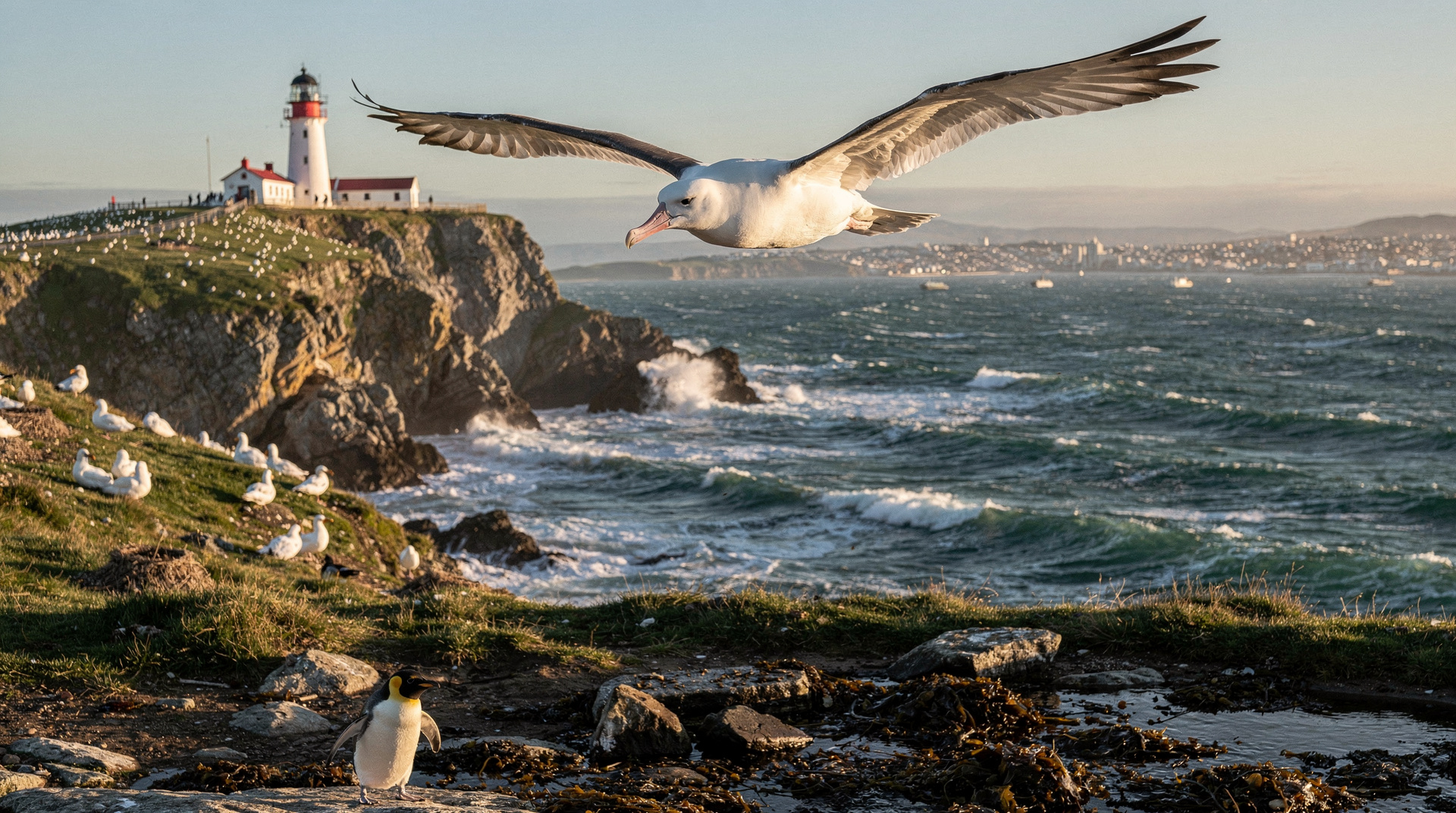
Otago Peninsula
Honest Otago Peninsula guide: albatross colony, yellow-eyed penguins, Larnach Castle — real NZD/USD/EUR prices and the best wildlife timing advice.
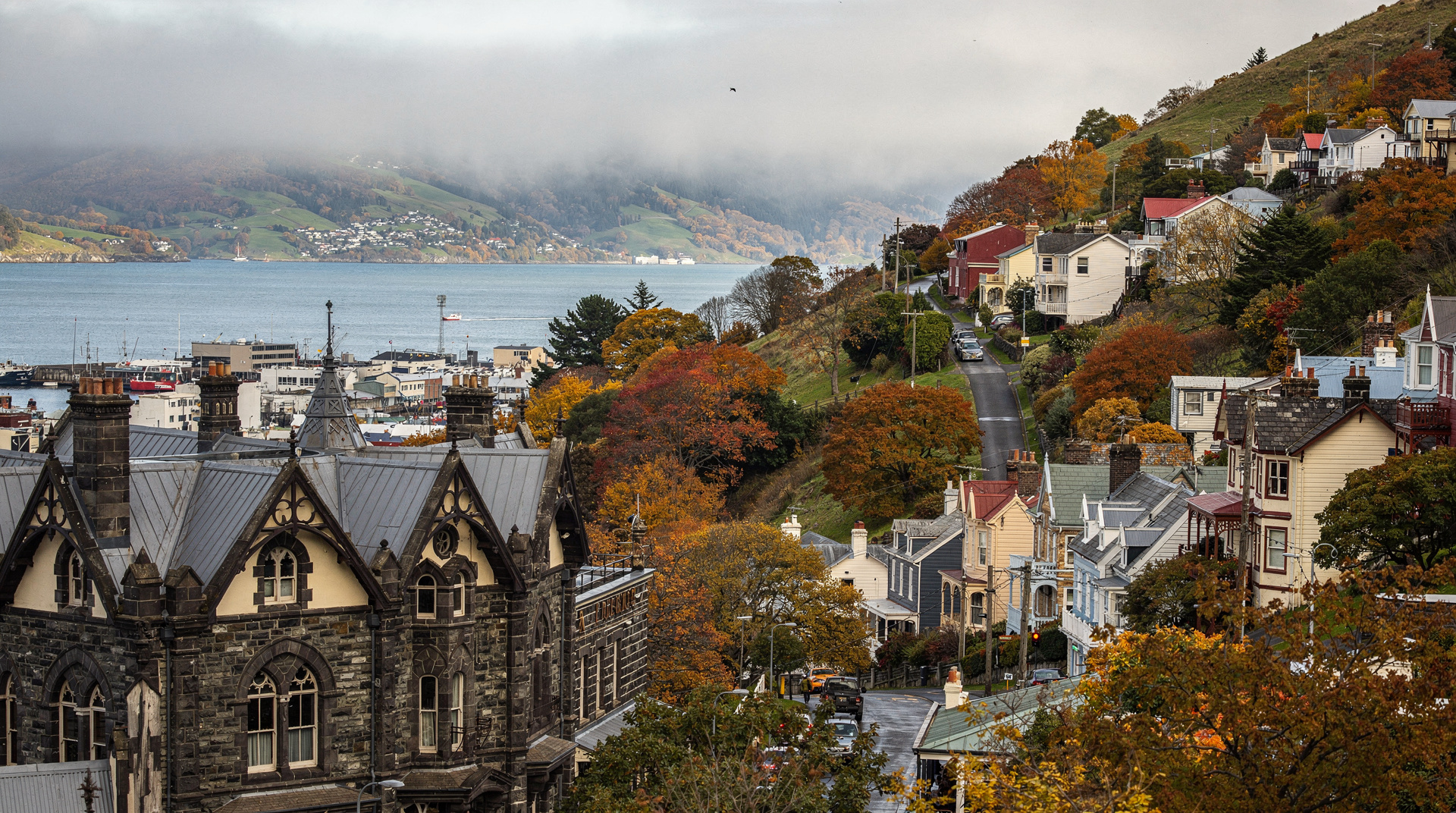
Dunedin
Honest Dunedin guide: Otago Peninsula wildlife, Larnach Castle, Baldwin Street — real NZD/USD/EUR prices and 2 days done right in NZ's Edinburgh.
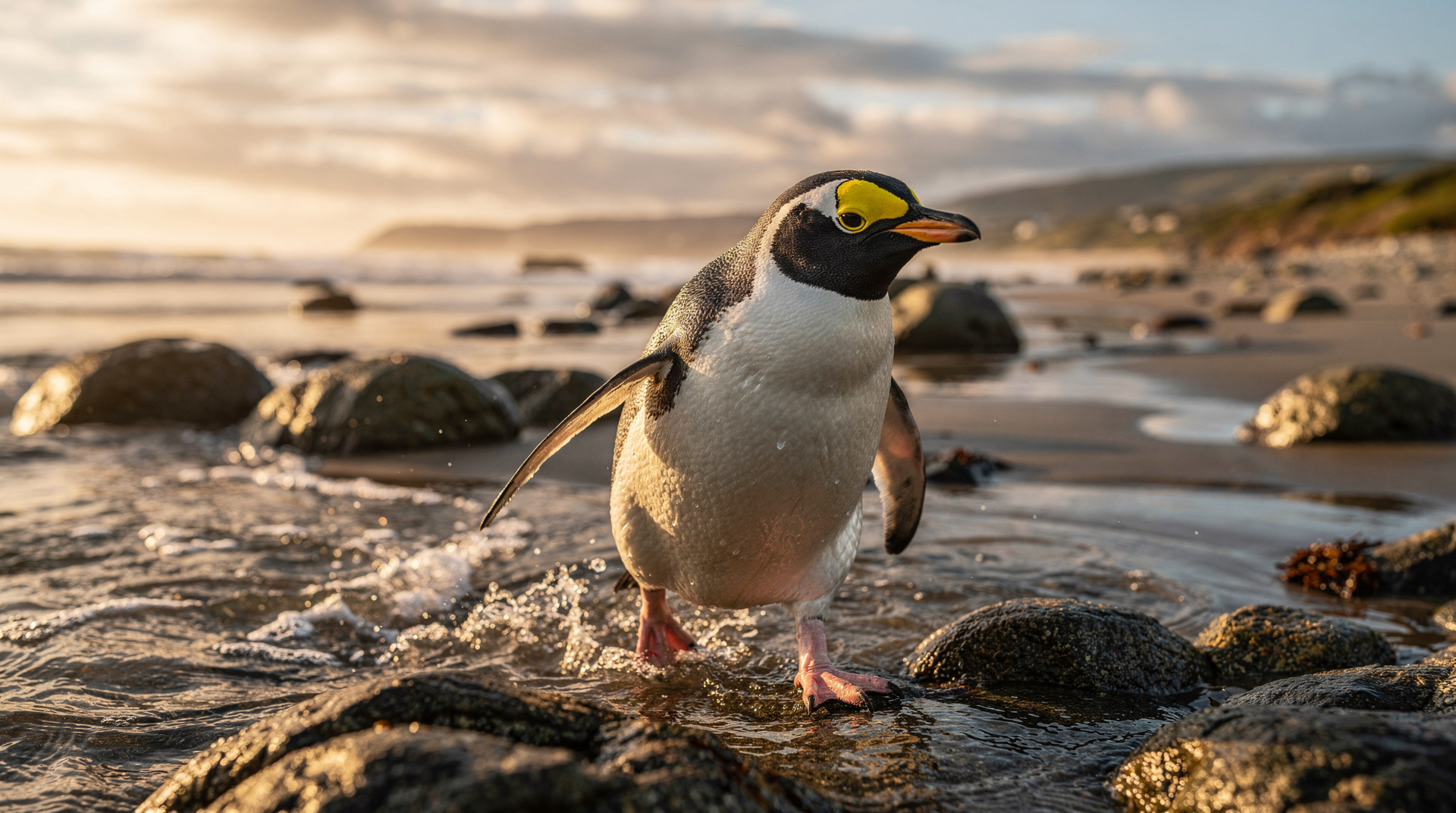
Yellow-eyed penguins on the Otago Peninsula
Hoiho (yellow-eyed penguin) are the world's rarest penguin. Where to see them wild on Otago Peninsula, ethical viewing hides, prices, and best timing.
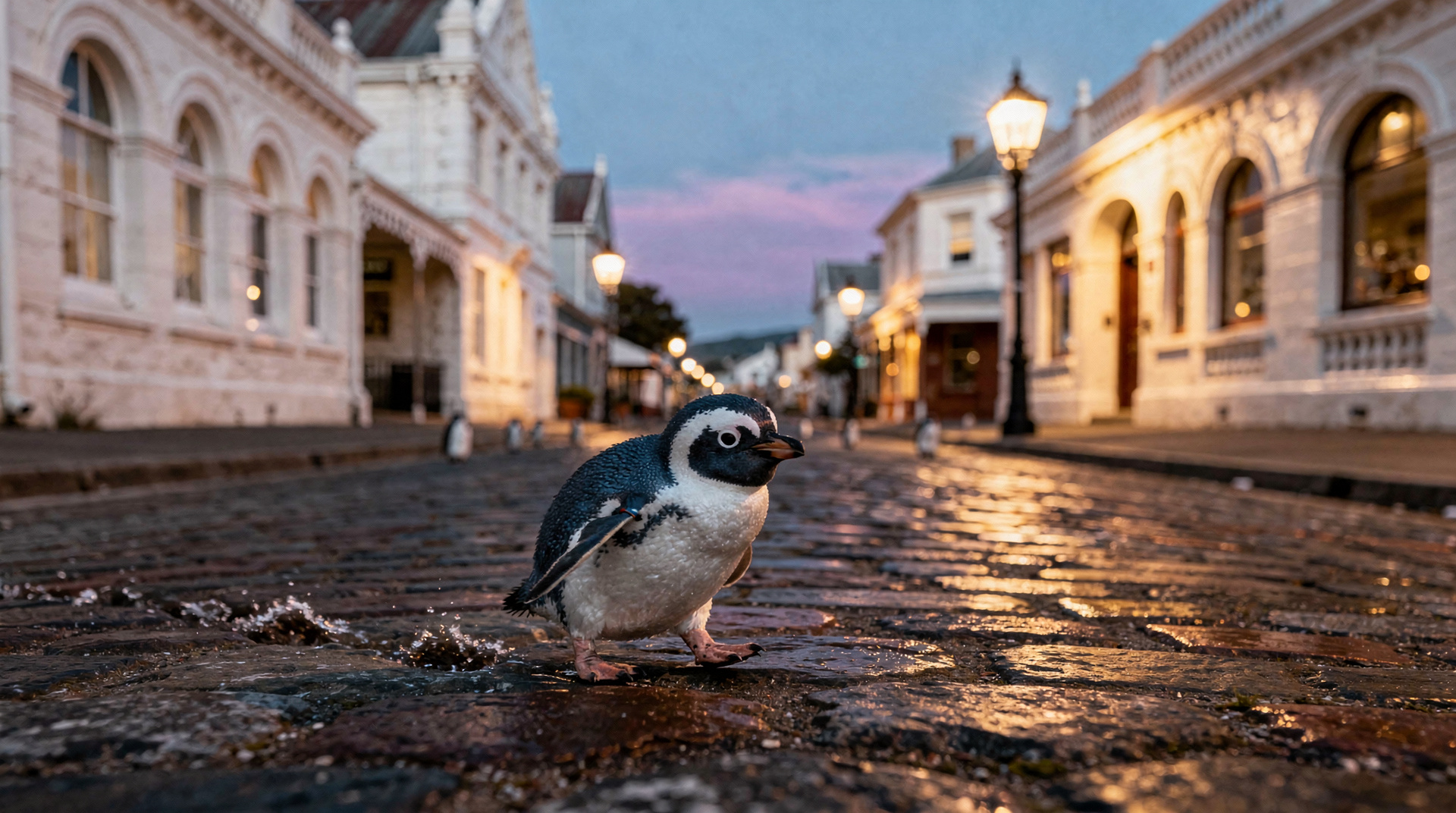
Blue penguins in Oamaru
Oamaru's little blue penguin colony is the most accessible in New Zealand. Evening viewing times, prices (NZD/USD/EUR), booking tips, and ethical guidelines.
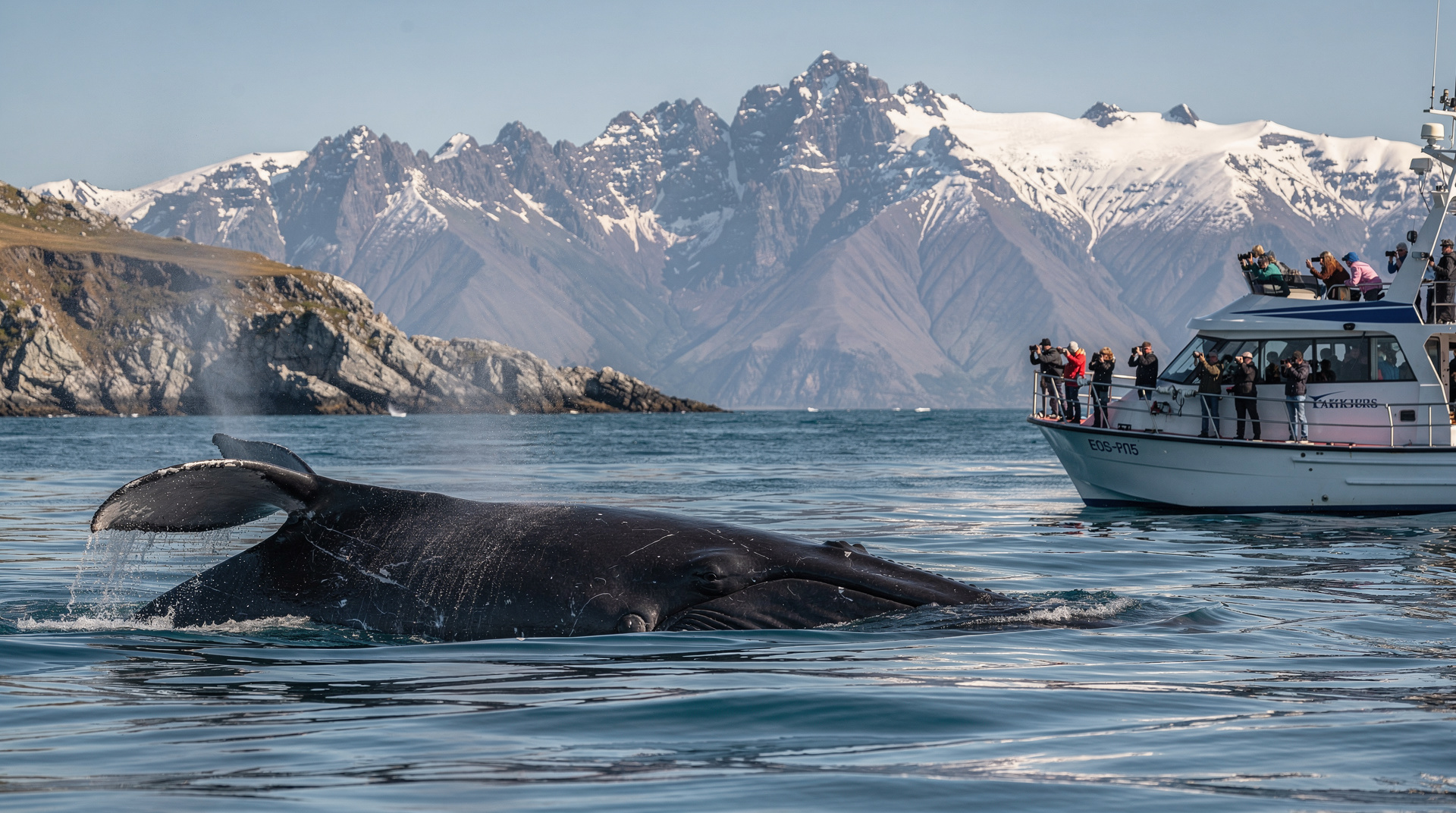
Kaikoura whale watching
Sperm whales off Kaikoura year-round: boat, flight, or kayak? Real prices (NZD/USD/EUR), sighting rates, and which operator to book.
Last reviewed: