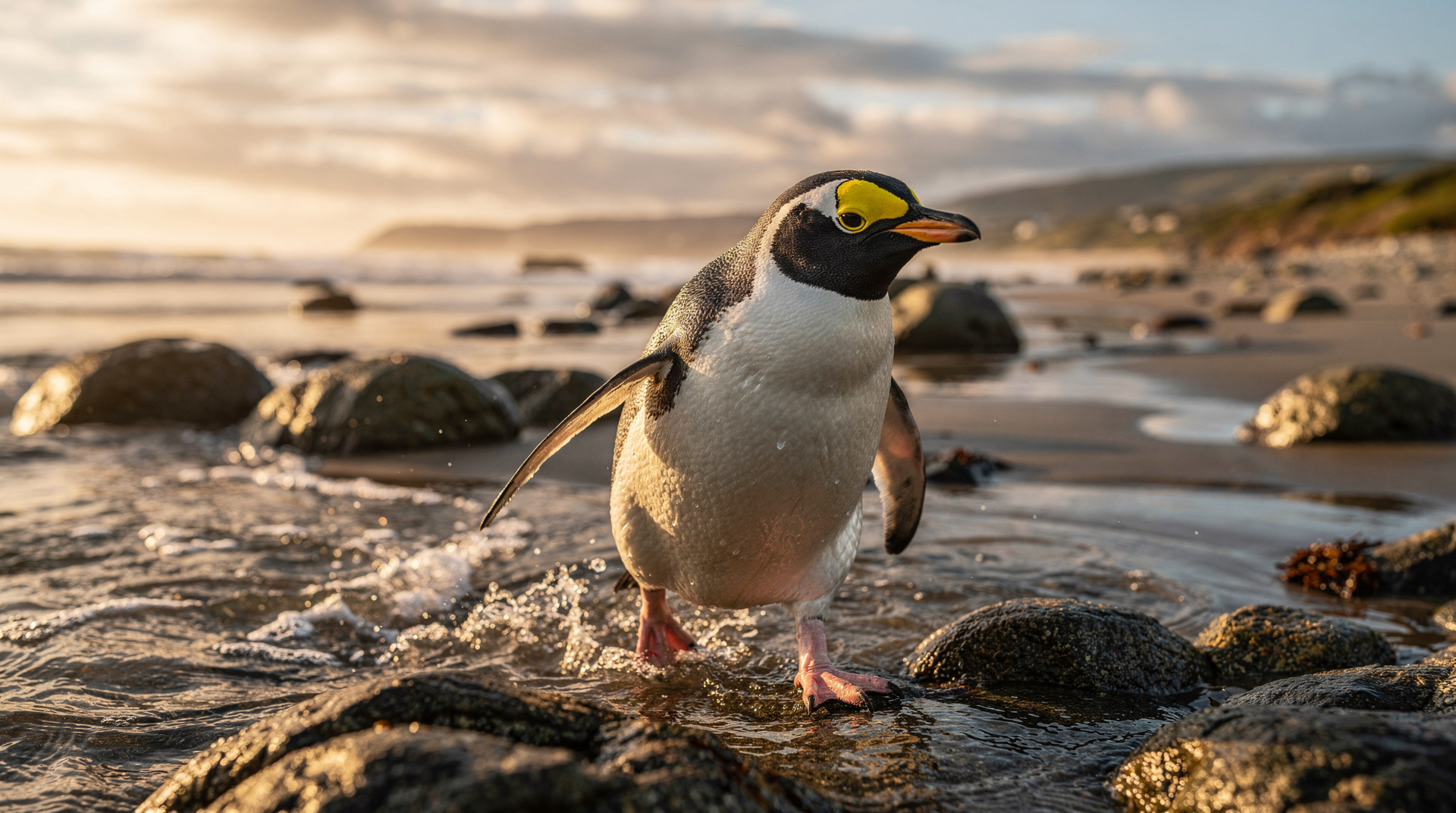
Yellow-eyed penguins on the Otago Peninsula
Where can I see yellow-eyed penguins in New Zealand?
Otago Peninsula's Penguin Place reserve offers the most reliable guided viewing of wild yellow-eyed penguins (hoiho) — the world's rarest penguin. Tours cost NZD 55–65 / USD 33–39 / EUR 30–36 and run daily at dusk from October to March. The Catlins coast and Stewart Island also have populations.
Seeing a hoiho come ashore at dusk is one of the most reliably moving wildlife encounters on the South Island — not because it’s rare to spot one (with a bit of planning, it isn’t), but because you’re watching the rarest penguin species on the planet go about an entirely ordinary evening. Otago Peninsula, 35 km from Dunedin, is the most accessible place on earth to do this properly, and the guided hide system at Penguin Place is the benchmark experience. This guide covers where to go, what it costs, when to visit, and how to view penguins responsibly if you go it alone.
| Where | Otago Peninsula, 35 km from Dunedin |
| Cost | Around NZD 55–65/adult (Penguin Place); free at self-guided DOC sites |
| Time needed | 2–3 hours including transport from Dunedin |
| Best time | October–March for chicks and activity; year-round for sightings |
| Booking | Book Penguin Place ahead in December–February |
Hoiho — the world’s rarest penguin
The yellow-eyed penguin (Megadyptes antipodes), known in te reo Maori as hoiho (“noise shouter”), is the world’s rarest penguin species. The total population is estimated at 4,000–5,000 individuals, split between the South Island mainland (Otago Peninsula, Catlins, Southland coasts) and a few sub-Antarctic islands (Auckland Islands, Campbell Island). It is the sole living member of its genus and diverged from other penguin lineages approximately 15 million years ago.
Unlike the colonial nesting behaviour of most penguin species, hoiho nest in isolated pairs in coastal forest, scrub, or rank grass — they cannot see other nesting pairs from their own nest, a unique behavioural requirement. This makes them particularly sensitive to habitat loss and equally sensitive to disturbance during the nesting cycle.
Population decline has been severe. In the 1990s, the mainland population crashed due to a bacterial disease, stoat predation, and habitat loss. Intensive conservation work — nest protection, predator trapping, habitat restoration — has stabilised numbers but not reversed the decline. Climate-driven prey availability (changes in ocean temperature affecting small fish populations) is now considered the primary ongoing threat.
Penguin Place — the benchmark viewing experience
Penguin Place is a private conservation reserve on the Otago Peninsula, 35 km from Dunedin. The farm has been progressively converted from sheep grazing to habitat restoration, with artificial nest boxes, predator control, and an extensive trench-and-hide system that allows viewing of wild birds without disturbance.
The hide system is extraordinary: a network of concealed trenches dug through the penguin habitat allows guides to position you within 10–30 metres of wild birds returning from the sea, without the penguins being aware of your presence. The experience is genuinely wild — the birds haven’t been trained, conditioned, or fed. They return to shore at dusk after a day at sea, trudge up the beach, find their nest partners, and settle for the night.
Price: NZD 55–65 / USD 33–39 / EUR 30–36 per adult. Children under 12: NZD 20–30 / USD 12–18 / EUR 11–17.
Timing: Tours depart in the afternoon (times shift seasonally to align with dusk penguin returns). Most visitors see 2–8 individual birds per tour; a typical tour lasts 60–90 minutes in the hides, plus transport on the property.
Booking: Essential in peak season (December–February). Penguin Place books out weeks ahead in summer. Check availability online early and book before arriving on the peninsula.
Verdict: Penguin Place is the single best way to see wild hoiho anywhere. The investment in the hide infrastructure means you see normal, undisturbed bird behaviour at genuinely close range — something few wildlife experiences anywhere in the world achieve with such a rare species.
The Dunedin full-day tour including penguins
The Dunedin and Otago Peninsula full-day tour combines city highlights, the Royal Albatross Centre at Taiaroa Head, and Penguin Place. It’s the most time-efficient option if you’re based in Dunedin without a car.
The Otago Peninsula and penguin day tour is a focused wildlife-only version, concentrating the day on the peninsula’s wildlife without the city component.
Alternative viewing sites
Sandfly Bay: A DOC public viewing area 20 minutes from central Otago Peninsula. A natural observation point overlooks the beach where penguins land at dusk. No guides; no infrastructure. You observe from a distance through binoculars. Access requires a 20-minute walk over sand dunes (steep). This is free, but the experience is less intimate than Penguin Place — distances are 50–200 metres rather than 10–30.
Bushy Beach, Oamaru: A DOC reserve adjacent to the town. Yellow-eyed penguins land here at dusk alongside little blue penguins. A public hide is available. The viewing is good in good light conditions; distance is 30–80 metres. Free to access.
The Catlins: Yellow-eyed penguins nest along the Catlins coast (Curio Bay, Nugget Point). Viewing is self-guided from public hides; timing and numbers are less predictable than on the peninsula. Good option if you’re travelling the Southern Scenic Route.
Timing and behaviour
October–November: Nesting begins. Adults incubate eggs; one bird stays on nest while the other forages. You may see nest-swapping behaviour at dusk.
December–January: Chicks are present in the nest. Adults make more frequent foraging trips to feed growing chicks. This is the busiest season at Penguin Place.
February–March: Chicks approaching fledging age. Large, nearly adult-sized young birds are visible on the beach preparing for their first sea journey.
April–August: Moulting season. Adult birds moult their feathers and are land-bound for 3–4 weeks (they cannot waterproof their feathers during moult). Less photogenic but still visible; this is the period when Penguin Place is less crowded and some of the best extended observations are possible.
What you see at dusk: Penguins typically land between 1–2 hours before dark. They body-surf onto the beach, then walk — slowly, often stopping — to their nest sites. The walk is surprisingly laborious given how efficient they are in the water. Pair greeting behaviour (loud calls, mutual preening) can be observed when a returning bird reaches its partner.
Ethical guidelines for self-guided viewing
If you’re viewing from Sandfly Bay, Bushy Beach, or the Catlins on your own:
- Stay at least 10 metres from any penguin
- Do not approach, chase, or position yourself between a bird and the sea
- No flash photography — this is critical; flash can cause disorientation and abandonment of chicks
- Keep noise minimal; avoid sudden movements
- Never touch, feed, or attempt to handle penguins (DOC prosecution possible)
- Do not block the penguin’s path up the beach — they will turn back to the sea and delay their return if obstructed
The guided experience at Penguin Place removes all these calculation burdens — the guides handle positioning and manage ethical viewing automatically.
Yellow-eyed vs little blue penguins — don’t get them confused
New Zealand’s South Island coast hosts two very different penguin-watching experiences, and visitors sometimes conflate them when planning a day. Yellow-eyed penguins (hoiho) are solitary nesters, larger, genuinely rare (4,000–5,000 worldwide), and viewed individually as they return to isolated nest sites at dusk — the Otago Peninsula and the Catlins are the places to see them.
Little blue penguins (kororā), the world’s smallest penguin species, are far more numerous, nest colonially, and are typically viewed in groups coming ashore together at organised evening viewings such as Oamaru’s blue penguin colony, about 90 minutes north of Dunedin. If your time is limited, hoiho at Penguin Place is the higher-priority, more distinctive wildlife experience; if you have an extra evening, the little blue penguin colony makes a good complementary stop and is a different kind of spectacle — dozens of birds crossing the beach together rather than a handful of solitary arrivals.
What to wear and bring
Evenings on the Otago Peninsula are cooler and windier than Dunedin itself, even in summer — bring a warm layer and a windproof jacket regardless of season. Closed, sturdy shoes matter more than they sound: the hide trenches and the walk to Sandfly Bay both involve uneven or sandy ground in low light. Binoculars are genuinely useful at self-guided sites like Sandfly Bay and Bushy Beach, where viewing distances are much greater than at Penguin Place. Bring a torch with a red filter or covered in red cellophane if you’re walking back after dark at a self-guided site — white light disturbs penguins and other wildlife; Penguin Place guides manage lighting for you.
Getting to Otago Peninsula
From Dunedin: approximately 35–45 minutes by car via the Portobello Road (flatter, along harbour edge) or 50–60 minutes via Highcliff Road (higher, better views). Both routes are sealed but winding.
Car hire from Dunedin airport: Fully viable for self-drive. Allow a full day for the peninsula.
Without a car: The Otago Peninsula wildlife tour from Dunedin provides return transport from Dunedin accommodations. This is the most practical option if you’ve arrived by the Taieri Gorge train or interCity bus.
Taxis: NZD 80–100 / USD 48–60 / EUR 44–55 each way — inefficient unless splitting costs between several people.
Costs summary (NZD / USD / EUR)
| Activity | NZD | USD | EUR |
|---|---|---|---|
| Penguin Place guided tour (adult) | 55–65 | 33–39 | 30–36 |
| Penguin Place guided tour (child) | 20–30 | 12–18 | 11–17 |
| Sandfly Bay / Bushy Beach (self-guided) | 0 | 0 | 0 |
| Dunedin + peninsula wildlife full day | 145–175 | 87–105 | 80–96 |
| Peninsula wildlife focus tour | 120–150 | 72–90 | 66–83 |
Exchange rate: 1 NZD ≈ 0.60 USD ≈ 0.55 EUR.
Honest verdict
Strongly worth it — Penguin Place is not cheap relative to its duration, but this is a legitimate conservation operation at a site that exists because of private investment in predator control and habitat restoration. You’re watching genuinely wild birds of the rarest penguin species on earth in conditions that no public park can replicate. The hide system is the correct way to do this ethically. Budget a full day on the peninsula; combine with the royal albatross tour for an exceptional wildlife day.
Frequently asked questions
How rare are yellow-eyed penguins compared to other penguins?
With 4,000–5,000 individuals globally, hoiho are in a different rarity category from little blue penguins (approximately 1 million) or rockhopper penguins (1.5 million). The closest rare penguin species by population is the Galápagos penguin at around 2,000 individuals. Hoiho’s combination of rarity, mainland accessibility, and endemism to New Zealand makes them uniquely significant.
Can I see yellow-eyed penguins in the wild without a guide?
Yes — Sandfly Bay (Otago Peninsula), Bushy Beach (Oamaru), Curio Bay (Catlins), and Nugget Point (Catlins) all offer self-guided DOC-access viewing. The experience is less intimate than Penguin Place’s hide system but is free and available at any time. Respect the ethical guidelines above.
What time of day do yellow-eyed penguins come ashore?
Typically 1–3 hours before dark (from around 5 pm in summer to 4 pm in winter). The exact time varies with day length and distance of that day’s foraging trip. Penguin Place tours are timed around these patterns; guides communicate current timing when you book.
Is photography possible?
Yes — with natural light, no flash. In good summer light, dusk scenes can be beautiful. A 200–400mm lens allows closer-looking images without actual proximity. At Penguin Place, the hide proximity allows natural light shots in low evening light with a fast lens; at public sites, distance makes photography more challenging.
Can I visit Penguin Place and the Royal Albatross Centre on the same trip?
Yes, and many visitors do — both are on the Otago Peninsula, with the Royal Albatross Centre at Taiaroa Head roughly a 15-minute drive from Penguin Place. The albatross colony operates on a daytime viewing schedule while penguins are best seen at dusk, so a combined day trip (albatross first, penguins at day’s end) works naturally; the Dunedin and Otago Peninsula full-day tour covers both in one guided outing.
Related reading
Related guides
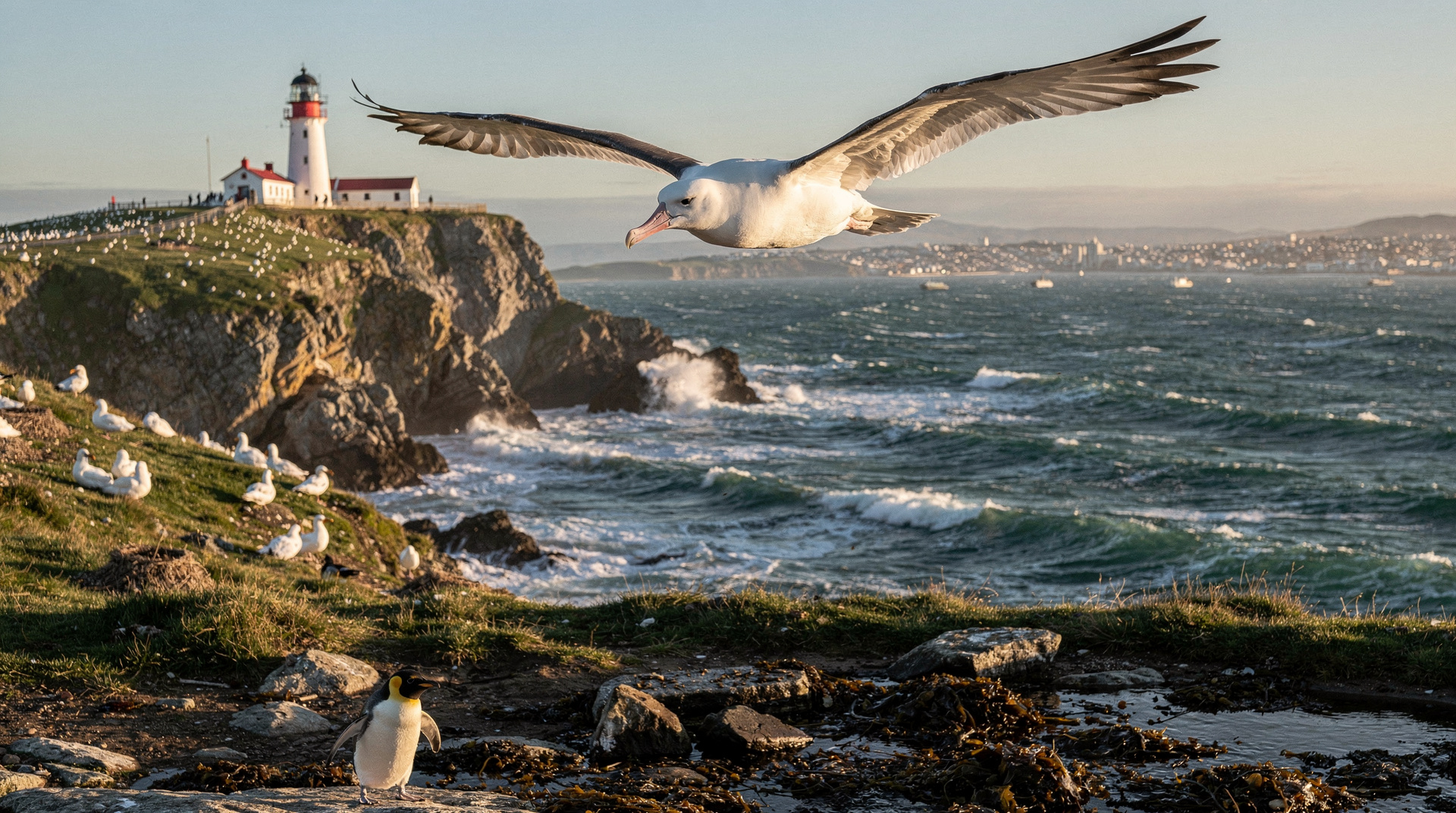
Otago Peninsula
Honest Otago Peninsula guide: albatross colony, yellow-eyed penguins, Larnach Castle — real NZD/USD/EUR prices and the best wildlife timing advice.
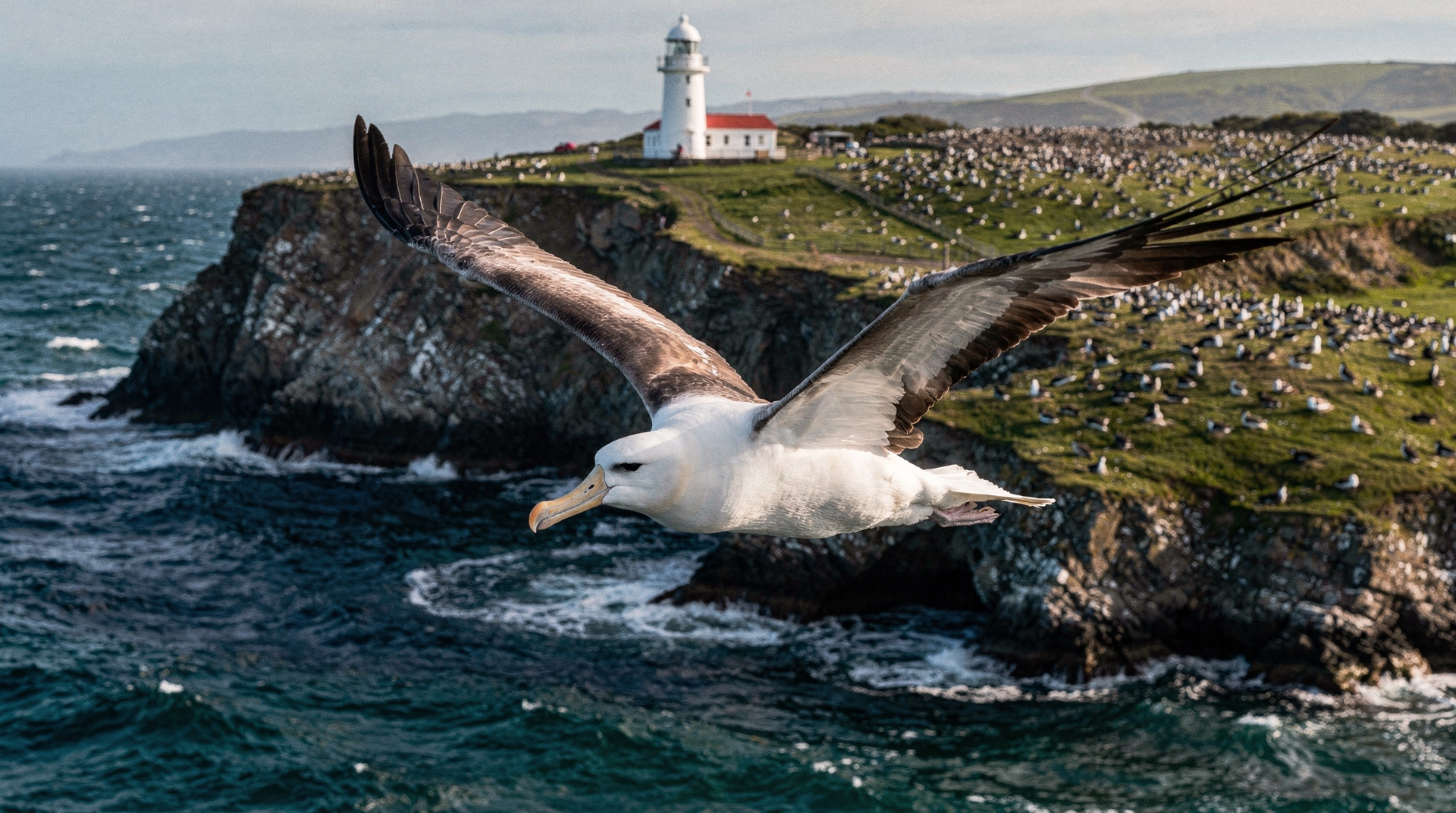
Royal albatross colony at Taiaroa Head
Taiaroa Head on Otago Peninsula hosts the world's only mainland royal albatross colony. Tours, prices (NZD/USD/EUR), best months, and what to expect.
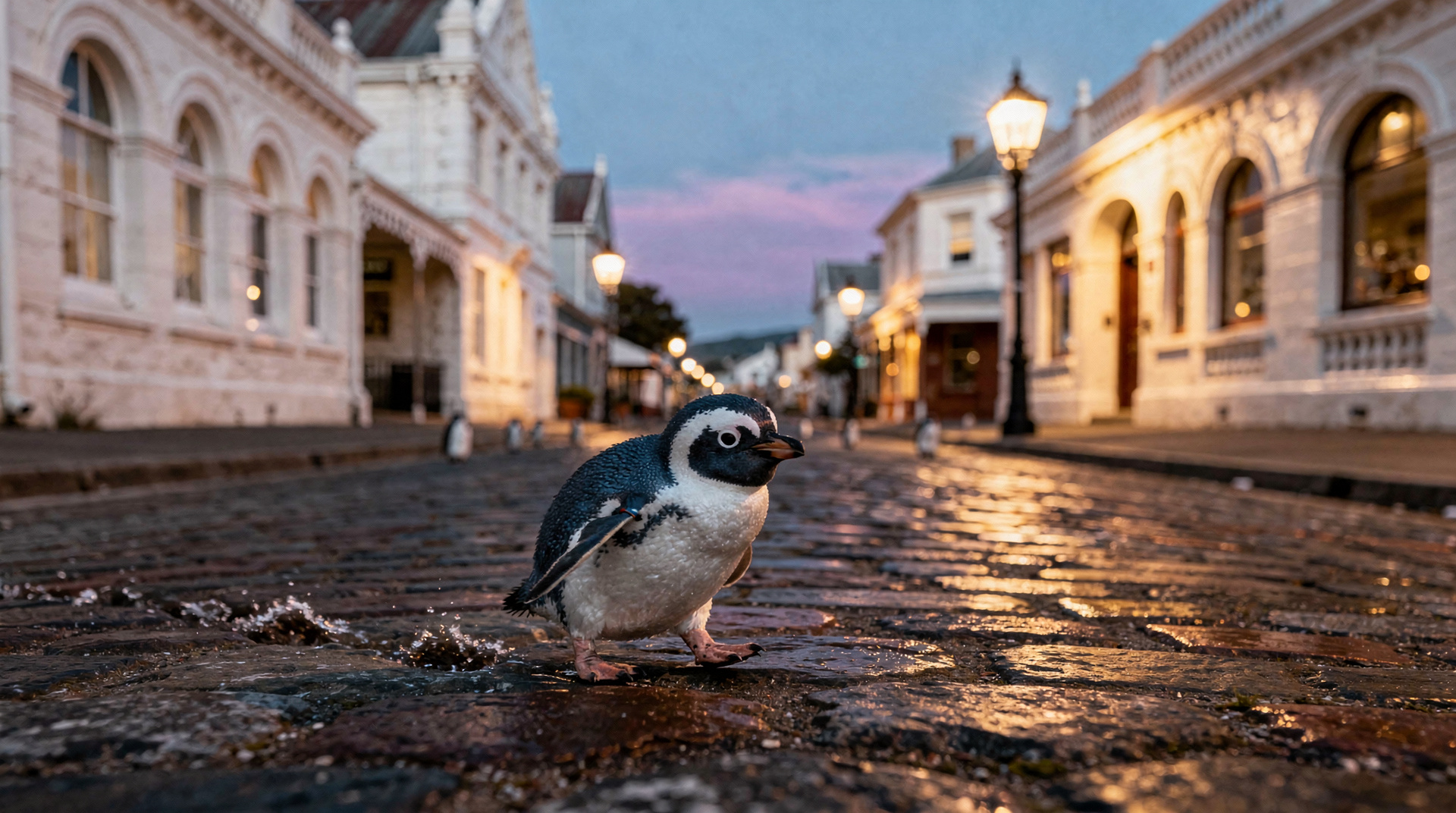
Blue penguins in Oamaru
Oamaru's little blue penguin colony is the most accessible in New Zealand. Evening viewing times, prices (NZD/USD/EUR), booking tips, and ethical guidelines.
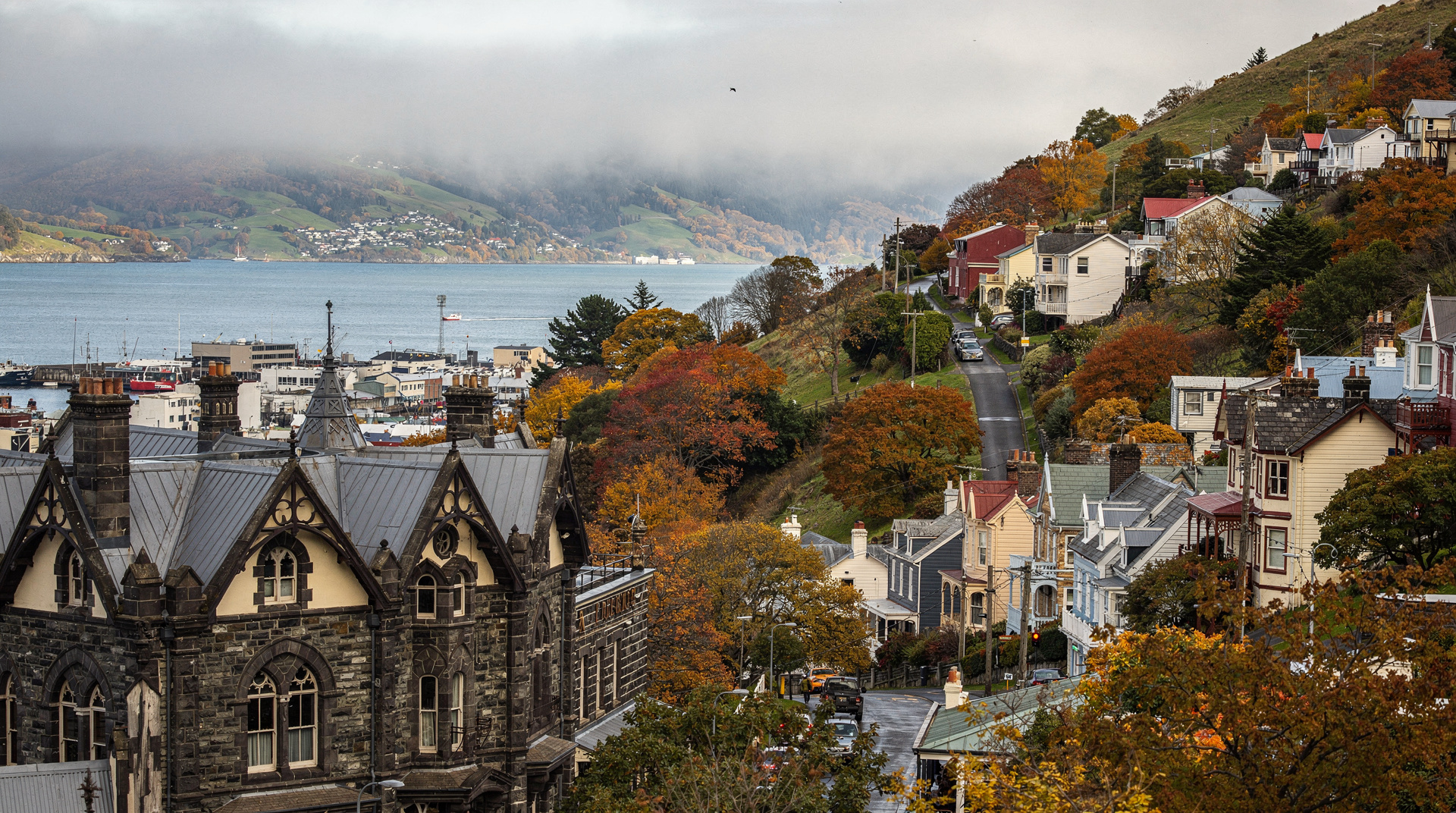
Dunedin
Honest Dunedin guide: Otago Peninsula wildlife, Larnach Castle, Baldwin Street — real NZD/USD/EUR prices and 2 days done right in NZ's Edinburgh.
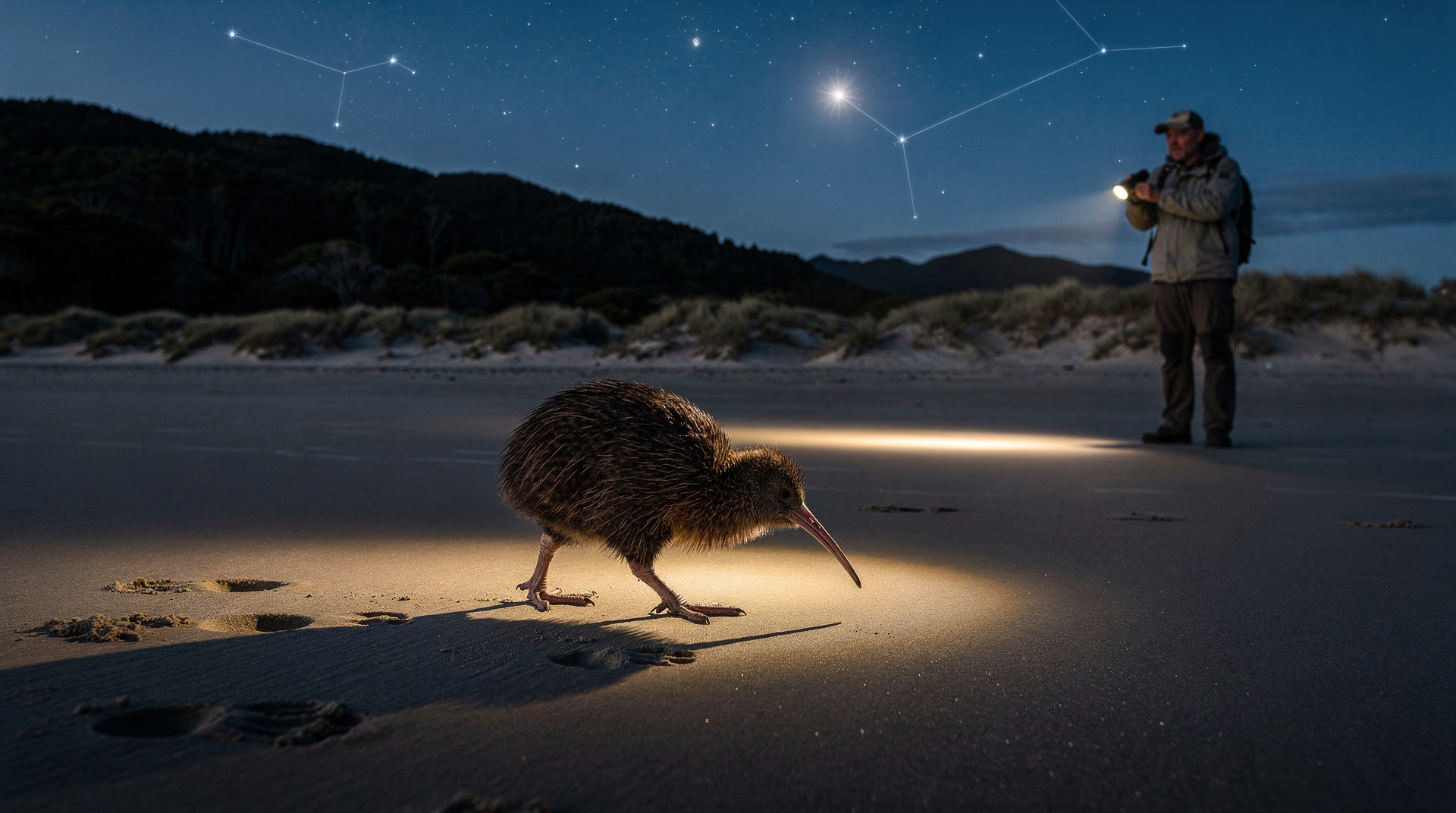
Kiwi spotting on Stewart Island/Rakiura
Stewart Island/Rakiura has New Zealand's highest kiwi density. Guided night tours, costs (NZD/USD/EUR), ferry access, and what to realistically expect.
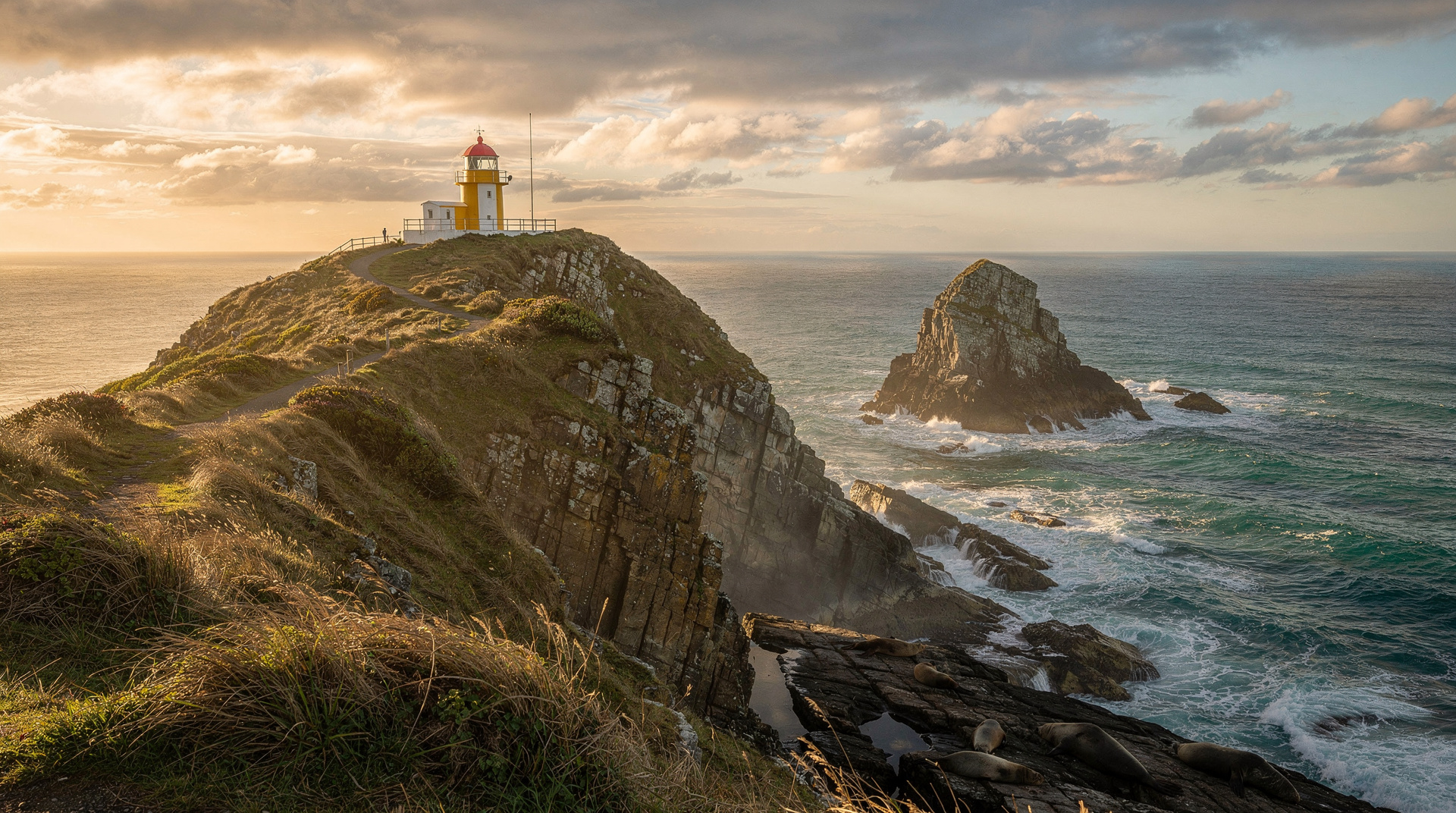
The Catlins
The Catlins: yellow-eyed penguins, Hooker's sea lions, the Curio Bay petrified Jurassic forest, and Nugget Point lighthouse. Honest guide NZD/USD/EUR.
Last reviewed: