Kaikoura vs Akaroa for wildlife
Should I go to Kaikoura or Akaroa for wildlife?
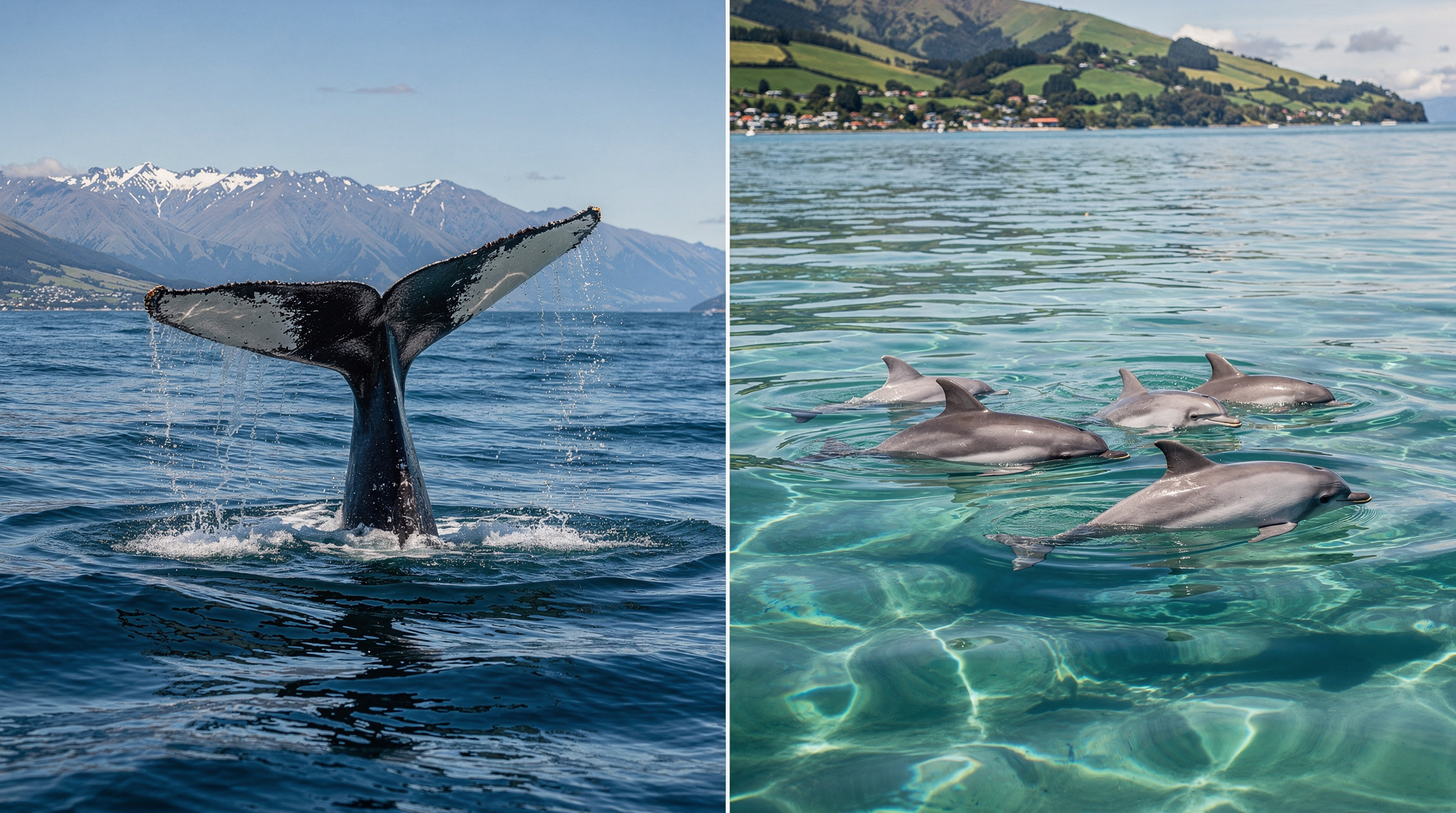
Kaikoura for whales, sperm whales specifically — the most reliable whale watching in New Zealand. Akaroa for Hector's dolphins, the world's smallest marine dolphins found nowhere else in New Zealand in such density. Both are day trips from Christchurch, 2.5 hours in opposite directions.
The honest verdict
Kaikoura and Akaroa are 2.5 hours from Christchurch in opposite directions — north and south respectively. Both are excellent wildlife destinations, but they offer fundamentally different experiences.
Kaikoura wins for whale watching — specifically sperm whales, which are resident year-round due to a deep underwater canyon close to shore. No other place in New Zealand offers reliable whale watching from so close to shore. The dolphin watching (Dusky dolphins — often in pods of hundreds) is also exceptional.
Akaroa wins for Hector’s dolphins — the world’s smallest and rarest marine dolphins, endemic to New Zealand. Akaroa Harbour has the highest density of Hector’s dolphins in the country. The harbour itself (a flooded volcanic crater on Banks Peninsula) is also extraordinarily beautiful.
| Where | Kaikoura (2.5h north) or Akaroa (1.5h south) of Christchurch |
| Cost | around NZD 155-245 for whale watching; NZD 85-130 for dolphin/kayak tours |
| Time needed | Kaikoura: 11-hour day; Akaroa: 8-hour day |
| Getting there | self-drive or guided day tour from Christchurch |
| Best time | December-March for calmest seas at both |
If you have to pick one: Kaikoura for raw wildlife spectacle. If you’ve already been to Kaikoura: Akaroa for intimate dolphin encounters and harbour scenery.
Side-by-side comparison
| Dimension | Kaikoura | Akaroa |
|---|---|---|
| Distance from Christchurch | 2.5h north via SH1 (coastal highway) | 1.5h south (over Banks Peninsula hills) |
| Signature wildlife | Sperm whales, Dusky dolphins, fur seals | Hector’s dolphins, little blue penguins, sea birds |
| Whale watching | Excellent — year-round sperm whales | Not available |
| Dolphins | Dusky dolphins (pods of 100–500+) | Hector’s dolphins (smaller pods, unique species) |
| Swimming with dolphins | Yes — Dusky dolphins, seasonal | Yes — Hector’s dolphins, seasonal restrictions |
| Fur seals | Abundant — year-round at Ohau Point | Occasional in harbour |
| Little blue penguins | At Kaikoura peninsula | Yes — evening penguin watch |
| Sea kayaking | Good | Excellent — calm harbour |
| Harbour scenery | Coastal mountain backdrop | Flooded volcanic crater — exceptional |
| Café/food scene | Good seafood (crayfish!) | Good French-influenced village |
| Crayfish (lobster) | Famous — world’s best crayfish rolls | Not a focus |
| French heritage | None | Yes — French colonial settlement 1840 |
| Day trip length | Long (add whale watching = 2h + drive) | More manageable (1.5h drive each way) |
Kaikoura in detail
Kaikoura’s exceptional wildlife is geological — the Kaikōura Canyon is 200m from shore and 1,000m deep. Sperm whales (the largest toothed predators on earth, up to 18m) dive into this canyon to hunt giant squid and return to breathe at the surface. Whale Watch Kaikōura runs the main whale watching operation. 2-hour whale watching cruise from Kaikoura is the primary experience — expect to see 1–3 sperm whales per trip (the sightings rate is around 95%). If no whale is sighted, a partial refund is offered. Price: NZD 155–175 / USD 93–105 / EUR 85–96.
For those who prefer aerial viewing: whale watching flight with guided commentary covers a larger area of ocean and is more likely to encounter multiple whales — NZD 175–210 / USD 105–126 / EUR 97–116.
Dusky dolphins are the other Kaikoura speciality. These are highly acrobatic, social dolphins that gather in pods of 100–500 individuals — completely different from the small intimate groups encountered at Akaroa. The dolphin swimming tours allow you to snorkel with the pod. Half-day wildlife kayaking takes you into the marine environment without a powerboat, often with dolphins and seals.
Kaikoura seafood: the town is famous for crayfish (rock lobster). The seafood caravans on the seafront sell crayfish rolls (NZD 30–45 / USD 18–27 / EUR 17–25) and fresh crays. This is genuinely one of the best and most affordable luxury food experiences in New Zealand.
Getting there: The Coastal Pacific scenic train from Christchurch to Kaikoura is an excellent alternative to driving — the Kaikoura Coastal section (where the mountains meet the sea in a narrow ledge) is one of the great short scenic rail segments. Christchurch to Kaikoura day tour with whale watching combines transport and whale watching in a structured package.
Akaroa in detail
Akaroa sits in a 75km-wide flooded volcanic crater on Banks Peninsula, 75 km southeast of Christchurch. The French colonial history (a small French settlement preceded British sovereignty in 1840 — uniquely, French street names, architecture and a boulangerie culture persist) gives the village a European character unlike any other New Zealand coastal town.
The Hector’s dolphins (Maui’s dolphins are a separate subspecies of the same species, even rarer, found on the North Island’s west coast) are what most visitors come for. These are tiny — 1.2–1.5m, the world’s smallest marine dolphins — and genuinely playful around boats and kayaks. Swimming with Hector’s dolphins is seasonally regulated (October–June is typically permitted) to protect breeding females.
Akaroa Pohatu little penguins 3-hour evening experience adds a second wildlife dimension — the world’s smallest penguin species (Kororā/little blue penguin) nesting at Pohatu Marine Reserve on Banks Peninsula.
4WD safari and guided sea kayaking at Akaroa combines terrain exploration of Banks Peninsula’s dramatic hill country with harbour kayaking — an efficient way to see both the Hector’s dolphins and the landscape.
The drive from Christchurch over the Summit Road (a scenic ridge road across the Banks Peninsula crater rim) is itself excellent — panoramic views over the Pacific and the harbour.
How the two wildlife experiences actually feel
The numbers only tell part of the story, so it helps to picture what each outing is like on the water. A Kaikoura whale cruise is about waiting and then sudden scale: the boat idles over the canyon, the guide listens for clicks, and when a sperm whale surfaces it is enormous, slow and unhurried. People tend to go quiet. The dusky dolphins arrive in the opposite mood, fast, noisy and leaping, so a single morning on the water can swing between awe and pure fun. Our Kaikoura whale watching guide and the Kaikoura whale watch boat review go deeper on what to expect aboard.
Akaroa is gentler. The harbour is sheltered, the water is often flat, and the Hector’s dolphins show up in small groups that come close to the boat and then drift away again. It suits people who prefer a quiet, intimate encounter over a headline sighting. Our Akaroa dolphins guide covers the boat options, and the Akaroa day trip from Christchurch shows how to fit a cruise into a full day around the village.
Choosing by who is travelling
- Families with young children: Akaroa’s calmer water and shorter drive make it the easier day. See New Zealand with kids for wider planning.
- Prone to seasickness: the open ocean off Kaikoura can be lively, so weigh that honestly before booking a whale cruise. The aerial option avoids the swell altogether, and Akaroa’s harbour is the softer choice.
- Photographers: Kaikoura gives you big, dramatic subjects and the mountains behind them. Akaroa rewards patience and a long lens for the small, quick dolphins.
- Couples or solo travellers: either works. Kaikoura suits a longer overnight stay with a seafood dinner, while Akaroa suits a slow village day with a long lunch.
Weather, seas and what to pack
Marine wildlife trips live and die by the weather. Tours at both places can be postponed or cancelled when the sea is rough, so leave some slack in your plan rather than treating a single day as the only chance. Booking early in your Christchurch stay gives you a spare day if conditions turn. Our driving in New Zealand guide is worth a read before you hit the coast road or the hill roads, and the packing list for New Zealand covers the layers, sun protection and waterproofs that make a day on the water far more comfortable. Even in summer it is cooler and windier on a boat than it looks from the shore.
Both destinations work as day trips from Christchurch, but the timing differs:
Kaikoura day trip: Depart Christchurch at 6:30–7am. Arrive Kaikoura 9:30am. Whale watch tour 10am–12pm. Crayfish lunch. Seal colony at Ohau Point. Return by 6pm. Total: 11-hour day. Long, but manageable.
Akaroa day trip: Depart Christchurch at 9am. Arrive Akaroa 10:30am via Summit Road. Dolphin cruise or kayak. Lunch in village. Return by 5pm. Total: 8-hour day. More relaxed.
For families or those who tire easily, Akaroa is the easier day trip. For serious wildlife enthusiasts, Kaikoura offers more species and greater spectacle.
Fitting either into a wider South Island itinerary
If you’re not day-tripping from Christchurch but building a longer South Island route, the choice changes shape. Kaikoura sits directly on SH1 between Christchurch and Picton/Marlborough — see the Nelson vs Marlborough guide if you’re routing north afterward — so it requires no detour if you’re already heading that direction. Akaroa is a spur trip off Christchurch itself, with no onward route benefit, which makes it better suited to a dedicated day rather than a stopover.
For a broader look at how these two fit against New Zealand’s other wildlife destinations (Kaikoura and Akaroa are excellent, but not the only options), see the wildlife New Zealand overview. And if you’re deciding how to get around the South Island generally — rental car vs campervan, self-drive vs guided days — the campervan vs car and motel guide and the 7-day South Island itinerary are useful companions to this comparison.
What they share
Both are accessible from Christchurch without a long-distance commitment. Both offer exceptional marine wildlife in their respective specialities. Both have good cafés and seafood. Both are best in summer (December–March) when marine wildlife is most active and road access is reliable.
Making the most of the surrounding area
Wildlife is only one reason to visit either place, and the surroundings can turn a good day into a memorable one. The Kaikoura destination page lists the town’s other stops, and the Kaikoura day trip from Christchurch lays out a realistic schedule. The coastline has a recent history worth knowing too: our blog piece on Kaikoura after the 2016 earthquake explains how the town and its road and rail links recovered. If you travel by rail, the Coastal Pacific train guide describes the route.
On the Akaroa side, the Akaroa destination page covers the village, and walkers who want more than a boat trip can look at the Banks Peninsula Track. If penguins are your real interest, compare the evening outing here with the colony at Oamaru in our blue penguins at Oamaru guide, or look at the rarer yellow-eyed penguins further south.
Finally, if you are still deciding between marine wildlife hubs across the country, the Kaikoura vs Bay of Islands whale watching comparison and the wildlife in New Zealand overview help you see where these two sit in the bigger picture. Starting from the city, the Christchurch destination page covers where to base yourself before and after either trip.
Cost comparison (NZD + USD + EUR)
| Activity | Kaikoura | Akaroa |
|---|---|---|
| Whale watching | NZD 155–175 / USD 93–105 / EUR 85–96 | Not available |
| Dolphin cruise / swimming | NZD 95–145 / USD 57–87 / EUR 52–80 | NZD 85–130 / USD 51–78 / EUR 47–72 |
| Sea kayaking | NZD 70–120 / USD 42–72 / EUR 38–66 | NZD 65–100 / USD 39–60 / EUR 36–55 |
| Crayfish roll | NZD 30–45 / USD 18–27 / EUR 17–25 | Not a focus |
| Mid-range accommodation | NZD 150–280 / USD 90–168 / EUR 83–154 | NZD 180–320 / USD 108–192 / EUR 99–176 |
Frequently asked questions about Kaikoura vs Akaroa for wildlife
Which has better dolphin watching?
Different dolphins. Kaikoura has Dusky dolphins in massive pods — spectacular, acrobatic, and accessible year-round. Akaroa has Hector’s dolphins — rarer (the world’s rarest marine dolphin), smaller, more intimate encounters, endemic to New Zealand. For wildlife value: Akaroa’s Hector’s dolphins are more globally unique. For visual spectacle: Kaikoura’s Dusky dolphin pods win.
When is whale watching best at Kaikoura?
Sperm whales are resident year-round — Kaikoura is one of the only places on earth where they can be reliably seen from shore. The summer months (December–March) have the best sea conditions. Winter is possible but rougher seas occasionally cancel tours.
Can I combine both in one trip?
Possible but exhausting as a back-to-back day trip sequence. Better approach: overnight in Kaikoura (excellent for early morning whale watching and late afternoon seal viewing), then drive south to Christchurch and continue to Akaroa the next day.
If I can only do one Christchurch day trip at all, which should it be?
If wildlife spectacle is the priority, Kaikoura. If you want an easier day and a genuinely charming village alongside the wildlife, Akaroa. For a broader look at other Christchurch day trip options beyond these two — Arthur’s Pass, Hanmer Springs, the TranzAlpine — see the day trips from Christchurch overview, and if train travel is part of your plan either way, the TranzAlpine vs Coastal Pacific comparison covers both of Christchurch’s classic scenic rail routes.
Related comparisons and guides
- Kaikoura guide
- Nelson guide
- Christchurch vs Dunedin
- TranzAlpine vs Coastal Pacific
- Nelson vs Marlborough
- South Island 7-day itinerary
- Campervan vs car and motel
Related guides
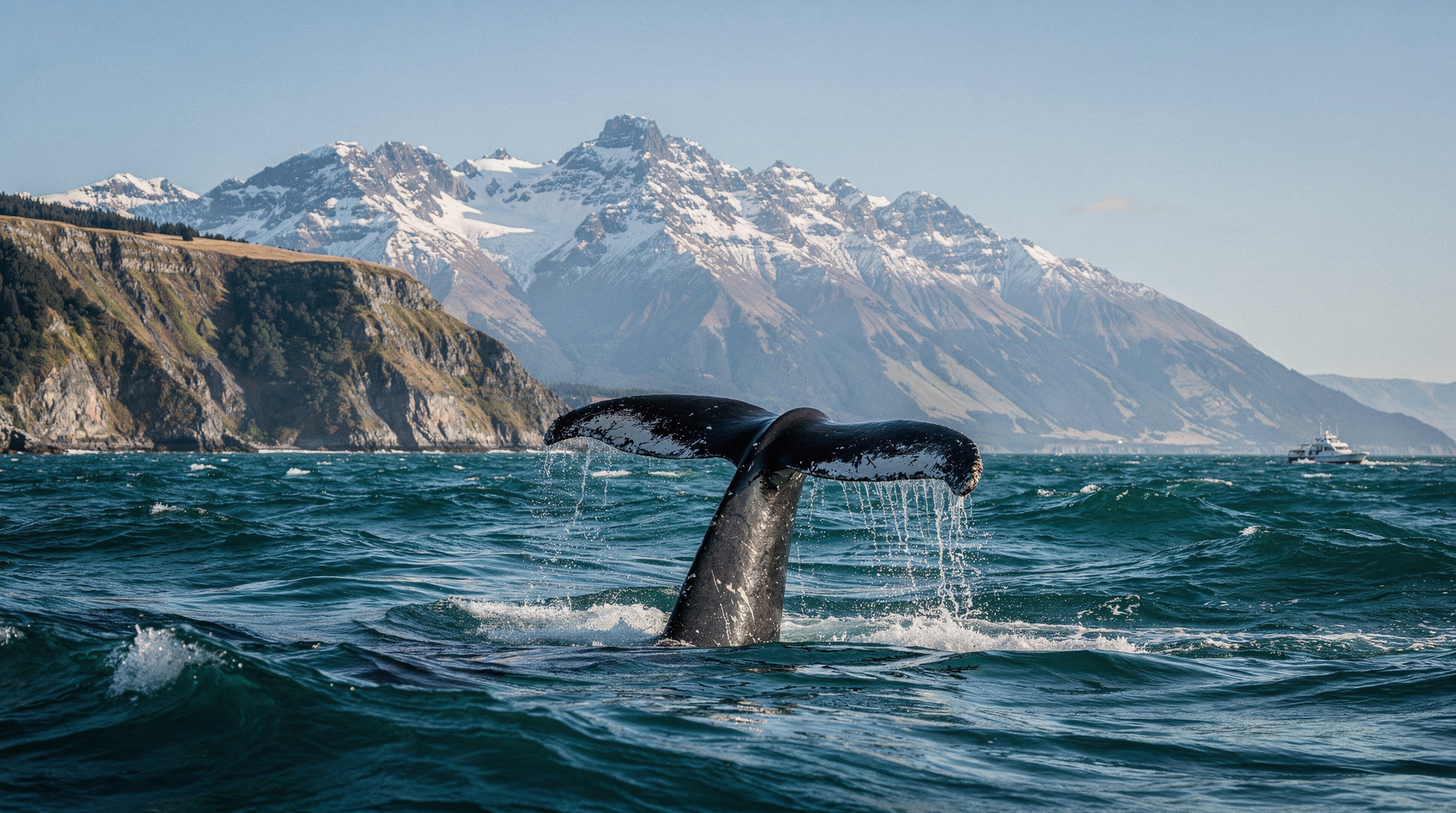
Kaikoura
Honest Kaikoura guide: sperm whale tours, wildlife kayaking, crayfish — real prices and the best time to visit after the 2016 earthquake rebuild.
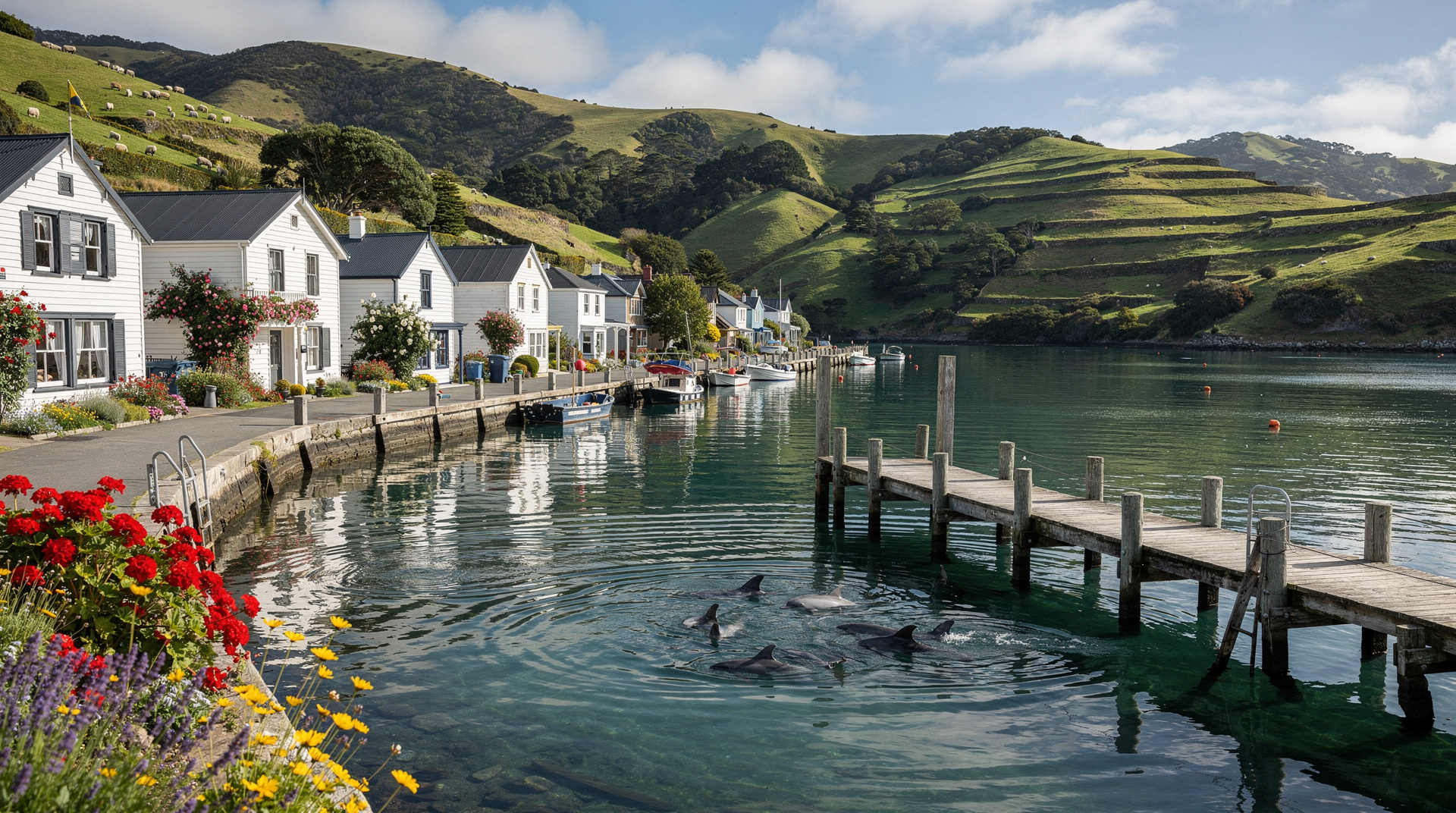
Akaroa
Akaroa: New Zealand's only French-founded town, Hector's dolphins, sea kayaking on Banks Peninsula. Day trip from Christchurch. Real costs NZD/USD/EUR.
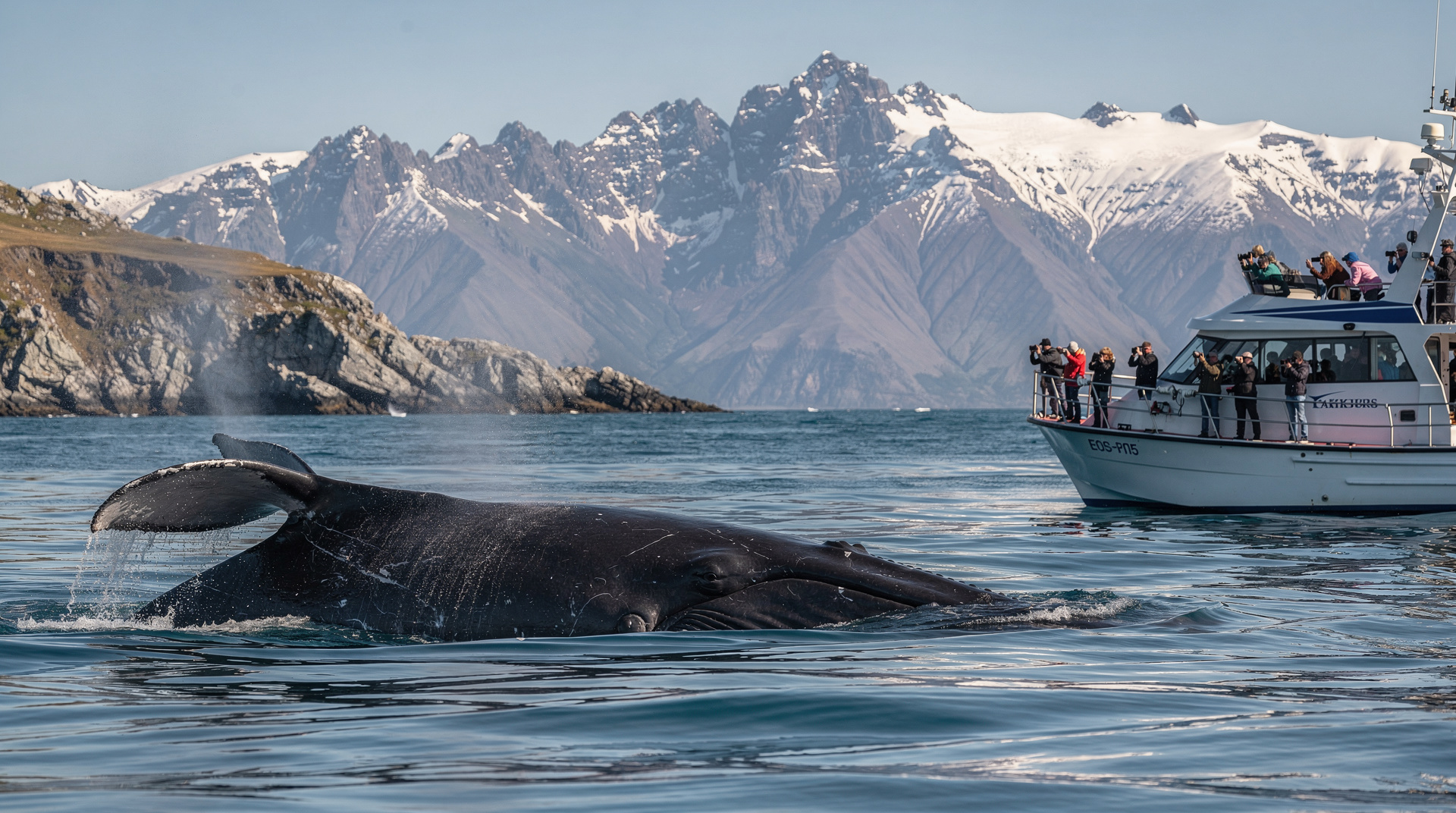
Kaikoura whale watching
Sperm whales off Kaikoura year-round: boat, flight, or kayak? Real prices (NZD/USD/EUR), sighting rates, and which operator to book.
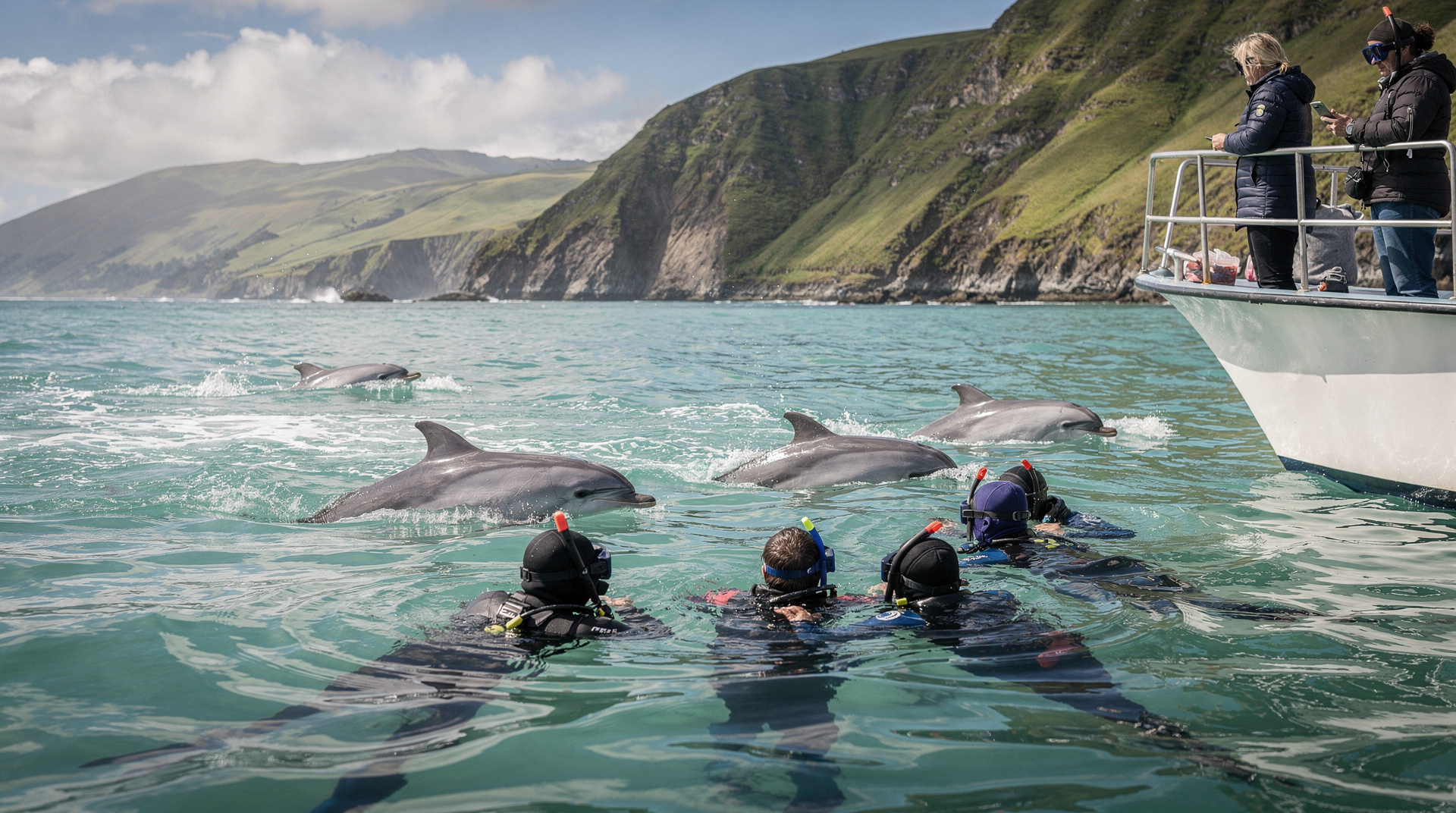
Hector's dolphins in Akaroa
Akaroa is the best place on earth to see Hector's dolphins, the world's smallest. Swim tours, cruise prices, ethical guidelines, and booking tips.
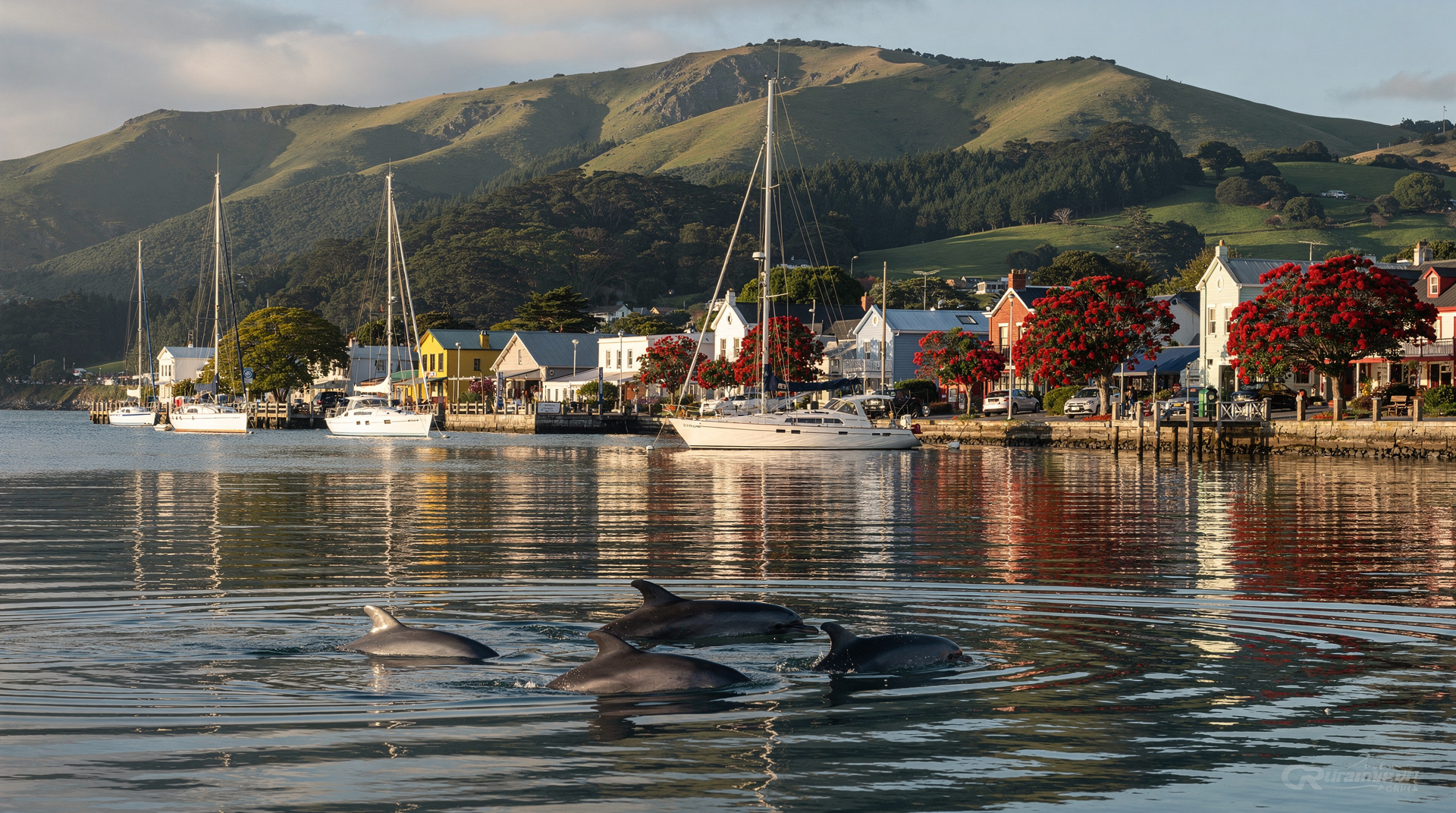
Best day trips from Christchurch
Best day trips from Christchurch: Akaroa dolphins (1h), Kaikoura whales (1.5h), Hanmer Springs pools, Arthur's Pass hikes.
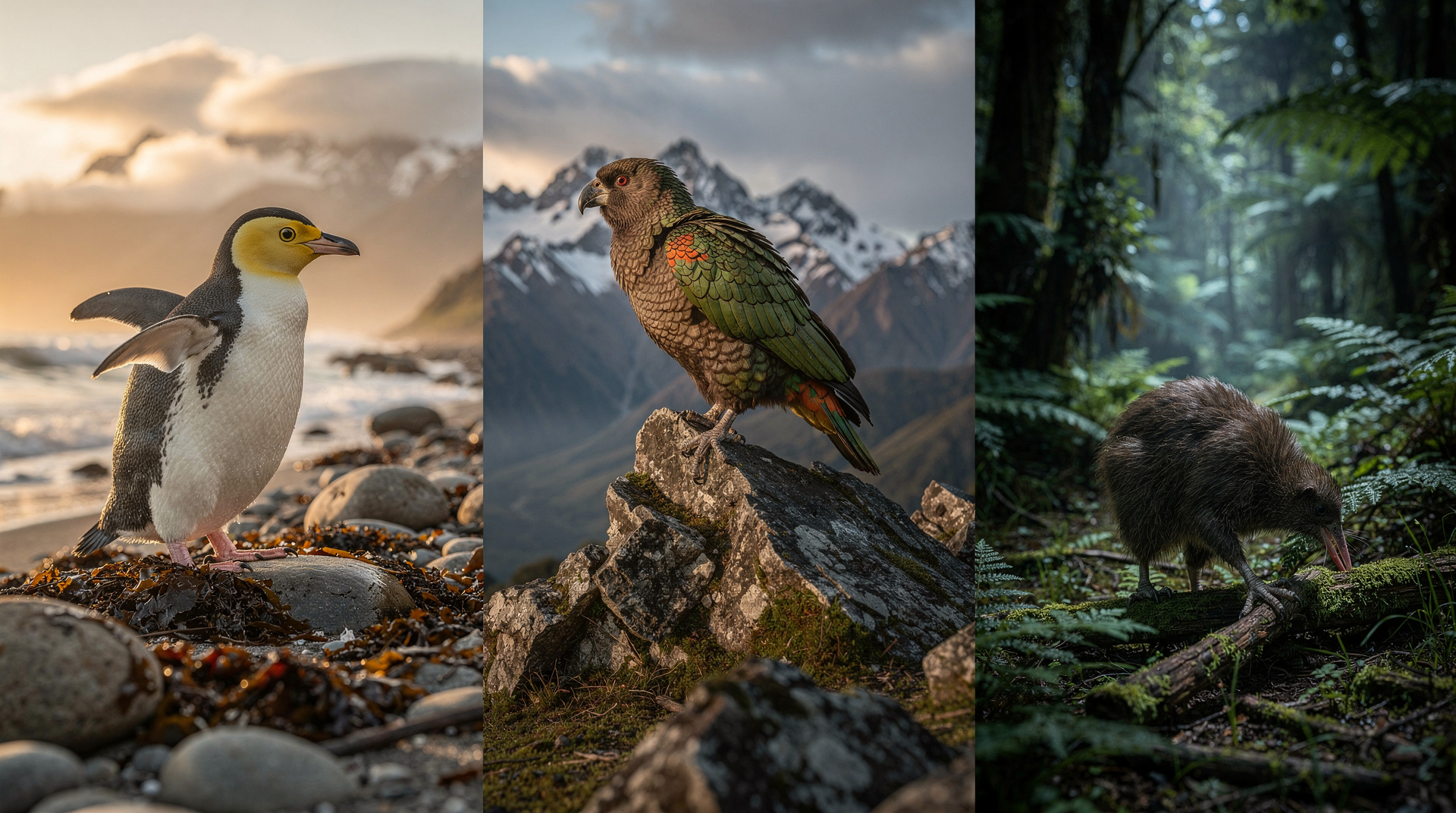
Wildlife in New Zealand — kiwi, penguins, whales, and more
Where to see NZ wildlife honestly: kiwi nights, yellow-eyed penguins, sperm whales at Kaikōura, royal albatross, fur seals. Best locations, real costs.