Marae etiquette for visitors
What do I need to know before visiting a marae?
The core rules: wait to be invited onto the marae, follow the powhiri welcome protocol, remove your shoes before entering the wharenui (meeting house), no food inside the wharenui, no sitting on tables (tables are tapu where food is placed), receive the hongi greeting with sincerity, and listen more than you speak. Your hosts will guide you — follow their lead at every step.
| Core rule | Wait to be invited; shoes off inside the wharenui; no food inside |
| Greeting | Hongi (pressed forehead and nose) after formal welcome |
| Dress | Modest and tidy — no shorts in formal ceremonies |
| Cost | Usually included in tourist cultural experience bookings |
| Where to visit as a tourist | Te Puia, Mitai (Rotorua), Waitangi Treaty Grounds |
What is a marae
A marae is the traditional gathering place and meeting ground of Maori communities. It is not just a building — it is a living cultural space that holds the history, genealogy, and collective identity of the iwi (tribe) and hapu (sub-tribe) who belong to it.
The marae complex typically includes:
- The open court (marae atea): The ceremonial area in front of the wharenui where formal ceremonies take place
- Wharenui (meeting house): The carved meeting house; the central building of the marae. Its carved posts (poupou) represent ancestors; the ridgepole represents a founding ancestor’s spine; the rafters are their ribs. You are entering a person made building.
- Wharekai (dining hall): Where food is prepared and shared — separately from the wharenui
- Ablutions block / toilet facilities
Not all marae have all elements; each marae reflects the resources and traditions of its community.
Who can visit a marae
Most marae are private — belonging to specific iwi, hapu, or whanau. They are not tourist attractions and cannot be visited uninvited. However:
- Marae visits for cultural tourism are offered at several sites, including Te Puia (Rotorua), Mitai Maori Village, and Waitangi Treaty Grounds — these are specifically structured for visitor groups and guided throughout.
- Community marae events sometimes welcome visitors if the community extends a specific invitation, such as Waitangi Day celebrations or community open days.
- Church and community marae associated with schools, universities, and urban communities may host events where non-members are invited.
If you are invited to a marae — whether as a tourist participant or as a genuine community guest — the following guide applies.
The powhiri: the welcoming ceremony
The powhiri is the formal ceremony by which visitors (manuhiri) are welcomed onto the marae by the hosts (tangata whenua). It establishes the relationship between the two groups and sets the spiritual foundation for whatever follows.
Before the ceremony
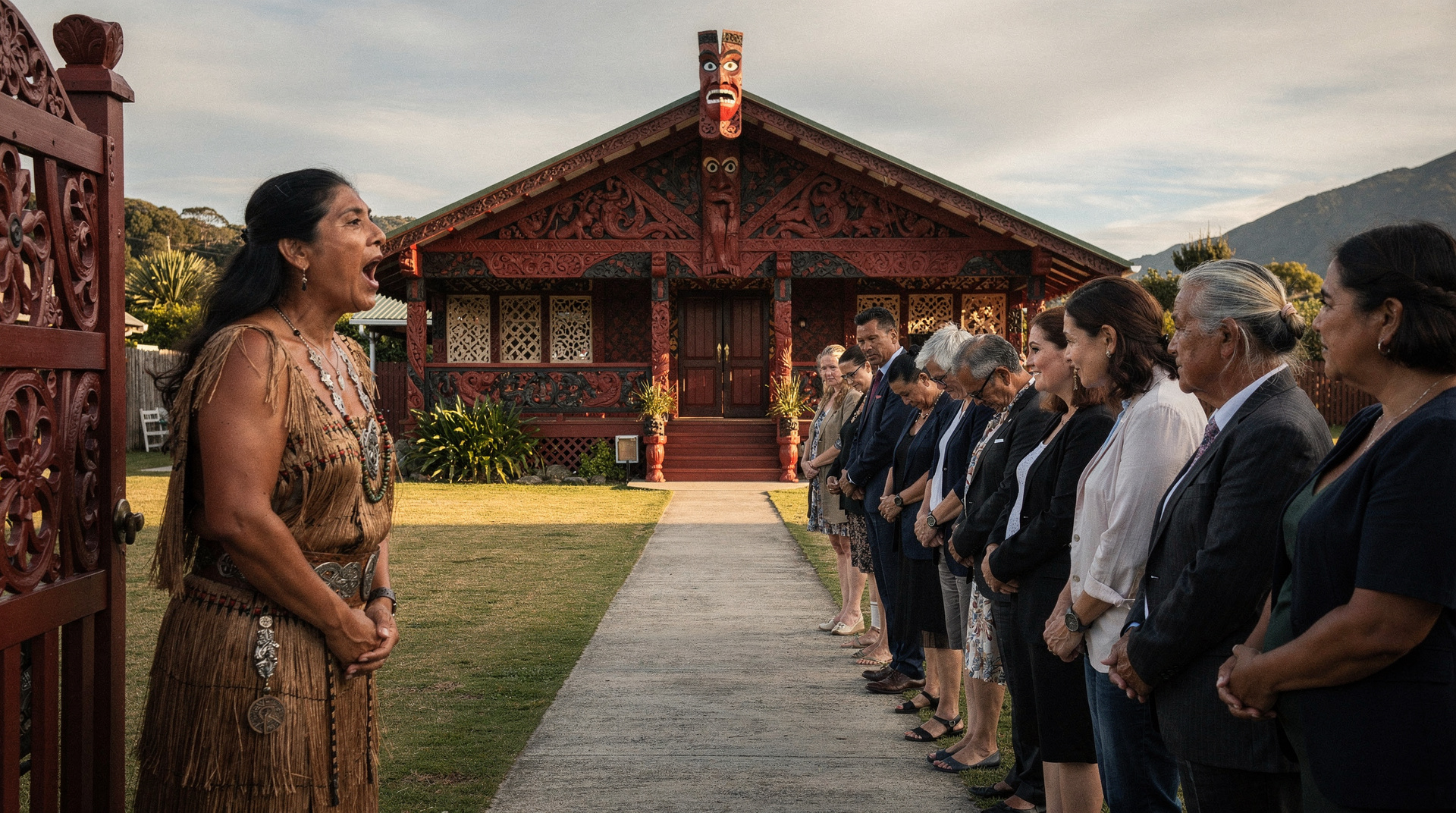
Wait at the entrance to the marae grounds. Do not walk onto the marae atea (the open court) until you are formally called. The call (karanga) will be made by a senior woman from the tangata whenua side.
Dress: Dress modestly and tidily. No shorts in formal ceremonies; women should have shoulders covered. Marae ceremony is a formal occasion, not a casual visit.
The karanga: the call
A woman from the tangata whenua (host) side calls the visitors onto the marae with a karanga — a high, sustained vocal call in te reo Maori that honours the visitors, acknowledges the ancestors, and establishes the spiritual context of the encounter.
If there is a senior woman in the visitor group, she may respond with a karanga as the group walks onto the marae. If your group has no one experienced in karanga, simply listen and walk forward respectfully.
Walk slowly and in a group when called. The women lead — this is not a diminishment of women but an honour. Women are considered the life-givers who carry the connection between the living and the ancestors. Walking in front during a karanga-led entrance is a position of spiritual significance.
The whaikorero: formal speeches
Senior men (kaumatua) from the tangata whenua and, if present, the manuhiri (visitor) side exchange formal speeches. These speeches include: acknowledgement of the dead, acknowledgement of the land and ancestors, recitation of genealogy, and formal welcome.
If you are in a visitor group without a Maori speaker, your host will usually explain what is being said. Sit quietly, do not talk, and do not look bored — this is the core of the ceremony.
The waiata: songs
After each speech, the speaker’s group sings a waiata (song) to support their speaker and consolidate what has been said. Waiata were the traditional vehicle for encoding oral knowledge.
The hongi: the greeting
After the formal speeches, hosts and visitors come together for the hongi — pressing foreheads and noses together while clasping hands. This is the most personally intimate element of the ceremony for many visitors.
How to do a hongi: Stand facing the person. Clasp their right hand with yours. Lean forward and press your forehead and nose gently against theirs. Sometimes two presses; sometimes one. Take your time — this is not a head-bump. Some people add a second press if there is a strong personal connection.
The hongi means the sharing of breath — ha — the divine essence breathed into humans at creation. By sharing breath, the two people (or groups) are unified. After the hongi, you are no longer manuhiri (visitors) but tangata whenua — you have been incorporated into the group.
Handshake alternative: In some formal contexts (meetings that begin with a modified powhiri), a handshake may replace or follow the hongi. Follow the host’s lead.
Inside the wharenui
Remove your shoes
Always remove your shoes before entering the wharenui. This rule is consistent across all marae. The wharenui is a sacred space; shoes carry the impurity of the outside world. Leave shoes at the entrance.
Note: If you have a foot condition or medical reason not to remove shoes, let your host know quietly before entering. A reasonable accommodation will be made.
No food or drinks
The wharenui is tapu (sacred). Kai (food) is noa (common) and must be kept separate. No food or drinks are consumed inside the wharenui. Ever. This includes chewing gum.
No sitting on tables
This is a specific rule that surprises many visitors. Tables are surfaces where food is prepared and placed; they are noa. Sitting on a table conflates the tapu of the person with the noa of the food space in a way that violates both. Do not sit on tables anywhere on the marae.
Photographs inside the wharenui
Ask before photographing inside the wharenui. In many marae, photography of specific carvings, weavings, or taonga is restricted. In tourist marae contexts (Te Puia, Waitangi), photography during performances is usually permitted — you will be told if it is not. In private marae visits, always ask.
The carved ancestors
The poupou (carved posts) inside the wharenui represent specific ancestors. They are not decoration. When you sit in a wharenui, you are surrounded by the ancestors of the people who built it. Treat them as you would treat photographs of someone’s grandparents.
What to wear and what to bring
There’s no strict dress code for tourist cultural experiences beyond general modesty, but formal marae visits (weddings, tangihanga, official events) warrant more care. Dark, tidy clothing is a safe default; avoid overly casual beachwear, singlets, or anything you’d consider disrespectful at a formal community event in your own culture. Bring a light jacket even in summer — many wharenui are unheated and ceremonies can run long. If you wear a hat, it’s polite to remove it when entering the wharenui, following the same logic as removing shoes.
Language basics for a marae visit
You are not expected to speak te reo Maori, but a handful of phrases signal respect and are genuinely appreciated: kia ora (hello, thank you), tena koe (greetings, to one person), tena koutou (greetings, to a group), and ka kite (see you later, as a farewell). If you’re part of a group that includes a designated speaker responding to the whaikorero, they may use a longer mihi (formal greeting) — this is usually arranged in advance by tour operators who bring groups to marae regularly. The te reo Maori basics guide has a fuller pronunciation guide if you want to prepare properly before a visit.
The hangi: eating together
After the powhiri and any programme, food is often shared. This is almost always in the wharekai (dining hall), not the wharenui.
Karakia before eating: A karakia (prayer or incantation) is said before eating. When the karakia begins, stop talking and stop eating (if you have already started). Bow your head slightly. When it ends, continue.
Serving order: In formal situations, guests (manuhiri) are served first. This is manaakitanga — the host’s obligation to care for guests before themselves.
Hangi food: Traditional hangi involves food (chicken, lamb, pork, kumara, potatoes, pumpkin) cooked underground in an earth oven. It is smoky, tender, and deeply flavoured. If you have dietary requirements, let your host know at booking — most marae cultural operators can accommodate vegetarian and vegan guests with advance notice.
After the ceremony
When the powhiri is complete and you have been welcomed, the formal protocols relax. You may move around the marae grounds (staying out of restricted areas your host indicates). Conversations with hosts after the ceremony are valued — this is when genuine human connection happens, outside the formality.
Departure: There is often a brief farewell karakia or poroporoaki (farewell ceremony). Follow your host’s guidance. Thank your hosts directly and personally.
What to bring as koha
Koha (a gift or donation) is the visitor’s reciprocal contribution to manaakitanga (hospitality). In tourist cultural contexts, koha is usually incorporated into the booking price. In community or private marae visits, koha is offered as cash in an envelope, presented formally.
The appropriate amount of koha varies by context; your host will give guidance if asked. Do not let concerns about koha become a barrier — the act of offering is what matters, not the amount.
Frequently asked questions about marae visits
What if I make a mistake in protocol?
Do not be paralysed by the fear of making a mistake. Your hosts know you are a visitor. A genuine attempt to follow protocol, accompanied by humility when you get something wrong, is far more respected than not trying. If you breach etiquette (walk in front of the speaking area during a whaikorero, for example), a quiet word from your guide will redirect you.
Do women lead in the hongi as well?
In the karanga (call), women lead. In the hongi line, it is usually mixed — both men and women participate in greeting visitors. Kaumatua (senior elders) often greet first, followed by other tangata whenua.
Can I bring children to a marae visit?
Yes. Children are welcomed. Teach children the key rules (shoes off, no food inside, quiet during karakia and speeches) before the visit. Children who show respect and curiosity are often given particular warmth by Maori hosts.
Is a marae visit religious?
Maori cultural practice is spiritual rather than strictly religious in the Western sense. The karakia acknowledges the atua (spiritual beings), the ancestors are present in the carvings, and spiritual dimensions are woven into all protocols. This is not the same as requiring visitors to adopt Maori religious beliefs — it is a ceremonial context that operates in spiritual terms. Visitors of any faith (or none) participate respectfully.
Should I learn te reo before visiting?
Knowing even a few phrases — kia ora, haere mai, ka kite, ae (yes), kao (no) — will be noticed and appreciated. You do not need fluency. See the te reo Maori basics guide for pronunciation and essential phrases.
What’s the difference between visiting a marae as a tourist versus a genuine community guest?
Both are legitimate, but they’re different experiences. Tourist marae visits (Te Puia, Mitai, Waitangi) are structured, repeated daily or several times a week, and designed to be accessible to visitors with no prior knowledge — they still follow real protocol but within a format built for a general audience. A genuine community invitation (a wedding, a tangihanga, a hapu event) follows the same core protocols but with none of the tourism framing, and carries correspondingly more weight and formality. If you receive a genuine community invitation, treat it with more seriousness than a tourist booking, and ask a trusted local or your host directly about anything you’re unsure of.
Related guides and itineraries
- Maori culture overview — cultural context
- Te reo Maori basics for travelers — language preparation
- Rotorua guide — marae cultural experiences in Rotorua
- Bay of Islands guide — Waitangi marae visit
- First time in New Zealand — orientation
- Auckland guide — Auckland marae tourism options
Te Pa Tu Maori cultural experience with dinner in Rotorua — one of the most thoughtfully designed visitor experiences of Maori culture, incorporating many of the elements described in this guide in an accessible, respectful format.
Related guides
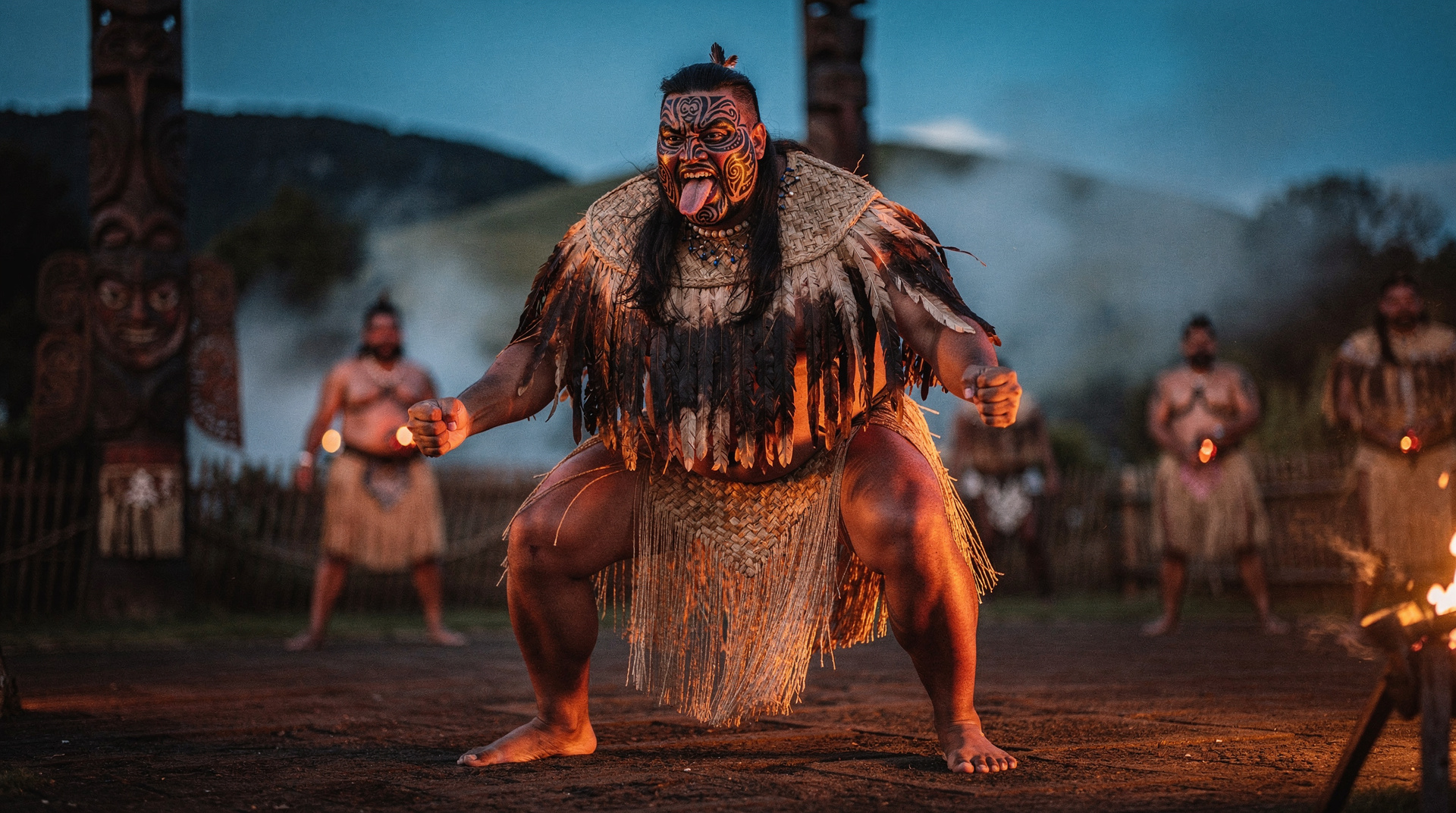
Maori culture overview — what every visitor should know
Respectful introduction to Maori culture for visitors: tangata whenua, Te Tiriti, tikanga basics, language, cultural experiences, and how to engage honestly.
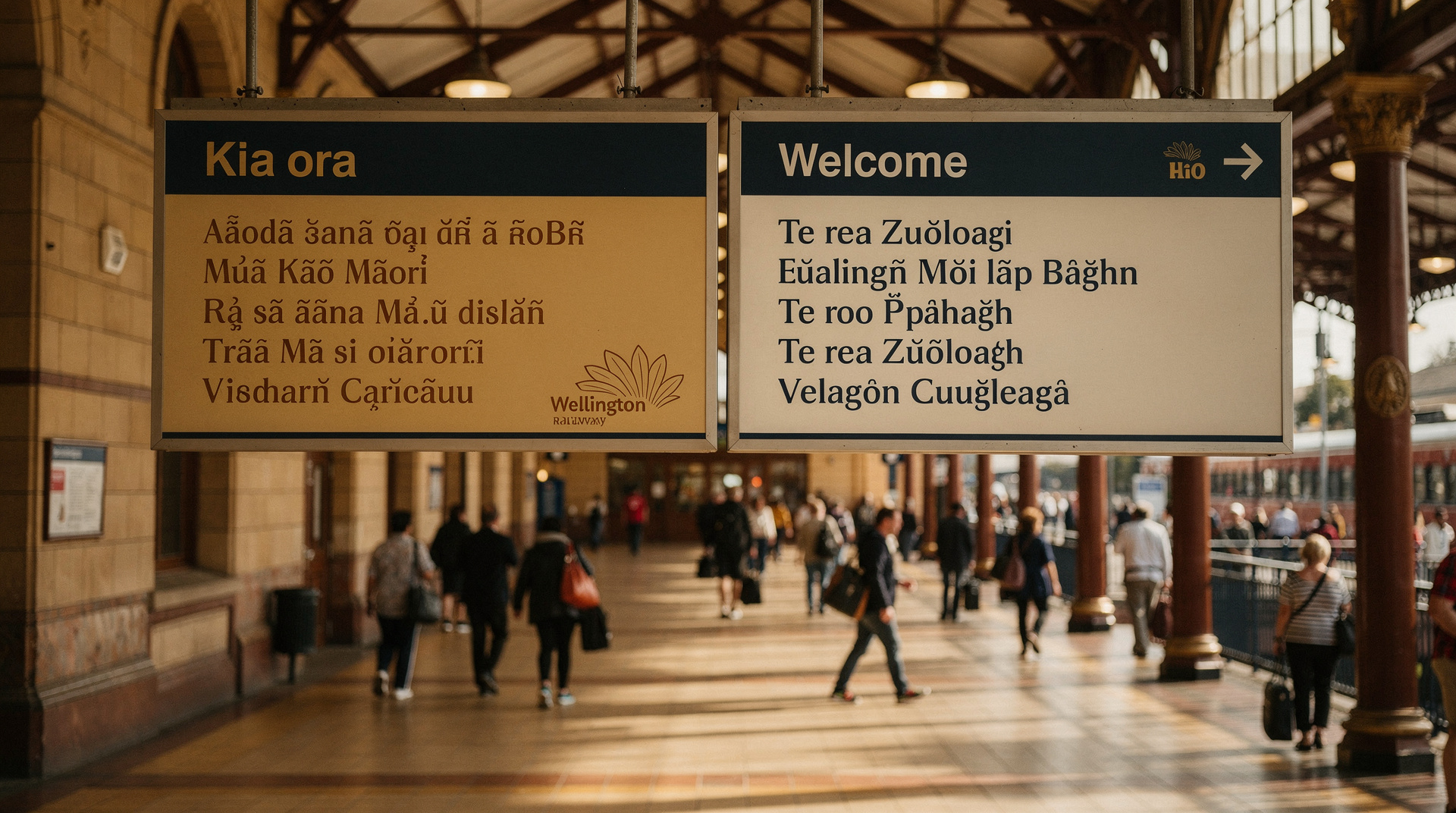
Te reo Maori basics for travelers
Practical te reo Maori guide: vowel pronunciation, 40+ essential phrases, place name meanings, and everyday Maori words woven into New Zealand English.
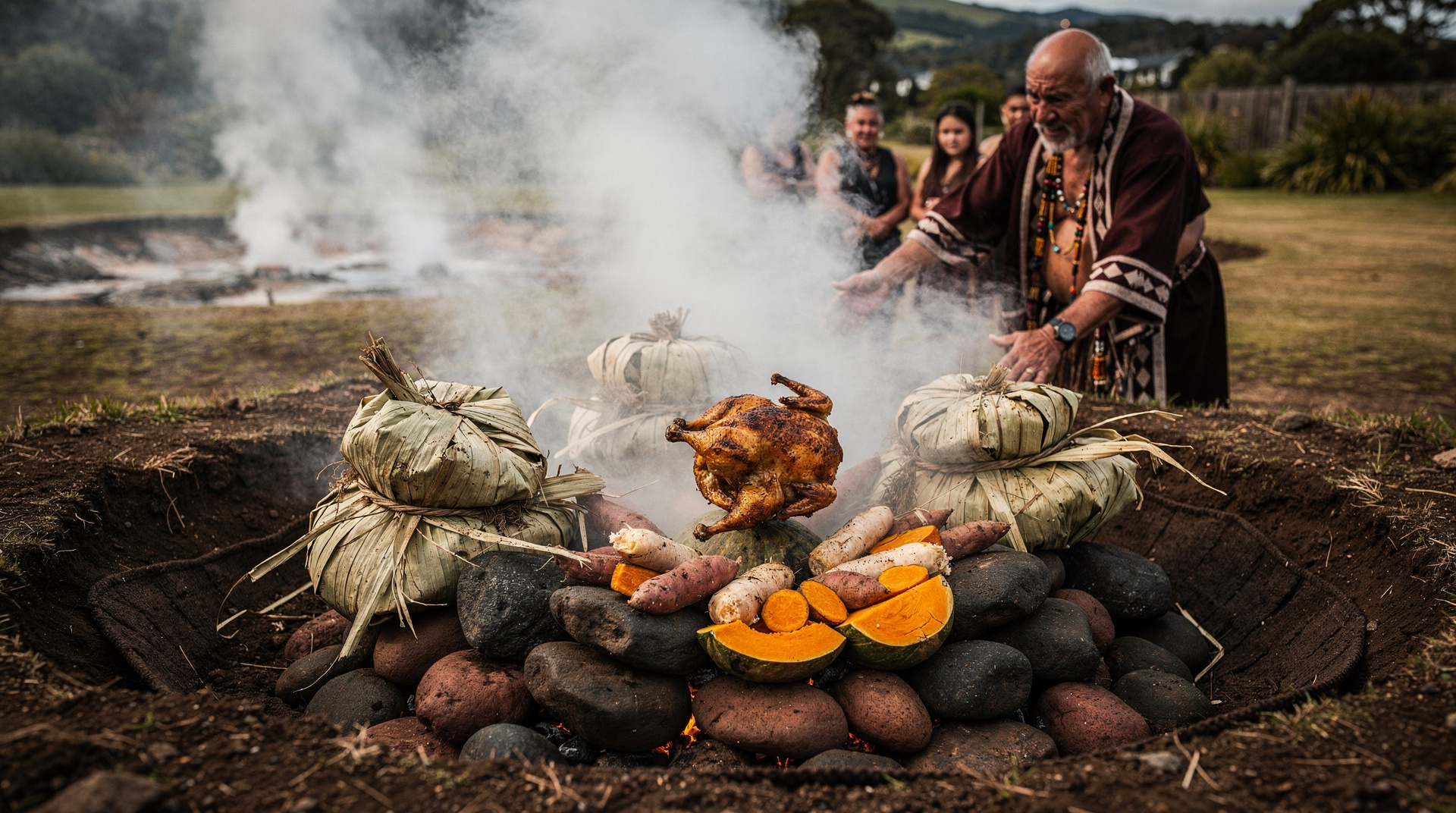
Hangi experience in New Zealand
A hangi is a traditional Maori feast cooked in an earth oven. Best operators in Rotorua, prices NZD/USD/EUR, cultural context, and te reo glossary.
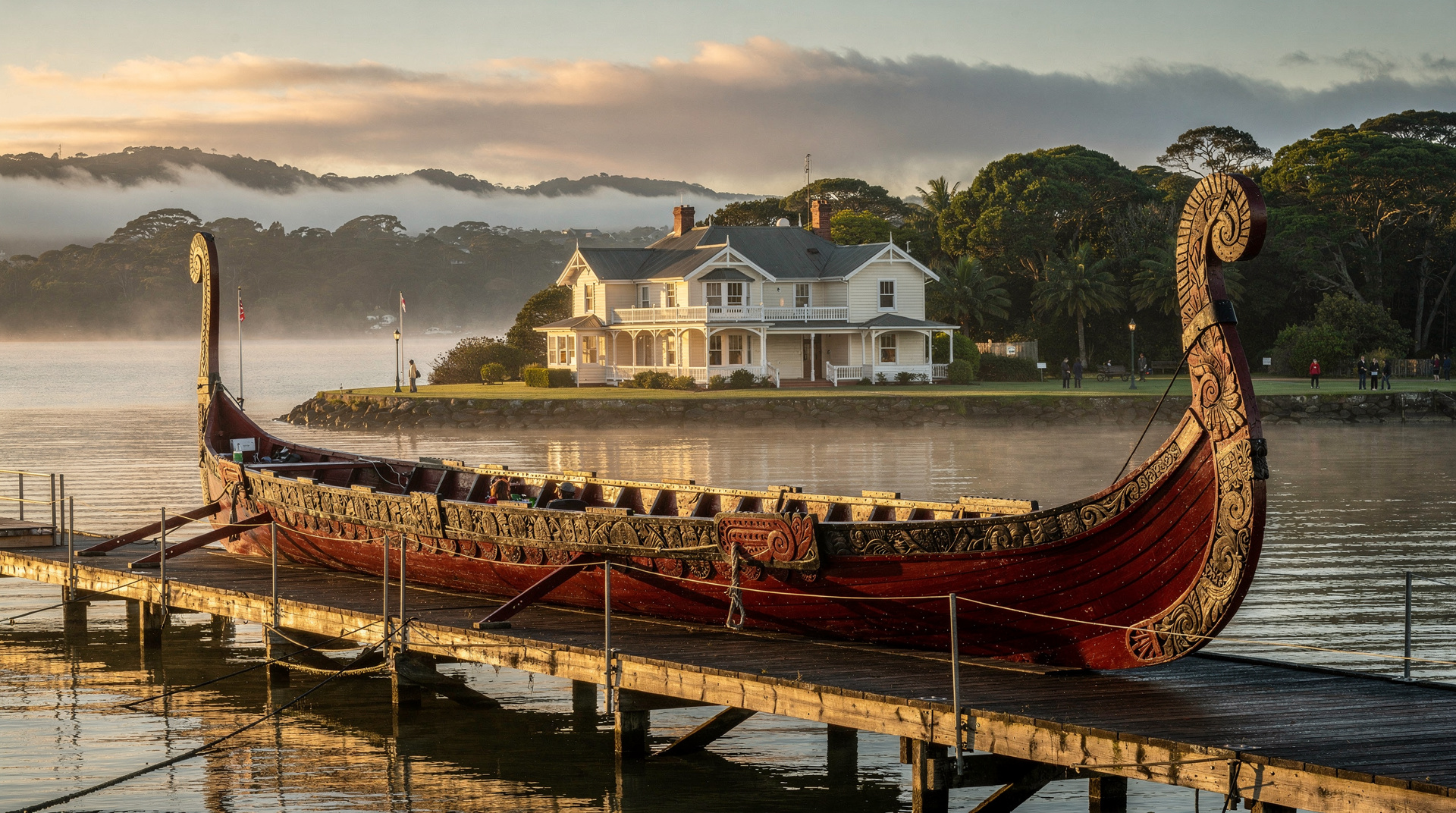
Waitangi Treaty Grounds — guide to New Zealand's most important site
Waitangi Treaty Grounds visitor guide: Treaty of Waitangi signed here 1840. Tickets, guided tours, hangi evenings, and essential NZ historical context.
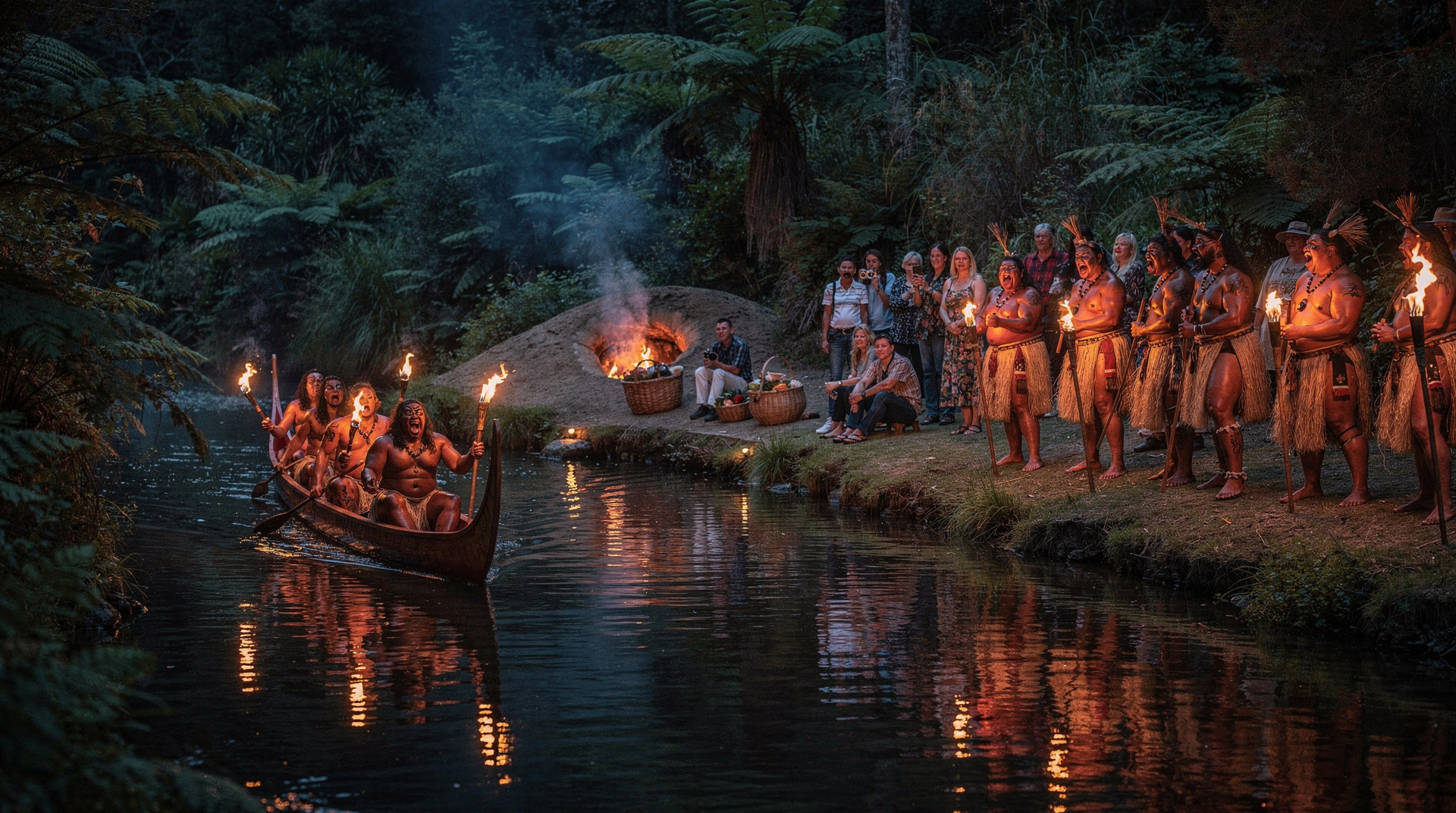
Mitai Maori Village Rotorua — honest review and visitor guide
Honest review of Mitai Maori Village Rotorua: the family-run waka arrival, kapa haka, hangi feast, and glowworm walk. Costs in NZD/USD/EUR and booking tips.
Last reviewed: