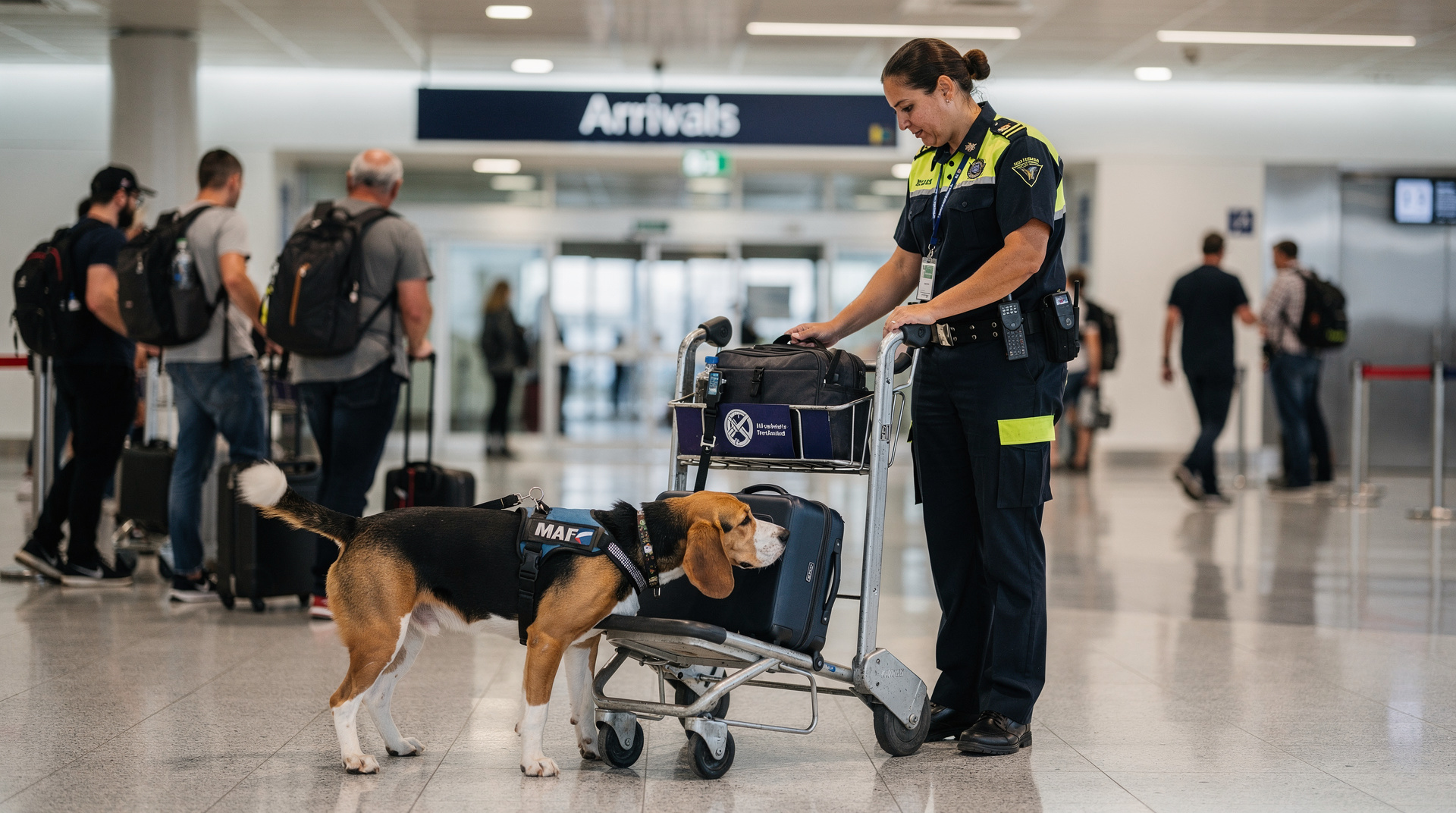
Bringing pets to New Zealand
Can I bring my pet to New Zealand?
Yes, but the process is lengthy, expensive, and applies strict biosecurity rules. Dogs and cats from approved countries (including Australia, UK, US — with conditions) can enter after completing pre-export tests and treatments, microchipping, health certificates, and a managed isolation period (10 days minimum from approved countries). Budget NZD 3,000-8,000+ in total costs. This is for permanent relocation or long-term Working Holiday stays — not practical for short tourist visits.
Pets and New Zealand’s biosecurity rules
New Zealand is one of the world’s most biosecurity-strict countries. The same island ecosystem isolation that makes it unique — no native land predators, endemic species found nowhere else on earth — makes it extremely vulnerable to introduced pests and diseases. Every animal entering New Zealand is treated as a potential biosecurity risk.
For tourists on a 1-3 week visit: do not bring your pet. The biosecurity process takes months to complete from most countries, costs thousands of dollars, and requires a managed isolation period after arrival. It is designed for people relocating permanently or for long-term Working Holiday Visa holders who are committed to the full process.
| Who this applies to | Permanent relocation or long-term Working Holiday Visa stays |
| Cost | NZD 3,000–8,000+ per dog from UK/US |
| Time needed | 6–12 months minimum from approved countries |
| Where to start | mpi.govt.nz or an accredited pet relocation agent |
| Short tourist visits | Not possible — no provision for temporary pet entry |
For Working Holiday Visa holders or those relocating permanently: the process is manageable with advance planning starting 6-12 months before your planned travel date.
This guide gives you the complete picture to make an informed decision.
Which animals can be imported
Permitted: Dogs and cats are the primary animals private individuals import. They are permitted from certain approved countries.
Not permitted (as pets): Most birds, reptiles, fish, and other animals face extreme restrictions or outright prohibition due to biosecurity risk. If you are considering importing any animal other than a dog or cat, contact the Ministry for Primary Industries (MPI) before making any plans.
Approved countries for dogs and cats:
- Australia (shortest process: direct, lower quarantine requirements)
- United Kingdom
- United States (with conditions)
- Ireland
- Singapore (for cats)
- Several others — check the MPI approved country list at mpi.govt.nz
Animals from non-approved countries (including most of continental Europe, France, Germany, Portugal, Spain, and Italy) face a much more complex process requiring an approved country intermediate step. This typically involves the animal spending 30-180 days in the UK, Australia, or another approved country before continuing to NZ.
The process for dogs and cats (from approved countries like UK, US)
Note: The process changes; these are steps accurate as of April 2026 but verify with MPI directly before proceeding.
Step 1: Start at least 6-12 months before travel
Contact MPI (mpi.govt.nz) or an approved pet relocation agent (see below) immediately. The timeline for many treatments and testing requirements cannot be accelerated regardless of money.
Step 2: Microchipping
Your animal must have an ISO-standard microchip (15-digit, 134.2kHz). This must be implanted before any other steps. Most animals already have this; non-standard chips may need an additional chip.
Step 3: Rabies vaccination and rabies blood test
- Rabies vaccination (if not already current)
- A rabies neutralising antibody titre test (RNAT/FAVN test) from an approved laboratory
- A waiting period of 180 days from the date of a satisfactory titre test result before travel (for non-Australia countries)
- This 180-day clock cannot be shortened
Step 4: Internal and external parasite treatments
Specific treatments for tapeworm (Echinococcus), ticks, and other parasites must be administered by an approved veterinarian within specific time windows before travel. The timing requirements are precise and must be followed exactly.
Step 5: Official veterinary health certificate
An official veterinary health certificate issued by a government-accredited veterinarian (not just any vet) within 10 days of travel.
Step 6: Flight requirements
- Must fly on an MPI-approved airline and in an approved cargo/cabin configuration
- Direct flights preferred; some connecting itineraries are approved
- Contact your airline’s cargo section — most international airlines have pet freight experience
Step 7: Managed isolation on arrival
Animals from approved countries spend 10 days in managed isolation at an MPI-approved facility (Auckland Quarantine Station). Animals from less-approved pathways may spend 30 days. You can visit during this period; you cannot take the animal home until clearance.
Australia is the exception: Animals from Australia with Australian residency documentation may enter via a shorter process under the Trans-Tasman Travel Arrangement.
Costs
The total cost varies significantly based on country of origin, number of animals, airline, and whether you use a pet relocation agent. Indicative ranges:
| Cost item | NZD estimate | USD | EUR |
|---|---|---|---|
| Veterinary costs (testing, treatments, certificates) | NZD 800-2,000 | USD 480-1,200 | EUR 440-1,100 |
| Pet relocation agent fees | NZD 500-2,000 | USD 300-1,200 | EUR 276-1,100 |
| Airline freight costs (per animal) | NZD 800-3,000 | USD 480-1,800 | EUR 440-1,650 |
| Managed isolation fees (10 days, 1 dog) | NZD 800-1,500 | USD 480-900 | EUR 440-825 |
| Total (1 dog from UK/US) | NZD 3,000-8,000+ | USD 1,800-4,800 | EUR 1,650-4,400 |
For two animals, costs roughly double for most line items. For small cats in cabin (where permitted), airline costs are lower.
Pet relocation agents
The complexity of the process — specific approved labs, precise treatment timing windows, government certificates — means most people use a specialist pet relocation agent. These agents manage the paperwork, coordinate with vets, book approved airline cargo, and liaise with MPI.
Major NZ-experienced agents include:
- Animals Away (New Zealand)
- Dogtainers (Australia to NZ route specialist)
- Airpets (UK to NZ)
These agents charge NZD 500-2,000 for the coordination service. For most people without experience in import processes, this cost saves significant time and reduces error risk. A mistake in the treatment timing or documentation can result in the animal being sent back at your expense.
What happens if your pet doesn’t meet requirements on arrival
Animals that do not meet biosecurity requirements on arrival are either placed in additional quarantine (at your cost) or exported back to their country of origin. There is no grace period. The rules are absolute.
This is not a bureaucratic inconvenience — it reflects genuine biosecurity stakes. An introduced disease like rabies or a new tapeworm species would have catastrophic consequences for New Zealand’s wildlife and agriculture. The rules are strict because the consequences of a mistake are serious.
Alternatives to importing your pet
Pet-sitting at home: The most common choice for short to medium stays. Professional pet sitters, friends, or family provide in-home care.
Boarding kennels/catteries: For stays of weeks to a few months, high-quality boarding establishments in most countries provide good care.
Rehoming if relocating permanently: Some owners choose to rehome their pet rather than subject it to the stress and expense of international travel. This is a personal decision; many pets adapt well to the journey, but older animals and anxious animals may find it distressing.
Deciding whether it’s worth it
For a genuine permanent relocation, most pet owners who complete the process report it was worth the cost and hassle, particularly for younger, healthy animals that travel reasonably well. The calculation changes for older pets (over 8-10 years), animals with anxiety or health conditions, or short-to-medium Working Holiday stays (under 18 months) — the combination of cost, the 10-day isolation period away from you, and the stress of the journey often outweighs the benefit for a temporary stay.
If you’re relocating with a Working Holiday Visa and unsure how long you’ll stay, it’s worth planning as if the stay could be short, since the import cost is the same regardless of how long you end up staying afterward. See the Working Holiday Visa guide for how the visa timeline interacts with this decision.
Timeline planning: working backward from your travel date
Because the 180-day rabies titre waiting period is fixed and cannot be shortened, the single most common mistake is starting too late. Working backward from a target arrival date: allow 1-2 months for the initial vet consultation, microchipping, and rabies vaccination if not already current; then the mandatory 180-day wait from a satisfactory titre test (for non-Australia origin countries); then 1-2 months for parasite treatments, the official health certificate, and booking approved airline cargo space.
In practice this means starting the process 8-12 months before your planned New Zealand arrival gives realistic breathing room for delays — lab results, vet appointment availability, and airline booking windows all vary and rarely go exactly to schedule.
Frequently asked questions about bringing pets to NZ
Can I bring my pet on a Working Holiday Visa?
Technically yes, if you complete the full import process. Practically, for a 12-month Working Holiday stay, the process starts 6-12 months before travel, costs NZD 3,000-8,000+, and the animal then needs to exit NZ with you at the end (or remain in NZ if you stay). Most Working Holiday Visa holders leave their pets at home — the logistics and costs rarely justify it for a 12-month stay.
Can I bring my dog to visit and then take it home?
No. There is no provision for short-term pet visits. Any animal entering New Zealand through the formal process has completed permanent import requirements. Bringing a pet for a holiday visit is not an option in New Zealand’s biosecurity framework.
Are assistance dogs treated differently?
Yes. Trained assistance dogs (guide dogs, hearing dogs, mobility assistance dogs) from approved countries can enter via an expedited process with reduced quarantine requirements, subject to meeting specific certification and health requirements. Contact MPI and the relevant New Zealand assistance dog organisation before travel for current guidance.
What happens to pets of tourists who bring them unknowingly (on smaller vessels, etc.)?
New Zealand Customs and Biosecurity have powers to detain and quarantine any undeclared animal immediately on arrival. Undeclared animals face mandatory isolation and likely export. Penalties include significant fines and potential prosecution. This applies to all arriving international vessels and aircraft.
Can I speed up the process by paying more?
No. The 180-day rabies titre waiting period and the mandated treatment windows are fixed by MPI regulation and cannot be shortened for any fee. A pet relocation agent can make the process smoother and reduce the risk of errors, but no legitimate service can compress the biosecurity timeline itself.
What happens to my pet during the 10-day managed isolation period?
The animal stays at an MPI-approved facility (the Auckland Quarantine Station for most approved-country arrivals), where it is monitored, cared for, and cleared through the remaining biosecurity checks. Owners can typically visit during this period, though visiting hours and rules vary — confirm specifics with the facility or your relocation agent before arrival. See the first time in New Zealand guide for wider arrival planning.
Related guides and itineraries
- NZeTA visa guide — biosecurity declaration context
- Packing list for New Zealand — what to declare at customs
- Working Holiday Visa New Zealand — for longer stays
- First time in New Zealand — orientation including biosecurity
- Is New Zealand safe — safety context for NZ’s biosecurity
Related guides
NZeTA visa guide (by nationality)
Complete NZeTA guide: who needs it, costs (NZD 23 + IVL 100), validity, and a per-nationality table for FR, DE, IT, ES, PT, US, CA, UK.

Working Holiday Visa New Zealand
Complete guide to the NZ Working Holiday Visa: age limits by nationality, costs, how to apply, what work you can do, and realistic expectations.

First time in New Zealand
Complete first-timer's guide to NZ: costs, logistics, Maori culture, what to book early, and how to structure 7–21 days.

Packing list for New Zealand
Practical NZ packing list: layers for 4-season weather, hiking essentials, biosecurity musts, and what NOT to bring through customs. Season-by-season breakdown.
Last reviewed: