
Working Holiday Visa New Zealand
Who is eligible for a Working Holiday Visa in New Zealand?
Generally citizens aged 18-30 (35 for France, Canada, Italy, Germany) from around 45 partner countries. You apply online, pay NZD 208 plus the NZD 100 IVL, and can stay 12 months — extendable to 23 months for some nationalities. You can work for any employer, but only 3 months with any single employer.
The real deal on working holidays in New Zealand
The Working Holiday Visa is one of the best travel mechanisms ever invented for people in their twenties. New Zealand has bilateral agreements with around 45 countries, allowing young people to spend up to 12 months (sometimes 23) living and working without being tied to a single employer or a specific job category. You can pick fruit in Hawke’s Bay, work as a barista in Wellington, do seasonal ski resort work in Queenstown, or take construction jobs in Christchurch — and intersperse any of these with travel.
New Zealand is one of the most popular Working Holiday destinations in the world, and for good reason: wages are reasonable, the country is safe, English is the language of work, and the landscapes are exceptional. But there are realities to know before you book: the cost of living has risen sharply, competition for work in tourism hubs is intense in summer, and rural work (fruit picking, farming) can be isolating.
This guide covers the mechanics. What you make of the experience is up to you.
| Who | Ages 18-30 (35 for France, Canada, Italy, Germany), ~45 partner countries |
| Cost | Around NZD 308 total (visa fee + IVL) |
| Stay | 12 months, extendable to 23 for some nationalities |
| Work rule | Any employer, max 3 months per employer (exceptions apply) |
| Apply | Online only, via immigration.govt.nz |
Eligibility by nationality
Working Holiday agreements vary significantly by country — particularly on age limits.
| Country | Age range | Annual quota | Max stay | Extension possible |
|---|---|---|---|---|
| France | 18-35 | 2,000 | 12 months | Yes, to 23 months |
| Germany | 18-30 | 1,800 | 12 months | Yes, to 23 months |
| Italy | 18-35 | 900 | 12 months | No |
| Spain | 18-30 | 200 | 12 months | No |
| Portugal | 18-30 | limited | 12 months | No |
| United Kingdom | 18-30 | no cap | 12 months | Yes, to 23 months |
| Canada | 18-35 | 5,100 | 12 months | No |
| Japan | 18-30 | 1,500 | 12 months | No |
| South Korea | 18-30 | 1,800 | 12 months | No |
| Ireland | 18-30 | 2,000 | 12 months | No |
| Netherlands | 18-30 | 200 | 12 months | No |
| Belgium | 18-30 | 100 | 12 months | No |
| Sweden | 18-30 | unlimited | 12 months | No |
| Denmark | 18-30 | unlimited | 12 months | No |
| Argentina | 18-30 | 100 | 12 months | No |
| Chile | 18-30 | 100 | 12 months | No |
Age is calculated on the date of application, not arrival. If you turn 31 (or 36 for France/Canada) before your visa is approved, you are ineligible. Apply before your birthday.
Quota exhaustion: Some countries (Spain, Portugal, Belgium, Netherlands, Argentina, Chile) have small annual quotas that can be exhausted early in the New Zealand financial year (April). If you are from a quota country, apply from 12 April (NZ time) onwards and monitor availability.
Verify current eligibility and quotas on Immigration New Zealand’s website — bilateral agreements do change, and the table above reflects conditions as of April 2026.
Costs
| Fee | Amount |
|---|---|
| Visa application fee | NZD 208 (USD 125 / EUR 114) |
| International Visitor Levy (IVL) | NZD 100 (USD 60 / EUR 55) |
| Total | NZD 308 (USD 185 / EUR 169) |
The IVL is the same levy paid by tourist visitors on an NZeTA — see the NZeTA visa guide for background. It is non-refundable.
Some nationalities may also need to pay for a medical examination (chest X-ray) to demonstrate tuberculosis-free status. This is required if you have lived for 3+ months in certain countries on a WHO TB list — check the Immigration New Zealand visa checker.
How to apply
-
Online only. All Working Holiday Visa applications go through Immigration New Zealand’s online portal (immigration.govt.nz). There are no embassy appointments or paper forms.
-
Create an INZ account and start a new visa application. Select “Working Holiday Visa” and your nationality.
-
Complete the application. You will be asked about: criminal history (convictions must be declared — a conviction does not automatically disqualify you, but non-declaration does), health conditions, travel history, and funding.
-
Funding requirement. You must demonstrate access to funds equivalent to NZD 4,200 (USD 2,520 / EUR 2,310) for living expenses and an onward/return ticket (or funds to purchase one). This is checked at the border, not typically at application stage — but you should have this ready.
-
Return/onward ticket: You do not need to have an actual return ticket booked, but you must have funds to purchase one. Many travellers show a flexible departure booking or evidence of savings.
-
Processing time. Usually within 24-72 hours. During peak application periods (April, when quotas reset for quota countries), processing can take a few days.
-
Once approved, your visa is electronic. You have 12 months from approval to first enter New Zealand.
What you can do on a Working Holiday Visa
Working Holiday Visas are very permissive compared to most work visas.
You can:
- Work for any employer in any industry
- Change jobs freely
- Start and stop work as you please
- Undertake study or training for up to 3 months total
- Travel freely within New Zealand throughout the 12 months
- Leave New Zealand and re-enter (as many times as you like within your validity period)
Restrictions:
- No more than 3 months with any single employer (unless you are doing specified seasonal horticultural work — fruit picking — in which case you can work longer for one employer, and this can earn you a 3-month extension)
- No working as a foreign correspondents or running a business that employs New Zealand residents
The 3-month single-employer rule is strictly enforced but also regularly misunderstood. It means 3 calendar months, not 3 months of actual working days. If you work at a ski resort from June to August (3 months), that counts. If you leave for 2 weeks in the middle, it does not pause the clock.
Extending to 23 months
UK and French passport holders can extend their Working Holiday Visa from 12 to 23 months by doing 3 months of specified work in:
- Agriculture, horticulture, viticulture
- Fishing or aquaculture
- Forestry
The work must be done in New Zealand and recorded with a recognised employer. After completing the qualifying work and returning home (or applying from within NZ), you can apply for a second Working Holiday Visa for a further 12 months.
German nationals are also able to apply for a second year, though under a separate bilateral arrangement with different qualifying criteria — verify on the Immigration NZ site.
What work is realistic to find
Easiest to find:
- Fruit picking (Hawke’s Bay, Marlborough, Central Otago, Bay of Plenty — seasonal, February-May primarily)
- Hospitality and cafes (Queenstown, Wanaka, Auckland — year-round)
- Ski resort work (Queenstown/Wanaka, Mt Ruapehu — June-October)
- Farm work (year-round in various regions)
- Construction (Christchurch, Auckland)
Harder to find but possible:
- Marketing, design, admin (requires local contacts or online job platforms)
- Healthcare (requires full registration — complex for international workers)
- Teaching (requires NZ teacher registration)
For job searching, Seek.co.nz, Trade Me Jobs, and Backpacker Board NZ are the main platforms. Arrive with 2-3 months of living funds minimum — it can take 2-4 weeks to find stable work, particularly in competitive tourist hubs.
Cost of living reality check
New Zealand is not the budget destination many Working Holiday visitors expect from guidebook descriptions written a decade ago.
Approximate monthly costs (2026):
| Expense | Budget | Mid-range |
|---|---|---|
| Rent (shared flat) | NZD 700-900 | NZD 900-1,400 |
| Food (self-catering) | NZD 350-500 | NZD 500-700 |
| Transport | NZD 100-200 | NZD 200-400 |
| Total | NZD 1,150-1,600 | NZD 1,600-2,500 |
The NZ minimum wage (April 2026) is NZD 23.15 per hour. Fruit picking and seasonal work often pays per unit (per bin) rather than per hour — experienced pickers can earn NZD 150-250/day in peak harvest; newcomers may earn NZD 80-120/day in the first week.
Auckland and Queenstown are the most expensive cities. Regional towns (Napier, Nelson, Whanganui) offer lower rents and can be easier to find work in less-competitive environments.
Bringing a partner
You and your partner can both apply for Working Holiday Visas independently — there is no joint application. Apply simultaneously and aim to arrive together. If one partner is ineligible (too old, wrong nationality), they may be able to apply for a standard visitor visa for shorter stays and then re-enter; this makes planning more complex. There is no automatic partner/dependency provision in Working Holiday arrangements.
Health insurance
New Zealand’s public health system (ACC) covers injuries (not illness) for all visitors including Working Holiday Visa holders. However, ACC does not cover pre-existing conditions, dental, optical, or illness-related medical costs. International travel insurance covering these gaps is strongly recommended for a 12-month stay. Budget approximately NZD 150-300 for a year of basic travel health insurance.
Taxes
If you work in New Zealand, you pay NZ income tax. You will need an IRD (Inland Revenue Department) number — apply online at ird.govt.nz within a few weeks of arrival. Tax rates are 10.5% on the first NZD 14,000 of annual income, 17.5% up to NZD 48,000.
At the end of the tax year (31 March), you can claim a tax refund if you overpaid. Many Working Holiday visitors are entitled to significant refunds because they work less than a full year. Use the myIR online portal or a tax refund agent (taxback.com, taxrefunds.co.nz) — agents charge around 15-20% of the refund.
Finding accommodation as you go
Most Working Holiday visitors don’t lock in long-term housing before arrival — the norm is a mix of hostels, short-term flat shares, and (for seasonal or ski work) staff accommodation attached to the job itself. Facebook groups for specific towns (“Queenstown Flatmates Wanted,” “Wanaka Jobs & Flats”) are the fastest way to find a room once you’ve picked a base, often faster than Trade Me Property listings.
Expect to pay a bond (usually two to four weeks’ rent) plus the first week upfront, and expect competition in Queenstown and Wanaka during ski season (June–October) and in Auckland year-round. Fruit-picking and orchard work often includes on-site cabins or shared houses at a set weekly deduction from pay — ask what’s included before accepting a role, since “accommodation provided” can mean anything from a private room to a shared caravan.
Common reasons applications get declined or delayed
Immigration New Zealand rejects or stalls a minority of Working Holiday applications, and the reasons are fairly predictable: undeclared criminal convictions (even minor ones, discovered later, are treated more harshly than disclosed ones), gaps or inconsistencies in travel history, insufficient evidence of funds when requested, and incomplete health declarations for applicants who have spent time in TB-risk countries.
A previous visa overstay anywhere — not just in New Zealand — can also trigger extra scrutiny. None of these are usually fatal on their own if declared honestly and explained; the pattern INZ penalises hardest is non-disclosure, not the underlying issue. If your application sits beyond the usual 24–72 hour window with no update, it typically means it’s been flagged for manual review rather than lost — check your INZ account for requests for additional information before contacting support.
Comparing your regional base
Where you choose to be based shapes both your job prospects and your cost of living more than almost any other decision.
| Region | Best for work | Cost of living | Character |
|---|---|---|---|
| Queenstown/Wanaka | Ski season hospitality, tourism | High | Adventure-town social scene, competitive housing |
| Auckland | Office admin, hospitality, year-round work | High | Biggest job market, most anonymous |
| Rotorua | Tourism, hospitality | Moderate | Smaller, easier to find housing than Queenstown |
| Hawke’s Bay/Marlborough | Fruit and grape picking (seasonal) | Low-moderate | Rural, seasonal, can be isolating outside harvest |
| Christchurch | Construction, hospitality | Moderate | Rebuilding city, less tourist-saturated |
| Nelson/Napier | Mixed, lower competition | Low | Under-the-radar, good for a quieter base |
Many Working Holiday visitors deliberately move between two or three of these across the year — ski season in Queenstown, harvest work in Hawke’s Bay or Marlborough, then a slower stretch in a smaller town to save money before heading home or extending.
Frequently asked questions about Working Holiday Visas
Can I apply for a Working Holiday Visa if I already have an NZeTA?
Yes. They are separate. If you have been visiting New Zealand on an NZeTA and decide you want to work, you must depart and apply for a Working Holiday Visa from outside New Zealand. You cannot convert an NZeTA into a Working Holiday Visa from within the country.
Can I study on a Working Holiday Visa?
Yes, up to 3 months of study or formal training during the 12-month period. This is popular for language schools, professional courses, or dive certifications. You cannot enrol in a full university programme.
Can I buy a campervan and travel while working?
Yes. Many Working Holiday visitors do exactly this — alternating periods of work and travel. It is one of the most practical ways to see the country cheaply. See the campervan vs car rental guide for honest cost comparisons.
Do I need to have a job lined up before arriving?
No. Most Working Holiday visa holders arrive without a job offer. The visa allows you to search for work after arrival. Having 2-3 months of living funds removes the pressure of needing a job immediately.
Is my home driver’s licence valid in New Zealand?
Yes for a standard car licence, provided it is in English or accompanied by an official translation. International Driving Permits are not required but can help if your licence is in a non-Latin script. See the driving in New Zealand guide for full details.
What happens if I overstay my Working Holiday Visa?
Overstaying is illegal and results in deportation with a likely 5-year re-entry ban. There is no amnesty for Working Holiday visa holders. If you want to stay longer, apply for a visa extension before your current visa expires.
Can I bring a pet with me on a Working Holiday Visa?
It’s possible but complex and expensive — New Zealand has strict biosecurity requirements including quarantine, vaccination timelines, and import permits that can take months to arrange. See the pets in NZ visa guide for the realistic process and timeline before committing to bringing an animal.
Do I need a New Zealand bank account, and how quickly can I open one?
Yes, in practice — most employers pay by direct deposit and few will run informal cash arrangements. Major banks (ANZ, ASB, Westpac, BNZ) let Working Holiday visa holders open an account online before arrival or in person within the first days, usually needing only your passport, visa confirmation, and a New Zealand address (a hostel address works to start). Funds typically clear within a day or two of opening.
Related guides and itineraries
- NZeTA visa guide — for visitor entry requirements
- New Zealand on a budget — cost reality for extended stays
- Campervan vs car rental — key decision for long-term travellers
- Driving in New Zealand — left-side rules, licence validity
- Best time to visit New Zealand
- First time in New Zealand
- Solo female travel in New Zealand
- Rotorua guide — popular Working Holiday base
- Queenstown guide — ski season work hub
Related guides
NZeTA visa guide (by nationality)
Complete NZeTA guide: who needs it, costs (NZD 23 + IVL 100), validity, and a per-nationality table for FR, DE, IT, ES, PT, US, CA, UK.
New Zealand on a budget
Honest budget guide to NZ: real daily costs, where to save, where not to cheap out, free things, and how to stretch NZD on a backpacker or mid-range budget.
InterCity bus guide
Complete InterCity bus guide for NZ: main routes, FlexiPass vs point-to-point, actual journey times, and when the bus is smarter than renting a car.
Bringing pets to New Zealand
Bringing pets to NZ: strict biosecurity rules, quarantine, approved countries, costs in NZD/USD/EUR, and whether it is worth attempting.

First time in New Zealand
Complete first-timer's guide to NZ: costs, logistics, Maori culture, what to book early, and how to structure 7–21 days.
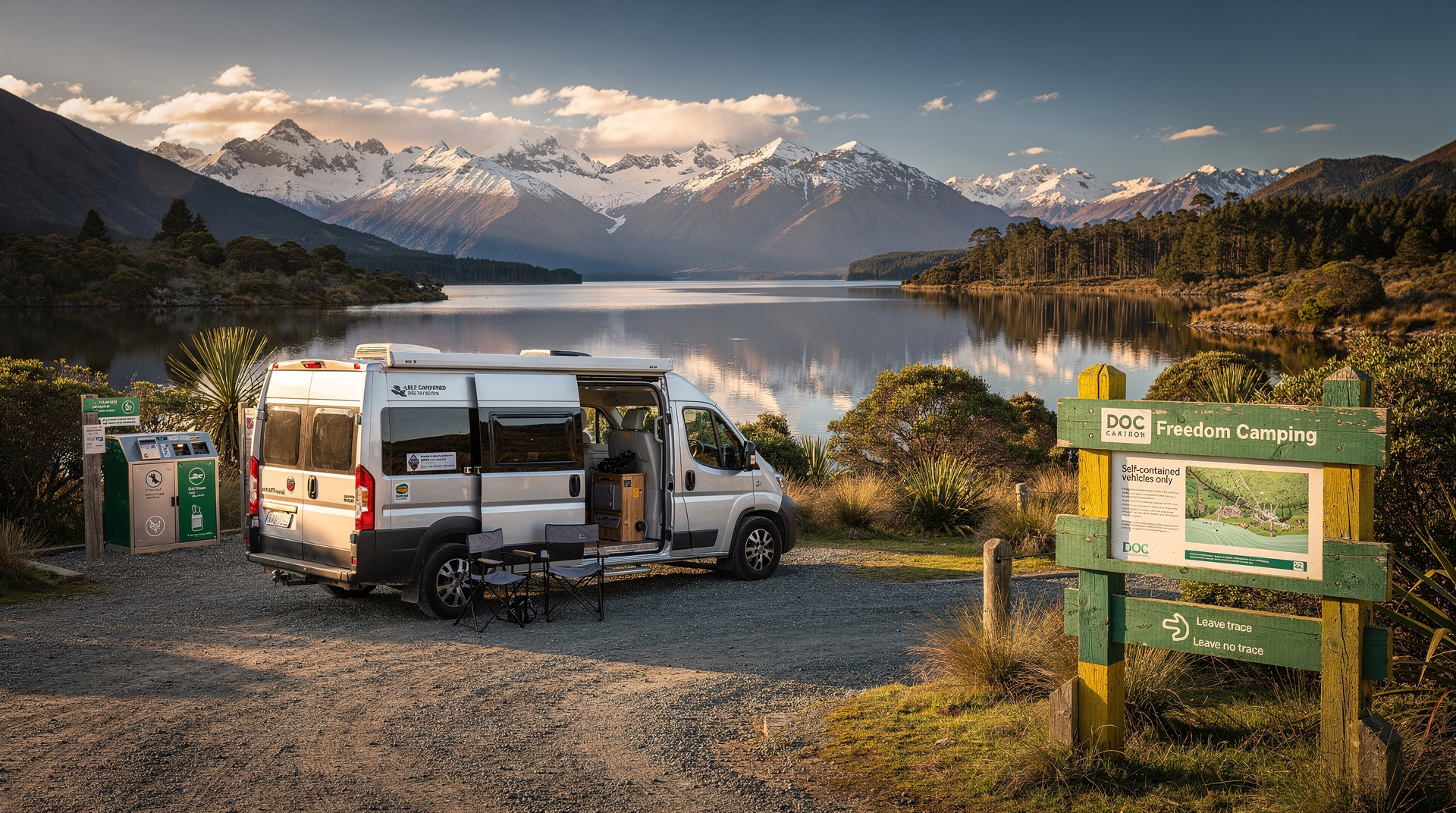
Freedom camping in New Zealand — the rules are tightening in 2025
Freedom camping restrictions are spreading across NZ councils. The honest 2025 picture: what's allowed, what's banned, and how to plan around it.
Last reviewed: