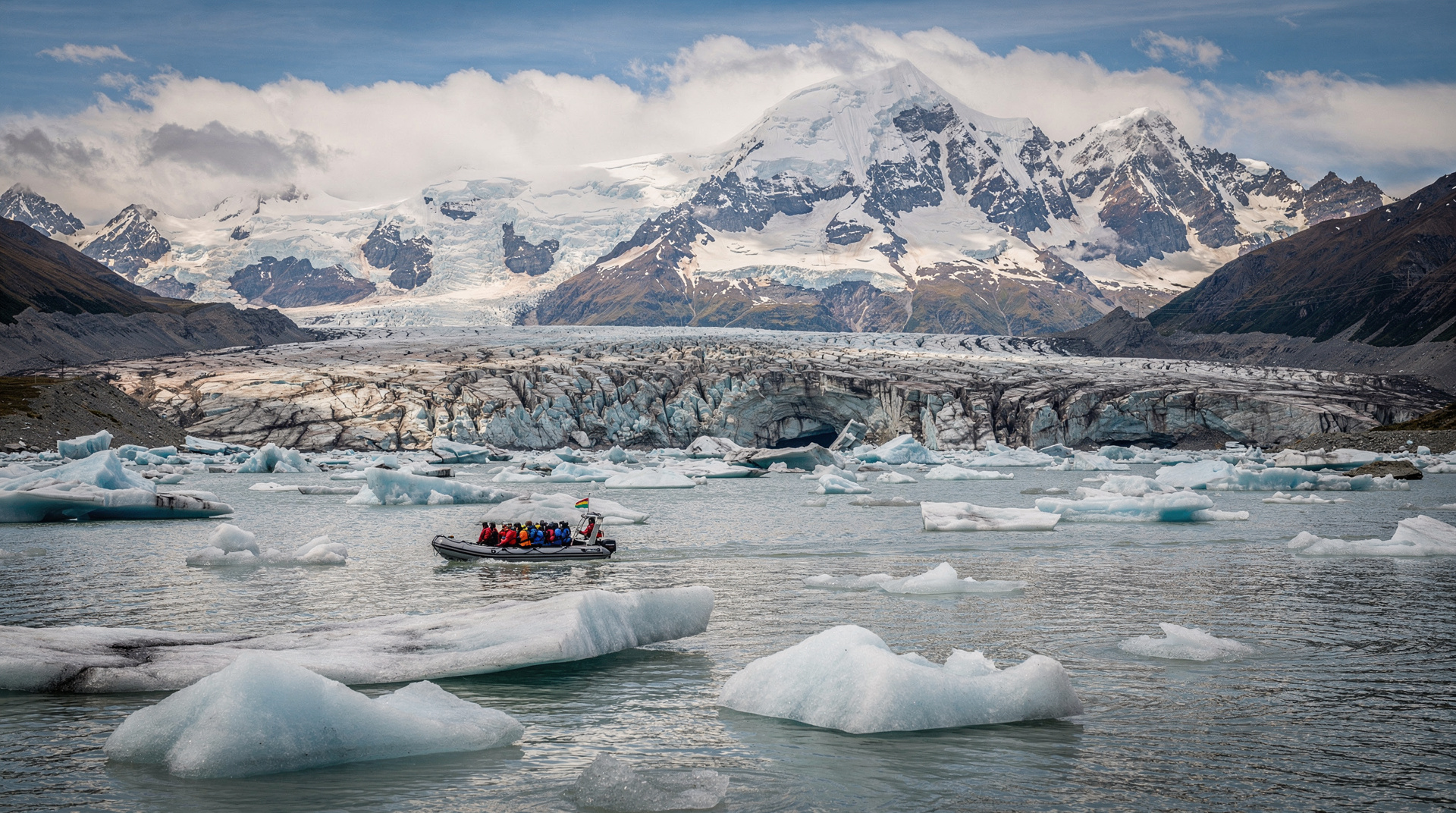
Tasman Glacier — New Zealand's longest glacier by helicopter or boat
How do you visit the Tasman Glacier?
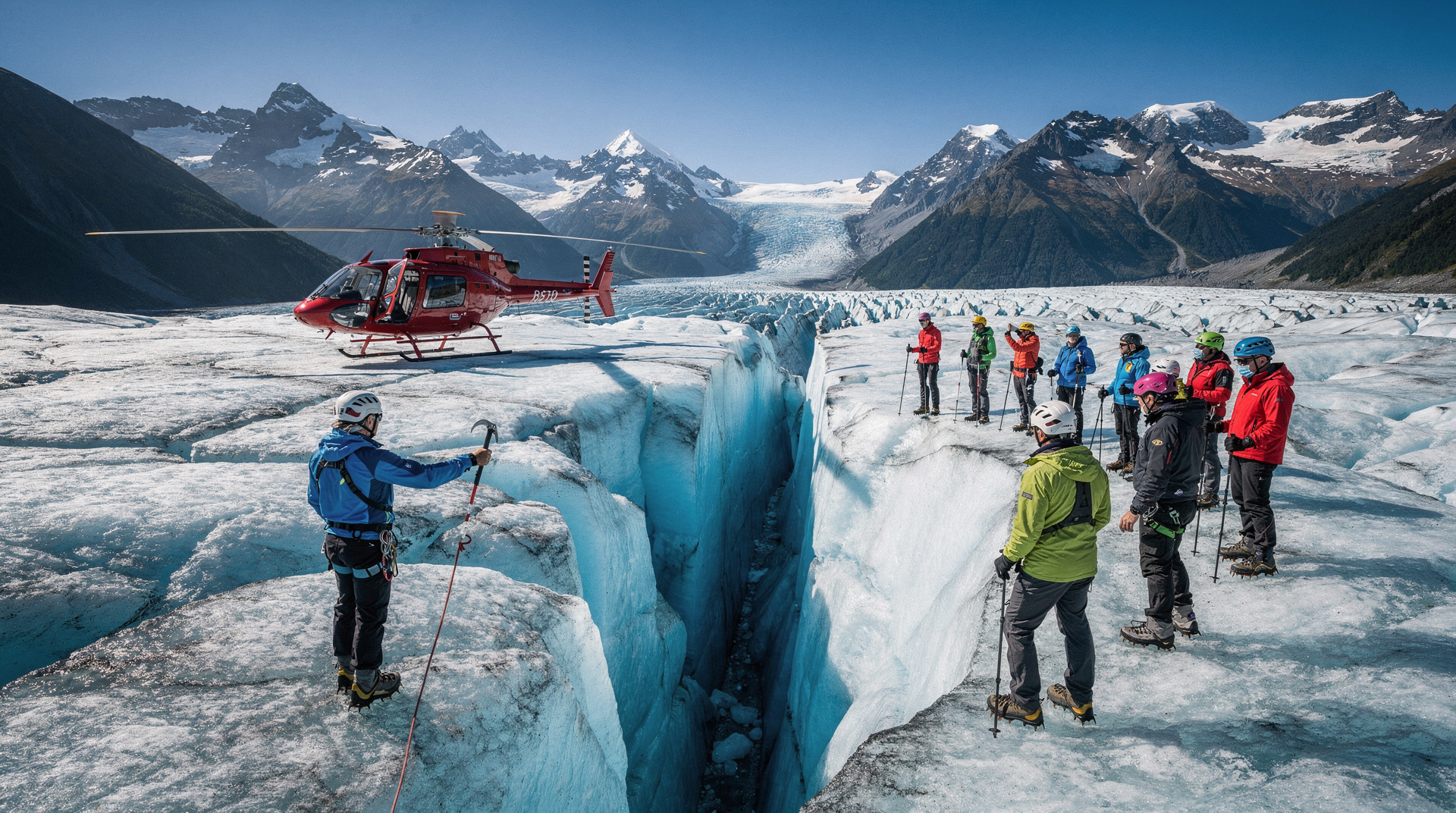
Two options: helicopter heli-hike from Aoraki/Mt Cook Village (NZD 350–500 / USD 210–300 / EUR 193–275), or a boat tour on the Tasman Glacier terminal lake among floating icebergs (NZD 59–85 / USD 35–51 / EUR 32–47). The boat tour is easier and more accessible; the heli-hike gives you time on the ice.
The longest glacier in New Zealand — and the most accessible from the east
| Length | 27km — NZ’s longest glacier |
| Boat tour cost | Around NZD 59-85/person, 2hrs |
| Heli-hike cost | Around NZD 350-500/person, 3hrs |
| Access town | Aoraki/Mt Cook Village |
| Best free view | Hooker Valley Track (10km return) |
The Tasman Glacier is New Zealand’s longest glacier at 27 km (versus Franz Josef at 11 km and Fox Glacier at 13 km). It flows from the Tasman Saddle at 2,960m to its terminus near Lake Pukaki at approximately 760m altitude, draining the eastern face of the Main Divide of the Southern Alps.
Unlike Franz Josef and Fox Glacier — which flow steeply west through rainforest to near sea level — the Tasman descends gradually on the drier eastern side of the Alps. This creates a different character: the Tasman is a broad, relatively flat glacier by New Zealand standards, and its terminal zone has produced a proglacial lake (Tasman Lake) that did not exist 50 years ago. The lake formed as the glacier retreated and is now 7 km long and still growing.
Access is different from the West Coast glaciers. The Tasman Glacier is reached from Aoraki/Mt Cook Village on the eastern side of the Alps — a 4.5-hour drive from Christchurch via Tekapo, or a 4.5-hour drive from Queenstown via Cromwell and the Lindis Pass.
Two ways to experience the Tasman Glacier
Option 1: The glacier boat tour (accessible, no helicopter)
Tasman Glacier terminal lake boat tours depart from the Tasman Valley Road end (3 km drive from Mt Cook Village). Small inflatable boats carry 12–15 passengers across the Tasman Lake, among floating icebergs calved from the glacier’s terminal face.
The icebergs range from bathtub-sized to house-sized. The lake water is opaque with rock flour — glacier-ground sediment — and glacially cold. Guides explain the retreat and the geological processes visible in the moraine walls.
Mt Cook: 35-Minute Tasman Glacier Scenic Helicopter FlightWait — that’s the helicopter, not the boat. The boat tour is run directly by local operators and can be booked through GetYourGuide:
Mount Cook: 3 Hour Heli Hike to the Tasman GlacierBoat tour price: approximately NZD 59–85 / USD 35–51 / EUR 32–47. Duration: 2 hours total. This is the best-value glacier experience in New Zealand — you’re physically among icebergs, close enough to touch (though you’re not meant to), on a lake that was a glacier 50 years ago. The context is both beautiful and sobering.
Option 2: The Tasman Glacier heli-hike
Helicopter flights from Mt Cook Village land on the upper Tasman Glacier for a guided walk. The upper Tasman is a broad snowfield at 2,200–2,500m — different in character from the narrow crevassed ice of Franz Josef and Fox, but with higher elevation, longer flights, and views of Aoraki/Mt Cook and the Silberhorn peak.
Mount Cook: 3-Hour Tasman Glacier Helicopter Ride and Hike Mount Cook: 3 Hour Heli Hike to the Tasman GlacierHeli-hike price: NZD 350–500 / USD 210–300 / EUR 193–275. Duration: 3 hours total. The longer flight compared to Franz Josef means the experience is visually different — you cross more terrain and the descent into the upper glacier is dramatic.
Option 3: Helicopter scenic flight (no landing)
For those who want aerial perspective without the ice walk.
Mount Cook: 50-Minute Aoraki Scenic Helicopter Flight Mount Cook: Scenic Helicopter Flight with Alpine LandingA 45–55 minute scenic flight from Mt Cook Village covers the Tasman Glacier, the upper névé, and the Aoraki/Mt Cook summit area. Price: NZD 350–450 / USD 210–270 / EUR 193–248.
The Tasman Lake icebergs — why they matter
Tasman Lake was not a significant lake in the 1960s. It was a small meltwater pool at the glacier terminus. Since then, rapid retreat has created a lake now 7 km long and 245m deep in places. The icebergs that float in this lake are calved from the glacier’s vertical terminal face — chunks that break off when the ice overhangs the water.
These icebergs are made of ice compressed over hundreds to thousands of years. The density removes all air bubbles, making the ice appear solid blue (the same blue-ice effect seen in the crevasses of Franz Josef). The oldest ice in these icebergs has been frozen since before the Roman Empire.
The lake is still expanding. Satellite measurements show the Tasman Glacier terminating further up-valley each year — the glacier has lost approximately 5 km of length since 1990 and the retreat shows no sign of slowing.
The Hooker Valley — Tasman’s most accessible glacier view
Without any helicopter or boat, the Hooker Valley Track (10 km return, 3 hours) from Mt Cook Village provides excellent views of Aoraki/Mt Cook and the Hooker Glacier — a separate, smaller glacier on the eastern face of the mountain. The Hooker Valley is also developing a terminal lake.
The Hooker Valley Track passes three swing bridges and terminates at the Hooker Lake (terminal lake of the Hooker Glacier), where icebergs are sometimes visible. This is a genuine glacier environment accessible on foot — the only one in the Mt Cook region that doesn’t require helicopter access.
Getting to Aoraki/Mt Cook Village
Mt Cook Village (population approximately 300) sits at 760m altitude in the Aoraki/Mt Cook National Park. The approach roads are some of the most scenic in New Zealand.
From Christchurch: 330 km via SH1 south to Tekapo (220 km), then SH80 along Lake Pukaki to Mt Cook (110 km). Approximately 3.5–4 hours. The turquoise colour of Lake Pukaki (rock flour glacial silt suspension) intensifies as you approach Mt Cook.
From Queenstown: 260 km via Cromwell, Lindis Pass, and Twizel. Approximately 3.5 hours. The Lindis Pass section is high, open country with spectacular Central Otago views.
From Twizel: 63 km, 50 minutes via SH80. Twizel (with the Lake Ohau and Pukaki area) serves as the nearest town with standard services.
Note: There is no petrol station in Mt Cook Village — fill up in Twizel before the final 63 km.
Accommodation in and near Mt Cook
At the village: The Hermitage Hotel is the dominant property — a full-service hotel with multiple restaurant tiers, observation areas, and direct views of Aoraki/Mt Cook. Rates: NZD 350–650 / USD 210–390 / EUR 193–358 per night. Advance booking essential from October through April.
Aoraki/Mt Cook Alpine Lodge: More affordable but comfortable — NZD 200–320 / USD 120–192 / EUR 110–176.
Mt Cook YHA backpacker: Budget option at NZD 55–85 / USD 33–51 / EUR 30–47 per night (dorm). The YHA has kitchen facilities and is appropriately comfortable for a remote national park stay.
At Twizel (60 km away): Full range of accommodation at half the Mt Cook prices. If the village is booked out or too expensive, Twizel is the practical alternative with a 50-minute morning drive to the park.
Season and weather
Mt Cook has a continental mountain climate — drier than the West Coast but subject to rapid weather changes. Clear days are magnificent; clouds forming over the main divide can obscure Aoraki/Mt Cook within hours.
Best months for clear views: January, February, March, May, June, July (some of these have cold nights — up to -10°C at the village). Summer mornings and evenings tend to have clearest air before afternoon cloud build-up.
Helicopter operations: Flight days at Mt Cook are fewer than at Franz Josef due to the different weather patterns. Budget at least 2–3 nights at Mt Cook for flexible helicopter access.
What to wear on the boat tour and heli-hike
For the boat tour, dress warmly regardless of season — the lake surface is cold enough to lower the air temperature noticeably, and the inflatable boats have no shelter from wind. A windproof jacket, closed shoes and gloves are worth packing even in summer. Heli-hike operators supply boots, crampons and jackets suited to the ice, but a base layer, sunglasses (glacier glare is intense) and sunscreen are your responsibility — snow reflects UV strongly even on overcast days. Both experiences depart from the same general area near Mt Cook Village, so a warm layer that works for either is the simplest approach if you’re doing both across a two- or three-night stay.
Stargazing at the Tasman Valley
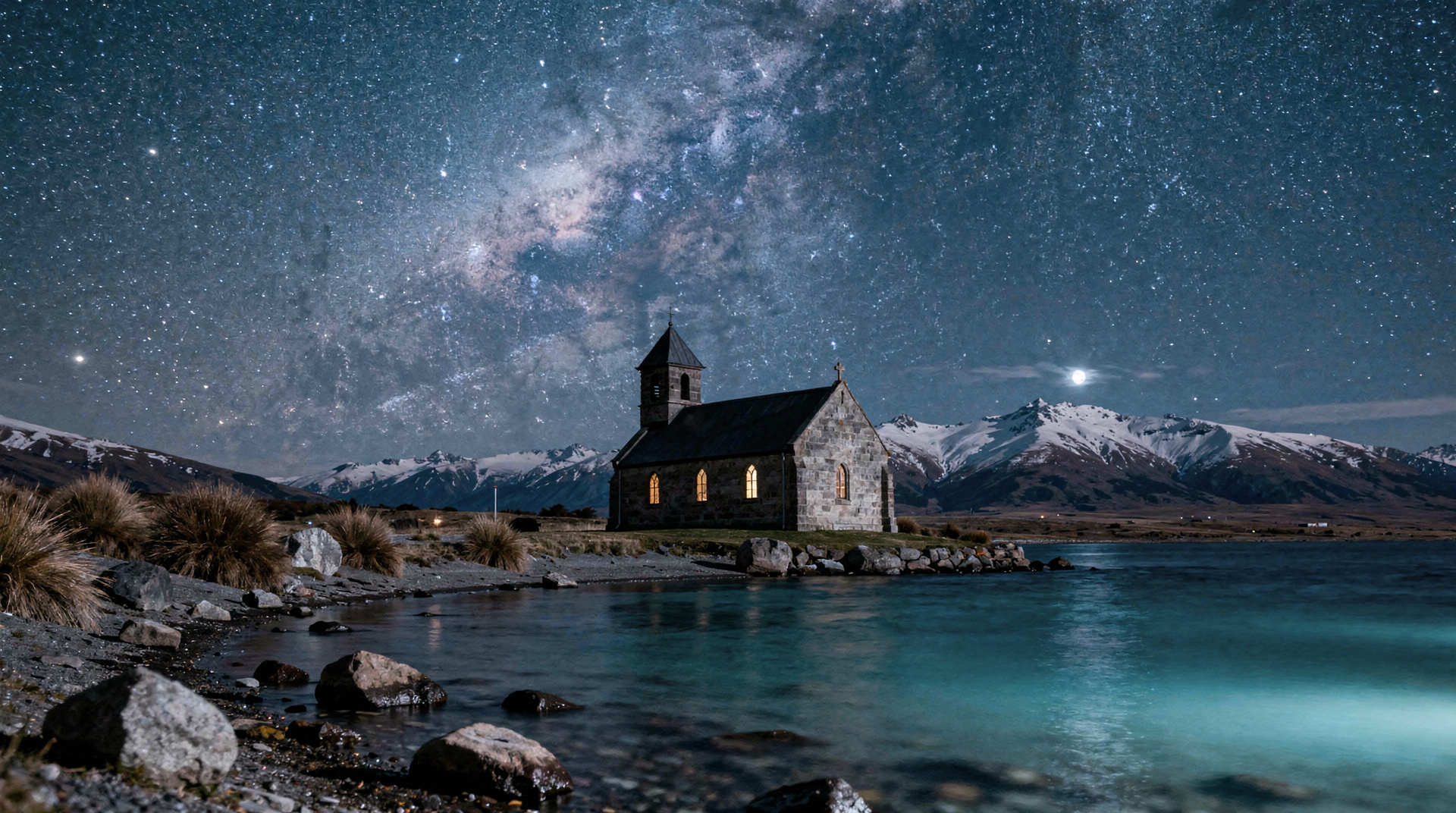
Aoraki/Mt Cook National Park sits within the Aoraki Mackenzie International Dark Sky Reserve, one of the largest dark sky reserves on Earth. On clear, moonless nights, the Tasman Valley delivers exceptional stargazing — the Milky Way is visible with the naked eye, and the lack of light pollution around the terminal lake means the same location you visited by boat or helicopter during the day becomes a genuinely different attraction after dark. Several Mt Cook Village operators run dedicated stargazing sessions with telescopes; check with your accommodation, as cloud cover determines whether a session runs on any given night.
Frequently asked questions
Is the Tasman Glacier heli-hike better or worse than Franz Josef?
Different rather than better or worse. The Tasman heli-hike deposits you on a broad snowfield at higher elevation — the experience is more alpine and less crevasse-focused than Franz Josef. Franz Josef’s ice walk involves more active crevasse navigation; the Tasman walk is more about the scale of the snowfield and the Aoraki/Mt Cook views. For dramatic crevasse-walking, Franz Josef; for high-alpine snowfield experience with Mt Cook views, Tasman.
Is the boat tour worth doing if I’ve already done a heli-hike at another glacier?
Yes — the boat among icebergs is a distinct experience from the helicopter-accessed ice walk. You’re surrounded by calved bergs in the terminal lake rather than walking on the living glacier above. The visual and contextual experience (seeing the retreated glacier from its former position) is compelling regardless of other glacier experiences.
What is the Tasman Lake’s current size?
As of 2026, the Tasman Glacier terminal lake is approximately 7 km long and 245m deep at maximum. It continues to expand at roughly 300–400 metres per year as the glacier retreats further. At current rates, the lake will reach 10 km length within 10–15 years.
More Aoraki/Mt Cook and glacier experiences
Related guides
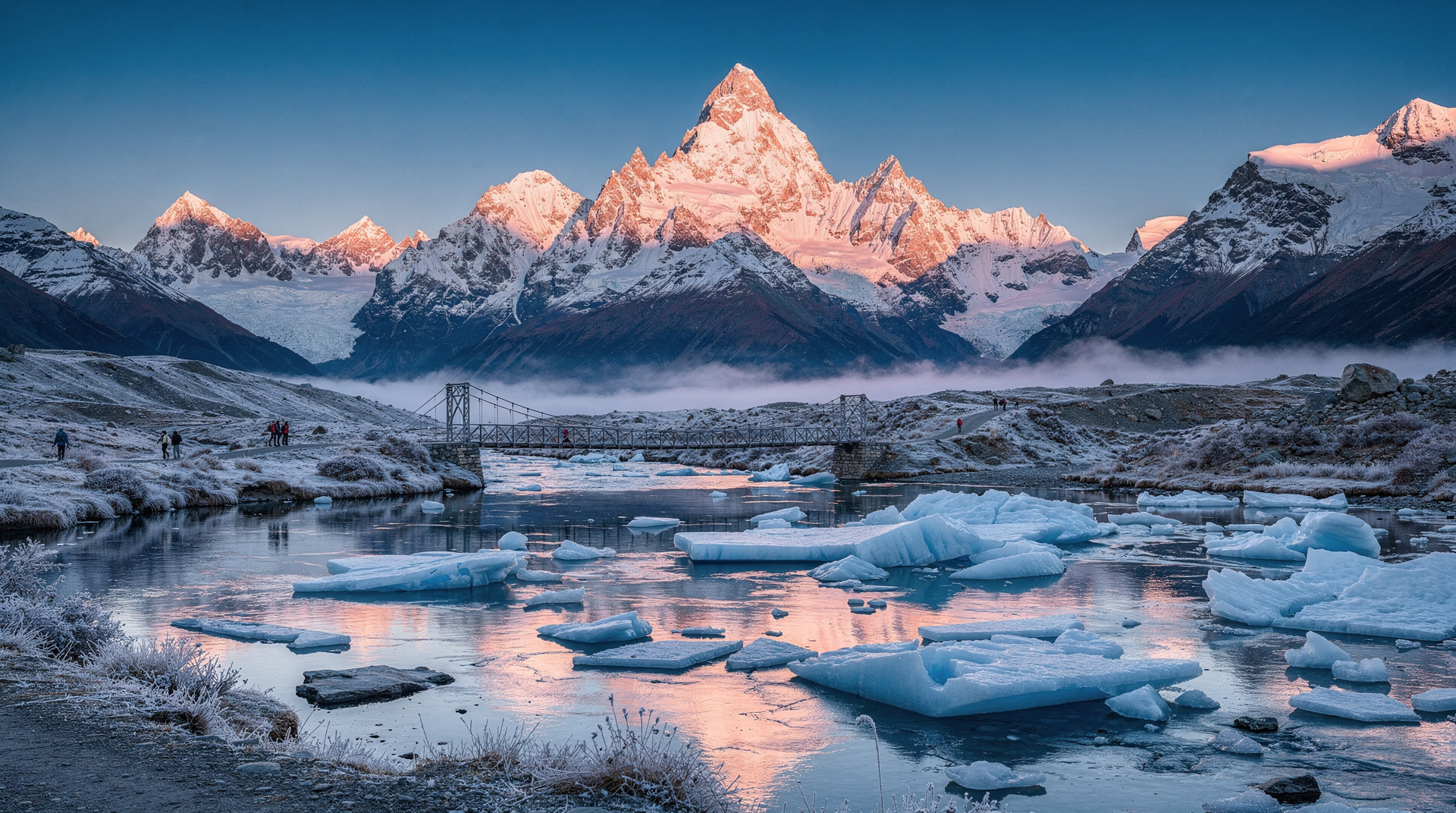
Aoraki / Mount Cook
Honest Aoraki / Mount Cook guide: Hooker Valley Track, Tasman Glacier, scenic flights — real NZD/USD/EUR prices and what to expect in all seasons.
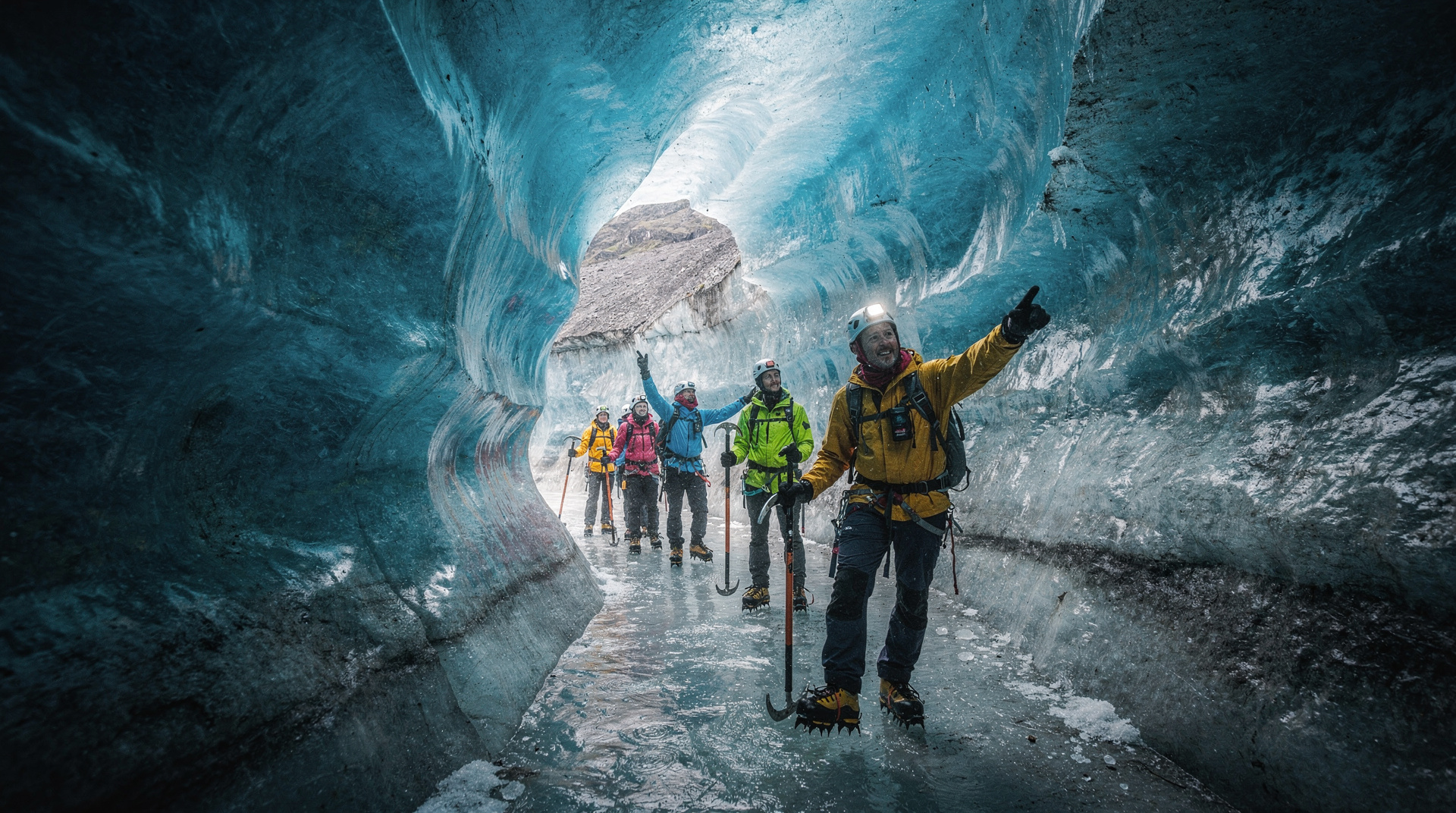
Franz Josef Glacier guide — heli-hike, ice walks, and the retreat reality
Franz Josef Glacier heli-hike guide: tours, ice climbing, helicopter flights, and the glacial retreat reality. Prices NZD/USD/EUR and booking advice.
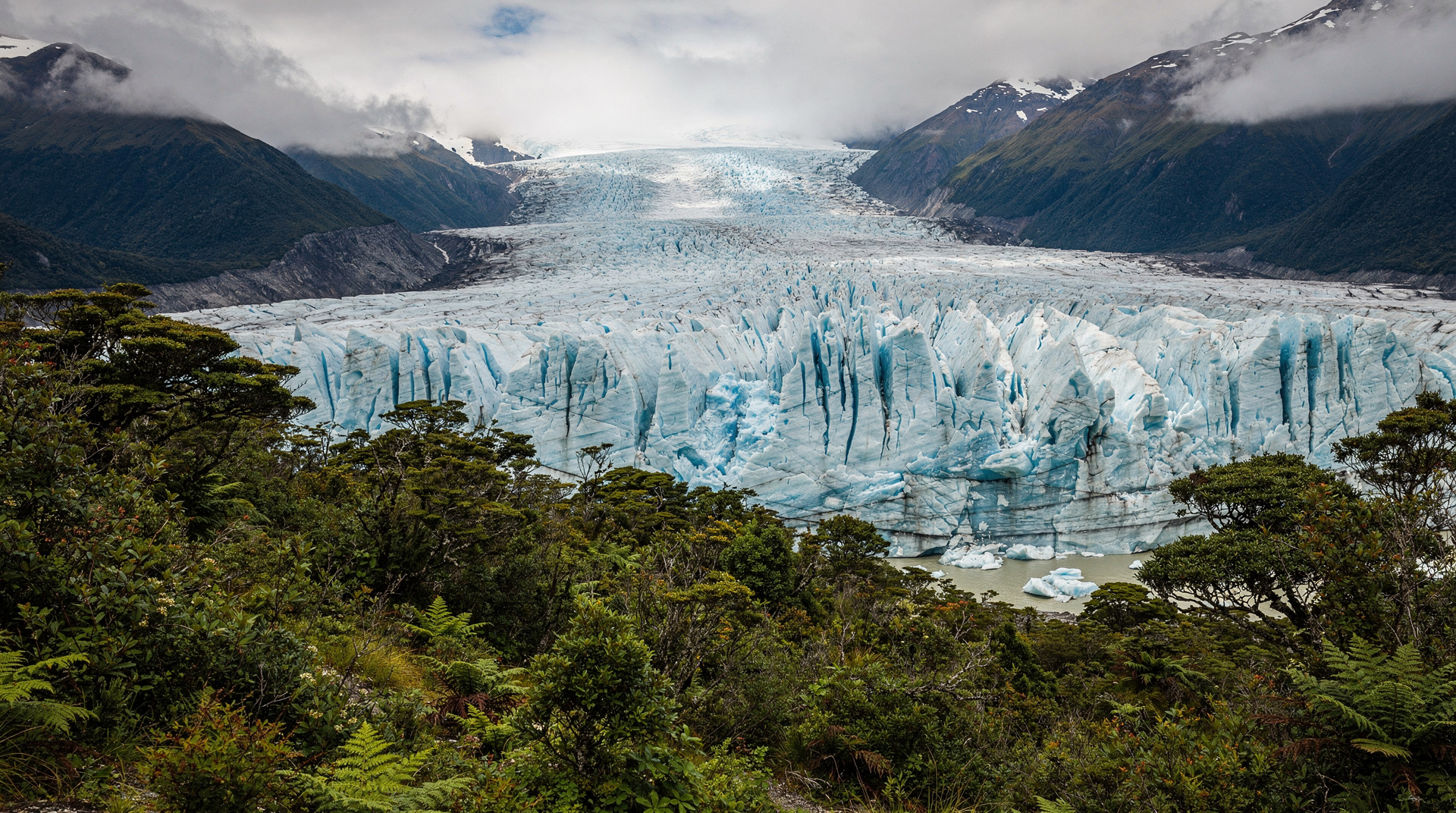
Fox Glacier guide — heli-hikes, Lake Matheson, and the quieter alternative
Fox Glacier heli-hike guide: tours, Lake Matheson dawn reflection, honest retreat context. Prices NZD/USD/EUR and comparison with Franz Josef.
Heli-hike comparison — Franz Josef vs Fox vs Tasman Glacier
Compare NZ's three glacier heli-hikes: Franz Josef, Fox, and Tasman. Prices NZD/USD/EUR, ice character, logistics, and honest verdict on which to choose.
Lake Tekapo
Honest Lake Tekapo guide: stargazing, Church of the Good Shepherd, hot pools — real NZD/USD/EUR costs and how long you actually need here.
Last reviewed: