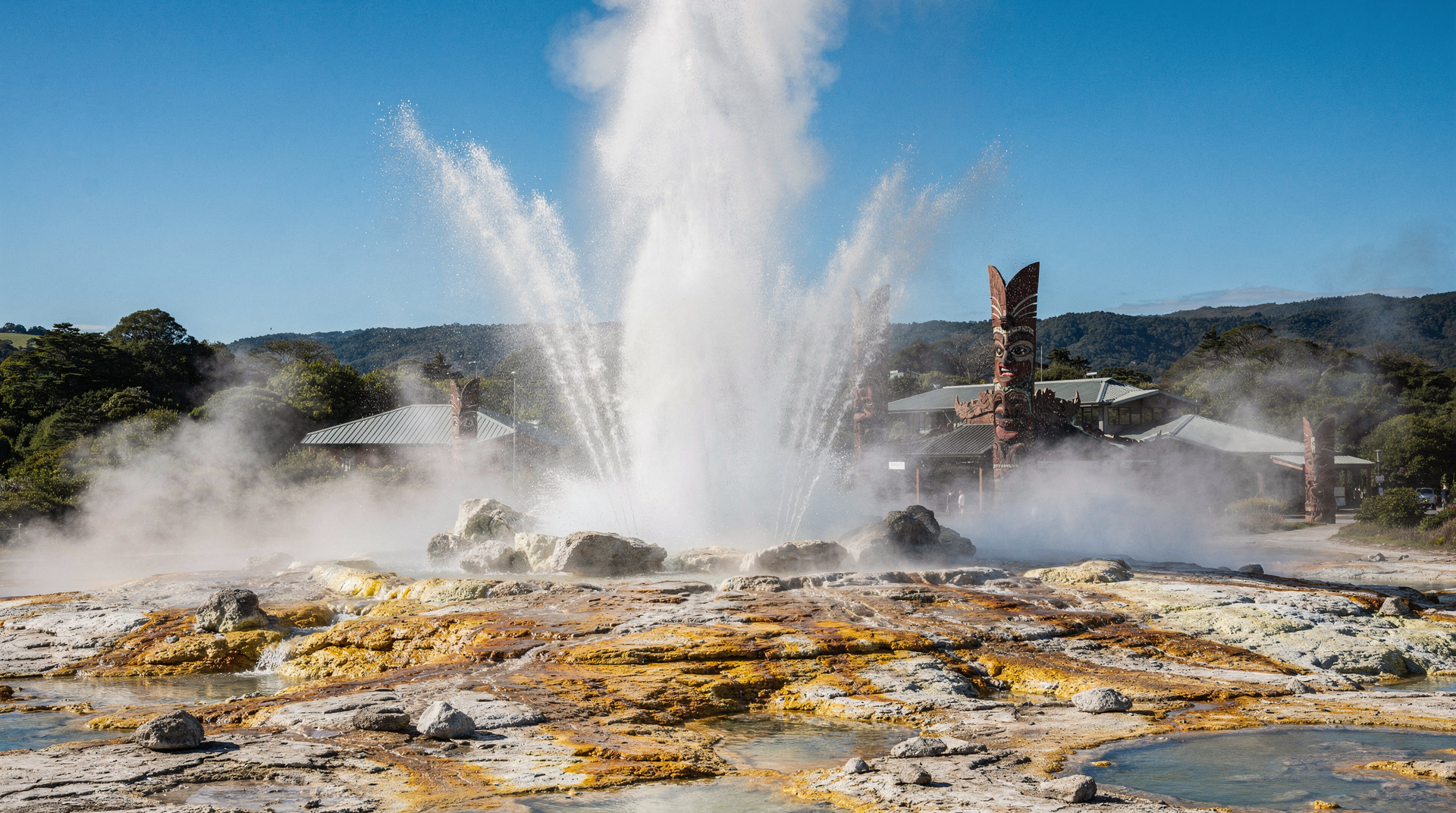
Te Puia — Rotorua's geothermal Maori cultural centre
What is Te Puia in Rotorua and is it worth visiting?
Te Puia is Rotorua's combined geothermal park and living Maori cultural centre, home to the Pohutu Geyser (NZ's largest), the NZ Maori Arts and Crafts Institute, and a kiwi house. Day entry: NZD 62 / USD 37 / EUR 34. Evening hangi and cultural show: NZD 150–195 / USD 90–117 / EUR 83–107.
| Where | Hemo Road, 3km south of central Rotorua |
| Cost | Self-guided entry around NZD 62; evening hangi and show NZD 150–195 |
| Time needed | 1.5–2 hours self-guided; 3+ hours for the evening programme |
| Getting there | 5-minute drive or 20-minute walk from Rotorua CBD |
| Best time | Morning for softer eruption-photography light; evening for the full hangi and kapa haka |
Te Puia — more than a geyser park
Te Puia (the full name is Te Puia Rotorua — Te Whakarewarewa Thermal Valley) is operated by Te Arawa, the indigenous iwi of the Rotorua area. This ownership matters: Te Puia is not a commercial enterprise that purchased a cultural asset; it is an iwi managing a site that has been the living community of Te Arawa people for centuries. For the fuller day-by-day breakdown of ticket options and the carving school’s structure, see the complete Te Puia guide.
The Whakarewarewa Thermal Valley, on which Te Puia is located, has been inhabited continuously since the 14th century. People have cooked in the geothermal vents for 700 years; the same steam is still used to cook food in baskets lowered into the ground. The Maori Arts and Crafts Institute — established in 1963 and still operating — trains students in tā moko (tattoo), whakairo (carving), and whatu (weaving) in the same valley. The students you see working in the carving and weaving houses are apprentices doing real traditional training, not performers.
This is the most important thing to understand about Te Puia: it is a living cultural site, not a museum.
Pohutu Geyser — New Zealand’s largest active geyser
Pohutu (meaning “constant splashing”) is New Zealand’s largest active geyser and one of the most active in the Southern Hemisphere. It erupts frequently — typically 10–25 times per day, with eruptions that reach 30 metres and can last from a few minutes to several hours. There is no fixed schedule; visitors wait at the viewing area and witness eruptions as they occur.
Viewing: The best viewing position is the geyser viewing area, reached by a short walk from Te Puia’s entrance. The viewing platform is 50–80 metres from the geyser; at 30 metres, the eruption columns are genuinely impressive. Photography: morning light is best (geyser steam catches the sun); the viewing area faces east, so afternoon light is less dramatic.
The Prince of Wales Feathers: A smaller geyser adjacent to Pohutu that typically erupts 1–2 minutes before Pohutu — a reliable predictor of the main event.
The Te Puia afternoon cultural programme includes entry to the geothermal area plus a guided cultural performance and explanation of the site’s history — the most comprehensive introduction to Te Puia for a first visit.
The NZ Maori Arts and Crafts Institute
The carving and weaving workshops are the aspect of Te Puia that most distinguishes it from standard geothermal parks:
Whakairo (wood carving): Students progress through a multi-year apprenticeship carving figures in Maori traditional style. The workshop is open to visitors — you watch apprentices working on real commissions. Many of the major carved pieces visible in New Zealand’s museums and meeting houses were made here.
Whatu (weaving): Flax weaving of traditional Maori patterns; the completed works are functional and cultural objects. Students demonstrate techniques and explain the symbolism embedded in the patterns.
Tā moko: The traditional Maori facial tattoo practice; instruction at Te Puia covers the cultural context and technique. Demonstrations occur at specific programme times.
The institute is the most authentic window into living Maori craft tradition available to general visitors in New Zealand. Spend time here; ask the guides questions; respect the students’ work.
The evening cultural show and hangi
The Te Pa Tu evening cultural dinner and show at Te Puia is the most complete experience available at the site — a formal pōhiri (welcome), cultural performances (kapa haka, haka, waiata), and a hangi dinner cooked in the ground using the valley’s own geothermal heat.
The hangi cooked using geothermal steam rather than heated stones distinguishes Te Puia’s method from standard hangi operations — the food takes on a slight mineral character from the volcanic steam. This is genuinely different and genuinely authentic to the site’s centuries-long cooking tradition.
Price (evening show and hangi): NZD 150–195 / USD 90–117 / EUR 83–107 per adult.
The Te Puia Te Ra day tour is the daytime equivalent — a cultural programme with hangi lunch rather than the evening show format. Suitable for visitors who want the full cultural experience but prefer an earlier finish.
Price (day tour with hangi lunch): NZD 95–130 / USD 57–78 / EUR 52–72.
Te Puia’s kiwi house
Te Puia operates one of Rotorua’s kiwi conservation facilities — a nocturnal house where kiwi are housed in reversed day-night conditions, allowing daylight-hour viewing of the normally nocturnal birds. Two or three birds are typically visible.
The kiwi house viewing is good but not exceptional — you’ll see the birds moving in dim red light, which reveals their shape and movement but not detail. For wild kiwi viewing, Stewart Island/Rakiura remains the best option. For a quick, accessible kiwi encounter in the North Island, the Te Puia facility is reliable.
Maori village visit (Whakarewarewa Village)
Adjacent to Te Puia but separately operated, Whakarewarewa Village is a living Maori community where residents still use the geothermal vents for cooking and bathing. Village tours run from the village itself (separate ticket, not through Te Puia). The village experience is more intimate and residential than Te Puia’s cultural centre; families live here, and visitors see the practical daily use of geothermal energy that has characterised this community for generations.
Both are worth visiting if time allows; together they present a complete picture of Te Arawa’s connection to the geothermal landscape.
Getting to Te Puia
Te Puia is 3 km south of central Rotorua on Hemo Road — a 5-minute drive or a 20-minute walk from the Rotorua CBD. Several Rotorua tour operators include Te Puia as a stop on their Rotorua programmes.
The Rotorua highlights, Te Puia, and Redwoods tour combines the geothermal valley with the Whakarewarewa Redwood Forest (a 30-minute walk or tree walk experience) in a half-day — the best combination for visitors with limited Rotorua time.
Costs summary (NZD / USD / EUR)
| Activity | NZD | USD | EUR |
|---|---|---|---|
| Self-guided entry (adult) | 62 | 37 | 34 |
| Self-guided entry (child) | 28 | 17 | 15 |
| Afternoon cultural programme | 90–120 | 54–72 | 50–66 |
| Evening show and hangi (Te Pa Tu) | 150–195 | 90–117 | 83–107 |
| Day tour with hangi lunch | 95–130 | 57–78 | 52–72 |
Exchange rate: 1 NZD ≈ 0.60 USD ≈ 0.55 EUR.
Comparing Te Puia’s tiers
Visitors often overspend on the evening show when the self-guided entry already covers the geyser and the institute, or underspend on self-guided entry when the cultural context of the evening programme is really the point. A rough guide: if Pohutu and the carving school are the priority and evenings are booked elsewhere, self-guided entry at around NZD 62 is enough. If a hangi and kapa haka performance matter as much as the geothermal scenery, the Te Puia cultural evening or the day tour with hangi lunch is the better allocation of budget. Families with children under 7 generally do better with the daytime hangi lunch than the evening show, which runs late.
Honest verdict
Frequently asked questions
What makes Te Puia different from other Maori cultural shows?
Te Puia is operated by Te Arawa iwi and sits on land that has been their home for 700 years. The carving and weaving institute is real training, not demonstration. The hangi is cooked using geothermal energy from the same vents the community has always used. This authentic ownership and practice is what distinguishes Te Puia from commercially produced cultural experiences.
How often does Pohutu Geyser erupt?
10–25 times per day, at intervals ranging from a few minutes to several hours. There is no fixed schedule. Most visitors who spend 45–90 minutes at the geothermal valley will witness at least one eruption. Guides watch the Prince of Wales Feathers (the adjacent smaller geyser) as a predictor — when it erupts, Pohutu typically follows within 1–2 minutes.
Is Te Puia appropriate for children?
Yes — the geothermal features, kiwi house, and cultural performances are all engaging for children. The evening hangi is suitable for older children (7+) who can manage a 3-hour evening programme. The daytime entry is better for families with young children.
Te reo Maori terms for this guide:
- Te Arawa — the iwi of the Rotorua area
- whakairo — wood carving
- whatu — weaving
- tā moko — traditional tattoo
- pōhiri — formal welcome ceremony
- kapa haka — Maori performing arts (song, dance, posture)
- waiata — song, singing
- geothermal kai — food cooked by earth’s heat (geothermal hangi)
Related reading
Related guides
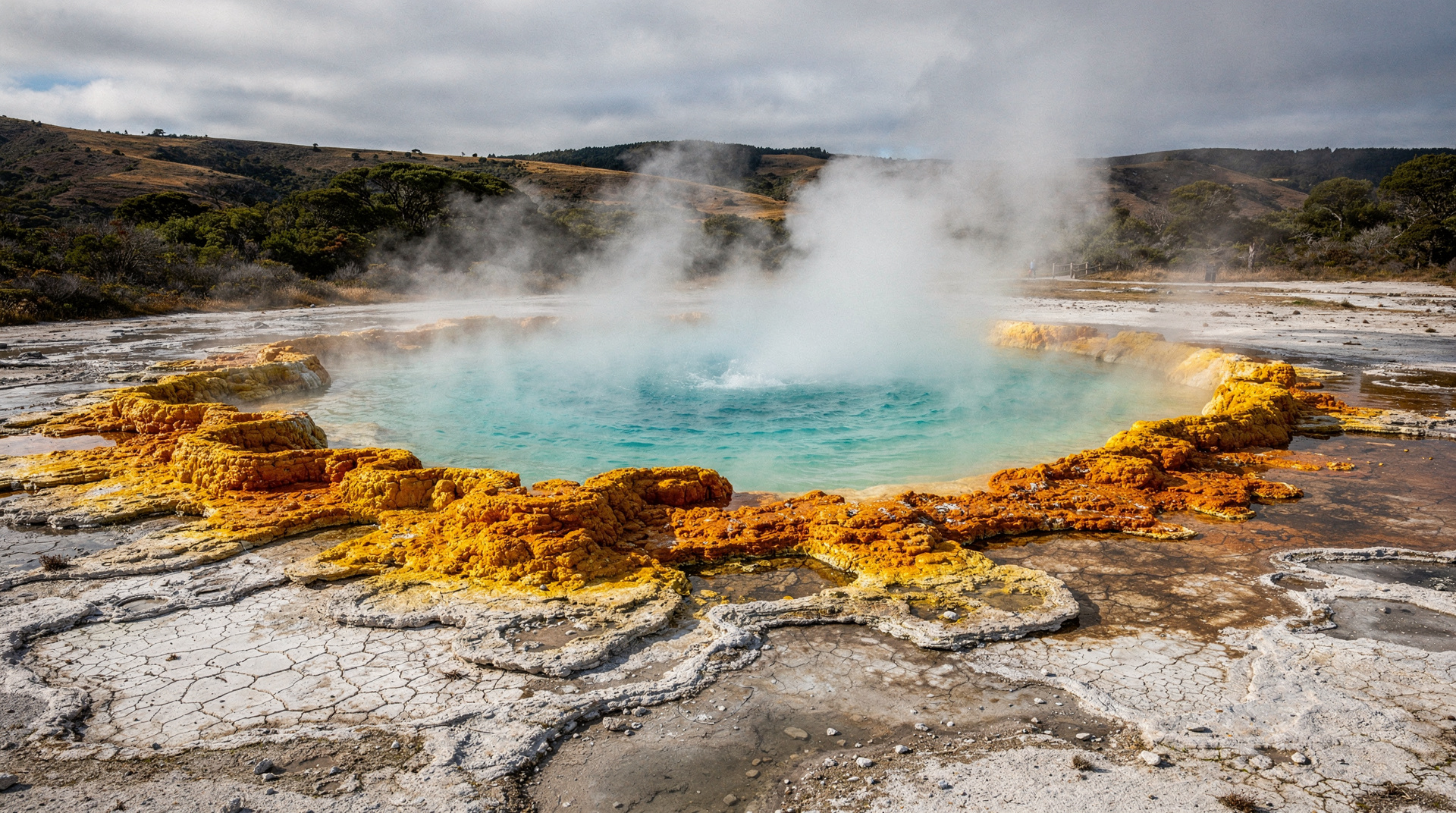
Rotorua
Honest Rotorua guide: Te Puia, Wai-O-Tapu, Polynesian Spa, Maori hangi, real prices NZD/USD/EUR, tourist traps to avoid, and best 2 days.
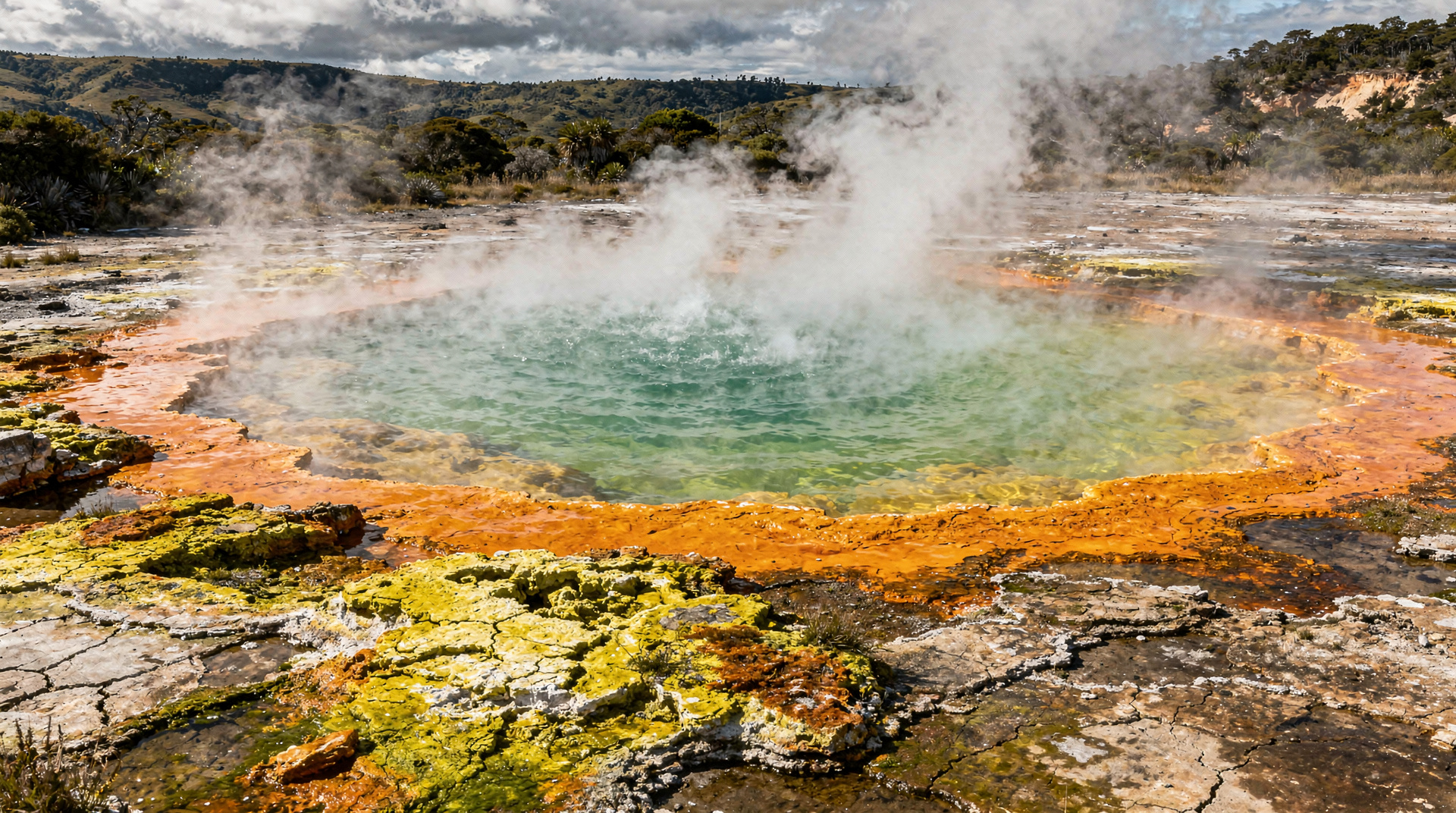
Wai-O-Tapu Thermal Wonderland
Wai-O-Tapu is NZ's most colourful geothermal park — Champagne Pool, Lady Knox Geyser, 18 km² of volcanic landscape. Entry NZD 42 / USD 25. Tour guide 2026.
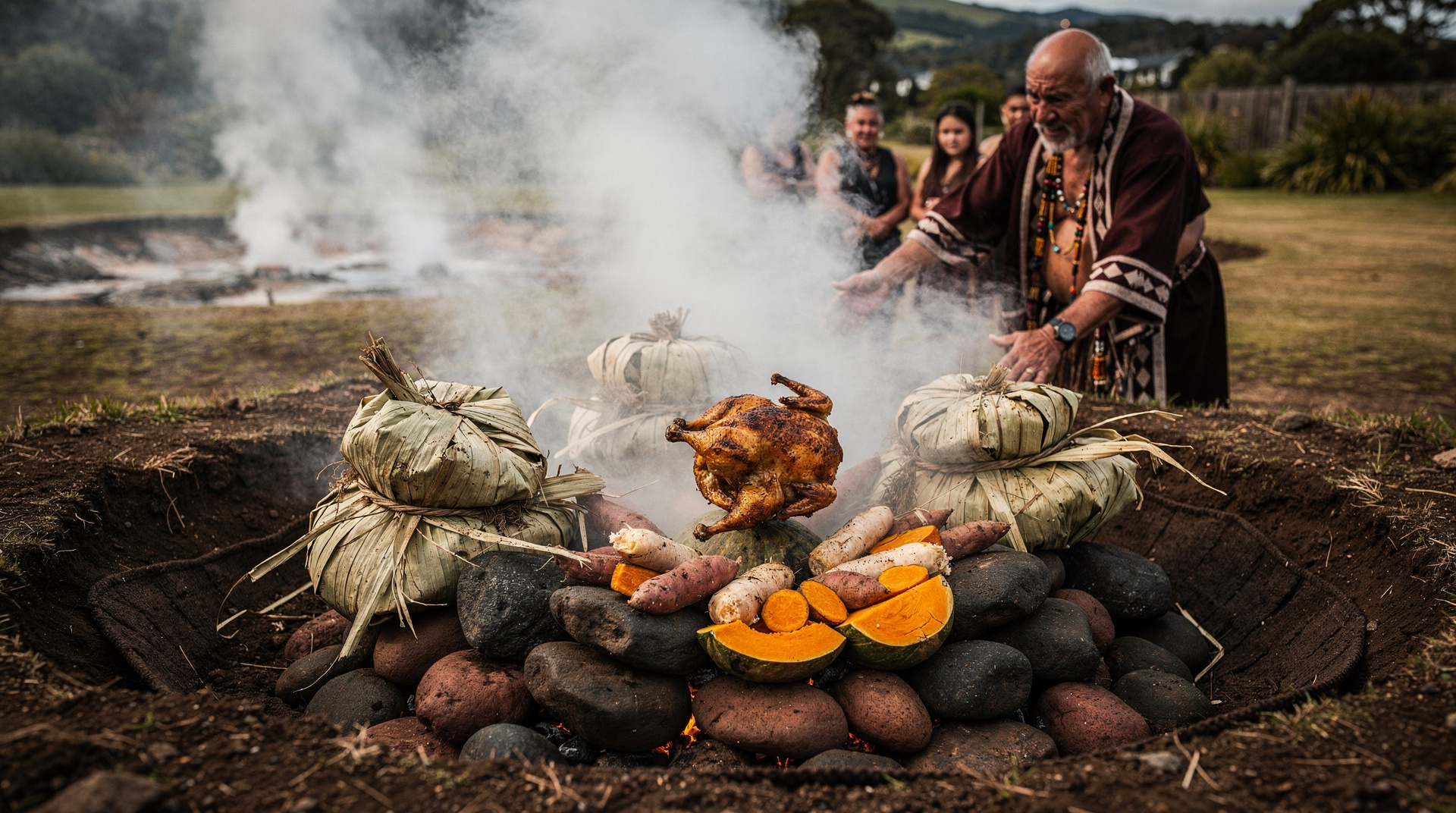
Hangi experience in New Zealand
A hangi is a traditional Maori feast cooked in an earth oven. Best operators in Rotorua, prices NZD/USD/EUR, cultural context, and te reo glossary.
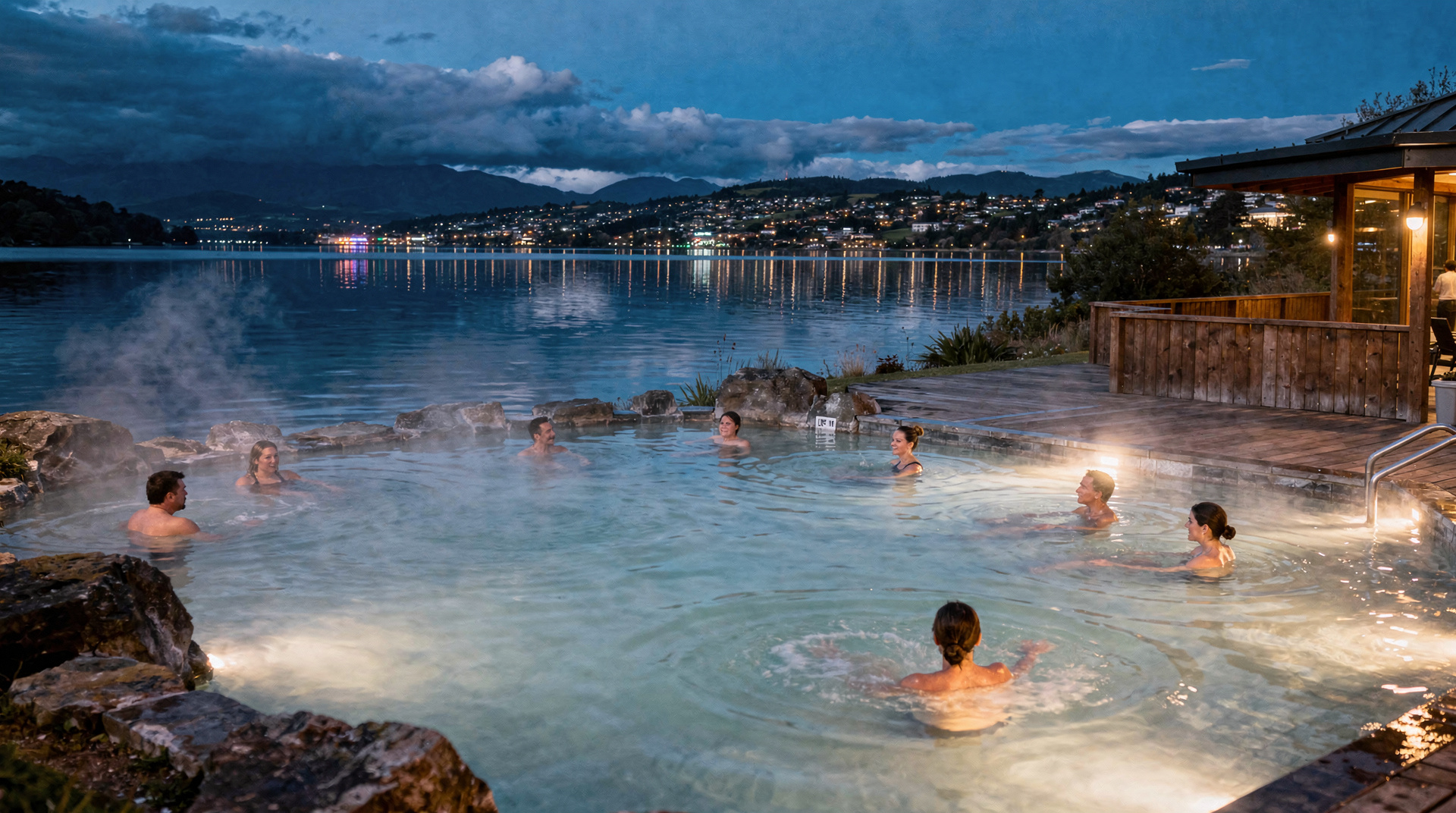
Polynesian Spa Rotorua
Polynesian Spa is NZ's premier geothermal pool complex on Lake Rotorua. Alkaline vs acidic pools, private lake-view suites, prices NZD/USD/EUR.
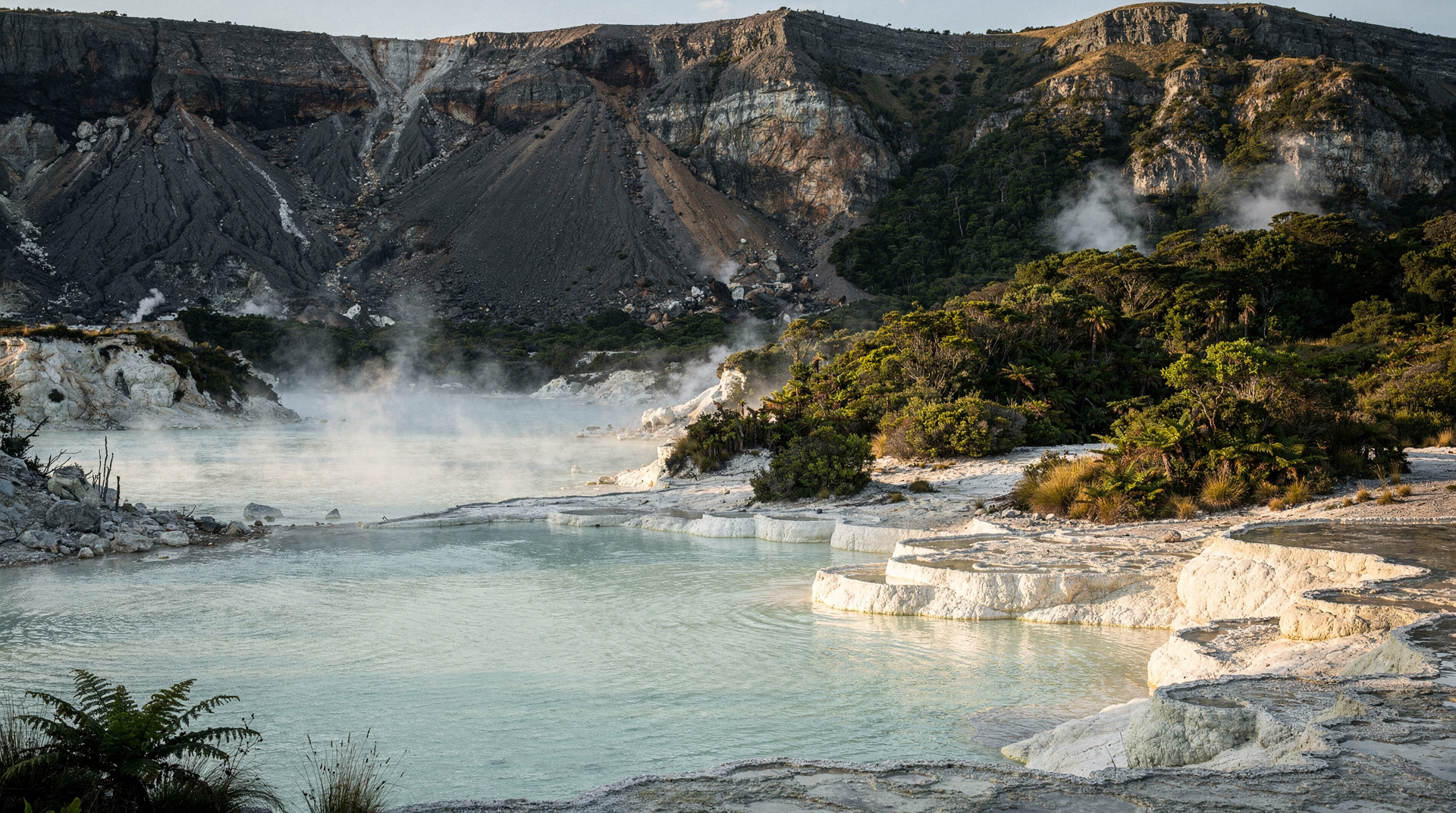
Waimangu Volcanic Valley
Waimangu was created by the 1886 Mt Tarawera eruption — earth's youngest geothermal system. Frying Pan Lake, Inferno Crater, boat tours. Prices NZD/USD/EUR.
Last reviewed: