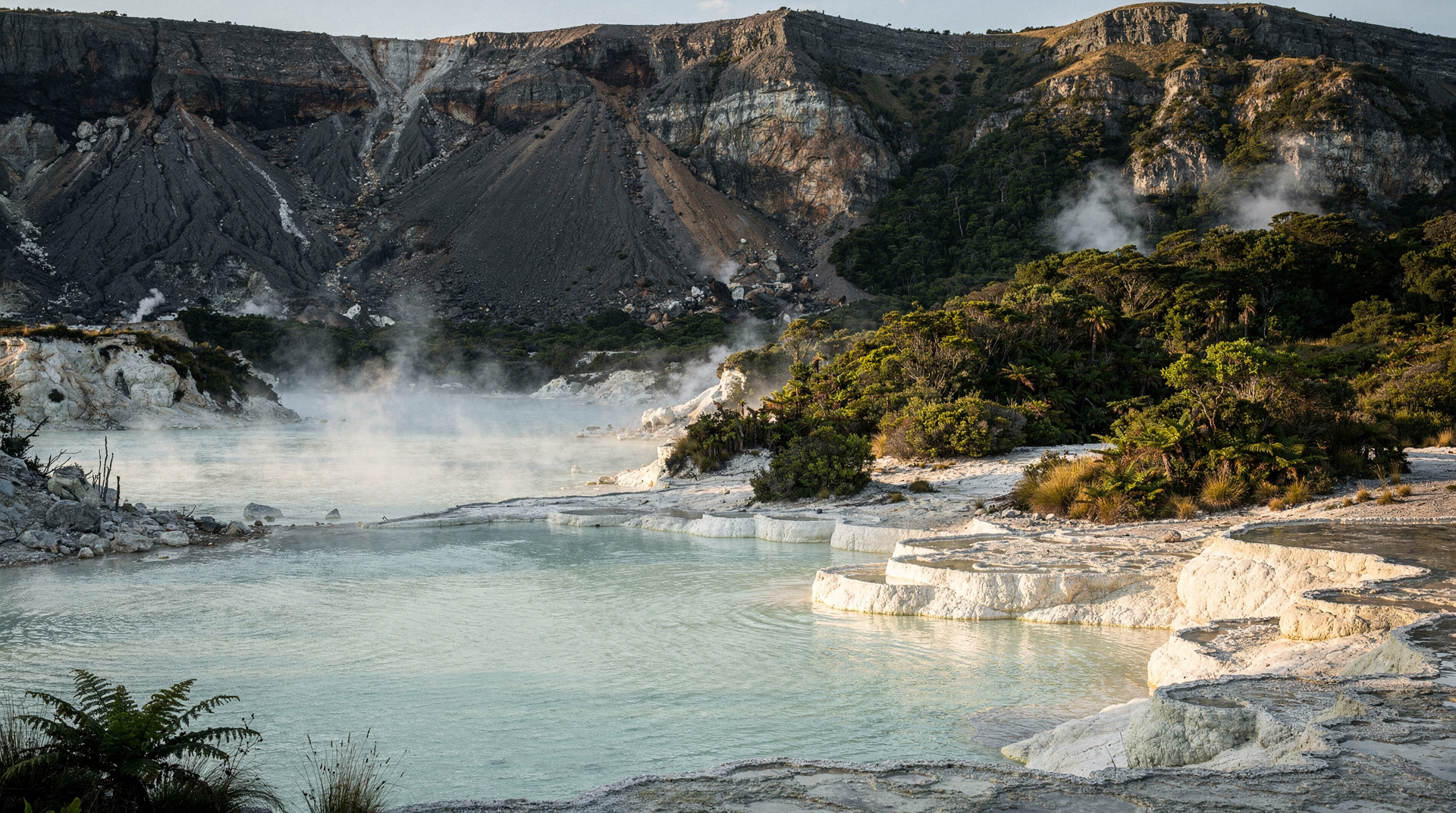
Waimangu Volcanic Valley
What is Waimangu Volcanic Valley and is it worth visiting?
Waimangu Volcanic Valley was formed by the 1886 Mt Tarawera eruption — the world's youngest geothermal system, less than 140 years old. A 4 km walk leads through the valley to Lake Rotomahana, with boat tours on the lake. Walk entry: NZD 50 / USD 30 / EUR 28. Walk + boat: NZD 115 / USD 69 / EUR 63.
The world’s youngest geothermal system
On 10 June 1886, Mt Tarawera erupted in one of New Zealand’s most catastrophic natural disasters. The eruption opened a 17 km rift across the volcano, ejecting 2 km³ of material, destroying the famous Pink and White Terraces (silica terrace formations considered the eighth natural wonder of the world at the time), and killing 120 people in the surrounding area. The eruption was preceded by unusual events — notably the sighting of a ghostly Maori war canoe on Lake Tarawera by multiple witnesses, interpreted as an omen.
| Where | Waimangu Road, 19 km south of Rotorua |
| Cost | around NZD 50 walk-only / NZD 115 walk + boat |
| Time needed | 2.5–4.5 hours depending on format |
| Getting there | 20 min self-drive from Rotorua, 6 km from Wai-O-Tapu |
| Best time | Morning for cooler walking conditions and fewer crowds |
The Waimangu Volcanic Valley formed directly from this eruption. Where the rift opened, geothermal activity established itself in the disturbed landscape. Over the 140 years since 1886, the valley has developed a complete geothermal ecosystem: the world’s largest hot spring, inferno craters, steam vents, hot streams, and crater lakes. The ecological recovery has been equally extraordinary — native plants and animals have recolonised a landscape that was bare rock in 1886, creating one of the world’s best-studied examples of ecological succession on volcanic terrain.
The word waimangu means “black water” in te reo Maori — a reference to the dark geyser that erupted from this site from 1900 to 1904. The Waimangu Geyser was briefly the world’s largest, reaching over 400 metres. It stopped erupting spontaneously in 1904 and has not erupted since.
The walking circuit
The main Waimangu walking circuit is 4 km one-way, descending from the visitor centre entrance to Lake Rotomahana (90 minutes walking at a moderate pace). The path is well-maintained boardwalk and gravel through the valley.
Key features on the circuit:
Waimangu Cauldron (Frying Pan Lake): The world’s largest naturally occurring hot spring — 3.8 hectares, 57°C, constant gentle surface movement. The water is pale grey-green from dissolved silica. The steam clouds above the lake are visible from 2 km away on cool mornings.
Inferno Crater: A deep blue crater lake with a characteristic regular level cycle — it rises and falls approximately 8 metres every 38 days, driven by deeper hydrothermal pressure. The blue colour is from dissolved minerals at specific temperatures. The viewing platform is at the crater rim, a short detour from the main path.
Warbrick Terrace: Silica terraces in the process of formation — small-scale replicas of the Pink and White Terraces destroyed in 1886. The terrace growth rate (approximately 3mm per year) makes them visible over human timescales if you visit more than once over a decade.
Cathedral Rocks: Volcanic rock walls formed during the 1886 eruption, with steam vents and mineral deposits.
Lake Rotomahana: The terminal lake of the walking circuit, where the Pink and White Terraces were submerged in 1886. The lake covers the original terrace location and has geothermal inflows that keep sections warm year-round.
Lake Rotomahana boat tour
The walking circuit ends at Lake Rotomahana, where a boat tour covers the lake’s geothermal inflows, steam cliffs, and bird life. The Pink and White Terrace outlines are visible on the lake floor in some areas (visible from the boat with good conditions).
The Waimangu and Wai-O-Tapu morning combination tour covers both geothermal parks in a morning — the most efficient format for visitors who want maximum geothermal coverage from Rotorua.
Walk-only entry: NZD 50 / USD 30 / EUR 28 (adult). Walk + boat: NZD 115 / USD 69 / EUR 63 (adult). Return shuttle from lake to visitor centre (if not completing return walk): Included in walk+boat tickets.
Ecological recovery — the scientific interest
Waimangu is one of the most studied ecological recovery sites in the world. From bare volcanic rock in 1886, the valley has developed:
- Native podocarp forest in the cooler upper sections
- Thermophilic (heat-loving) algae and bacteria in and around the hot springs
- Native bird populations including bellbirds, tui, and fantails that have colonised progressively since the eruption
- Skinks and geckos in the warmer rocky sections
The restoration is entirely natural — no replanting programme was implemented. The valley shows exactly how New Zealand’s native ecosystem reassembles itself when the environment is suitable.
DOC (Department of Conservation) maintains an ongoing scientific monitoring programme at Waimangu. The visitor centre has good display material on the ecological succession research.
Guided tours including Waimangu
The Wai-O-Tapu, Waimangu, and Te Puia full-day combination tour covers all three major Rotorua geothermal sites in a single day. This is the most comprehensive format for visitors with only one day in Rotorua who want the full geothermal picture.
Price: NZD 195–250 / USD 117–150 / EUR 108–138 (includes all entry fees and transport between sites).
Alternatively, the Wai-O-Tapu and Waimangu half-day morning tour covers both geothermal parks without the cultural component of Te Puia — suitable for visitors who are seeing Te Puia separately in the evening.
Waimangu vs Wai-O-Tapu — which to choose?
Both are excellent; they’re different experiences:
Wai-O-Tapu: More visually spectacular (extreme colours from mineral deposits — the Champagne Pool, Devil’s Bath, Artist’s Palette). Lady Knox Geyser eruption is theatrical and guaranteed. Suitable for shorter visits (2 hours). More tourist infrastructure.
Waimangu: More scientifically interesting (the geological history is extraordinary; the ecological recovery is remarkable). Frying Pan Lake is the world’s largest hot spring. The walk to the lake adds a physical element. Quieter and more atmospheric.
The ideal is both — starting at Waimangu in the morning (walk to the lake, boat tour) and finishing at Wai-O-Tapu in the afternoon (or catching the Lady Knox Geyser at 10:15 am first). Total: full day.
Getting to Waimangu
Waimangu is on the Waimangu Road, 19 km south of Rotorua and 6 km from Wai-O-Tapu. Self-driving from Rotorua: 20 minutes. The visitor centre and car park are well-signed from SH5.
Costs summary (NZD / USD / EUR)
| Activity | NZD | USD | EUR |
|---|---|---|---|
| Walk entry only (adult) | 50 | 30 | 28 |
| Walk + boat tour (adult) | 115 | 69 | 63 |
| Walk entry (child 5–15) | 18 | 11 | 10 |
| Wai-O-Tapu + Waimangu half-day tour | 130–175 | 78–105 | 72–96 |
| All three Rotorua geothermal sites (full day) | 195–250 | 117–150 | 108–138 |
Exchange rate: 1 NZD ≈ 0.60 USD ≈ 0.55 EUR.
What to bring and wear
Waimangu is a walking-based visit, unlike the more compact Wai-O-Tapu loop, so footwear matters more here. Wear closed, comfortable walking shoes rather than sandals — the boardwalk sections are safe but the gravel path between them can be uneven, and there’s a genuine elevation change over the 4 km descent to the lake. Bring water, particularly in summer when the valley holds heat, and a hat, as much of the walk has limited shade. Sunscreen is worth applying before you start rather than partway through. If you’re doing the walk + boat option, allow extra time and don’t rush the final stretch to the jetty — the shuttle and boat run to a schedule and missing your slot means a wait.
Comparing the two ecological stories
Wai-O-Tapu and Waimangu were both created by volcanic activity, but the stories they tell are different in kind. Wai-O-Tapu’s geothermal field long predates any single catastrophic event and is best understood through mineral chemistry — what temperature makes what colour. Waimangu’s field is the direct, dateable product of one afternoon in 1886, and its value lies in watching an entire ecosystem rebuild itself from bare rock within living memory of scientific monitoring. If you find yourself more interested in “how did this happen” than “why is this pool green,” Waimangu will reward you more than Wai-O-Tapu, and vice versa.
Honest verdict
Worth it — particularly if you have any interest in geology or ecology beyond the purely visual. The story of the 1886 eruption and the valley’s 140-year recovery is genuinely fascinating; the Frying Pan Lake is extraordinary in scale; the Inferno Crater’s colour is otherworldly. Less visually spectacular than Wai-O-Tapu’s vivid mineral colours but more scientifically interesting and more historically significant. Book the walk+boat combination for the most complete experience.
Frequently asked questions
What happened to the Pink and White Terraces?
The Pink and White Terraces were silica terrace formations created over thousands of years by geothermal water flowing over the hillside above Lake Rotomahana. The 1886 eruption destroyed them — the terraces collapsed into the newly enlarged lake, which was raised significantly by the eruption debris. A 2011 sonar survey found possible remnant terrace material on the lake floor. The loss is considered one of the great natural heritage destructions in history.
Is Waimangu safe to walk alone?
Yes — the walking circuit is a managed DOC-permitted track with clear signage and boardwalks. You should not leave the marked paths (geothermal ground can be unstable away from designated areas). The boat tour requires timing with the ferry schedule; check departure times when you buy your entry ticket.
How long does the full Waimangu experience take?
Walk only (one-way with shuttle return): 2.5–3 hours. Walk + boat + shuttle: 3.5–4.5 hours. This is a half-day commitment minimum; plan a full day if combining with Wai-O-Tapu.
Related reading
Related guides
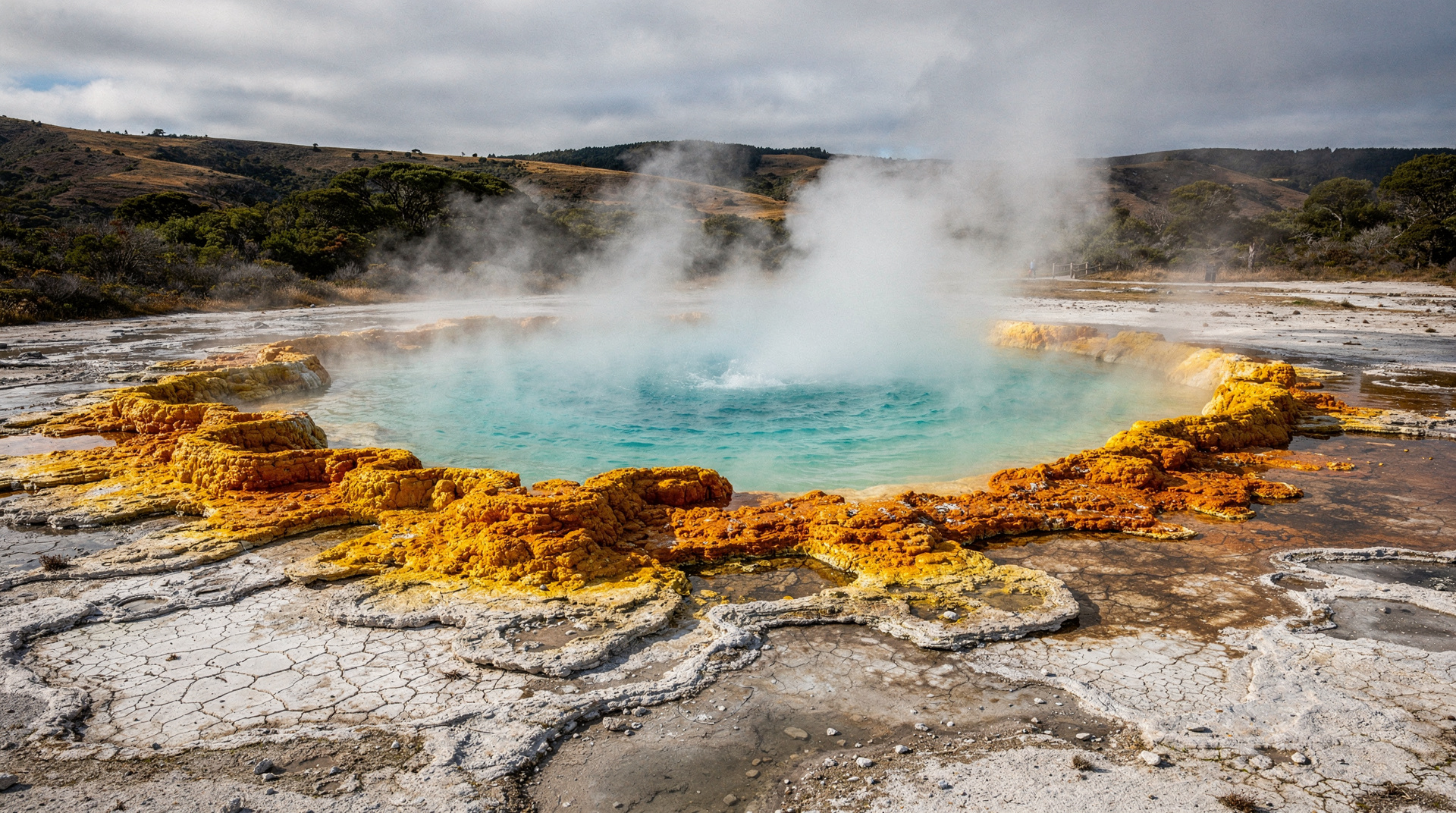
Rotorua
Honest Rotorua guide: Te Puia, Wai-O-Tapu, Polynesian Spa, Maori hangi, real prices NZD/USD/EUR, tourist traps to avoid, and best 2 days.
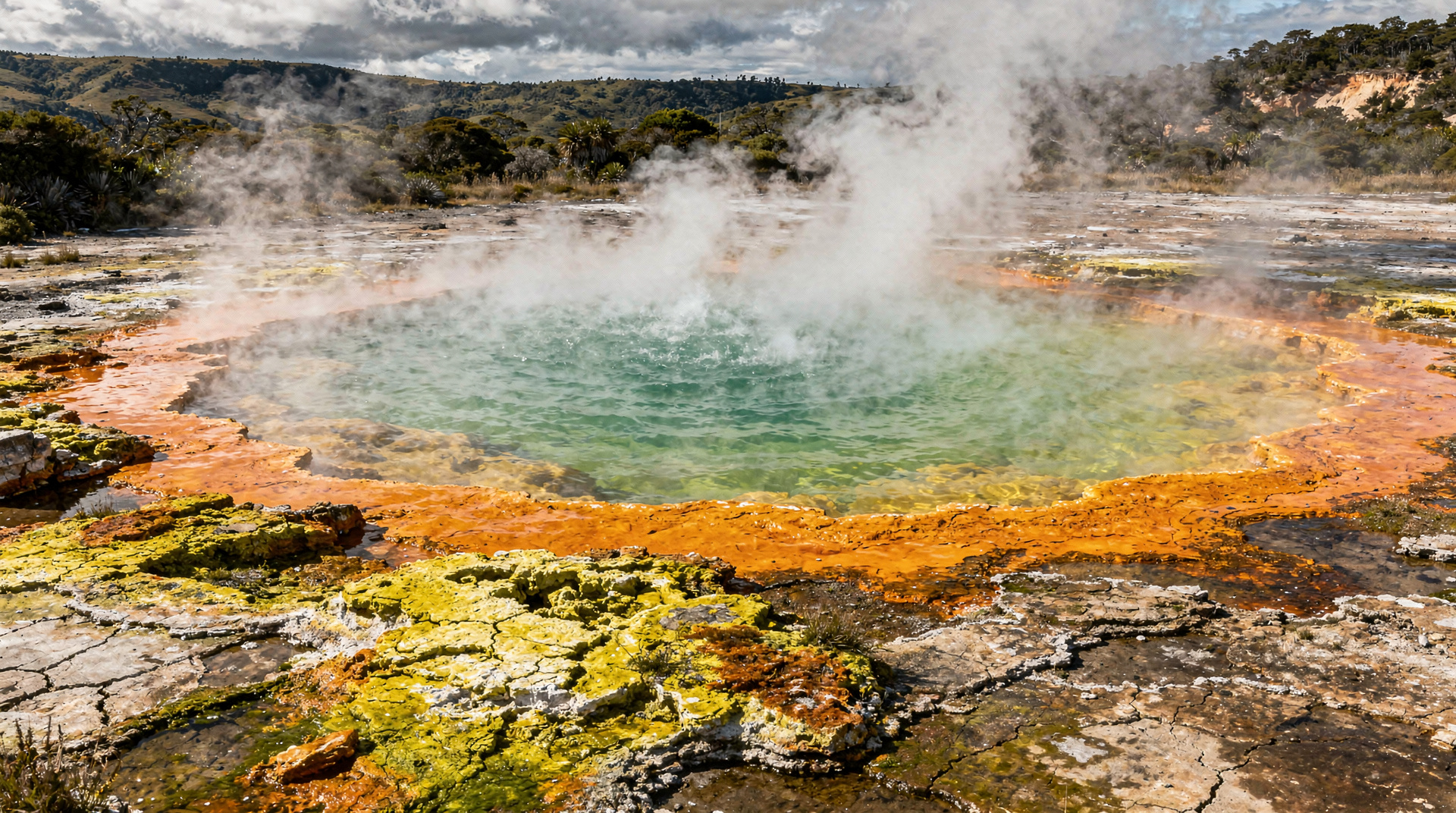
Wai-O-Tapu Thermal Wonderland
Wai-O-Tapu is NZ's most colourful geothermal park — Champagne Pool, Lady Knox Geyser, 18 km² of volcanic landscape. Entry NZD 42 / USD 25. Tour guide 2026.
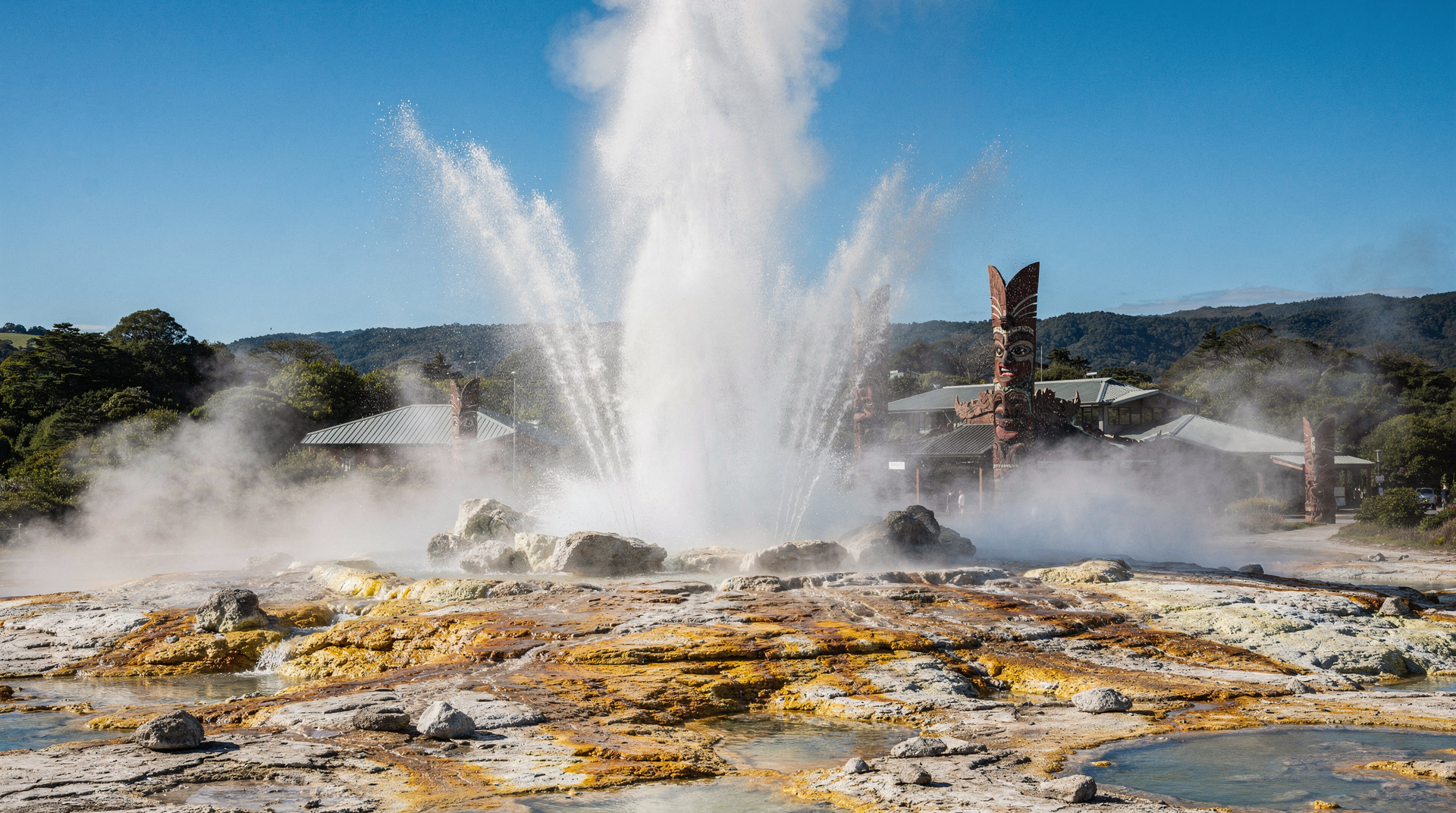
Te Puia — Rotorua's geothermal Maori cultural centre
Te Puia combines the Pohutu Geyser with a living Maori cultural centre — carving school, hangi, kiwi house. Iwi-owned. Prices NZD/USD/EUR and practical tips.
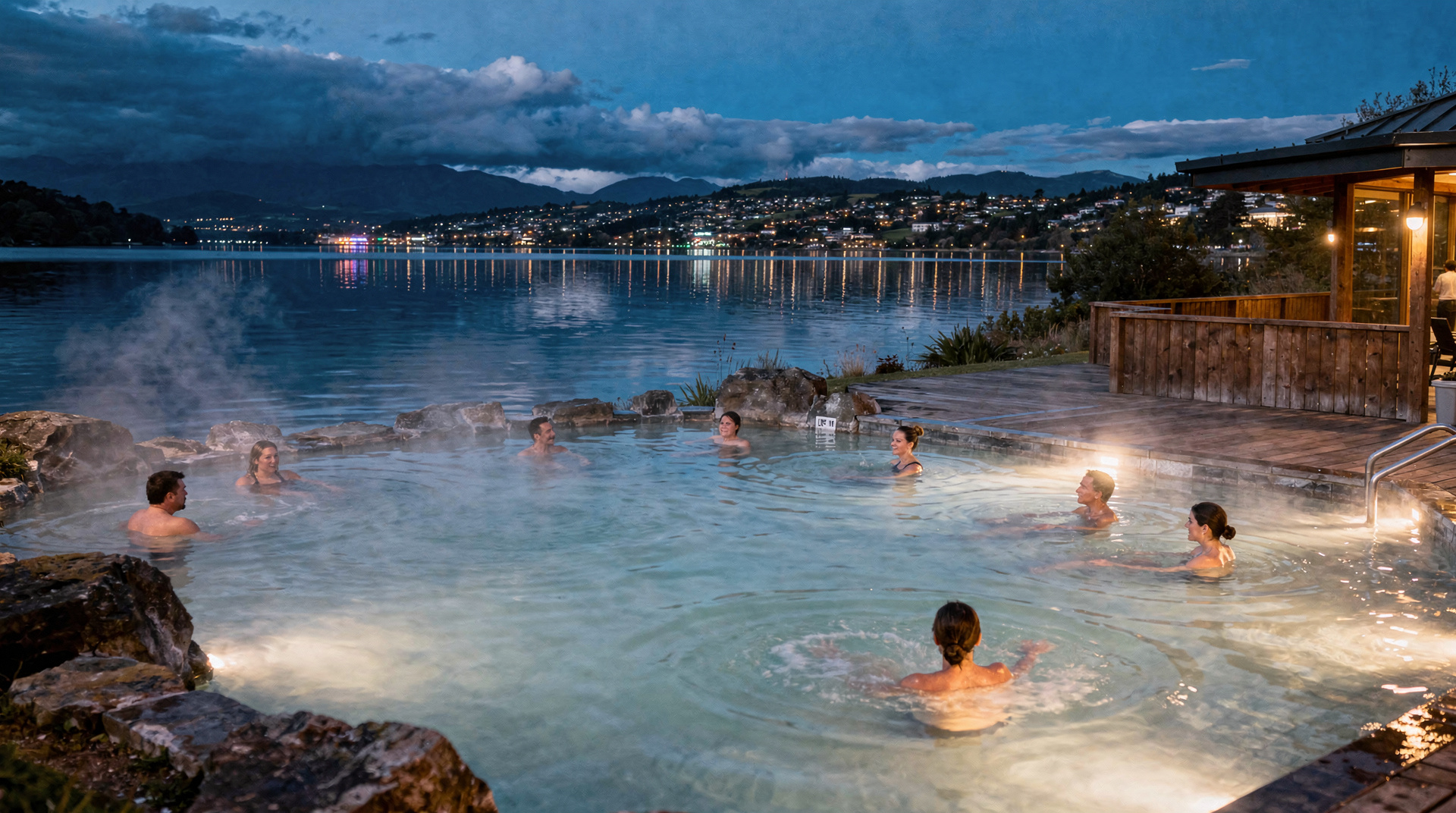
Polynesian Spa Rotorua
Polynesian Spa is NZ's premier geothermal pool complex on Lake Rotorua. Alkaline vs acidic pools, private lake-view suites, prices NZD/USD/EUR.
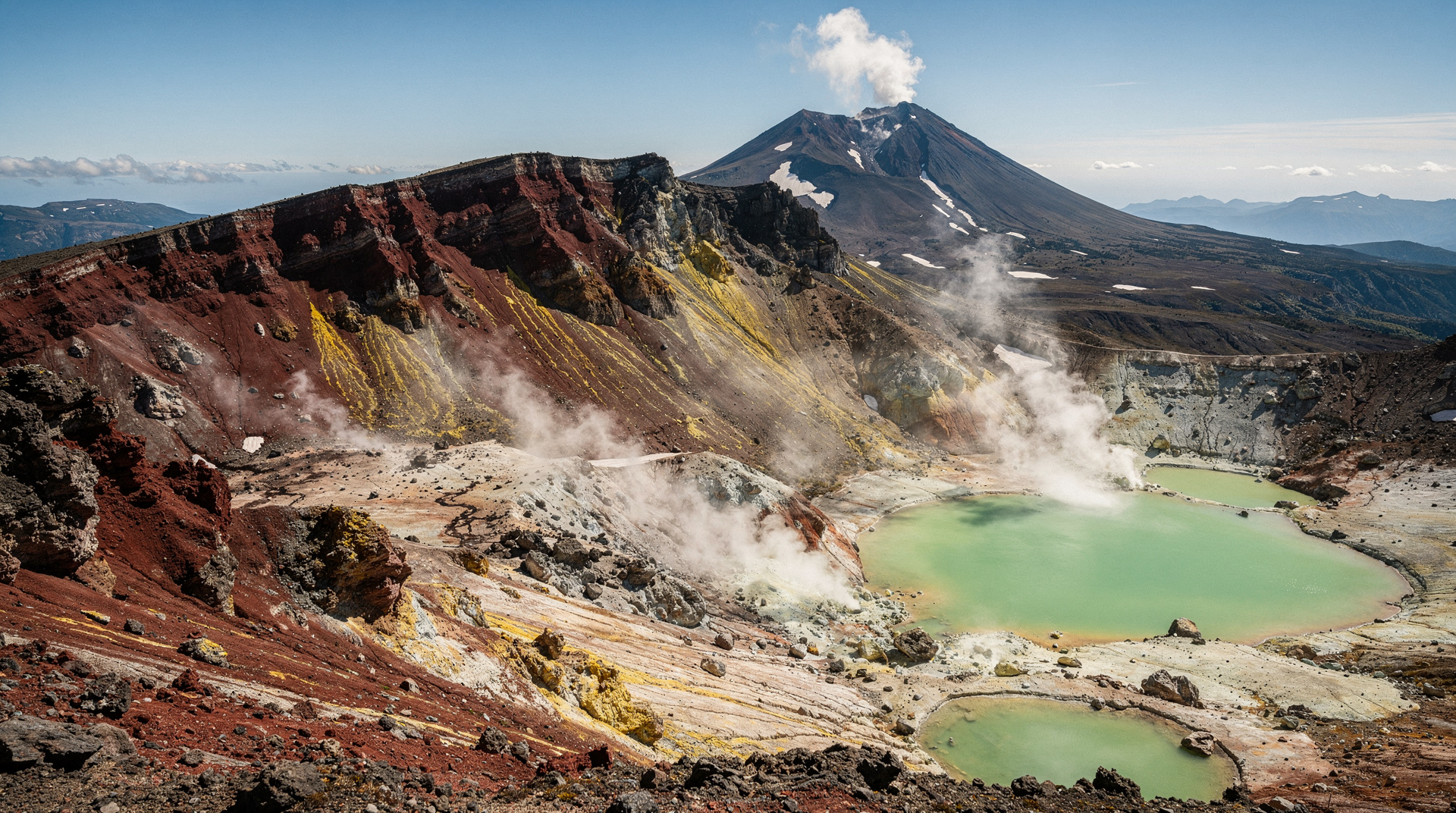
Tongariro volcanic craters and geothermal features
Tongariro's Emerald Lakes, Red Crater, and Blue Lake are NZ's finest volcanic landscape. Geothermal features guide, access, viewpoints, and safety tips.
Last reviewed: