
Tipping in New Zealand
Do you need to tip in New Zealand?
No. Tipping is not customary or expected in New Zealand. Restaurant servers, bar staff, taxi drivers, and hotel workers earn a living wage set by law. Leaving a tip is a genuine compliment for excellent service — not an obligation. Visitors from tipping cultures (US, Canada) often over-tip out of habit; locals rarely tip at all.
| Short answer | Tipping is optional everywhere in New Zealand, not expected |
| Where it’s most common | Tour guides and activity operators, not restaurants |
| Typical restaurant tip | NZD 5–10 on a NZD 80–120 bill, only for standout service |
| Typical tour guide tip | NZD 10–30 per person for a half- or full-day guided experience |
| Where never to tip | Fast food, petrol stations, supermarkets, DOC rangers |
The truth about tipping in New Zealand
New Zealand operates on a minimum wage system that actually means something. As of April 2026, the minimum wage is NZD 23.15 per hour (approximately USD 13.90 / EUR 12.70). There is no “tipped minimum wage” — the category that allows US employers to pay servers USD 2.13 per hour on the assumption that tips will make up the difference does not exist here.
This changes everything about the social logic of tipping. New Zealand hospitality workers are not depending on your generosity to pay their rent. A restaurant server earns NZD 23-28 per hour whether you leave a tip or not. This is why tipping here is genuinely optional — not “optional but you’ll be judged if you don’t,” but actually optional in the full sense of the word.
Understanding this removes a lot of anxiety for visitors from tipping cultures. You are not being mean by not tipping. You are not going to receive worse service next time. The social contract is simply different.
Restaurant and cafe tipping
The norm: Most New Zealanders do not tip at restaurants, cafes, or brunch spots. Leaving a few dollars for a particularly good meal is appreciated but will sometimes surprise the staff.
When a small tip is genuinely appropriate:
- A long lunch or dinner where the server went noticeably beyond routine service
- A tasting menu restaurant where the service was genuinely attentive and knowledgeable
- A small owner-operated restaurant where the owner served you personally
Appropriate amounts: If you choose to tip, NZD 5-10 on a bill of NZD 80-120 is generous and appreciated. Rounding up (leaving the change) is the most common tipping behaviour among the minority of New Zealanders who tip at all.
Tipping by card: Most terminals now have a tip prompt on the screen. If you do not want to tip, simply select “0%” or “No tip” — this is normal and not awkward.
Service charges: Some restaurants in Auckland and Queenstown add a weekend surcharge (typically 10-15%) or a public holiday surcharge (up to 15%) to cover higher staff wages. This is not a tip — it goes to staff wages, is required by law to be disclosed on the menu, and is not discretionary. Do not confuse it with a gratuity. If you want to tip on top, you can, but you are not expected to.
Bar and cafe tipping
The norm: No tip expected at bars. Buying a round for the bartender is more common than leaving cash. At cafes, tip jars at the counter exist — dropping in your coins is friendly, leaving nothing is equally fine.
Tour guides and activity operators
This is where tipping is most common in New Zealand, and most culturally appropriate.
Guided day tours: For a half-day or full-day guided tour — Maori cultural experience, kayaking guide, Milford Sound boat crew — NZD 5-20 per person for excellent service is genuinely appreciated and more common than restaurant tipping. Tour operators, particularly smaller owner-operators, often work for rates closer to minimum wage than a restaurant chef.
Multi-day adventures: For a 3-5 day Great Walk guided experience or a multi-day kayak tour, NZD 30-50 per person for an outstanding guide is appropriate and will be remembered.
DOC (Department of Conservation) rangers: Not tipped. They are civil servants.
Private drivers for full-day touring: NZD 20-30 as an optional thank-you is appreciated for exceptional service.
Taxi and rideshare tipping
Taxis: Rounding up to the nearest dollar is the limit of convention. A NZD 38 ride might get a NZD 40 payment. Nothing more is expected.
Uber/Ola: The app will prompt for a tip after the ride. Most New Zealand passengers select 0%. If the driver was exceptionally helpful (helping with heavy luggage, providing local advice), NZD 2-5 is a generous gesture.
Hotel tipping
Reception staff: Not tipped.
Housekeeping: Not expected. Some guests leave a few dollars on departure, but this is not a New Zealand custom.
Porters/bellhops: Not expected at hotels that have them (mostly in Auckland, Queenstown, and Christchurch five-star properties). If a porter carries multiple heavy bags, NZD 5 is appreciated.
Concierge: Not tipped for standard service (restaurant bookings, maps, recommendations). For genuinely exceptional help arranging a difficult booking or private experience, a small gift or NZD 10-20 is appropriate.
Tipping at beauty and wellness services
Hair salons: Not customary. New Zealand haircut and colour prices already include the service component.
Massage and spa: At a spa attached to a hotel or resort, a small tip (NZD 10-15) for an excellent therapist is appreciated but not expected.
Tattoo artists: New Zealand has a world-class tattoo industry, particularly for Maori-inspired ta moko work. For a tattoo session of several hours, leaving something above the quoted rate (5-10%) for outstanding work is appropriate and mirrors international tattoo tipping conventions more than standard NZ service tipping.
When to skip the tip entirely
- Fast food and counter service
- Petrol stations and convenience stores
- Supermarkets
- Any transaction where you ordered at a counter rather than being served at a table
Frequently asked questions about tipping in NZ
Will my server be offended if I don’t tip?
No. New Zealand hospitality workers do not expect tips and are not dependent on them. Unlike the US, there is no implicit social contract that assumes a tip. If you do not tip after a meal, it will not be interpreted as a statement about the quality of service.
What if I am from the US and tipping feels wrong to skip?
Perfectly understandable. The habit is deeply ingrained in American culture. If tipping feels natural to you, tip — your server will appreciate it. But do not feel guilty on a trip where you have decided to adapt to local norms.
Is tipping expected at Maori cultural experiences?
Not as a rule, but a small gratuity (NZD 10-20 per person for a multi-hour experience) is a kind acknowledgement of the personal nature of many of these experiences. Performers at major venues like Te Puia in Rotorua have institutional wages; small family-run cultural experiences are different.
Are tip jars on the counter at cafes genuine?
Yes. They are voluntary. Many New Zealanders drop in coins from their change; many do not. Either is normal.
Do any restaurants have automatic gratuities?
Not as a standard practice. Some upscale restaurants in Auckland and Queenstown include a “service suggestion” or add a gratuity for large groups (8+), similar to international practice. This is noted on the menu. In these cases, the service charge goes to staff and is not discretionary.
My tour guide was incredible. How much should I tip?
For a full-day (8-hour) guided experience where the guide significantly enhanced your trip: NZD 20-30 per person is generous and meaningful. For a half-day: NZD 10-15. These amounts represent genuine appreciation without creating awkwardness.
The bigger picture: wages, workers, and honesty
New Zealand’s tipping culture reflects a broader social contract. The country has a relatively low Gini coefficient (income inequality is moderate by OECD standards), strong union coverage in hospitality, and a political consensus around liveable wages. This does not mean hospitality workers are wealthy — housing costs in Auckland and Queenstown make NZD 23/hour a tight budget. But the mechanism for addressing that is wages, not tips.
If you want to express economic appreciation for outstanding service in New Zealand, the most culturally aligned ways are: leave a genuine online review mentioning the specific person, tell the manager directly about the exceptional employee, and return. These actions have lasting career consequences for workers in a way that a tip does not.
How tipping fits into your overall budget
Because tipping is genuinely optional here, it’s easier to plan a trip budget than in tipping-heavy destinations — you don’t need to pad every restaurant bill or tour price by 15–20% as a matter of course. The New Zealand on a budget guide doesn’t factor tipping into its daily cost estimates for exactly this reason, and the currency and money guide covers the practical side — cards versus cash, ATM fees, and how EFTPOS terminals handle the on-screen tip prompt if you do want to leave one. If this is your first trip and tipping etiquette is one of several unfamiliar norms, the first time in New Zealand guide covers the wider orientation.
Related guides and itineraries
- Currency and money in New Zealand — NZD rates, ATMs, cards
- New Zealand on a budget — overall cost reality
- Maori culture overview — context for cultural experiences
- First time in New Zealand — full orientation
- Auckland guide — restaurant and food scene
- Queenstown guide — where surcharges are most common
- Rotorua guide — where Maori cultural tipping questions arise
Related guides
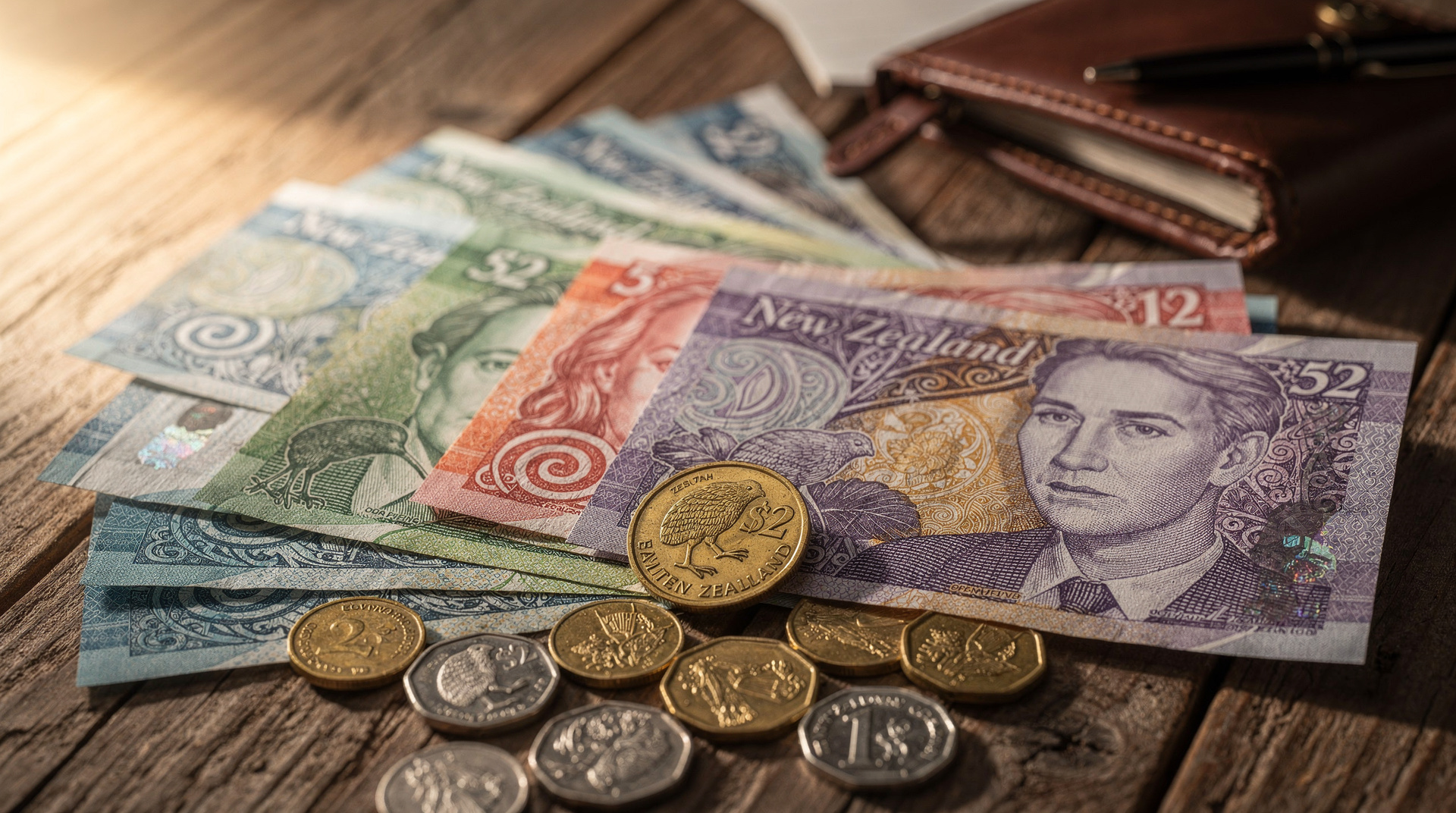
Currency and money in New Zealand
Everything about NZ money: NZD exchange rates, where to get cash, card usage, ATMs, GST, tipping rules, and how to avoid bad exchange deals.
New Zealand on a budget
Honest budget guide to NZ: real daily costs, where to save, where not to cheap out, free things, and how to stretch NZD on a backpacker or mid-range budget.

First time in New Zealand
Complete first-timer's guide to NZ: costs, logistics, Maori culture, what to book early, and how to structure 7–21 days.
Vegan and vegetarian in New Zealand
Honest guide for vegans and vegetarians in NZ: where options are plentiful, where they're limited, best cities, supermarket staples, and eating on a budget.
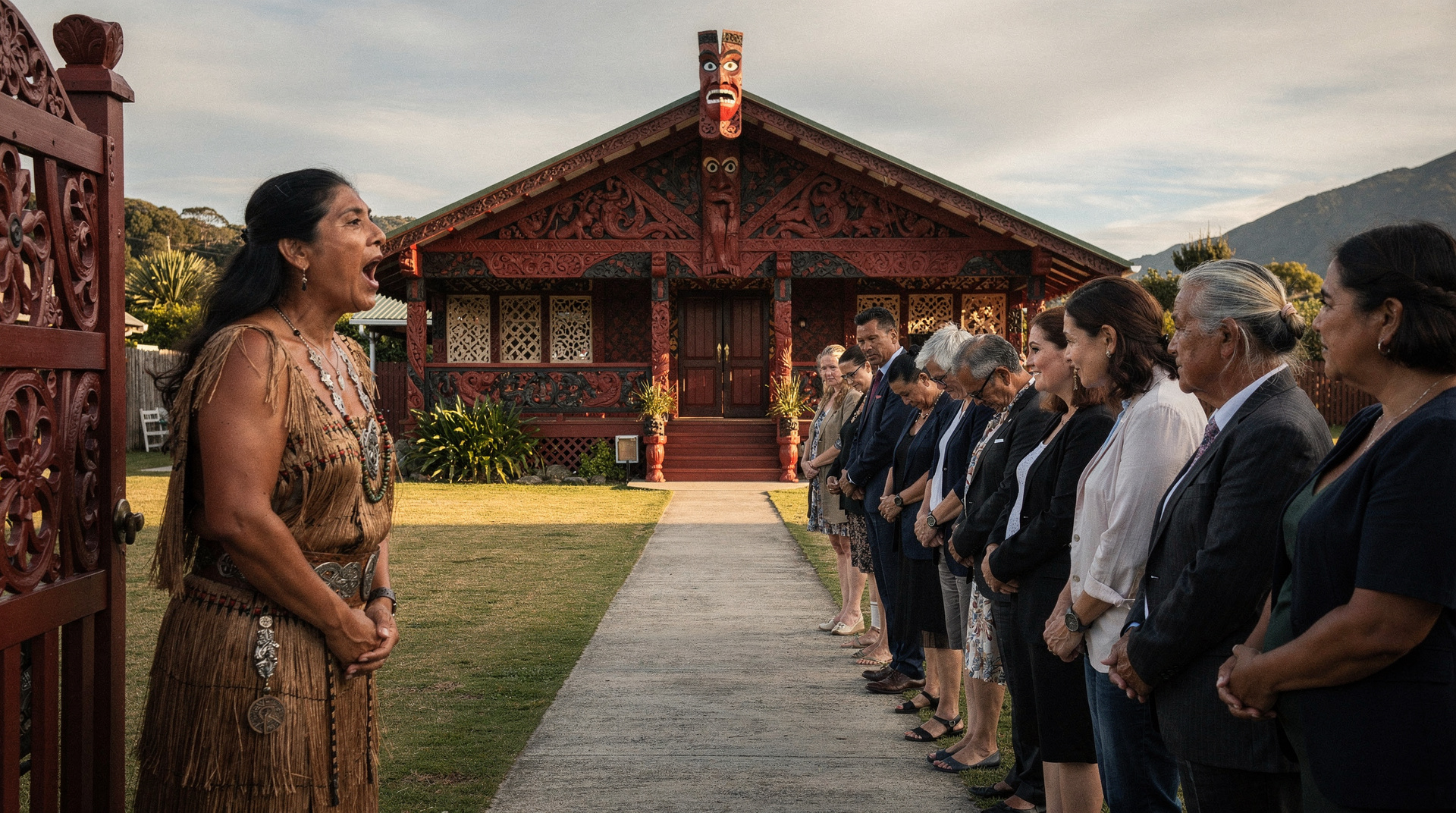
Marae etiquette for visitors
Marae etiquette: powhiri protocol, hongi greeting, shoes off, what not to do, and how to be a respectful guest at a Maori meeting place.
Last reviewed: