Waiheke Island vs Great Barrier Island
Should I visit Waiheke Island or Great Barrier Island from Auckland?
Waiheke for a day trip or weekend — wine, beaches, and cafes 35 minutes from Auckland. Great Barrier Island if you want four days off-grid in one of New Zealand's most remote and unspoiled landscapes. These are not comparable day trips — Great Barrier requires proper planning, a longer stay, and a different mindset entirely.
Two islands, two completely different trips
Waiheke Island and Great Barrier Island sit in the Hauraki Gulf, both accessible from Auckland, and both considered among the best island experiences in New Zealand. They share almost nothing else.
| Where | Both in the Hauraki Gulf, Auckland |
| Cost | Waiheke around NZD 150–400/day; Great Barrier NZD 80–200/day |
| Time needed | Waiheke: half-day to 1 day; Great Barrier: 3-4 nights minimum |
| Getting there | Waiheke: 35-min ferry; Great Barrier: 4-4.5h ferry or 30-min flight |
| Best time | Both best November-April |
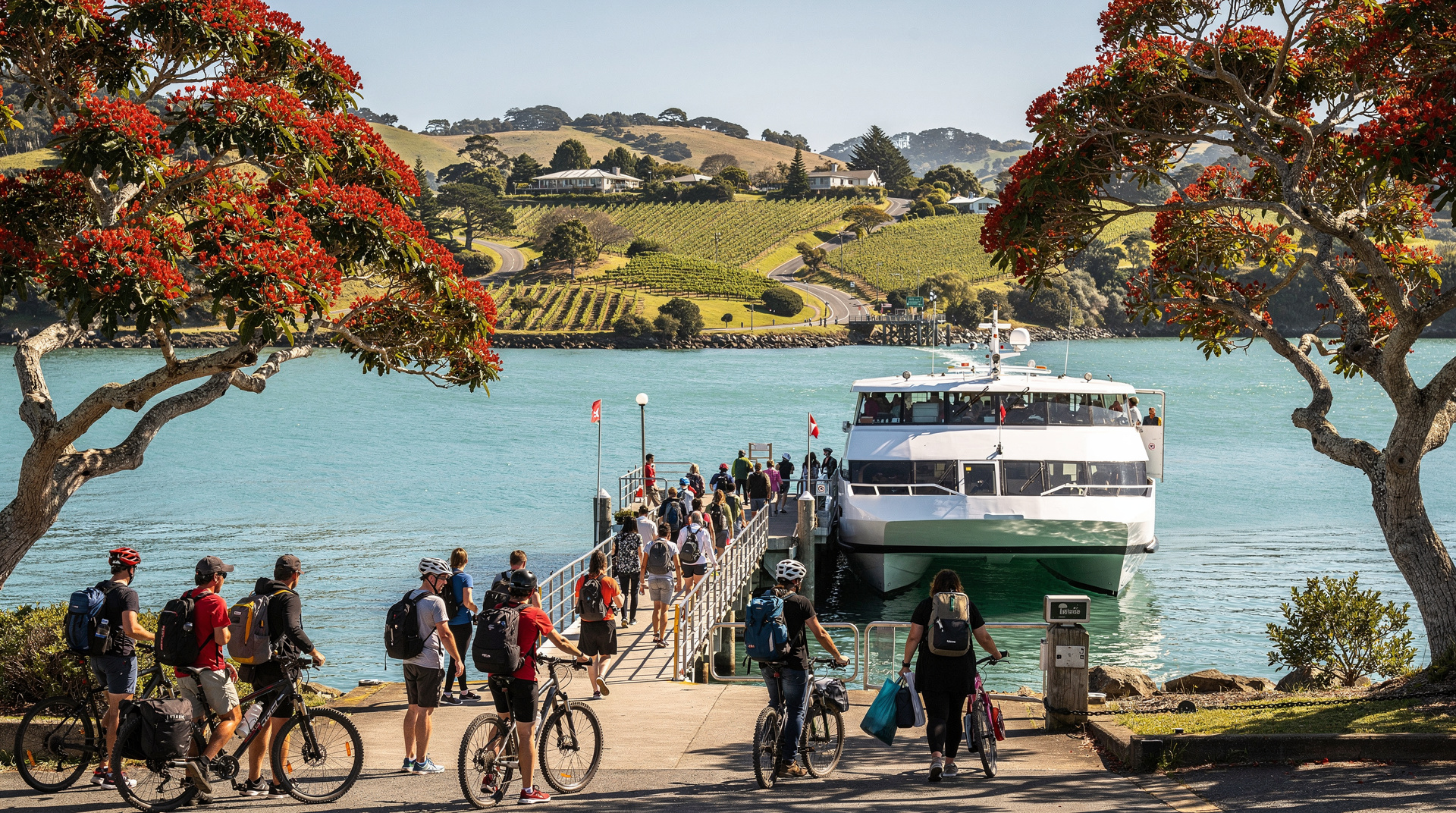
Waiheke is 35 minutes from downtown Auckland by Fullers ferry. It has 23+ wineries, good restaurants, several beautiful beaches, regular bus services, and more accommodation options than some South Island towns. On a summer weekend, the island has a tourist infrastructure that functions smoothly. It is excellent, and most Auckland day trips to Waiheke are genuinely enjoyable.
Great Barrier Island — Aotea, to use its Maori name — is 4 hours from Auckland by ferry (or 30 minutes by small plane, which fills quickly). It has no supermarket with standard stock, no 24-hour petrol station, limited mobile coverage, and roads that are mostly unsealed. It is also one of the least light-polluted places in the Southern Hemisphere, a certified International Dark Sky Sanctuary, and home to landscapes that feel nothing like mainland New Zealand.
These are not competing day trip options. You will not visit Great Barrier Island as a day trip from Auckland — the ferry takes 4 hours each way. If you’re comparing them, you’re deciding between a 1-day Waiheke excursion and a 3-5 day Great Barrier Island stay as a distinct trip component.
| Dimension | Waiheke Island | Great Barrier Island (Aotea) |
|---|---|---|
| Ferry time from Auckland | 35 minutes (Fullers, regular service) | 4-4.5 hours (Fullers/Sealink, limited departures) |
| Flight from Auckland | Not available as a practical option | 30 minutes (FlyMySky, Air Chathams — book ahead) |
| Minimum sensible stay | Half a day — day trip works well | 3-4 nights minimum to justify the travel |
| Mobile phone coverage | Good — most of the island covered | Very limited — Claris township only reliably |
| Wineries/wine culture | 23+ wineries — Waiheke is a serious wine destination | None — not a wine destination |
| Beaches | Onetangi, Palm Beach, Oneroa — good swimming beaches | Medlands, Kaitoke — often deserted, among NZ's best |
| Hiking | Coastal walks, Te Ara Hura loop (around the island) | Mt Hobson/Hirakimata (621m), Windy Canyon, extensive DOC tracks |
| Accommodation style | Boutique hotels, holiday houses, backpacker options | Campgrounds, basic cabins, self-contained cottages — bring supplies |
| Cost per day | NZD 150-400+ depending on activity and meals | NZD 80-200 (accommodation cheaper; food costs higher if not self-catering) |
| Dark sky viewing | Poor — light pollution from Auckland | Outstanding — certified International Dark Sky Sanctuary |
| Book it | Book Waiheke wine tour | Book Auckland island wildlife day trip |
Verdict: Waiheke for wine, beaches and a relaxed day or weekend from Auckland. Great Barrier Island for a genuine off-grid escape with extraordinary landscapes, dark skies, and empty beaches.
Waiheke Island — what the experience is actually like
Waiheke is New Zealand’s third most-visited destination (after Auckland and Queenstown), which tells you both about its quality and its crowds. In January and February, the ferry is packed with Aucklanders and tourists. This is not a secret getaway — it is a well-developed island destination with real quality at most price points.
The wine scene is the defining reason most international visitors come. Waiheke’s combination of warm, dry summers (sheltered from Auckland’s humidity) and free-draining soils produces some of New Zealand’s best Bordeaux-style reds and Chardonnay. Goldwater, Stonyridge, Cable Bay, and Man O’ War are among the wineries worth visiting — Stonyridge’s Larose in particular is one of New Zealand’s most celebrated single reds.
Waiheke Island: The Essence of Waiheke Wine Tour
Waiheke Island wine tasting tour — three wineries, guided transport, tastings included. One of the best organized half-day wine experiences available from Auckland.
From NZD 145-195 / USD 87-117 / EUR 80-107
The beaches are legitimately good. Onetangi (long, white sand, good swimming) and Palm Beach (sheltered, family-friendly) are the main options. Oneroa, the main village, has a functioning high street — cafes, restaurants, wine shops, a bookshop — that makes aimless wandering worthwhile. The bus system connects the main beaches and Oneroa from the ferry terminal at Matiatia, so you don’t need to rent a car for a basic day trip.
Ferry, hop-on hop-off bus, and optional wine tour combination is the most common starting point for first-time visitors — you get the transport organized and the island’s layout becomes clear quickly. For a more in-depth wine experience: Waiheke Island three vineyards tour with transport covers more ground with guide commentary.
For cultural depth beyond wine: Maori cultural tour on Waiheke Island includes the island’s specific Ngati Paoa history — Waiheke was historically heavily populated before European settlement dramatically reduced the iwi. The cultural context adds dimension that a pure wine tour doesn’t.
What Waiheke is not: it is not a quiet escape. In peak summer, you will share beaches with hundreds of people and wineries with busloads of tourists. The island is also relatively small (92 km²) — once you’ve done the main vineyards and beaches, you’ve covered the core experience. Some visitors feel slightly underwhelmed if they arrive expecting drama; it is pleasant, not dramatic.
Great Barrier Island — what the experience is actually like
Great Barrier Island — Aotea — is roughly 285 km² and home to fewer than 1,000 permanent residents. The western side (accessible from Port Fitzroy) has a fjord-like coastline; the eastern side has DOC-managed forests, excellent DOC tracks, hot springs, and the island’s best beaches at Medlands and Kaitoke.
The scale of what Great Barrier offers is genuinely different from Waiheke. Mt Hobson/Hirakimata (621m, the island’s high point) is a half-day walk through kauri forest (some of the largest kauri trees in the Hauraki Gulf survive here) to a summit with 360-degree views of the Gulf, Coromandel Peninsula, and on clear days the Northland coast. Windy Canyon is a short walk to a dramatic basalt rock formation unlike anything on the mainland. The Kaitoke hot springs (a gentle geothermal seep in a river — free, DOC-managed) are one of the island’s specific pleasures.
The Maori experience of the island remains palpable. Aotea is the name used by tangata whenua (Ngati Rehua) and increasingly the name you’ll see on maps and DOC signage. The island was never subject to the same intensity of development as the mainland; there are still areas of cultural significance maintained with appropriate respect.
The practicalities that catch people out:
- Bring cash — not everywhere takes cards.
- Bring food supplies for cooking — the island’s main shop in Claris has basics but limited fresh produce.
- Petrol is significantly more expensive than Auckland.
- Roads are mostly unsealed; a standard rental car manages fine, but allow more time than GPS suggests.
- Mobile coverage is essentially non-existent outside Claris township. This is also one of the things people most appreciate about the island after they get there.
The dark sky experience is the feature that most distinguishes Great Barrier from any other island accessible from a major New Zealand city. Aotea is a certified International Dark Sky Sanctuary — one of only a handful in the Southern Hemisphere. On a clear moonless night, the Milky Way is visible with the naked eye in a way that simply isn’t possible from anywhere near Auckland. If you’ve never seen a genuinely dark sky, this alone is worth planning around.
Verdicts — Skip / Worth it / Splurge
A Waiheke wine tour in January, ferry booked, wineries visited at 11am — ✓ Worth it — the wine quality is real and the island setting makes it more enjoyable than a suburban winery.
Waiheke as a “quiet escape” in peak summer — ✕ Skip — the island is not quiet in January. If you want a quiet escape, go to Great Barrier or go off-season.
A premium Waiheke wine and food experience with small group tour — ✓ Worth it — the island’s best wineries (Stonyridge, Man O’ War) reward focused attention; a guided tour helps you avoid the obvious tourist traps.
Waiheke Island Gourmet Food and Wine Tour with Lunch
Waiheke Island premium food and wine tour — small group, curated wineries, local food producers.
From NZD 225-295 / USD 135-177 / EUR 124-162
Great Barrier Island in summer (December-March), 4-5 nights, camping or self-contained cottage, dark sky night viewing — ✓ Worth it — genuinely one of the great off-grid experiences available within 30 minutes’ flight of a major international city.
Great Barrier Island as a 2-night stop — ✕ Skip — the 4-hour ferry and limited infrastructure means 2 nights is too short to justify the logistics. Go for 4+ nights or don’t go.
What it actually costs (NZD + USD + EUR)
Cost breakdown
One person, 2026 prices, FX as at May 2026 (1 NZD ≈ 0.60 USD ≈ 0.55 EUR)
| Item | NZD | USD | EUR | Verdict |
|---|---|---|---|---|
| Waiheke ferry return (Auckland-Matiatia) | 55-75 | 33-45 | 30-41 | ✓ Worth it |
| Waiheke wine tour (guided, 3 wineries) | 145-195 | 87-117 | 80-107 | ✓ Worth it |
| Waiheke lunch at mid-range restaurant | 35-65 | 21-39 | 19-36 | |
| Waiheke 1-night boutique stay | 220-380 | 132-228 | 121-209 | |
| Great Barrier Island ferry return (4h) | 130-185 | 78-111 | 72-102 | |
| Great Barrier Island flight return (30min) Book ahead — small planes fill quickly | 250-350 | 150-210 | 138-193 | ✓ Worth it |
| Great Barrier DOC campsite per night | 8-15 | 5-9 | 4-8 | ✓ Worth it |
| Great Barrier self-contained cottage per night | 150-280 | 90-168 | 83-154 |
Note: Great Barrier Island can be done cheaply (camping + self-catered food) or at moderate cost (cottage + some eating out). The transport cost is the fixed expense — fly if your time is limited.
Practical logistics — getting there
Waiheke: Fullers360 runs multiple ferries daily from the Auckland Ferry Building (downtown). The high-season timetable (November-April) has services every 30-60 minutes from about 6am. Standard return fare is NZD 55-75 per adult. No booking required for the foot passenger ferry (though weekend morning sailings fill up — arrive early). The ferry terminal on Waiheke (Matiatia) has a taxi rank and the hop-on hop-off bus stop.
Great Barrier Island: Fullers360 and Sealink run passenger/vehicle ferries to Tryphena (south of the island, most facilities) or Port Fitzroy (north, more remote). Ferry time is 4-4.5 hours. Vehicle spots book out weeks ahead in summer — passenger bookings are also advisable. Flight alternative: FlyMySky and Air Chathams operate 15-30 seat propeller planes (30 minutes, NZD 125-200 one way) from Auckland’s Domestic terminal and North Shore Aerodrome. Book the flight early; these planes fill on weekends.
If flying one way and taking the ferry the other way, arrive by ferry and leave by plane (or vice versa) — you get both perspectives and the ferry gives you the sea approach to the island without the time cost on the return.
Frequently asked questions about Waiheke Island vs Great Barrier Island
Can I do Great Barrier Island as a day trip?
No. The ferry is 4 hours each way, meaning an 8-hour ferry commitment for a day trip. There is not enough time. A flight (30 minutes each way) makes a day trip marginally possible but wastes most of the benefit of being there. Minimum sensible stay: 3-4 nights.
Is Waiheke Island worth visiting in winter?
Yes, and arguably better for non-wine-focused visitors. The crowds drop significantly, accommodation prices fall 20-30%, and the island’s landscape is greener. Some wineries reduce hours in winter but most remain open on weekends. The beaches are cold but the walking is good.
Do I need a car on Waiheke?
For a day trip: no. The hop-on hop-off bus connects Matiatia, Oneroa, Ostend, Palm Beach, and Onetangi. For a multi-day stay: a rental car gives more flexibility, particularly for reaching the eastern beaches and more remote wineries. E-bike rental is increasingly popular and suits the island’s scale well.
What should I bring to Great Barrier Island?
Cash (limited card acceptance), more food than you think you’ll need (bring a cooler with basics from Auckland), a good rain jacket (exposed coasts, changeable weather), a physical map or downloaded offline maps (no mobile data for most of the island), and a torch or headlamp for the dark sky nights. Prescription medications — bring enough, as the pharmacy situation is extremely limited.
Which island has better beaches?
Different categories. Waiheke’s Onetangi beach is excellent for swimming and accessible. Great Barrier’s Medlands and Kaitoke beaches are among the finest uncrowded beaches in New Zealand, with surf at Medlands and calm water at Kaitoke. If you want a crowd-free beach experience, Great Barrier wins. If you want a beach accessible within 45 minutes of Auckland on a weekday, Waiheke wins.
Is Great Barrier Island safe for families?
Yes, genuinely family-friendly — the pace is slow, the beaches are safe, and the hot springs are appropriate for children. The limitations are the logistics (long ferry, limited shops) rather than any safety concerns. Families with young children tend to find Great Barrier easier with 5+ nights to settle in.
What they share — the Hauraki Gulf context
Both islands sit in the Hauraki Gulf Marine Park — a 1.2 million hectare protected area covering the sea, islands, and marine life between Auckland and the Coromandel Peninsula. The Gulf is one of New Zealand’s most ecologically significant seascapes: little blue penguins nest on Waiheke’s western cliffs, dolphins are regularly seen on both ferry routes, and gannets breed on the outer islands. Both islands have DOC (Department of Conservation) land alongside private property, and both have active conservation programmes.
The Hauraki Gulf Islands are collectively better understood as a cluster than as individual destinations. If you’re spending a week in Auckland, you could reasonably do a Waiheke day trip, a day on Tiritiri Matangi (open sanctuary island, no accommodation, extraordinary birdlife), and then a 4-night Great Barrier Island stay — and cover very different slices of the Gulf’s character.
Tiritiri Matangi Island day trip from Auckland is worth considering alongside the Waiheke vs Great Barrier decision. Tiritiri Matangi is a predator-free open sanctuary with kiwi, saddleback, kokako (one of New Zealand’s most endangered birds), takahe, and many species of petrel — accessible in 75 minutes by ferry, no accommodation, day visitors only. It’s the most concentrated wildlife experience available from Auckland, and entirely different from either Waiheke or Great Barrier.
Seasonal advice
Waiheke best season: November-April. Summer (December-February) is peak season — warm, crowded, maximum winery operating hours, beach swimming comfortable. The harvest season (February-April) has the added interest of winery harvest events and grape-picking, and the crowds thin meaningfully in March-April.
Waiheke off-season (May-October): Wineries open but on reduced hours. The island is quieter, greener, and 20-30% cheaper on accommodation. If you’re a walker rather than a wine tourist, the off-season walking (coastal sections of Te Ara Hura) is excellent.
Great Barrier Island best season: December-April (long days, warm sea, clear dark skies). The island has its own microclimate — the western coast (Port Fitzroy side) is wetter and more dramatic; the eastern coast (Tryphena, Medlands) is sunnier. January and February are peak season but the island never gets overwhelmed — its remoteness self-filters the crowd.
Great Barrier Island off-season (May-November): The island quiets significantly. Some accommodation and businesses close. DOC tracks remain open; the landscape is beautiful. The dark sky experience is if anything better in winter (clearer nights, longer dark hours). Not recommended for first-time visitors unfamiliar with the island’s limited infrastructure.
When to pick each
Pick Waiheke if: You have 1-2 days in Auckland and want to experience one of New Zealand’s best wine regions in a scenic island setting. Also appropriate for a weekend break that doesn’t require serious planning — frequent ferries, good accommodation options, functional infrastructure. The island works for groups of mixed interests: wine tourists, beach-goers, and walkers can all find their day.
Pick Great Barrier Island if: You want a genuine off-grid experience, are willing to commit 4+ nights, and can handle the logistics. Ideal for travelers who find Waiheke too polished — Great Barrier rewards the effort. The dark sky experience alone justifies the trip for astronomy-inclined visitors. Also ideal for families who want a self-contained island holiday with empty beaches, safe swimming, and children-appropriate pace.
Don’t mistake them for the same kind of trip. Waiheke is a well-executed day out from a major city. Great Barrier Island is a minor expedition. Both are excellent in their category; neither disappoints travelers who approach them with realistic expectations.
Food and eating on each island
Waiheke’s food scene is genuinely excellent by New Zealand standards — most of the major wineries (Mudbrick, Cable Bay, Te Motu) run their own restaurants, and Oneroa village has a dense cluster of cafes, a bakery worth planning a stop around, and several good casual dining options along the main strip. You can eat extremely well on Waiheke without any advance planning; walk-ins are generally fine outside peak lunch hours in January, though the best winery restaurants benefit from a booking made a day or two ahead.
Great Barrier Island is the opposite. The Claris general store covers basics but has limited fresh produce, and the island’s handful of cafes and one or two restaurants (concentrated around Tryphena and Claris) keep unpredictable hours, especially outside peak summer. Most visitors who stay in self-contained accommodation bring the bulk of their food from Auckland — a cooler bag with meat, vegetables, and staples makes a meaningful difference to the trip.
Campers should budget similarly; relying on the island’s limited shop for a multi-day stay is a common mistake that leads to expensive, repetitive meals. If self-catering isn’t your preference, book accommodation that includes meals, as several of the island’s lodges do. Petrol on Great Barrier is also significantly pricier than the mainland and the single pump in Claris can queue on busy weekends — fill up before boarding the ferry or plane where possible, and never let the tank run low given the distances between settlements.
A realistic 10-day Auckland-area itinerary combining both
For travellers with more than a week around Auckland, there’s no need to choose only one. A realistic structure: spend days 1-2 in central Auckland, take a Waiheke day trip on day 3 (wine tour in the morning, beach in the afternoon, back by evening ferry), then fly or ferry to Great Barrier Island for days 4-7 (four nights is the practical minimum given the travel time), and return to Auckland for a final day before flying onward.
This sequencing works well because Waiheke’s polish and Great Barrier’s remoteness form a genuine contrast rather than a repeat of the same island experience — most travellers who do both rate them as complementary rather than redundant. Booking the Great Barrier flight or ferry several weeks ahead matters more than the Waiheke ferry, which runs frequently enough to book closer to the date.
For those with only a long weekend, the honest advice is to pick one. Waiheke fits comfortably into a 2-3 day Auckland stopover; Great Barrier does not, and trying to compress it into 2 nights defeats the purpose of going somewhere genuinely off-grid.
Wildlife and conservation across the Gulf
Both islands sit within a working conservation landscape rather than a static nature reserve. Waiheke has active predator-control programmes on parts of its eastern peninsulas, protecting little blue penguin colonies and shorebird nesting sites — visible if you walk the Te Ara Hura coastal track rather than sticking to the wineries.
Great Barrier Island is further along this path: large sections are predator-free or under active trapping programmes, and the island supports populations of the endangered black petrel (which breeds almost nowhere else in the world) alongside brown teal and the occasional kaka. Neither island offers the guaranteed close wildlife encounters of a dedicated sanctuary like Tiritiri Matangi, but both reward travellers who build in time for a coastal walk rather than treating the islands purely as wine or beach destinations.
Fitting the islands into a wider New Zealand trip
Neither island needs to be a headline act. Many travellers treat Waiheke as a breather at the start or end of a longer trip, somewhere easy to land after a long flight or to wind down before flying home. If you are still shaping the bigger picture, the first-time New Zealand guide and the plan a trip to New Zealand page show where a Gulf island fits among the other regions.
Great Barrier asks more of your schedule. On a short trip, the days it takes are better spent elsewhere; on a longer one, it works as the quiet chapter between busier ones. The 10-day New Zealand itinerary and the 7-day North Island itinerary are good places to see how much room a trip really has, and the how many days in New Zealand guide helps you decide whether the extra nights are affordable in time.
Both islands start in the same place. Auckland is where the ferries and flights leave from, so a night or two there before or after the islands makes the logistics easier. If you would rather read about the island itself before committing, the Waiheke Island destination page covers it in more depth. Travellers who want other easy excursions from the city can compare them in day trips from Auckland and the Coromandel day trip, which looks across the same Gulf from the other side.
For other practical questions, driving in New Zealand is worth a read if you plan to take a vehicle to Great Barrier, and the packing list for New Zealand covers the layers and rain gear that suit both islands. Weather and seasons are laid out in the best-time guide if your dates are flexible.
Related comparisons and guides
Related guides
Waiheke Island
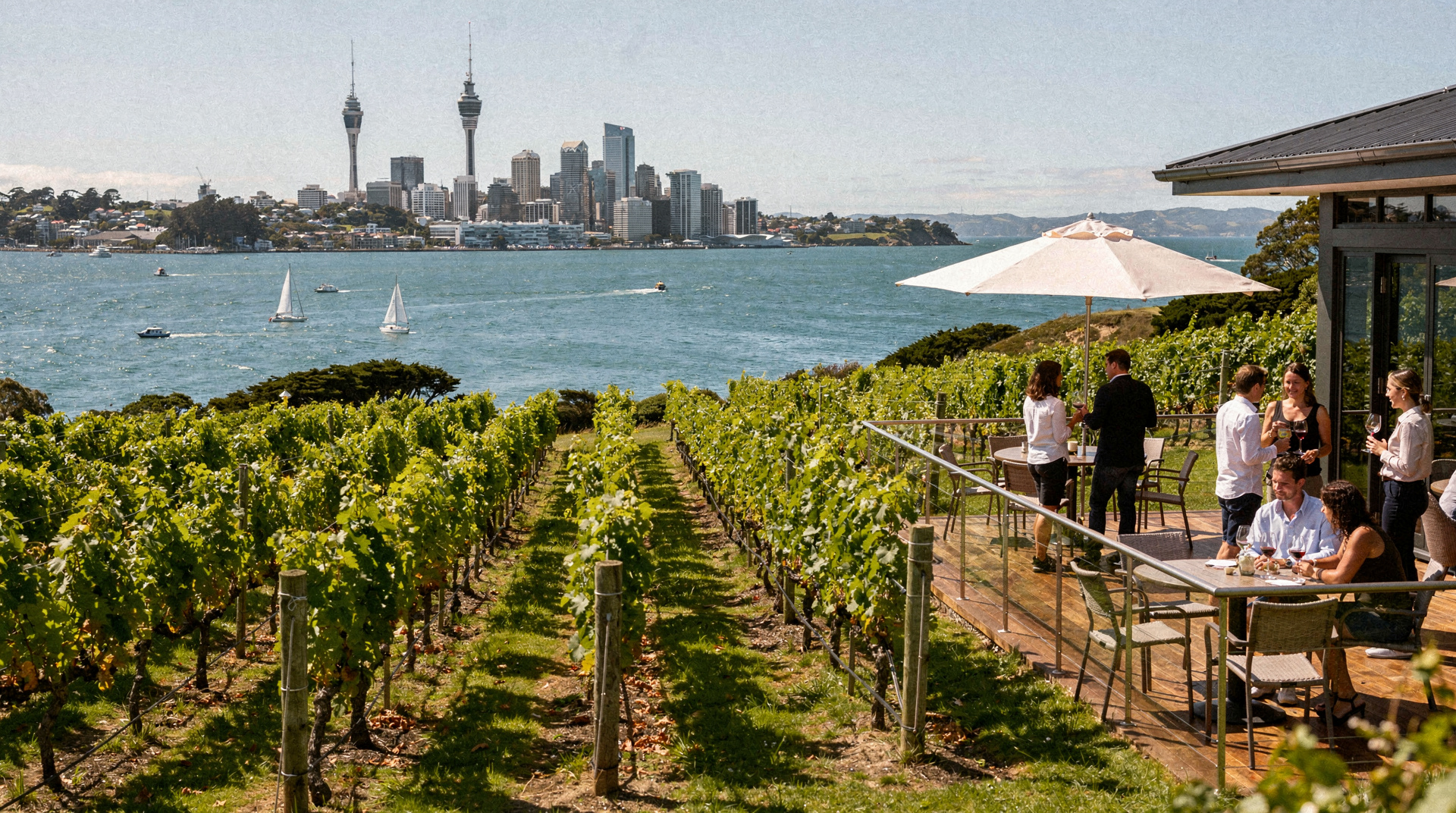
Waiheke Island honest guide: best wineries, beaches, ferry logistics, real costs NZD/USD/EUR, and how to spend one perfect day from Auckland.
Waiheke Island day trip from Auckland
How to do a Waiheke Island day trip from Auckland: ferry times, best wineries, self-bike option, cost in NZD/USD/EUR, and what to skip.
Waiheke Island wine tour
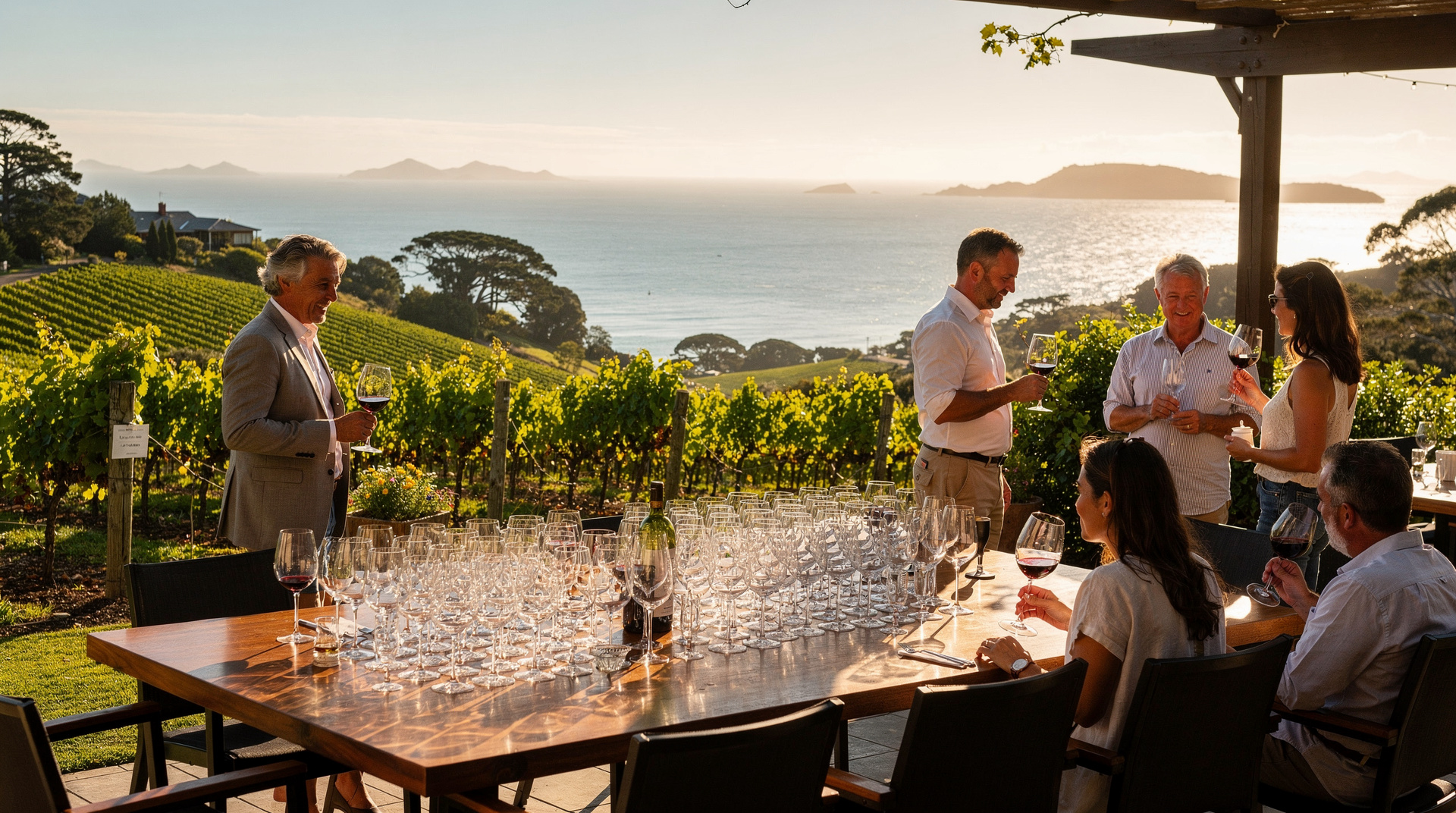
Waiheke has 30+ boutique wineries 35 min from Auckland. Full-day tours, self-guided cycling, ferry access — prices NZD/USD/EUR and top cellar doors.
Auckland region
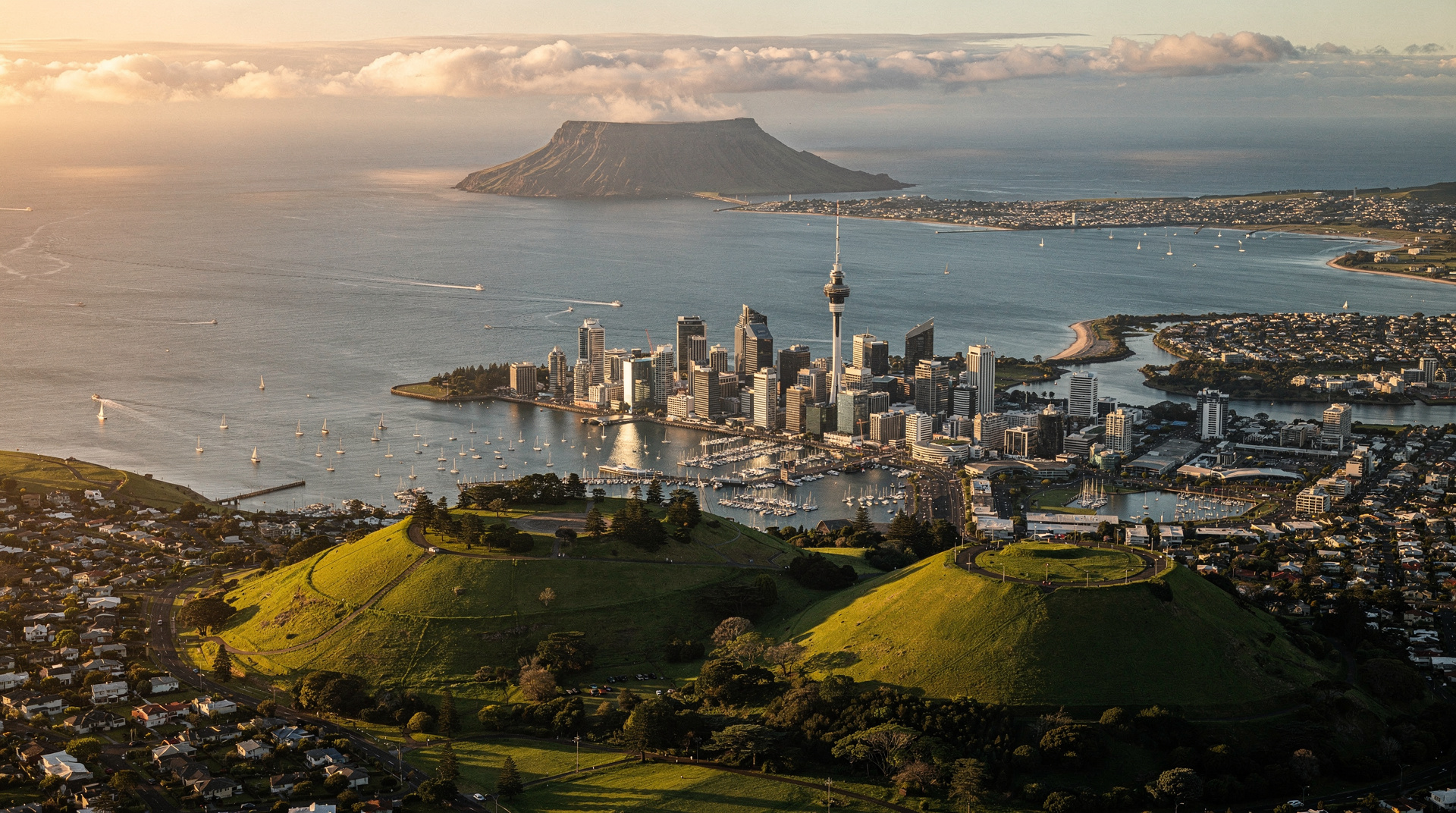
Auckland region beyond the city: Waiheke wine island, Piha surf, Tiritiri Matangi wildlife.
Best day trips from Auckland
Six great day trips from Auckland: Waiheke, Hobbiton, Waitomo, Coromandel, Rotorua and more — with drive times, GYG tours, and honest advice.