West Coast glaciers retreating — what to see now before the ice changes again
| Access now | Aerial (helicopter) for the ice; free valley walk for the viewpoint |
| Cost | Around NZD 460-520/person for a half-day heli-hike |
| Time needed | 3-4 hours for the heli-hike; 30-45 minutes for the valley walk |
| Weather risk | Cancellations are frequent; book early in your stay |
| Nearby free stop | Lake Matheson reflection walk, 30 minutes from Fox township |
The terminal face is no longer accessible
Twenty years ago, you could walk to the terminal face of Franz Josef Glacier. The valley track led you across a gravel riverbed and to the ice within a half-hour walk from the car park. Photographs from the early 2000s show tourists standing at the edge of the blue ice with the glacier towering above them.
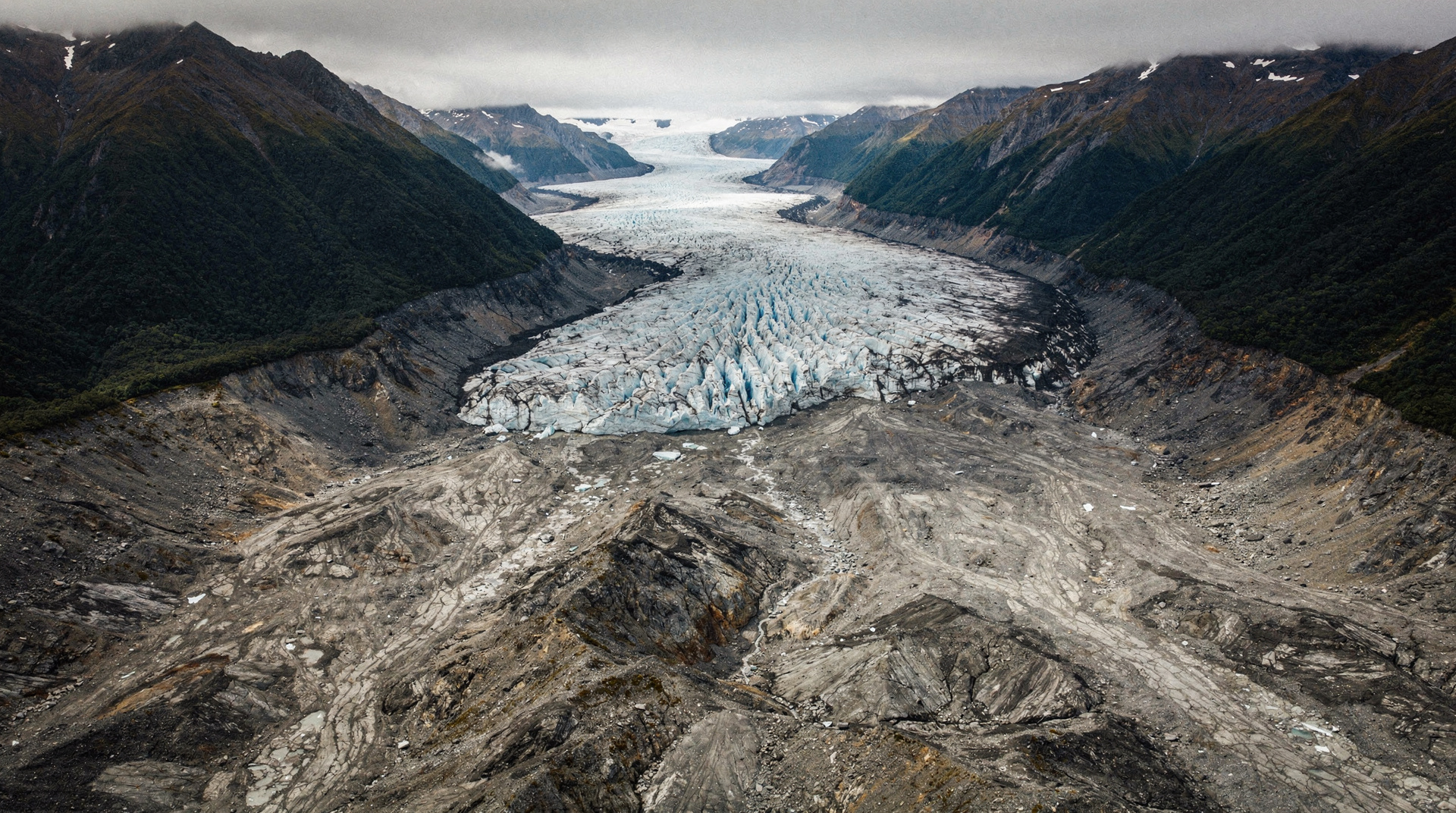
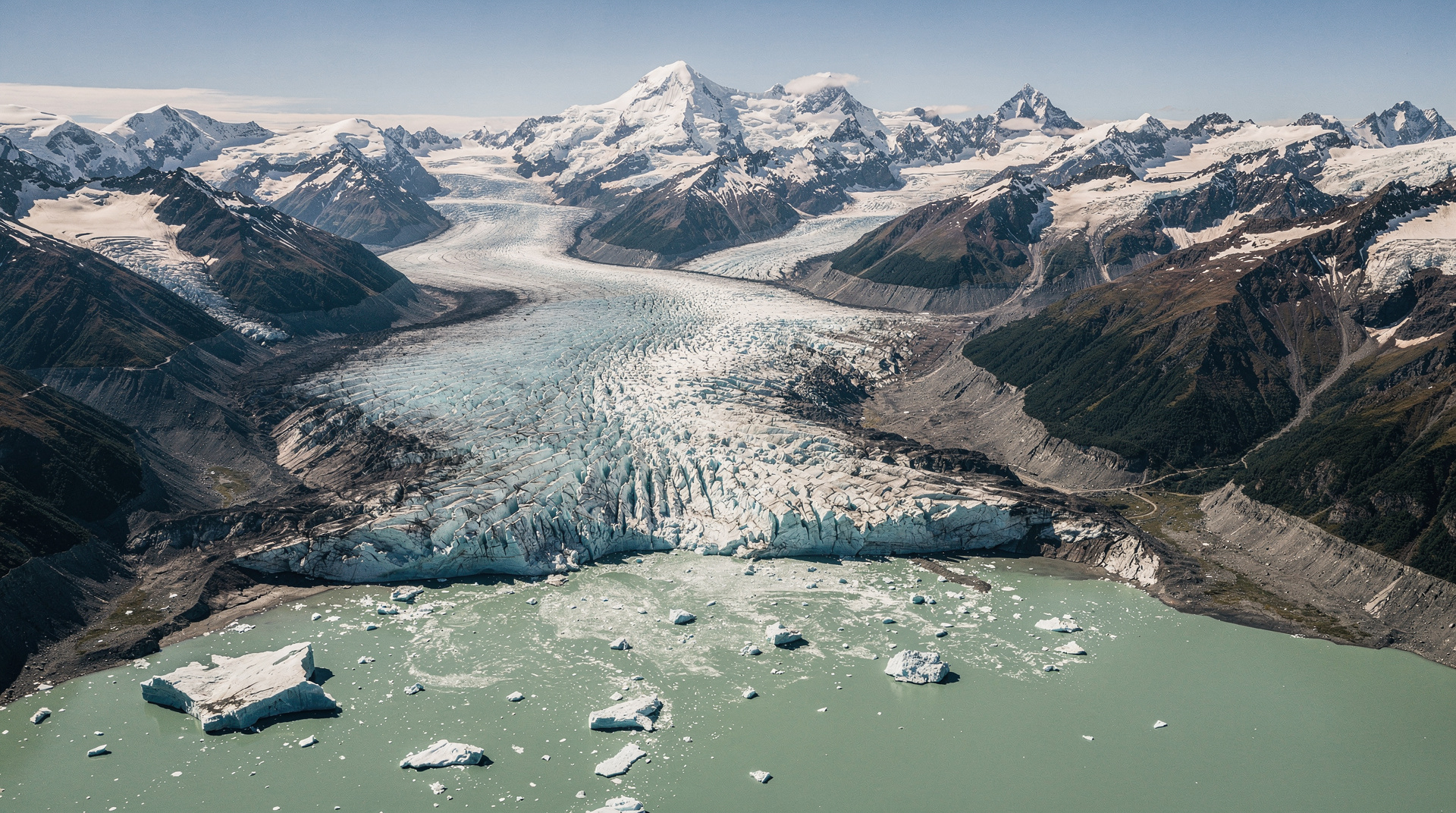
That’s no longer possible. The glacier has retreated approximately 3km from those photographs. The terminal face is now several kilometres up the valley and the terrain between the old track and the current glacier position is active glacial outwash — unstable, constantly shifting, subject to rockfall from the exposed rock walls the retreating ice has left behind.
This is not a metaphor or an abstract statistic. It’s the actual experience of visiting the glacier in 2023: you park at the visitor car park, walk the flat valley track for 20-30 minutes, reach a viewpoint with safety barriers, and look at the glacier from a meaningful distance. The ice is visible. The scale is still impressive. But you are not at the glacier.
What you can actually do
The glacier experience in 2023 is primarily aerial. Helicopter tours take you to the ice in 10-15 minutes, landing on the glacier’s upper neve where the ice is still deep and active, where crevasses open and seracs rise. From above, the view of the glacier within its valley — the ice fall, the rock walls, the scrub of the lower valley giving way to the blue-white ice — is extraordinary.
The Franz Josef half-day helicopter hike is the standard experience: helicopter to the ice, guided walk with crampons across the upper glacier, helicopter return. This typically runs NZD 460-520 / USD 331-375 / EUR 304-344 per person and takes around 3-4 hours in total. Prices vary by operator and the specific flight time. Book in advance — weather cancellations are frequent and good-weather days fill immediately.
The alternative is a guided ice climb: Franz Josef glacier ice climbing experience involves technical instruction and ascending ice formations on the glacier. This is the more physically demanding and more satisfying engagement with the ice for those who want genuine mountaineering contact. Similar pricing.
The ground-level viewpoint is free and genuinely worthwhile even if you’re not doing a helicopter tour. The scale of the valley, the water colour of the braided rivers, and the surrounding Westland Tai Poutini National Park landscape are compelling on their own.
Fox Glacier
Fox Glacier, 25 minutes south of Franz Josef, is in a similar position — retreated substantially, aerial access the primary means of reaching the ice. The Fox Glacier township is smaller and quieter than Franz Josef; the experience is comparable. Some visitors prefer Fox for exactly this reason. The Fox Glacier helicopter hike runs parallel pricing and logistics to the Franz Josef options.
From a landscape perspective, Fox Glacier has one advantage Franz Josef doesn’t: Lake Matheson, a 30-minute walk from the township, is one of the best reflection photography locations in New Zealand. On calm mornings, Aoraki/Mt Cook and Mt Tasman reflect in the dark lake water in a composition that appears on essentially every New Zealand travel promotion. It costs nothing and takes 45 minutes to walk the circuit.
How much has the retreat been?
The numbers are documented and significant. Franz Josef Glacier has retreated approximately 3km since the early 2000s. Fox Glacier has similarly retreated. Both glaciers were advancing through the 2000s — a local exception to global trends driven by high precipitation on the West Coast — but began retreating again around 2009 and have continued retreating since.
The retreat is primarily climate-driven: warming temperatures reduce the ice’s accumulation rate and increase ablation (melting) at the lower reaches. The West Coast’s extraordinary precipitation — the area receives some of the highest rainfall in New Zealand — means the glaciers continue to exist at all; in a drier climate the retreat would have been more complete. But the accumulation rate is no longer keeping pace with ablation at the terminal end.
Neither glacier is at risk of disappearing in the next decade. The upper neve — the high snowfield that feeds the glacier — remains intact. What’s changing is the lower valley, where the ice reaches its terminus. This is the part tourists visit, and it’s changing on a timescale that’s visible within a decade.
The West Coast beyond the glaciers
This is an important point for trip planning: the West Coast is one of the most scenically dramatic regions of New Zealand and the glaciers are only part of it.
Punakaiki, three hours north of Franz Josef, has the Pancake Rocks and blowholes — coastal karst formations that are genuinely unlike anything else in New Zealand. The Hokitika Gorge, east of Hokitika, has water of an almost impossibly vivid turquoise-blue from glacial flour in the river. The Haast Pass road south of Fox Glacier through Mount Aspiring National Park is one of the great scenic drives. The rainforest — temperate rainforest of kahikatea, rimu, and podocarp — is a landscape asset that needs no qualifier.
The West Coast’s isolation is real. It’s a long drive from either Christchurch (4 hours via Lewis Pass or Arthur’s Pass) or Queenstown (4 hours via Haast). But the distance is worth it, and not only for the glaciers.
The helicopter decision
The helicopter access to the glacier ice is the honest recommendation, with these caveats:
- Budget NZD 460-520 / USD 331-375 / EUR 304-344 for the half-day heli-hike. This is the bottom of the pricing range; some premium tours cost more.
- Weather cancellations are frequent. If your schedule is tight, book early in your stay and have a fallback day.
- The free valley walk is not nothing. If the helicopter cost is genuinely out of budget, the valley walk still gives you the scale and landscape context.
- The experience is genuinely different from any other glacier experience I’m aware of in accessible tourism. The combination of helicopter access and guided ice walking in one of the Southern Alps’ major glacier systems is unusual.
I’d put it this way: if you’re visiting the West Coast, the helicopter glacier tour is worth the price if you have any margin for it. If you’re choosing between this and another category of activity, it depends on your priorities. For landscape and geology, it’s among the top five experiences in New Zealand.
Franz Josef or Fox — which base
If you’re only stopping at one glacier town, the choice comes down to atmosphere as much as ice access. The Franz Josef vs Fox Glacier comparison covers the practical differences in more depth, but the short version: Franz Josef township has more infrastructure and choice of operators, while Fox is quieter and sits closer to Lake Matheson. Either way, Aoraki/Mt Cook further south is the other place in New Zealand to see this scale of alpine and glacial landscape, and pairs naturally with a West Coast itinerary if you’re continuing south or looping back via the Haast Pass.
Further north along the coast, Hokitika and Punakaiki round out a West Coast trip that isn’t only about the glaciers — the Hokitika Gorge’s turquoise water and Punakaiki’s Pancake Rocks are both worth the detour on the drive between Christchurch and the glacier towns.
FAQ
Can you still walk to Franz Josef Glacier’s terminal face? No — the glacier has retreated around 3km since the early 2000s, and the terrain between the old track and the current ice is unstable glacial outwash. The valley walk now ends at a viewpoint, not the ice itself.
Is the helicopter glacier tour worth the cost? For landscape and geology, most visitors find it is — the aerial access to crevasses and seracs on the upper glacier is genuinely different from any ground-level experience available in New Zealand.
Related reading
Related guides
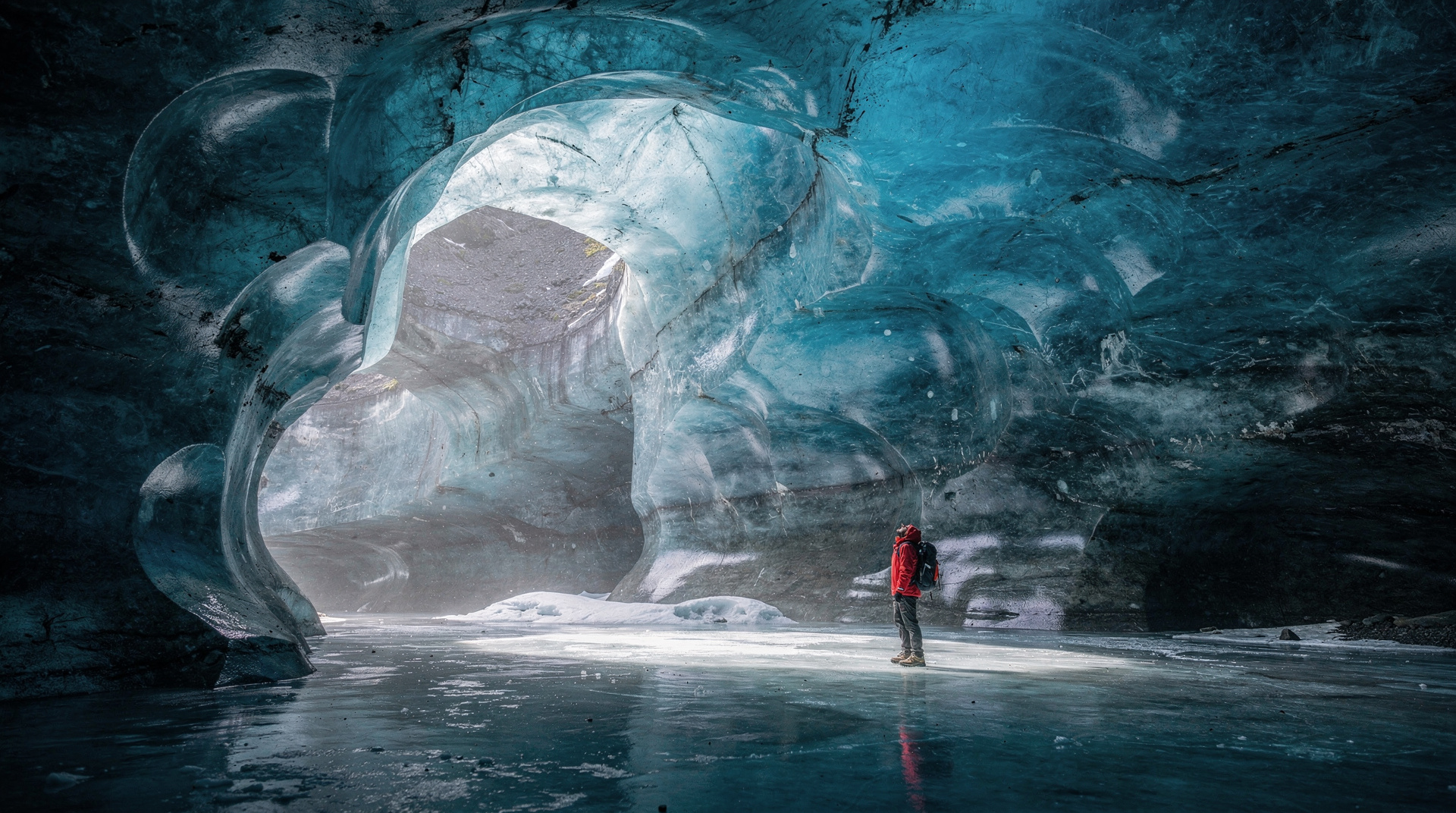
Franz Josef Glacier
Honest Franz Josef guide: heli-hike vs ice walk, glacier retreat reality, real NZD/USD/EUR costs and what's possible after significant ice loss.
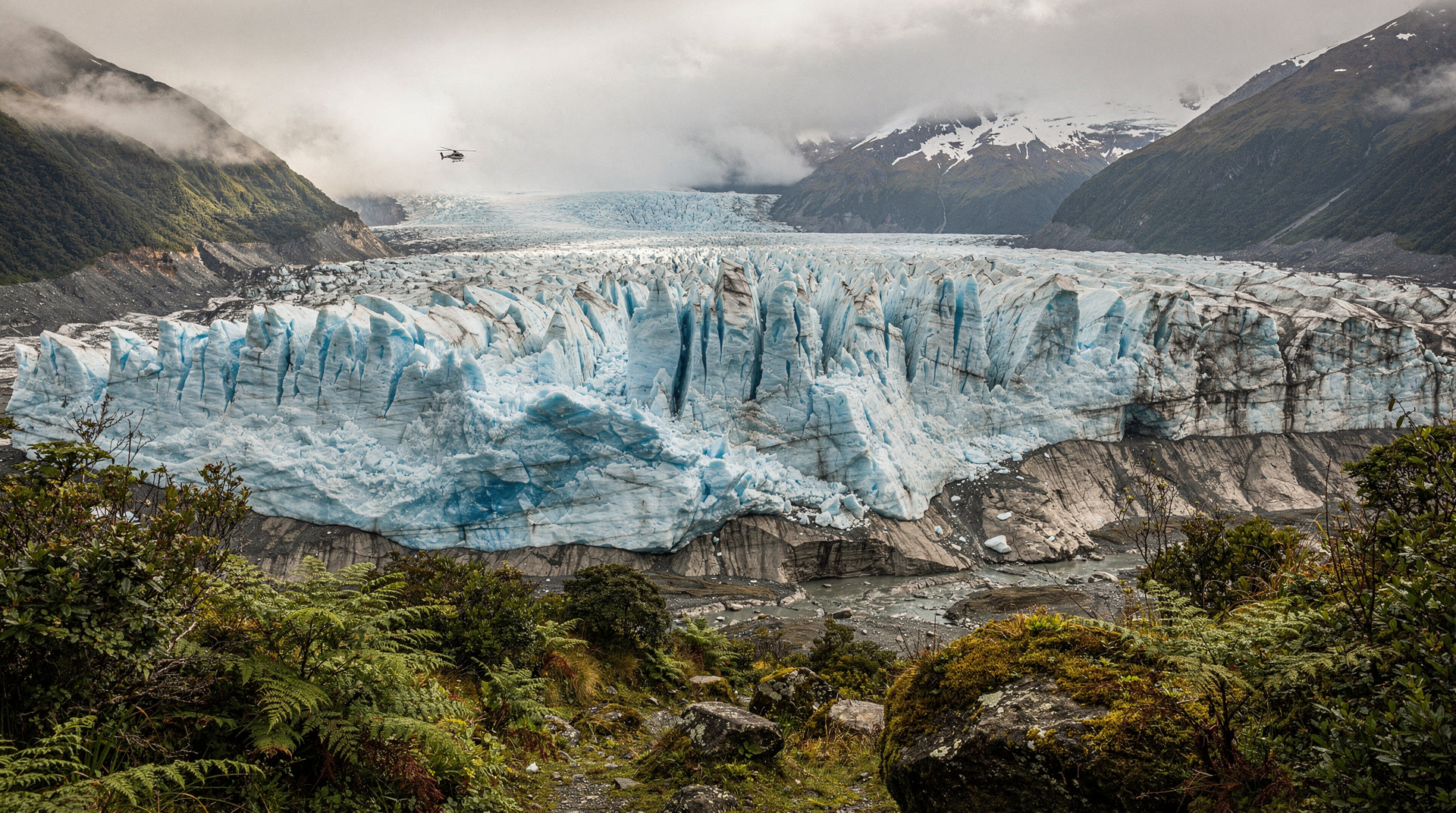
Fox Glacier
Fox Glacier: helicopter hikes on ice, the mirror-lake reflection at Lake Matheson, and a quieter alternative to Franz Josef. Real costs NZD/USD/EUR.
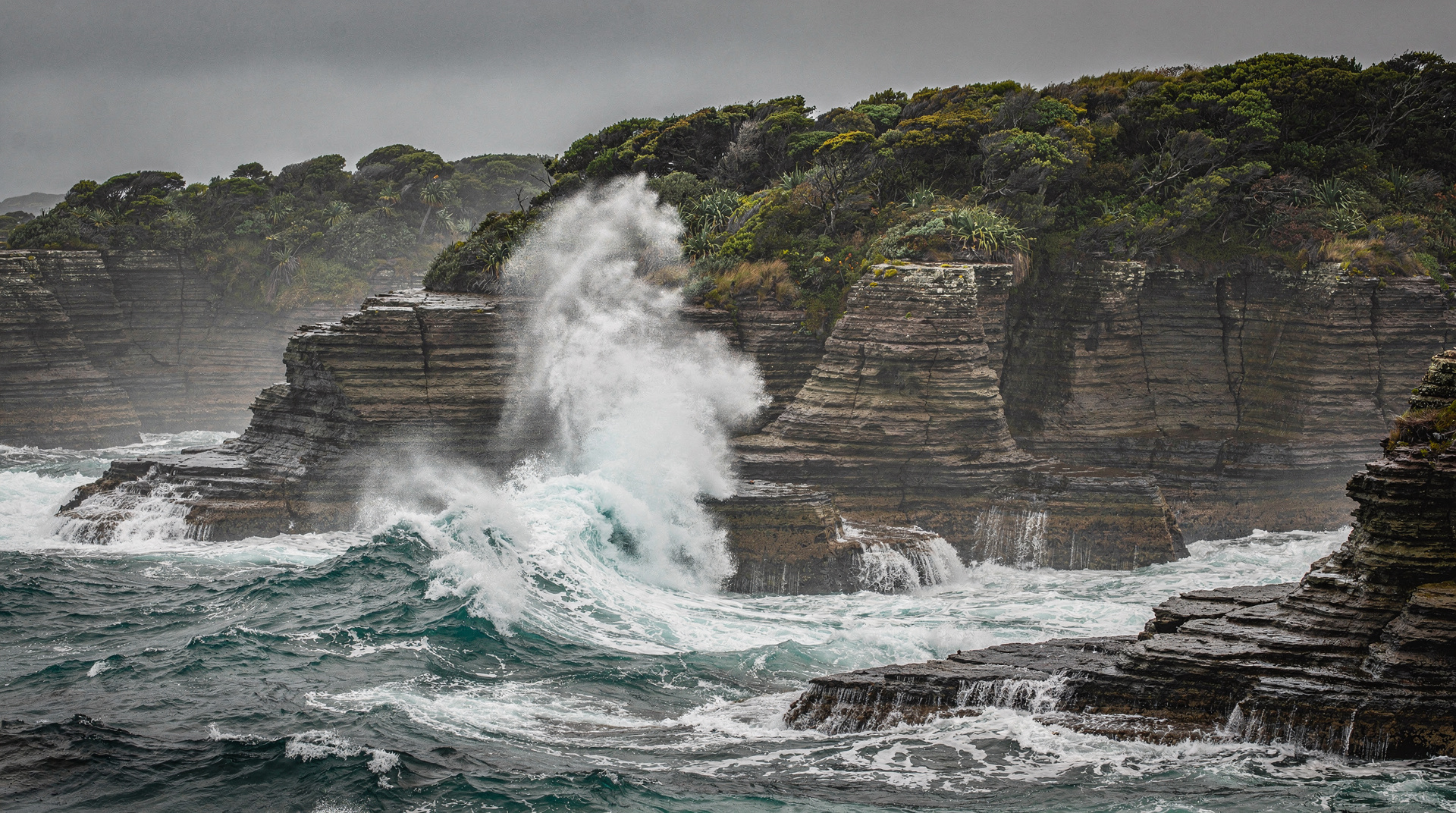
West Coast
Honest West Coast guide: Franz Josef and Fox Glacier heli-hikes, Punakaiki Pancake Rocks, Hokitika, Greymouth. NZD/USD/EUR prices, what's worth it.
New Zealand glaciers guide — Franz Josef, Fox, and the Tasman
Honest NZ glacier guide: Franz Josef vs Fox vs Tasman Glacier comparison, heli-hike options, glacier retreat reality, what's still accessible in 2026.
Published: