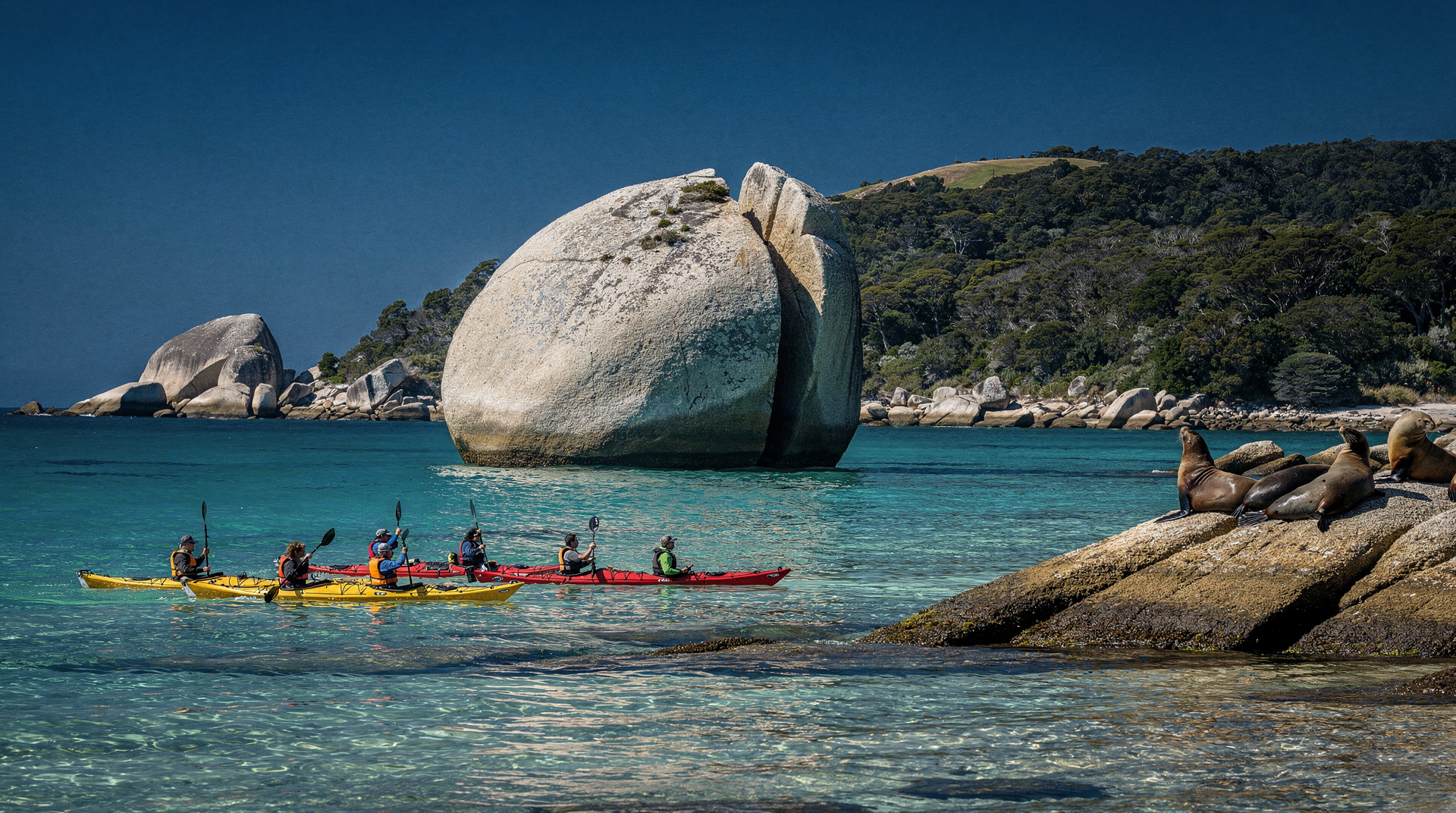
Sea kayaking in Abel Tasman National Park
Is kayaking in Abel Tasman worth it?
Yes — for most visitors it's the best way to experience the park. A full-day guided paddle costs NZD 175-230 (USD 105-138 / EUR 96-127) and gets you into coves inaccessible by foot. Water taxi pickup means you don't have to paddle both ways. Book 2-4 weeks ahead in summer; the park sees 250,000+ visitors annually and operator slots fill fast.
The honest case for kayaking Abel Tasman
There is a well-worn argument about how to experience Abel Tasman National Park: walk the Abel Tasman Coast Track over 3-5 days, or paddle the same coastline by kayak. The answer is not either/or — it depends on how much time you have and what kind of discomfort you enjoy.
The hike rewards you with forest corridors and coastal clifftop views. The kayak rewards you with everything at sea level: fur seals sleeping on rocks 2 metres away, golden beaches reachable only by water, the silence of a glassy inlet at 7 am when the tour groups haven’t arrived yet. If you have one day and one day only, the kayak wins.
Abel Tasman sits at the northern tip of the South Island, a short drive from Nelson and 67 km from Blenheim. The park’s 22 km of coastline is the defining draw — granite headlands, turquoise bays, tidal inlets that flip from navigable channel to mudflat in two hours if you read the tides wrong.
| Where | Marahau or Kaiteriteri, Abel Tasman National Park |
| Cost | Around NZD 175–230/person for a full-day guided paddle |
| Time needed | Half-day (4h) to 5 days |
| Best base | Nelson, 1 hour from Marahau |
| Booking | 2–4 weeks ahead in Dec–Feb |
What makes kayaking here different from anywhere else
The conditions are forgiving
Abel Tasman is a sheltered coast. The Tasman Bay forms a natural breakwater and the prevailing northerlies are manageable for beginner paddlers in a sea kayak. Swells that would terrify a novice on the open Tasman coast are rare inside the bay. That said, “sheltered” is relative — afternoon wind can build quickly, and operators cancel or reschedule if conditions deteriorate. The sea still deserves respect.
Wildlife is close
New Zealand fur seals (kekeno) haul out on rocks throughout the park. They are habituated to kayakers and will often sleep through your approach. Little blue penguins (kororaa) nest in shoreline burrows and are most active at dawn and dusk. Wading birds — oystercatchers, herons, godwits in summer — work the tidal flats at Split Apple Rock and Anchorage Bay.
The tide rules everything
Two tidal cycles a day dictate where you can go. Torrent Bay and Okarito Lagoon are only navigable on a mid-to-high tide. Operators build itineraries around this. If you go independently, download the Metservice tide chart for Tonga Bay and plan your route before you launch — a dropped tide can strand you on a mudflat for four hours.
Water taxi integration
This is Abel Tasman’s superpower. A network of water taxis (Aquataxis, Abel Tasman Sea Shuttles, others) runs between Marahau, Kaiteriteri, and the main park beaches. You can paddle one direction and taxi back, or taxi to a remote point and paddle home. For guided tours, water taxi pickup is usually included in 1-day full-park itineraries.
Launch points: Marahau vs Kaiteriteri
Marahau
The primary kayaking hub. Most guided operators base here: Ocean River Kayaking, Abel Tasman Kayaks, and R&R Kayaks all depart from the estuary just north of the village. Parking is at the beachfront or the lodge car parks (around NZD 10 / USD 6 / EUR 5.50 per day). Marahau is 67 km from Nelson and 16 km from Motueka — a 1-hour drive from Nelson. There is no fuel in Marahau; fill up in Motueka.
Marahau’s disadvantage: the estuary launch is tidal. At low tide you’re walking a kayak across 400 m of mudflat to reach navigable water. This is a fact of life. Your operator will factor it into timing.
Kaiteriteri
A beach resort town 14 km south of Marahau. Several operators — including Abel Tasman Kayaks and Golden Bay Air — offer departures from Kaiteriteri Beach. The sandy beach launch is easier than the Marahau estuary and the town has cafés and accommodation. Water taxis also connect Kaiteriteri to the park, so you can catch a shuttle north and paddle south. For day trippers arriving from Nelson, Kaiteriteri is slightly more convenient.
Kayak itineraries by duration
One day: the essential loop (NZD 175-230)
A full-day guided paddle — typically 7-8 hours on the water — covers 15-20 km of coastline. The standard route from Marahau runs north through Anchorage Bay, rounds the headland at Cleopatra’s Pool access point, and paddles to Bark Bay or Torrent Bay before a water taxi return. Lunch is usually included (packed box or BBQ on the beach at some operators). Guides handle navigation and surf landings.
Verdict: Worth it. This is the minimum viable Abel Tasman kayak experience. You see fur seals, you beach on golden sand, you understand why people return.
Skip if: You’re not comfortable sitting in a kayak for 6+ hours. Sea kayaks are not canoes — your legs stay flat and the lower back takes work. Try a half-day paddle (NZD 95-120 / USD 57-72 / EUR 52-66) if you have doubts.
Three days: the northern circuit (NZD 520-680 guided)
Three days lets you paddle past Tonga Island (DOC fur seal marine reserve — kayaking permitted within the sanctuary boundary), reach the remote Awaroa Inlet, and camp or hut-stay overnight. Guided 3-day tours include water taxi return, camping equipment, and meals. Independent paddlers need DOC camping permits booked online (NZD 18-25 / USD 11-15 / EUR 10-14 per person per night depending on site; Great Walk huts run NZD 46 / USD 28 / EUR 25 per night in season).
The 3-day format is the most popular multi-day option. You cover the park’s best beaches (Onetahuti, Awaroa) without repeating the same headlands. Day 3 typically ends at a northern beach for water taxi pickup back to Marahau or Kaiteriteri.
Verdict: Splurge. If you have three days free around Nelson, this is one of the finest paddle trips in New Zealand. The overnight camps are not glamping — bring your own sea-kindliness about sleeping on sand — but the isolation is profound.
Five days: coast to coast (NZD 850-1100 guided)
A full south-to-north traverse of the Abel Tasman Coast Track by kayak covers all 22 km and the park’s most remote northern reaches, including Separation Point and Whariwharangi Bay. Few operators offer a fully guided 5-day paddle; most sell it as a self-guided guided rental with pre-booked campsites and water taxi support. The 5-day format is for confident paddlers or those who’ve done the 3-day circuit before.
Verdict: Skip for first-timers. The extra two days add remote beaches but also more variable weather, greater paddling fatigue, and the logistical complexity of tides at Separation Point. Do the 3-day first.
Real costs — what you’ll actually pay (2026)
| Option | NZD | USD | EUR |
|---|---|---|---|
| Half-day guided kayak (4h) | 95-120 | 57-72 | 52-66 |
| Full-day guided kayak (8h) | 175-230 | 105-138 | 96-127 |
| 3-day guided kayak (incl. camping, meals) | 520-680 | 312-408 | 286-374 |
| 5-day guided (incl. accommodation, meals) | 850-1100 | 510-660 | 468-605 |
| Freedom kayak rental (1 day, double kayak) | 130-160 | 78-96 | 72-88 |
| DOC campsite (per person per night) | 18-25 | 11-15 | 10-14 |
| Great Walk hut (per night, in season) | 46 | 28 | 25 |
| Water taxi Marahau–Anchorage | 45-55 | 27-33 | 25-30 |
Hidden costs to budget for: Wetsuit hire if you don’t own one (NZD 15-25 / USD 9-15 / EUR 8-14), dry bag rental (NZD 8-12), car park at Marahau, lunch at Motueka or Matueka bakery if the tour doesn’t include it.
How to book
Guided tours
Full-day kayak, seals, and cruise from Nelson — this 8-hour guided experience from Nelson combines a sea kayak paddle with a fur seal landing and returns by water taxi cruise. It’s ideal if you’re basing in Nelson and don’t want to self-drive to Marahau.
1-day freedom kayak rental (Abel Tasman Kayaks) — renting your own double or single kayak from Abel Tasman Kayaks gives you maximum flexibility. You paddle where you want, when you want, within your booked tide windows. Suits confident paddlers who’ve kayaked before.
For the full cruise-walk-kayak combo that maximises the park in a single day:
Abel Tasman cruise, self-guided walk and kayak experience (from Nelson)For a 3-day multi-day guided kayak and walk in the northern section of the park:
3-day kayak and walk north (from Marahau)Direct operators
- Ocean River Kayaking (Marahau) — well-regarded, strong guides, multiple guided and rental options. oceanriver.co.nz
- Abel Tasman Kayaks (Marahau and Kaiteriteri) — oldest operator in the park, good logistics, runs the popular northern circuit packages. abeltasmankayaks.co.nz
- R&R Kayaks (Marahau) — smaller, more personal, good for small groups. rrkayaks.co.nz
Book 2-4 weeks ahead in December–February. Some operators fill up for Christmas week in June.
DOC campsite permits
All campsites and Great Walk huts must be booked on the DOC website (doc.govt.nz) in advance during season (October–April). The Abel Tasman Great Walk is one of the most heavily booked in New Zealand. For peak summer, book 3-6 months ahead.
When to go
December–February: Peak summer. Warmest water (17-19°C), longest days, best visibility. Most crowded; all beaches have people. Book accommodation and tours far ahead.
March–April: Best compromise. Water still warm enough for swimming and paddling, crowds halve after Easter, autumn colours appear in the bush above the beaches. Our recommendation for kayaking.
May–September: Off-season. DOC huts switch to open (no bookings, no wardens). Guided tours run reduced schedules or stop entirely. Water temperatures drop to 12-14°C — wetsuit essential. Days are short. Some operators offer winter rental only.
October–November: Spring. Quiet, fresh, lambs on the farms en route. Water chilly but paddling is excellent. Guided tours restart fully in October.
Comparison: kayaking vs hiking the Coast Track
The Abel Tasman Coast Track is one of New Zealand’s Great Walks — 60 km over 3-5 days of consistently stunning coastal walking. Here’s the honest comparison:
| Factor | Kayaking | Hiking |
|---|---|---|
| Distance covered | 15-22 km/day possible | 12-20 km/day |
| Wildlife access | Excellent (seals at sea level) | Good (birds from clifftops) |
| Physical demand | Upper body fatigue; sit-down | Legs; cardio; pack weight |
| Weather dependency | Wind-sensitive (tours may cancel) | Less affected |
| Cost | Higher (guides + gear) | Lower (DOC huts/camping) |
| Remoteness | Moderate (water taxis everywhere) | Higher (inner forest) |
| Suitable for kids | 8+ years (guided), older independently | 10+ years (Great Walk) |
The smartest approach if you have 5+ days: paddle one day, hike the next. Water taxis connect the two activities. Stay at Anchorage or Bark Bay hut and see both the forest and the sea. Nelson has rental cars and shuttles that handle the logistics.
Alternatives if kayaking is booked out or conditions are bad
Sailing day trip: Abel Tasman full day sailing adventure with lunch — you’re a passenger, not a paddler, but the coastline is the same.
Water taxi and walk: Take a taxi north to Awaroa and walk the southern section back to Anchorage in a day. No booking pressure, no weather cancellation for walking.
Golden Bay day trip: If the park is too busy or the Marahau operators are full, Golden Bay offers a different coastal mood — quieter, wilder, Farewell Spit is a world-class birding site. See our Golden Bay guide.
Marlborough Sounds cruising: On the South Island’s other coast, the Marlborough Sounds offer sheltered water in a different landscape. No sandy beaches, but more dramatic drowned valleys.
How this fits into a wider South Island trip
Abel Tasman is one of two standout sea-kayaking destinations on the South Island. The other is Milford Sound, a completely different mood — dramatic vertical fiord walls and waterfalls instead of golden beaches and warm shallows. If your itinerary has room for only one, pick Abel Tasman for a relaxed, family-friendly multi-day base near Nelson; pick Milford for a single dramatic day paired with Queenstown or Te Anau. Some travellers with 3+ weeks do both.
Getting to Marahau or Kaiteriteri usually means self-driving from Nelson, so read driving in New Zealand beforehand if this is your first time on NZ roads — the drive itself is easy, but rental car logistics (fuel stops, insurance) are worth knowing in advance. If kayaking is one stop on a longer Great Walks-focused trip, the Great Walks overview explains how the Abel Tasman Coast Track and other multi-day tracks compare for people who’d rather walk than paddle.
Timing matters more here than in most of New Zealand because of water temperature: check best time to visit New Zealand if you’re building your whole trip around warm-water paddling, and see the New Zealand packing list for what to bring beyond what your kayak operator supplies.
FAQ
What fitness level do I need for a 1-day guided kayak?
Moderate. You’ll paddle 12-16 km with breaks; the guides set the pace and rest frequently. Anyone who walks regularly can complete a 1-day guided tour. If you have shoulder or back problems, discuss this with your operator before booking — single kayaks are less stable than doubles but allow you to set your own pace.
Can I kayak Abel Tasman independently?
Yes, if you have sea kayak experience. You need to demonstrate competency to rental operators — they’ll ask about your experience. A double kayak rental runs NZD 130-160 / USD 78-96 / EUR 72-88 per day. You must pre-book DOC campsites online and understand tidal windows for Torrent Bay and Awaroa. First-timers: take a guided tour first.
Are children allowed?
Most operators allow children 8+ in a double kayak with an adult. Some require 10+ for full-day tours. Check individual operator policies. The half-day option is usually more appropriate for under-12s. The park itself welcomes families — the Abel Tasman Coast Track is the most child-friendly Great Walk.
What happens if it rains?
Guided tours generally run in light rain (you’ll get wet anyway). Heavy rain or strong wind may prompt rescheduling. Reputable operators offer full refunds or free date changes for weather cancellations — confirm this policy at booking. Wet weather gear is standard kit.
Should I book through GetYourGuide or direct?
For multi-day guided packages, book direct with the operator — you get more flexibility on dates and clearer cancellation terms. For 1-day tours, either channel works. GetYourGuide aggregates smaller operators you might not find on Google.
Is the water cold?
In summer (December–March) the water reaches 17-19°C — cool but swimmable. Most 1-day tours provide a wetsuit or rashguard. In autumn and spring, 13-15°C — wetsuit mandatory if you’re swimming. In winter, 11-13°C — guided tours are rare; not recommended for casual paddlers.
What should I bring?
Sunscreen (reapply every 2 hours — the reflection off water accelerates burn), water (2L minimum), snacks if lunch isn’t included, a spare dry layer in a dry bag, and closed-toe shoes or reef shoes. Leave valuables in your locked car at Marahau — operators provide dry storage for wallets and phones on the water.
Related guides
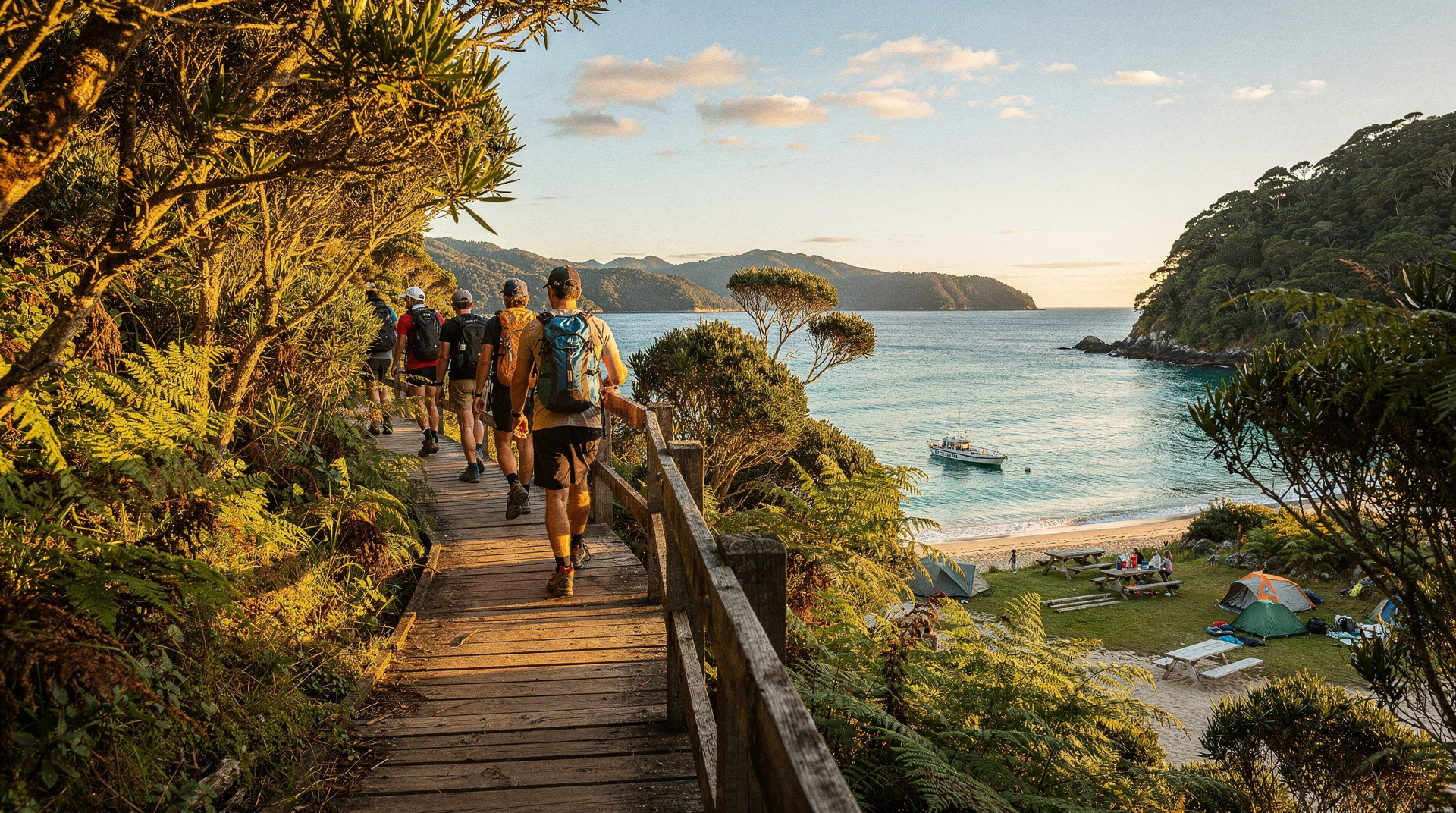
Abel Tasman Coast Track — Great Walk guide
Abel Tasman Coast Track: 60km, 3-5 days, NZD 102/night huts. NZ's most popular Great Walk — golden beaches, clear water, seals. Book months ahead.
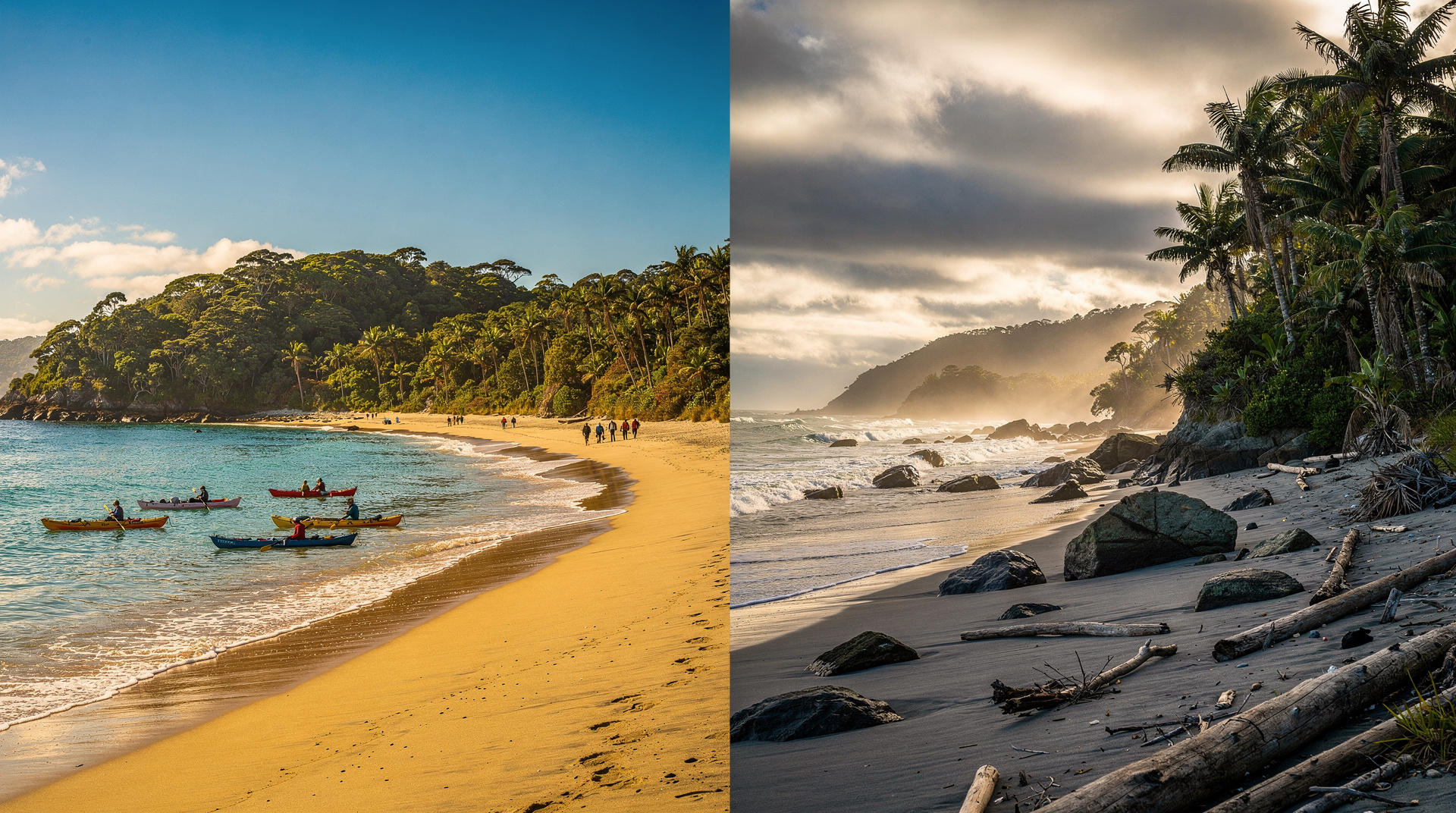
Abel Tasman vs Kahurangi National Park
Abel Tasman vs Kahurangi honest comparison: beaches, tracks, caves, access and cost. Clear verdict for walkers, kayakers and Great Walk planners. NZD/USD/EUR.
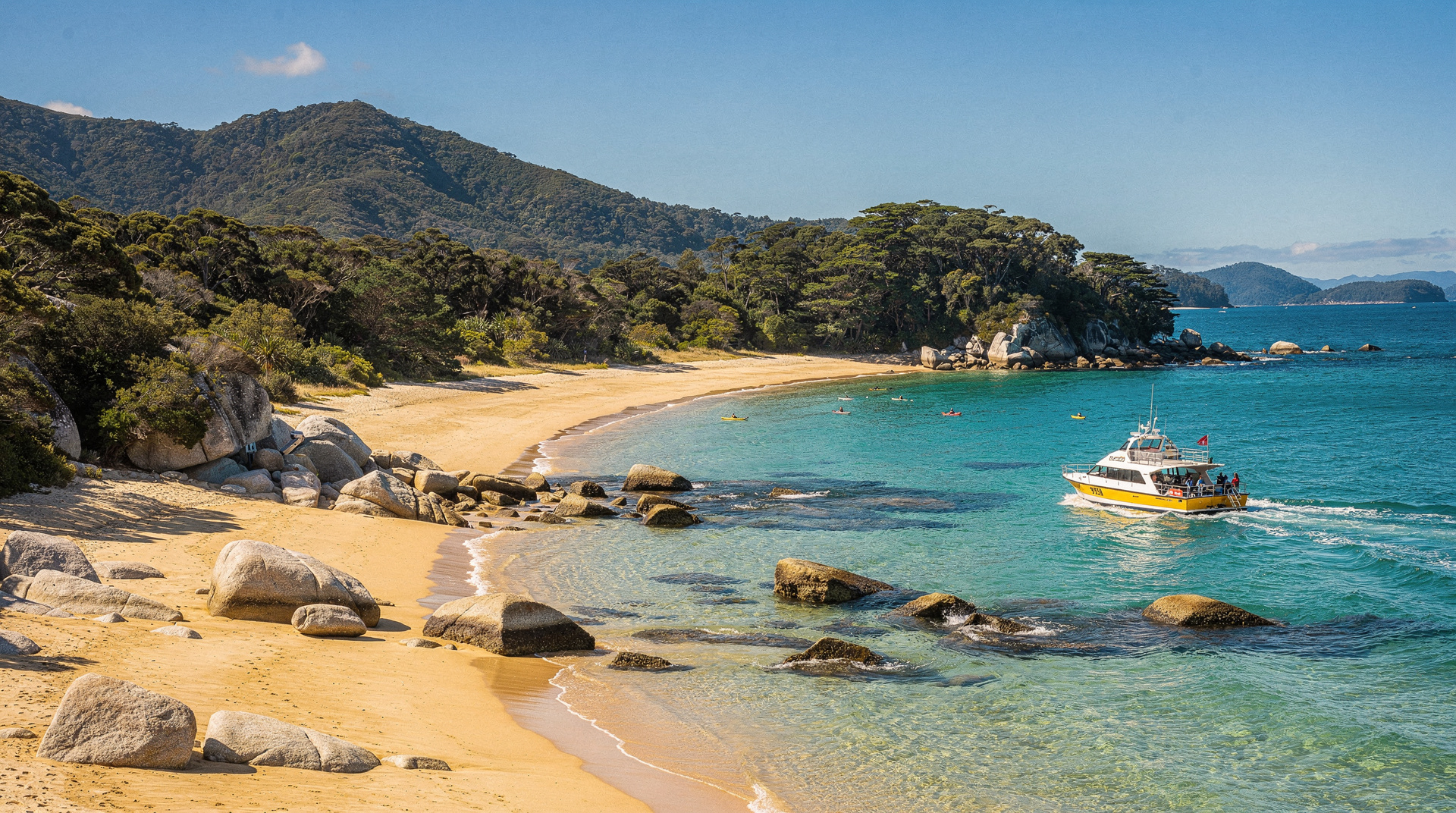
Abel Tasman National Park
Honest Abel Tasman guide: kayak vs coast track, water taxis, best bays — real NZD/USD/EUR prices and how long you actually need for this park.
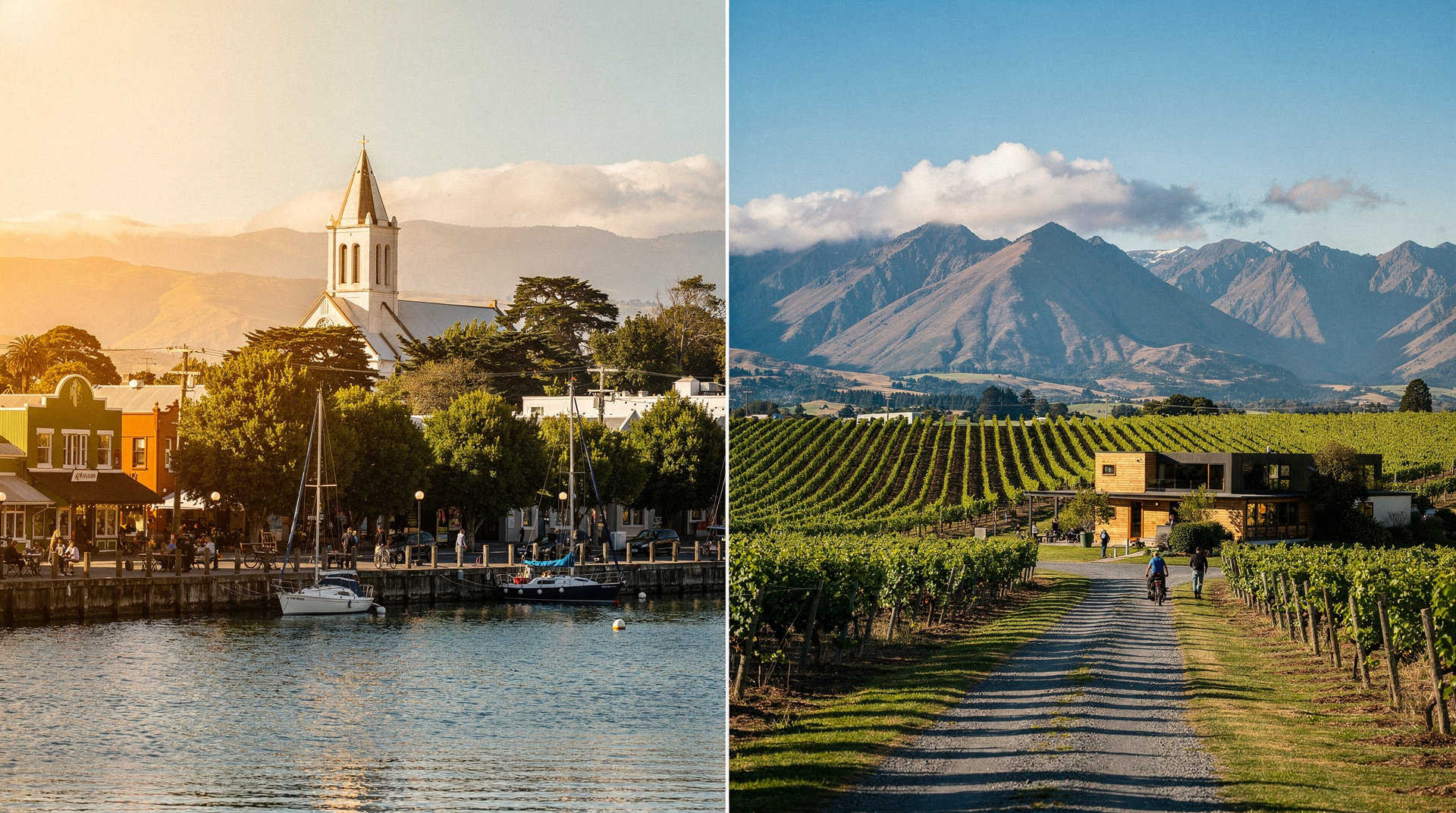
Nelson vs Marlborough
Nelson vs Marlborough honest comparison: wine, national parks, beaches, access and which region to prioritise. Clear verdict with prices in NZD/USD/EUR.
Last reviewed: