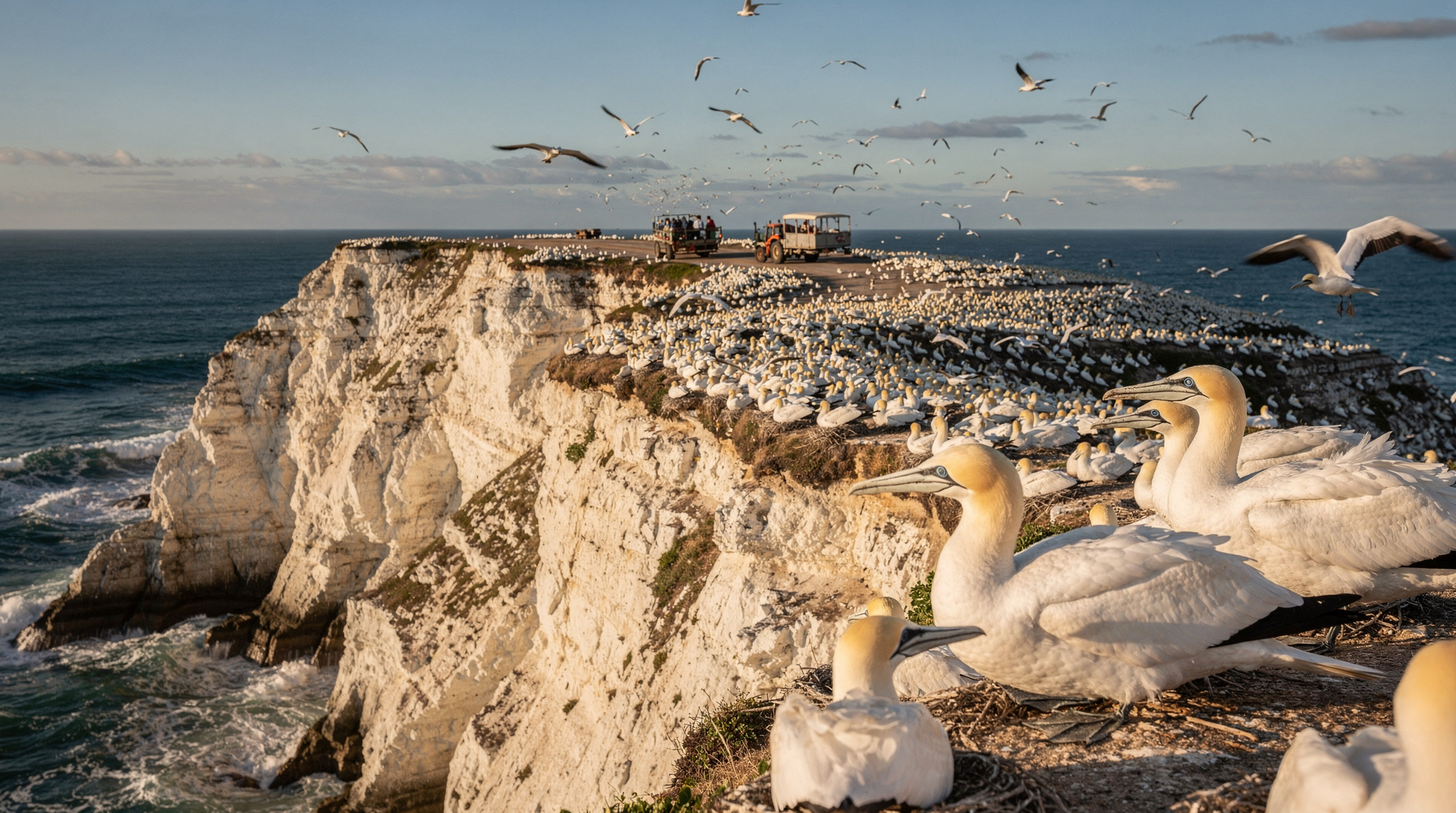
Gannets at Cape Kidnappers
How do you visit the gannets at Cape Kidnappers?
Cape Kidnappers is accessible by guided tractor-trailer tour (most popular), 4WD tour, or an 8 km coastal walk at low tide. The colony holds around 6,000 nesting pairs. Tractor tours cost NZD 95–135 / USD 57–81 / EUR 52–74. Season: October to April.
| Where | Cape Kidnappers, 30km southeast of Napier, Hawke’s Bay |
| Cost | around NZD 95-220 depending on tour type; free for the self-guided walk |
| Time needed | 4-5 hours for the tractor tour; 5+ hours for the coastal walk |
| Getting there | Depart from Clifton Domain, 21km south of Napier; self-drive or tour pickup |
| Best time | November-February for peak breeding activity and chicks |
The world’s largest accessible mainland gannet colony
Australasian gannets (Morus serrator) are spectacular birds: 90 cm long, 1.8 m wingspan, white with black-tipped wings and a golden-washed head. They dive from up to 30 metres at speeds of 100 km/h to catch fish, folding their wings back at the last moment to enter the water like a living arrow. When 6,000 nesting pairs are gathered on a clifftop headland simultaneously, the noise, movement, and smell create an experience unlike most wildlife encounters.
Cape Kidnappers, 30 km southeast of Napier on Hawke’s Bay’s southern coast, holds the world’s largest and most accessible mainland gannet colony. Most gannet colonies are on remote offshore islands where nesting pairs evolved without mammalian predators and have no reason to tolerate human proximity. The Cape Kidnappers colony has been gradually habituated to the tractor tours that have run since the 1960s, allowing visitors to approach within metres of nesting adults. The birds do not flush; they posture, call, and simply continue with colony life.
The cape itself is dramatic — white limestone cliffs dropping to a gravel beach, with the Hawke’s Bay coast curving north toward Napier in the distance. The combination of geological setting and wildlife density makes it one of the most photographically rewarding half-days in New Zealand.
Getting there: the tractor tour
The standard access to Cape Kidnappers is by tractor-trailer from Clifton (21 km south of Napier). The trip travels along the beach (only accessible at low tide) and up the cliffs to the colony. Total duration is approximately 4–5 hours return.
The Cape Kidnappers gannet sightseeing tour is the primary tractor option. Departures are timed around low tide — typically morning departures in summer. The booking system locks in your seat several days in advance.
Price (tractor tour): NZD 95–135 / USD 57–81 / EUR 52–74 per adult. Children: NZD 40–60 / USD 24–36 / EUR 22–33.
What you see at the colony: Three main gannet “platforms” on the headland, each occupied by hundreds of nesting pairs. In breeding season, you’ll see adults engaged in elaborate mutual preening displays, sky-pointing courtship behaviour, chick feeding, and territorial boundary disputes with neighbours (gannets nest extremely close together and maintain very precise territory boundaries with vigorous bill-fencing). The smell is considerable — bring this expectation; it doesn’t subtract from the experience.
Sunrise tour option
The Cape Kidnappers gannet sunrise tour departs before dawn and reaches the colony at first light. The quality of the morning light on the birds is genuinely superior to midday visits, the beach is completely empty, and bird activity (particularly displays and nest exchanges) is highest in the early hours.
Price: Approximately NZD 155–180 / USD 93–108 / EUR 86–99.
This is the tour to book if photography is a priority. The combination of golden light, active displays, and empty beaches makes for significantly better images than the standard tours.
Walking to the colony
It is possible to walk to Cape Kidnappers from Clifton along the beach — 8 km one way, accessible only at low tide. The walk takes approximately 2.5 hours each way. You must time your arrival and departure carefully against the tide — the beach route is blocked at high tide by the incoming sea against the cliffs.
Practical considerations for walking:
- Check tide tables (Clifton) before departing; aim to leave 2.5 hours after low tide so you arrive at the turnaround with sufficient time before the next high
- Boots recommended — the beach is shingle and some wet sections
- Walk is rated easy to moderate; the return trip is the same terrain
- Bring water and food; nothing available at the colony
- DOC permits the public walk; no booking required
The walk is free and offers an excellent experience, but the tractor tours get you to the colony more quickly and with guide commentary on behaviour.
Private 4WD access
The Cape Kidnappers private gannet tour uses a 4WD vehicle for smaller groups and can access slightly different viewpoints from the standard tractor route. This costs more but offers more flexibility and personalised guide attention.
Price: NZD 160–220 / USD 96–132 / EUR 88–121 per person (private small group).
Season and colony timing
The gannet colony is active October to April (spring through late summer in the southern hemisphere):
- October–November: Adults arrive and establish nest sites. Courtship displays at peak.
- November–December: Eggs laid. Both adults take turns incubating.
- January–February: Chicks hatching. High colony activity; adults making repeated fishing dives.
- March–April: Chicks growing toward fledging. Large grey-brown juvenile birds visible; adults increasingly absent on fishing trips.
- Late April: Colony empties as adults depart for winter at sea. Tours cease.
Outside the season (May–September): no gannets present. The coastal walk is still worthwhile for scenery.
Best months overall: January–February for peak breeding activity and chick visibility. October–November for courtship behaviour and arrival energy. December–January for a mix of both.
Combining with Hawke’s Bay wine
Cape Kidnappers sits within Hawke’s Bay wine country, and many operators combine the gannet tour with a winery visit. The Art Deco Napier and Te Mata wine and cheese tour is one of several combinations that work well for a full day — gannets in the morning, wine in the afternoon.
The cape’s plateau hosts Cape Kidnappers Station, a working farm that also operates as an ultra-luxury lodge with its own golf course. Non-guests are not admitted to the lodge grounds, but the road through the station provides 4WD access to the colony for tour operators with permits.
Art Deco Napier and Te Mata wine and cheese tourBeyond wine, Napier itself is worth a half day for its Art Deco architecture — the city was almost entirely rebuilt in the 1930s after the 1931 earthquake, giving it one of the most concentrated collections of Art Deco buildings anywhere in the world. Pairing a morning at the gannet colony with an afternoon walking Napier’s Art Deco streets makes a well-rounded Hawke’s Bay day.
Getting to Cape Kidnappers
The departure point for tractor tours is Clifton Domain, 21 km south of Napier. Self-driving from Napier: 25–30 minutes on winding roads (add time for GPS optimism). There’s no public transport to Clifton; a rental car or a combined tour from Napier is necessary.
Some tours offer pickup from Napier hotels — check with individual operators when booking.
Costs summary (NZD / USD / EUR)
| Activity | NZD | USD | EUR |
|---|---|---|---|
| Tractor tour (adult) | 95–135 | 57–81 | 52–74 |
| Tractor tour (child) | 40–60 | 24–36 | 22–33 |
| Sunrise tractor tour | 155–180 | 93–108 | 86–99 |
| Private 4WD tour | 160–220 | 96–132 | 88–121 |
| Coastal walk (self-guided) | 0 | 0 | 0 |
Exchange rate: 1 NZD ≈ 0.60 USD ≈ 0.55 EUR.
Honest verdict
Worth it — especially in the active breeding season (November–February). The Cape Kidnappers gannet colony is genuinely impressive: 6,000 nesting pairs at close range, spectacular diving behaviour visible offshore, and a dramatic coastal setting. The tractor tour is a slow trundle along a beach followed by a good 90 minutes at the colony — it’s not glamorous transport, but it works. The sunrise tour is the pick if photography matters to you.
Combine with Napier’s Art Deco architecture for a full day in Hawke’s Bay.
Frequently asked questions
What months are best for visiting?
November to February covers peak breeding activity, chick presence, and maximum visual spectacle. October has excellent courtship display behaviour. Late March–April sees chicks almost fledging, which is also compelling. Outside October–April, the colony is empty.
How close do you get to the gannets?
On the tractor tour, you walk into the colony perimeter and can be 2–5 metres from nesting birds. The gannets are habituated to people moving through the prescribed viewing areas; they do not flush or alter behaviour noticeably. This is genuinely close — close enough to observe individual feather patterns and see the pale blue ring around their eyes.
Is the coastal walk to Cape Kidnappers suitable for families?
The 8 km beach walk is manageable for children who are comfortable walkers and can handle 5+ hours of walking round trip. The key constraint is the tide — the timing is non-negotiable. For families with younger children, the tractor tour is easier and provides the same access to the colony.
Can you see gannets diving into the sea?
Yes — from the clifftop at the colony, you look out over the ocean and regularly see gannets diving from height into the water. On days with active feeding behaviour (usually mornings), this can be spectacular. The tractor tour guide will point out good viewing angles.
How does Cape Kidnappers compare to other New Zealand wildlife encounters?
Different scale and species. Kaikoura whale watching offers marine mammals in open ocean; the royal albatross colony at Taiaroa Head is a smaller, more tightly controlled seabird visit; Cape Kidnappers is unusual for how close and dense the colony is, with thousands of birds nesting in full view at close range. If you’re building a wildlife-focused South Island/North Island itinerary, all three are complementary rather than duplicative.
Do I need to book in advance?
Yes, especially for the tractor tour and sunrise tour in peak season (December-February) — seats are limited and the booking system fills days ahead. The self-guided coastal walk needs no booking, only correct tide timing.
Related reading
Related guides
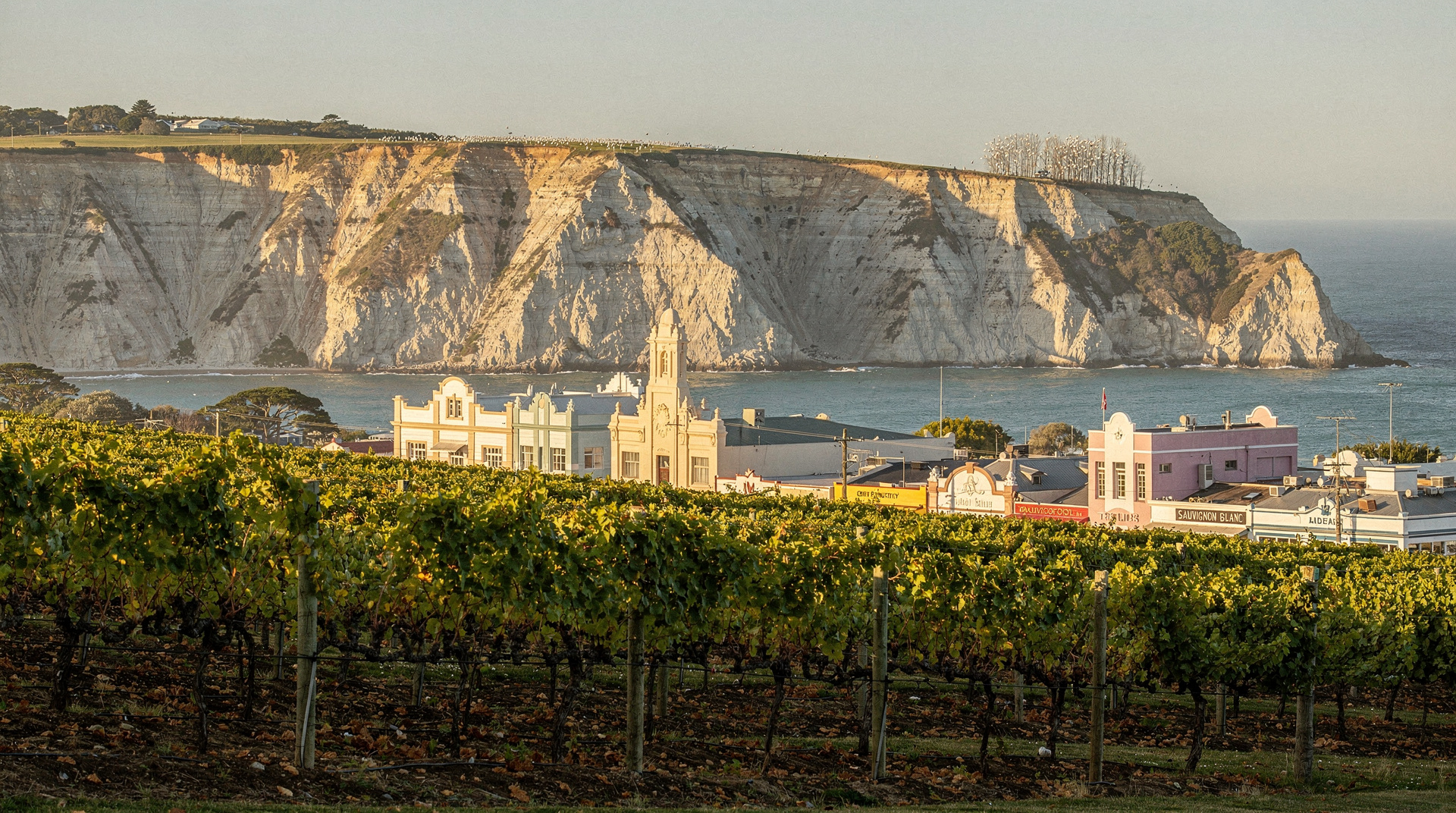
Hawke's Bay
Honest Hawke's Bay guide: Napier Art Deco, Marlborough-rivalling wines, Cape Kidnappers gannets, real NZD/USD/EUR costs. Best time to visit and what to skip.

Napier
Honest Napier guide: Art Deco architecture, Hawke's Bay wine tours, Cape Kidnappers gannets, real prices NZD/USD/EUR, and how long to stay.
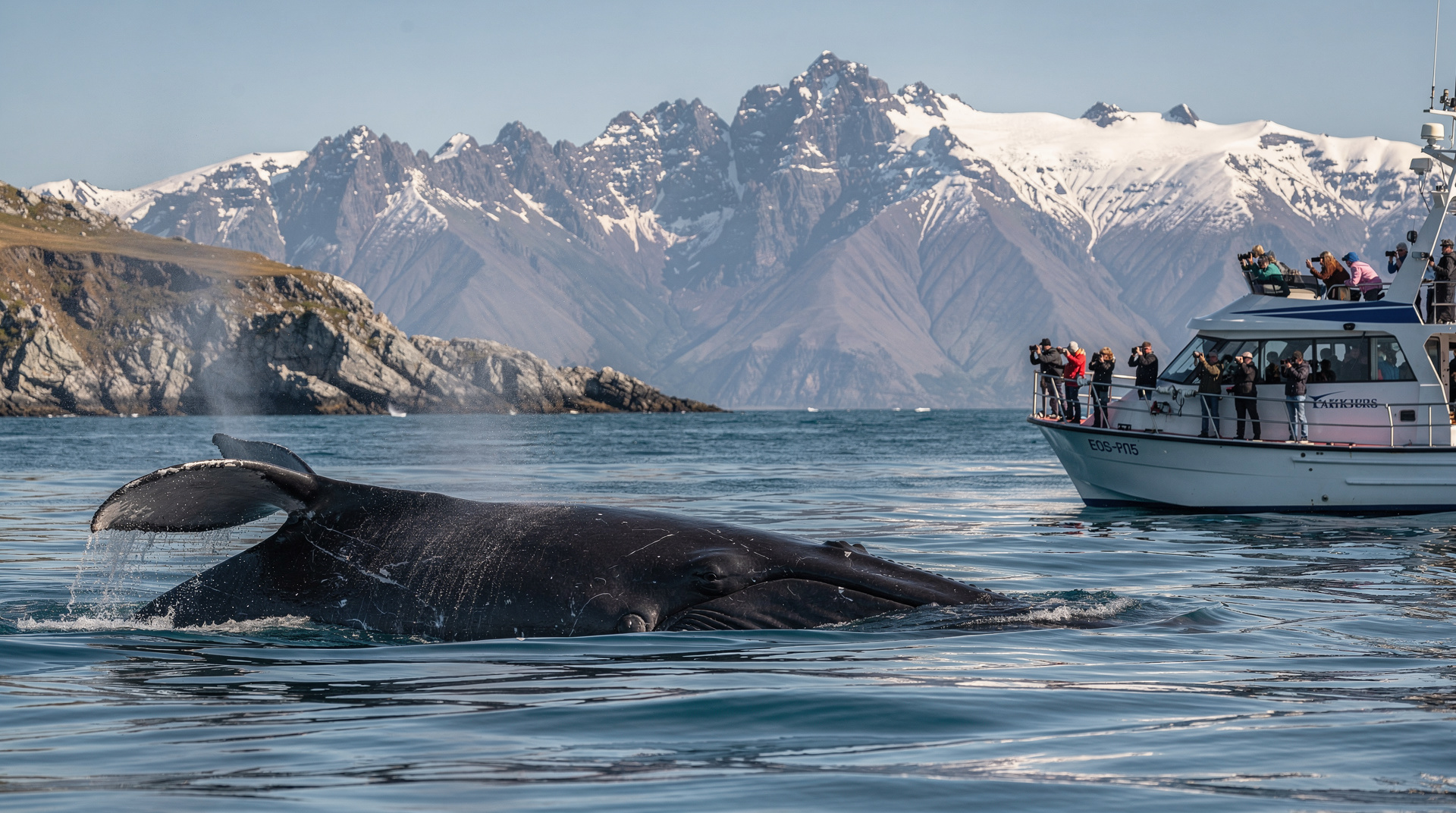
Kaikoura whale watching
Sperm whales off Kaikoura year-round: boat, flight, or kayak? Real prices (NZD/USD/EUR), sighting rates, and which operator to book.
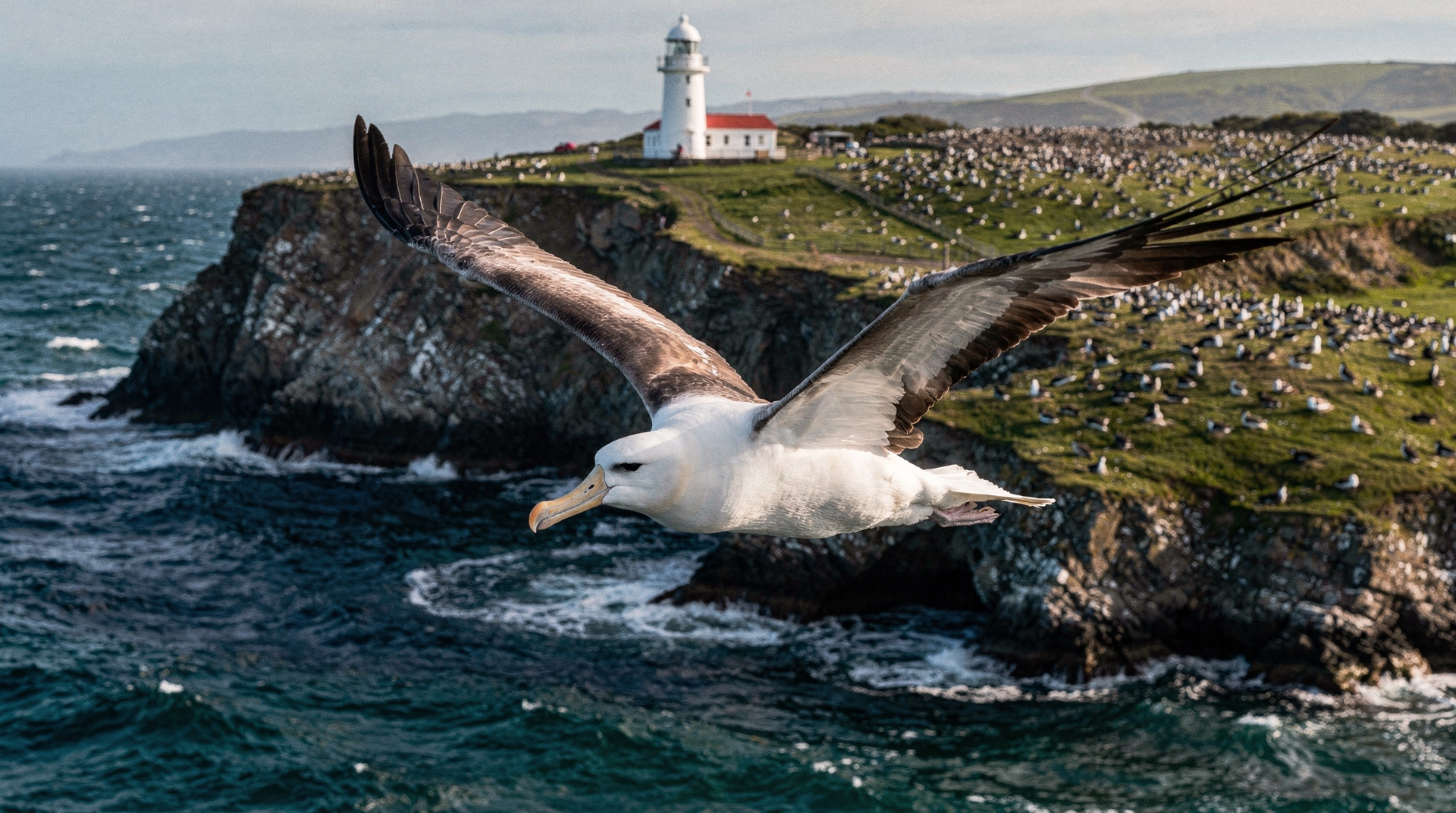
Royal albatross colony at Taiaroa Head
Taiaroa Head on Otago Peninsula hosts the world's only mainland royal albatross colony. Tours, prices (NZD/USD/EUR), best months, and what to expect.
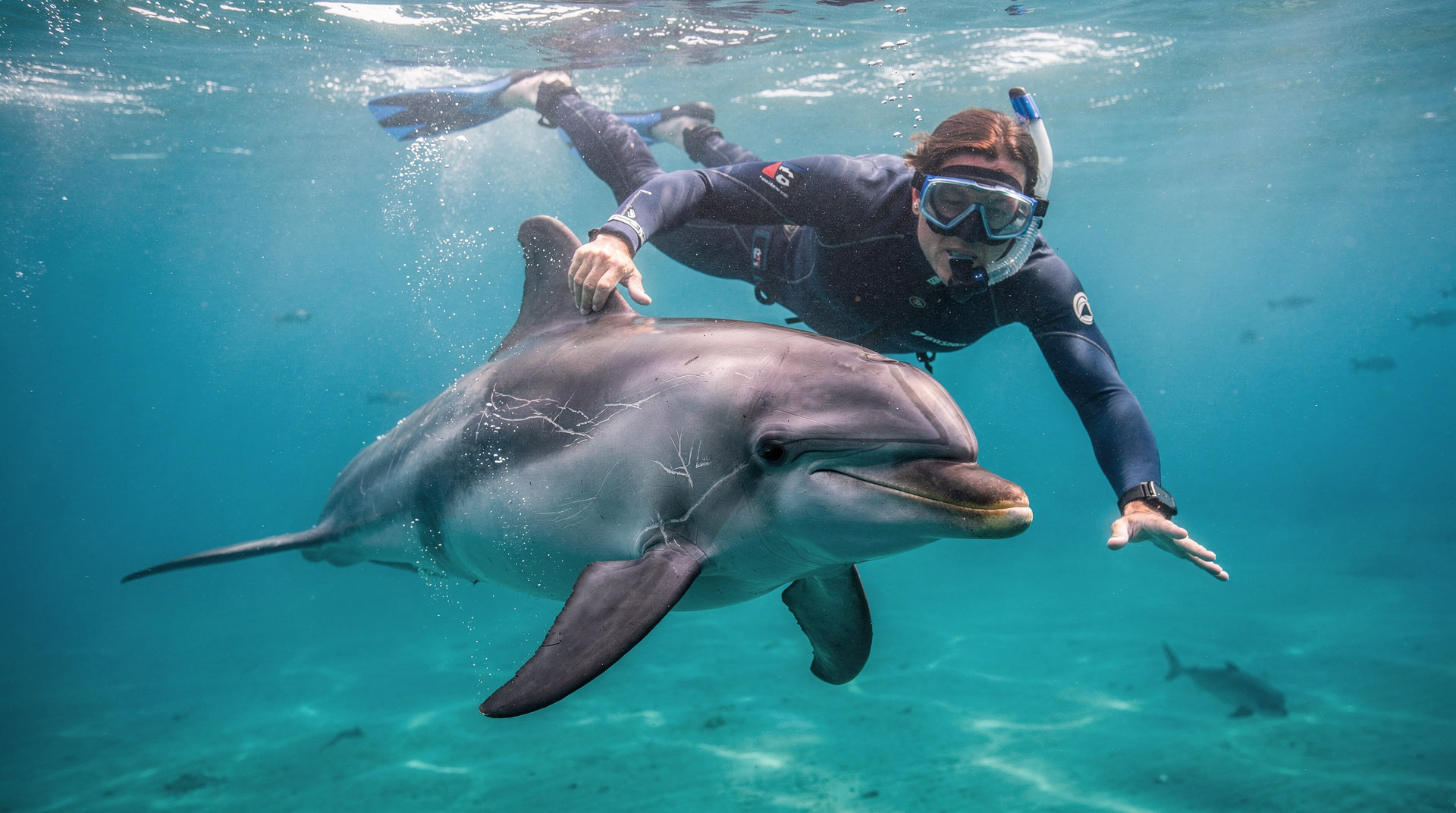
Dolphin swim in the Bay of Islands
Swimming with bottlenose dolphins in the Bay of Islands: DOC-permitted operators, best months, ethical restrictions, and prices (NZD/USD/EUR).
Last reviewed: