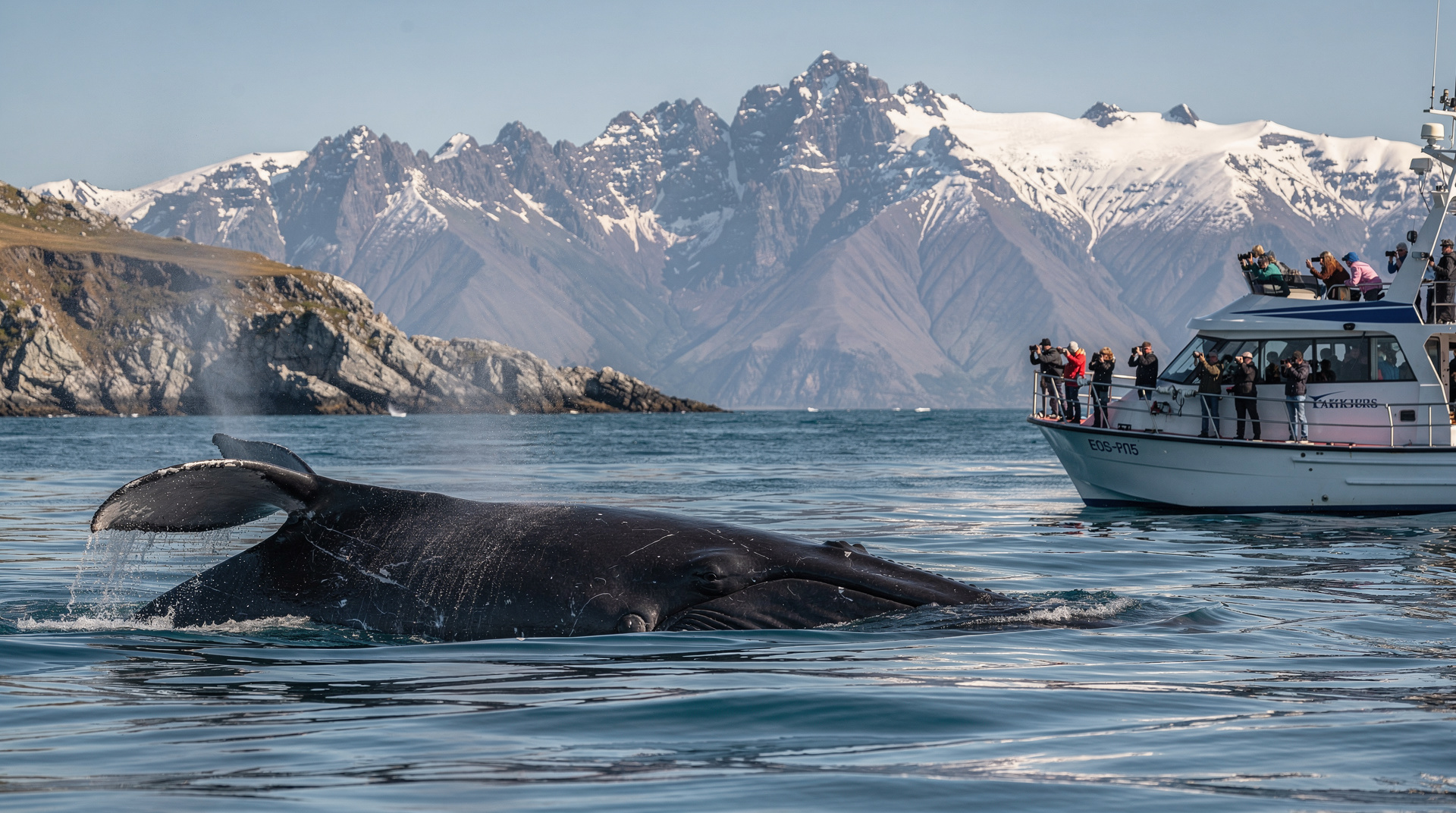
Kaikoura whale watching
Is whale watching in Kaikoura worth it?
Yes — Kaikoura is one of the world's few places with sperm whales year-round, thanks to a deep submarine canyon close to shore. Sighting rates exceed 95% for the boat tour. The 2.5-hour boat trip costs NZD 165 / USD 99 / EUR 91. If the boat departs and no whale is sighted, you get a voucher for a free return trip (rare but honoured).
Why sperm whales stay off Kaikoura year-round
Most places in the world where you can see large whales are seasonal — humpbacks migrate, blue whales appear briefly, orcas follow specific prey windows. Kaikoura is different. The town sits at the intersection of warm Southland Current waters and the Kaikoura Canyon, a submarine trench that drops to over 1,000 metres within just a few kilometres of the coastline. This extraordinary geography concentrates deep-water squid — the primary prey of sperm whales — in accessible waters throughout the year.
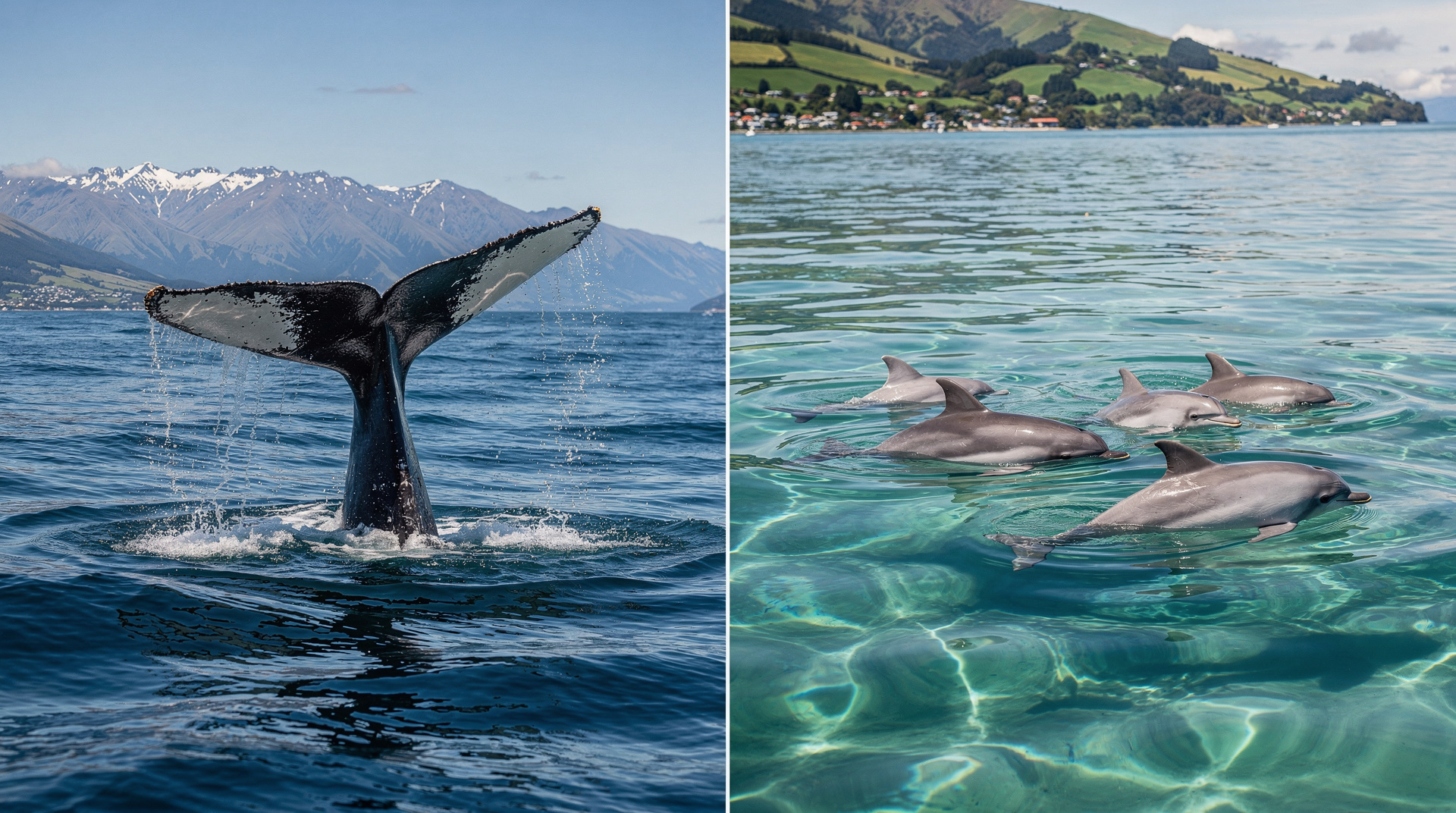
Sperm whales (Physeter macrocephalus) are the largest toothed predators on earth. Males can reach 18 metres and 57,000 kg; the ones you’ll see off Kaikoura are adult bachelor males using the canyon as a feeding ground. They dive to 600–1,000 metres for 45–60 minutes, then surface to breathe for 8–10 minutes, showing their characteristic triangular flukes on the final dive. The entire experience pivots on catching that final dive — the whale lifting its massive tail clear of the water before disappearing again.
Kaikoura’s history connects deeply to whaling and then to its rejection. The town’s Maori name means “place of crayfish” — a reflection of its original relationship with the sea. Today that relationship is built on observation rather than extraction, and Whale Watch Kaikoura — the only boat-based whale watching operator — is entirely owned by the local Ngati Kuri iwi. Booking with them is directly supporting the community that has stewarded this coastline for generations.
| Where | Kaikoura marina — 181 km / 2.5hrs north of Christchurch |
| Cost | around NZD 165/adult boat tour; NZD 195-320 for flights |
| Time needed | 2.5-3 hours for the boat, 30-60 min for flights |
| Getting there | self-drive, Coastal Pacific train, or guided day tour |
| Best time | year-round; summer (Dec-Feb) has the calmest seas |
Boat tour — the standard Kaikoura experience
The Whale Watch Kaikoura boat tour runs 2.5 hours and departs multiple times daily depending on conditions. The vessels are purpose-built catamarans with a covered upper deck, downstairs seating, and hydrophones that the crew uses to track whale locations by sound before surfacing. You’ll typically see 1–2 sperm whales per trip; on some trips you see more, occasionally just one.
Price: NZD 165 / USD 99 / EUR 91 per adult. Children (3–15): NZD 60 / USD 36 / EUR 33.
The “money back guarantee” works like this: if the boat departs and no whale is sighted, you receive a full refund or a voucher for a future trip. This has happened a handful of times since operations began in 1987. Trips are sometimes cancelled before departure due to sea conditions — if cancelled before you board, you get a full refund. Pack layers regardless of season; the sea wind is cold even in midsummer.
When to go: Year-round, but summer (December–February) has the calmest seas and best weather for topside viewing. Winter is rougher but still entirely viable — the whales don’t care about the weather. Booking 2–3 weeks ahead in peak summer is advisable; winter trips can often be booked a day ahead.
Whale watching by air
If you get seasick easily, or if you want a different perspective, the Kaikoura whale watching flights offer a bird’s-eye view of the animals.
The whale watching scenic flight runs approximately 30 minutes over the canyon. From the air, you can see the entire outline of a sperm whale lying at the surface — something the boat makes harder because you’re typically viewing from water level. The tradeoff is distance: you’re further away, the experience is shorter, and you miss the intimate proximity of the boat.
Price (flight): NZD 195–220 / USD 117–132 / EUR 108–121 depending on aircraft.
The 1-hour whale helicopter flight extends the aerial experience and may combine a whale sighting with a coastal or mountain pass. This is a more expensive option but uniquely atmospheric if the helicopter swoops low over a surfacing whale.
Verdict on flights vs boat: The boat is the better core experience for most people — you’re closer, the trip is longer, and the hydrophone tracking means you’re positioned correctly when the whale surfaces. The flight is a supplement for boat veterans or those with motion sickness concerns.
Wildlife you might encounter beyond sperm whales
Kaikoura’s productive waters mean that whale watching trips frequently involve other marine life:
New Zealand fur seals (kekeno): A large colony lives on the rocks near the Kaikoura Peninsula walkway. You’ll almost certainly see them on the water during the boat trip as well.
Dusky dolphins (Lagenorhynchus obscurus): One of the most acrobatic dolphin species. Large pods — sometimes hundreds — are regularly encountered during whale watch trips. Swimming with dusky dolphins is offered separately through a different operator.
Sperm whale companions: Occasionally pilot whales, orca, and humpbacks appear. Humpbacks (June–August) and southern right whales (rare) are bonus sightings rather than guaranteed.
Seabirds: Kaikoura has exceptional pelagic birdlife. Wandering albatrosses, giant petrels, Westland petrels, and shearwaters are common on the water around the boats. Bring binoculars.
Wildlife kayaking around the peninsula
The half-day wildlife kayaking tour operates around the Kaikoura Peninsula, offering a slow-water perspective on the local fur seal colonies. You paddle alongside seals resting on rocks or swimming nearby — they’re largely indifferent to kayakers. The paddle also passes through kelp forests where blue cod and other fish are visible in clear water.
Price: NZD 85–110 / USD 51–66 / EUR 47–61. No whale-spotting chance from kayaks, but the seal intimacy is difficult to replicate.
Ethical note: Do not approach seals closer than 20 metres on your own. The tour operators are DOC-permitted and know the appropriate distances. Fur seals can move surprisingly fast on land and will bite if cornered. On the peninsula walkway (self-guided), stay on the marked path.
Getting to Kaikoura
Kaikoura sits on SH1, 181 km north of Christchurch and 127 km south of Blenheim. Drive time from Christchurch is approximately 2.5 hours (NZ roads are slower than GPS suggests — allow 3 hours). From Blenheim: 1.5–2 hours.
The TranzCoastal scenic train (Christchurch–Picton) stops at Kaikoura — a beautiful approach with ocean views on the eastern side. Train travel time from Christchurch: roughly 2.5 hours.
Day trip from Christchurch: Possible but tight. The whale watch boat runs 2.5 hours, plus check-in time, plus the 3-hour drive each way. A 6am departure from Christchurch makes it work. Overnight in Kaikoura is a significantly more relaxed option — the Hapuku Lodge and Kaikoura Coastal Camp are both excellent at different price points.
Note: the 2016 earthquake significantly damaged SH1 north of Kaikoura. The road has since been repaired and fully reopened, though some sections remain winding with single-lane passages.
Boat, flight or kayak — which to book
If you’re only doing one, the boat tour is the right default for almost everyone — it’s the longest experience, the closest proximity, and the hydrophone tracking means the crew consistently positions you well for the fluke dive. The comparison in brief:
| Option | Duration | Proximity | Best for |
|---|---|---|---|
| Boat tour | 2.5-3 hours | Close (50-200m) | Most visitors — the definitive Kaikoura experience |
| Scenic flight | 30 min | Distant, aerial | Motion sickness sufferers, time-limited visitors |
| Helicopter | 1 hour | Distant, aerial, lower | Combining with coastal/alpine scenery |
| Wildlife kayaking | 2.5-3 hours | Very close (seals, not whales) | A second half-day activity, not a whale-watching substitute |
For a full independent review of the boat tour experience itself — what a typical departure looks like minute by minute, and honest red flags to know before booking — see the Whale Watch Kaikoura boat tour review.
Combining whale watching with a Christchurch day trip
If you’re based in Christchurch rather than staying overnight in Kaikoura, the whale watch is very doable as a long day trip — see the Kaikoura day trip from Christchurch guide for a realistic hour-by-hour itinerary that fits the boat tour, lunch, and the free Ohau Point seal colony into a single day.
Costs summary (NZD / USD / EUR)
| Activity | NZD | USD | EUR |
|---|---|---|---|
| Whale Watch boat tour (adult) | 165 | 99 | 91 |
| Whale Watch boat tour (child 3–15) | 60 | 36 | 33 |
| Whale watching scenic flight (30 min) | 195–220 | 117–132 | 108–121 |
| Whale helicopter 1 hour | 280–320 | 168–192 | 154–176 |
| Wildlife kayaking half-day | 85–110 | 51–66 | 47–61 |
Exchange rate: 1 NZD ≈ 0.60 USD ≈ 0.55 EUR (2026 snapshot).
Practical tips
- Seasickness: The catamarans are relatively stable but the open ocean is unpredictable. If you’re prone to motion sickness, take preventative medication (e.g. Stugeron) 1–2 hours before departure. Don’t eat a large meal beforehand.
- Photography: A 200–400mm telephoto lens captures the best flukes. Smartphones work well in good light when the whale surfaces close to the boat. Video mode often gives the best results for fluke dives.
- Clothing: Layers. The sun can be intense on the upper deck while the wind is cold. Sunscreen and a windproof jacket are both needed.
- Children: The minimum age for the boat is 3 years. The flight has no minimum age. Children under 15 pay reduced rates.
Frequently asked questions
What is the whale sighting rate at Kaikoura?
Whale Watch Kaikoura publishes a guarantee: if you depart on a trip and no sperm whale is spotted, you receive a full refund or free return voucher. In practice, sperm whales are sighted on over 95% of departures. The few exceptions are caused by extremely poor visibility or unusual weather, not by absence of whales — the canyon means the whales are almost always present.
Can I see humpback whales in Kaikoura?
Humpbacks migrate through Kaikoura waters between June and August. Sightings are not guaranteed but have become more frequent in recent years. The boat tour runs year-round and you may encounter humpbacks as a bonus during winter months. Southern right whales are rare but have appeared.
Is Kaikoura whale watching ethical?
Whale Watch Kaikoura operates under DOC permit with strict vessel approach distance guidelines. The company is Maori-owned (Ngati Kuri iwi) and was instrumental in establishing conservation frameworks for the canyon. The sperm whales show no signs of disturbance-related behaviour changes; the feeding habitat remains intact. This is considered one of the more ethically sound cetacean tourism operations globally.
Can you swim with whales in Kaikoura?
No. Swimming with sperm whales is not offered in Kaikoura — the DOC permit specifically prohibits in-water whale interaction. The animals are simply too large and the risk too significant. In-water dolphin experiences (with dusky dolphins) are offered separately by a different operator.
Should I book the boat or the flight?
For a first visit: the boat. You’re at water level, you can hear the hydrophone tracking, you see the flukes from the same height as the whale’s body, and the 2.5-hour experience is more immersive than 30 minutes in the air. Book the flight if you’ve done the boat before or have significant motion sickness concerns.
Is Kaikoura better as a day trip from Christchurch or an overnight stay?
An overnight is preferable if your schedule allows it — it removes the time pressure of a 10-12 hour round trip and often lands you a calmer-sea morning departure. The day trip is entirely workable too; see the Kaikoura day trip from Christchurch guide for a realistic plan either way.
Where can I read a full independent review of the boat tour?
See the Whale Watch Kaikoura boat tour review for a minute-by-minute breakdown of a typical departure, honest red flags, and who should book versus skip.
Related reading
Related guides
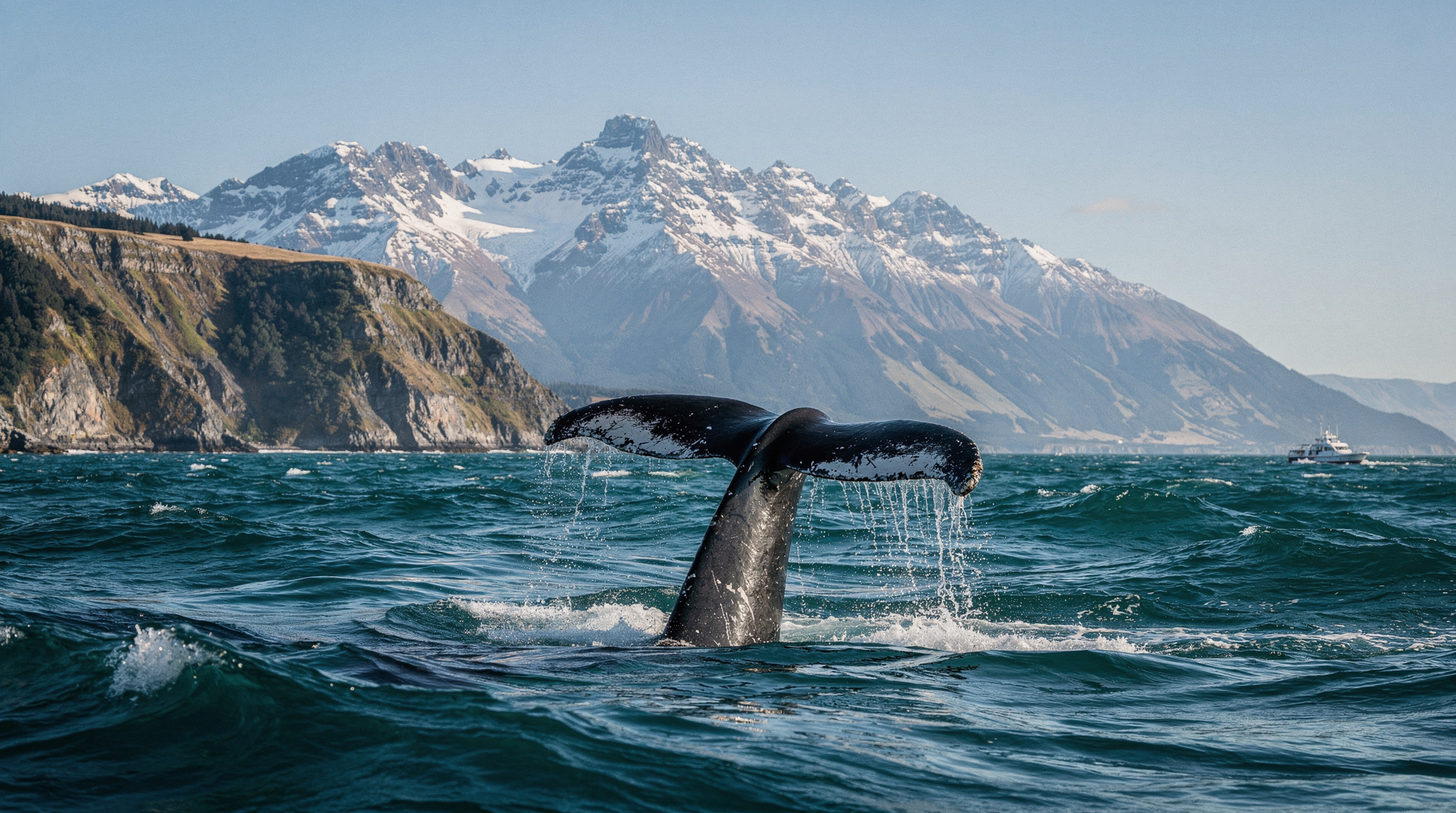
Kaikoura
Honest Kaikoura guide: sperm whale tours, wildlife kayaking, crayfish — real prices and the best time to visit after the 2016 earthquake rebuild.
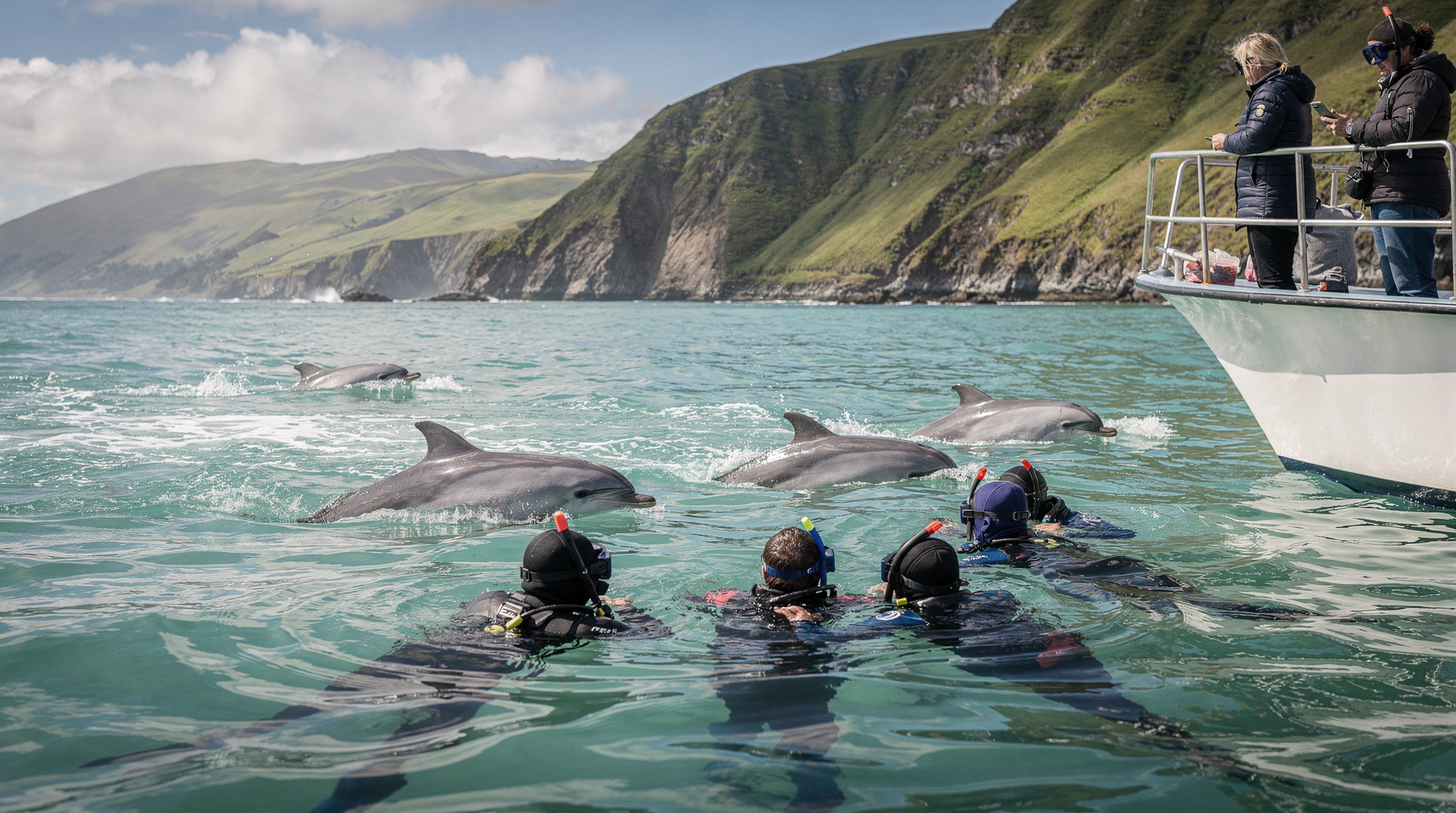
Hector's dolphins in Akaroa
Akaroa is the best place on earth to see Hector's dolphins, the world's smallest. Swim tours, cruise prices, ethical guidelines, and booking tips.
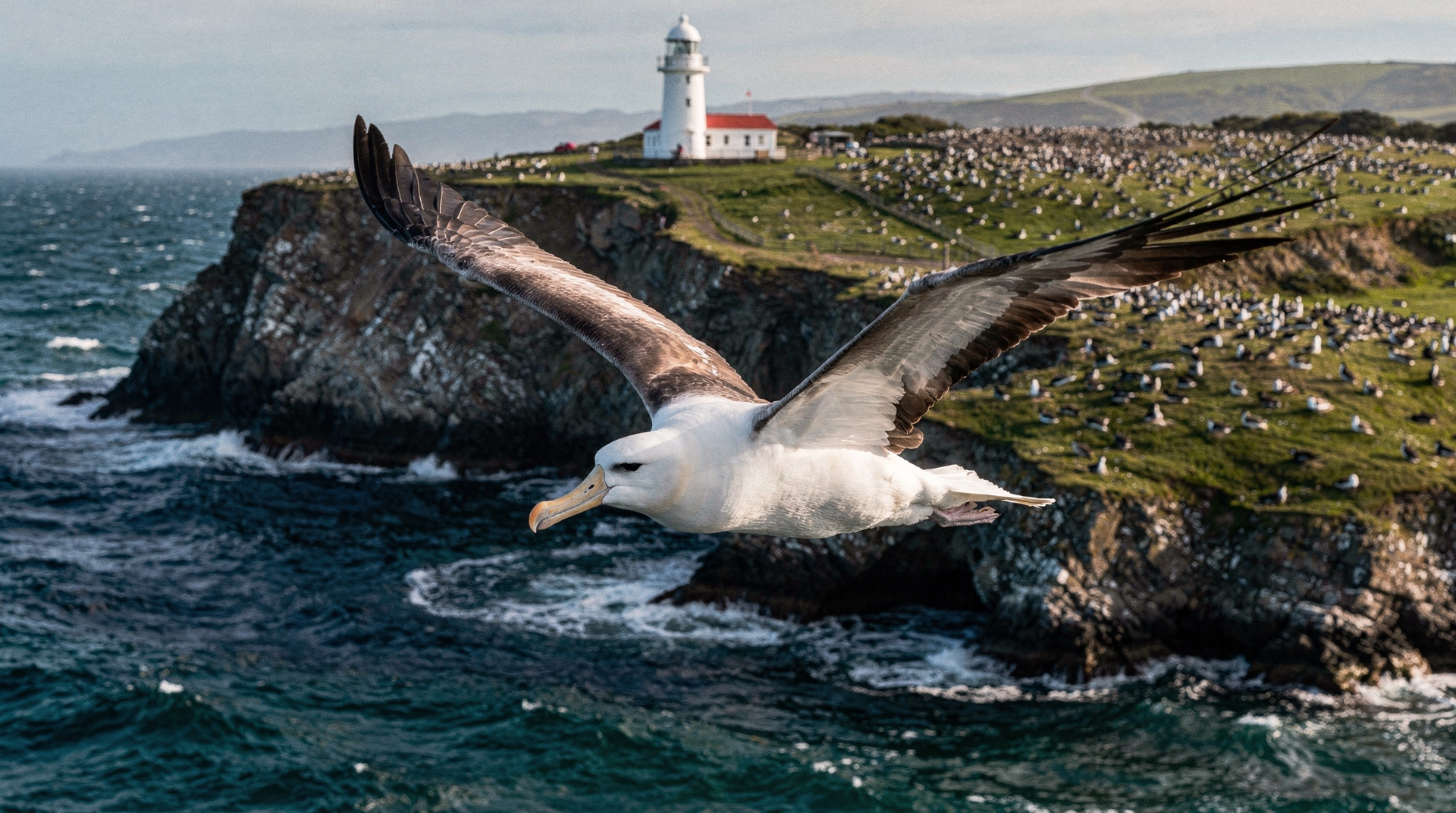
Royal albatross colony at Taiaroa Head
Taiaroa Head on Otago Peninsula hosts the world's only mainland royal albatross colony. Tours, prices (NZD/USD/EUR), best months, and what to expect.
Kaikoura vs Akaroa for wildlife
Kaikoura vs Akaroa wildlife comparison: whales vs Hector's dolphins, sea kayaking, and which is better for a wildlife day from Christchurch. NZD/USD/EUR.
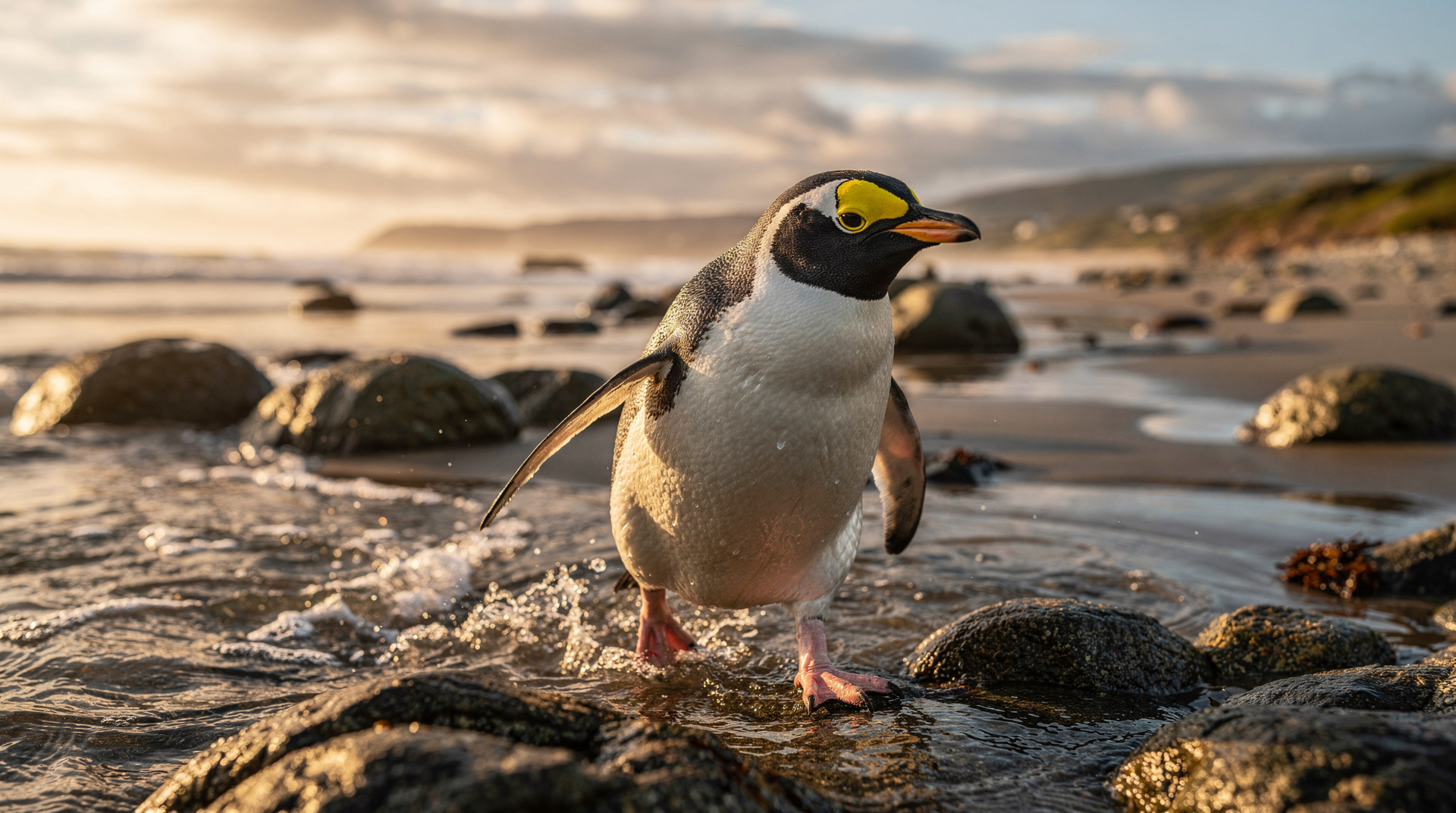
Yellow-eyed penguins on the Otago Peninsula
Hoiho (yellow-eyed penguin) are the world's rarest penguin. Where to see them wild on Otago Peninsula, ethical viewing hides, prices, and best timing.

Canterbury
Honest Canterbury guide: Christchurch, Akaroa, Lake Tekapo stargazing, Aoraki/Mt Cook. Real NZD/USD/EUR costs, scenic train, ski, and practical itineraries.
Last reviewed: