New Zealand vs Australia — which to visit first
Should I visit New Zealand or Australia first?
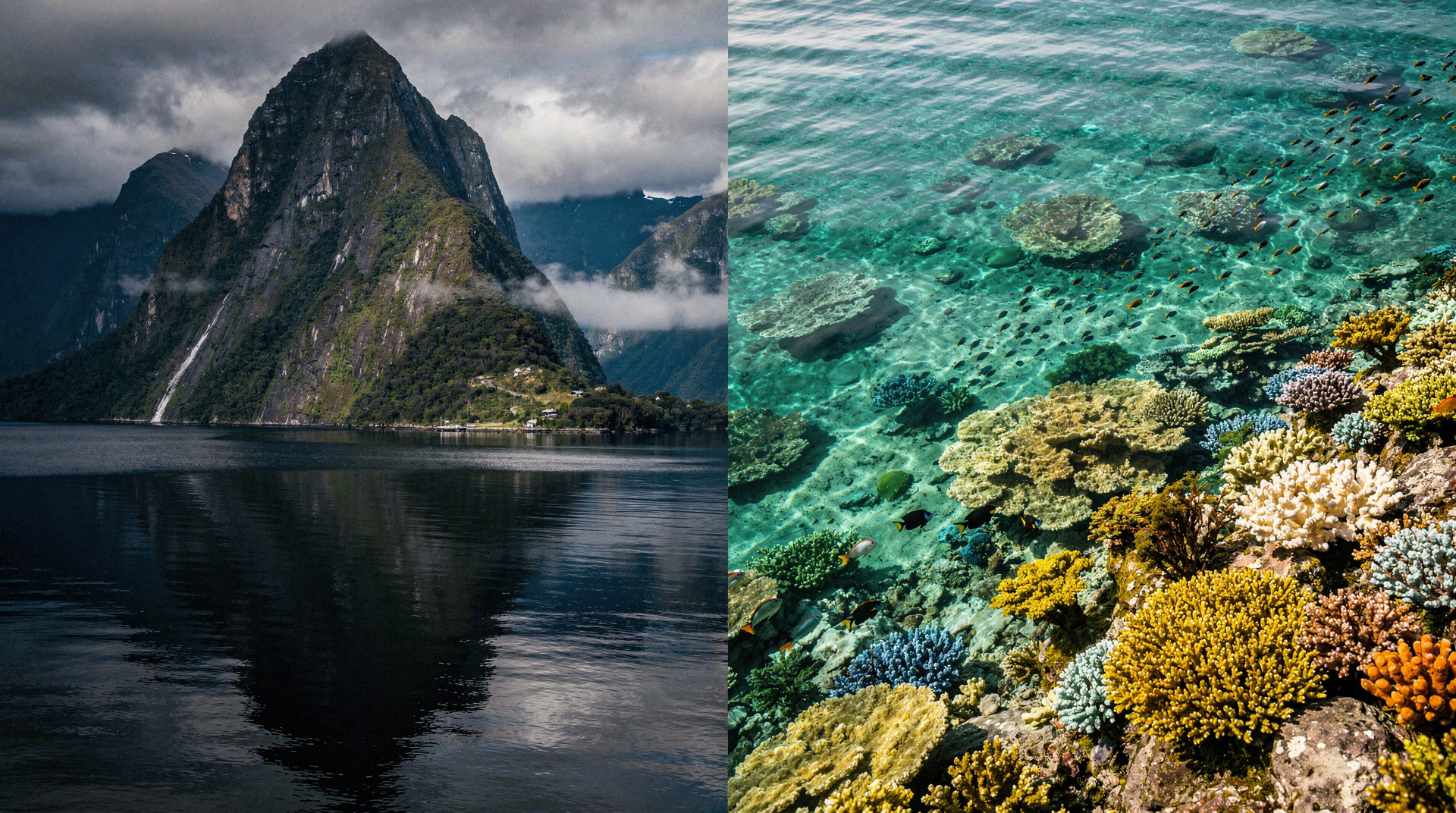
New Zealand for concentrated landscape drama, Maori culture, hiking, adventure sports and no dangerous wildlife. Australia for the Great Barrier Reef, the Red Centre (Uluru), Sydney, and a subtropical north. They're not substitutes — they offer fundamentally different experiences. If choosing one: New Zealand for landscape, Australia for biodiversity and coast.
The honest verdict
New Zealand and Australia are adjacent countries on most travel itineraries of the South Pacific, and they’re regularly compared — partly because flights between Auckland and Sydney or Melbourne are 3 hours and cheap (AUD 80–200 / NZD 90–230 return), and partly because many visitors consider combining both into a single trip.
They are, however, profoundly different travel destinations. The comparison reveals fundamental differences in what each offers rather than simply a question of “which is better.”
New Zealand’s strengths: Concentrated geographic drama (fjords, volcanoes, glaciers, hot springs — all within driving distance of each other), Maori culture as a living indigenous tradition rather than a tourist construct, genuinely world-class adventure sports, and — significantly — no dangerous wildlife. The absence of venomous snakes, funnel-web spiders, and aggressive marine life makes New Zealand an unusually relaxed outdoor environment.
Australia’s strengths: Scale (Australia is 28 times larger than New Zealand), the Great Barrier Reef (the world’s largest coral ecosystem), Uluru and the Red Centre (a geological and indigenous cultural landscape with no New Zealand equivalent), Sydney’s harbour (one of the world’s great urban waterfronts), and biodiversity that is genuinely unlike anywhere else on earth — marsupials, monotremes, and a reptile fauna found nowhere else.
For a first-time visitor who can only visit one: choose based on what matters most. Landscape drama and manageable scale → New Zealand. Marine life, desert, indigenous connection to ancient land → Australia. If you’re still undecided after this page, the first time in New Zealand guide and the how many days in New Zealand guide help pressure-test whether NZ specifically fits your available time.
| Pick New Zealand if | Landscape drama, adventure sports, Māori culture, 10–14 days available |
| Pick Australia if | Reef, outback, wildlife, city scale, 14–21 days available |
| Combine both if | You have 3+ weeks and don’t mind a mid-trip flight |
| Cheapest to add on | New Zealand from Australia (Auckland–Sydney, 3h, from AUD 80) |
| Visa for most Western passports | NZeTA (NZD 23 + NZD 100 IVL) vs Australia ETA (AUD 20) |
Side-by-side comparison
| Dimension | New Zealand | Australia |
|---|---|---|
| Area | 268,000 km² (UK-sized) | 7.7 million km² (continental) |
| Population | 5.1 million | 27 million |
| Major cities | Auckland (1.8M), Wellington (440K), Christchurch (390K) | Sydney (5.4M), Melbourne (5.2M), Brisbane (2.7M) |
| Iconic landscapes | Fiords, volcanoes, glaciers, thermal parks | Red desert, reef, tropical rainforest, gorges |
| Best known for | Adventure sports, Maori culture, LOTR, hiking | Reef, outback, Sydney Opera House, wildlife |
| Indigenous culture | Maori — integrated and visible | Aboriginal and Torres Strait Islander |
| Dangerous wildlife | None significant | Snakes, spiders, crocodiles, box jellyfish, sharks |
| Language | English (+ te reo Maori) | English |
| Currency | NZD | AUD (1 AUD ≈ 1.08 NZD) |
| Visa (for most Western passports) | NZeTa (NZD 17 / USD 10) | ETA (AUD 20 / USD 13) |
| Cost level | Moderate-high | Moderate-high |
| Driving side | Left | Left |
| Best season | Dec–Feb (summer) | Mar–May or Sep–Nov (avoid tropical north in summer) |
| Time needed | 10–14 days minimum | 14–21 days minimum (to cover any meaningful range) |
New Zealand in detail
New Zealand’s geography does something rare: it packs extreme diversity into a compact space. In 14 days you can stand on a still-active volcanic plateau, swim in warm geothermal springs, walk through ancient native forest, take a boat into a fiord surrounded by 1,200m waterfalls, and sleep beside a glacier — all without a long-haul flight.
The Maori cultural experience is arguably the most accessible and authentic indigenous cultural tourism in the world. Rotorua’s Mitai Maori Village evening — Mitai Maori village evening with hangi and cultural performance — NZD 115–145 / USD 69–87 / EUR 63–80 — provides a living cultural experience with genuine depth, not a performance for tourists. Waitangi Treaty Grounds is the founding site of modern New Zealand’s relationship between Maori and the Crown — Waitangi Treaty Grounds with hangi and kapa haka — NZD 70–95 / USD 42–57 / EUR 38–52.
The adventure sports concentration in Queenstown is genuinely unparalleled. The Nevis Bungy (134m, New Zealand’s highest) — Queenstown Nevis Bungy jump — NZD 275–350 / USD 165–210 / EUR 151–193 — is the flagship experience of a destination that has built an entire economy around adrenaline.
Milford Sound is the experience most international visitors cite as New Zealand’s non-negotiable. The fiord — accessible only by a single road through Fiordland National Park — is overwhelming in scale and beauty. See the Milford Sound vs Doubtful Sound guide for full details.
New Zealand’s hiking infrastructure (the Great Walks) is the best in the world for accessibility: well-maintained tracks, DOC huts throughout, and guided options for non-experienced walkers. See the Routeburn vs Milford Track guide for comparison.
Australia in detail
Australia’s defining experience is scale — physical, temporal, and biological. The continent-country is 28 times larger than New Zealand, and the experiences that define it are spread across vast distances.
The Great Barrier Reef (Queensland): The world’s largest coral system, stretching 2,300 km off the Queensland coast. Cairns is the main gateway; the Whitsunday Islands provide the most accessible luxury reef experience. The reef is bleaching under climate pressure — this is one of the experiences most urgently worth seeing while it remains at its best.
Uluru-Kata Tjuta National Park (Northern Territory): Uluru (formerly Ayers Rock) is a 348m sandstone monolith rising from a flat desert plain, sacred to the Anangu Aboriginal people. No equivalent exists in New Zealand — this is a geological and spiritual landscape unlike anything in the Pacific. Climbing is no longer permitted (closed in 2019 at the request of the traditional owners).
Sydney: The harbour, the Opera House, the Bridge Climb, Bondi Beach — Sydney is one of the world’s great city experiences. New Zealand’s cities (Auckland, Wellington) are excellent but smaller and less internationally prominent as urban destinations.
Wildlife: Australia’s wildlife is genuinely singular. Kangaroos, wallabies, koalas, wombats, platypus, echidnas, cassowaries — none of these exist in the wild in New Zealand. The wildlife encounter in Australia is a core part of the experience for most visitors. The risk side of Australian wildlife (snakes, spiders, crocodiles, marine stingers) is real but manageable with appropriate awareness.
Cost comparison
Both countries are moderately expensive by international standards. The cost of living in New Zealand and Australia is similar, with Australia running slightly higher in major cities.
| Category | New Zealand | Australia |
|---|---|---|
| Budget hostel/night | NZD 35–55 / USD 21–33 / EUR 19–30 | AUD 35–60 / USD 23–39 / EUR 21–36 |
| Mid-range hotel/night | NZD 160–280 / USD 96–168 / EUR 88–154 | AUD 160–300 / USD 104–195 / EUR 95–179 |
| Restaurant meal (mid-range) | NZD 25–45 / USD 15–27 / EUR 14–25 | AUD 25–50 / USD 16–33 / EUR 15–30 |
| Domestic flight (2h) | NZD 90–200 / USD 54–120 / EUR 50–110 | AUD 80–200 / USD 52–130 / EUR 48–119 |
| Signature activity | NZD 80–400 / USD 48–240 / EUR 44–220 | AUD 80–300 / USD 52–195 / EUR 48–179 |
| Rental car/day | NZD 50–90 / USD 30–54 / EUR 28–50 | AUD 45–90 / USD 29–59 / EUR 27–54 |
Time requirements
New Zealand: 10–14 days for a satisfying both-islands trip. The 14-day circuit covers the key experiences without feeling rushed. The small size means no domestic flight times longer than 1.5 hours and no driving distances that can’t be covered in a day.
Australia: Genuinely requires 3 weeks to cover any meaningful range of the continent. Sydney alone warrants 3 days; the Reef requires 2–3 days minimum; the Red Centre is a 2-day minimum trip from the nearest gateway; Melbourne is another 3 days. A “best of Australia” 14-day trip covers 2–3 regions at most and involves significant domestic flying (Cairns to Uluru to Sydney, for example, is 3–4 flights).
This asymmetry is important: New Zealand fits a 2-week trip perfectly. Australia requires either a longer trip or a regional focus.
Combining both
Auckland to Sydney is 3 hours. Many visitors combine both countries by flying into Auckland, spending 10–14 days in New Zealand, then flying to Sydney for the final week of an Australia leg. Alternatively: enter Australia via Sydney or Melbourne, fly to Cairns for the Reef, then fly Auckland to begin the New Zealand circuit.
The fly-in-fly-out sequence (land in one country’s city, fly to the other’s city) is the standard combination. Routing via New Zealand first and ending in Sydney or Melbourne is common for European visitors on return routing.
Which islands or regions to prioritise on a combined trip
If you’re doing both countries in 3+ weeks, the sequencing question comes up immediately: New Zealand first or Australia first? Most Europeans and North Americans do Australia first (bigger jet-lag adjustment, arrive rested for the more demanding logistics), then New Zealand as the shorter, easier-to-navigate back half of the trip.
Within New Zealand itself, the North vs South Island guide helps decide which island to prioritise if the Australia leg has already eaten into your available days — the South Island’s Milford Sound and Queenstown adventure cluster is the highest-density option for a shortened NZ leg, while the North Island suits travelers who want Māori culture and geothermal parks without the driving distances.
For travelers weighing whether to self-drive or book guided transport in New Zealand once they’ve decided to come, the private tour vs self-drive guide is the natural next read — the calculus is different from Australia, where distances often make domestic flights the default rather than a genuine choice between driving and touring.
Frequently asked questions
Which is safer for travellers?
Both are extremely safe by international standards. New Zealand’s main risks are outdoor — weather changes on hiking tracks, river crossings, cold water. Australia adds venomous wildlife risk (snakes, spiders, marine stingers) and remote location risk in the outback. Urban safety in both countries is comparable to Western Europe.
Which is more expensive?
Broadly similar. New Zealand’s Queenstown and Milford Sound area is premium-priced; Australia’s Reef gateway (Cairns, Whitsundays) and outback tours are similarly expensive. Sydney and Melbourne accommodation runs slightly higher than Auckland equivalents.
Can you visit both in 14 days?
Technically yes; practically unsatisfying. Two weeks split between both countries gives you one week each — enough for a highlight reel but not enough for depth. If you have 14 days, spend them entirely in New Zealand (which scales perfectly) or Australia (choose 2 regions). If you have 21 days, a two-country combination becomes worthwhile.
Is New Zealand or Australia better for a first international trip to the Southern Hemisphere?
New Zealand, for most first-timers. The English-only language environment, no dangerous wildlife, compact distances, and forgiving self-drive infrastructure make it a lower-friction introduction to the region than Australia’s continental scale and venomous-wildlife awareness requirements. Australia rewards a second Southern Hemisphere trip once you’re comfortable with longer distances and more domestic flying.
Related comparisons and guides
Related guides

First time in New Zealand
Complete first-timer's guide to NZ: costs, logistics, Maori culture, what to book early, and how to structure 7–21 days.
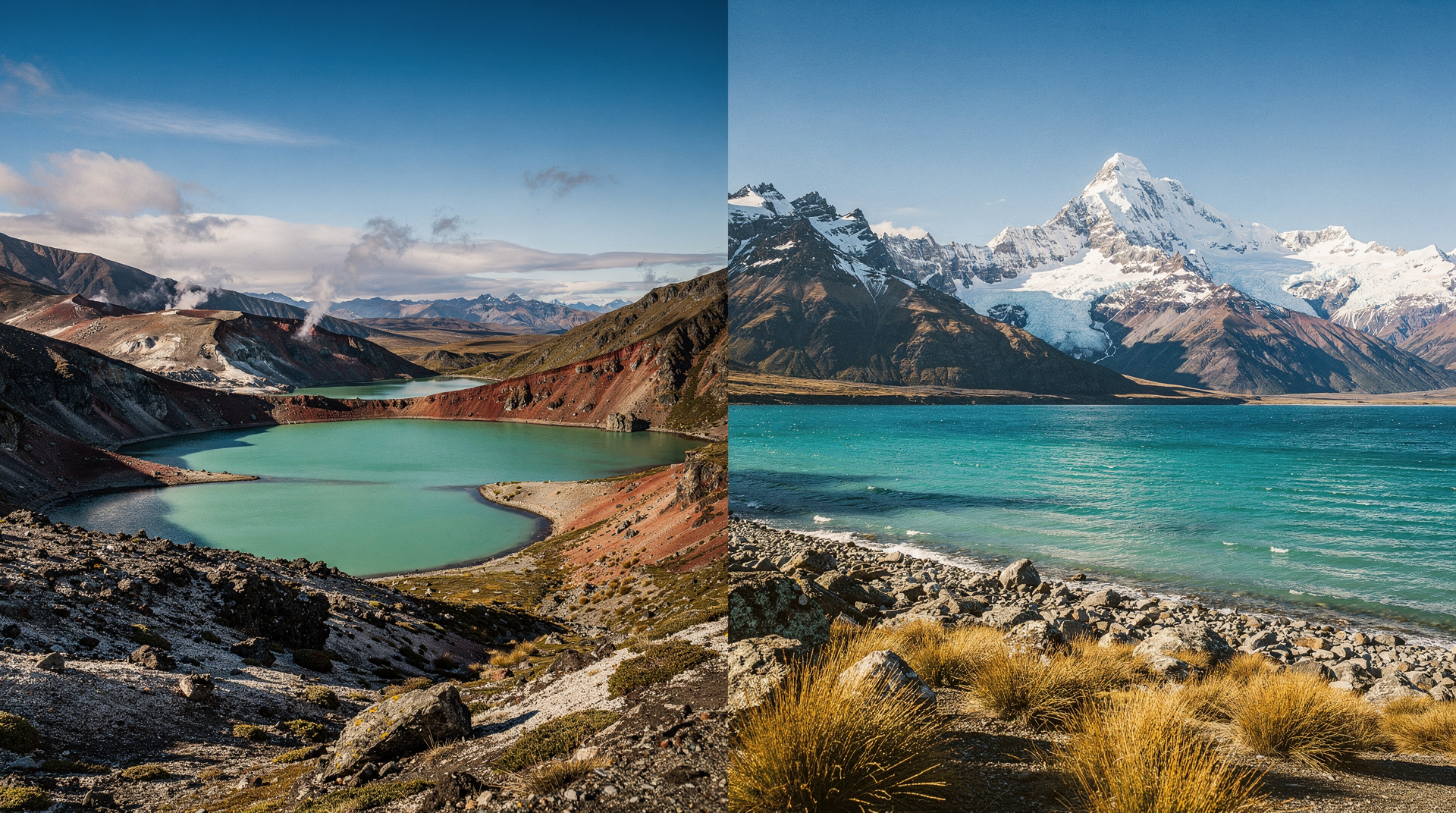
North vs South Island — which is right for you
Honest North vs South Island comparison: culture, landscapes, costs and a clear verdict for first-timers, families and short trips.
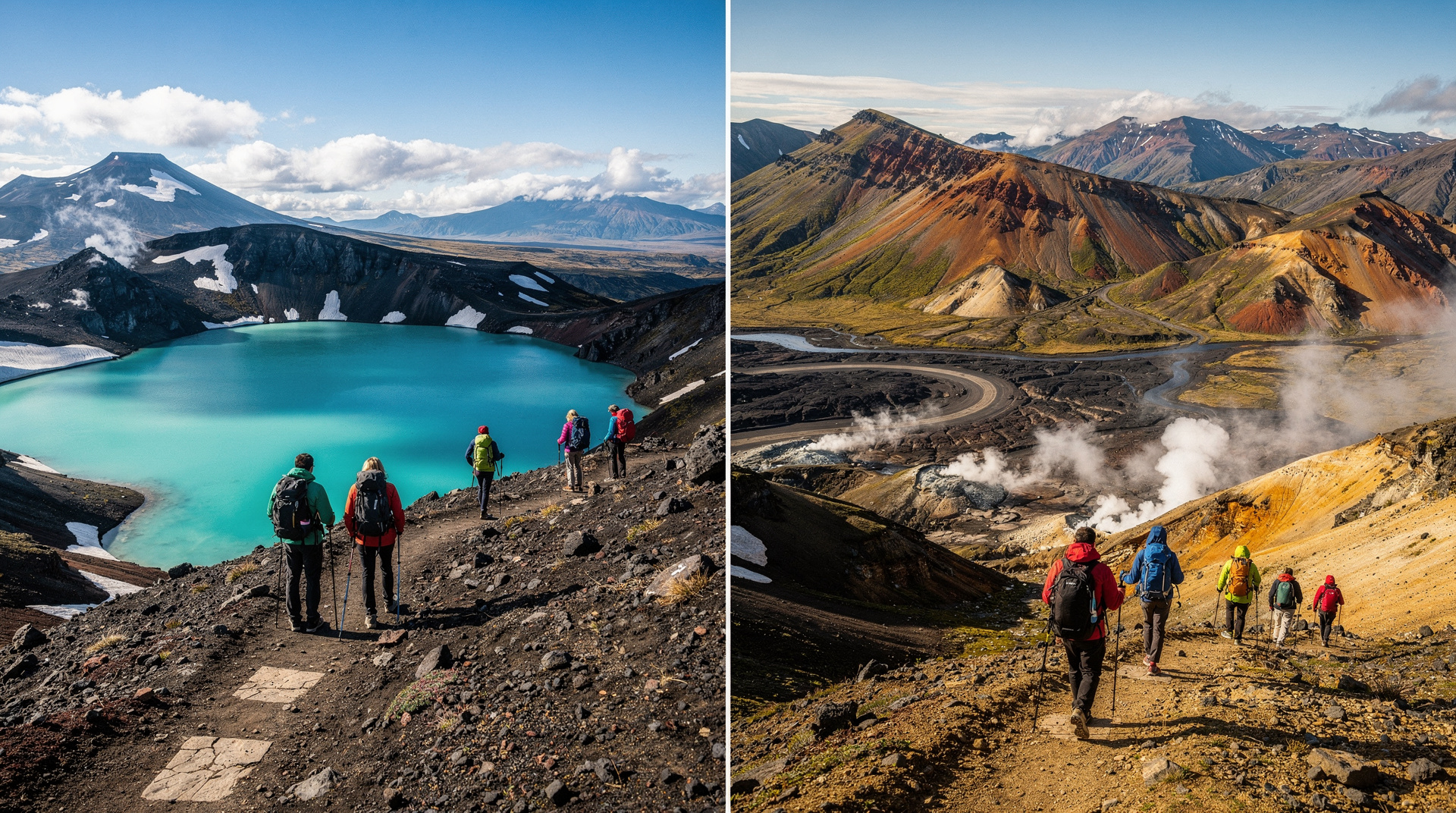
New Zealand vs Iceland — which to visit first
New Zealand vs Iceland compared for landscape, wildlife, cost, accessibility and which to visit if you can only pick one. NZD/USD/EUR prices throughout.
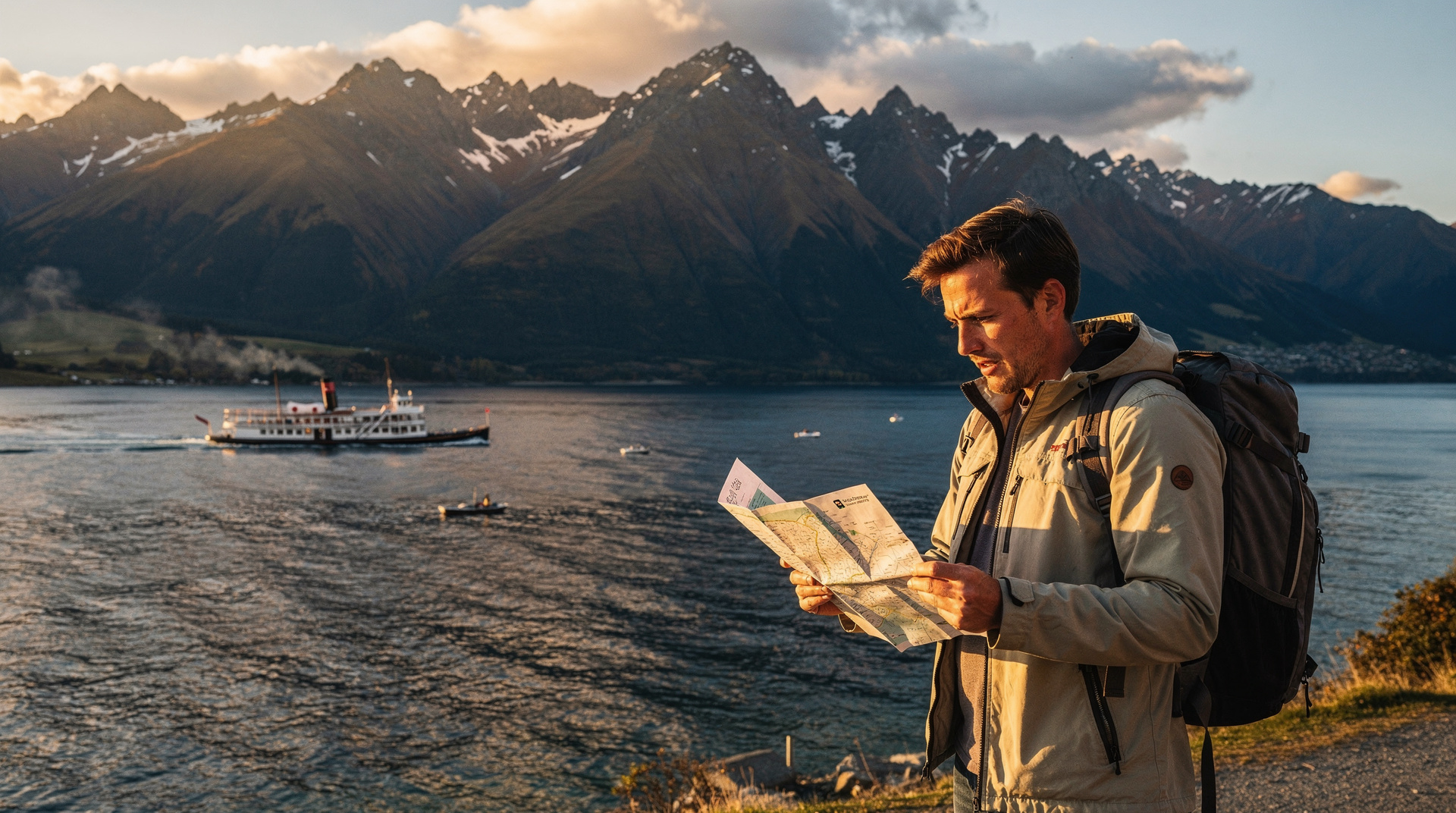
How many days do you need in New Zealand
7 days, 14 days, or 3 weeks? Honest guide to how much time you need for New Zealand, island by island, with sample day-counts by priority and travel style.

NZeTA visa guide (by nationality)
Complete NZeTA guide: who needs it, costs (NZD 23 + IVL 100), validity, and a per-nationality table for FR, DE, IT, ES, PT, US, CA, UK.
Last reviewed: