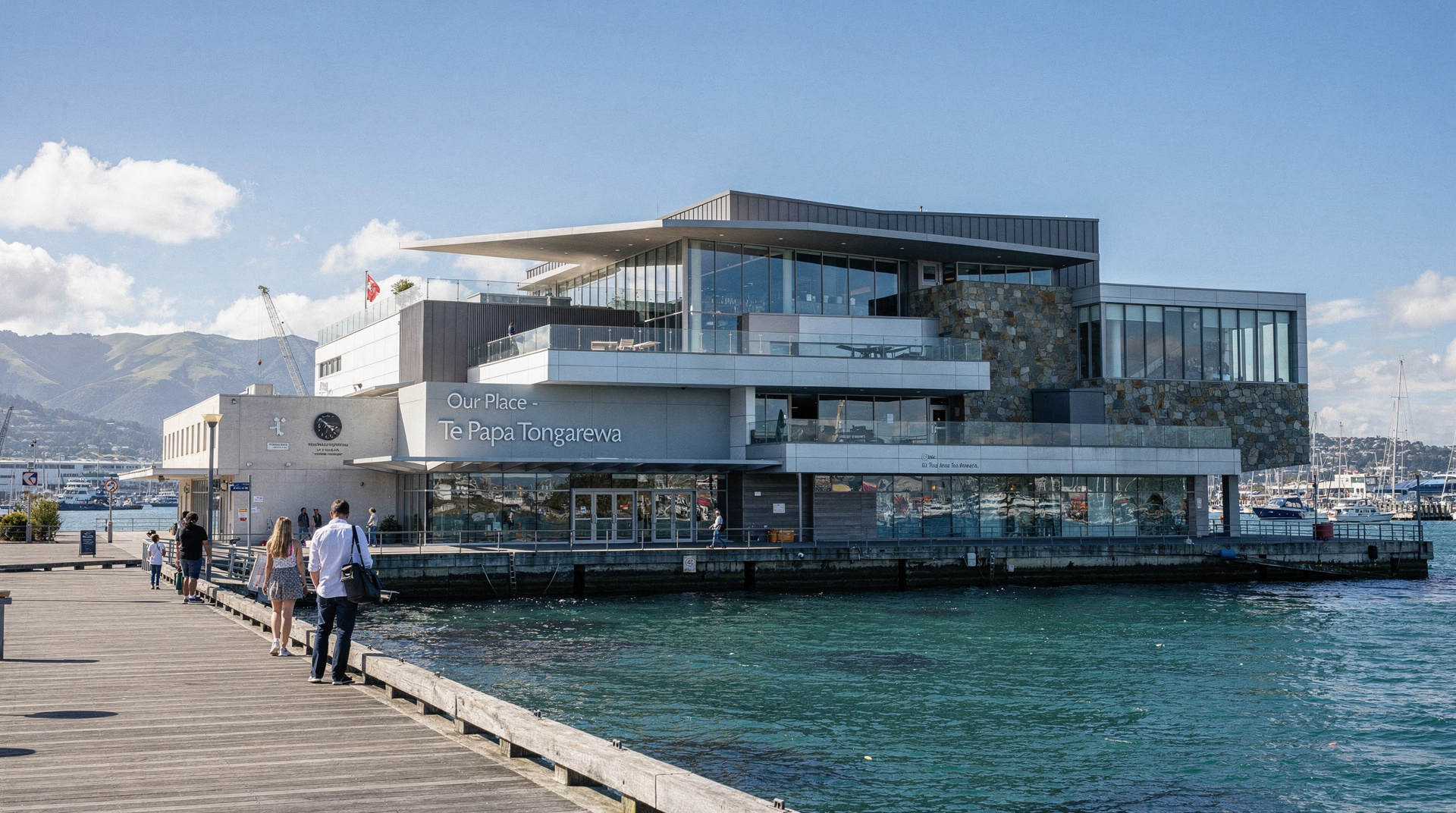
Te Papa museum Wellington — complete visitor guide
Is Te Papa museum worth visiting in Wellington?
Absolutely. Te Papa Tongarewa is New Zealand's national museum and one of the best free museums in the Southern Hemisphere. Allow at least half a day. The Maori galleries (Te Ao Marama), the Gallipoli exhibition with giant-scale figures, and the natural history collections are world-class. Entry is free; guided tours cost NZD 30–40 per person.
What makes Te Papa different from other national museums
| Where | 55 Cable Street, Wellington waterfront |
| Entry | Free (special exhibitions NZD 15-25) |
| Hours | Daily 10am-6pm, Thursday until 9pm |
| Time needed | Minimum 2.5 hours; half day is better |
| Guided tour | Around NZD 30-40/person |
Te Papa Tongarewa — the name translates roughly as “the container of treasures of this land” — opened on Wellington’s waterfront in 1998 after years of debate about what a national museum for Aotearoa New Zealand should be. The result is a six-floor institution that attempts something genuinely difficult: to hold the stories of the tangata whenua (Maori people), the stories of Pakeha (European) settlers, and the natural world of New Zealand in a single coherent space.
What distinguishes Te Papa is not size alone (it is large — 36,000 square metres of floor space, 1.3 million items in the collection) but the commitment to bicultural curation. Maori tikanga (protocol) shapes the design of the building, the arrangement of the collections, and the protocols for managing tapu (sacred) objects. The museum has a full-time kaitiaki (guardian) team whose role is the cultural custodianship of the Maori collection — a practice that was genuinely innovative when it was introduced and remains exceptional globally.
Entry is free. This is unusual for a national institution of this calibre and reflects a deliberate policy choice: the museum belongs to all New Zealanders and to the visitors who come to understand the country. Paid guided tours are available and worthwhile for understanding the depth of what you are looking at.
Getting there and practical information
Address: 55 Cable Street, Wellington waterfront. A 15-minute walk from Wellington Railway Station, or a short ride on any city bus to the waterfront. The #2 bus stops directly outside.
Hours: Open daily, 10am–6pm (last entry 5pm). Open late Thursday to 9pm. Closed Christmas Day.
Entry: Free for most galleries. Special exhibitions carry entry fees (typically NZD 15–25 per adult; concession rates available). For visitors who prefer to book ahead and confirm their general admission slot, the Te Papa general admission booking is available via GYG — particularly useful for groups with a fixed morning schedule.
Guided tours: Multiple options daily. The standard 90-minute highlights tour runs NZD 30–35 per adult. The Te Ao Marama Maori cultural tour is NZD 35–40 and is run by Maori staff — it is the best-value cultural experience in Wellington. The Twilight Express evening tour (Thursday evenings, NZD 40–45) includes sections of the collection not shown in daytime tours.
For visitors particularly interested in the art collections, the Te Papa art narratives tour with general admission focuses specifically on the New Zealand and Pacific art holdings — including major works by Colin McCahon and contemporary Maori artists — with a guide who brings the curatorial decisions and cultural context to the foreground.
Accessibility: Fully wheelchair accessible. Lifts throughout. Audio guides available. Tactile objects available in some galleries.
Café and shop: Toi (the museum café) on the ground floor serves good coffee, pies, and kai Maori (Maori food) — rewena bread, hangi-flavoured dishes. The museum store has high-quality New Zealand-made gifts without the Chinatown junk of tourist shops elsewhere.
Te Papa highlights guided tour — 90 minutesThe Maori collection: Te Ao Marama
The Maori galleries occupy much of the fourth and fifth floors and represent one of the two or three finest Maori collections in the world. The scale of what is here is difficult to convey: more than 70,000 Maori and Pacific taonga (treasures) in the collection, with rotating presentations of the most significant pieces.
The Hotunui meeting house: The spiritual and architectural heart of the Maori galleries is Hotunui, a complete wharenui (meeting house) built around 1878 for the Ngati Maru and Ngati Paoa peoples of the Hauraki region. The carvings are extraordinary — each poupou (post) represents a named ancestor, carved with individual designs encoding genealogical information. Walking around Hotunui rather than simply past it — reading the carvings, understanding that this is not decoration but a three-dimensional record of identity — is one of the most affecting experiences in any New Zealand museum.
Te Hono ki Rarotonga (waka hourua): A voyaging canoe in the Pacific galleries that connects the Maori migration story to the broader Polynesian world. The canoe represents the ongoing relationship between Aotearoa and the wider Pacific — Cook Islands, Niue, Samoa, Tonga.
Taonga collections: The museum holds taiaha (traditional weapons), korowai (cloaks of feathers and flax fibre that took years to weave), greenstone (pounamu) adornments, carved flute instruments (koauau, putorino), and an extraordinary collection of woven garments. The quality of the weaving in particular — the intricacy of taniko border patterns, the sheen of kiekie garments — stops visitors mid-stride.
What to know about the tapu protocols: Some areas of the collection are managed under tapu protocols, meaning access or photography may be restricted at certain times. Follow the guidance of museum staff without question — this is not bureaucratic restriction but genuine cultural custodianship.
Te Papa Mana Maori guided tour — Maori-led cultural experienceThe Gallipoli exhibition: the largest draw
“Gallipoli: The scale of our war” is a permanent special exhibition and the single most-visited attraction at Te Papa. Created in partnership with Weta Workshop (the Wellington film effects company), the exhibition presents eight New Zealanders’ stories from the Gallipoli campaign (1915) through giant-scale, hyper-realistic figures — each 2.4 times human size.
The effect is almost unbearably immediate. The faces are not heroic composite types but specific people: a teenage rifleman from the Waikato, a nurse from Christchurch, an officer from Wellington. Each figure is surrounded by personal objects, letters, photographs, and sound design that makes the experience intensely personal rather than abstractly historical.
New Zealand’s loss at Gallipoli — 2,779 dead from a country of barely one million — created the Anzac mythology that still shapes national identity. Understanding this is understanding something fundamental about the country.
Entry fee: NZD 25 adults, NZD 12.50 children. Advance booking strongly recommended (the exhibition sells out on weekends).
Te Papa Gallipoli early access ticketNatural history galleries
New Zealand’s natural history is among the most distinctive on Earth — 80 million years of isolation produced plants, birds, and insects found nowhere else. The natural history galleries on floors two and three cover this story well.
Giant squid: The museum holds the world’s largest preserved colossal squid (Mesonychoteuthis hamiltoni), caught in Antarctic waters in 2007. At 4.2 metres and 495 kg, it remains the largest complete specimen of this species anywhere. Nothing prepares visitors for the scale of it.
Tuatara: Living representatives of an ancient lineage (rhynchocephalia), tuatara are not lizards despite appearances — they are the last surviving members of an order that flourished 200 million years ago. The museum’s live tuatara display is one of the few places on the mainland where visitors can observe them.
Geology and earthquakes: Wellington sits on active fault lines (the Wellington Fault runs directly through the city; a major earthquake would be catastrophic). The museum’s earthquake simulation — a moving floor recreation of the Hawke’s Bay 1931 earthquake — is sobering context for visitors who will be driving or hiking in New Zealand’s geologically active landscape.
Art collections and temporary exhibitions
Te Papa holds significant New Zealand and Pacific art collections, particularly works by Colin McCahon (New Zealand’s most important 20th-century painter, whose large canvases mixing religious text and landscape are striking and polarising), Gordon Walters, and contemporary Maori artists including Brett Graham, Lisa Reihana, and Michael Parekowhai.
Check the website for current temporary exhibitions — Te Papa runs three to five major special exhibitions annually, often including international touring shows.
Te Papa versus Auckland Museum
This comparison comes up frequently. Both are world-class; they differ in emphasis.
Auckland Museum (Tamaki Paenga Hira) is housed in a magnificent 1929 neoclassical building with a stronger focus on Maori collections from the upper North Island, natural history, and war memorials. It is not free (approximately NZD 30 adult entry for non-residents). The Maori carving tradition represented in Auckland is different from the central North Island styles — Northland and Waikato carving has its own distinctive character.
Te Papa is larger, more contemporary in design and curatorial approach, free, and offers a broader national scope including the Gallipoli exhibition.
Verdict: if visiting both Wellington and Auckland, both are worth visiting. If you have only one day for a museum in New Zealand, Te Papa offers more breadth.
What visitors miss
Most people spend 90 minutes at Te Papa and see the headline exhibits. The things worth seeking out that tour groups typically skip:
The Pacific galleries (floor 2): New Zealand’s Pacific community — Samoa, Tonga, Fiji, Niue, Tokelau, Cook Islands — is large and culturally significant, and the Pacific galleries have some of the finest bark cloth (tapa), woven mats, and ornamental objects in any southern hemisphere collection. Often completely empty even when the main floors are crowded.
The Te Ao Hou exhibition room: A rotating display of works from the museum’s contemporary Maori art collection — frequently some of the most challenging and beautiful work in the building.
The archive collections: Available by appointment, the research library and archive hold documents and objects not on public display. If you are researching a specific topic (natural history, Treaty history, Pacific material culture), contact the museum’s research team.
Eating and taking a break
Wellington’s waterfront is immediately outside Te Papa’s doors. The walk north towards the city is pleasant and lined with cafés, bars, and restaurants in the Taranaki Street area and the waterfront Shed 5 complex. For a quick meal within the museum, Toi Café on the ground floor is reasonably priced and consistently good.
For the full Wellington experience after Te Papa, walk along the waterfront to Frank Kitts Park, then up Cuba Street into the Cuba Quarter — Wellington’s bohemian cultural heart — for the evening.
Photography and what you can bring in
Photography without flash is permitted in most galleries, including the natural history floors and much of the Maori collection, though some taonga under tapu protocols are marked as no-photography — follow the signage and staff guidance without exception. The Gallipoli exhibition restricts flash entirely (it would be jarring against the deliberately dim, atmospheric lighting) and tripods are generally not permitted in busy galleries during opening hours.
Bags are welcome, but large backpacks and suitcases should be left at the free cloakroom near the main entrance — practical if you’re visiting Te Papa on the way to or from the airport with luggage in tow, which is a common Wellington itinerary move given the museum’s central, walkable location.
Combining Te Papa with the rest of Wellington’s culture scene
Wellington markets itself as New Zealand’s cultural capital, and Te Papa is the anchor of a wider circuit worth planning around it. Weta Workshop, the special-effects studio behind the Gallipoli figures at Te Papa, runs its own guided tours a short drive away in Miramar — a natural pairing for anyone who found the giant-scale figures compelling.
Zealandia ecosanctuary, a 10-minute drive from the CBD, offers the natural counterpart to Te Papa’s natural history galleries: living native birds, including wild kiwi, in a predator-free valley rather than behind glass. Many visitors structure a Wellington day as Te Papa in the morning, lunch in the Cuba Quarter, then Zealandia or Weta Workshop in the afternoon — a full and varied cultural day that doesn’t require a car.
Frequently asked questions
How long should I spend at Te Papa?
Minimum 2.5 hours to see the key galleries at a reasonable pace. Half a day (4 hours) is better, especially if you want to include a guided tour and a meal. Allow a full day if you want to explore the Pacific galleries and natural history in depth.
Do I need to book tickets in advance?
The main museum entry is free and walk-in. For the Gallipoli exhibition and guided tours, advance booking is strongly recommended on weekends and from December to February (peak summer).
Can children enjoy Te Papa?
Yes. The hands-on exhibits in the natural history galleries, the live tuatara, and the interactive earthquake simulation are particularly good for ages 6 and up. The Gallipoli exhibition is powerful but confronting — use your judgment for children under 10.
Is the Maori collection displayed with cultural respect?
Yes. Te Papa has a longstanding commitment to bicultural curation developed with Maori communities and the Maori staff who manage the taonga. This is genuinely different from the “curiosities in glass cases” approach of older colonial museums. Some objects are managed under tapu protocols and may not always be visible — this is appropriate, not a failing.
What is the best time to visit?
Tuesday to Thursday mornings are the least crowded. Weekends and school holidays bring significant visitor numbers. The Thursday late opening (until 9pm) is a pleasant option — the building is quieter in the evening and the café stays open.
Planning your Wellington visit
Te Papa is best visited as part of a Wellington day that combines the waterfront, the Cuba Quarter, and a cable car ride to the Botanic Garden. The museum’s position on the waterfront makes it the natural start or end of a waterfront walk.
For context on the Maori collections you will see at Te Papa, the Maori culture overview and Te reo Maori basics are useful preparation. The Waitangi Treaty Grounds guide provides the historical context for the Treaty materials you will encounter in the museum.
If Wellington is part of a longer New Zealand trip, the North Island vs South Island comparison and the 7 vs 10 vs 14-day itinerary guide will help you plan how much time to allocate.
Related guides
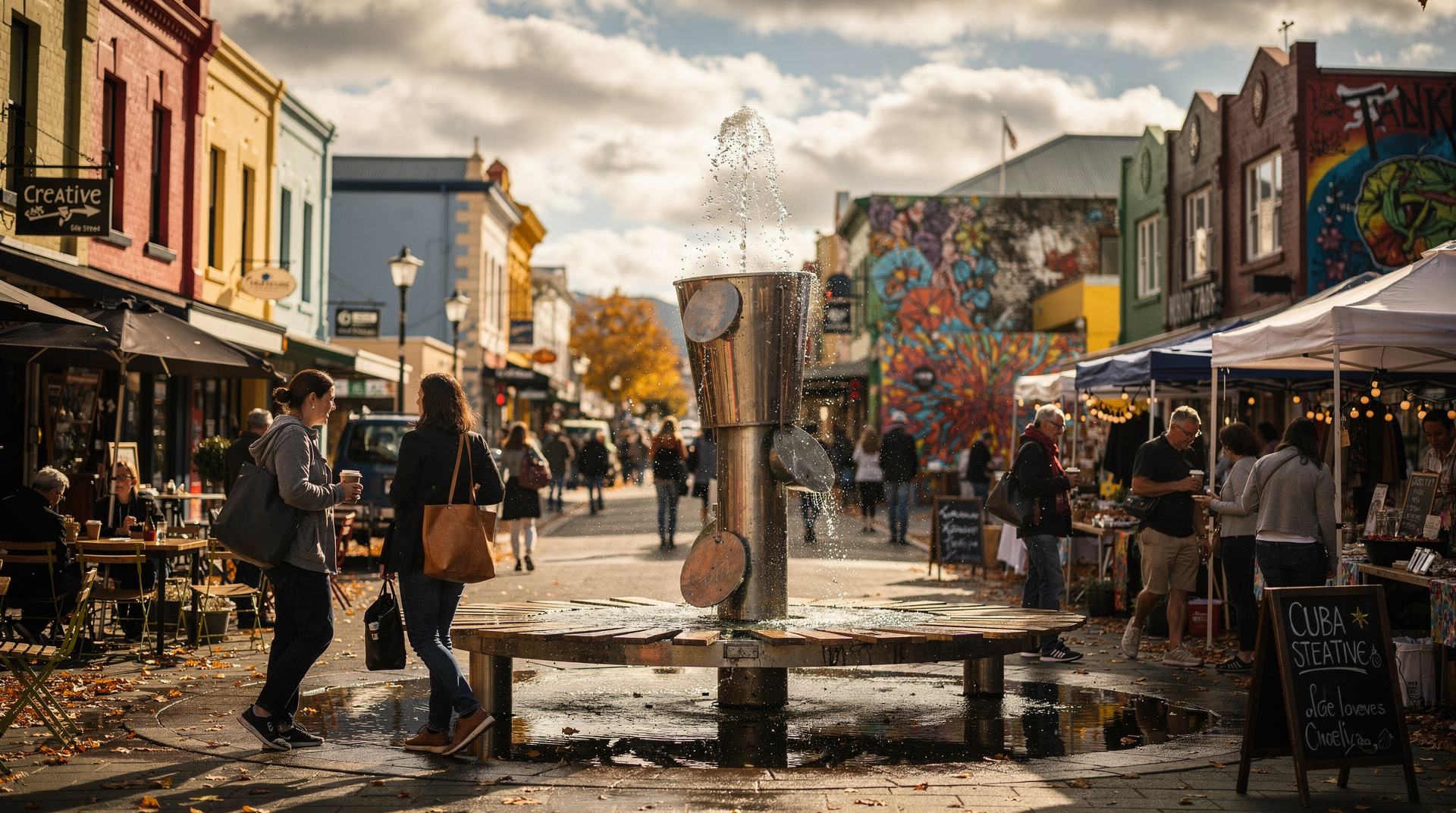
Wellington Cuba Quarter — the bohemian heart of the capital
Cuba Street and the Cuba Quarter are Wellington's creative hub: independent cafés, live music, street art, vintage shops, and the best flat whites in NZ.
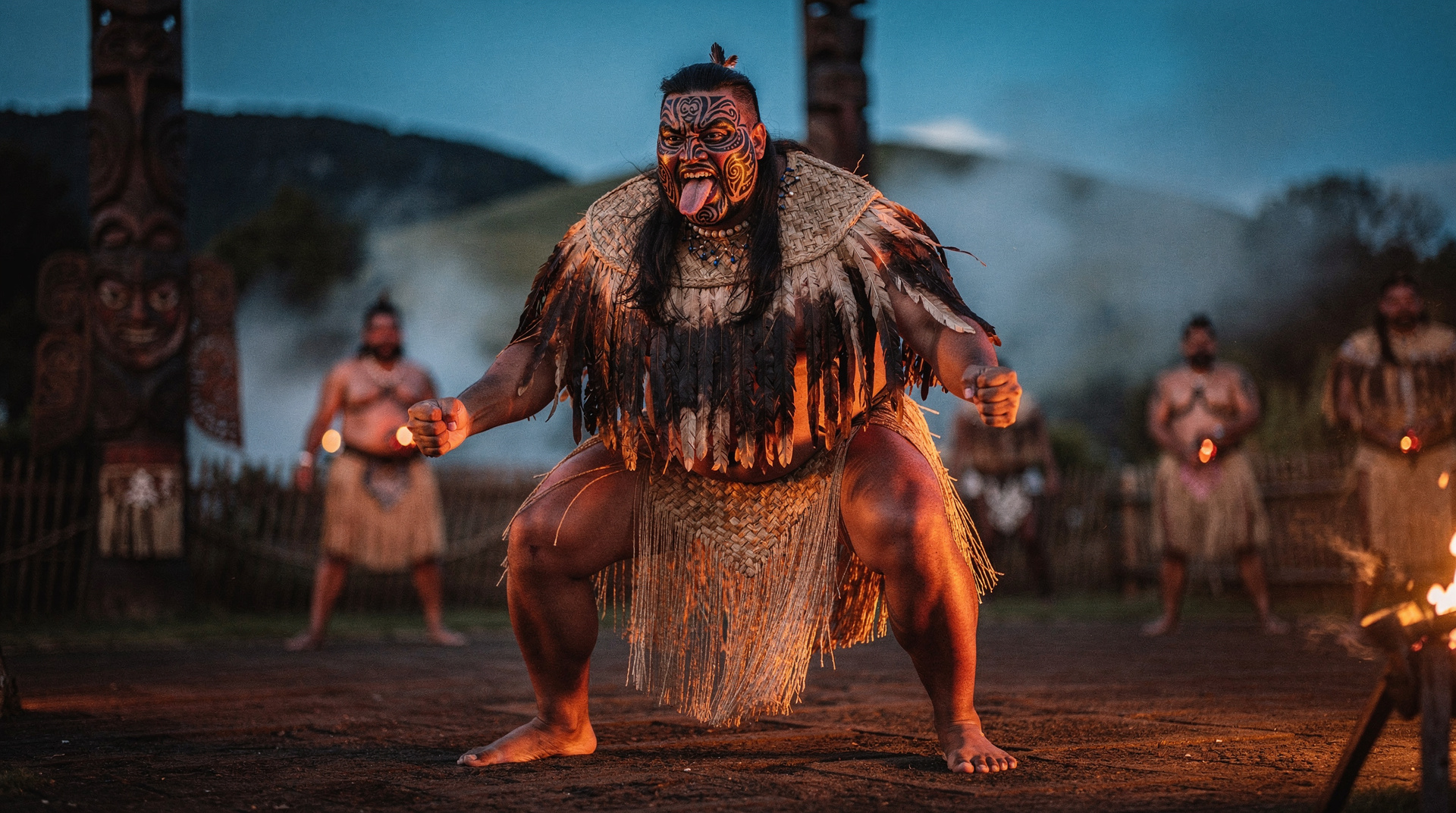
Maori culture overview — what every visitor should know
Respectful introduction to Maori culture for visitors: tangata whenua, Te Tiriti, tikanga basics, language, cultural experiences, and how to engage honestly.
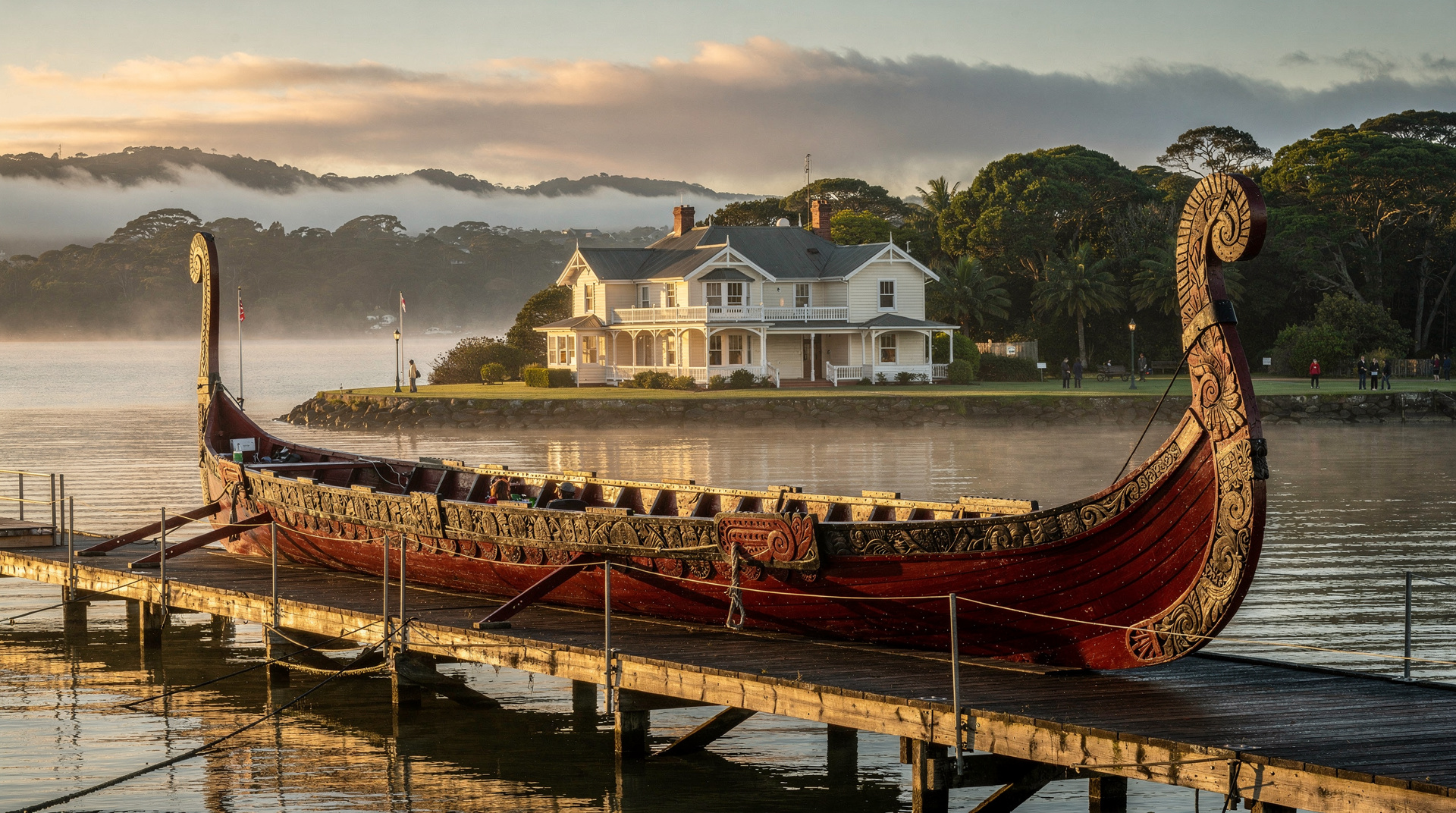
Waitangi Treaty Grounds — guide to New Zealand's most important site
Waitangi Treaty Grounds visitor guide: Treaty of Waitangi signed here 1840. Tickets, guided tours, hangi evenings, and essential NZ historical context.
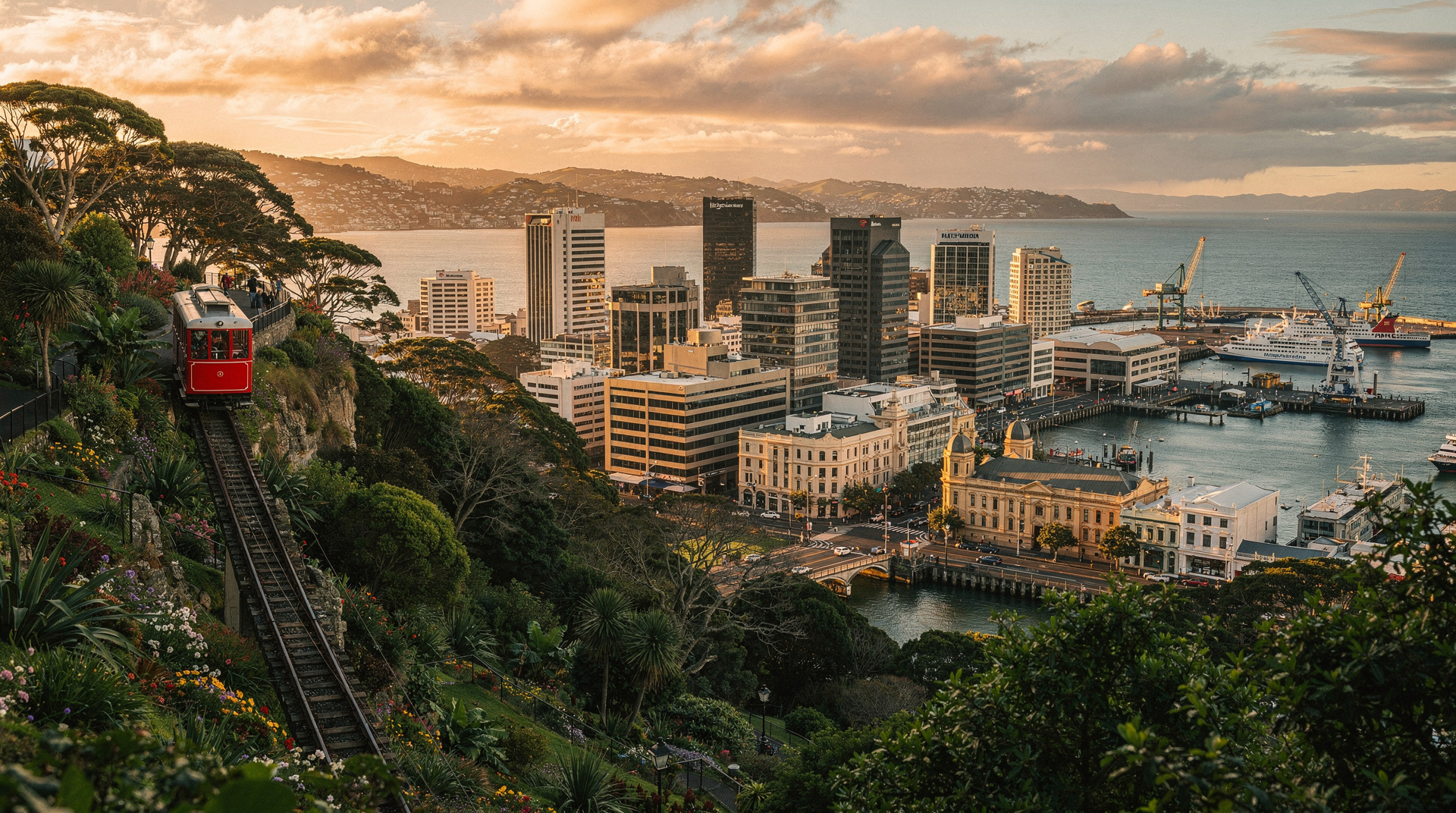
Wellington
Honest Wellington guide: Te Papa museum, Weta Workshop LOTR tours, Zealandia, Cuba Street, ferry to South Island, real prices NZD/USD/EUR.

First time in New Zealand
Complete first-timer's guide to NZ: costs, logistics, Maori culture, what to book early, and how to structure 7–21 days.
7 vs 10 vs 14 days in New Zealand
7, 10 or 14 days in New Zealand: what each trip length achieves, sample itineraries for both islands, and honest advice on what gets cut. NZD/USD/EUR.
Last reviewed: