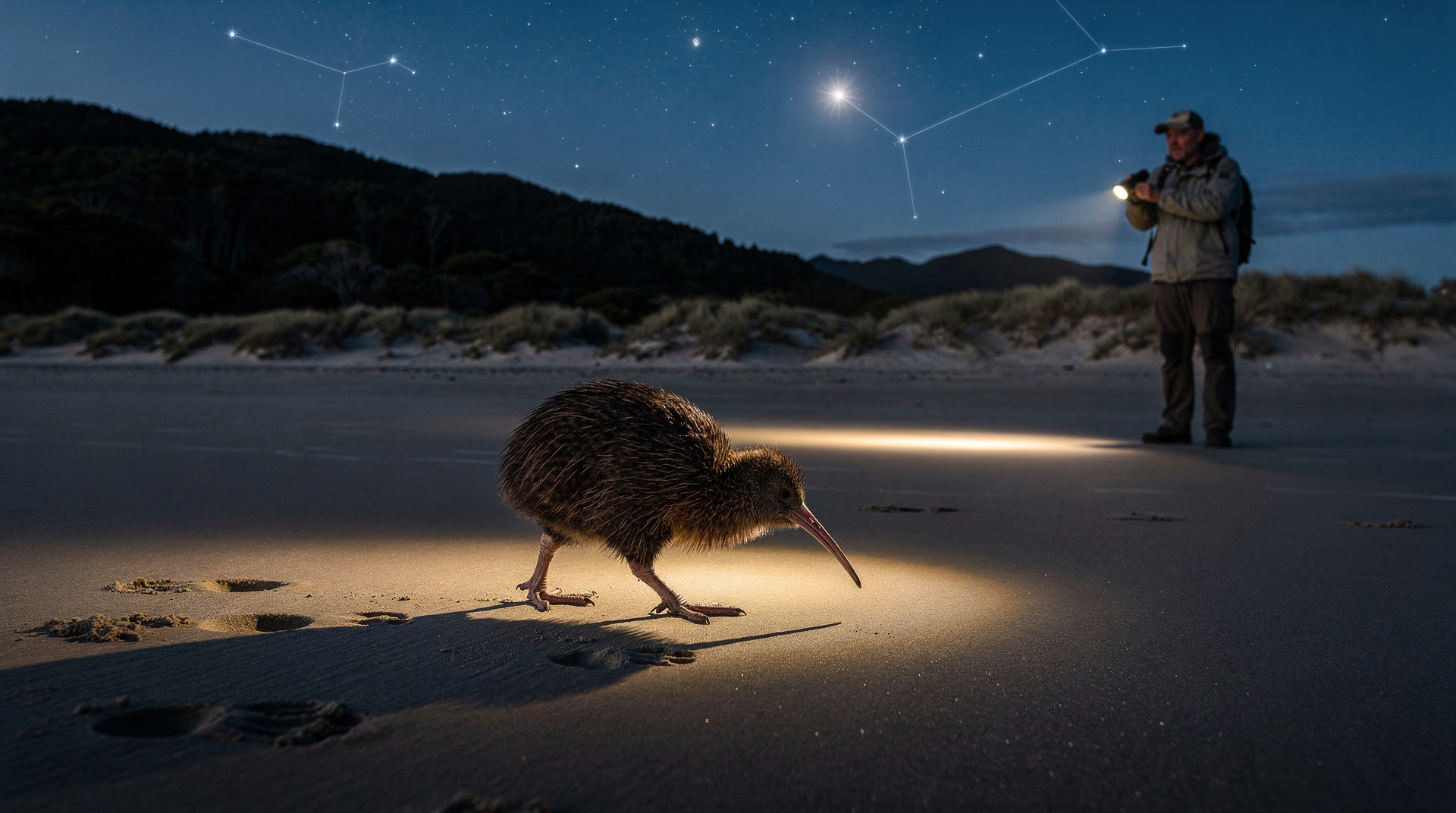
Kiwi spotting on Stewart Island/Rakiura
What's the best place to see wild kiwi in New Zealand?
Stewart Island/Rakiura has the highest kiwi density in the country — around 20,000 southern tokoeka kiwi. Guided night tours on Mason Bay offer 80–90% sighting probability. Tours cost NZD 85–120 / USD 51–72 / EUR 47–66. The ferry from Bluff takes 1 hour.
Why Stewart Island/Rakiura is New Zealand’s best kiwi destination
Kiwi are New Zealand’s most iconic bird — and one of the world’s hardest to see in the wild. They are nocturnal, secretive, and have been eliminated across most of the mainland by introduced predators (stoats, rats, possums, cats, dogs). Finding wild kiwi on the main islands requires specialist knowledge and significant luck.
Stewart Island/Rakiura is different. The island’s 1,746 km² supports approximately 20,000 southern tokoeka kiwi (Apteryx australis) — the highest kiwi density anywhere in New Zealand. The tokoeka subspecies on Stewart Island has also developed atypical behaviour: unlike other kiwi populations, some individuals on Mason Bay and Ocean Beach forage in daylight, particularly on overcast days and in winter. Kiwi sightings are therefore possible in reasonable light rather than pure darkness.
Rakiura means “land of glowing skies” in te reo Maori — a reference to the aurora australis visible on clear nights from the island’s southern latitude. Approximately 85% of the island is protected as Rakiura National Park. Permanent residents number around 400 people, most in Halfmoon Bay (Oban), the only settlement.
| Where | Stewart Island/Rakiura, 1hr ferry south of Bluff |
| Cost | around NZD 85-120/person for a guided kiwi night tour |
| Time needed | Minimum 2 nights on the island |
| Getting there | Ferry from Bluff (1hr) or flight from Invercargill (20min) |
| Sighting odds | 80-90% on guided Mason Bay tours |
Guided kiwi tours — the reliable approach
The Stewart Island wild kiwi encounter tour operates on Mason Bay, an 8 km sweep of beach on the island’s west coast and one of the most reliable kiwi areas. The tour typically combines transport (water taxi or 4WD) to the bay, a guided walk of 1–3 hours after dusk, and the return journey.
Price: NZD 85–120 / USD 51–72 / EUR 47–66 per person.
Success rate: Guides quote 80–90% sighting probability — significantly higher than any comparable wild kiwi experience in New Zealand. On many nights, multiple kiwi are encountered on the beach itself, moving in the open at close range.
What to bring: Multiple warm layers (Stewart Island is cold even in summer; the wind off the Southern Ocean is sustained and cutting), waterproof jacket, strong torch (most operators provide one, but a backup is sensible), and waterproof footwear. The beach and dune terrain is relatively even but often wet.
The guided wilderness walk at Oneke extends into the interior of the island for visitors who want a fuller natural history experience beyond just kiwi spotting. It covers native forest, wetland birds, and the broader ecology of Rakiura National Park.
Other wildlife on Stewart Island
Stewart Island’s isolation and high conservation status make the island exceptionally rich in birdlife beyond kiwi:
Tui and bellbird (korimako): Extraordinarily loud — the dawn chorus on Stewart Island is among the most intense in New Zealand. Early risers are rewarded.
Kaka: The island has a healthy kaka population; these large forest parrots are bold and often seen near Halfmoon Bay settlement.
Weka: Flightless rail with attitude. Common around the settlement and on beaches; they will inspect your lunch if given the opportunity.
Southern brown kiwi (tokoeka): The same species found in Fiordland. The Stewart Island subspecies is the only one that sometimes forages in daylight.
Yellow-eyed penguins (hoiho): Present in small numbers on some island beaches; not reliably viewable without specialist guidance.
Foveaux shag: Endemic to the Stewart Island/Foveaux Strait area. Nests on rocky islets; visible from the ferry crossing.
Marine mammals: New Zealand sea lions increasingly haul out on Stewart Island beaches. Dolphins are frequently seen from the ferry.
Timing your visit around bird activity: Dawn and dusk are the most active windows across nearly every species on the island — tui, bellbird, and kaka are loudest in the first hour after sunrise, while the kiwi tours naturally run after dusk. Overcast days tend to produce more daytime kiwi activity than bright, clear ones, so don’t be discouraged if your visit coincides with grey weather — it can work in your favour.
Ulva Island — offshore predator-free sanctuary
The Ulva Island walk and cruise is the second major wildlife experience from Stewart Island. Ulva Island (an island off an island — inside Patterson Inlet on Stewart Island’s east coast) is a 267-hectare predator-free sanctuary where birds that are threatened elsewhere in New Zealand are noticeably abundant.
On a 3–4 hour guided walk, expect close encounters with South Island robin, saddleback (tieke), rifleman (titipounamu), kaka, and Yellowhead (mohua) — all rare on the mainland but thriving without stoats and rats. The birding quality is exceptional; experienced birders consider Ulva Island one of the best birding sites in New Zealand.
Price: NZD 65–95 / USD 39–57 / EUR 36–52. Water taxi from Halfmoon Bay to Ulva Island: NZD 25–35 return.
The combined Ulva Island cruise and walk tour provides guide commentary during the water crossing as well as the island walk — worth the premium over DIY water taxi for first-time visitors.
Getting to Stewart Island
Ferry from Bluff: The Stewart Island Experience ferry runs 2–3 times daily depending on season. Journey time: 1 hour across Foveaux Strait. Cost: NZD 90–100 / USD 54–60 / EUR 50–55 return.
The Bluff to Stewart Island ferry is the standard route. Bluff is 27 km south of Invercargill; driving from Queenstown to Bluff takes approximately 2 hours (add 30% to GPS estimate for road conditions and stops).
Flying: Stewart Island Flights operates a small aircraft service from Invercargill airport to Halfmoon Bay. Journey: 20 minutes. Cost: approximately NZD 130 / USD 78 / EUR 72 one-way. Excellent if seasick-prone or short on time — Foveaux Strait can be very rough in westerly weather.
The crossing: Foveaux Strait has a justified reputation for rough seas. On calm days the ferry ride is pleasant; on rough days it is unpleasant and seasickness is common. Stugeron (cinnarizine) taken 1–2 hours before departure is the most effective preventative.
The Rakiura Track
The Rakiura Track is one of New Zealand’s 11 Great Walks. It’s a 3-day, 36 km circuit from Halfmoon Bay, covering coastal forest, beaches, and native bush. DOC huts require booking in advance during the Great Walk season (October–April). The track is rated easy to moderate — well-maintained and suitable for most trampers.
The Rakiura Track is unique among Great Walks in being open year-round with no seasonal hut closure (conditions simply change). Winter walking is cold and wet but the bird activity and solitude are exceptional.
Reading a Stewart Island guest review before you book
If you want a first-hand account rather than just logistics, the Stewart Island kiwi spotting review covers what an actual night tour felt like — useful for calibrating expectations around weather, walking pace, and how long you’ll actually spend in darkness waiting.
How Stewart Island compares to other NZ wildlife spots
Stewart Island’s kiwi tours stand apart from the country’s other headline wildlife experiences in one key way: reliability. Yellow-eyed penguins on the Otago Peninsula and the royal albatross at Taiaroa Head both require patience and don’t guarantee close views on every visit; Stewart Island’s 80-90% kiwi sighting rate is unusually high for a wild (not captive) encounter. If your trip includes the Otago Peninsula as well, budget kiwi spotting as the higher-probability activity and treat penguin or albatross sightings as a bonus rather than a certainty.
Where to stay in Halfmoon Bay
Halfmoon Bay (Oban) has a small range of accommodation: the South Sea Hotel (the island pub, with basic rooms above), several B&Bs, and self-catering baches. Book well in advance for summer — the island’s limited bed count fills quickly.
The South Sea Hotel bar serves good pies, local oysters (Bluff oysters in season), and Foveaux Strait blue cod. The oysters — when in season (March–August, post-dredge season) — are exceptional.
Costs summary (NZD / USD / EUR)
| Activity | NZD | USD | EUR |
|---|---|---|---|
| Wild kiwi encounter tour | 85–120 | 51–72 | 47–66 |
| Ulva Island cruise and walk | 65–95 | 39–57 | 36–52 |
| Bluff–Stewart Island ferry (return) | 90–100 | 54–60 | 50–55 |
| Stewart Island scenic flight (one-way) | 130 | 78 | 72 |
| Rakiura Track (DOC hut fees, 2 nights) | 40–60 | 24–36 | 22–33 |
Exchange rate: 1 NZD ≈ 0.60 USD ≈ 0.55 EUR.
Honest verdict
Worth it — particularly for those who have tried and failed to see kiwi elsewhere in New Zealand, and for birders with any interest in New Zealand’s endemic species. The combination of the wild kiwi encounter, Ulva Island’s predator-free sanctuary, and the island’s extraordinary dawn chorus makes Stewart Island one of the best natural history experiences in the southern hemisphere. The ferry crossing adds some commitment (and motion sickness risk), but an island that takes effort to reach is part of what has preserved its wildlife.
Budget minimum 2 nights on the island to fit in both the kiwi night tour and Ulva Island; 3 nights gives time for the Rakiura Track or additional independent hiking.
Frequently asked questions
What is the sighting success rate for wild kiwi?
Guided tours on Mason Bay report 80–90% success rates — higher than any other wild kiwi viewing in New Zealand. The key variables are weather (overcast nights increase kiwi activity on the beach), season (winter can offer daylight sightings), and moon phase (darker nights are better). Even on a failed night, the guide experience and island setting are worthwhile.
Is it possible to see kiwi without a guide?
Technically yes — kiwi live throughout the island, and independent walkers do occasionally encounter them. However, guides know specific tracks, moon and tide conditions, and individual bird locations that dramatically improve your probability. For a short visit, hiring a guide is the correct choice. Self-guided kiwi encounters are largely a matter of luck.
Is Stewart Island suitable for children?
Yes, with some planning. The ferry crossing can be rough (bring seasickness medication for children). Kiwi tours run late (typically 8–11 pm) and involve walking in darkness — some children find this exciting, others difficult. The island otherwise is excellent for children: beaches, bush walks, and the settlement itself is small and safe.
When should I visit for aurora australis (southern lights)?
The aurora australis is visible from Stewart Island during geomagnetic activity — there’s no fixed season. Clear winter nights (June–August) give the best chance due to longer darkness, but the aurora can occur at any time of year. The island’s southerly latitude (47°S) and lack of light pollution make it one of the better mainland NZ positions for aurora viewing.
Related reading
Related guides
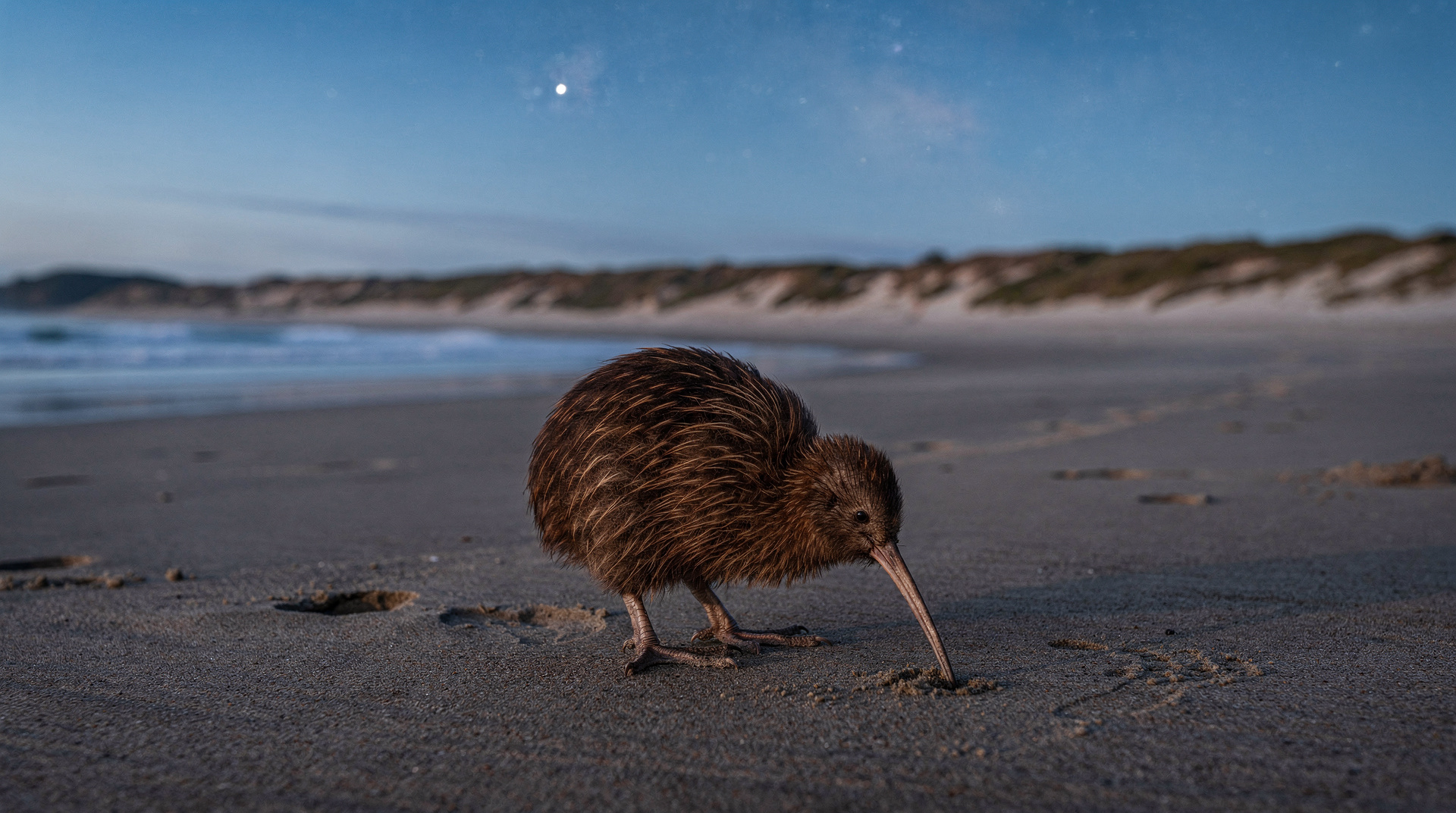
Stewart Island / Rakiura
Honest guide to Stewart Island / Rakiura: wild kiwi at night, Ulva Island bird sanctuary, Rakiura Track, Foveaux Strait ferry, real prices NZD/USD/EUR.
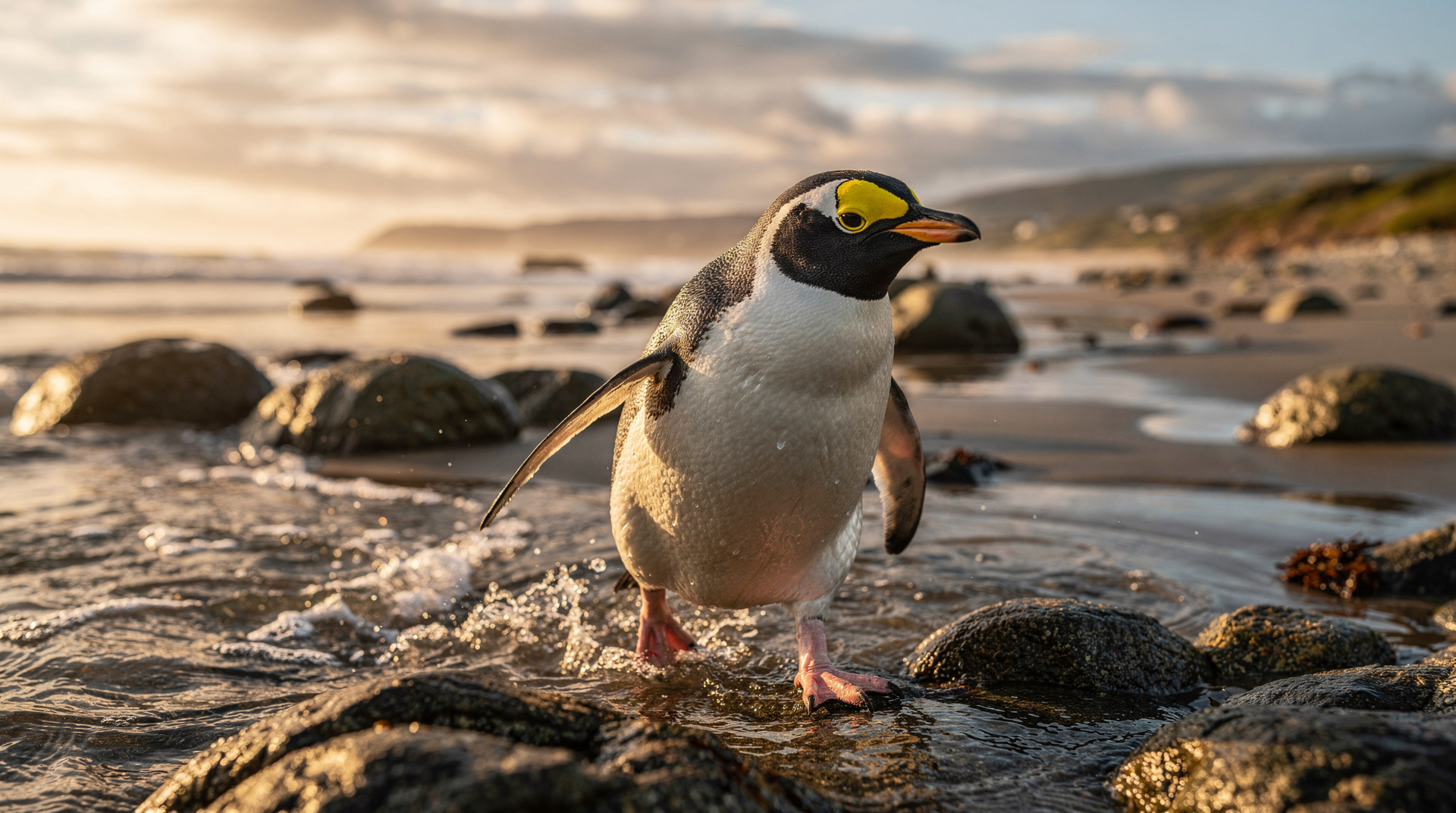
Yellow-eyed penguins on the Otago Peninsula
Hoiho (yellow-eyed penguin) are the world's rarest penguin. Where to see them wild on Otago Peninsula, ethical viewing hides, prices, and best timing.
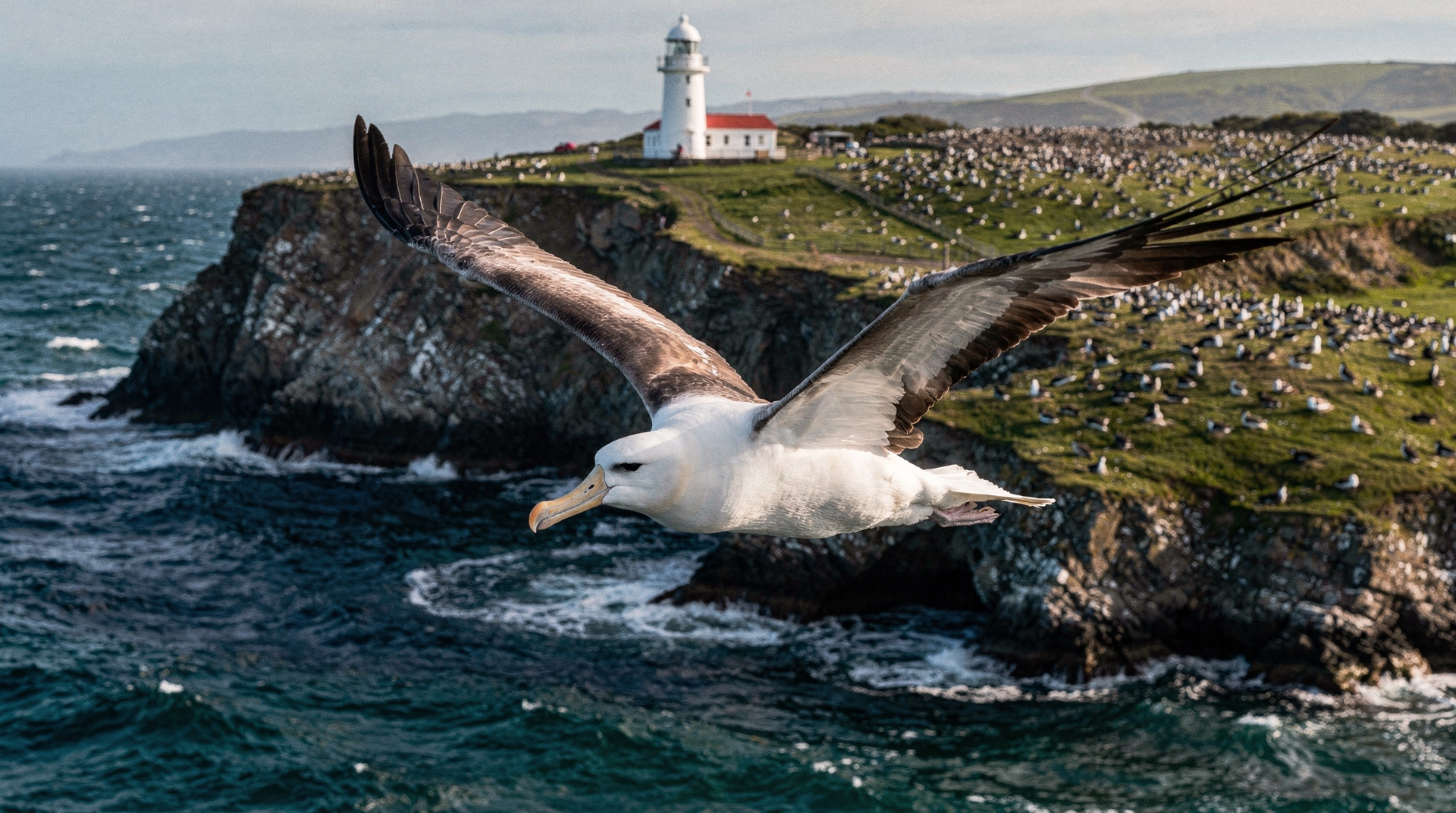
Royal albatross colony at Taiaroa Head
Taiaroa Head on Otago Peninsula hosts the world's only mainland royal albatross colony. Tours, prices (NZD/USD/EUR), best months, and what to expect.
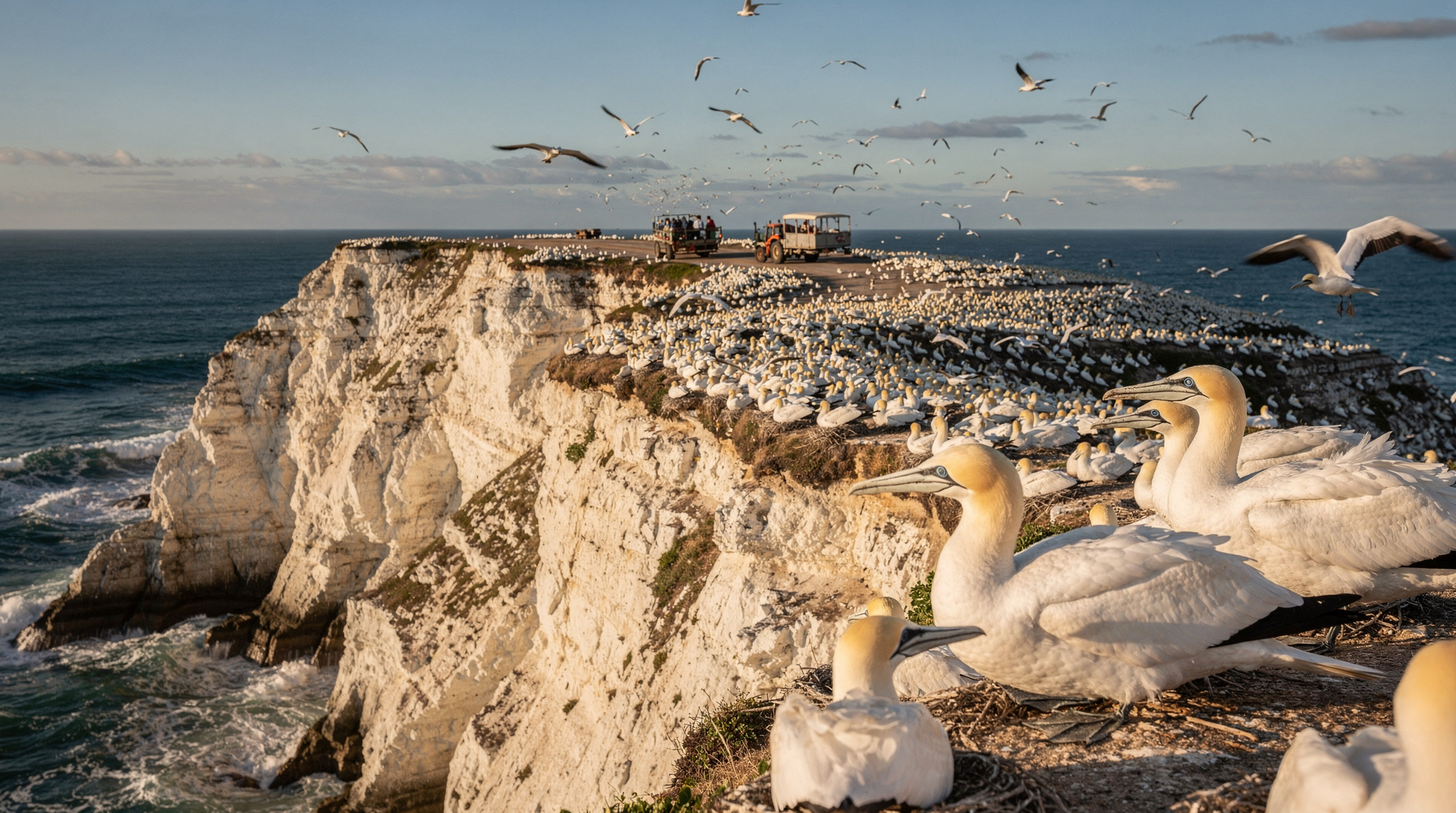
Gannets at Cape Kidnappers
Cape Kidnappers holds the world's largest mainland gannet colony. Tractor tours, prices (NZD/USD/EUR), best season, and how to visit from Napier or Hawke's Bay.
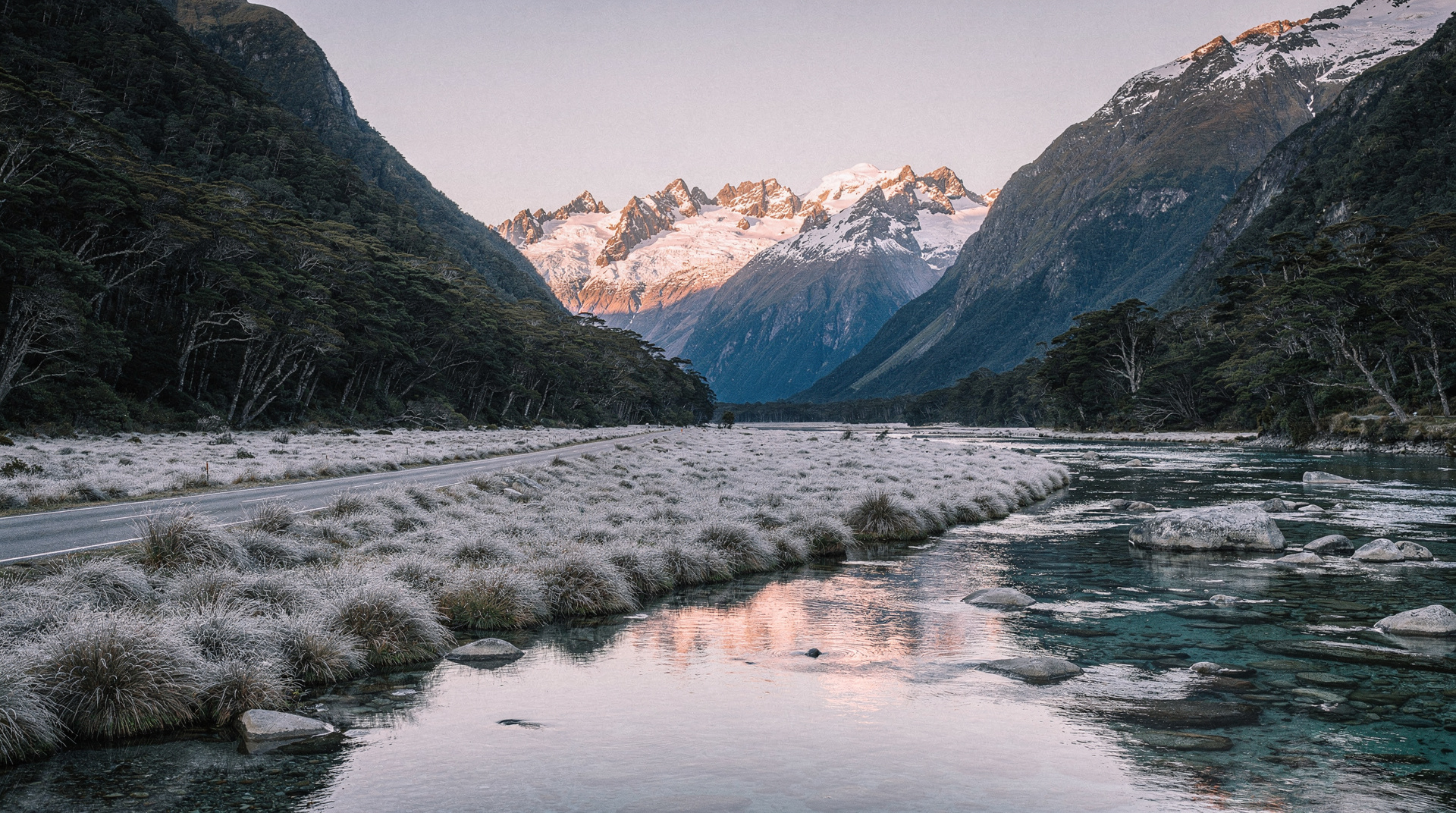
Southland
Honest Southland guide: Invercargill, The Catlins wildlife coast, Bluff oysters, gateway to Stewart Island/Rakiura. NZD/USD/EUR costs and practical logistics.
Last reviewed: