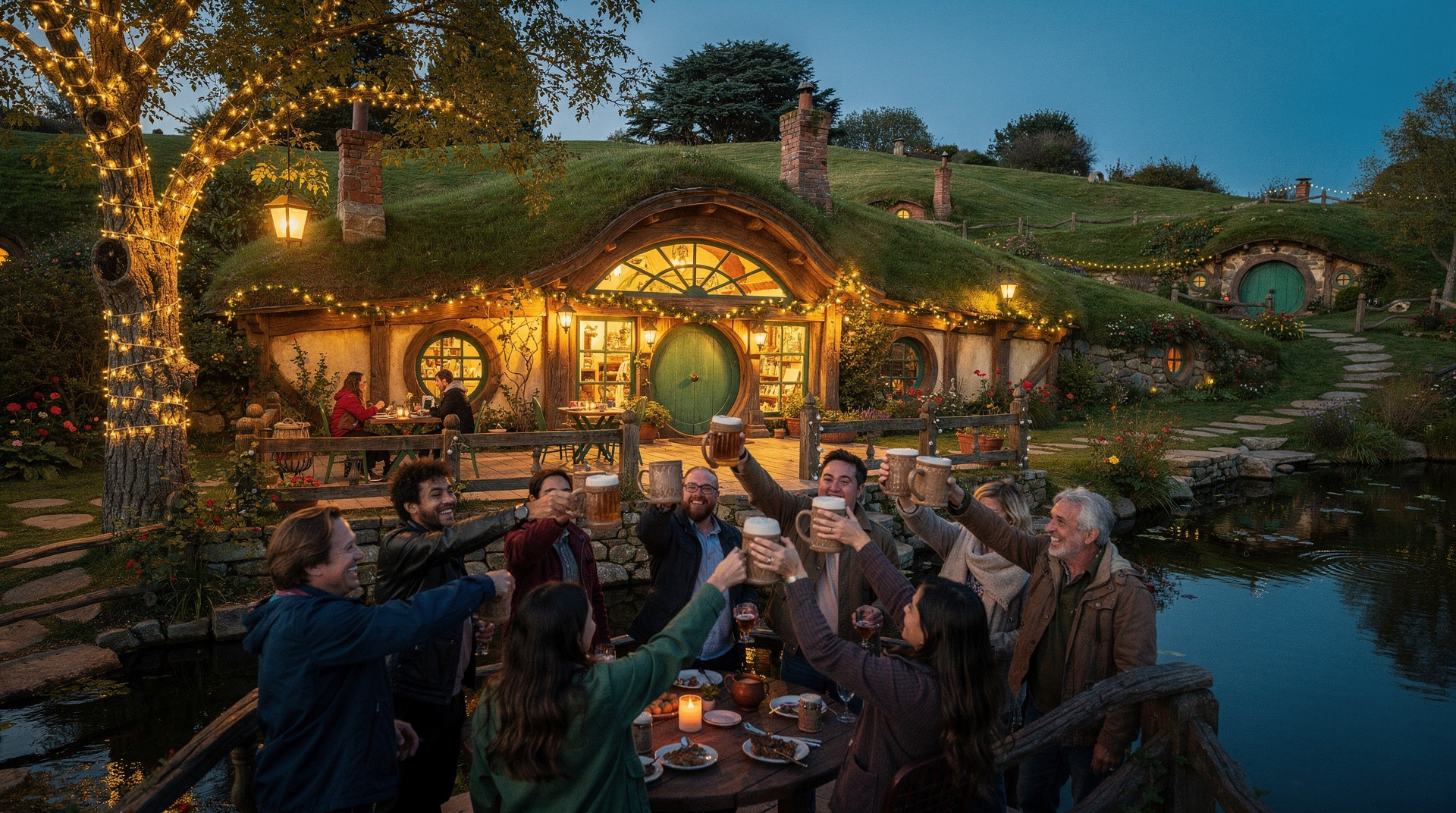
Hobbiton at 25 — how the Shire became a permanent fixture in New Zealand
A sheep farm in the Waikato, 1998
The story begins with Peter Jackson in a helicopter. He was scouting locations for The Lord of the Rings — a production of staggering ambition that had, at that point, been given the green light by New Line Cinema and was in pre-production. Jackson wanted a Shire location that looked like the paintings of John Howe and Alan Lee: rolling green hills, a working farm quality, pastoral without being too manicured.
He found it over Alexander Farm near Matamata. The family had been farming sheep and beef cattle on the land since the 1970s. From the air, the hillside with its natural dell and the surrounding topography matched what Jackson had in his mind. A phone call followed. A deal was made. By 1999, construction of the Hobbiton set had begun.
| Where | Alexander Farm, near Matamata, Waikato |
| Distance from Auckland | Around 90 minutes drive |
| Tour length | Approximately 2 hours, 44 hobbit holes |
| Cost | Around NZD 99 per adult standard tour |
| Skip | The evening Banquet experience — steep premium for what it offers |
The original set
The original set built for The Fellowship of the Ring was constructed over a period of months in 1999, largely of non-permanent materials. The production design was detailed — the 37 hobbit holes had interiors suggested but not built out, the scale variations between different-sized holes for camera trickery were carefully calculated — but the materials were not meant to weather a decade of New Zealand seasons.
When filming wrapped and the production moved on, the set was largely left in place but not maintained. Alexander Farm continued to operate as a working farm. For a period, informal tours of the site ran for modest fees, drawing Lord of the Rings fans on pilgrimage from around the world. The set decayed gracefully. Photographs from the early 2000s show a Hobbiton that looks slightly haunted — recognisable but faded.
The Hobbit changed everything
When Peter Jackson returned to shoot The Hobbit trilogy — the first film released in 2012 — Hobbiton was rebuilt from scratch. This time, the construction was permanent. The hobbit holes were built with weatherboard and stone and real wood, not paint and plaster. The vegetable gardens were planted and tended. The water wheel turned for real. The Green Dragon Inn was built as a functioning bar.
The brief was to create a set that would survive indefinitely and serve as a tourism attraction after filming. The Alexander family, now running Hobbiton Movie Set Tours in partnership with the film production, understood what they had. By the time The Hobbit: An Unexpected Journey was released in December 2012, the permanent Hobbiton was ready.
2021: what the set looks like now
By 2019 and into early 2020, Hobbiton was receiving roughly 600,000 visitors per year — extraordinary for a single attraction on a working farm in Waikato. COVID-19 shut the gates in March 2020 and the attraction was closed for extended periods through 2020 and 2021.
The reopening in 2021, cautious and staged, brought back what was still one of the most complete film-set experiences in the world. The Hobbiton Movie Set guided tour runs approximately two hours and covers all 44 hobbit holes, the mill, the Green Dragon Inn — where you receive one complimentary beverage at the end of the tour — and the broader farm setting that makes the whole thing feel embedded in landscape rather than perched on top of it.
The standard adult ticket in late 2021 was NZD 99 / USD 71 / EUR 63. That price has attracted commentary over the years as high for what is, in essence, a walk through an outdoor set. Having done it twice, I think the complaint misses what makes Hobbiton work: the detail is extraordinary, the scale variations are disorienting in the best way, and the experience of standing in the Shire — even knowing intellectually that it’s a constructed set — is unlike anything else in New Zealand.
What I would skip: the evening Banquet experience, which runs NZD 230-250 / USD 166-180 / EUR 146-158 per person and involves a period-style dinner in the Great Hall. Unless you’re an extremely committed Tolkien devotee, the premium is steep for what the dinner itself offers.
The farm underneath
What’s often overlooked in coverage of Hobbiton is that Alexander Farm is still a working sheep and beef farm. The Alexanders — the same family Peter Jackson called in 1998 — manage both the tourism operation and the agricultural production. The landscape that makes Hobbiton convincing is not maintained scenery; it’s a farmed hillside that happens to be extremely photogenic.
This matters because it explains the seasonal quality of the light and the landscape. The hills green up substantially after autumn rain. In dry summers, the grass takes on a golden quality. Different times of year produce genuinely different visual experiences of the same set.
The numbers in 2021
The COVID years disrupted Hobbiton’s trajectory significantly. From 600,000 visitors per year pre-pandemic, numbers dropped to essentially zero through the 2020 closures and remained suppressed into 2021. The attraction’s recovery has been staged — domestic New Zealand tourism sustained it in 2021 while international borders remained closed.
The underlying logic of Hobbiton as a tourism product is, however, durable. It is the only purpose-built, permanent Lord of the Rings film set in the world. There is nowhere else you can go and stand in the Shire. As long as Tolkien’s work maintains its cultural reach — and two decades on from the original films, The Rings of Power television series on Amazon has introduced the mythology to a new generation — the demand will be there.
Getting there
Hobbiton is 90 minutes south of Auckland on SH1, then east on SH29 toward Matamata. Driving is the most flexible option; there are also coach transfers from Auckland and Rotorua that are popular with international visitors. The Auckland to Hobbiton and Waitomo day trip combines both Waikato highlights in a single long day if you’re pressed for time — though the drive back to Auckland after Waitomo in the dark is genuinely tiring. Our full Hobbiton visiting guide covers ticket types, tour timing and photography tips in more depth than this piece.
My recommendation: use Matamata or Hamilton as your base, stay overnight in the area, and treat Hobbiton as a standalone morning rather than part of a rush. The surrounding Waikato countryside repays slower travel.
Auckland or Rotorua as your Hobbiton base
Most visitors approach Hobbiton from either Auckland or Rotorua, and the choice affects the shape of your day. From Auckland, it’s a straightforward return day trip or a stop en route south. From Rotorua, it fits naturally into a loop that also takes in Waitomo — our Hobbiton from Auckland vs Rotorua comparison walks through the driving times and which pairing makes more sense depending on the rest of your itinerary. If Waitomo’s glowworm caves are also on your list, doing both from a Waikato base rather than day-tripping from Auckland avoids the long return drives that make that combination tiring.
Related reading
Related guides
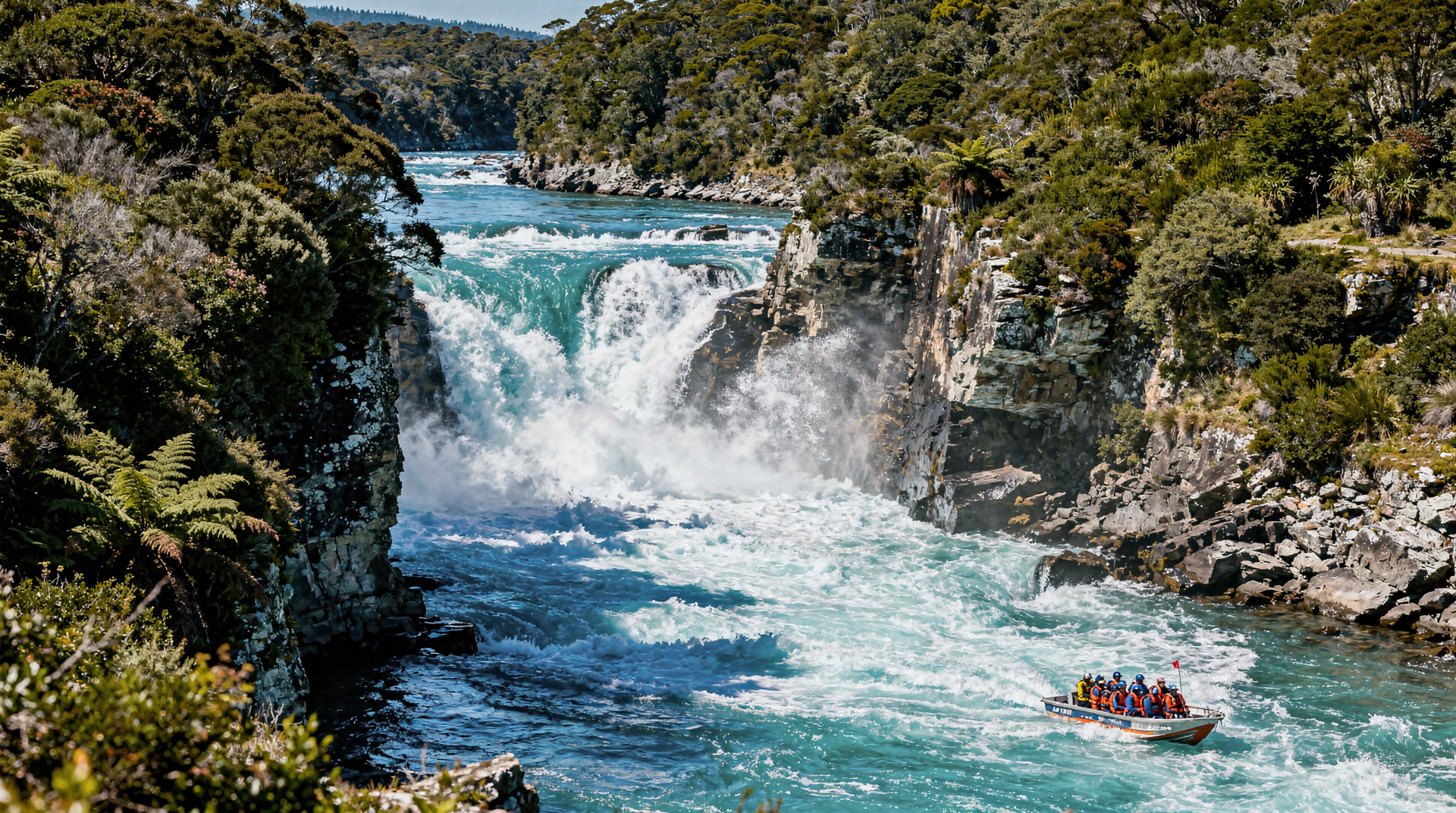
Waikato
Honest Waikato guide: Hobbiton Movie Set, Waitomo glowworm caves, Hamilton Gardens, Raglan surf. Real NZD/USD/EUR prices, what's worth your time.
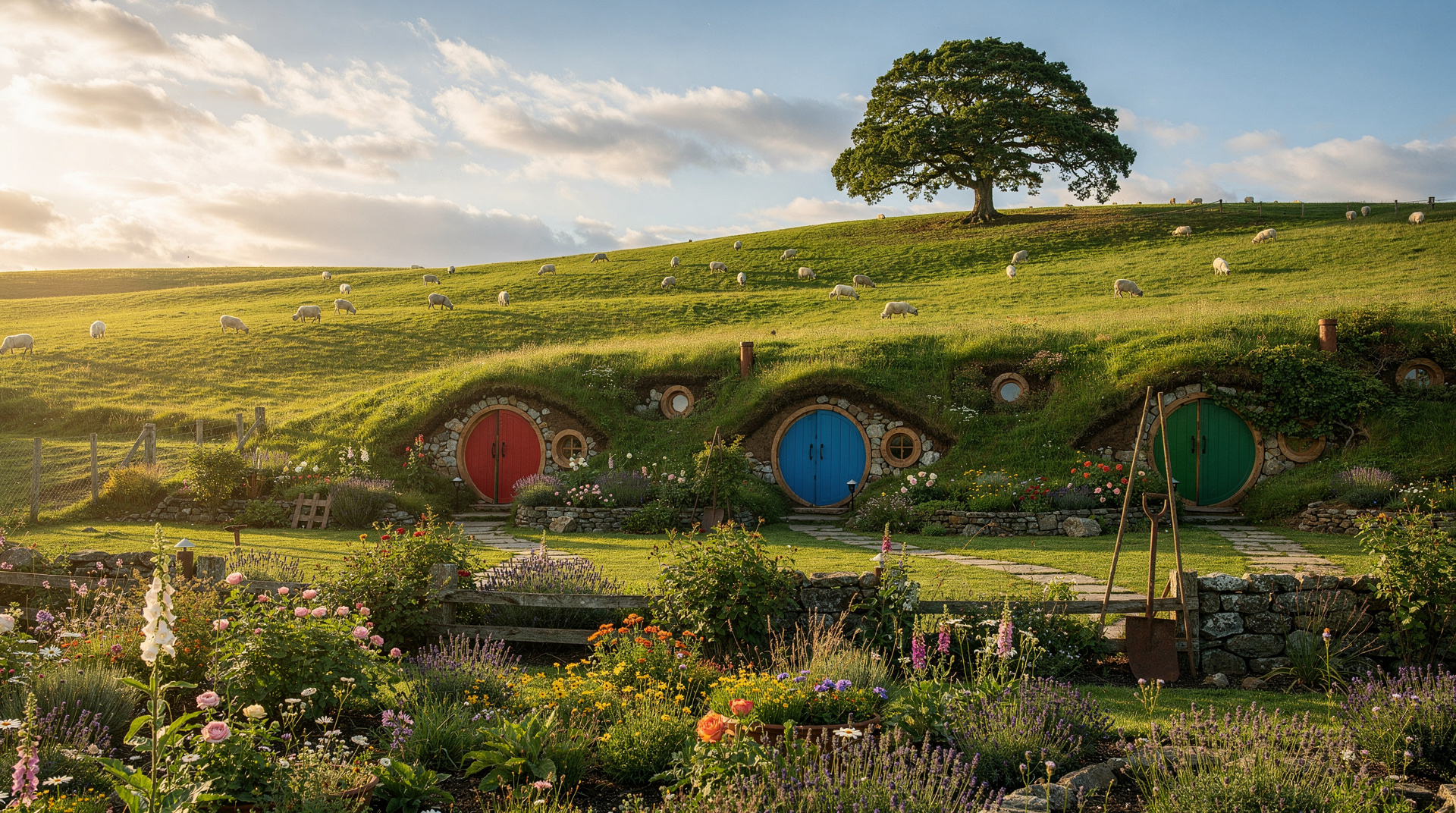
Hobbiton visiting guide — how to book, what it costs, honest verdict
Complete Hobbiton guide: standard tour vs Evening Banquet, how to book, what you actually see, is NZD 99 worth it, alternatives if you skip it.
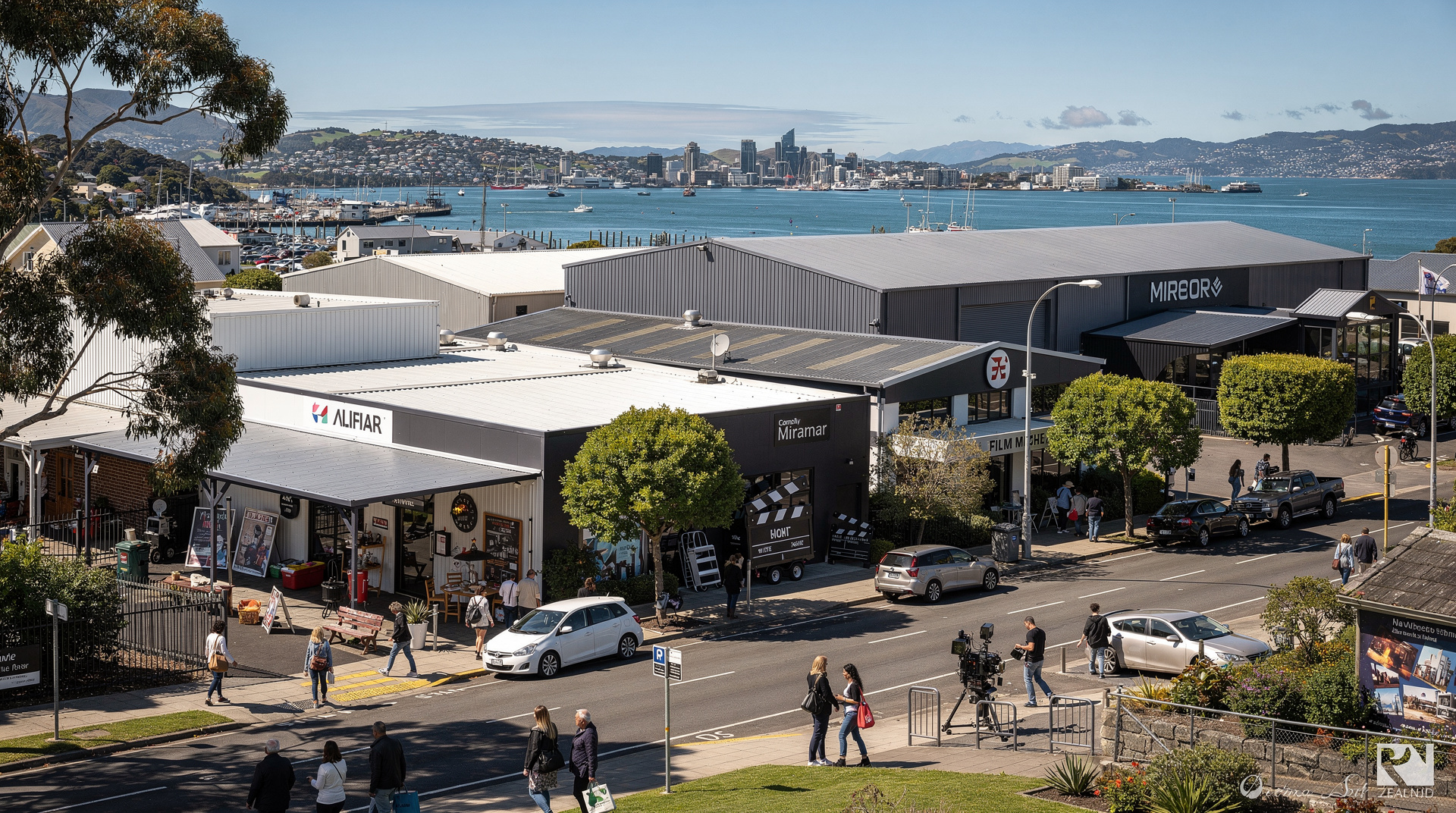
Lord of the Rings locations — a pilgrimage that's still worth doing
The LOTR pilgrimage in New Zealand: which locations hold up, which disappoint, and how to plan a trip that's honest about the nostalgia.
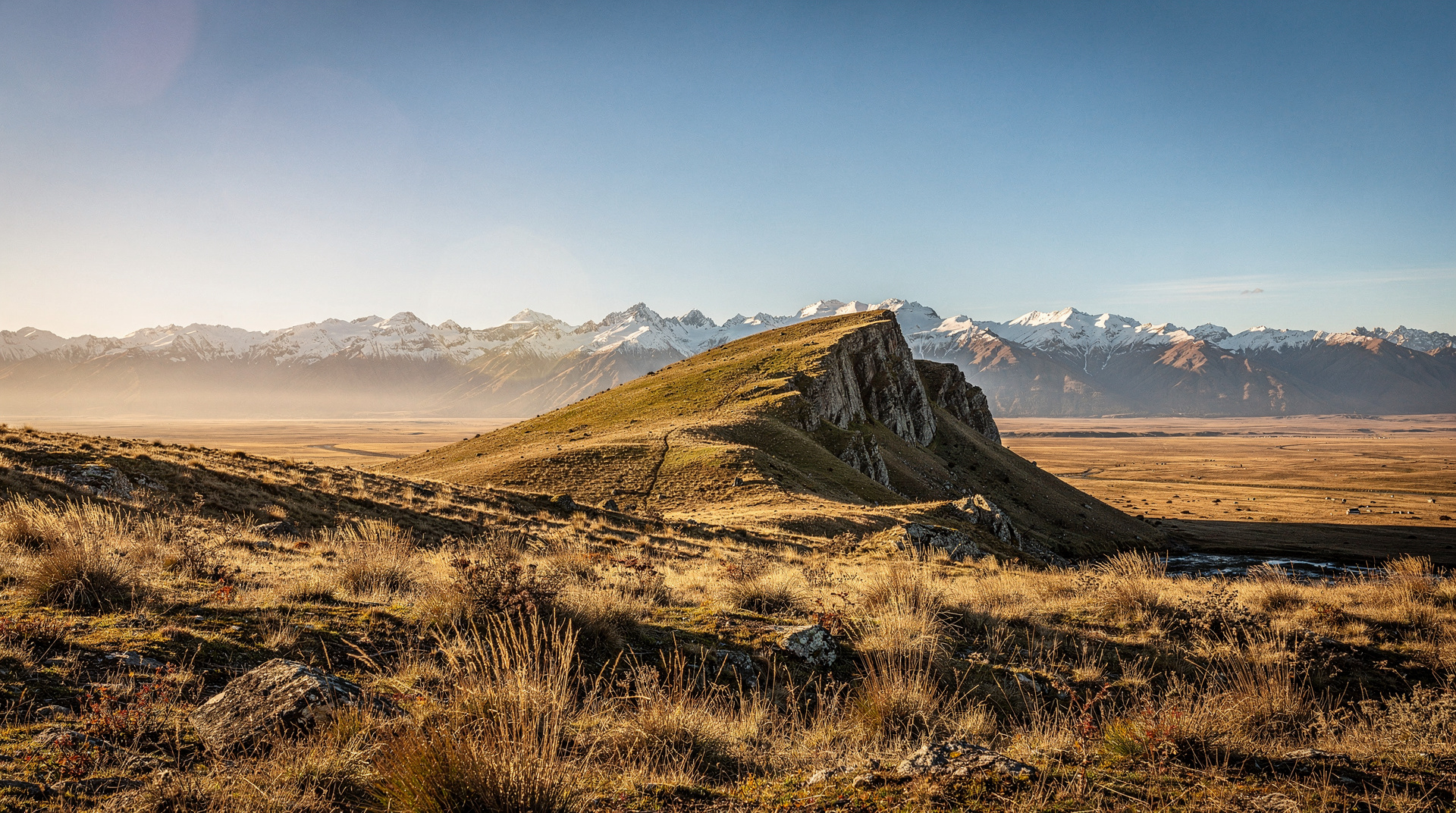
Lord of the Rings locations at 25 years — what's changed since filming started
Peter Jackson started filming The Lord of the Rings in New Zealand in October 1999. Twenty-five years on, here's what the locations look like now.
Published: