Kaikoura after the 2016 earthquake — what's changed
Midnight, November 14, 2016
The earthquake hit at 12:02am. Magnitude 7.8, centred near Waiau in North Canterbury, about 95km inland from Kaikoura. The shaking lasted nearly two minutes. By morning, the coastal highway (SH1) between Christchurch and Kaikoura was gone in multiple places — landslides had dumped entire hillsides across the road. The rail line was also severed. For six days, Kaikoura’s 4,000 residents and roughly 1,000 stranded tourists were accessible only by air and sea.
I visited in late 2019, three years on. What I found wasn’t a town in recovery. It was a town that had come through something and was changed by it in ways that were sometimes better, sometimes just different.
| Where | SH1, between Christchurch and Picton, 2.5hrs each way |
| Main draw | Year-round sperm whale watching |
| Stay | 1–2 nights minimum |
| Cost | Whale watch ~NZD 155/adult; crayfish ~NZD 70–120 |
| Best booked | Morning whale watch departures (calmer swells) |
The landscape first
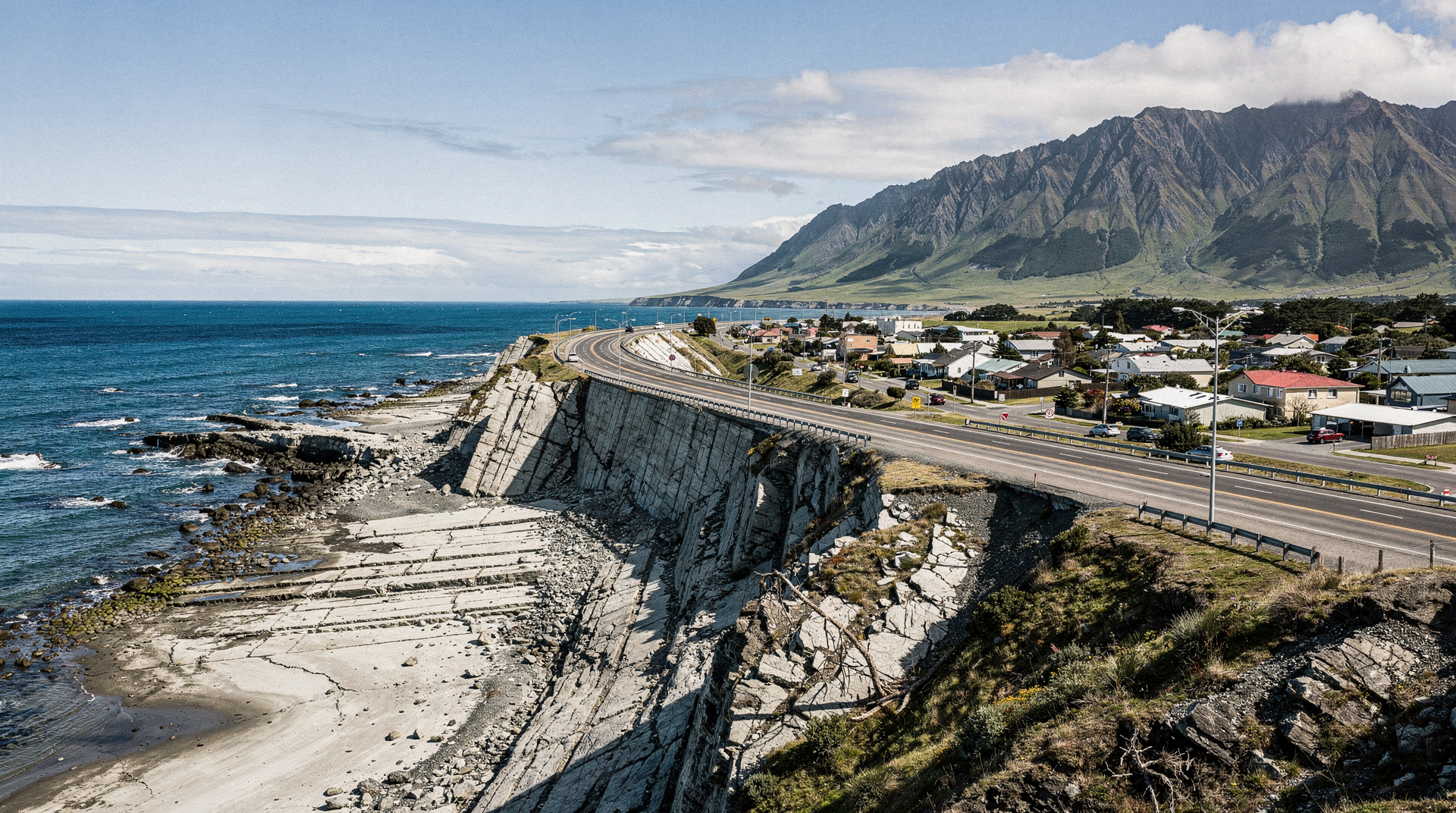
This is the first thing you notice driving north from Christchurch on SH1: the road is new. Not repaired — substantially rebuilt. Some sections were raised, some rerouted, some blasted through fresh rock faces. The work involved 80 construction companies, 3,000 workers at peak, and NZD 1.4 billion of infrastructure investment. The road reopened to tourist traffic in December 2017 — fourteen months after the quake.
The rail line, the Coastal Pacific, reopened in 2019 for its first summer season since the earthquake. Scenic Journeys operates it between Picton and Christchurch; it runs seasonally from September to May. The coastal section around Kaikoura is one of the most spectacular stretches of railway in New Zealand.
The landscape itself bears visible marks. Drive slowly enough and you’ll see the uplift — sections of the seabed pushed above the waterline, adding metres to the coastline in places. The Kaikoura Peninsula walkway now passes over terrain that was underwater three years ago. A marine biologist at a local café described it as “the most significant geological event in living memory for New Zealand’s coastline.” It isn’t hyperbole.
The whale watching — unchanged, and then some
The sperm whales were here before the earthquake and they’re here after. Year-round. Kaikoura is one of the few places on earth where deep ocean trenches come close enough to shore that sperm whales can be found reliably in accessible water. The earthquake didn’t change the hydrology.
What did change: the interpretation. Kaikoura Whale Watch, the main operator (Maori-owned, community-rooted), has deepened its context around the ecology of the canyon and the significance of whales in Maori culture since the quake. There’s a rawness to how guides discuss the earthquake and recovery that makes the tours feel less like a product and more like a community conversation.
A Kaikoura whale watching boat tour typically runs about NZD 155 / USD 100 / EUR 90 per adult. Flights over the whales (seaplanes and helicopters) offer a different perspective and typically cost NZD 180–265 / USD 116–171 / EUR 104–153.
What the town looks like now
Kaikoura proper — the main street, the foreshore — looks repaired rather than dramatic. Most of the visible damage in town was actually less severe than what happened to the surrounding infrastructure. The greatest casualty was economic: the road closure cut off tourist arrivals for fourteen months at a point when tourism had become a substantial part of the local economy.
Some businesses didn’t survive the closure and never reopened. The restaurants and accommodation that are open feel genuinely alive — people who chose to stay after the earthquake tend to be committed to the place in ways that show. The seafood, which was Kaikoura’s culinary signature long before earthquake tourism became a thing, remains excellent. Crayfish (rock lobster) is the local specialty; expect NZD 70–120 / USD 45–77 / EUR 41–69 for a whole crayfish depending on size and season.
The DOC campsite south of town is one of the better positioned campsites in New Zealand — right on the Kaikoura coast with the Seaward Kaikoura Range behind it.
The Ohau Stream seal colony
One genuinely positive outcome of the earthquake period: the Ohau Stream waterfall and seal pup nursery became much better known. The waterfall is about 30 minutes north of Kaikoura on SH1. From November to June, you can watch New Zealand fur seal pups learning to swim in the rock pools at the base of the falls. It costs nothing, requires a 10-minute walk, and is one of the more charming wildlife encounters on the South Island. The path is well-maintained and DOC-managed.
Should you visit now?
Yes, clearly. The question was more relevant in 2017–2018 when Kaikoura was genuinely disrupted. By 2019 the town is fully functional and the coastal road drive is better than it was before the earthquake — wider in places, more dramatically routed in others.
The whales are the anchor reason. The geology, the seals, the views of the Kaikoura Ranges from the coast road — these are the surround. The earthquake is now part of the story of the place, which is a story worth hearing.
What this means for your trip
Kaikoura sits on SH1 between Christchurch (2.5 hours) and Picton (2.5 hours). It’s a natural overnight stop on the South Island circuit and fully deserves one, perhaps two nights. If you’re considering the Coastal Pacific train, the Kaikoura section is the highlight of the whole journey — book that train if you have the flexibility.
The whale watch is not guaranteed — rough weather can ground boats, and if the whales aren’t cooperating the boat turns back — but sightings are reported on around 95% of trips. Book a morning departure if possible; afternoon swells are higher and the experience less comfortable.
Kaikoura as a day trip vs an overnight stop
Plenty of Christchurch-based visitors treat Kaikoura as a long day trip rather than an overnight stop, and it works logistically — the drive is 2.5 hours each way and a morning whale watch plus lunch can be done and you’re back in Christchurch by evening. See the Kaikoura day trip from Christchurch guide for the specifics. That said, doing it as a day trip means skipping the Ohau Stream seals, the peninsula walkway at a relaxed pace, and the crayfish dinner without a long drive afterward. If your itinerary allows even one night, take it.
For a read on the full whale watching operator comparison, including how the boat tour stacks up against the flightseeing options, it’s worth checking before you book — the boat gets you closer and longer, the flight gets you a wider view and near-certain sightings in rougher weather when boats are cancelled.
How Kaikoura compares to other wildlife stops
Travellers building a South Island wildlife itinerary often ask how Kaikoura stacks up against Akaroa’s wildlife near Christchurch — Akaroa is closer and better for penguins and dolphins in a sheltered harbour, while Kaikoura is the only reliable year-round sperm whale location in New Zealand and the wilder, more open-ocean experience. If you’re deciding between Kaikoura and North Island options, the Kaikoura vs Bay of Islands whale watching comparison covers the trade-offs directly — Bay of Islands offers more variety of species seasonally, but Kaikoura’s sperm whales are the more dependable sighting.
Related reading
Related guides
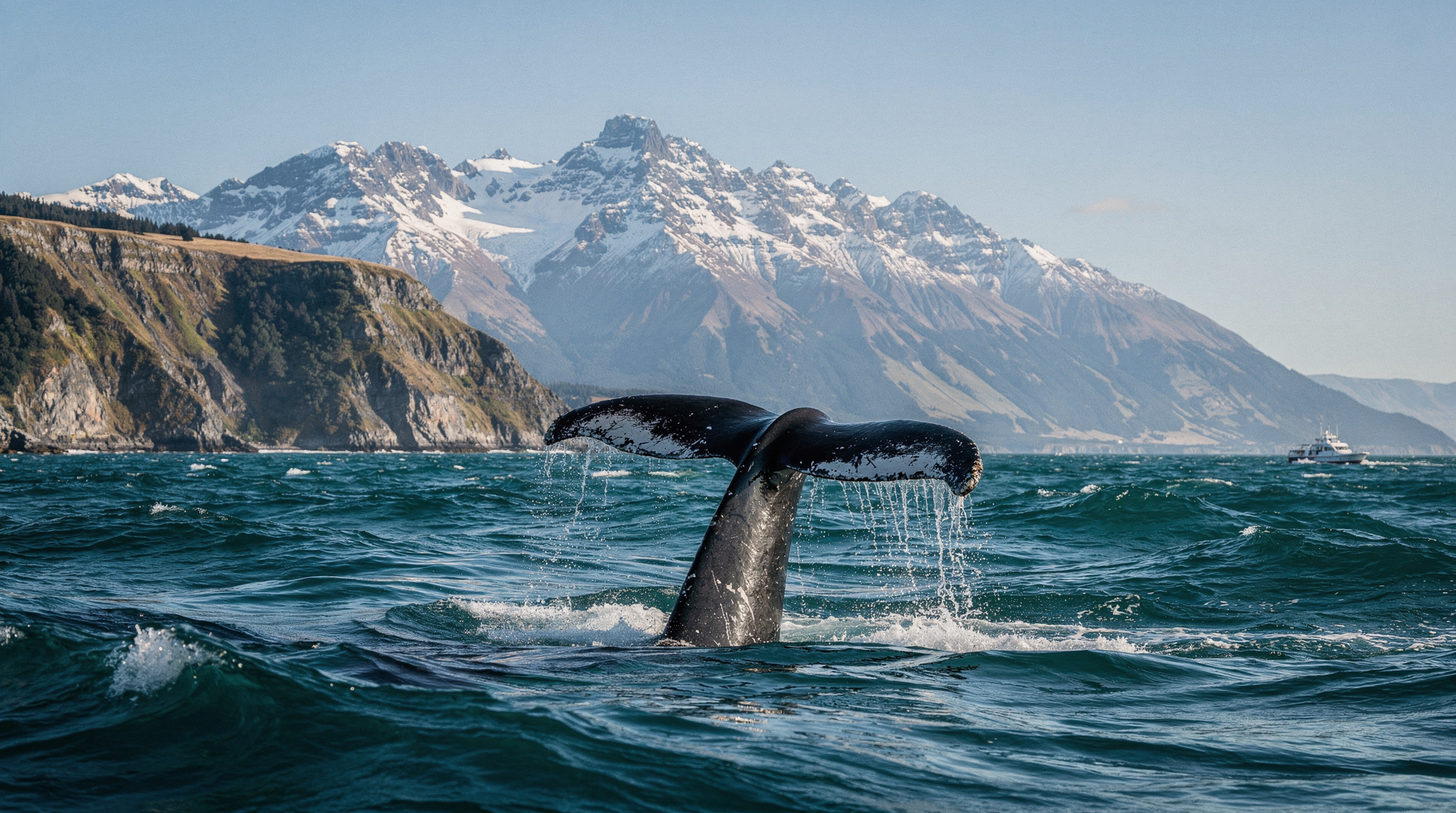
Kaikoura
Honest Kaikoura guide: sperm whale tours, wildlife kayaking, crayfish — real prices and the best time to visit after the 2016 earthquake rebuild.
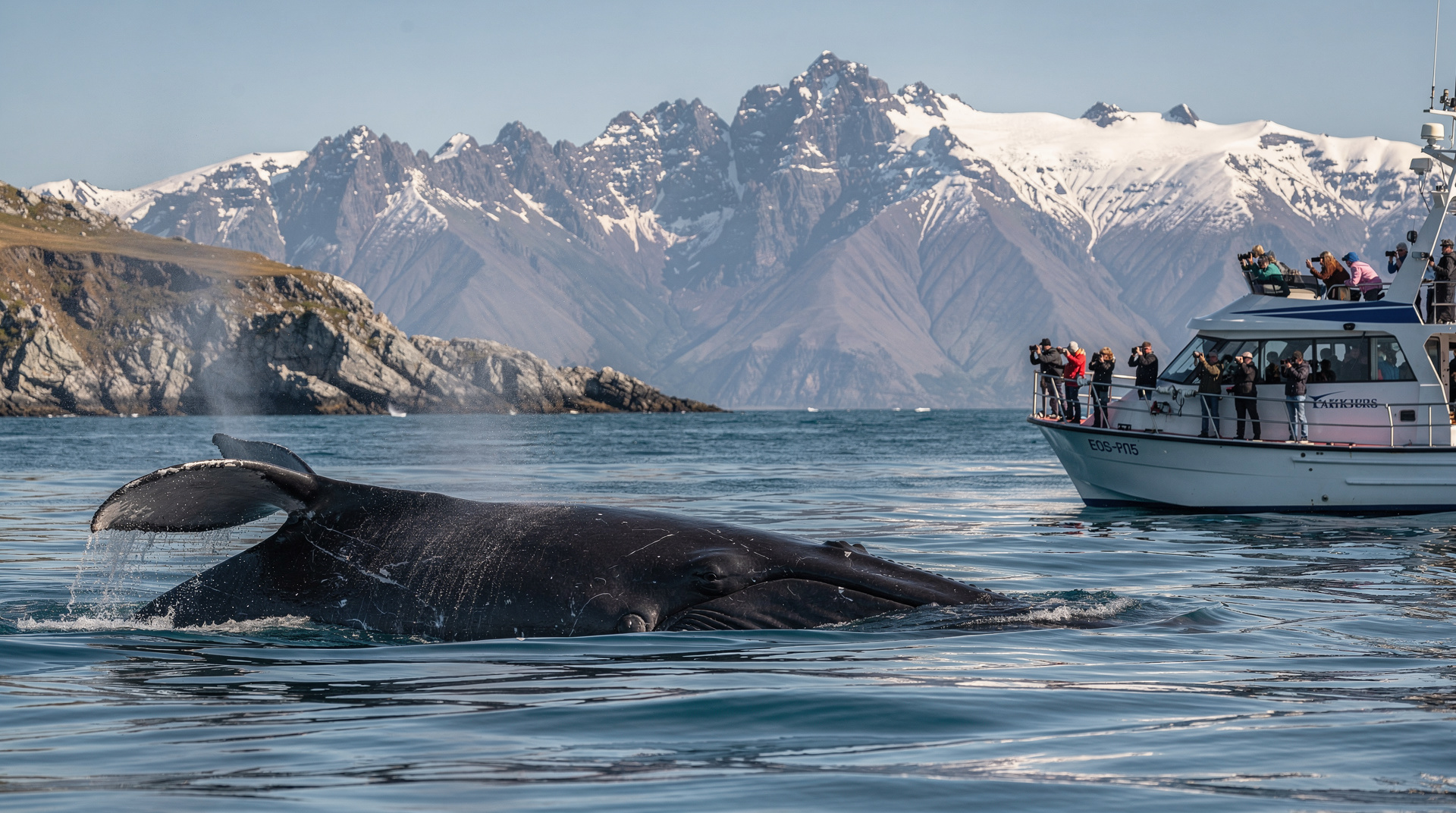
Kaikoura whale watching
Sperm whales off Kaikoura year-round: boat, flight, or kayak? Real prices (NZD/USD/EUR), sighting rates, and which operator to book.
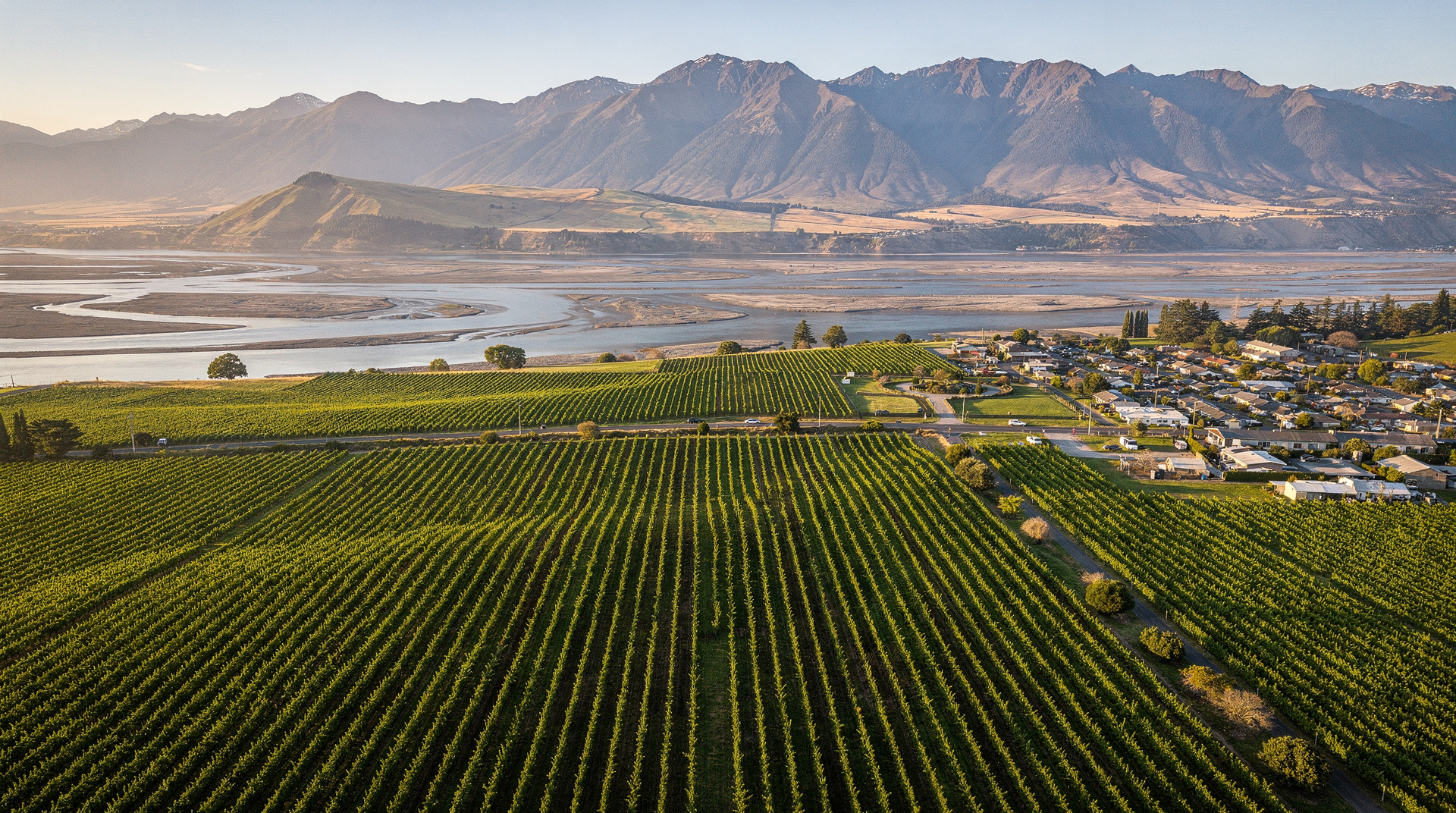
Marlborough
Honest Marlborough guide: Picton ferry gateway, Queen Charlotte Sound, Blenheim wineries, Havelock mussels. Real NZD/USD/EUR prices and practical logistics.
Driving in New Zealand
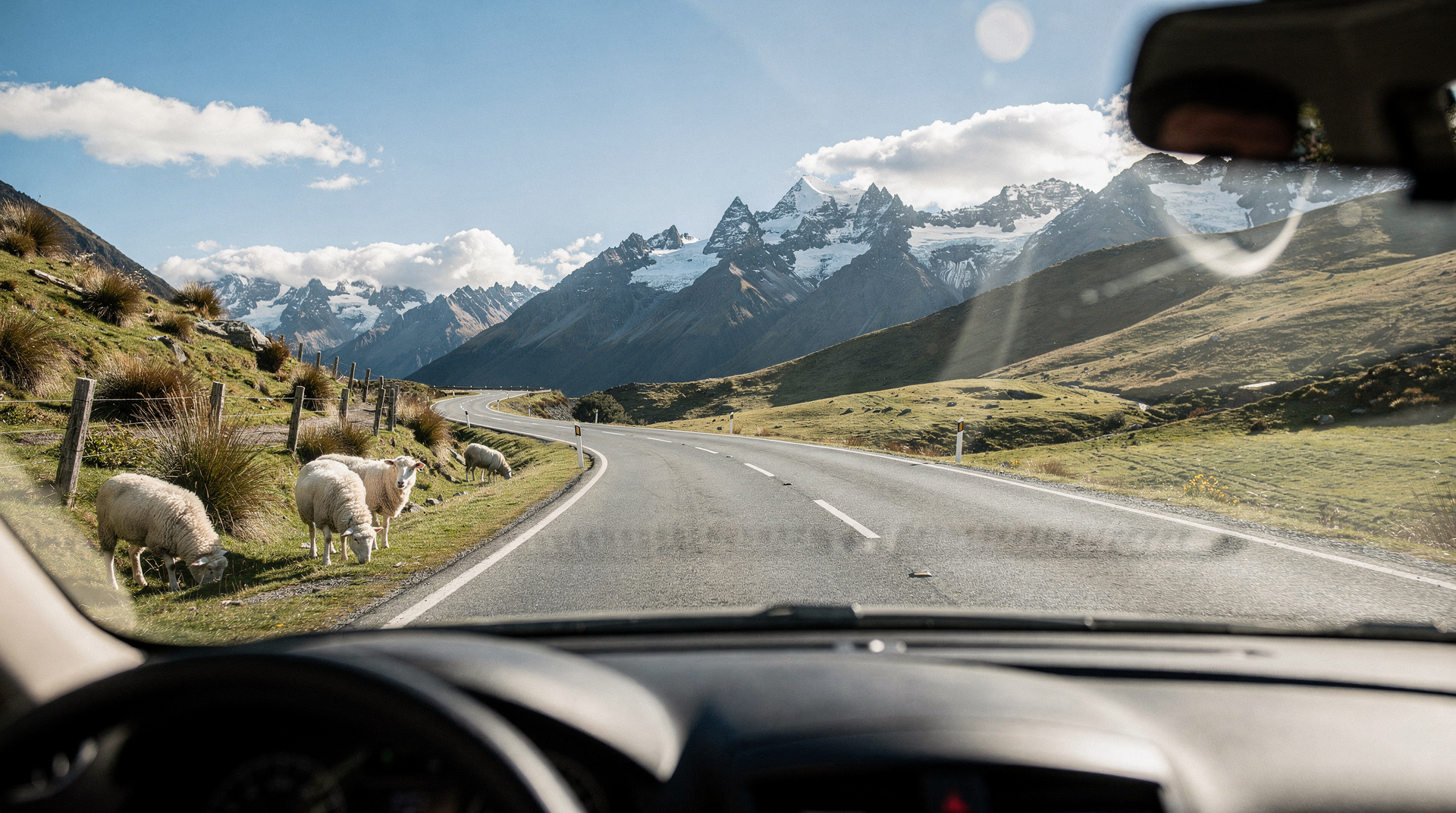
Honest driving guide for NZ: left-side rules, gravel road etiquette, why GPS lies, fuel costs, one-lane bridges, and what rental companies don't tell you.
Published: