New Zealand during COVID — what travel actually felt like
The country that went quiet and then, briefly, didn’t
By August 2020, New Zealand had done something most of the world hadn’t managed: the border was sealed, but inside the country, community transmission had been eliminated. No masks required, restaurants fully open, domestic flights running. The Alert Level 1 period that followed New Zealand’s elimination strategy was a peculiar window — a country going about something close to normal life while the rest of the world was in various stages of lockdown.
For New Zealanders, this was domestic travel at a scale not seen before. For the small number of international visitors already inside the country, it was a strange experience of watching New Zealand rediscover itself.
| Period covered | Alert Level 1, mid-2020 to early 2021 |
| International borders | Closed |
| Domestic travel | Fully open, no restrictions |
| Biggest winner | Great Walks (domestic booking surge) |
| Biggest loser | Queenstown, Rotorua, backpacker hostels |
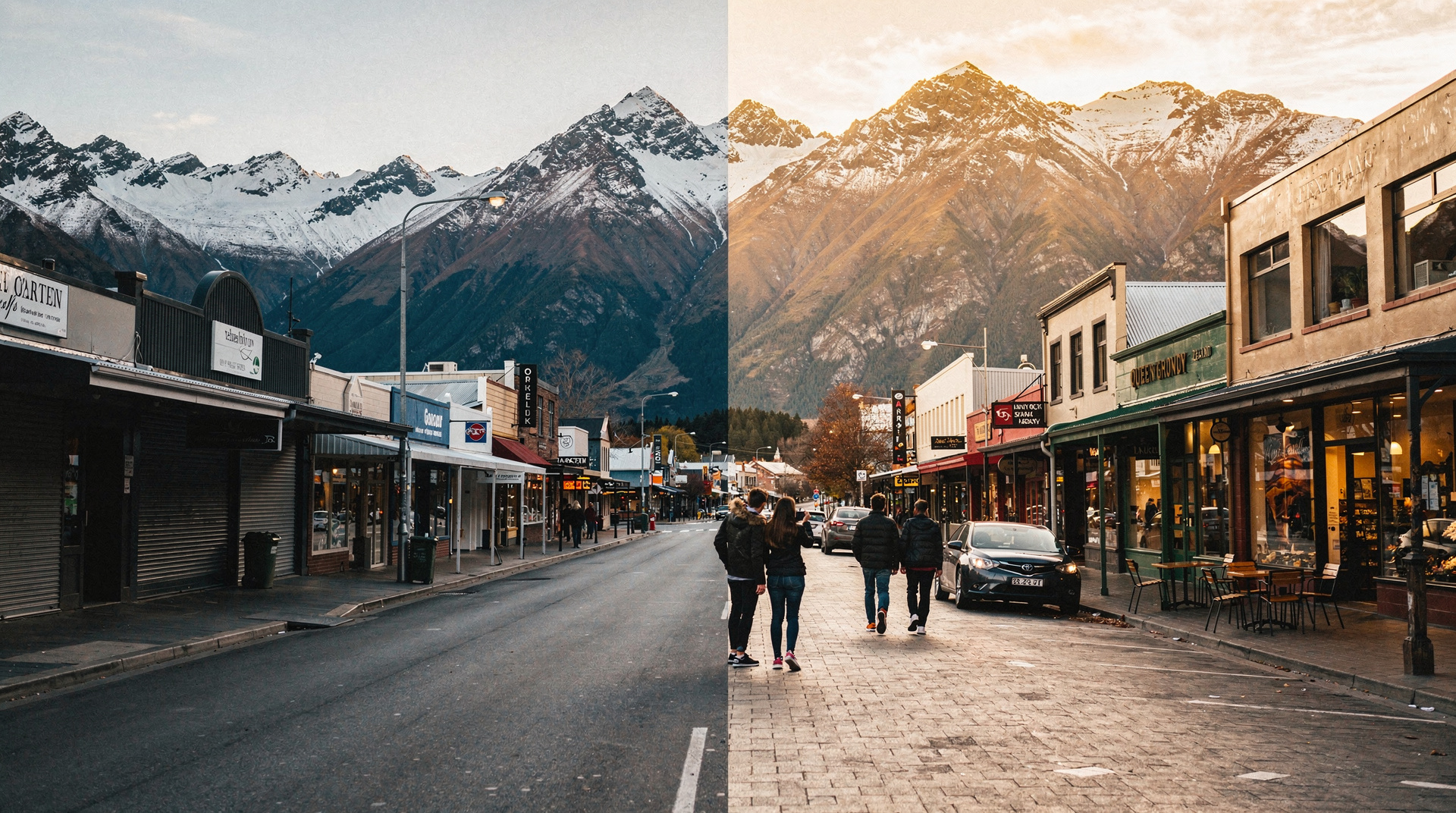
What Queenstown looked like without the crowd
Queenstown in August is normally ski season — high season. The town fills with Australians, Japanese visitors, a scattering of Europeans and Americans. Adventure operators run at capacity. In August 2020, the borders were closed and no international visitors were arriving.
What remained was a town of locals and New Zealand domestic tourists. The queues at Fergburger, famous for wrapping around the block in normal times, were manageable. The accommodation was discounted sharply — mid-range hotels that charged NZD 280/night in normal ski season were at NZD 140–180. Some adventure operations had reduced prices to attract a domestic market unaccustomed to Queenstown’s typical pricing.
The mountains were still there. Coronet Peak was running with excellent early-season snow. The Remarkables opened on schedule. The experience of skiing Queenstown without airport crowds was genuinely better in most practical respects — except the restaurants were running reduced menus and some businesses had scaled back.
The emptiness was eerie and peaceful in equal parts.
What happened to tourism businesses
The impact on New Zealand’s tourism industry was severe and unevenly distributed. Queenstown, which derives a very large proportion of its economy from international visitors, suffered more than Wellington or Christchurch, which have more diversified economies. Rotorua, dependent on international bus tours, lost significant business. The Bay of Islands was quieter than locals had seen it in years.
The domestic market partially compensated but couldn’t replace international spending. Backpacker hostels, dependent on the working holiday visa ecosystem, were especially hard hit — that entire network of young European and British travelers had disappeared.
What was notable: DOC huts and Great Walks were reporting an unusual phenomenon. New Zealanders who’d never done the Routeburn or the Milford Track were booking them for the first time, for want of anywhere else to go and with extra time available during lockdown periods. The Great Walks got a domestic renaissance in 2020 that many operators credited with increasing local appreciation for the conservation estate.
What Alert Level 1 travel actually felt like
Contact tracing was active. The NZ Covid Tracer app was widely used — a QR code at the entrance to every restaurant, café, and museum. You scanned in. This was normal and nobody objected. New Zealand had moved decisively through its elimination response and the public compliance had been high enough that Level 1 felt genuinely free — normal table spacing, no capacity limits, no masks in public.
This is a significant contrast with almost everywhere else at the same time. Sitting in a Wellington café in August 2020 with no plexiglass barriers and no visible anxiety felt surreal in the context of what was happening in Europe.
The thing that was missing was the mixed international crowd that is part of New Zealand’s normal texture. Hostels were quieter. The multilingual hubbub of a Queenstown bar — the French, German, Israeli, Japanese, Korean clusters you normally overhear — was replaced by something that sounded exclusively like New Zealand.
What changed structurally
Some things that changed during 2020 persisted. The NZeTA (New Zealand Electronic Travel Authority) was already in place pre-COVID and continued. The International Visitor Levy (IVL) — NZD 35 at the time, later increased — was part of the existing entry system.
Several businesses that struggled through 2020 didn’t reopen when borders eventually did. The hospitality and tour sectors that survived did so through wage subsidy support and domestic tourism spending. Some of those businesses restructured their offering — more New Zealand-focused, less internationally-oriented — and that shift had lasting effects on certain regional economies.
What this means for current travelers
The COVID period is over as a practical travel factor. New Zealand’s borders are fully open, the alert level framework has been retired, and the country has returned to its standard visitor profile. What the 2020 period demonstrated — somewhat accidentally — was that the domestic tourism infrastructure is excellent, that the Great Walks are underappreciated by New Zealanders, and that Queenstown is a better town with fewer people in it.
The last point, at least, carries forward to any current planning conversation about shoulder season travel.
The lasting Great Walks effect
The domestic Great Walks surge of 2020 didn’t fully reverse once borders reopened. New Zealanders who discovered the Great Walks during the pandemic kept booking them, and DOC hut and campsite bookings for tracks like the Routeburn and the Milford Track are now more competitive year-round than they were pre-2020. If you’re planning a Great Walk, book earlier than you might expect based on older advice — the domestic demand baseline shifted permanently. The Routeburn vs Milford comparison is worth reading for how the two most in-demand tracks compare for booking difficulty and experience.
What else changed permanently
Freedom camping is the other area where COVID-era shifts stuck. The surge in domestic road-tripping during the pandemic, combined with a wave of new campervan buyers, contributed to the freedom camping pressure that led to the rule tightening described in the freedom camping 2025 update. If you’re planning a self-drive trip, that piece is worth reading alongside the driving in New Zealand guide — both reflect a domestic travel landscape shaped partly by the 2020 window described here.
Related reading
Related guides
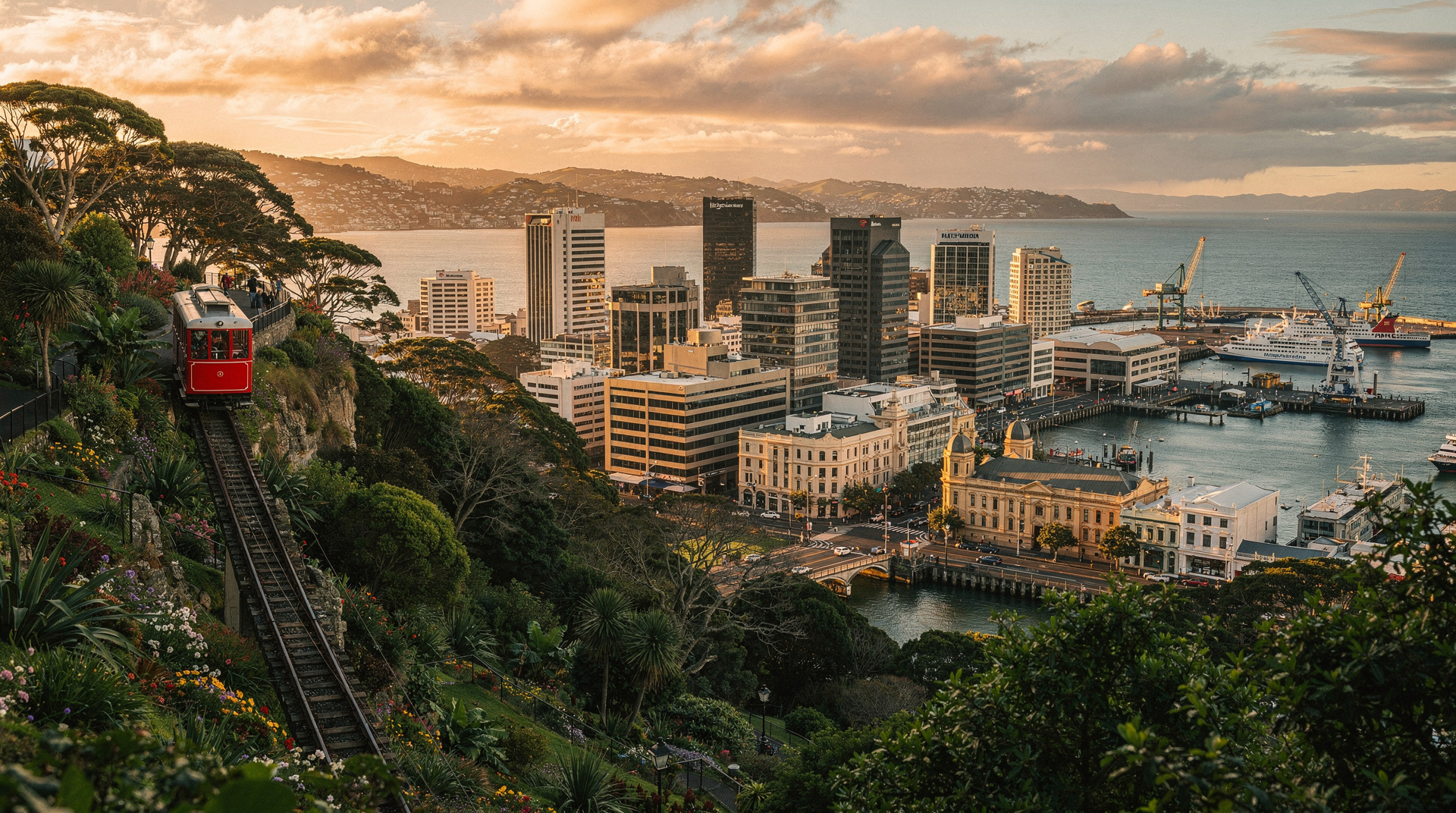
Wellington
Honest Wellington guide: Te Papa museum, Weta Workshop LOTR tours, Zealandia, Cuba Street, ferry to South Island, real prices NZD/USD/EUR.
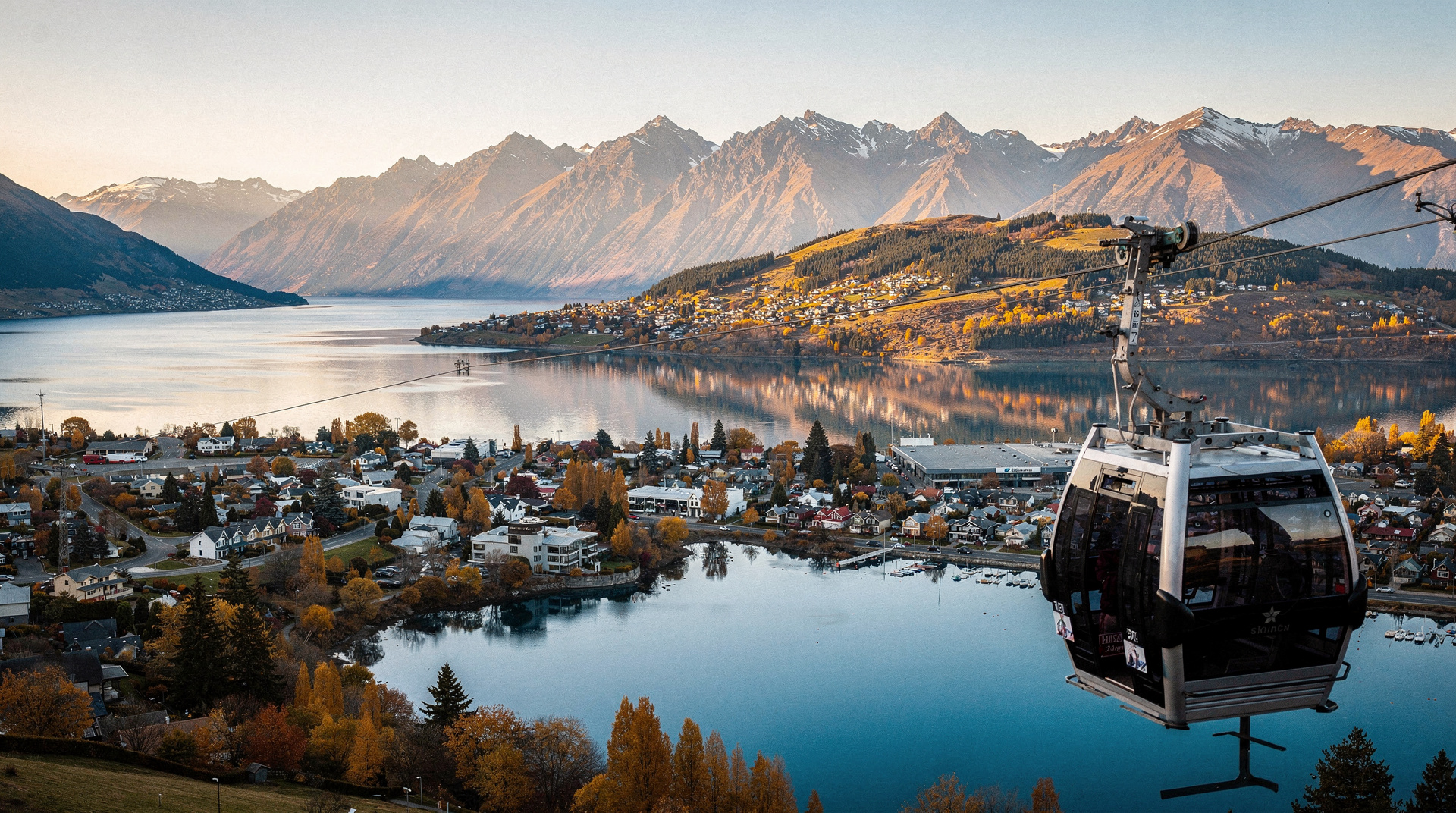
Queenstown
The honest Queenstown planner: bungy, jet boat, ski, scenic flights — real prices in NZD/USD/EUR, what to skip and what's worth your money.
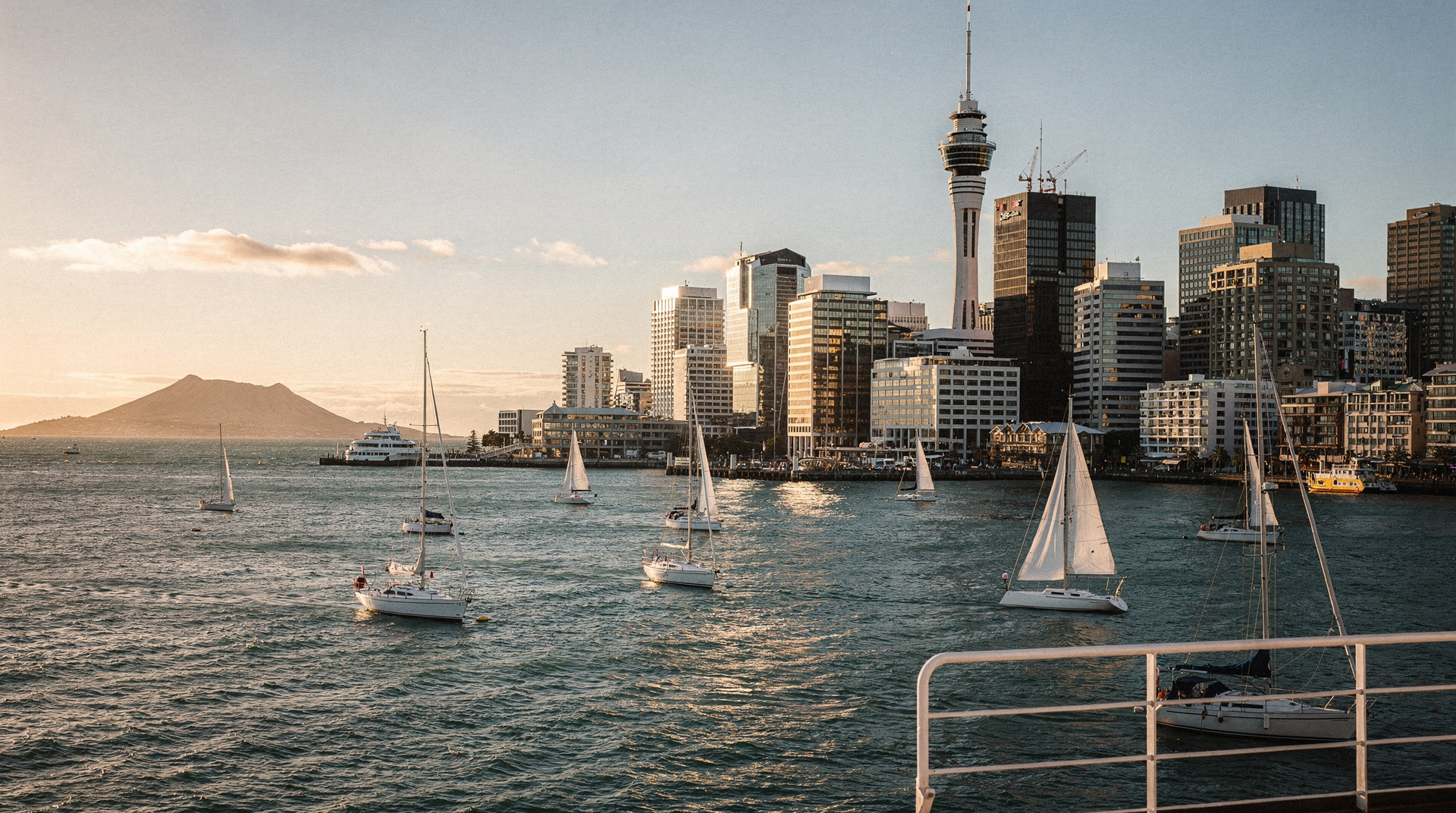
Auckland
Honest Auckland planner: harbour, Sky Tower, Waiheke wineries, day-trips to Hobbiton, real prices NZD/USD/EUR, and what's actually worth your time.
Best time to visit New Zealand
When to visit New Zealand: honest breakdown by season, region, and activity type. Summer is not always best. Spring and autumn often outperform the peak season.
Published: