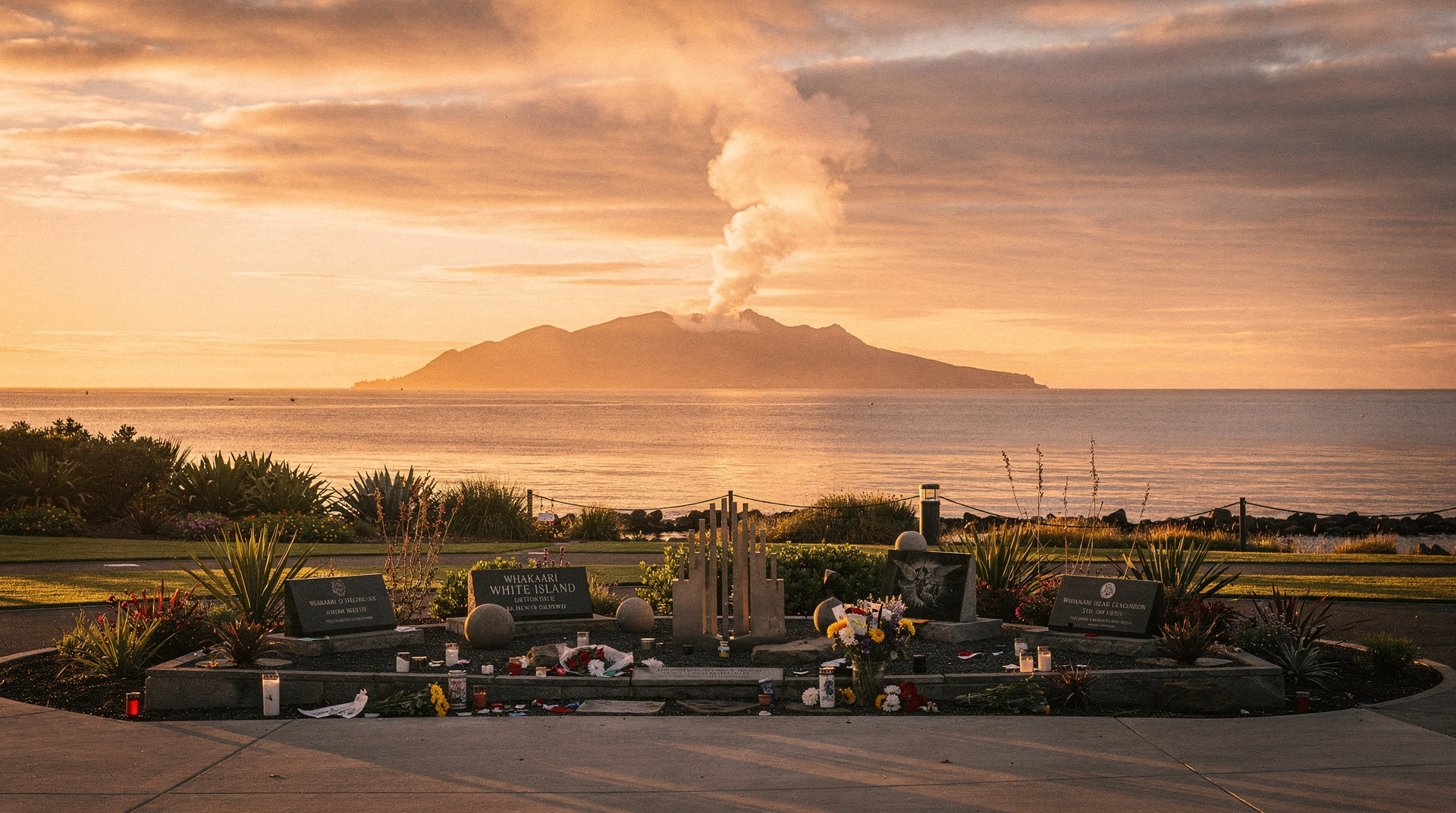
Whakaari/White Island — three years on from the eruption
| Event | 9 December 2019 eruption, 22 deaths |
| Current status | Closed to all commercial access since the eruption |
| Visible from | Whakatane coast on clear days |
| Alert level | Volcanic Alert Level 1-2 (GeoNet) |
| Nearby open volcanic sites | Rotorua’s Wai-O-Tapu, Waimangu, Te Puia; the Tongariro Alpine Crossing |
What happened on 9 December 2019
At 2:11pm on 9 December 2019, Whakaari/White Island, an active marine volcano 48km off the coast of Whakatane in the Bay of Plenty, erupted without warning. Forty-seven tourists and guides were on the island at the time — a number that, in retrospect, drew particular attention given that the GeoNet volcanic alert level had been elevated in the weeks prior.
Twenty-two people died. Twenty-five survived, many with severe burns covering large portions of their bodies. The immediate aftermath involved a dramatic helicopter rescue operation with pilots flying into a still-erupting volcanic environment; subsequently, a period of agonised waiting as families and governments worked to recover the bodies of those who could not be reached in the first days.
The victims were from New Zealand, Australia, the United States, Germany, China, Malaysia, and the United Kingdom. Many were passengers from the cruise ship Ovation of the Seas, which had docked in Tauranga that morning.
I want to be direct about the register of this piece: it is a factual account of what happened and what followed. Whakaari is not a footnote in a travel story. Twenty-two people died in a place that had received paying tourists for decades.
The immediate closure
Whakaari was closed to all access immediately after the eruption. No commercial tours have operated since. The island’s owners — the Buttle family, who have owned Whakaari as private land since 1936 — cooperated with authorities on the closure.
GNS Science, the Crown Research Institute responsible for volcanic monitoring, maintained elevated alert levels on the island for months after the eruption. Subsequent monitoring has shown that Whakaari remains geologically active. As of December 2022, there is no indication from either the scientific or legal communities that commercial access will resume in the foreseeable future.
The prosecutions
The legal proceedings have been substantial and complex. WorkSafe New Zealand — the workplace health and safety regulator — laid charges against multiple parties: the commercial tour operators who had been running trips to the island, the island’s owners, and a number of related entities.
The prosecution centred on whether adequate safety assessments had been conducted, whether the volcanic alert level elevation prior to the eruption had been properly responded to, and whether those who made decisions about taking paying guests onto an active volcano had met their legal obligations.
In April 2022, Whakaari Management (the island’s owners) and three tour operators — White Island Tours, Aerius (a helicopter operator), and ID Tours — pleaded guilty to WorkSafe charges. Sentences and fines were imposed; the operators faced significant financial penalties. Several other defendants maintained not-guilty pleas.
The families of the victims have also pursued civil legal action in multiple jurisdictions, including in the United States under maritime law, given the cruise ship connection.
The scientific picture in 2022
Three years on, GNS Science’s monitoring of Whakaari has produced a more detailed understanding of the eruption mechanism. The 2019 event was what volcanologists classify as a hydrothermal eruption — driven by a sudden expansion of steam rather than magmatic activity. These eruptions are particularly difficult to predict because they don’t necessarily involve the same precursors as magmatic eruptions.
The elevated GeoNet alert level in the weeks prior to December 2019 reflected increased hydrothermal activity that was, in hindsight, a precursor signal — but the specific timing and severity of the eruption was not predictable from that data. This is a genuine scientific constraint, not an excuse for decision-making failures around visitor access.
Whakaari remains a Volcanic Alert Level 1-2 site on GeoNet’s scale. The island has not erupted significantly since December 2019, but volcanic activity — gas emissions, hydrothermal fluid movement — continues.
What you can see from Whakatane
Whakaari is visible from the Whakatane coast on clear days as a low shape on the horizon, occasionally with steam visible above it. The island’s appearance from the mainland has not changed; it is the same active marine volcano it has always been.
Whakatane itself is a pleasant Bay of Plenty town with its own attractions: Ohope Beach, one of the better surf beaches in the North Island, is a short drive away. The Mataatua Wharenui (meeting house) is one of the most significant Maori taonga (treasures) in New Zealand — it was removed to Sydney in 1879, displayed in Britain and Australia for decades, and returned to its people in 1996 after a 117-year absence.
The broader Bay of Plenty region is worth visiting on its own terms: Tauranga, Mount Maunganui, and the access to the Coromandel Peninsula make it a legitimate destination rather than merely a base for White Island tours.
On future access
The question of whether Whakaari will ever reopen to tourists is one I won’t speculate about. The legal proceedings are ongoing. The science of the hydrothermal system hasn’t fundamentally changed. The island’s owners have not publicly indicated any timeline or intention around future access.
What I can say is this: if commercial access does eventually resume — if scientists, regulators, and the island’s owners reach a framework for managed visits — the decision about whether to go should be made with clear eyes about what Whakaari is. It is an active marine volcano. The views from the crater are extraordinary. It is also a place where 22 people died.
That calculation belongs to individual visitors, not to travel writers.
The Bay of Plenty today
The Bay of Plenty is very much open. Rotorua’s geothermal attractions — Wai-O-Tapu, Waimangu, Te Puia — offer volcanic landscapes in a managed environment with established safety records. The Tongariro Alpine Crossing, the most popular day walk in New Zealand, traverses an active volcanic field with an excellent safety protocol.
Volcanic New Zealand is one of the distinctive experiences the country offers. The relevant question isn’t whether to engage with it, but how to do so with appropriate information.
Visiting the wider region responsibly
For travellers who want to see Whakaari without setting foot on it, several Whakatane- and Rotorua-based boat tours pass within view of the island as part of a wider Bay of Plenty itinerary — worth checking what’s actually included before booking, since some listings are less clear than others about whether they land.
Rotorua, roughly 1.5 hours inland, offers the managed geothermal alternative in full: Te Puia’s geysers and cultural performances, Wai-O-Tapu’s mineral terraces, and Waimangu’s volcanic valley all deliver the same volcanic-landscape interest with an established safety record. The Bay of Plenty overview guide covers how to sequence Whakatane, Rotorua, and the Coromandel if you’re building a North Island loop.
Rotorua Wai-O-Tapu geothermal half-day tourFAQ
Can you still visit Whakaari/White Island? No. The island has been closed to all commercial access since the 9 December 2019 eruption, and there is no publicly announced timeline for reopening.
What can you see of Whakaari from the mainland? It’s visible as a low shape on the horizon from the Whakatane coast on clear days, sometimes with steam visible above it, but there is no way to visit it in person.
Related reading
Related guides
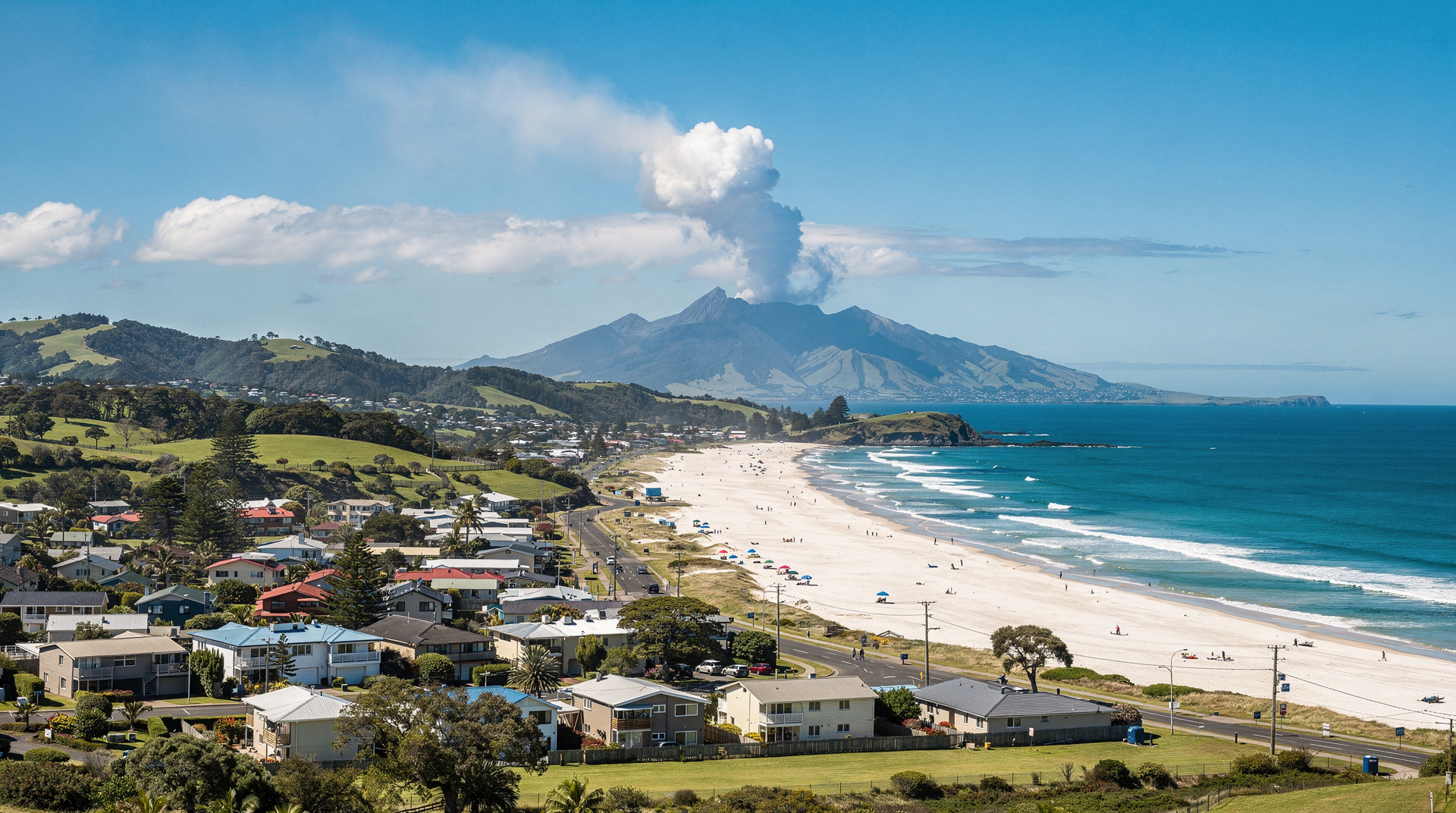
Whakatane
Whakatane: Bay of Plenty's most liveable town, Ohope Beach, dolphin swimming, and access to Whakaari/White Island's history. Real costs NZD/USD/EUR.
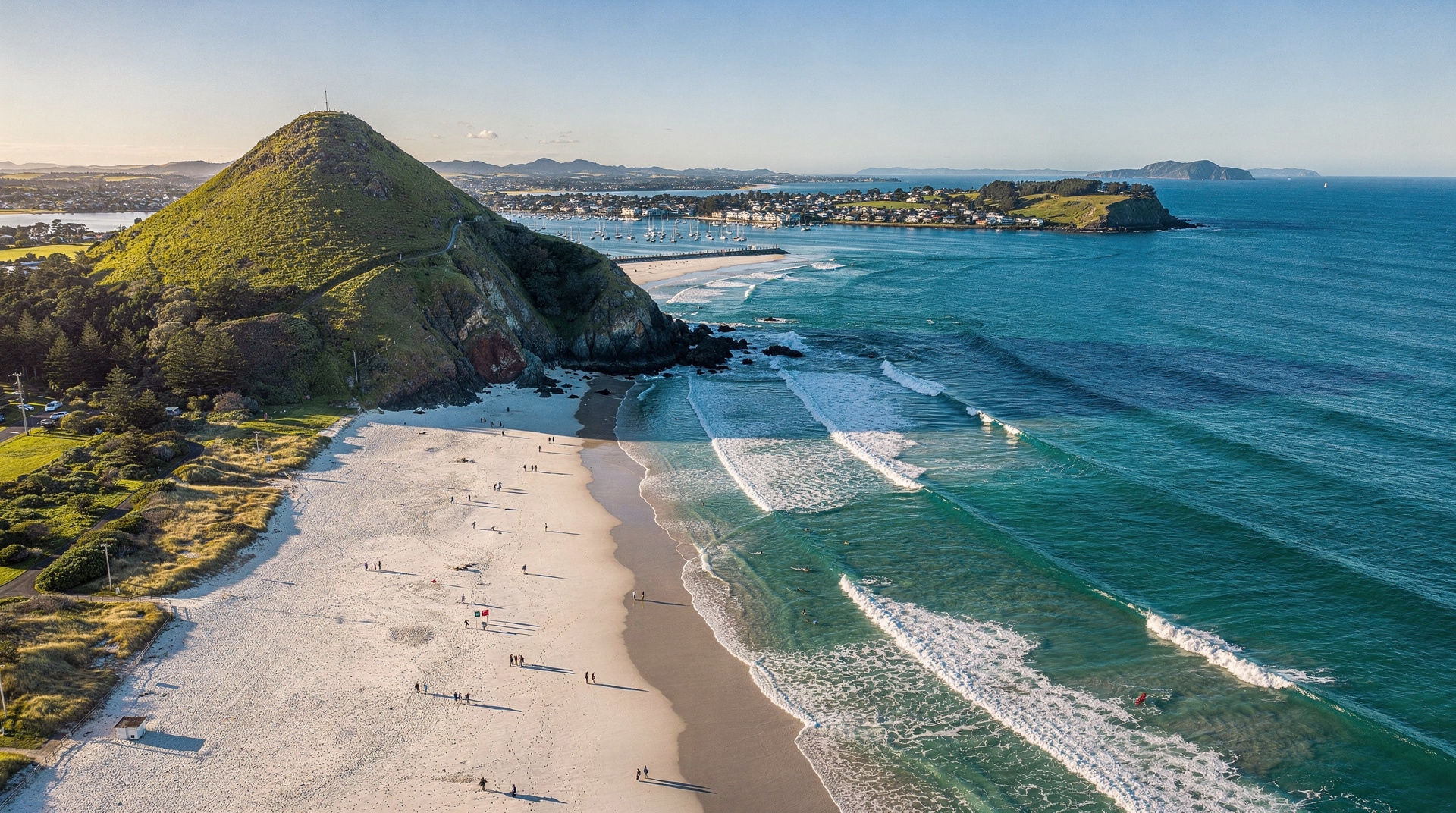
Bay of Plenty
Bay of Plenty region guide: Tauranga, Mount Maunganui surf, Whakatane, Whakaari/White Island eruption facts. Real NZD/USD/EUR costs, honest verdicts.
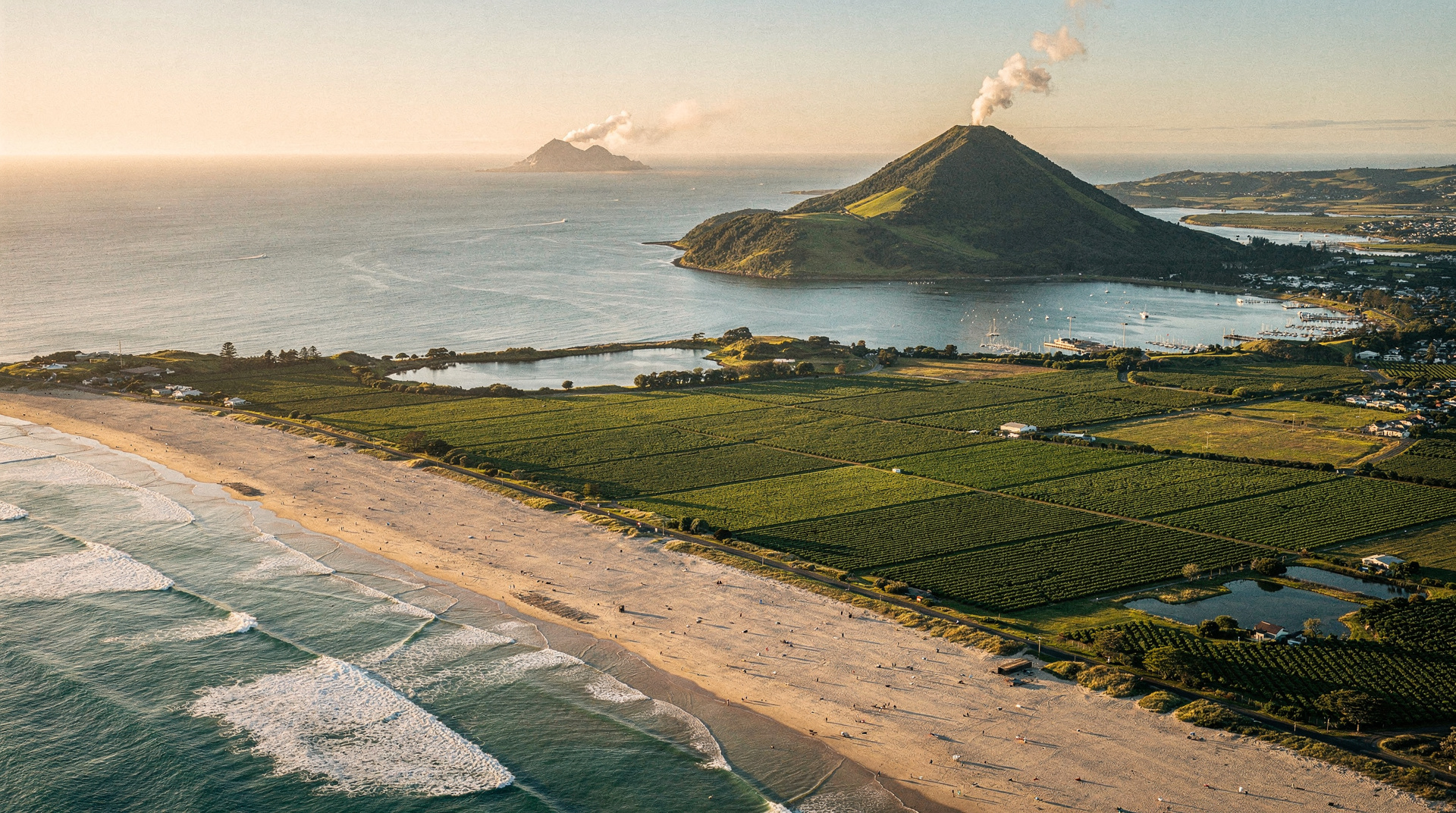
Bay of Plenty travel guide — Tauranga, Mount Maunganui, Whakatane
Bay of Plenty honest planner: best beaches, Whakaari context, White Island alternatives, where to base yourself, real costs NZD/USD/EUR.
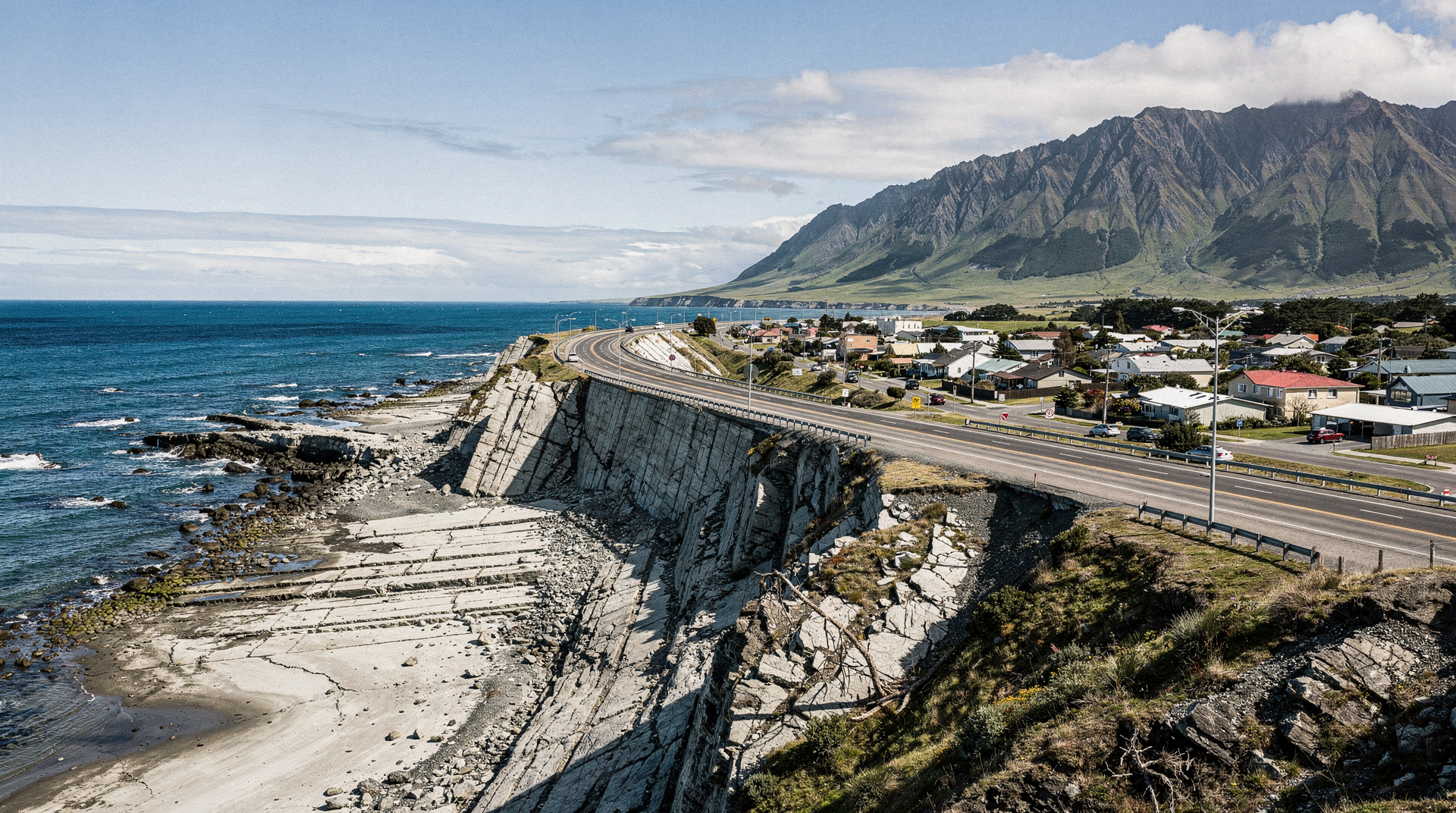
Kaikoura after the 2016 earthquake — what's changed
Three years after the 7.8 earthquake, Kaikoura is open for business — and in some ways more interesting than before the disaster.
Published: