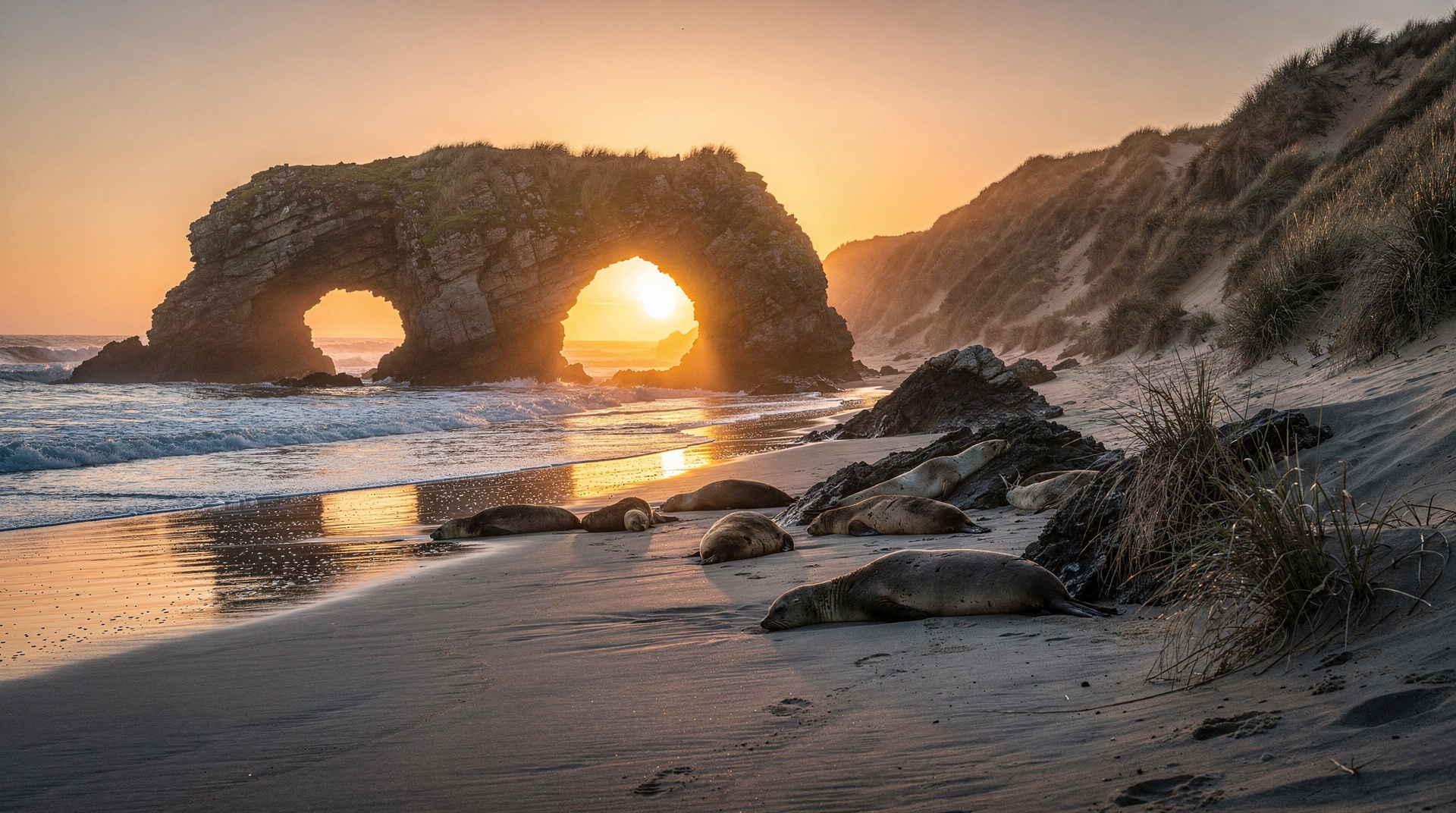
New Zealand beaches guide — best coastal experiences by region
What are the most famous beaches in New Zealand?
Cathedral Cove (Coromandel) for scenery, Hot Water Beach for geothermal fun, Piha and Karekare for dramatic black sand, 90 Mile Beach for scale, Wharariki for wild remoteness, and the Catlins coast for seals and sea caves. NZ beaches are beautiful but many are unsuitable for casual swimming — rips are common and lifeguards are only present at patrolled beaches in summer.
The honest case for NZ’s coastline
New Zealand has 15,000 km of coastline and somewhere around 2,500 named beaches. The problem is not finding a beach — it’s calibrating expectations. NZ beaches exist on a spectrum from patrolled family-friendly strands (Ocean Beach at Mount Maunganui, New Chums, Kaiteriteri) to wild, surf-hammered stretches with no lifeguards, serious rip currents, and genuine danger for casual swimmers (Karekare, Wharariki, sections of 90 Mile Beach).
This guide is organised by region and by type: scenic, swimmable, dramatic, geothermal, and wildlife-rich. A safety note comes first because it matters.
| Best for scenery | Cathedral Cove, Wharariki Beach |
| Best for families | Ocean Beach Mount Maunganui, Kaiteriteri |
| Best time | December-March North Island; January-March South Island |
| Cost | Free entry almost everywhere; parking fees at popular spots |
| Safety | Swim only at patrolled beaches with flags; rips are common |
Beach safety in New Zealand — read this before you swim
Drowning is the leading cause of accidental death for tourists in New Zealand. The reasons are consistent:
-
Rip currents form at virtually every surf beach, often invisible from shore. They pull swimmers offshore faster than most people can swim against them. If caught in a rip, float and drift sideways, not against the current.
-
Surf beach conditions change rapidly. A calm morning can become dangerous surf by afternoon.
-
“Lifeguard flags” only appear at patrolled beaches in summer (roughly Labour Weekend to Easter, October-April). Outside those hours and outside those months, most beaches are unpatrolled.
-
Cold water shock. The Tasman Sea and much of the South Island coast is cold enough year-round to cause sudden incapacity.
Rule of thumb: if there are flags at a beach, swim between them. If there are no flags, local knowledge matters. Ask at the nearest surf club or i-SITE visitor centre.
North Island beaches
Northland and Auckland west coast
Piha is the iconic black-sand surf beach on Auckland’s west coast, 40 km from the city centre but a world apart. The black sand is volcanic, fine, and photogenic. The beach is patrolled in summer. Lion Rock (the great volcanic stack that divides the beach) is climbable at low tide and gives views that justify the 40-minute walk up. Go for the scenery — read the Piha guide for rip current context before swimming.
Karekare, 5 km south of Piha, is smaller, backed by pohutukawa forest, and appears in the opening scenes of Jane Campion’s The Piano. It’s not a beach for casual swimming — the surf here is powerful and irregular. Come for the atmosphere and the waterfall walk from the carpark.
Muriwai Beach runs 60 km up the west coast from Auckland — long, exposed, and dramatic. The gannet colony at the northern headland (Muriwai Gannet Colony) is one of the most accessible seabird colonies in the country. The gannets are present September to March.
90 Mile Beach (Te Oneroa-a-Tohe) in the Far North is a 100 km (not 90 mile — the original estimate was optimistic) continuous sand beach, a protected Te Rarawa and Ngāpuhi rohe (territory). Read the full guide to 90 Mile Beach — the key points: driving on the beach is legal but cars get stuck in soft sand or caught by tides every season; the swimming conditions vary; the cultural context (it’s a living mahinga kai area) matters. Come for the scale and the Far North light, not for a beach holiday.
Coromandel Peninsula
Cathedral Cove (Te Whanganui-A-Hei) is the most photographed sea cave in New Zealand — a 30-metre natural arch connecting two cream-sand beaches, accessible only on foot (35-minute walk from the carpark) or by boat. The full Cathedral Cove guide covers the walk, the water access, and the crowds (it is very busy December-January). Worth it despite the hype, but go early morning or late afternoon.
Hot Water Beach is 5 km south of Cathedral Cove along the same coastline. For two hours either side of low tide, you can dig into the sand with a rented spade (NZD 5 from the surf shop) and create a natural hot pool heated by geothermal water from below. It is genuinely fun and genuinely unusual. The swimming at Hot Water Beach is dangerous — the rips are severe. Don’t swim here; come for the spa experience.
Cathedral Cove and Hot Water Beach day tour from Auckland covers both sites and saves you the navigation. Cost from NZD 155-185 (USD 93-111 / EUR 85-102) per person, full day.
New Chums Beach requires a 40-minute walk over a headland from Wainuiomata. No road access, no facilities, and consistently ranked among NZ’s best beaches. It’s a hidden gem because it requires effort — which keeps it quiet.
Bay of Plenty
Ohope Beach near Whakatane is 11 km of south-facing, sheltered sand that families consistently rate as one of NZ’s best. The Ohiwa Harbour estuary at the east end is excellent for kayaking and birdwatching. Less famous than Ocean Beach at the Mount but arguably better for families. See the Bay of Plenty overview for logistics.
Ocean Beach, Mount Maunganui is the Bay of Plenty’s flagship beach — 11 km, patrolled in summer, good for beginner surfing, and backed by the distinctive Mauao cone. Urban services within walking distance (cafes, board hire, surf lessons) make this one of the most genuinely usable beaches in NZ.
South Island beaches
Nelson-Tasman
Kaiteriteri Beach at the gateway to Abel Tasman National Park is the most family-friendly beach on the South Island — a clear-water, sheltered bay with a boat ramp and accessible camping. The water is genuinely warm in summer by South Island standards (18-21°C December-February). Kayak hire and aquataxi services depart from here for the Abel Tasman coast.
Tōtaranui inside Abel Tasman National Park, reachable by aquataxi or a 2-3 hour walk, is larger and quieter than Kaiteriteri. DOC campsite requires advance booking — one of the most competitive on the Great Walk booking system.
Wharariki Beach at the top of the South Island is one of the most dramatic beaches in New Zealand — wild, windswept, with offshore sea stacks, seal colonies, and sand dunes. The full Wharariki guide covers the 30-minute walk in from the carpark. No swimming — this is a scenic and wildlife beach. Combine with Cape Farewell and the Farewell Spit for a full day in Golden Bay.
West Coast
The West Coast’s ocean beaches face the full Tasman Sea and are generally unsuitable for swimming. They are, however, among the most photogenic in the country: black rocks, crashing surf, driftwood, and the Southern Alps as a backdrop.
Hokitika Gorge beach is technically a river gorge rather than a sea beach, but the turquoise glacial meltwater against white pebbles is extraordinary — a 30-minute drive from Hokitika town. Hokitika is worth a night for the gorge and the glowworm dell.
Canterbury and Otago
Kaikōura coast is more wildlife than beach — the beaches here are functional (grey gravel and stone), but the backdrop is the Seaward Kaikōura Range rising directly from the coast. The marine wildlife (sperm whales, dusky dolphins, New Zealand fur seals, Hutton’s shearwaters) is the point. Read the Kaikōura day trip guide for timing and booking advice.
Moeraki Boulders (Koekohe Beach, State Highway 1 between Oamaru and Dunedin) — the spherical boulders emerging from the beach at low tide are a geological curiosity, a roadside stop that legitimately justifies 30-45 minutes. Free.
The Catlins and Southland
Curio Bay in the Catlins contains a 180-million-year-old petrified forest exposed at low tide, a yellow-eyed penguin (hoiho) viewing area, and Hector’s dolphin activity in the bay. It is arguably the most information-dense beach in the country in a small space. Combine with Waipapa Point Lighthouse and Slope Point (the southernmost point of the South Island) on a full Catlins day.
Beaches by type — quick reference
Best for scenery and photography
- Cathedral Cove, Coromandel
- Wharariki Beach, Golden Bay
- Karekare, Auckland West Coast
- Piha, Auckland West Coast
- Lake Hāwea shoreline (not ocean, but spectacular)
Best for family swimming (patrolled, calm)
- Ocean Beach, Mount Maunganui
- Ohope Beach, Whakatane
- Kaiteriteri, Abel Tasman
- New Brighton, Christchurch (shallow, calm, accessible)
- Scorching Bay, Wellington (sheltered harbour beach)
Best for drama and wildness (not for swimming)
- 90 Mile Beach, Northland
- Punakaiki / Pancake Rocks, West Coast
- Wharariki Beach, Golden Bay
- Karekare and Piha, Auckland West Coast
- Curio Bay, Catlins
Best for wildlife
- Curio Bay (yellow-eyed penguins, Hector’s dolphins)
- Kaikōura (sperm whales, fur seals, dolphins)
- Otago Peninsula (royal albatross, yellow-eyed penguins, fur seals)
- Moeraki Boulders (yellow-eyed penguins in evening)
- Muriwai (Australasian gannets, September-March)
Best geothermal beach experience
- Hot Water Beach, Coromandel (dig your own pool at low tide)
- Champagne Pool overflow at Wai-O-Tapu (walk-in pool area — technically hot spring, not beach)
Packing for a New Zealand beach day
New Zealand’s UV index runs higher than most visitors expect, even on overcast days, due to thinner ozone coverage over the Southern Hemisphere in summer — reef-safe sunscreen, a hat, and sunglasses matter more here than the temperature alone suggests. Reef shoes or old sneakers are useful at rocky beaches (Kaikōura, the Catlins) where the shoreline is stone rather than sand. A dry bag is worth carrying if you’re combining a beach stop with kayaking or a boat tour. For West Coast and southern beaches, water stays cold even in midsummer (15-18°C is typical), so a wetsuit rather than togs alone is the realistic choice for anything beyond a quick dip.
Beach etiquette and cultural context
Many of New Zealand’s most striking beaches sit within areas of ongoing significance to local iwi (Māori tribal groups) — 90 Mile Beach (Te Oneroa-a-Tohe) is a living mahinga kai (food-gathering) area for Te Rarawa and Ngāpuhi, and Cathedral Cove sits inside a marine reserve tied to Ngāti Hei history.
Practical implications for visitors: respect any posted rāhui (temporary restrictions, sometimes placed after a drowning or for conservation reasons — signage will explain), don’t remove shells, rocks, or driftwood in quantity, and treat shellfish-gathering limits seriously if you’re collecting kaimoana (seafood) — Fisheries NZ publishes daily limits by species and region, and rangers do check. None of this restricts ordinary beach visits, swimming, or photography; it simply asks the same respect you’d extend to any working landscape rather than a purely recreational one.
Coastal erosion and what’s changing
Several of the beaches in this guide are visibly changing. Cathedral Cove’s access track has needed repeated stabilisation since Cyclone Gabrielle’s 2023 landslides, and DOC’s ongoing works there reflect an active erosion process in the region’s soft volcanic rock, not a one-off repair. Sections of 90 Mile Beach see dune movement that occasionally reroutes informal access tracks. None of this makes these beaches less worth visiting, but it’s a reason to check current DOC advisories before a special-purpose trip (particularly to Cathedral Cove) rather than assuming a guidebook description from a few years ago still holds exactly.
Real costs
| Experience | NZD | USD | EUR |
|---|---|---|---|
| Hot Water Beach spade hire | NZD 5 | USD 3 | EUR 3 |
| Cathedral Cove boat tour | NZD 35-50 | USD 21-30 | EUR 19-28 |
| Kaiteriteri kayak half-day | NZD 65-85 | USD 39-51 | EUR 36-47 |
| Surf lesson (beginner, 2h) | NZD 70-90 | USD 42-54 | EUR 39-50 |
| Cathedral Cove + Hot Water Beach day trip from Auckland | NZD 155-185 | USD 93-111 | EUR 85-102 |
| Abel Tasman aquataxi to Tōtaranui | NZD 38-55 | USD 23-33 | EUR 21-30 |
When to visit NZ beaches
North Island beaches (Coromandel, Bay of Plenty, Northland): December-March is peak season. Water temperatures reach 20-22°C. Summer holidays (mid-December to late January) mean Cathedral Cove and Hot Water Beach are busy. Go in November or February for similar weather with fewer crowds.
South Island beaches (Nelson-Tasman, Kaikōura, Catlins): January-March is most reliable. Water temperatures in Nelson-Tasman reach 19-21°C in February. The Catlins is a year-round destination for wildlife but swimming is not the point regardless of season.
West Coast (Punakaiki, Hokitika): Year-round for scenery. Summer is more reliable for access to glacier viewpoints nearby.
Alternatives
If Cathedral Cove is too crowded: Walk 20 minutes north from the Cathedral Cove carpark to Gemstone Bay — a snorkelling reserve with a 30-minute underwater trail, far quieter. Or head to New Chums Beach for a genuinely uncrowded experience.
If Hot Water Beach is past low tide: The hot spring seepage zone shifts. Go 30 minutes before or after low tide for the best pools. Outside the 2-hour window either side of low, the beach is just a beach.
If Ocean Beach Mount Maunganui is too busy in January: Ohope Beach near Whakatane (90 min drive) is wider, less crowded, and just as good for families.
FAQ
Are New Zealand beaches free to access?
Almost universally yes. There are no paid beach entry fees. Parking charges apply at some popular spots (Cathedral Cove carpark charges NZD 5-8/hour in peak season; there is a mandatory shuttle from Hahei township December-March). DOC campsites at beaches charge NZD 15-21/night.
Are there sharks at New Zealand beaches?
Sharks are present in NZ waters, but attacks on humans are rare. The species most commonly seen near shore are bronze whaler and school sharks, both generally non-aggressive to humans. Great white sharks are present further offshore (especially around seal colonies). The Catlins coast and Kaikōura seal colonies have Great whites offshore, but no incidents at tourist beaches are on record for the standard swimming areas.
What does “rip current” look like from shore?
A rip typically appears as a calmer, slightly darker channel between areas of breaking surf — counterintuitively, the calm water is the dangerous water. Some rips are visible as sandy discolouration. If in doubt, ask the lifeguards or stay out.
Can I take a boat to Cathedral Cove?
Yes. Several operators run shuttle boats from Hahei (5 minutes) and from Whitianga (30 minutes). This is the best option during peak season (December-February) when the walking track is extremely busy. Booking ahead is essential; Cathedral Cove and Coromandel day tours from Auckland include transport.
Are there nude beaches in New Zealand?
Several. The most established is Makorori (near Gisborne) and Maslin Beach analogues exist near Christchurch (Spencer Park area). Clothing-optional sections of beaches are generally accepted but not officially designated. Ask locals or search NaturistNZ for current information.
What are the best beaches for snorkelling?
Goat Island Marine Reserve near Leigh (north of Auckland) is NZ’s premier accessible snorkel spot — clear water, abundant fish, no boats. Gemstone Bay near Cathedral Cove has an underwater snorkel trail with markers. Poor Knights Islands Marine Reserve near Whangarei is world-class for diving.
Are there cultural considerations to be aware of at NZ beaches?
Yes, at some sites. A number of well-known beaches — 90 Mile Beach and Cathedral Cove among them — hold ongoing significance to local iwi as mahinga kai (food-gathering) areas or sites of ancestral history. This doesn’t restrict normal swimming, walking, or photography, but do respect any posted rāhui signage, avoid removing shells or rocks in quantity, and follow published daily limits if you’re gathering kaimoana (seafood) — these are actively enforced in places.
Related guides
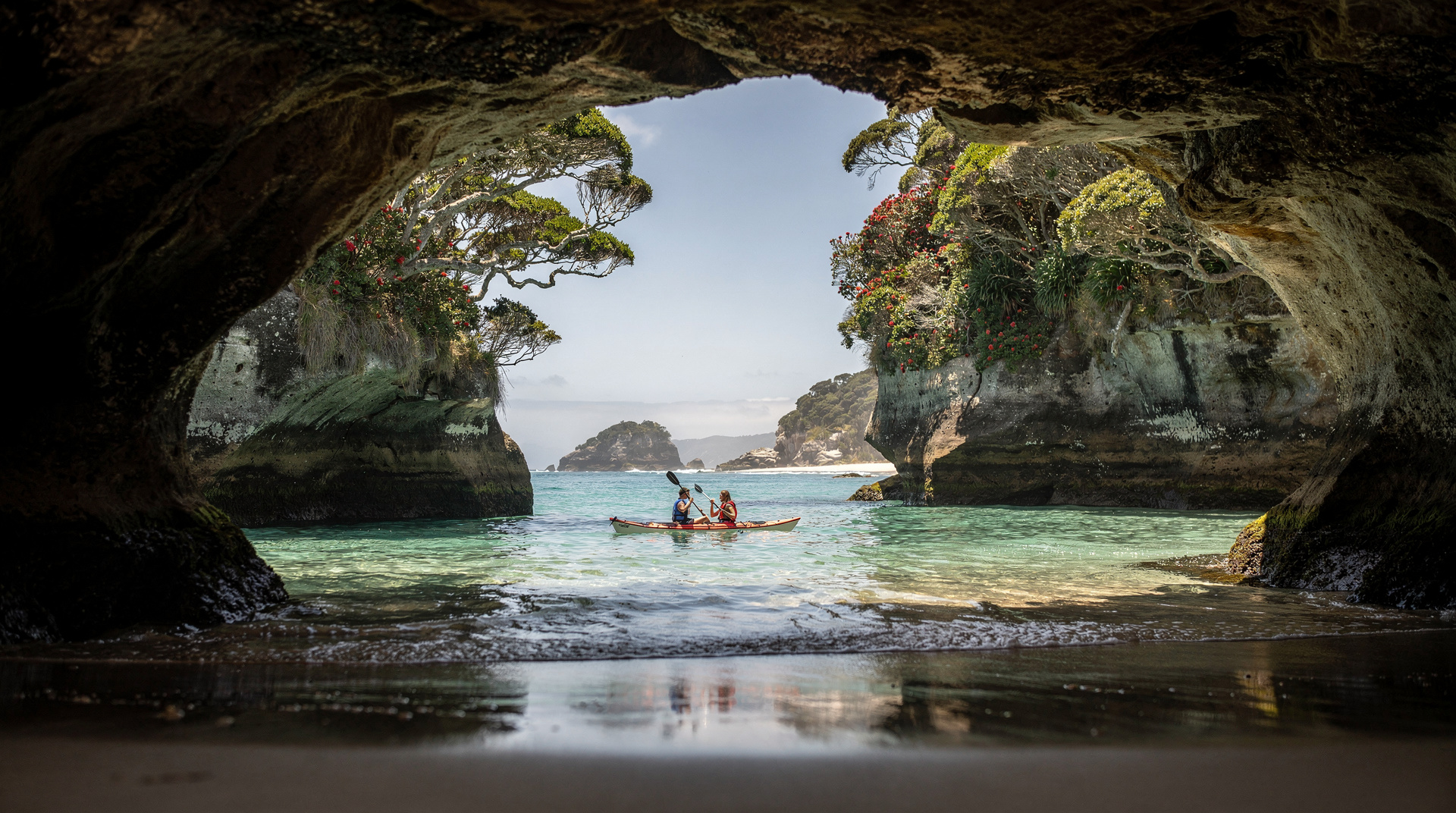
Cathedral Cove, Coromandel
Cathedral Cove is Coromandel's most iconic beach. Track access after Cyclone Gabrielle, kayak tours, combining with Hot Water Beach — costs NZD/USD/EUR.
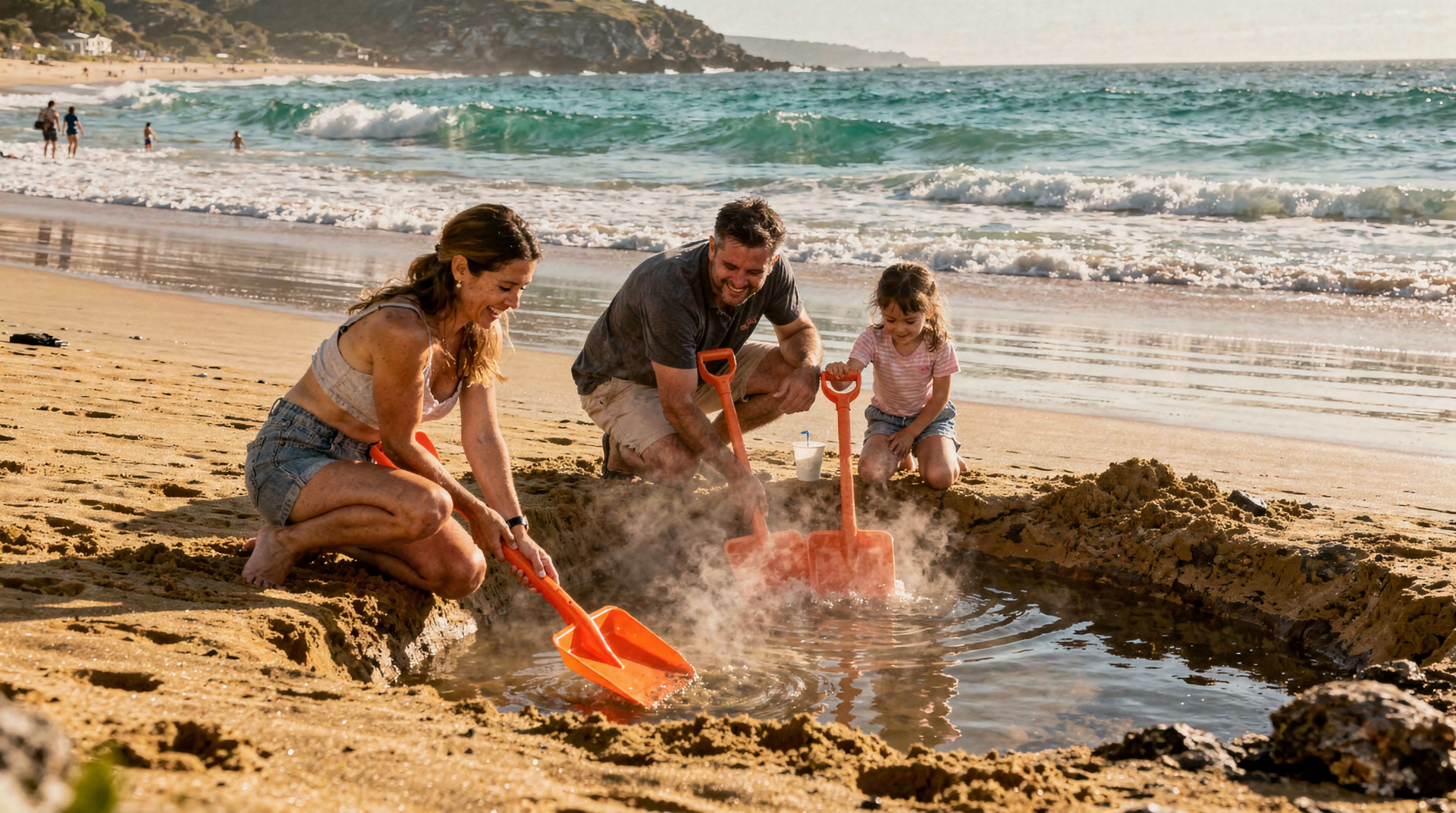
Hot Water Beach, Coromandel
Hot Water Beach: dig into the sand at low tide and geothermal water wells up. Timing the tide window, spade hire, access from Auckland — costs NZD/USD/EUR.
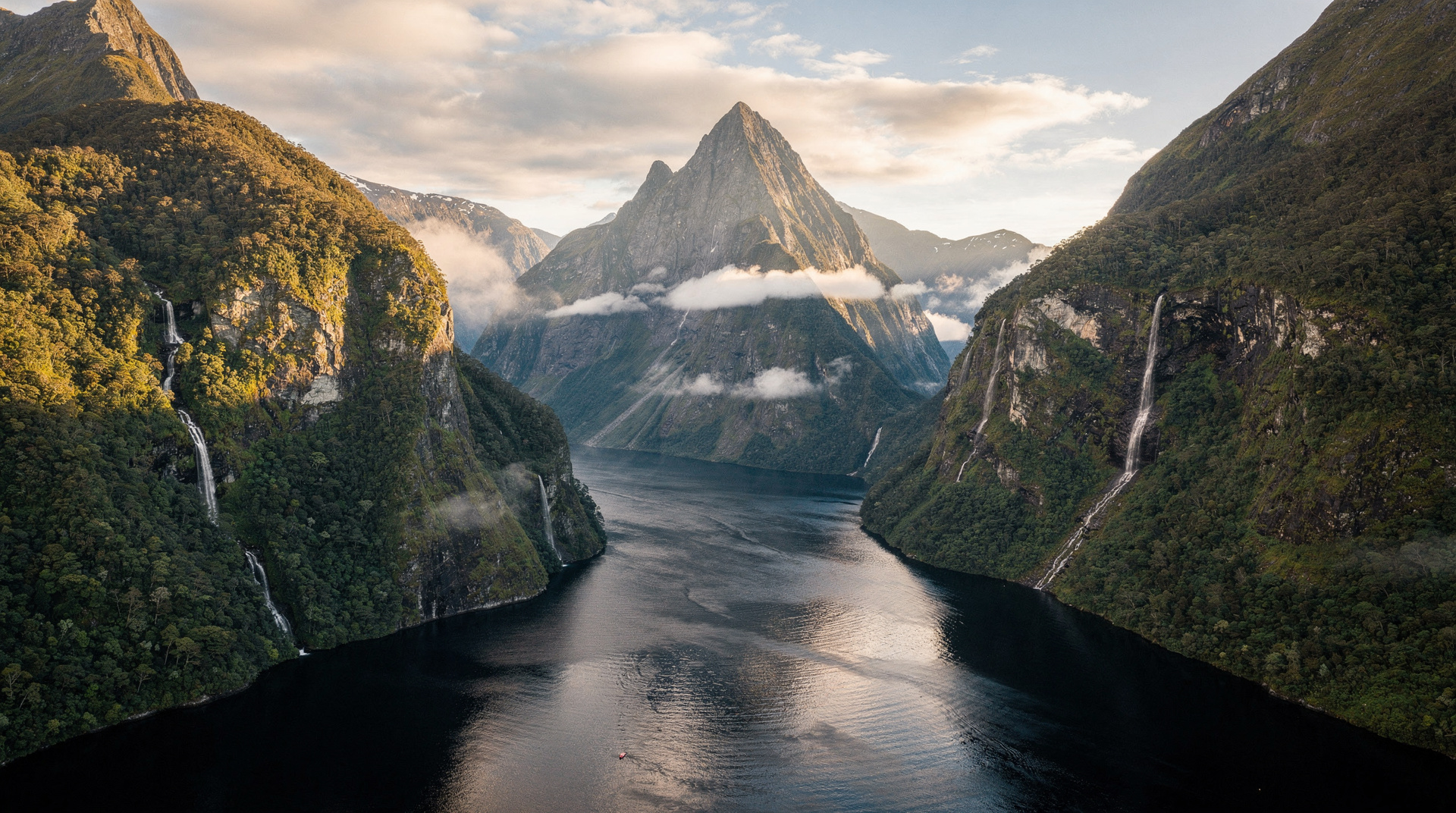
90 Mile Beach — Cape Reinga and Northland's wild coast
90 Mile Beach is 88 km of wild Northland surf coast. Why rental cars can't drive it, tour access, sand dune boarding, and Cape Reinga — prices NZD/USD/EUR.
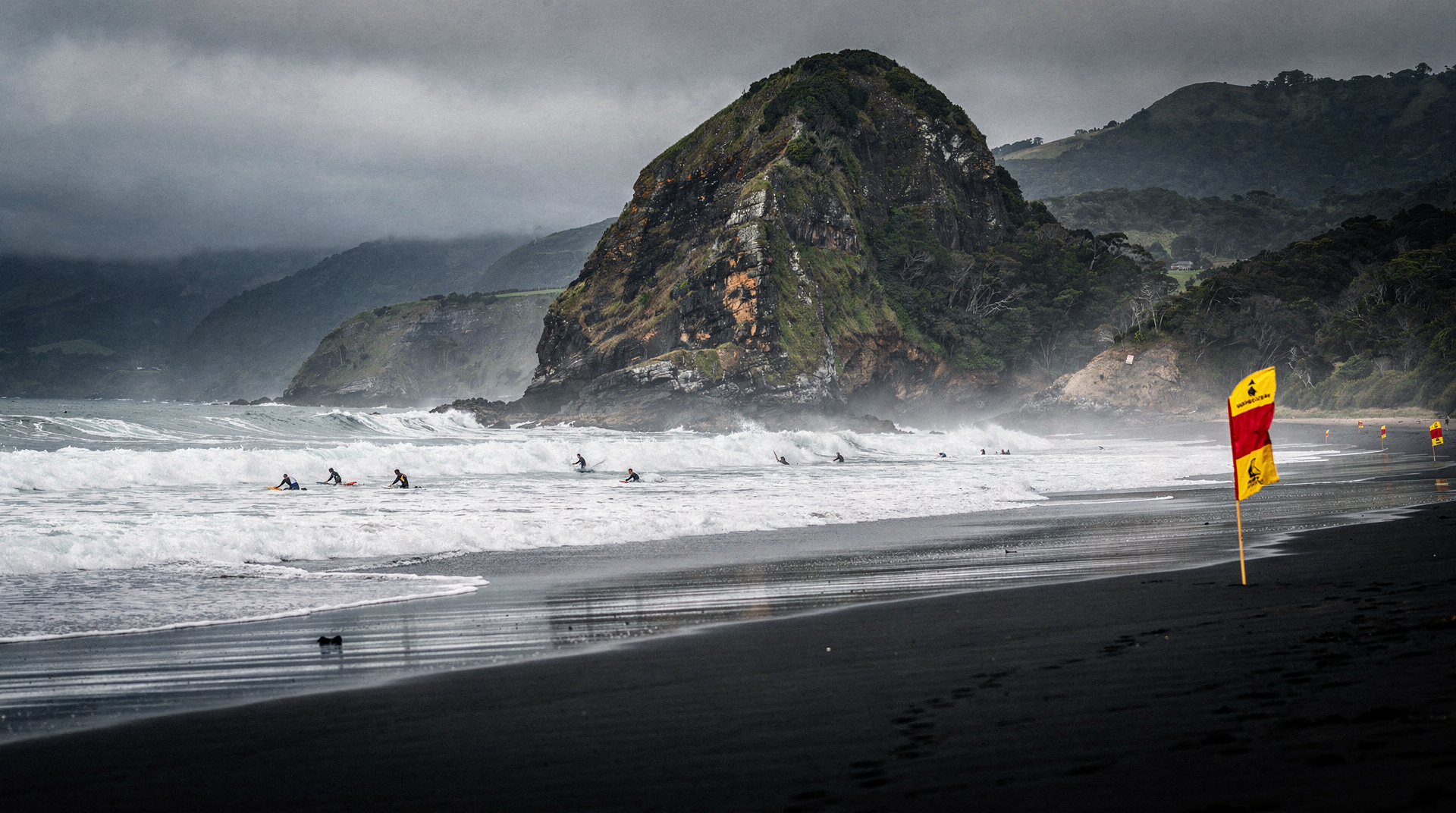
Piha beach — Auckland's wild black-sand coast
Piha is Auckland's most famous black-sand surf beach. Getting there, rip current safety, Lion Rock climb, and shuttle options — prices and practical tips.
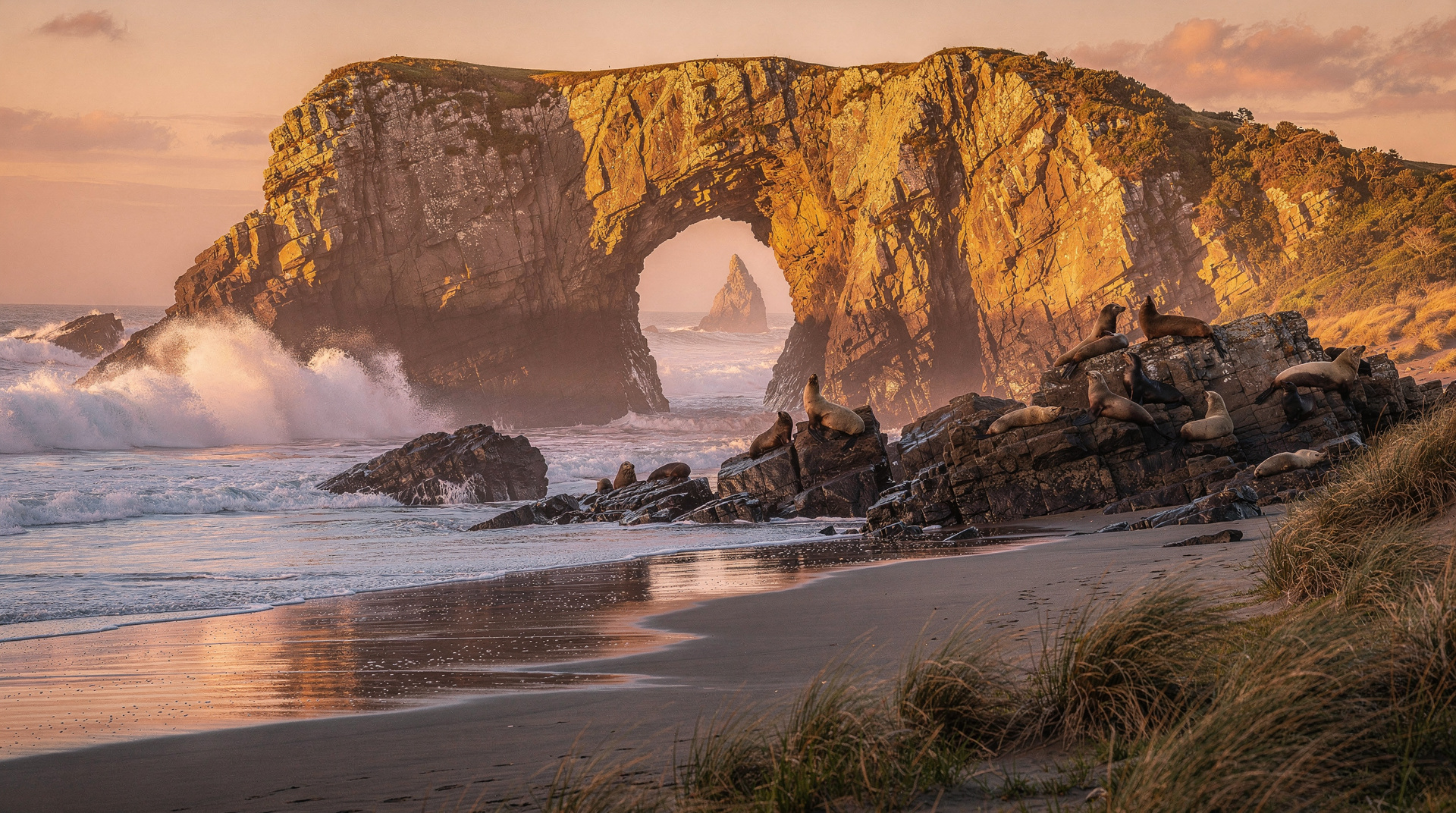
Wharariki Beach and the Archway Islands
Wharariki Beach, Golden Bay: dramatic Archway Islands sea arches, year-round fur seal colony, tidal caves. 20-min walk access. Practical guide 2026.
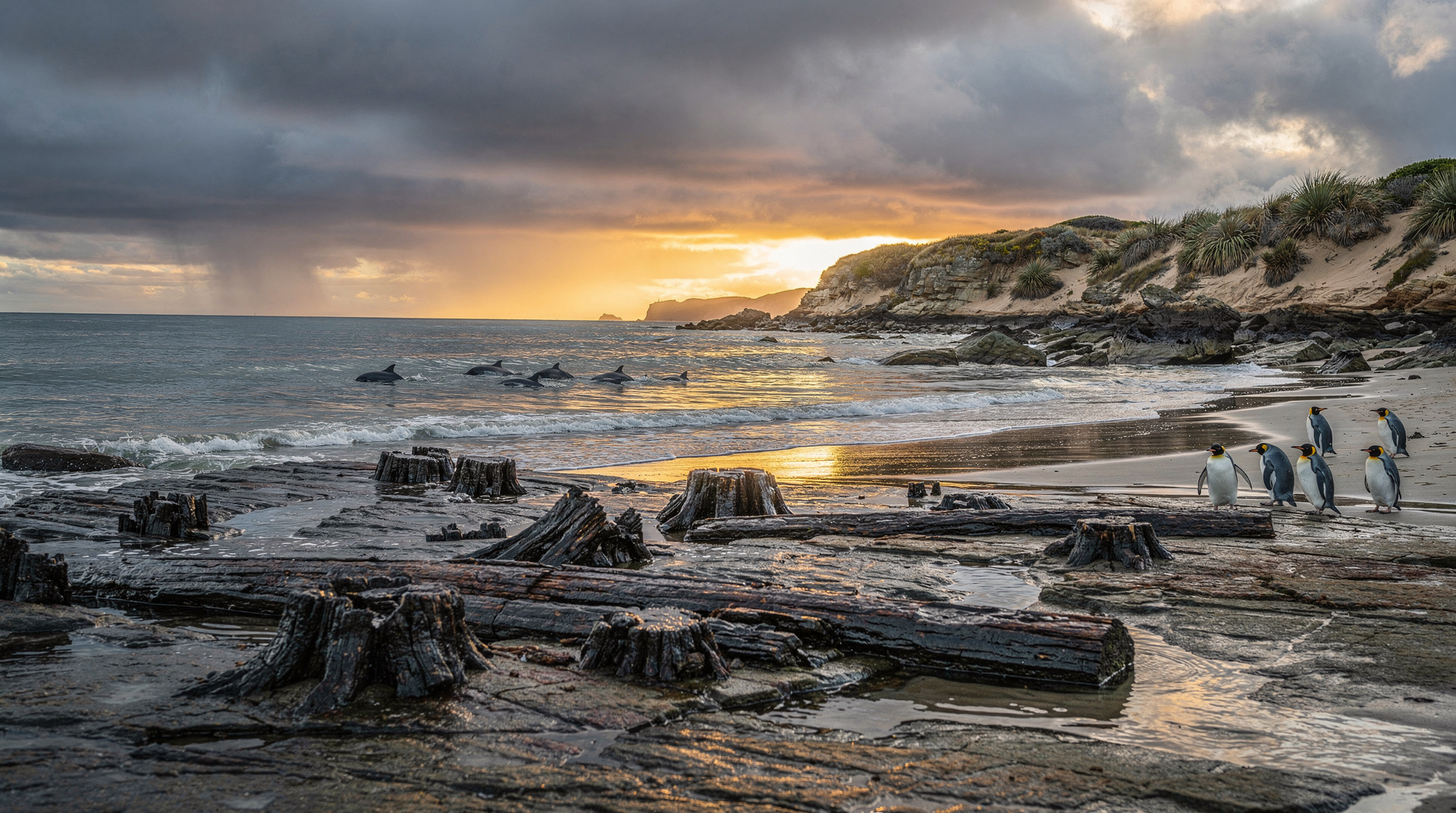
The Catlins — beaches, wildlife, and waterfalls
The Catlins is Southland's wild coastal drive — Hector's dolphins at Curio Bay, Cathedral Caves, Nugget Point penguins. Self-drive guide and costs.
Last reviewed: