Cook Strait ferry: Interislander vs Bluebridge — which one to book
Interislander or Bluebridge for the Cook Strait crossing?
Interislander has more departures and one new ship (Aratere replacement). Bluebridge is often cheaper by 10–20% and has a calmer dog policy. For campervans, compare loading conditions on the specific sailing — both handle them but ramp angles differ. Book early in either case — both sell out in summer.
The honest two-line answer
| Dimension | Interislander | Bluebridge |
|---|---|---|
| Crossing time | 3h 30m (standard) | 3h 30m – 3h 50m |
| Departures per day | 3–5 per day, both directions | 2–4 per day, both directions |
| Price (foot passenger) | NZD 55–105 / USD 33–63 / EUR 30–58 | NZD 48–92 / USD 29–55 / EUR 27–51 |
| Price (standard car) | NZD 135–260 / USD 81–156 / EUR 74–143 | NZD 115–235 / USD 69–141 / EUR 63–129 |
| Campervans/motorhomes | Good ramp access — book vehicle length early | Handles large vehicles well — slightly simpler loading |
| Dogs | Permitted in kennels or on vehicle deck — varies by vessel | Dogs in vehicle or kennel — clear, consistent policy |
| On-board food | Café + buffet restaurant, bar | Café + galley food, bar |
| Lounges & seating | Multiple decks, kids zone, recliner seats | Simpler layout — comfortable but less variety |
| Reliability (wind/weather) | Can cancel in extreme Cook Strait conditions | Can cancel in extreme Cook Strait conditions |
| Booking online | KiwiRail website | Bluebridge.co.nz |
| Book it | Book Interislander via GYG |
Verdict: Both are adequate. Bluebridge saves money. Interislander has more departures and a newer ship. The best choice is usually whichever has the sailing time that fits your itinerary at the price you're comfortable paying.
The Cook Strait is one of the windiest bodies of water in the world, connecting Wellington Harbour to the Marlborough Sounds through 90 kilometres of water with a reputation for rough crossings. The two ferry operators — Interislander (KiwiRail) and Bluebridge (Strait Shipping) — have divided the route between them for years, providing enough competition to keep prices from climbing completely out of control, and enough option variety that getting from Wellington to Picton doesn’t require a single company’s mercy.
I’ve done this crossing more times than I can accurately remember, always from the passenger deck, usually checking the Cook Strait winds forecast the night before and hoping for a calm one. The honest truth: both operators get you to Picton. The crossing quality depends almost entirely on the weather, which neither controls. The differences between them are real but smaller than the marketing suggests.
| Where | Wellington to Picton, 90km across Cook Strait |
| Time needed | 3h20-3h50 crossing plus 45-60 min check-in |
| Cost | Foot passenger from around NZD 48; car from around NZD 115 |
| Cheaper option | Bluebridge, typically 10-20% less |
| More departures | Interislander, 3-5 sailings daily each way |
The crossing itself
The Interislander terminal is at Aotea Quay in central Wellington, about 2 kilometres north of the ferry terminal — not walkable from Wellington’s CBD with luggage, but accessible by taxi, Uber, or the ferry shuttle. Bluebridge operates from Waterloo Quay, closer to the CBD — walking distance from Wellington train station.
On the Picton end, both terminals are within 300 metres of each other in the Picton ferry precinct. The town itself is 5 minutes’ walk from either berth.
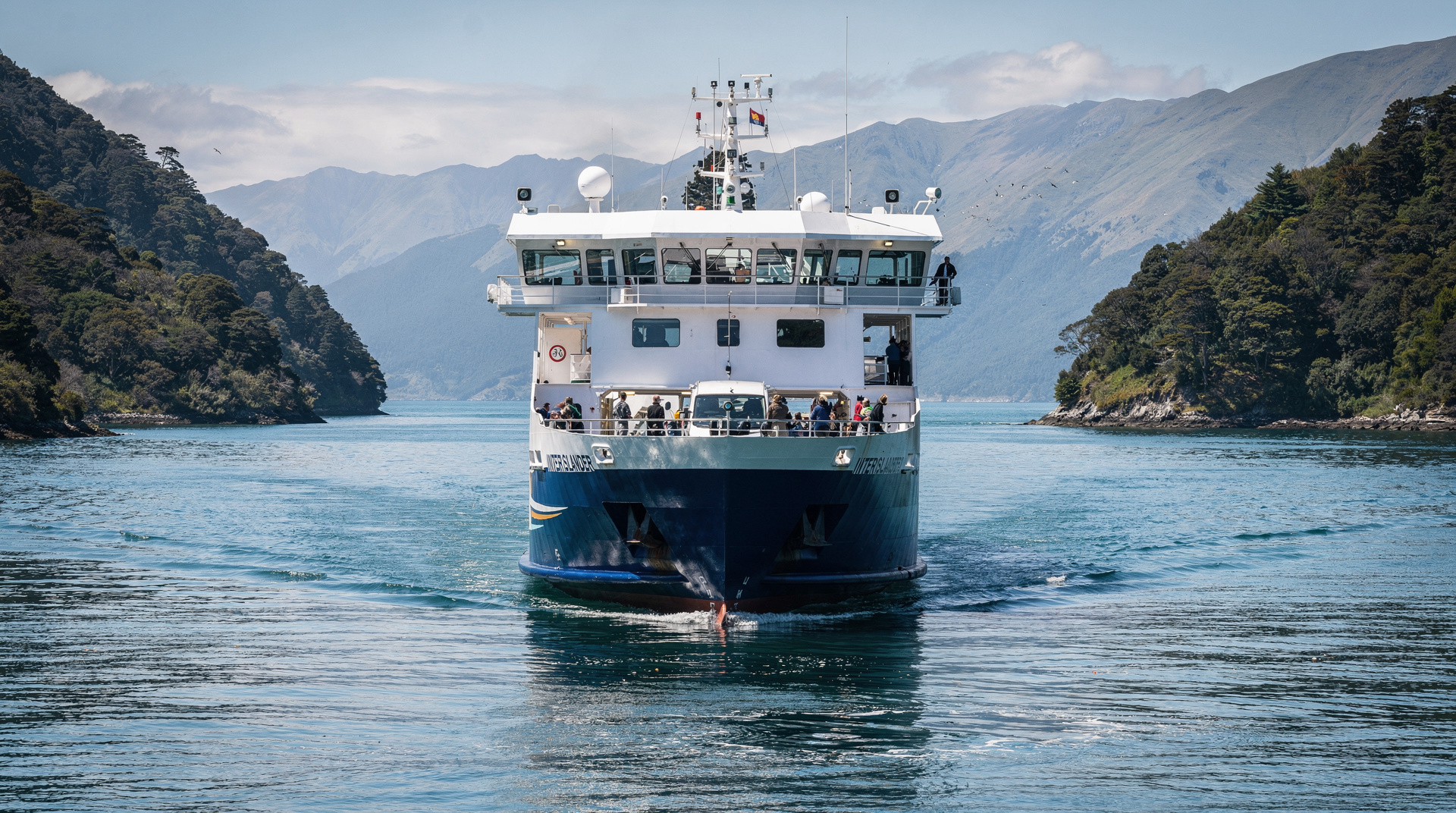
The actual crossing takes 3h 20–50 minutes depending on conditions, vessel, and tidal timing through the Marlborough Sounds (the sheltered, fjord-like waterways that form the northern approach to Picton). The Sounds section is always calm and beautiful — narrow channels between forested hills, mussel farm buoys in the water, the occasional dolphin. The open water of Cook Strait between Wellington and the top of the Sounds is where the motion happens.
A rough Cook Strait crossing ranges from uncomfortable to genuinely unpleasant. Sea sickness on the Cook Strait is common enough that both operators sell ginger biscuits at the café and don’t look surprised when you ask for a seasickness bag. The good news: most crossings are not rough. The Cook Strait has a reputation that slightly exceeds its reality. About 60–70% of crossings in summer are comfortable or mildly choppy. Winter crossings are statistically rougher.
Interislander
Interislander is operated by KiwiRail, the state-owned rail freight company. The route is financially important to KiwiRail not because of tourists but because of freight — truck trailers are a significant part of what goes across the Strait on both services. This matters practically: you’re traveling on what is fundamentally a freight ferry with a passenger deck added, not a purpose-built cruise experience.
The current fleet (2026) is in transition. The Aratere — the main passenger vessel — was replaced following the KiwiRail fleet renewal program. The newer vessel on the route has improved passenger facilities: more seating zones, a dedicated children’s area, improved café space. The freight deck handling has also improved.
Interislander has more daily departures — typically 3–5 in each direction depending on the season — which gives it a practical advantage for travelers with fixed itinerary constraints. If you need a 6am departure or a 9pm crossing, Interislander is more likely to have it.
The on-board experience includes a café, a buffet-style restaurant, a bar, and multiple seating areas from standard seats to premium recliners. The premium experience is not particularly premium by any luxury standard, but it’s comfortable for a 3.5-hour crossing. There’s no overnight service — both operators run day crossings only.
Wellington and Picton: Interislander Ferry (Cook Strait, one-way)
One-way Cook Strait crossing between Wellington and Picton — Interislander service, foot passenger.
From NZD 55–105 / USD 33–63 / EUR 30–58
Interislander and campervans
Campervans and motorhomes over 5.5 metres need to be declared at booking and may attract a higher vehicle surcharge. Interislander has historically been the more complex of the two operators for very large vehicles — the ramp and vehicle deck configuration on some vessels requires specific positioning. Book the vehicle length accurately at booking, and if you’re driving a high-top or very long motorhome, call KiwiRail directly to confirm loading compatibility before you commit to a sailing.
Interislander and dogs
Dogs are permitted on Interislander but the policy has varied between vessels. On most sailings, dogs travel in the vehicle deck (you stay with them during the crossing or they’re secured in the vehicle), or in kennels when provided. Check the specific vessel policy when booking — it has changed between fleet updates. Do not assume the policy from a previous trip applies.
Bluebridge
Bluebridge is operated by Strait Shipping, a privately owned company that has competed successfully with the state-owned operator for well over a decade. Its two vessels — Straitsman and Santa Regina — are reliable if less modern than Interislander’s newer addition. The on-board facilities are simpler: café, galley food, bar, standard seating. The recliner option exists on both vessels.
The Bluebridge advantage is price and consistency. Bluebridge is typically 10–20% cheaper than Interislander on equivalent sailings for foot passengers and vehicles. The gap narrows during peak summer (January–February) when both operators price up, but Bluebridge rarely reaches Interislander’s peak pricing. For a family with a car, the saving across two crossings (if doing a return) can reach NZD 80–150.
Bluebridge’s ferry terminal is closer to Wellington’s CBD — 15 minutes’ walk from the train station — which matters if you’re a foot passenger arriving by train from Auckland. The Interislander terminal requires a transfer.
Bluebridge.co.nz is the booking platform — straightforward, slightly less polished than KiwiRail’s system, but functional.
Bluebridge and campervans
Bluebridge handles campervans and motorhomes routinely. The vehicle deck loading is considered slightly simpler by some campervan operators — the ramp configuration accommodates a wider range of vehicle heights without special arrangement. High-top campervans (over 3.5 metres) should still declare height at booking. The Santa Regina has vehicle deck height restrictions that differ from the Straitsman — verify at booking if you’re in doubt.
Bluebridge and dogs
Bluebridge has a cleaner, more consistent dog policy: dogs travel in the vehicle or in a dedicated kennel area on the vehicle deck. You can visit your dog during the crossing. The policy hasn’t changed between vessels the way Interislander’s has. For dog owners, Bluebridge is generally the more straightforward choice.
Verdicts — Skip / Worth it / Splurge
- ✓ Worth it Standard seat either operator — NZD 55–105 foot passenger. Adequate for a 3.5-hour daytime crossing. Bring something to read or watch, the scenery through the Marlborough Sounds at the end is its own reward.
- ✓ Worth it Bluebridge for budget travelers and dog owners — Usually cheaper, consistent pet policy, terminal walkable from Wellington train station.
- ✓ Worth it Interislander for early-morning or late-evening departures — More sailing times gives more flexibility for tight itineraries.
- ★ Splurge Premium recliners — NZD 25–45 extra per person. Worth it on a rough crossing when everyone in the standard seating area has turned green. Not necessary on a calm day.
- ✕ Skip On-board restaurant — Both operators’ food is overpriced and mediocre. Eat before you board or bring your own food. The café coffee is acceptable.
- ◆ Hidden gem The Marlborough Sounds approach — Whichever operator you use, go outside for the last 45 minutes as the ship winds through the Sounds. Queen Charlotte Sound is genuinely beautiful — narrow forested channels, calm water, the occasional kayaker. It’s free with both operators and is one of the better free experiences in New Zealand.
Getting to the terminal without a car
If you’re arriving by train — the Northern Explorer from Auckland terminates at Wellington station — Bluebridge’s Waterloo Quay terminal is the easier walk, roughly 15 minutes with luggage. Interislander’s Aotea Quay terminal requires a taxi, Uber, or the free Interislander shuttle bus, which runs from central Wellington on a schedule tied to sailing times; check the departure time when you book rather than assuming it matches every sailing.
On the Picton side, both terminals sit inside the same small ferry precinct, an easy walk from the town’s cafes, the i-SITE, and the InterCity coach stop. If you’re continuing south without a rental car, book the coach connection alongside your ferry ticket — the timing is designed to meet arriving sailings, but it’s not automatic if booked separately at the last minute.
Bikes, e-scooters, and other unusual cargo
Bicycles travel on both ferries for a modest surcharge (around NZD 15-25), stored in the vehicle deck rather than with foot passenger luggage — check in at the same counter as vehicles, not the foot passenger queue. Motorbikes are also accepted on both, secured by crew on the vehicle deck. E-scooters and other battery-powered devices should be declared at booking; lithium battery restrictions apply and vary slightly between operators, so confirm before you turn up with anything unusual.
What it actually costs (NZD + USD + EUR)
Cost breakdown
Prices approximate 2026, one-way. Peak summer prices (Jan–Feb) are at the high end of the range. Book 4–8 weeks ahead for summer sailings.
| Item | NZD | USD | EUR | Verdict |
|---|---|---|---|---|
| Foot passenger — Interislander one-way Price varies by sailing time and season | NZD 55–105 | USD 33–63 | EUR 30–58 | ✓ Worth it |
| Foot passenger — Bluebridge one-way Generally 10–20% cheaper than Interislander | NZD 48–92 | USD 29–55 | EUR 27–51 | ✓ Worth it |
| Car (standard, up to 5.5m) — Interislander Per vehicle, no passengers included | NZD 135–260 | USD 81–156 | EUR 74–143 | ✓ Worth it |
| Car (standard) — Bluebridge Per vehicle — passengers booked separately | NZD 115–235 | USD 69–141 | EUR 63–129 | ✓ Worth it |
| Campervan (5.5–6.5m) — Interislander Surcharge applies to vehicles over standard length | NZD 195–340 | USD 117–204 | EUR 107–187 | ✓ Worth it |
| Campervan (5.5–6.5m) — Bluebridge Declare length and height at booking | NZD 165–310 | USD 99–186 | EUR 91–171 | ✓ Worth it |
| Premium recliner upgrade — either operator Worth it on a rough crossing | NZD 25–45 | USD 15–27 | EUR 14–25 | ✓ Worth it |
| Dog kennel — either operator Bluebridge policy more consistent | NZD 15–35 | USD 9–21 | EUR 8–19 | ✓ Worth it |
FAQ
How rough does the Cook Strait get?
Rough enough that seasickness is a genuine possibility on bad days. The strait sits at 41 degrees south, with nothing between it and Antarctica on the westerly quarter — when the Southern Ocean swells wrap around the South Island, the strait gets genuine wave action. The crossing is worst in winter (June–August) and during northwesterly gales. It’s calmer from November to March but never guaranteed flat. Take seasickness medication (Kwells or Stugeron) preventatively if you’re susceptible — don’t wait until you feel bad.
Can I book one-way and walk off the boat?
Yes, and most foot passengers do this. You book one-way, walk on with your luggage, and walk off at Picton or Wellington. No special procedure required. If you’re picking up a rental car in Picton, the rental company desk is inside the Picton terminal. For Queenstown or Christchurch-bound travelers, InterCity coaches connect from Picton — book alongside your ferry.
How far ahead do I need to book?
In January and February: 4–8 weeks for sailings with reasonable vehicle space, especially campervans. Peak sailings (Friday and Sunday departures in summer) can sell out 6 weeks ahead. Foot passenger seats are available later but cabin-class and premium seats go early. Off-season (April–October): booking 1–2 weeks ahead is usually fine; last-minute foot passenger bookings often available.
Is there an overnight ferry option?
No. Both operators run day crossings only. The earliest sailing (around 6am from Wellington, 8am from Picton on most days) and the latest (around 8pm from Wellington) cover early starts and late arrivals, but there’s no sleeping accommodation and no overnight service. If your schedule requires an overnight journey, the Auckland-to-Wellington train (Overlander, where it operates) or flying are the alternatives.
Which is better for families with small children?
Interislander has a dedicated children’s zone with seating and activities — useful for a 3.5-hour crossing with a 4-year-old. Bluebridge’s seating is open-plan and less structured. Both have outdoor deck access for fresh air and whale/dolphin spotting. If the children’s zone matters, Interislander has the edge. If you’re traveling with a campervan and the children will spend some time in the vehicle deck, both operators allow access to the vehicle deck at sea (brief visits, not an option to stay there the whole crossing).
What happens if the sailing is cancelled due to weather?
Both operators move affected passengers to the next available sailing on either their own service or the competitor’s, depending on availability and agreements. You don’t lose your money — you get a rebooking or a refund. Cancellations due to weather are relatively infrequent (Cook Strait cancellations run about 3–5% of all sailings, higher in winter) but can cascade in bad weather weeks. Build a buffer day into your itinerary if arriving in Wellington or Picton for a onward connection.
Can seniors or children get a discount?
Children typically travel at a reduced fare on both operators (roughly half the adult foot passenger price, varying by age bracket — check current terms at booking), and infants usually travel free. Neither operator advertises a blanket senior discount, but occasional promotional fares appear online — always compare the advance-purchase price against any advertised concession before assuming it’s the cheapest option available.
Are there loyalty programs or discount cards?
Interislander: KiwiRail’s Mates Rates gives online discounts on advance bookings — always book early online rather than at the terminal. Bluebridge: no formal loyalty program, but advance purchase discounts are consistently better than walk-up pricing. YHA/BBH cardholders: some discounts apply on Interislander — check at booking. Not applicable to Bluebridge.
Do the ferries take bicycles and motorbikes?
Yes, both operators accept bicycles (around NZD 15-25 surcharge) and motorbikes, loaded and secured on the vehicle deck by crew. Check in at the vehicle counter, not the foot passenger line, and arrive with the standard vehicle check-in window rather than the shorter foot passenger one.
Is one operator noticeably more reliable in bad weather?
No — both assess the same Cook Strait conditions and cancel or delay under the same thresholds, since it’s the same body of water. Neither has a meaningfully better safety or reliability record than the other; weather affects both equally, and cancellations run around 3-5% of sailings fleet-wide.
When to pick each
Book Interislander if:
- You need a specific early-morning or late-evening departure not available on Bluebridge
- The children’s zone matters and you have young kids
- You’re already using KiwiRail’s train + ferry combo booking (Auckland to Picton via Wellington — the Northern Explorer and Interislander can be booked together)
- You’ve used the Interislander before and know what to expect
Book Bluebridge if:
- Price is the priority and you have schedule flexibility
- You’re traveling with a dog and want a consistent, clear pet policy
- You’re on foot from Wellington city centre (their terminal is closer)
- You’re traveling in a large campervan and want the simpler loading procedure
- You’re doing a same-week return and want to save on both crossings
Book either if:
- You have a fixed date and one operator has the sailing time you need while the other doesn’t
- One operator is significantly cheaper for your specific sailing (prices vary departure by departure — always compare)
The Cook Strait crossing is one of the genuinely great New Zealand travel experiences — the Sounds approach at the end is something no South Island first-timer should miss, and the drama of the strait itself (calm or rough) is part of the journey. Both operators complete it adequately. Pick on price and schedule, not brand loyalty.
Related comparisons and guides
Related guides

Marlborough
Honest Marlborough guide: Picton ferry gateway, Queen Charlotte Sound, Blenheim wineries, Havelock mussels. Real NZD/USD/EUR prices and practical logistics.

Marlborough wine tour guide
Marlborough produces 77% of NZ's wine. Self-drive routes, guided tours, top wineries around Blenheim — prices NZD/USD/EUR and drink-drive tips.
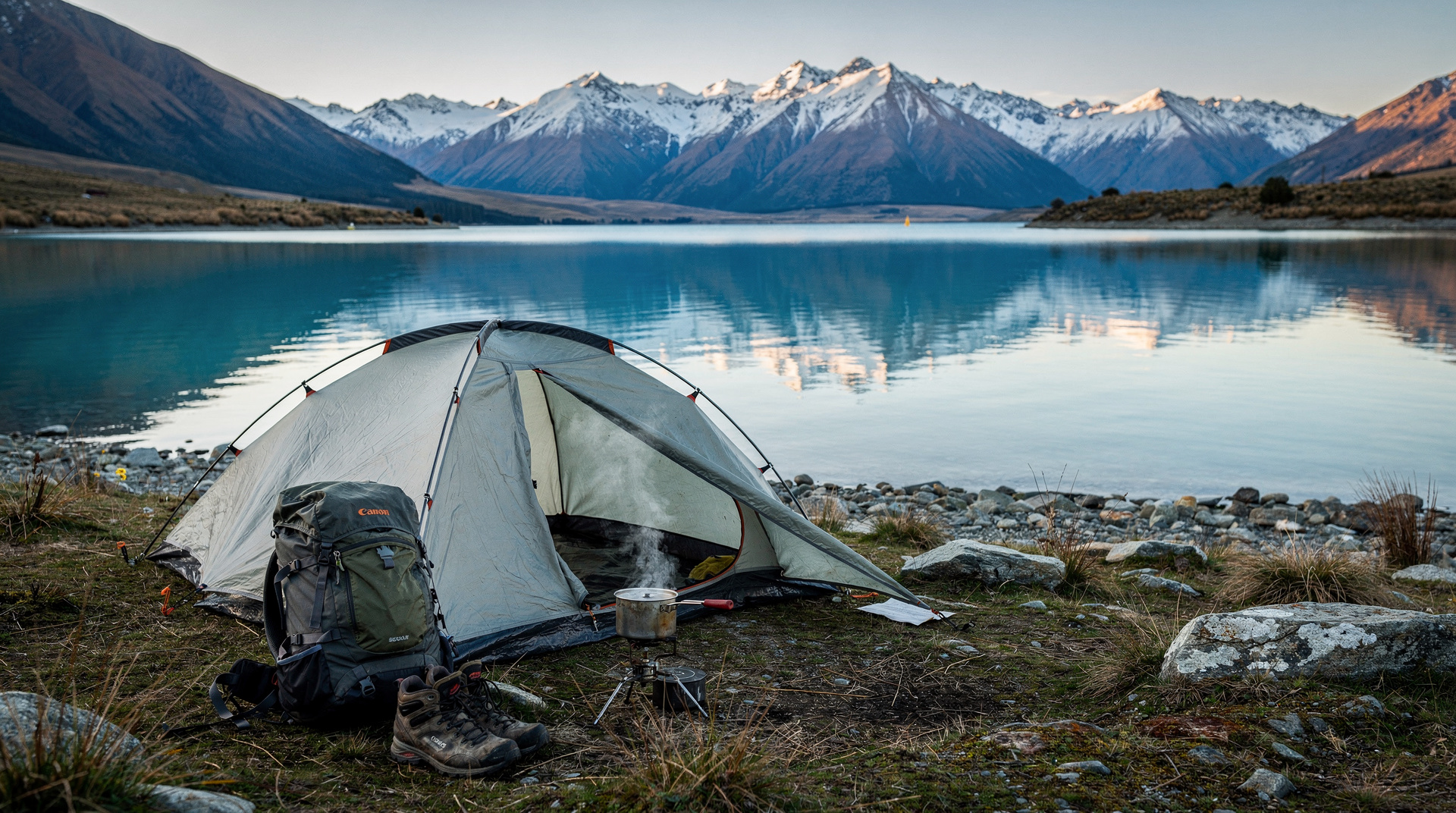
Backpacker hostel vs holiday park in New Zealand — which suits you?
YHA, Base, and Bug hostels vs Top 10 and Tasman holiday parks — honest NZ comparison for solos, couples, and families with 2026 prices.

Campervan vs car rental in New Zealand
Honest campervan vs car rental comparison for NZ: real costs, freedom camping rules, who should choose each, and what the brochures don't tell you.
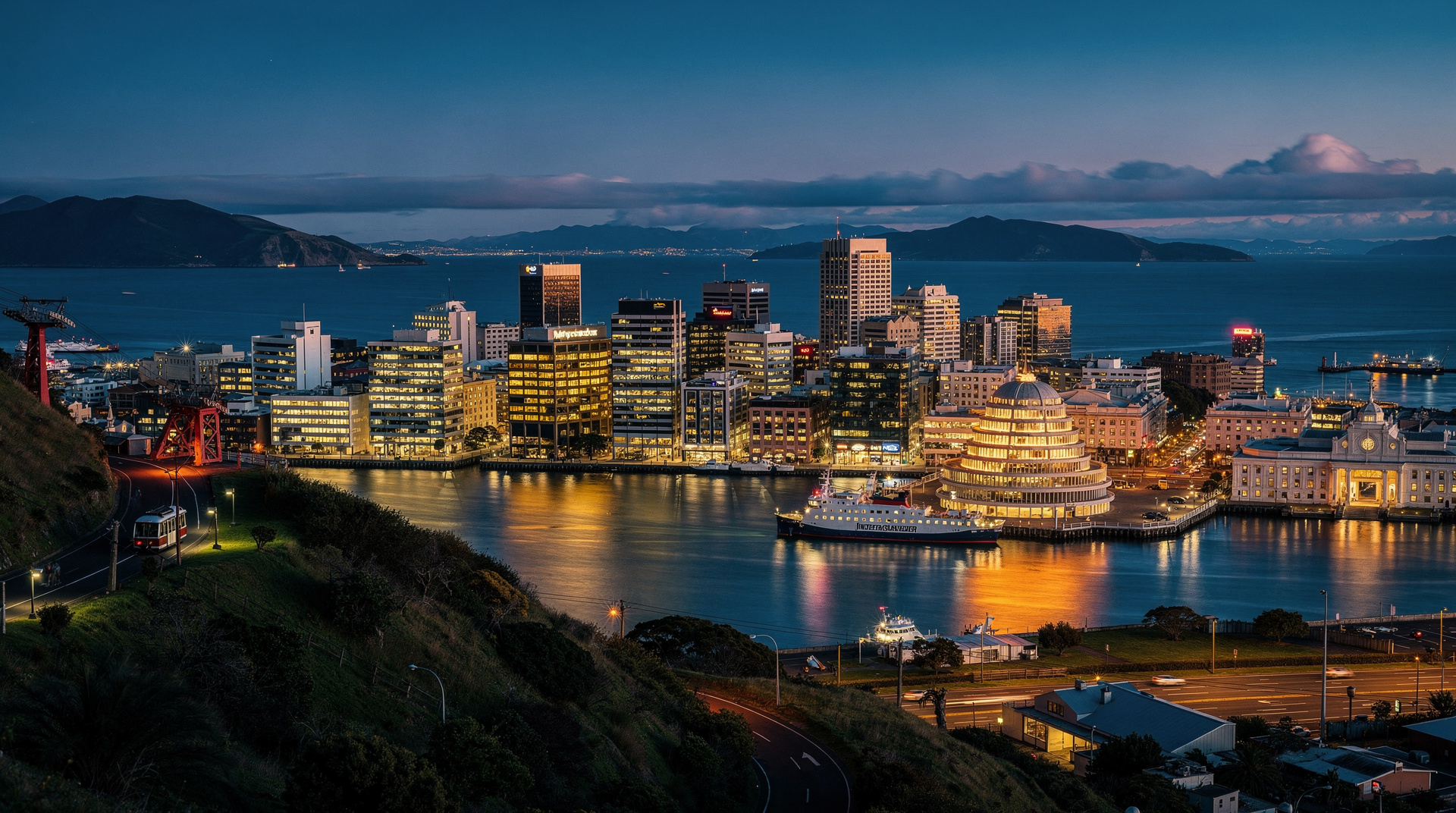
Wellington region
Honest Wellington region planner: city highlights, Te Papa, Weta Workshop, Wairarapa wine, Kapiti Island. Real NZD/USD/EUR costs and practical logistics.
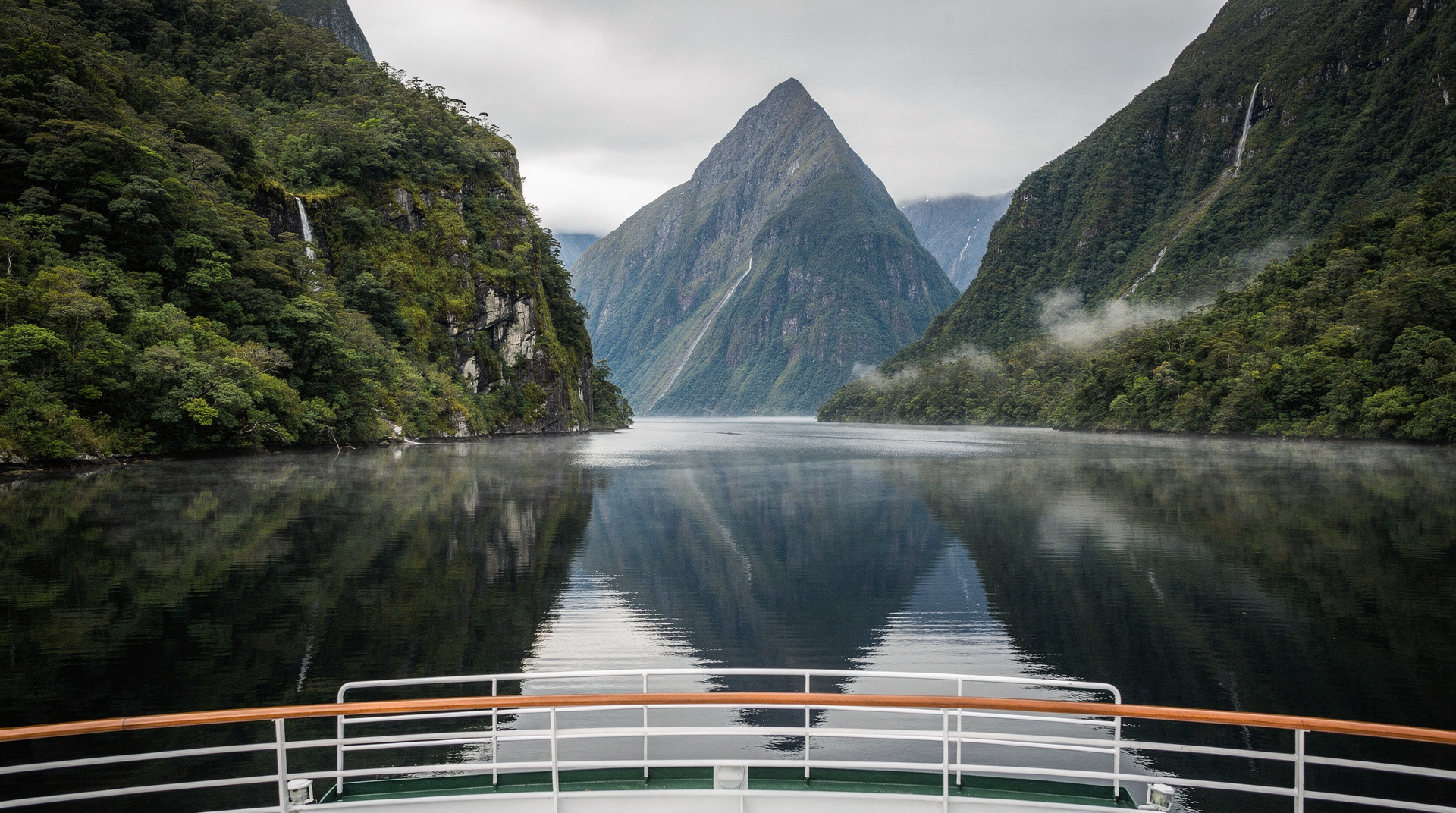
7-day South Island itinerary — the essential loop
Christchurch → Tekapo → Mt Cook → Queenstown → Milford → TranzAlpine return. The honest 7-day South Island loop with real costs and pacing.
Last reviewed: