Marlborough vs Central Otago wine — Sauvignon Blanc or Pinot Noir trip
Marlborough or Central Otago for a wine trip?
Marlborough if you want a 2-day cellar-door blitz of crisp Sauvignon Blanc on flat bike routes. Central Otago if you have a week, like Pinot Noir, and want vineyard lunches with alpine views.
The honest two-line answer
| Dimension | Marlborough | Central Otago |
|---|---|---|
| Signature grape | Sauvignon Blanc — aromatic, citrus, high-acid | Pinot Noir — earthy, cherry, silky tannin |
| Landscape | Flat river plains, golden hills, wide skies | Rocky schist gorges, alpine backdrop, dramatic seasons |
| Tour style | Bike between wineries on flat sealed lanes | Chauffeured van through mountain valleys |
| Days needed | 2 days adequate, 3 comfortable | 3–5 days to cover Bannockburn, Cromwell, Gibbston |
| Distance from major hub | 30 min from Picton, 1h from Nelson | 30 min from Queenstown, 30 min from Wanaka |
| Number of wineries | 150+ — largest NZ wine region by volume | 80+ — smallest premium region, high per-bottle price |
| Best season | Nov–Apr (harvest March–April outstanding) | Feb–May (autumn colours + harvest together) |
| Avg half-day tour cost | NZD 95–130 / USD 57–78 / EUR 52–71 | NZD 130–185 / USD 78–111 / EUR 71–102 |
| Self-drive | Flat, easy, GPS-friendly | Gorge roads, narrow — guided is better |
| Food pairing culture | Mussel cruises, olive oil, artisan cheese | Venison, wild thyme honey, alpine cheese |
| Book it | Book Marlborough wine tour | Book Central Otago wine tour |
Verdict: Marlborough for a quick, affordable, bike-friendly Sauvignon Blanc fix. Central Otago for a more expensive, more dramatic, Pinot-led wine journey.
These are New Zealand’s two most internationally recognized wine regions — and they share almost nothing except the grape vine. Marlborough is flat, efficient, and built around Sauvignon Blanc grown at industrial scale. Central Otago is steep, remote, and built around Pinot Noir grown in some of the world’s most extreme conditions for a premium grape.
I’ve spent more time than I’ll admit cycling between Marlborough wineries in February, sun on the back of my neck, a borrowed bike with a wire basket, stopping at Dog Point before noon. I’ve also spent afternoons at Felton Road above Bannockburn watching the light change colour on schist cliffs while a winemaker explained why Central Otago Pinot costs what it does. Both are genuinely excellent. They are not interchangeable.
The practical difference: Marlborough is easy to visit on a 2-night detour from the Cook Strait ferry. Central Otago rewards a longer commitment — it’s a wine region you visit because you’re going to Queenstown or Wanaka anyway, and it improves significantly if you have 3 or more days.
Marlborough: what it actually is
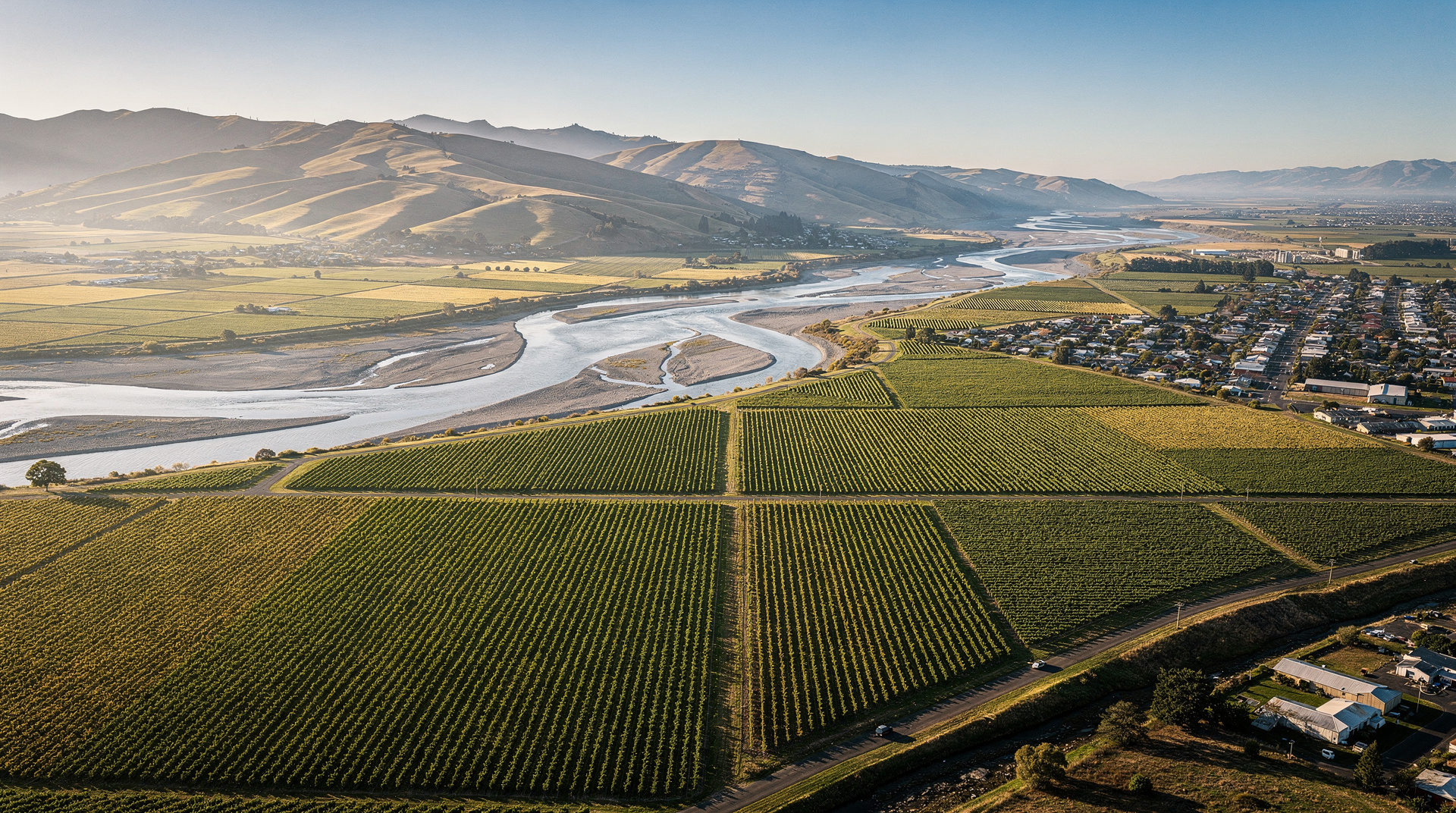
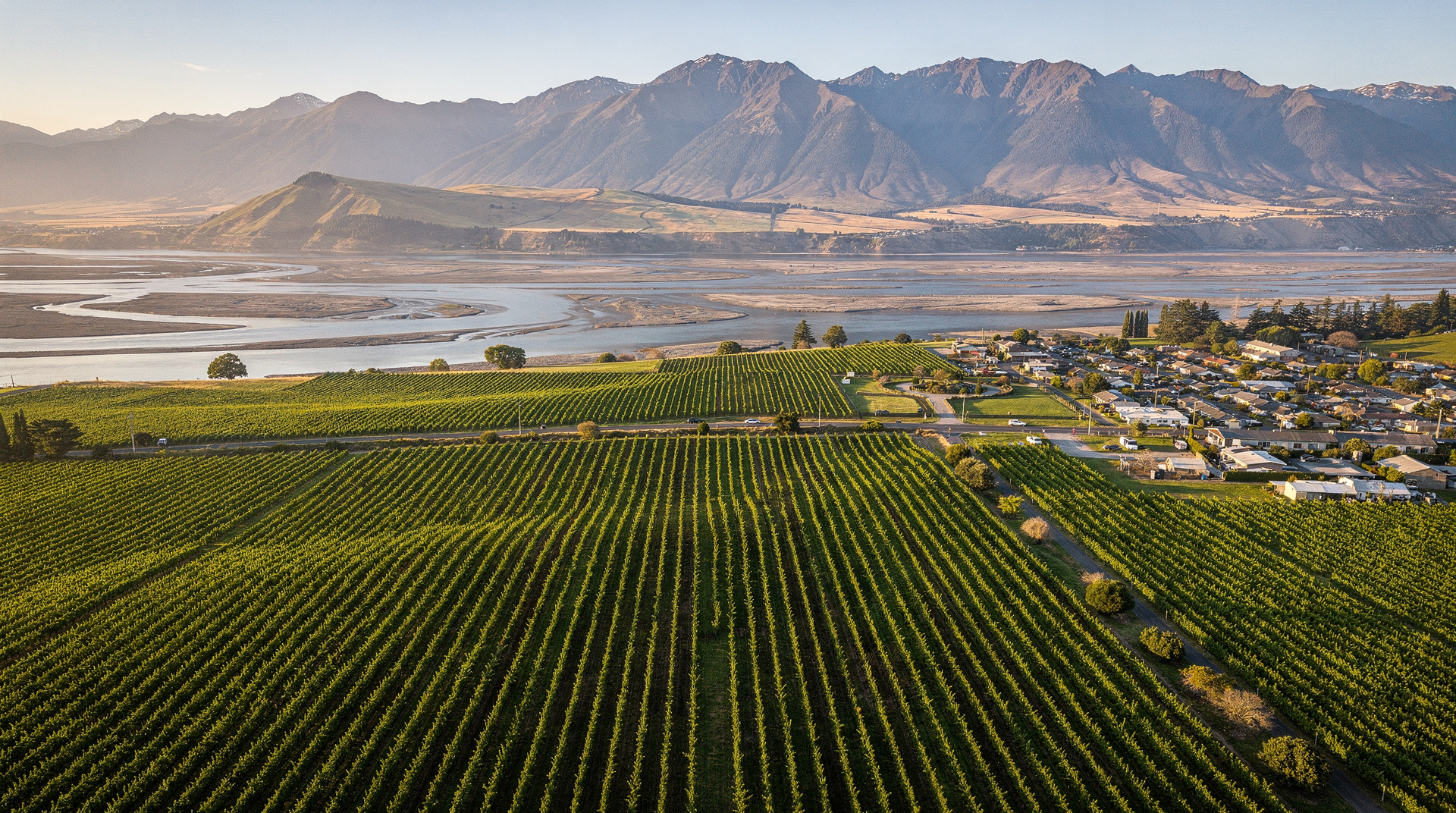
Marlborough sits at the top of the South Island, sheltered by the Richmond and Wither Hills ranges. The Wairau Plains — a wide, flat river basin between the ranges — is where almost everything grows. The soils are stony river gravel with good drainage. The climate is dry (one of the driest on the South Island), sunny, and with a marked diurnal temperature variation: hot days, cool nights. This combination produces Sauvignon Blanc that is aggressively aromatic — gooseberry, passionfruit, fresh-cut grass, grapefruit zest — and high in natural acidity. It’s a style the world largely didn’t know existed before Cloudy Bay’s first commercial release in 1985.
Today Marlborough produces roughly three-quarters of New Zealand’s total wine output. The big names — Cloudy Bay, Villa Maria, Kim Crawford, Brancott Estate, Yealands — operate at significant scale. But the region also has over a hundred smaller producers where the winemaking is genuinely interesting: Fromm, Dog Point, Greywacke, Mahi, Seresin, Forrest, Te Whare Ra. These are the cellar doors worth finding.
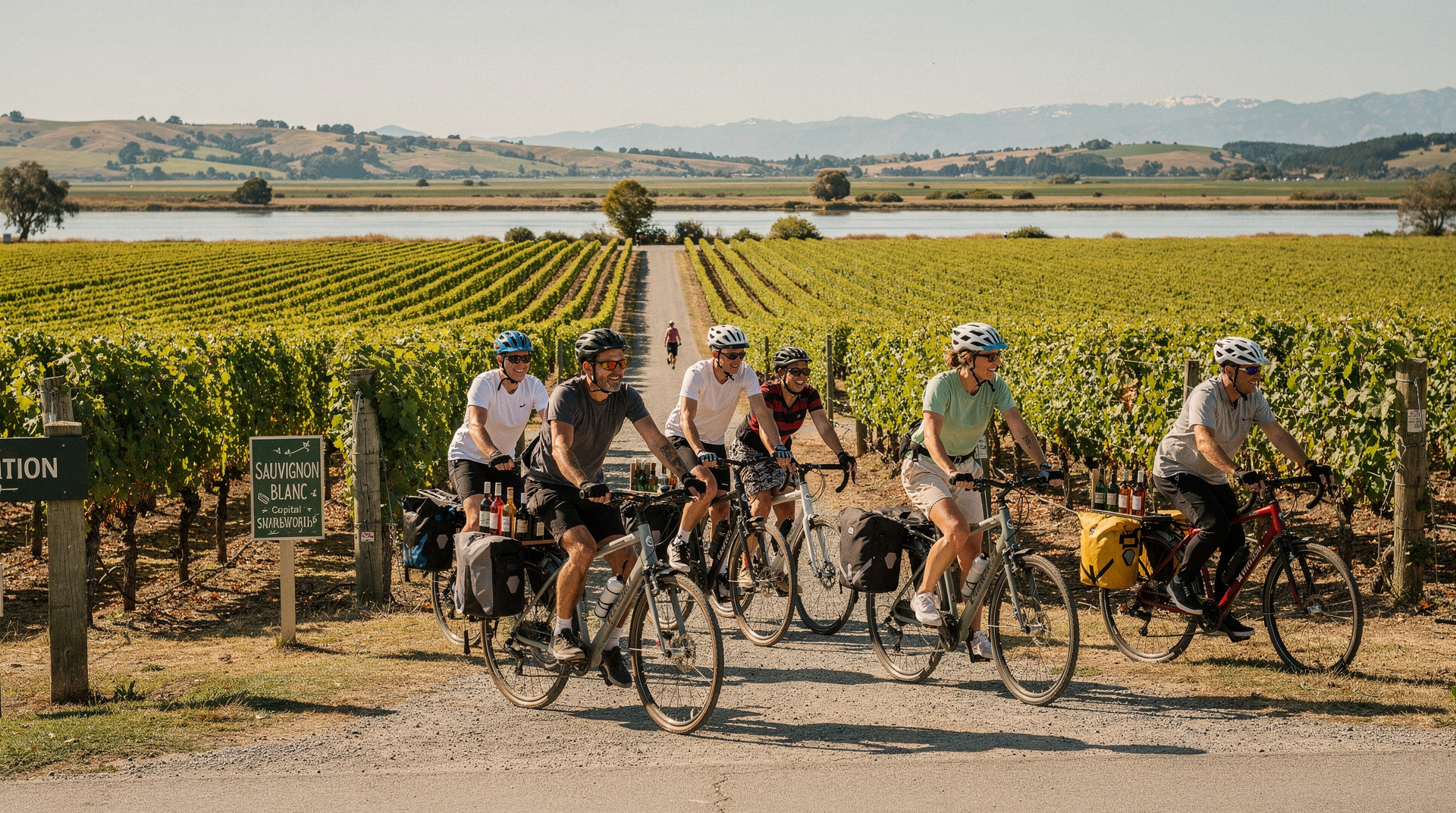
The best way to visit is by bicycle. The Marlborough Wine Trail is a network of sealed lanes connecting cellar doors across the Wairau Plains. It’s flat, clearly signed, and doable without any particular cycling fitness. Most cellar doors have racks out front. On a good day in February or March you can visit five or six before the sun gets too much and the road home starts to wobble pleasantly.
Marlborough: Full-Day Self-Guided Biking Wine Tour
Full-day self-guided biking wine tour through Marlborough — bike, map, and return transport included.
From NZD 95–115 / USD 57–69 / EUR 52–63
Blenheim is the service town — not particularly attractive but well set up for wine tourists. Most visitors stay here or at one of the vineyard accommodation options (Marlborough Vintners Hotel, Peppers Parehua) and cycle or drive to cellar doors. The town itself has a good central strip of restaurants that work the local produce angle effectively.
Greenshell mussels from the Marlborough Sounds (accessible from Picton, 30 minutes north) pair perfectly with the Sauvignon Blanc, and the progressive wine and gourmet trail from Blenheim combines cellar doors with food stops in a structured format that suits those who find self-directed winery visits a bit unstructured.
What Marlborough does well
The sheer density of quality at accessible prices. At a Marlborough cellar door you can taste 6–8 wines for NZD 5–15 (often waived on purchase), buy a bottle for NZD 20–35, and sit outside at a picnic table with a view of the vines. The landscape isn’t dramatic but it has a wide, peaceful quality — big skies, golden hills in summer, the smell of wild thyme on the surrounding hills. There’s an ease to Marlborough wine tourism that Central Otago doesn’t quite replicate.
What Marlborough doesn’t do well
Pinot Noir. Marlborough makes it — some examples from the upper Wairau Valley sub-regions are genuinely interesting — but it’s not why you’re here. Marlborough Pinot is lighter, less complex, and less age-worthy than Central Otago. If Pinot Noir is what you’re specifically after, Central Otago is the only answer in New Zealand.
From Blenheim/Picton: Marlborough Gourmet Wine Tasting Tour
Marlborough gourmet wine tasting tour — includes Sauvignon Blanc, Pinot Gris, and regional food pairings.
From NZD 110–145 / USD 66–87 / EUR 60–80
Central Otago: what it actually is
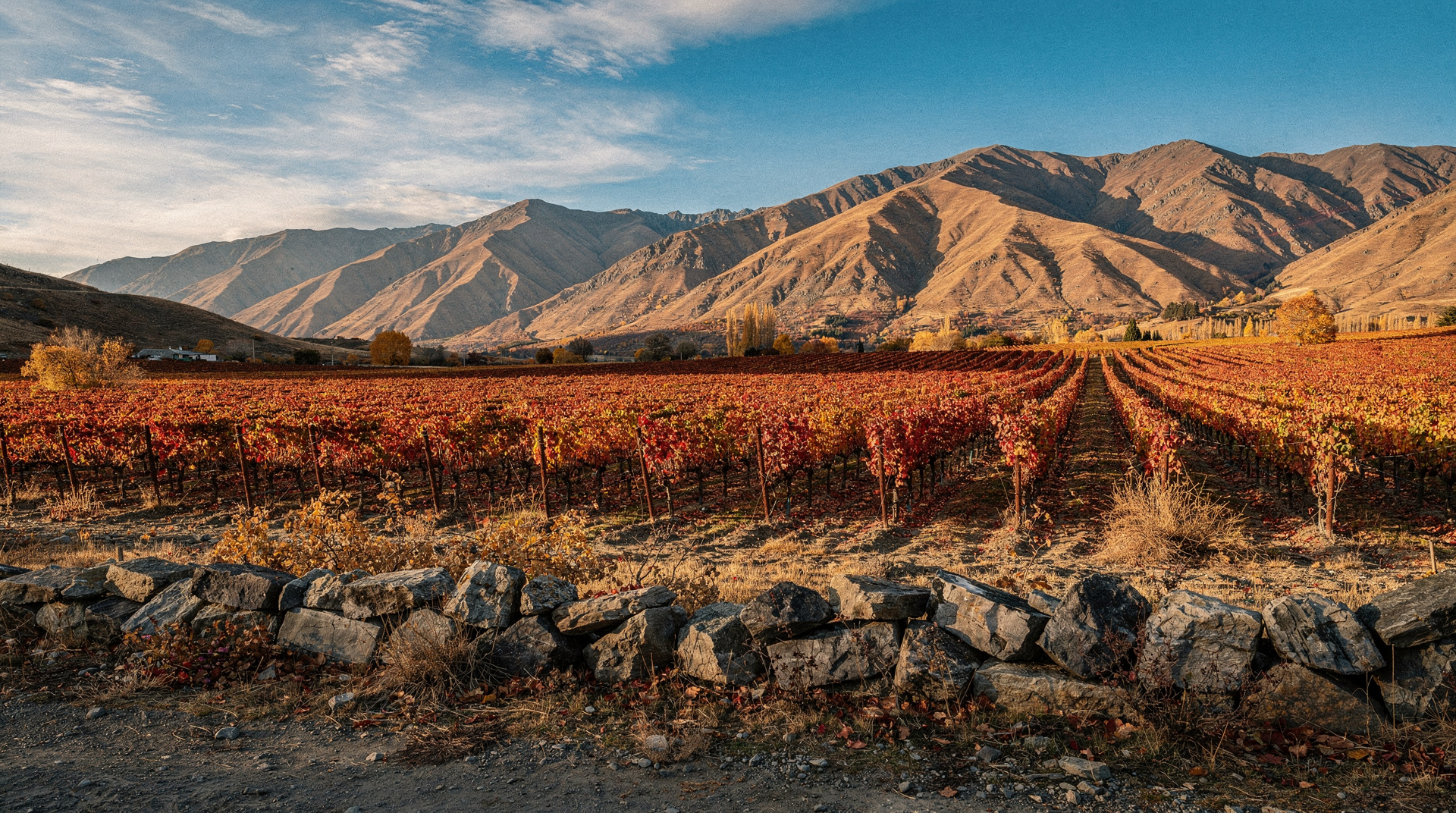
Central Otago is the southernmost and highest-altitude wine region in the world — or near enough. The vineyards around Bannockburn, Cromwell, Gibbston Valley, and Wanaka sit between 200 and 450 metres above sea level in a landscape that looks nothing like anywhere else grapes grow: ancient schist gorges, exposed rock faces streaked pink and orange, tussock grassland between the vineyard rows, and a view of the Remarkables or the Crown Range in the background of almost every cellar door.
The climate is continental extreme — New Zealand’s only truly continental wine region. Winters are cold enough to snow on the vines. Summers are hot and dry. The diurnal variation (difference between day and night temperature) is significant: 15–20°C swings in summer are common. This stresses the vines productively, producing small-berried, intensely flavoured Pinot Noir with good natural acidity and a structural backbone that makes the wines age unusually well for New Zealand Pinot.
Felton Road is the benchmark — internationally recognized as one of the finest Pinot Noir producers in the Southern Hemisphere, comparable to mid-tier Burgundy at similar price points. Mount Difficulty, Peregrine, Rippon (on the shores of Lake Wanaka), Chard Farm (hanging over the Kawarau Gorge), Two Paddocks, Carrick — these are serious wineries with serious wine.
The catch: Central Otago is not particularly easy to visit. The sub-regions — Bannockburn, Lowburn, Cromwell, Gibbston Valley, Alexandra, Wanaka — are spread across 150 kilometres of mountain roads. Self-driving works if you’re not drinking seriously, which is somewhat against the point. The guided van tour format is genuinely useful here: a knowledgeable driver navigates the gorge roads, manages timing, and drops you back at your hotel after a day that ends with six wines’ worth of warmth in your chest.
Queenstown: Central Otago Wine Tour
Central Otago wine tour from Queenstown — Gibbston Valley and Bannockburn cellar doors with return transport.
From NZD 155–185 / USD 93–111 / EUR 85–102
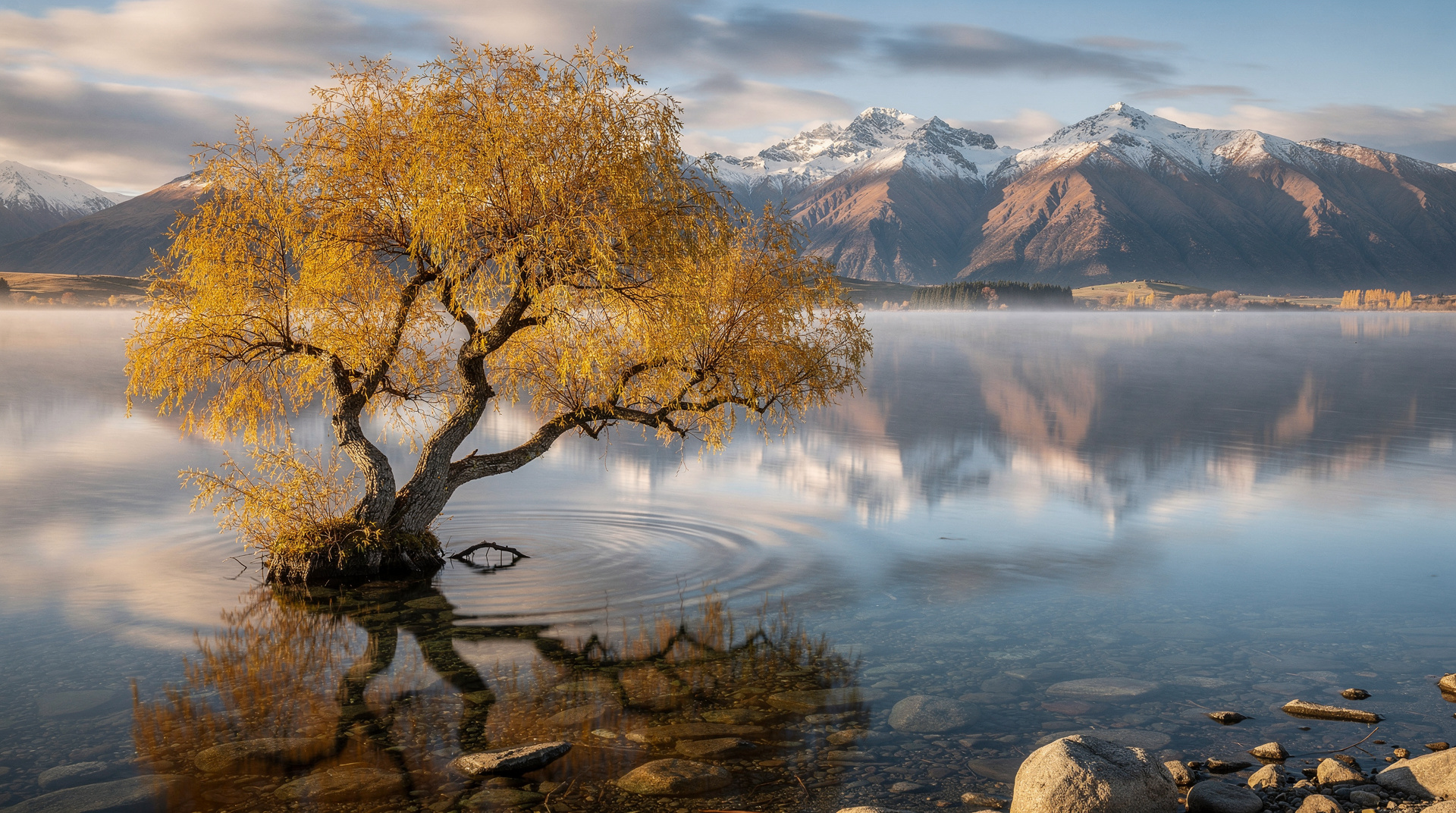
Rippon, on the western shore of Lake Wanaka, deserves special mention. Biodynamic, spectacularly positioned, and producing a range of varieties beyond Pinot Noir (Osteiner, Gewurztraminer, Pinot Gris). The cellar door is one of the most visually arresting in New Zealand: lawn slopes to the lake edge, the mountains behind, and the organic biodynamic vineyard between. It’s worth a detour from Wanaka specifically.
Boutique Central Otago wine tour from Queenstown focuses on smaller producers and includes visits to Gibbston Valley — New Zealand’s most visited winery, positioned in a dramatic schist gorge — and Chard Farm, clinging to a cliff above the Kawarau Gorge river.
What Central Otago does well
The combination of landscape and wine quality is unmatched in New Zealand. Tasting a Bannockburn Pinot Noir at Felton Road while looking at the schist cliffs that define the appellation is a genuinely complete experience. The region also benefits from being embedded within New Zealand’s best adventure tourism infrastructure — a Central Otago wine day pairs naturally with hiking, cycling, or simply arriving from a morning at the Remarkables.
What Central Otago doesn’t do well
Volume and accessibility. Cellar doors have limited hours, some require appointments, and the quality leaders (Felton Road in particular) have waiting lists for allocation mailing lists. You cannot casually cycle between cellar doors the way you can in Marlborough — the distances and terrain make it impractical. Budget for guided transport and the prices that come with it.
Getting between the two regions
If you’re doing both on one South Island trip, the drive from Blenheim to Queenstown is roughly 8 hours via Christchurch and the Lindis Pass, or a similar duration via the West Coast if you want glaciers along the way. Neither route is a single day most people want to drive after wine tasting the day before — build in an overnight in Christchurch or Wanaka to break the journey. Flying is the practical alternative for time-limited visitors: both Blenheim and Queenstown have airports with connections via Wellington or Christchurch, cutting the transfer to under 2 hours in the air, though you lose the South Island scenery along the way.
Wine tourism styles: guided versus independent
The two regions reward genuinely different approaches, and getting this wrong is the most common way visitors end up disappointed. In Marlborough, independent and self-directed exploration is not just possible but often preferable — the self-drive vs guided tour calculus tips toward self-drive (or self-bike) here because the terrain is flat, the cellar doors are close together, and walk-in tastings are the norm outside peak January-February weekends.
In Central Otago, the calculus reverses: distances are longer, roads are gorge-hugging and require concentration, and several of the best producers require advance booking. A driver who isn’t drinking is one workaround for a self-drive Central Otago day, but for most visitors the guided van format genuinely earns its higher price here in a way it wouldn’t in Marlborough.
Packing and practical notes for a wine day
Marlborough’s cycling routes mean sun protection matters more than layers — a February day on the Wairau Plains regularly hits 28-30°C, and there’s little shade on the wine trail. Bring a hat, sunscreen, and water even for a half-day ride. Central Otago’s continental climate swings harder: a summer wine day can still get cold once the sun drops behind the schist ridgelines in the evening, and shoulder-season visits (April, September) can see a 15°C+ difference between midday and early morning.
Layers work better than a single jacket. In both regions, closed shoes are sensible for cellar door gravel and vineyard rows, and a cooler bag in the car is worth having if you’re buying bottles to enjoy later rather than shipping them home — Central Otago Pinot in particular benefits from not sitting in a hot car boot all afternoon.
Verdicts — Skip / Worth it / Splurge
- ✓ Worth it Marlborough self-guided bike tour (NZD 95–115) — The standard Marlborough visit. Flat, affordable, well-organized. Hit 4–6 cellar doors in a day and you’ve experienced the region properly.
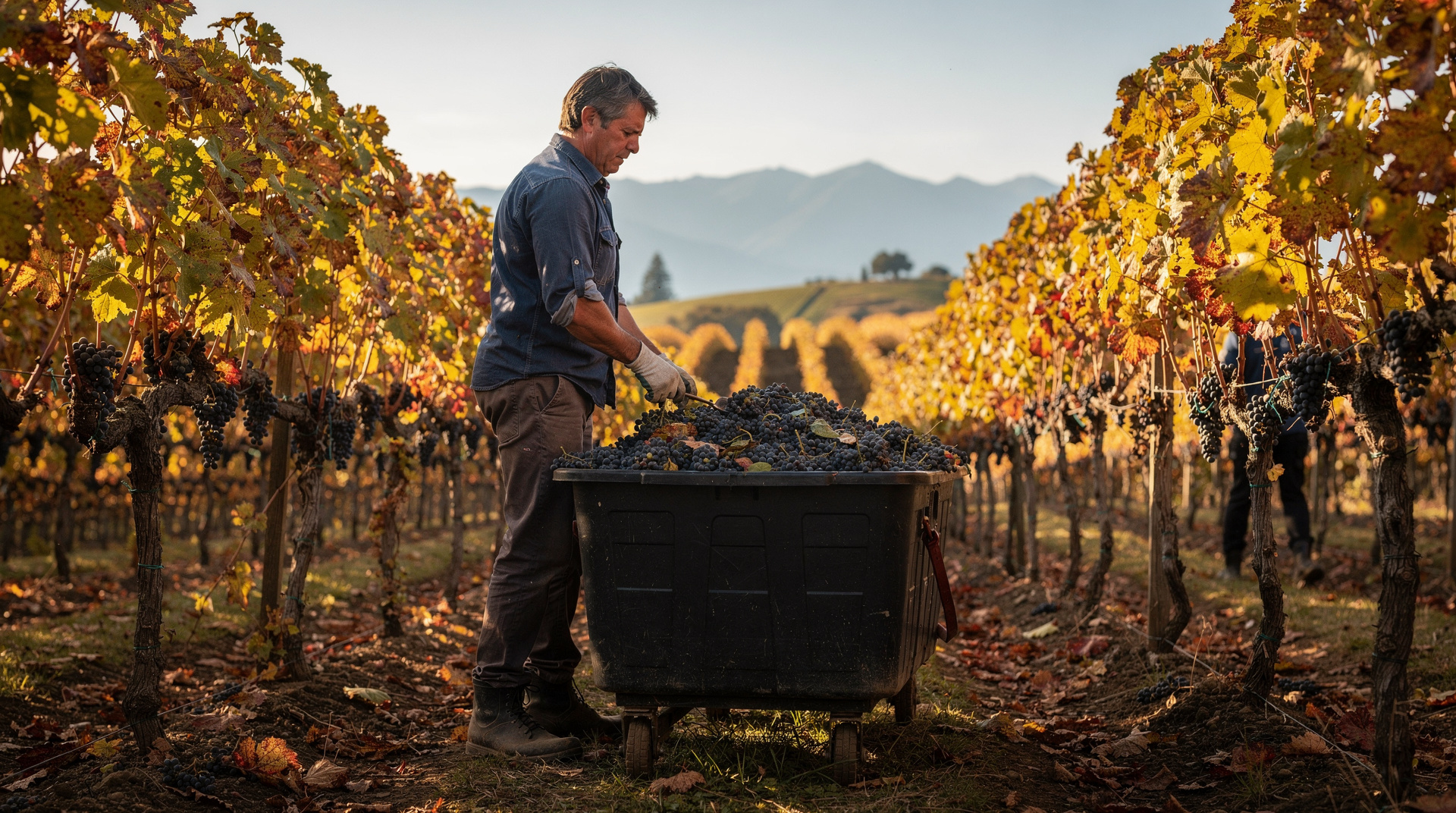
- ✓ Worth it Marlborough harvest season (March–April) — Visiting during harvest transforms the region. The crush is happening, the cellar doors have tank samples, the winemakers are present and willing to talk. The best time to visit by a significant margin.
- ✓ Worth it Central Otago guided van tour — Self-driving between Bannockburn and Gibbston Valley while tasting seriously is impractical. The guided format earns its cost here.
- ★ Splurge Felton Road tasting — NZD 35–45 for the tasting experience, but the benchmark against which every other Central Otago Pinot is measured. Worth it once for context.
- ◆ Hidden gem Rippon Vineyard from Wanaka — Biodynamic, on the lake, genuinely unusual for New Zealand. Often overlooked in favour of Gibbston Valley because it requires a Wanaka base.
- ✕ Skip Cloudy Bay cellar door, Marlborough — The international flagship but not where the interesting wine is. The entry-level Sauvignon Blanc is the same wine available in your home country’s supermarket. Visit Dog Point, Greywacke, or Mahi instead for the same quality tier with more character.
What it actually costs (NZD + USD + EUR)
Cost breakdown
Prices approximate 2026. Central Otago consistently costs 30–50% more than Marlborough across tours and accommodation.
| Item | NZD | USD | EUR | Verdict |
|---|---|---|---|---|
| Marlborough — self-guided bike tour (full day) | NZD 95–115 | USD 57–69 | EUR 52–63 | ✓ Worth it |
| Marlborough — half-day guided wine tour | NZD 95–130 | USD 57–78 | EUR 52–71 | ✓ Worth it |
| Marlborough — gourmet full-day tour with lunch | NZD 145–185 | USD 87–111 | EUR 80–102 | ✓ Worth it |
| Central Otago — half-day wine tour from Queenstown | NZD 130–165 | USD 78–99 | EUR 71–91 | ✓ Worth it |
| Central Otago — full-day gourmet tour with lunch | NZD 195–260 | USD 117–156 | EUR 108–143 | ✓ Worth it |
| Accommodation Blenheim (mid-range) Holiday park options from NZD 45 dorm | NZD 175–270 | USD 105–162 | EUR 96–149 | ✓ Worth it |
| Accommodation Queenstown/Wanaka base (mid-range) Higher due to Queenstown premium | NZD 220–380 | USD 132–228 | EUR 121–209 | ✓ Worth it |
| Cellar door tastings (typical) Usually waived on purchase of 1 bottle | NZD 5–20 | USD 3–12 | EUR 3–11 | ✓ Worth it |
| Wine bottle — mid-range cellar door price | NZD 22–45 (Marlborough) / NZD 35–75 (C. Otago) | USD 13–45 | EUR 12–41 | ✓ Worth it |
FAQ
Can I visit both Marlborough and Central Otago on one South Island trip?
Yes, and this is a natural pairing for a 10–14 day South Island itinerary. Marlborough at the start (arriving from Wellington via Cook Strait ferry or flying into Blenheim), then working south to Central Otago via Christchurch or the West Coast. The two regions are at opposite ends of the South Island — roughly 8 hours of driving between Blenheim and Queenstown — so you wouldn’t visit them back-to-back on a short trip.
Which region is better for Pinot Noir?
Central Otago, unambiguously. Marlborough makes Pinot Noir and some examples from the upper Wairau Valley and Southern Valleys (Awatere, Omaka) are worth trying. But Central Otago Pinot — particularly from Bannockburn — is a different wine: deeper colour, more complex structure, better with age, more expensive, and recognized internationally as one of the Southern Hemisphere’s finest expressions of the variety.
Do I need to book cellar door visits in advance?
In Marlborough: generally no, except in January and February (peak summer). Most cellar doors operate walk-in. In Central Otago: yes, particularly for the smaller prestigious producers. Felton Road, Rippon, and Two Paddocks all prefer or require advance booking. The guided tour operators handle this for you — another reason the van tour format works better in Central Otago.
Is March or April better than summer for wine tourism?
For Marlborough, absolutely. Harvest runs March–April and the region is at its most interesting: tanks full of just-pressed juice, winemakers on-site and often in their gumboots, the vineyards heavy and golden. For Central Otago, the same logic applies plus the added benefit of autumn colours — the poplars and willows around Cromwell and Wanaka turn gold and orange in April, making the landscape even more spectacular than summer.
What should I eat with Marlborough Sauvignon Blanc?
Greenshell mussels, first. They grow in the Marlborough Sounds (the flooded valleys north of Picton) and pair with Sauvignon Blanc in a way that feels locally inevitable — the briny sweetness of the mussel against the citrus acid of the wine. Also: fresh oysters, goat cheese, salmon gravlax, grilled snapper, asparagus in spring. Avoid anything with rich cream or red meat — Sauvignon Blanc doesn’t have the weight for it.
What’s the best single winery to visit in each region?
Marlborough: Dog Point. Not the most famous (that’s Cloudy Bay) but consistently the most interesting — the Section 94 Sauvignon Blanc is an object lesson in what Marlborough Sauvignon can be with extended skin contact and concrete egg fermentation. Central Otago: Felton Road, if you can get a tasting booking. If not, Mount Difficulty in Bannockburn has a good restaurant on-site and is more accessible for walk-in visitors.
How does Hawke’s Bay compare to these two regions?
Hawke’s Bay, on the North Island’s East Coast, is New Zealand’s oldest wine region and specialises in Bordeaux-style reds (Cabernet Sauvignon, Merlot) and Syrah rather than Sauvignon Blanc or Pinot Noir — a genuinely different style from either Marlborough or Central Otago. It’s worth considering as a third option if your itinerary includes the North Island; see the Hawke’s Bay wine routes guide for the details. For a South Island-only trip, though, the Marlborough-versus-Central-Otago choice covered here is the one that actually matters.
When to pick each
Choose Marlborough if:
- You’re arriving or departing via the Cook Strait ferry (Picton is the gateway)
- You’re on a 2–3 night South Island stop rather than a longer trip
- You want to cycle between cellar doors on flat terrain
- Sauvignon Blanc is your daily-drinker variety
- Budget matters — Marlborough is consistently cheaper across tours, accommodation, and wine
- You like large-format wine tourism with lots of options and walk-in cellar doors
Choose Central Otago if:
- You’re already going to Queenstown or Wanaka
- Pinot Noir is the reason you’re going
- You want the combination of dramatic landscape and serious wine
- You have 3–5 days and are willing to pay the Queenstown-area accommodation premium
- You want to visit a region that international wine critics talk about seriously
Do both if:
- You’re doing a 10–14 day South Island itinerary
- Wine is one of the main reasons you’re visiting New Zealand
- You want to understand the contrast between two completely different wine cultures within the same country
Related comparisons and guides
Related guides
Marlborough wine tour guide
Marlborough produces 77% of NZ's wine. Self-drive routes, guided tours, top wineries around Blenheim — prices NZD/USD/EUR and drink-drive tips.
Central Otago wine tour guide
Central Otago is the world's southernmost wine region and NZ's pinot noir capital. Cromwell Basin, Bannockburn, Gibbston — tours and prices NZD/USD/EUR.
New Zealand wine regions — complete guide
Complete guide to New Zealand's 10 wine regions: Marlborough, Central Otago, Hawke's Bay, Martinborough and more. Which to visit, what to taste, prices.
Martinborough wine tour guide
Martinborough is Wellington's boutique wine region — 30+ wineries, acclaimed pinot noir, walkable village. Tours, cycling, prices NZD/USD/EUR.
Marlborough
Honest Marlborough guide: Picton ferry gateway, Queen Charlotte Sound, Blenheim wineries, Havelock mussels. Real NZD/USD/EUR prices and practical logistics.
Wanaka
Honest Wanaka guide: Roy's Peak, Cardrona ski, lake kayaking — real NZD/USD/EUR costs and the honest Queenstown vs Wanaka verdict.
Last reviewed: