Day trips from Dunedin — the best excursions and how long each takes
What are the best day trips from Dunedin?
Otago Peninsula (royal albatross, yellow-eyed penguins, Larnach Castle) is the top pick and needs a full day. Moeraki Boulders pairs well with an Oamaru afternoon (blue penguin evening colony). Tunnel Beach is a half-day option within 20 minutes of the city. Most trips work by self-drive; guided tours add value specifically for the Peninsula wildlife sites.
Dunedin as a day-trip base — what you’re working with
Dunedin sits at the head of Otago Harbour, surrounded by a peninsula, volcanic hills, and a coastline that has remained largely undeveloped. As a day-trip base, it punches well above its weight: within 90 minutes of the city centre you have one of the world’s only mainland royal albatross breeding colonies, some of New Zealand’s most reliable yellow-eyed penguin viewing, a Victorian steampunk town with its own little blue penguin colony, and a geological curiosity that attracts photographers from across the world.
The honest caveat: Dunedin’s day-trip options are heavily wildlife-oriented, tide-adjacent, and heavily dependent on timing. This guide tells you exactly when to show up and how long to budget.
Trip 1 — Otago Peninsula: the full wildlife day
Distance from Dunedin city centre: 35 km to Taiaroa Head (end of the peninsula) Real drive time: 45-60 minutes one way (Highcliff Road is scenic but winding) Time budget: Full day (7-8 hours including driving) Best for: Wildlife, scenic views, Larnach Castle
The Otago Peninsula is Dunedin’s most rewarding excursion, full stop. The narrow finger of land extends 30 km into the Pacific, and along its spine and shores you’ll find an improbable concentration of wildlife and Victorian heritage.
Royal albatross centre — Taiaroa Head
The Royal Albatross Centre at Taiaroa Head is the only place in the world where royal albatrosses (wandering albatross subspecies) breed on a mainland accessible to the public. These birds have a wingspan of up to 3.1 metres and spend most of their lives in the Southern Ocean, returning to Taiaroa Head only to breed.
Viewing is by guided tour only (departs from the visitor centre every 30-60 minutes, weather and bird activity permitting):
- Adult: NZD 55 / USD 33 / EUR 30
- Child (5-15): NZD 20 / USD 12 / EUR 11
- Tours run October to mid-September (peak season is November-February when chicks are hatching)
Verdict: Worth it — provided you book ahead (online bookings essential in summer) and choose a calm-wind day. Albatrosses launch from cliff edges and land in headwinds — on still days, they barely move.
Dunedin city, Otago Peninsula and albatross guided tourYellow-eyed penguins and blue penguins — Taiaroa Head area
Within a 5-minute drive of the Royal Albatross Centre, there are two reliable penguin viewing sites:
Pilots Beach (below the albatross centre carpark): Little blue penguins (kororā) come ashore here at dusk in significant numbers — one of the most accessible wild blue penguin colonies in New Zealand. No entry fee; managed viewing area with low lighting.
Otago Peninsula scenery and little blue penguin tour (Taiaroa Head)Yellow-eyed penguin (hoiho) hides: Several private wildlife reserves on the peninsula run guided penguin viewing at dusk, including Penguin Place (NZD 55-70 / USD 33-42 / EUR 30-39 per adult) and Nature’s Wonders — both accessed from the ocean-side (Highcliff Road side) of the peninsula. Bookings essential. See the yellow-eyed penguin guide for full detail on the species and viewing ethics.
Dunedin: Otago Peninsula with guided penguin reserve tourLarnach Castle
New Zealand’s only castle (and technically it’s a grand Victorian manor rather than a medieval fortification) sits high on the peninsula ridge with views to both harbour and ocean. Built in 1871 for businessman William Larnach, it’s privately owned and open to visitors:
- Castle and gardens entry: NZD 35 / USD 21 / EUR 19
- Gardens only: NZD 20 / USD 12 / EUR 11
Verdict: Worth it as part of the full peninsula day. The gardens are genuinely well-maintained, the interior is an interesting window into Victorian colonial excess, and the views from the tower are excellent. Not worth a dedicated trip if you only have one day on the peninsula — prioritise wildlife.
How to do the peninsula day
Option A — Self-drive: Take Portobello Road along the harbour side of the peninsula (flatter, faster). Return via Highcliff Road (higher, slower, much better views). Visit the albatross centre in the morning (book the 10 a.m. tour), have lunch at 1908 Café in Portobello village, spend the afternoon at Larnach Castle, return to Taiaroa Head for evening penguin viewing. This structure gets you two penguin species and the albatross in one day.
Option B — Guided tour: Several Dunedin operators run combined city-plus-peninsula full-day tours. These are particularly worth it if you’re without a car or if you want expert wildlife interpretation.
Dunedin and Otago Peninsula full-day nature tourDriving note: Highcliff Road is steep and narrow. It’s perfectly passable in a standard rental car but campervans should stay on Portobello Road.
Trip 2 — Moeraki Boulders + Oamaru: the north coast combination
Distance from Dunedin: Moeraki 85 km (1h), Oamaru 115 km (1h 25min) Time budget: Full day (Oamaru for evening penguin viewing makes this a long day) Best for: Geological curiosity + Victorian heritage + blue penguins
Moeraki Boulders — the geological oddity
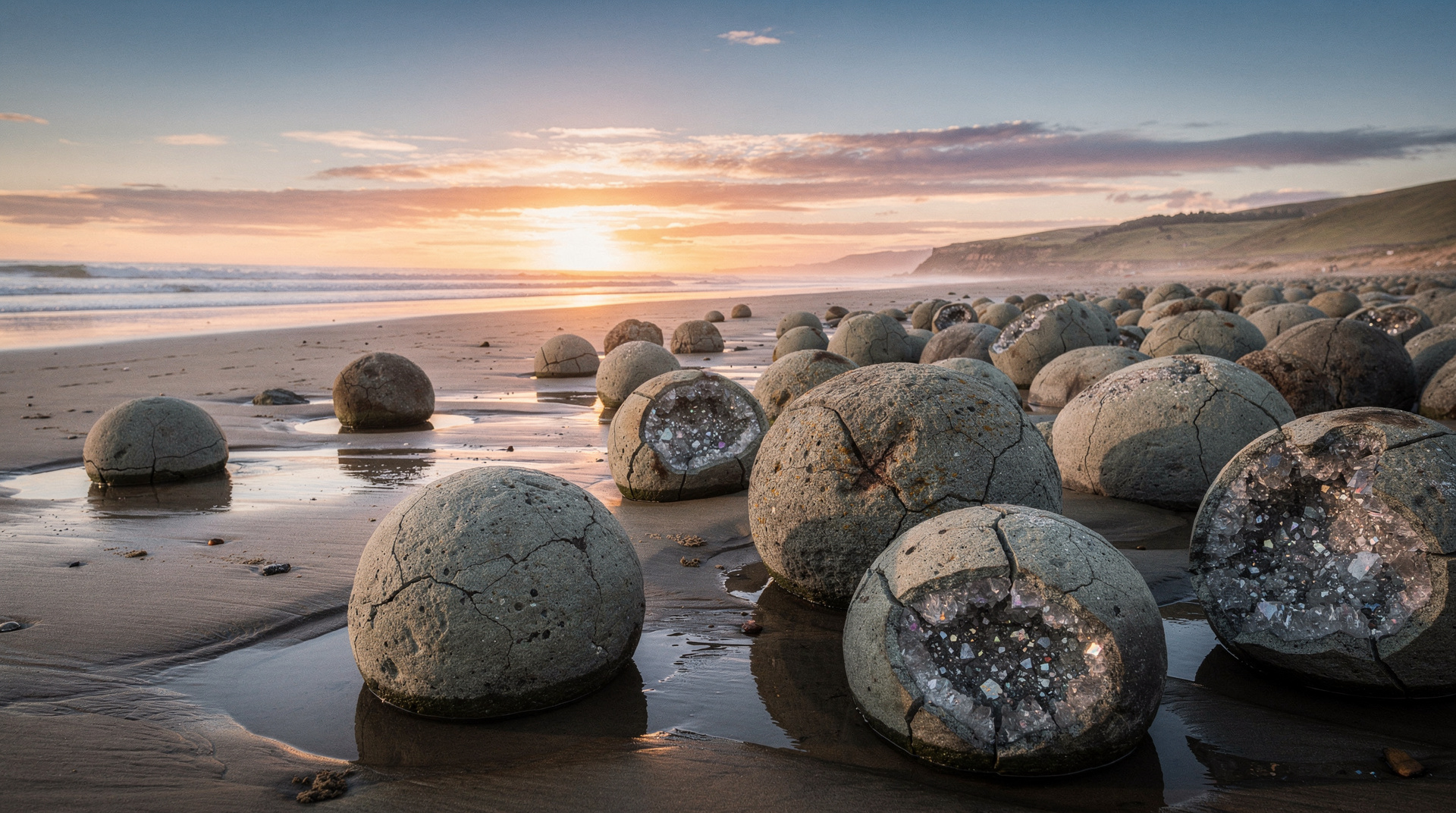
The Moeraki Boulders (Te Kaihinaki) on Koekohe Beach are spherical concretions up to 2 metres in diameter, scattered across a sandy beach as if placed there by a giant. Maori legend says they are gourds and food baskets washed ashore from the waka (canoe) Araiteuru, which ran aground on the nearby Shag Point reef. Geologically, they formed over millions of years from calcite crystallisation around a central nucleus — essentially the same process that forms pearls, vastly scaled up.
Practicalities: The main car park is beside the Moeraki Boulders Lodge and Restaurant (which is fine for a coffee or a meal). Access to the beach is free. The best time is low tide, when more boulders are exposed — many are partially buried in sand or partially submerged at high tide. The beach walk is flat and accessible. Allow 45-60 minutes.
Guided tour option: Moeraki Boulders and North Otago wildlife tour from Dunedin
Oamaru — Victorian steampunk and blue penguins
Oamaru is 30 minutes north of Moeraki and deserves more time than most visitors give it. The Victorian Precinct — a collection of well-preserved 19th-century limestone buildings repurposed as galleries, shops, and cafés — is genuinely one of New Zealand’s best-preserved heritage streetscapes. The steampunk scene centred on the Steampunk HQ museum is eccentric fun (entry NZD 10 / USD 6 / EUR 5.50).
The major evening draw is the Oamaru Blue Penguin Colony, where little blue penguins (kororā) come ashore after dark to their nest burrows in the old railway precinct. The colony is managed by the Waitaki District Council:
- Standard grandstand viewing: NZD 35 / USD 21 / EUR 19
- Premium viewing (front rows): NZD 60 / USD 36 / EUR 33
The colony vs Pilots Beach comparison: The Oamaru colony is a managed wildlife experience with grandstand seating, consistent arrival times, and good lighting infrastructure. Pilots Beach at Taiaroa Head is wilder and free. Oamaru numbers are larger (up to 200 penguins some evenings). Oamaru is the better choice if you want a guaranteed sighting; Pilots Beach if you want a more raw wildlife experience.
Timing on the Moeraki-Oamaru day: Leave Dunedin by 9 a.m. Reach Moeraki by 10:15, spend 60 minutes there. Oamaru by noon for lunch in the Victorian Precinct. Afternoon: Steampunk HQ, Whitestone Cheese factory tour (NZD 15 / USD 9 / EUR 8.25, great value), browse the antique shops. Blue penguin viewing at sunset (timing varies: check colony website for current schedule, usually 7:30-9 p.m. in summer, 5:30-6:30 p.m. in winter). Return to Dunedin by 9:30-10:30 p.m. — long but manageable.
Trip 3 — Tunnel Beach: the city-edge sea stack (half-day)
Distance from Dunedin: 8 km to the carpark, 20 minutes from the city centre Time budget: 2-3 hours (half-day) Best for: Dramatic coastal scenery, a short but rewarding walk
Tunnel Beach is the most accessible dramatic coastal scenery within Dunedin’s immediate orbit. A 1 km walk (each way) through farmland and over a stile leads to a hand-dug tunnel through the cliffs (dug by pioneer John Cargill in the 1870s so his family could access the beach below). Emerging from the tunnel, you find yourself on a small sea-stack-framed beach with blowholes and impressive rock arches.
Verdict: Strongly recommended if you have a half-day free. The walk is moderate (some steep steps near the tunnel) but manageable for most fitness levels. No entry fee — the land is now DOC-managed. Best in morning or afternoon light (the tunnel faces west, so afternoon sun illuminates the beach better).
Access: Drive from Dunedin city via Kaikorai Valley Road to Blackhead Road. The carpark is signed. Track is DOC-maintained and open year-round.
Trip 4 — Aramoana and the Otago Harbour mouth (half-day)
Distance from Dunedin: 20 km (30 minutes via the port and Port Chalmers) Time budget: 2-3 hours Best for: Birdwatching, quiet beach, low-key NZ small-town atmosphere
Aramoana is a small community at the very mouth of Otago Harbour where the estuary meets the Pacific. It’s known to local birdwatchers as one of the best estuary birding spots in Otago (godwits, oystercatchers, spoonbills, herons) and to domestic visitors as a peaceful beach escape. The sand spit at the harbour mouth has a mole (breakwater) that’s a pleasant walk.
Aramoana massacre site: The town is also known for the 1990 Aramoana massacre — a shooting incident that killed 13 people and remains New Zealand’s worst mass shooting until Christchurch 2019. There is a small memorial; it’s worth knowing the context before visiting.
Combined with Port Chalmers: Port Chalmers is a port suburb 12 km from Dunedin city with a surprisingly good café scene (try Fix Espresso) and several vintage shops. Combine with Aramoana for a low-key morning.
Trip 5 — Taieri Gorge Railway (half-day to full day)
Strictly a departure from Dunedin city, the Taieri Gorge Railway is a heritage train that runs from Dunedin station into the dramatic gorge of the Taieri River, crossing 10 viaducts and 2 tunnels on a 77 km route before returning. It’s also the first leg of the Otago Central Rail Trail connection (via Middlemarch).
Dunedin: scenic railway tour through the Taieri GorgeRunning schedule: Check the Dunedin Railways website — the train runs several times per week (not daily). The return trip to Pukerangi takes about 4.5 hours. One-way options to Middlemarch exist for cyclists and hikers connecting to the Rail Trail.
Self-drive vs guided: the honest verdict
Self-drive is better for: Moeraki/Oamaru (straightforward route, timing flexibility for penguin colony), Tunnel Beach (15 minutes from Dunedin), Aramoana.
Guided tours are better for: Otago Peninsula wildlife. The peninsula’s wildlife sites (yellow-eyed penguin reserves, albatross centre) benefit enormously from expert guides who can position you correctly, identify individual birds, and explain behaviour. Also: parking at Taiaroa Head is genuinely limited in summer, and driving Highcliff Road in the dark after evening penguin viewing is not straightforward.
Cost comparison: A guided Otago Peninsula full-day costs NZD 100-160 / USD 60-96 / EUR 55-88 per person. Self-driving the same route (rental car fuel + albatross centre entry + penguin reserve entry) costs NZD 100-120 per person anyway, without the expert interpretation.
Real costs summary
| Day trip | Self-drive cost per person | Guided tour cost per person |
|---|---|---|
| Otago Peninsula full day (wildlife + Larnach) | NZD 100-130 | NZD 120-180 |
| Moeraki + Oamaru (penguins incl.) | NZD 50-80 | NZD 90-130 |
| Tunnel Beach (half-day) | Free (parking NZD 0) | N/A |
| Aramoana + Port Chalmers | Free (parking NZD 0) | N/A |
| Taieri Gorge Railway (return) | NZD 100-120 | Included in ticket |
Exchange rate snapshot 2026: 1 NZD ≈ 0.60 USD ≈ 0.55 EUR.
When to go
Wildlife viewing windows:
- Royal albatross: October to mid-September (year-round colony, peak November-February)
- Yellow-eyed penguins: Year-round; best viewing October-March when chicks are present
- Blue penguins (Oamaru and Pilots Beach): Year-round; largest numbers September-March
- Moeraki Boulders: Year-round, check tide times
Weather: Dunedin is one of New Zealand’s cooler cities year-round (average summer high 19°C / 66°F, winter 10°C / 50°F). Pack a waterproof layer regardless of month — the Otago coastline gets wind and sudden showers.
Summer (December-February): Long days (sunset 9:30 p.m.) mean penguin viewing runs very late. The albatross centre is busiest but chick hatching makes it most rewarding.
Autumn (March-May): Fewer crowds, shorter days, reliable weather, great photography light. Penguin chicks have fledged by April; adult numbers remain high.
Common mistakes
Arriving at Pilots Beach too late: Dusk at Taiaroa Head, not dark. If you arrive after sunset, the penguins are already past the viewing zone. Aim to be in position 45 minutes before sunset.
Not booking the albatross centre in advance: Tours sell out in December-January. Book online before you leave your accommodation, not when you arrive.
Combining Otago Peninsula and Moeraki in one day: Technically possible but genuinely exhausting — the peninsula alone is a full day if you do it properly. Split across two days if you have them.
Driving Highcliff Road in a campervan: Technically possible for smaller vans, inadvisable for large motorhomes. Portobello Road is the safer option for anything wider than a standard car.
Missing Tunnel Beach: Most visitors planning an “Otago Peninsula day” skip Tunnel Beach because it’s in the opposite direction. It’s 20 minutes from the city and needs only a half-day — pair it with a late afternoon city wander through Dunedin’s Octagon and the Cadbury factory precinct.
Combining Dunedin with the wider Otago region
Dunedin’s day trips work well as a standalone 2-3 night stop, but they also connect naturally into a longer South Island loop. Travellers heading from Christchurch south toward Queenstown often break the drive with a Dunedin stopover specifically for the Otago Peninsula wildlife — nowhere else on the standard South Island route offers a comparable concentration of albatross, penguin, and heritage sights within a single afternoon. For those with an extra day, The Catlins extends the wildlife theme south of Dunedin with its own yellow-eyed penguin colonies, waterfalls, and the dramatic Nugget Point lighthouse — though it rewards an overnight far more than a rushed add-on day.
A realistic 3-day Dunedin structure: Day 1, arrive and explore the city centre (the Octagon, Cadbury World precinct, Dunedin Railway Station — one of the most photographed buildings in New Zealand). Day 2, the full Otago Peninsula day as outlined above. Day 3, choose between Moeraki/Oamaru or Tunnel Beach plus Aramoana, depending on whether the steampunk-and-penguins day or the quieter coastal half-day appeals more.
Practical tips for the Otago Peninsula wildlife day
Book the albatross centre and penguin reserve slots before you arrive in Dunedin, not on the morning of your visit — both sell out in the December-February peak, and same-day availability outside peak season is unreliable enough that it’s not worth the risk. Bring warm layers regardless of season: the peninsula’s exposed headlands catch wind straight off the Southern Ocean, and evening penguin viewing in particular can be considerably colder than the Dunedin city centre suggests. Fuel up before leaving the city — there are limited petrol stations on the peninsula itself.
FAQ
How many days should I spend in Dunedin?
Two nights (two full days) gives you enough time for the Otago Peninsula properly and one of Moeraki/Oamaru or Tunnel Beach. One night works if you focus only on the peninsula. Three nights adds The Catlins as a day trip, though The Catlins really rewards an overnight. See the Catlins self-drive guide for detail.
Is there a bus or shuttle to the Otago Peninsula?
The Dunedin City Council operates bus route 25 to Portobello (terminus), which gets you partway. There is no public transport to Taiaroa Head. Taxis and Uber exist in Dunedin. The Otago Peninsula Trust occasionally runs shuttles; check their website. For a single day trip, a rental car or guided tour is the most practical option.
Are the penguin viewing sites ethical?
The managed sites (Penguin Place, Nature’s Wonders, Royal Albatross Centre, Oamaru Blue Penguin Colony) all operate under strict DOC guidelines and have contributed significantly to penguin population recovery. Wild viewing at Pilots Beach and Curio Bay (in The Catlins) requires more self-discipline — stay behind the ropes, no flash, no approaching the birds. The yellow-eyed penguin population is vulnerable; irresponsible tourism has real consequences.
Is the Taieri Gorge Railway worth the cost?
At NZD 100-120 per person for a half-day excursion, it’s expensive for what is essentially a scenic train ride. Worth it if: you’re a train enthusiast, you’re connecting to the Otago Central Rail Trail at Middlemarch, or you’re looking for a comfortable half-day activity that requires no physical exertion. Not worth it if you’d rather be watching wildlife.
Can I combine Dunedin day trips with a drive to Queenstown?
Yes. The most efficient routing is: Dunedin → Moeraki/Oamaru (overnight) → Christchurch (or reverse). Alternatively, Dunedin → Otago Peninsula → The Catlins self-drive → Invercargill → Queenstown is a classic 4-5 day south loop.
Related guides
Dunedin
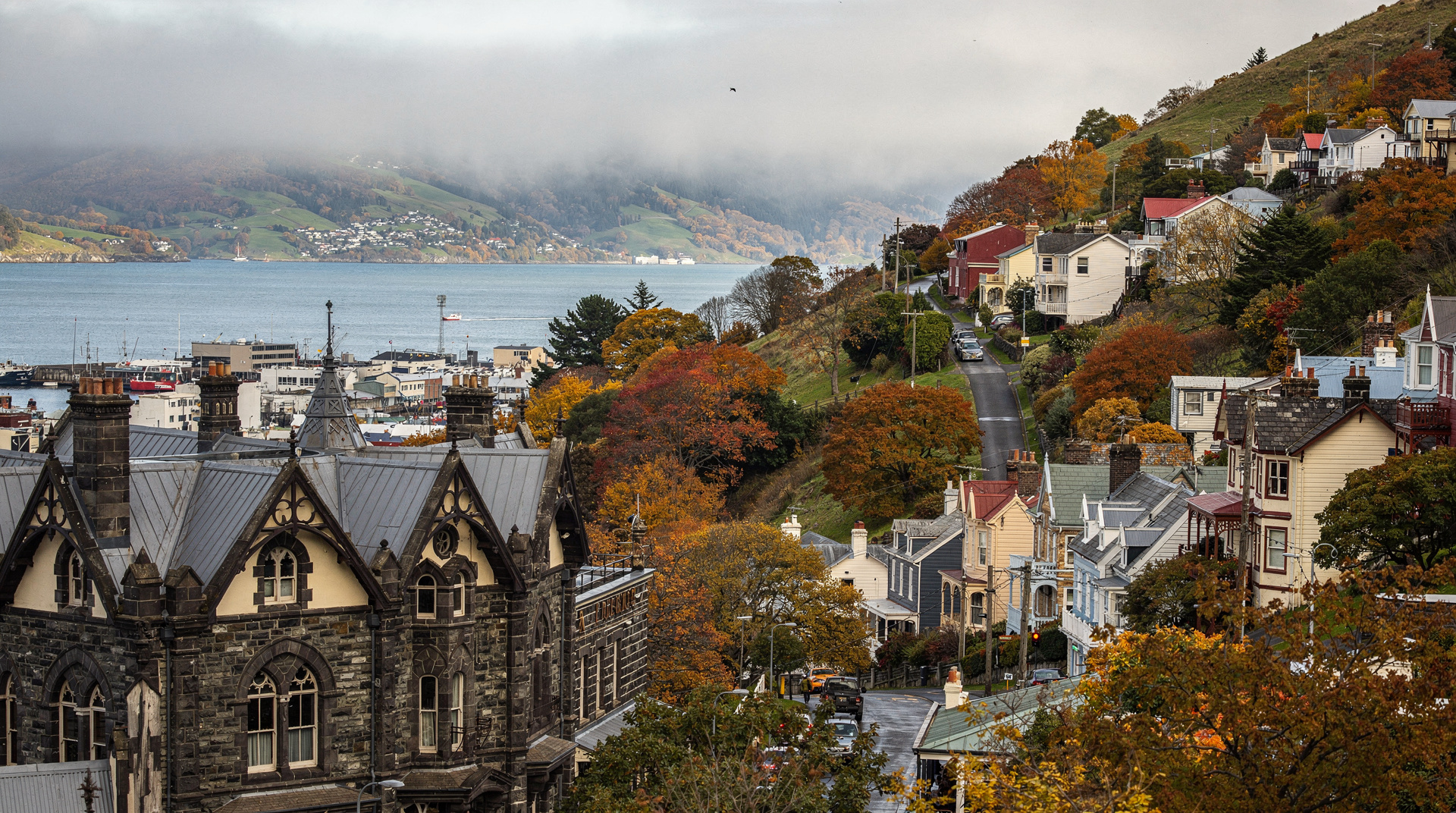
Honest Dunedin guide: Otago Peninsula wildlife, Larnach Castle, Baldwin Street — real NZD/USD/EUR prices and 2 days done right in NZ's Edinburgh.
Otago Peninsula
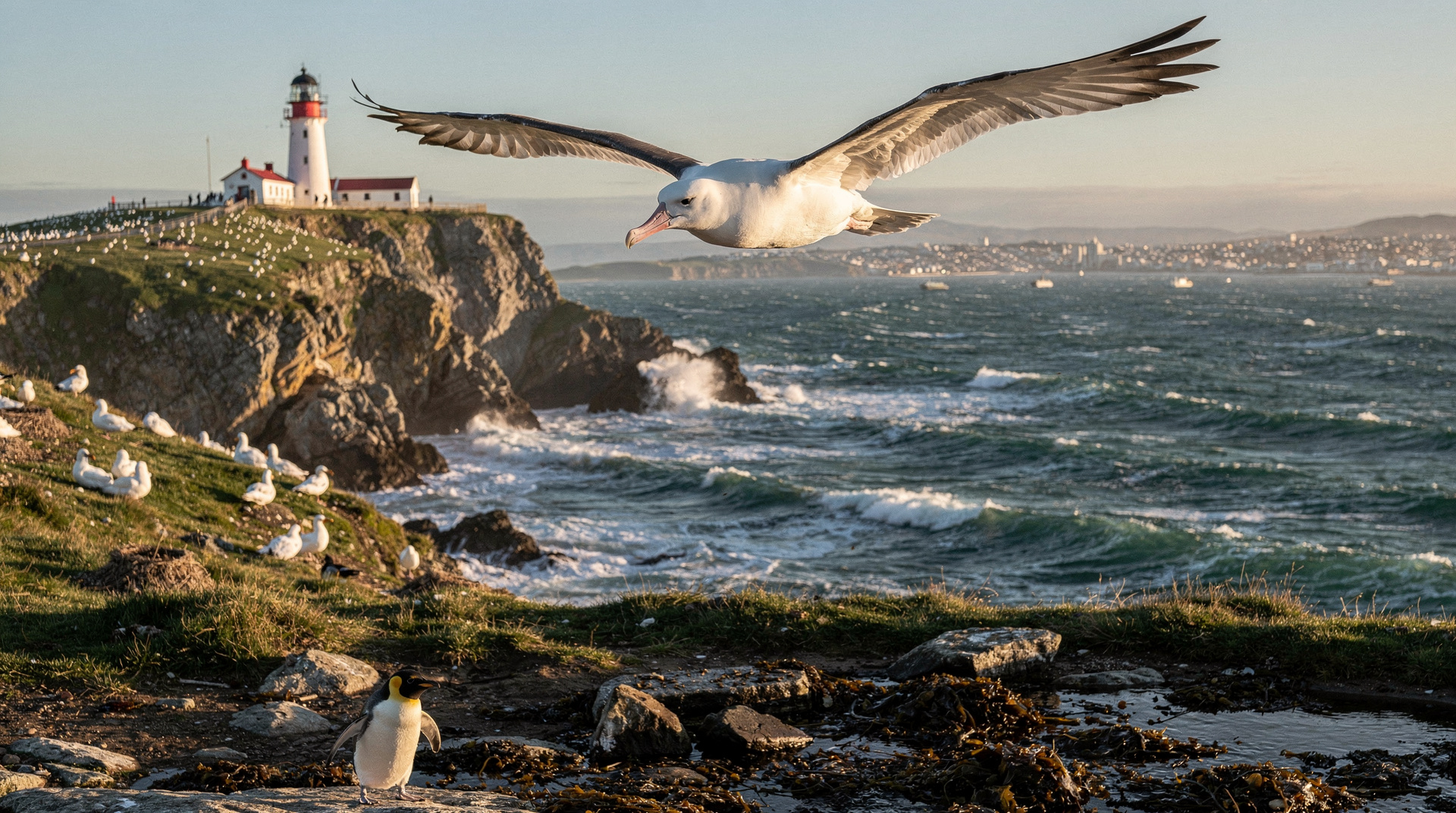
Honest Otago Peninsula guide: albatross colony, yellow-eyed penguins, Larnach Castle — real NZD/USD/EUR prices and the best wildlife timing advice.
Oamaru
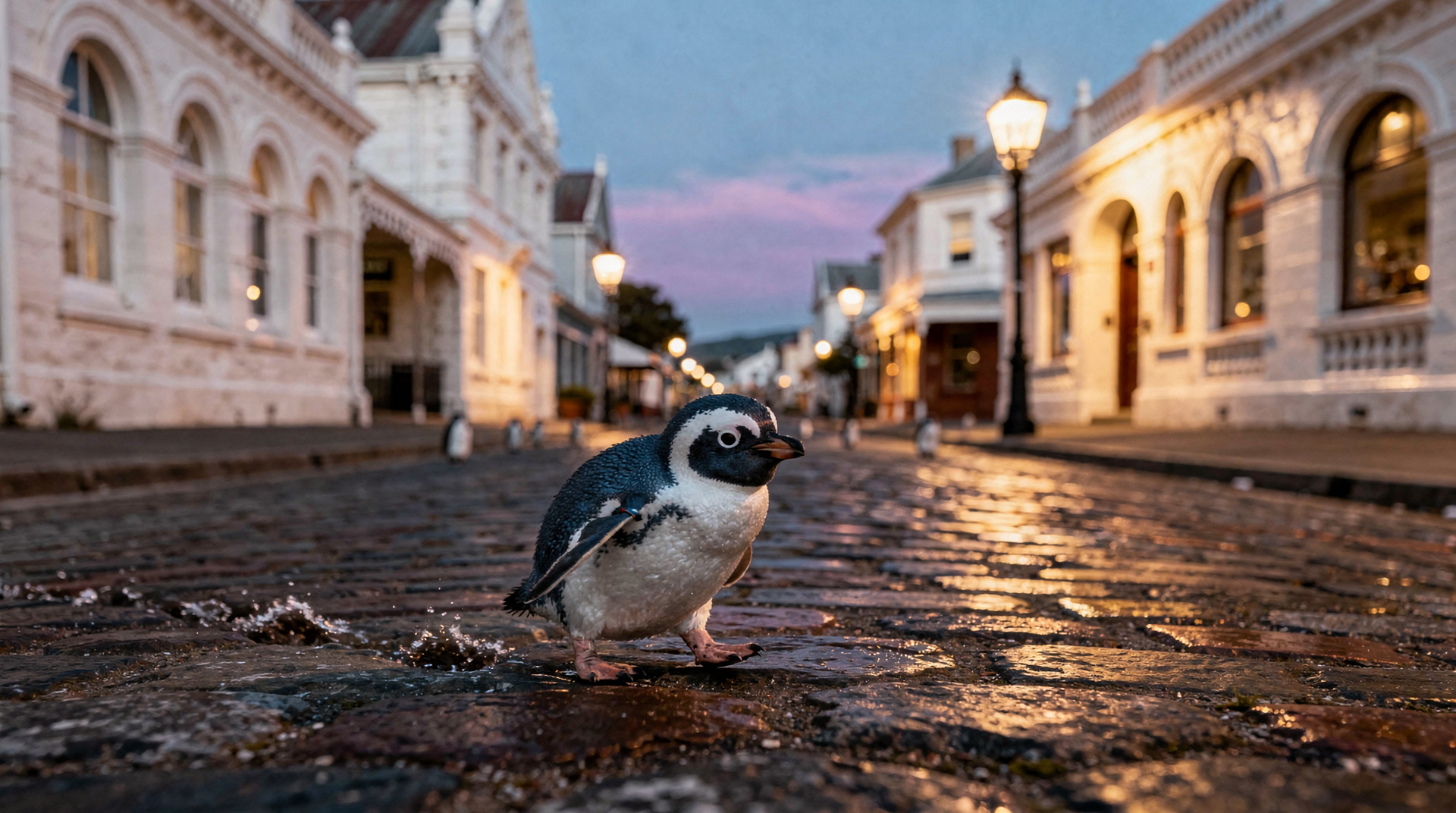
Oamaru: the world's most accessible little blue penguin colony, a Steampunk capital, and Victorian limestone architecture. Honest guide with NZD/USD/EUR costs.
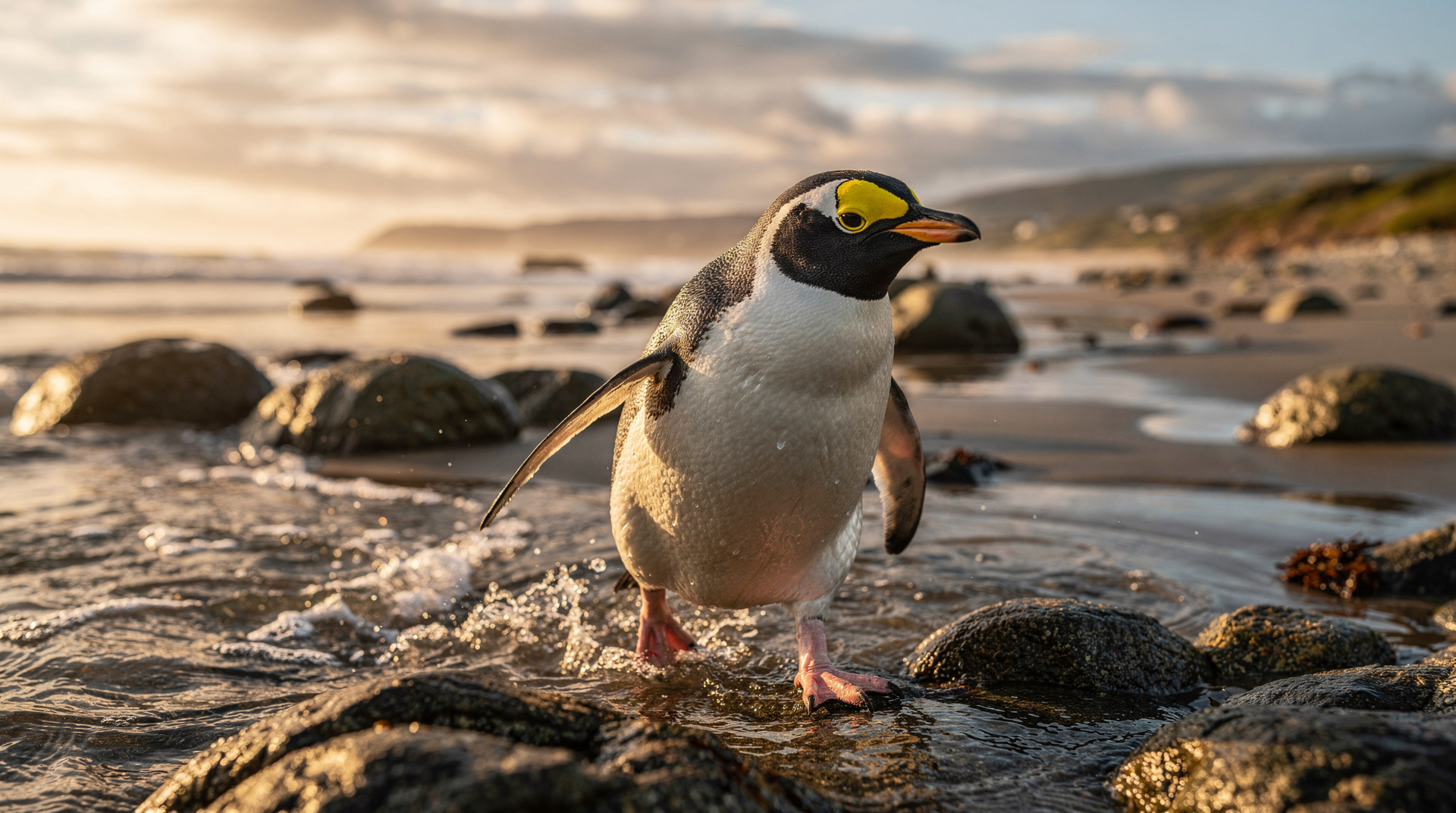
Yellow-eyed penguins on the Otago Peninsula
Hoiho (yellow-eyed penguin) are the world's rarest penguin. Where to see them wild on Otago Peninsula, ethical viewing hides, prices, and best timing.
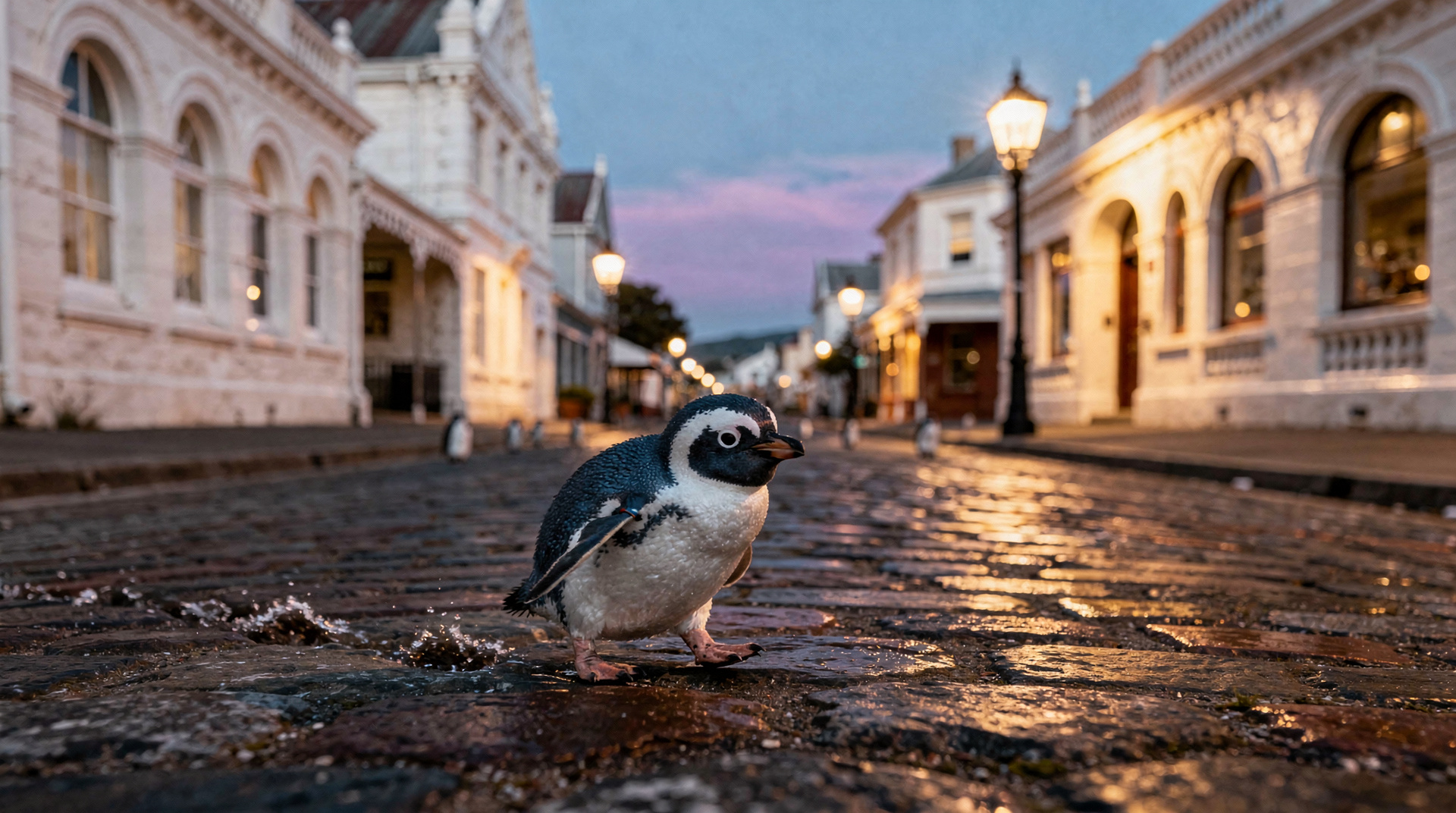
Blue penguins in Oamaru
Oamaru's little blue penguin colony is the most accessible in New Zealand. Evening viewing times, prices (NZD/USD/EUR), booking tips, and ethical guidelines.
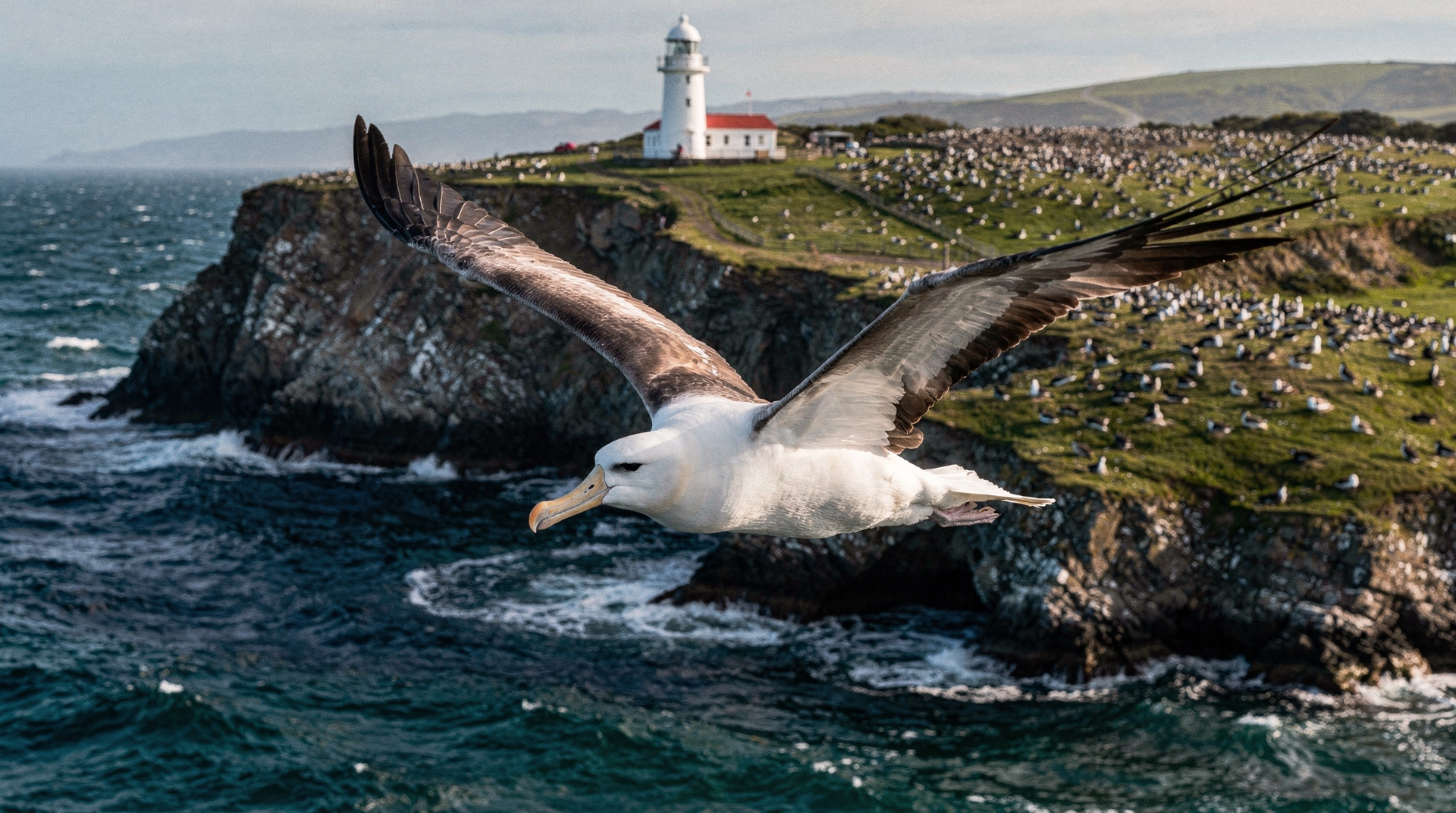
Royal albatross colony at Taiaroa Head
Taiaroa Head on Otago Peninsula hosts the world's only mainland royal albatross colony. Tours, prices (NZD/USD/EUR), best months, and what to expect.
Last reviewed: