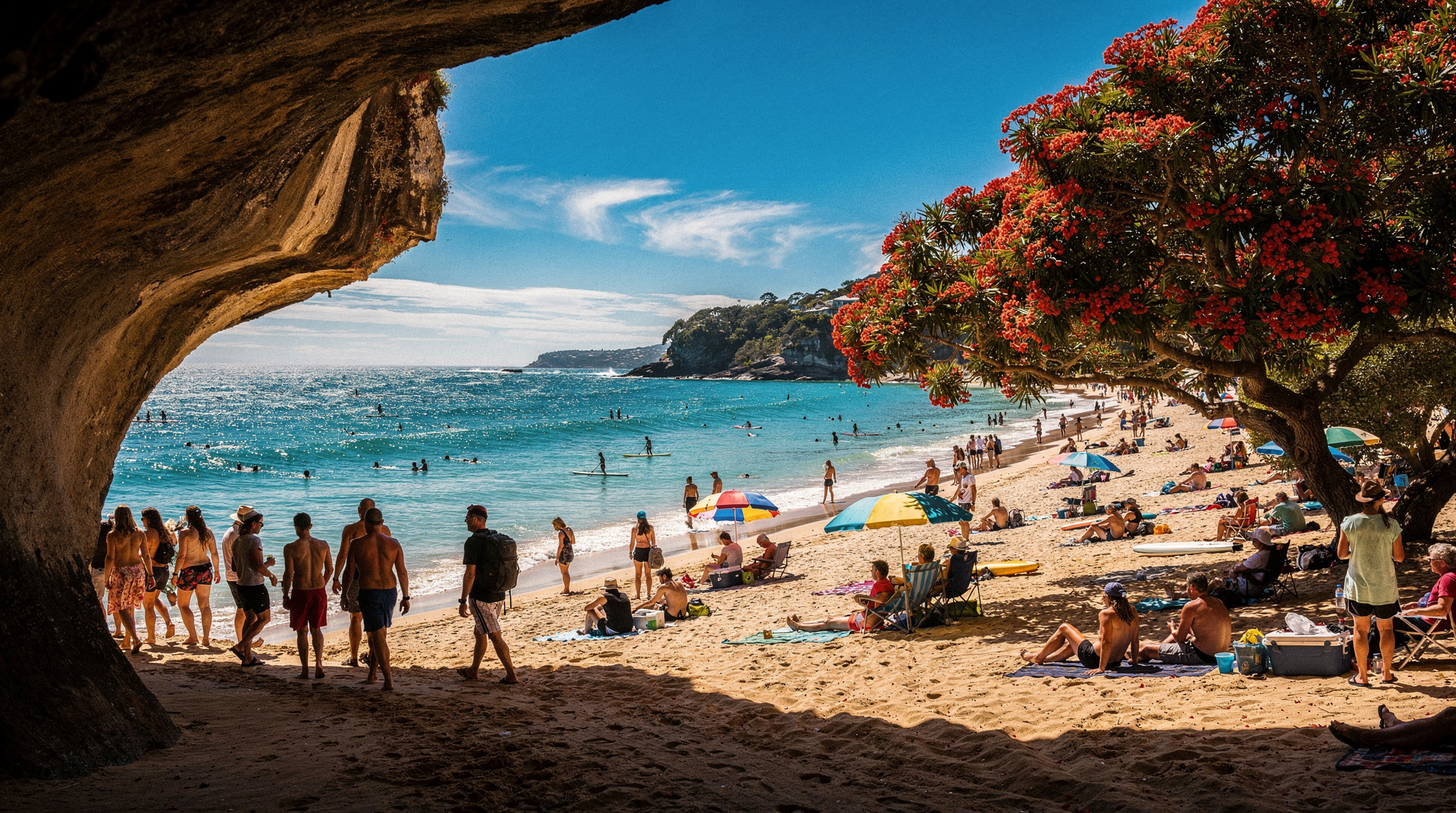
New Zealand in January
Is January a good time to visit New Zealand?
January is peak summer — warm, long days, everything open. It is also the most crowded and expensive month of the year. School holidays fill campgrounds, Queenstown and Bay of Islands book out weeks ahead, and Milford Track huts sell out in October. Go in February for the same weather with fewer people, or accept January for what it is and book everything 3–6 months out.
What summer peak season actually looks like
January is the height of the New Zealand summer and the country’s busiest tourism month. Temperatures are warm throughout both islands, all the Great Walks are fully open, and the days are long — sunrise before 6am in the south, after-dinner light lingering until 9:30pm. The atmosphere in beach towns and adventure hubs is genuinely festive.
The flip side is real: campgrounds at Abel Tasman, Coromandel, and the Bay of Islands fill completely. School holiday timing means New Zealand and Australian families travel together, pushing accommodation prices to annual highs. If you’re flexible on timing, February gives you near-identical weather with noticeably fewer crowds once the school break ends.
| Best for | peak summer weather, every Great Walk fully open |
| Weather | 20–28°C across both islands, extreme UV |
| Crowd level | highest of the year |
| Great Walks | all open, Milford/Kepler/Routeburn sold out since mid-year |
| Booking lead time | 3–6 months for Great Walks and Queenstown |
Weather: real numbers, not the brochure
Auckland and Northland: Average 23–26°C (73–79°F), overnight lows around 18°C. Humidity noticeable. Rain is possible but typically short and heavy. Sea temperature at the Bay of Islands: 22–24°C — excellent swimming. Daylight hours: approximately 14.5 hours.
Rotorua and Central North Island: 22–27°C days, cooler nights at altitude. Taupo averages a pleasant 23°C. Mt Ruapehu summit snow is minimal in January — the volcanic plateau is genuinely hot.
Wellington: 20–24°C but the notorious Te Ika-a-Maui winds don’t stop for summer. Jacket needed on the waterfront even in January.
Queenstown and Otago: Warm and often dry — 25–28°C on good days. The Remarkables are mostly snow-free. Central Otago is the hottest, driest part of New Zealand in January; Cromwell and Alexandra regularly hit 30°C+. Sunburn is a serious concern — New Zealand’s UV index peaks in January due to the ozone hole over the southern hemisphere. Apply SPF 50 daily without fail.
Fiordland: Even in summer, Milford Sound receives around 6–7mm of rain per day on average. Rain here is part of the experience, not a surprise. Pack accordingly.
Sea temperatures for swimming: Bay of Plenty (Mt Maunganui) 22°C, Coromandel beaches 21°C, Nelson and Marlborough Sounds 19°C, Dunedin beaches 17°C (cold but doable for the brave).
Best things to do in January
Kayaking Abel Tasman National Park is the definitive New Zealand summer activity. Golden beaches, turquoise water, seals on rocks, and no other landscape quite like it. A 1-day freedom kayak in Abel Tasman gets you on the water without committing to a multi-day walk. Book at least 6 weeks ahead for January. If you want a longer trip, the 3-day kayak and walk combination from Marahau runs all summer with excellent operators.
Hobbiton Movie Set is fully operational in January and busier than at any other time of year. The tour itself is worth it despite the crowds — go on the first tour of the day (7:30am) or the Evening Banquet Tour. The Hobbiton guided tour from Matamata is the most popular single-attraction ticket in New Zealand. Book months ahead for January.
Bay of Islands sailing and cruising — January weather makes this world-class sailing territory. The Bay of Islands full-day cruise from Paihia covers the Hole in the Rock and Cape Brett with swimming stops. Dolphins are regularly sighted. Auckland Anniversary Regatta (late January) brings hundreds of yachts to the Waitemata — spectacular to watch from the waterfront.
Milford Track — if you are attempting the Milford Track in January, your hut bookings were placed with DOC approximately 6 months ago. Walk-ins are not possible; this is the most oversubscribed Great Walk in the country. For those who missed out, the Milford Sound day cruise is available without advance booking, though peak-season departures fill quickly.
Tongariro Alpine Crossing — arguably the best single-day walk in New Zealand. The crossing is in full swing in January with 1,200–1,500 walkers per day at peak. Shuttle bookings from National Park, Turangi, and Taupo are essential — you cannot drive your own vehicle to the trailhead. See the Tongariro Alpine Crossing guide for the full logistics picture.
Waiheke Island wine tasting — a 35-minute ferry from Auckland, Waiheke in January is everything: vineyards, beaches, olive oil tasting, and some of the best Syrah and Bordeaux blends in New Zealand. The Waiheke Island scenic wine tour with lunch is the best structured option for first-timers. Book at least 2–3 weeks ahead.
What to avoid in January
Driving in the dark on South Island roads. January daylight is long, but the temptation to push one more destination before nightfall leads to accidents on winding, often unmarked roads. The Haast Pass, Milford Road, and Crown Range all demand full attention and ideally daylight driving.
Underestimating the UV index. January in New Zealand is genuinely dangerous for sun exposure. The UV index regularly hits 11–13 (extreme) in the North Island. Outdoor activities without SPF 50, protective clothing, and a hat can result in burns within 15 minutes. This applies equally to cloudy days.
Last-minute Great Walks bookings. The Milford Track, Kepler, and Routeburn huts for January will have been sold out since June or July. If you haven’t pre-booked, consider the Kepler Track day walk from Te Anau (no hut booking required for day visitors) or the many day walks in Fiordland National Park.
Queenstown at premium pricing. Queenstown accommodation in January runs 40–60% above its already-expensive baseline. A mid-range hotel room that costs NZD 200 / USD 120 / EUR 110 in May will cost NZD 320–380 / USD 192–228 / EUR 176–209 in January. Book ahead or consider Wanaka as a quieter, cheaper alternative base.
Crowds and prices in January
January is the most expensive month to visit New Zealand. Expect:
- Hostel dorm beds: NZD 45–75 / USD 27–45 / EUR 25–41 (Queenstown) to NZD 35–55 / USD 21–33 / EUR 19–30 (smaller towns)
- Mid-range motel/hotel: NZD 220–380 / USD 132–228 / EUR 121–209 per night
- Campervan rental: NZD 160–250 / USD 96–150 / EUR 88–138 per day (campground fees NZD 20–50 / USD 12–30 / EUR 11–28 extra)
- Milford Sound day bus/cruise from Queenstown: NZD 165–220 / USD 99–132 / EUR 91–121
- Abel Tasman Great Walk huts: booked via DOC at NZD 65–75 / USD 39–45 / EUR 36–41 per night
Booking lead time for January: Milford Track huts — 6 months minimum. Queenstown mid-range hotel — 3 months. Bay of Islands B&B — 2 months. Abel Tasman kayak day trips — 4–6 weeks. Hobbiton — 3–4 weeks.
Best regions in January
Bay of Islands and Northland is at its best. Warm sea temperatures, all cruise operators running multiple departures daily, and the road north to Cape Reinga is accessible and beautiful. This is the month to do the Paihia-based cruises and Waitangi Treaty Grounds together.
Abel Tasman and Nelson — arguably the best place to be in January if you’ve planned ahead. The national park is at peak conditions: warm sea, calm days, all beach water taxis operating. Nelson itself is relaxed, with excellent food and wine.
Queenstown and Central Otago — busy but spectacular. The wine country is ripe, the adventure activities all operate, and the scenery is at its most accessible. Worth it if you’ve pre-booked. Arrowtown is 20 minutes away and far quieter.
Coromandel Peninsula — Cathedral Cove and Hot Water Beach are iconic January destinations for good reason. The Cathedral Cove and Hot Water Beach tour from Auckland is the simplest approach; driving yourself requires early starts to beat the crowds at Cathedral Cove carpark.
January weather hacks
SPF 50 minimum, reapplied every 2 hours outdoors. Hats with neck protection, not just baseball caps. Start major walks before 7am — the Tongariro Crossing in January can feel uncomfortably crowded by 9am, and early starters get the magic light on the crater lake. Check MetService (New Zealand’s official forecast service) for hyperlocal mountain forecasts before alpine activities. Fiordland rain gear is not optional even in January — a 20-minute downpour in Milford Sound is considered fine weather.
Frequently asked questions about visiting in January
Is New Zealand too crowded in January?
By New Zealand standards, yes — January is noticeably busier than any other month. By global standards, even peak-season New Zealand rarely feels like Paris in August. The crowds concentrate at specific pinch points: Milford Sound, Hobbiton, Cathedral Cove, Abel Tasman. Everywhere else, even in January, you can find empty walks and quiet beaches.
What events happen in January?
The Auckland Anniversary Regatta (last Monday of January) brings yacht racing to the Waitemata Harbour. New Zealand’s domestic school summer holidays run from mid-December to late January, generating internal travel peaks. The Gisborne New Year’s Festival (around New Year’s) is the first in the world to celebrate midnight.
How much should I budget per day in January?
Budget traveler (hostel, self-catering, limited paid activities): NZD 120–160 / USD 72–96 / EUR 66–88 per person per day. Mid-range couple (motel, restaurant meals, 1 activity): NZD 500–750 / USD 300–450 / EUR 275–413 per couple per day. Luxury (lodge, meals, scenic flight): NZD 1,200+ / USD 720+ / EUR 660+ per couple per day.
Should I rent a campervan in January?
Campervans work well in January if you’ve booked your campground spots in advance — especially at DOC and holiday park sites that fill weeks ahead. Freedom camping has been significantly restricted in New Zealand; check CamperMate app for legal sites. A campervan is excellent value if you’re covering both islands over 14+ days. For shorter trips, a rental car plus motel mix is often cheaper.
Are the Tongariro Alpine Crossing and other Great Walks safe in January?
The Tongariro Crossing is at its most accessible and safest in January — no ice, no snow, good visibility likely. Still a challenging 7–8 hour walk requiring proper footwear (not sandals — people attempt this in sandals every year, to the despair of rangers). The Milford, Routeburn, and Kepler tracks are all in prime condition. Always check DOC conditions before setting out — weather can shift rapidly in alpine environments.
How far in advance should I book flights within New Zealand?
For January, domestic flights (Auckland–Queenstown, Auckland–Rotorua, Wellington–Queenstown) should be booked 2–3 months ahead. Air New Zealand and Jetstar prices roughly double in the final 2 weeks before peak-season travel. Flying is almost always faster than the driving alternative once you factor in road distances.
How to combine January travel with the rest of New Zealand
January works best within a 14-day itinerary that uses the North Island for the first week (Auckland, Bay of Islands, Rotorua, Hobbiton) and the South Island for the second (Abel Tasman, Queenstown, Milford Sound). The 14-day New Zealand itinerary is designed with peak-season logistics in mind. For visitors with 3 weeks, the 21-day itinerary adds the West Coast glaciers and a night in Te Anau that transforms the Milford Sound experience.
January connects naturally into February — if your trip spans both months, aim to do Queenstown and Fiordland in February when prices drop slightly and crowds thin. The 7-day South Island itinerary is designed for the time-constrained visitor who wants Queenstown, Milford, and the glaciers in one efficient loop.
Related guides
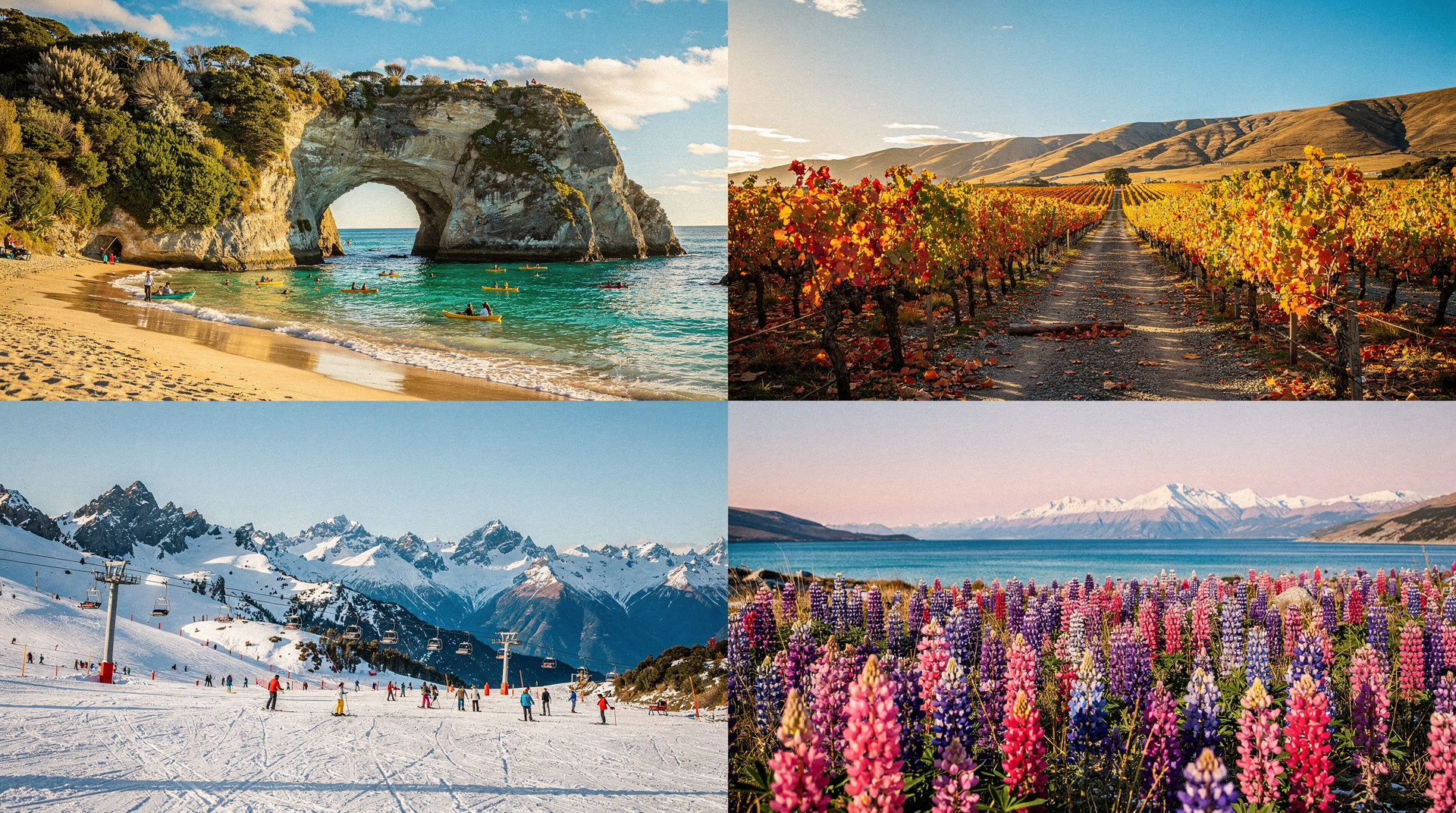
Best time to visit New Zealand
When to visit New Zealand: honest breakdown by season, region, and activity type. Summer is not always best. Spring and autumn often outperform the peak season.
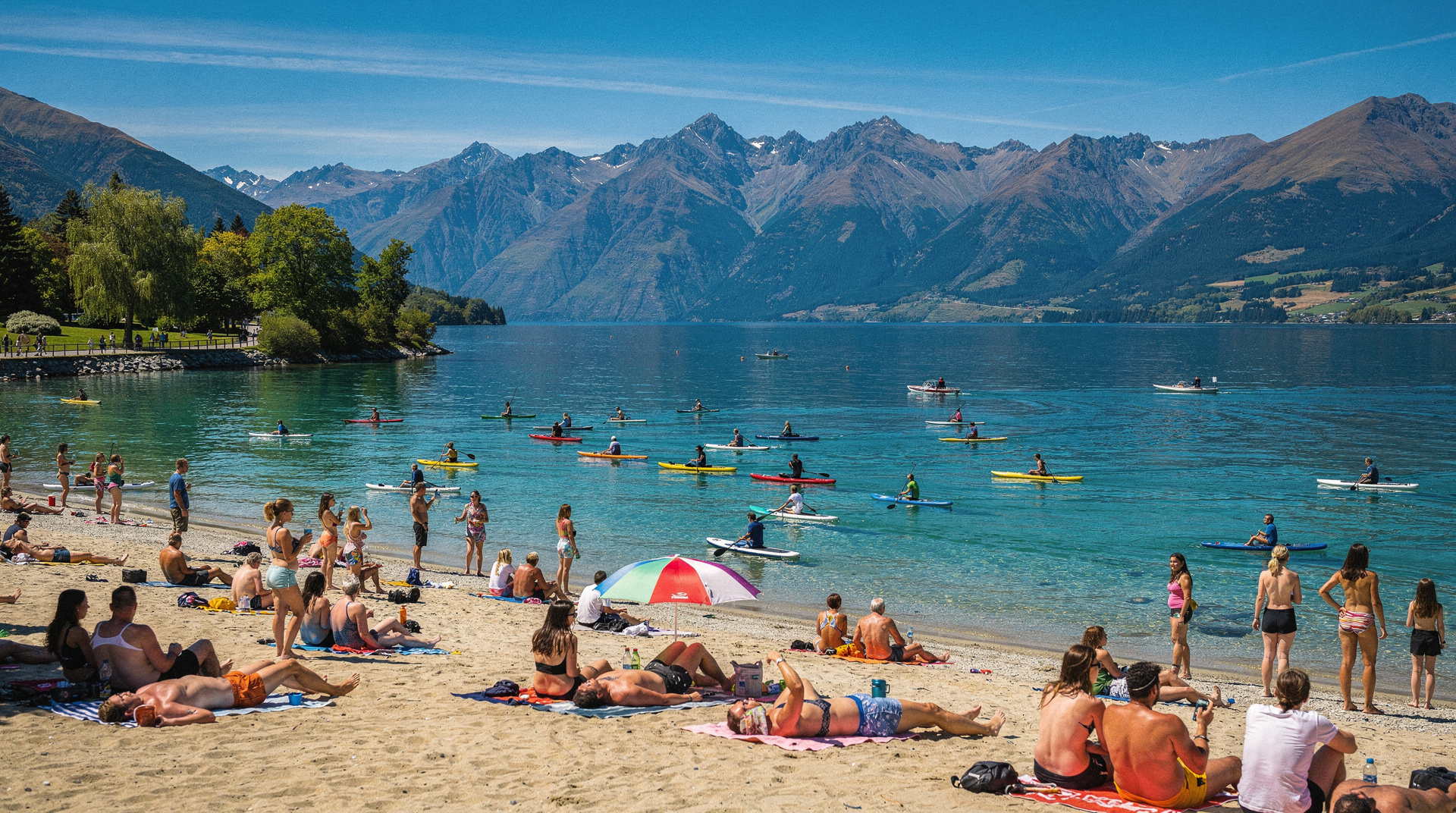
New Zealand in February
February is NZ's best month: warm summer, post-holiday crowds thinning, wine harvest starting. Real prices in NZD/USD/EUR and what to book ahead.
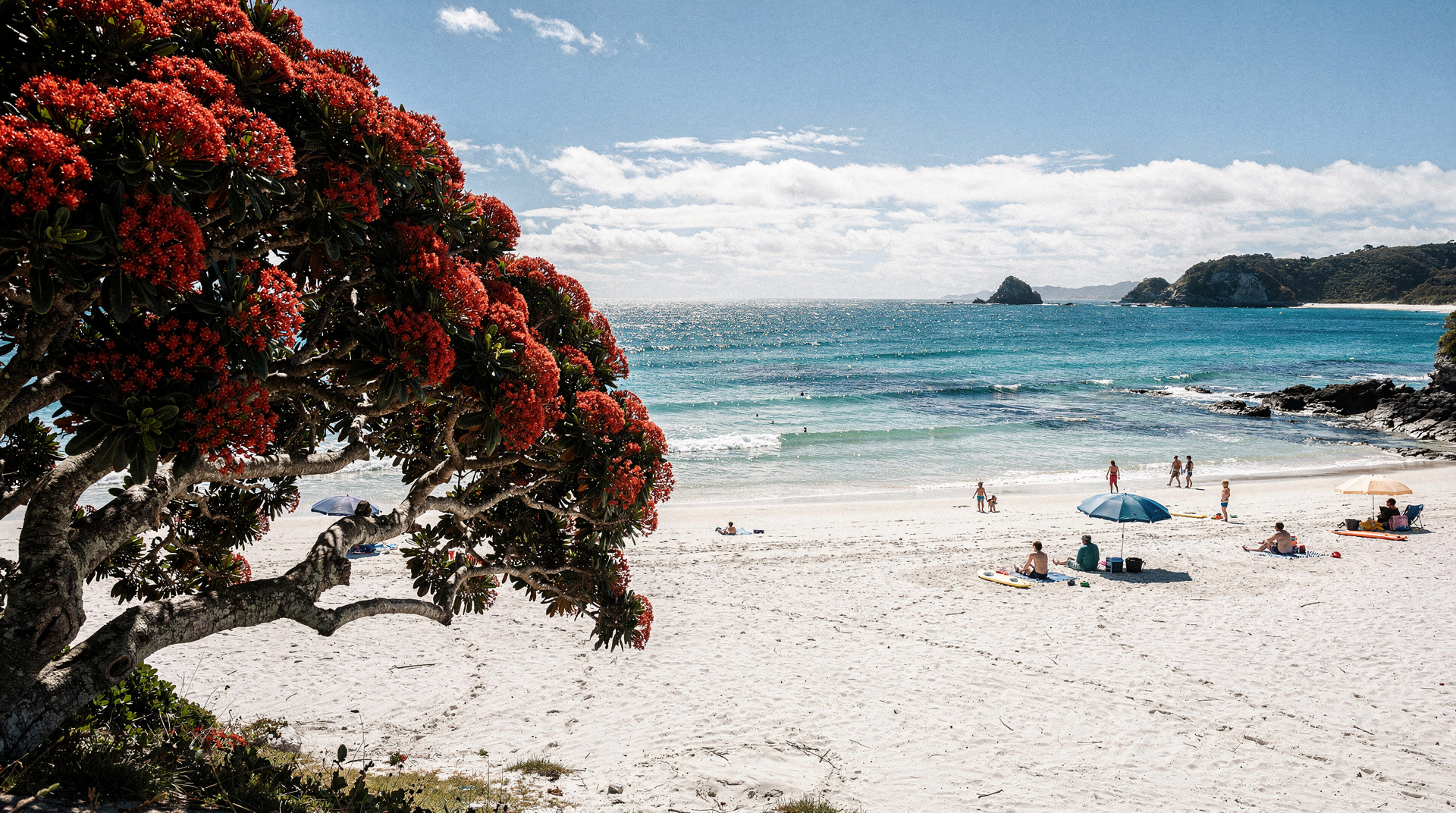
New Zealand in December
December means early summer in New Zealand: warm seas, long days, Christmas in sunshine. School holidays spike prices from mid-month. NZD/USD/EUR guide.
Summer vs winter in New Zealand
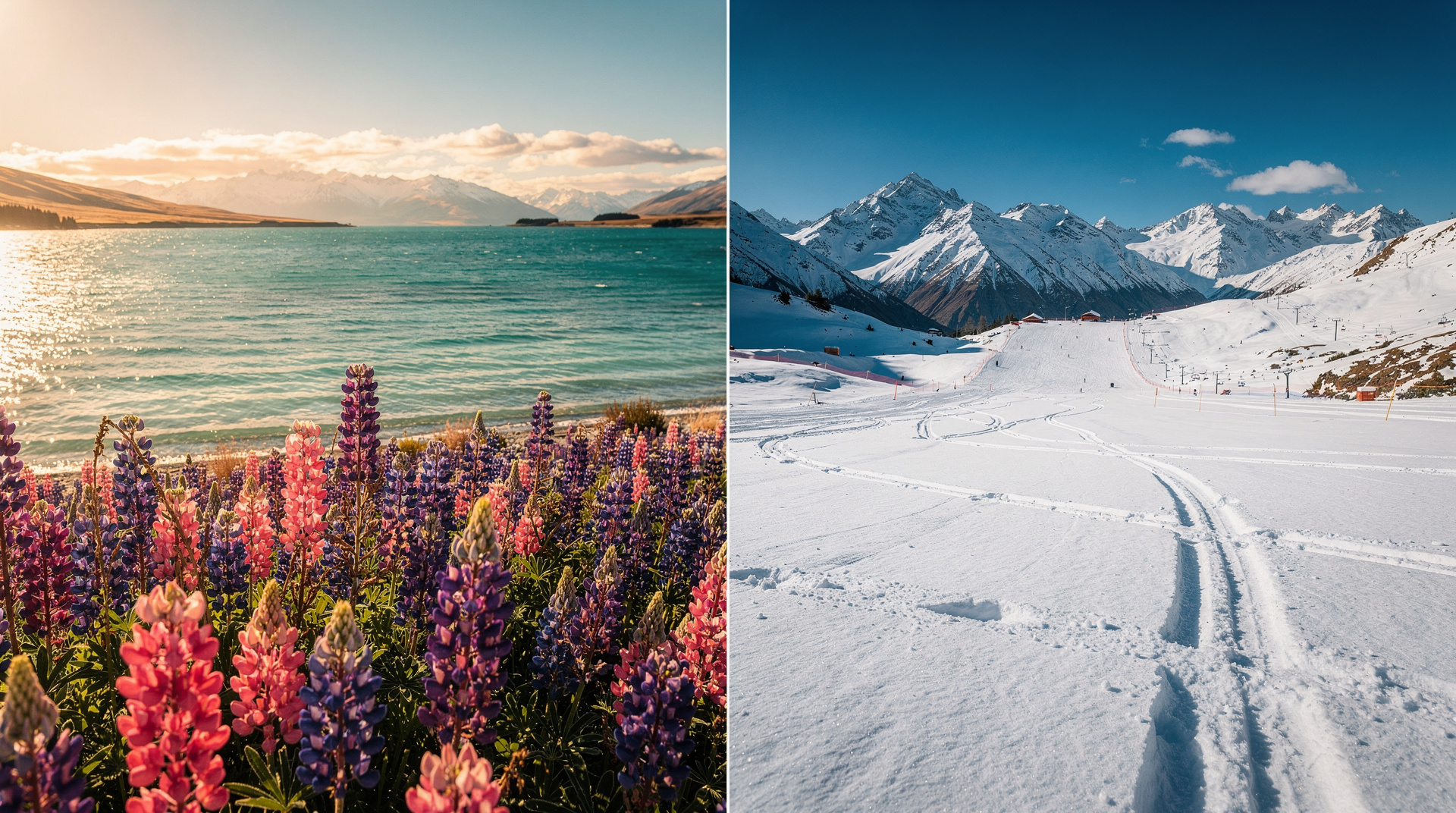
Summer vs winter in New Zealand: weather, crowds, costs and the honest verdict on which season suits your trip. NZD/USD/EUR prices throughout.
New Zealand Great Walks — complete comparison guide
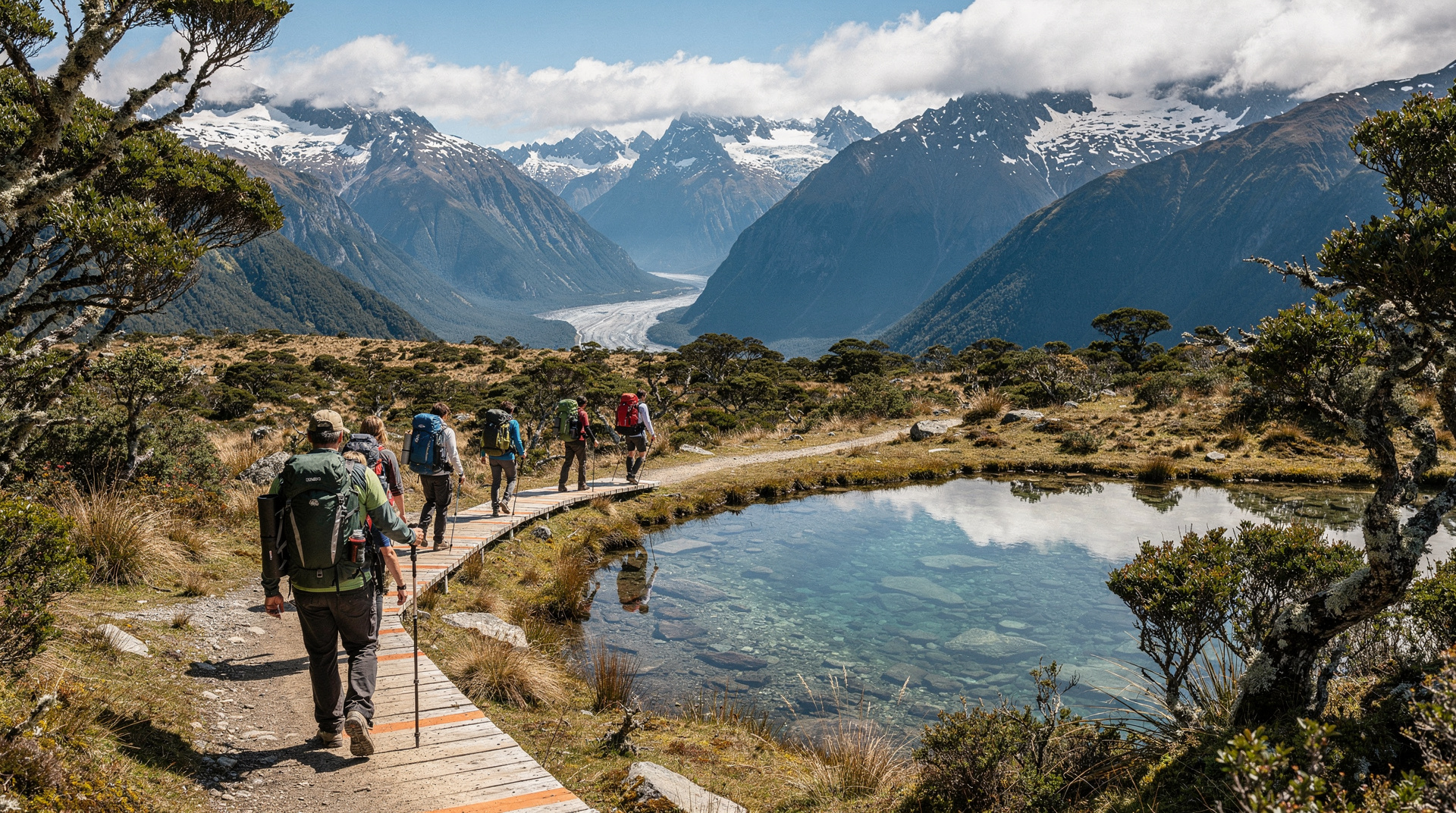
All 11 Great Walks compared: Milford vs Routeburn vs Kepler, difficulty, season, hut prices. Which one fits your trip and fitness level.
Last reviewed: