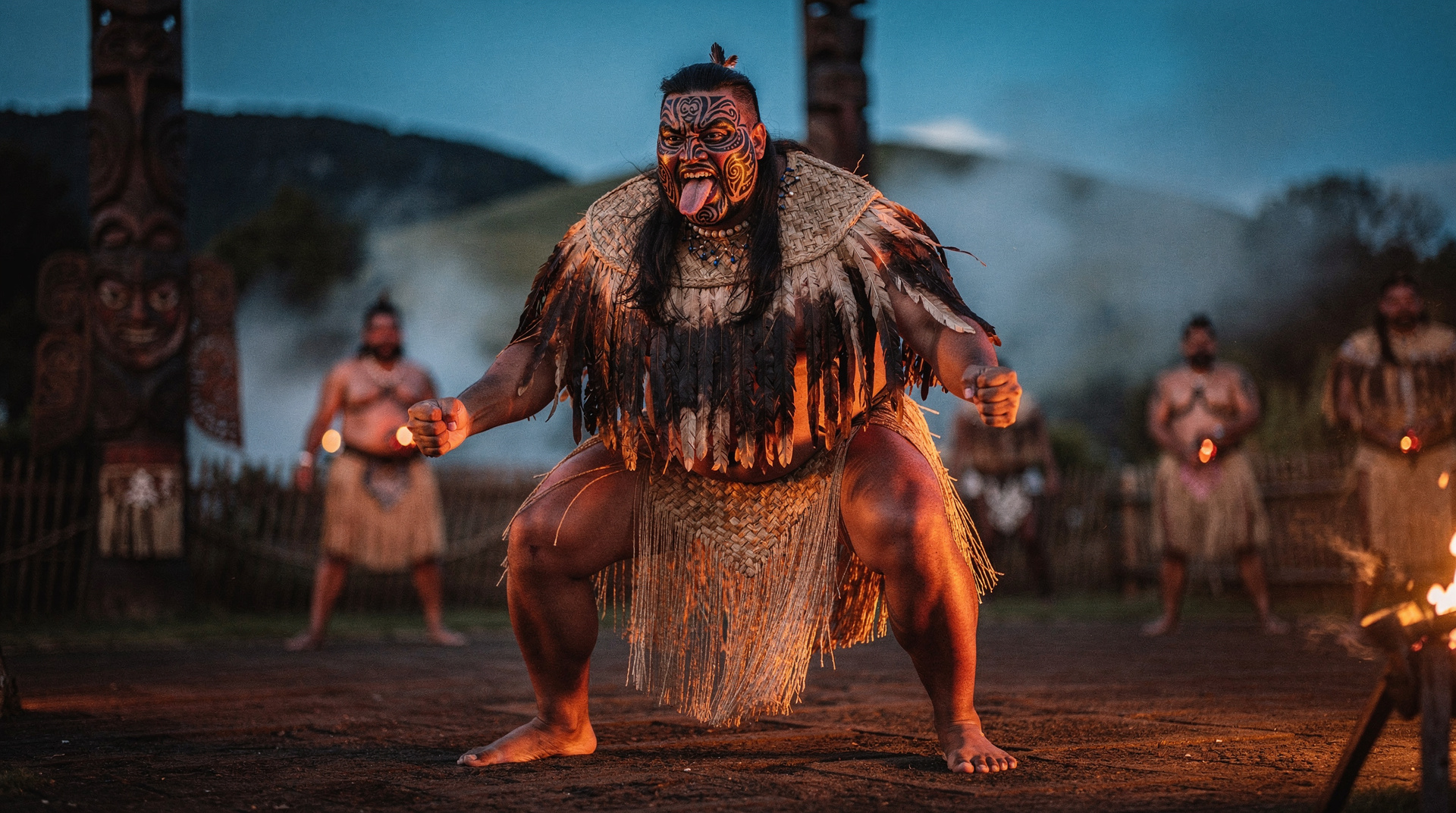
Te reo Maori glossary — the words you'll see in New Zealand
Do I need to learn te reo Maori for New Zealand?
No, but learning 10-15 words transforms the trip. Kia ora (hello), whenua (land), iwi (tribe), hangi (earth-oven feast), and a few place-name suffixes (-roa = long, -nui = big) unlock signs, menus and cultural sites you'd otherwise miss.
Top-rated tours to book
| What it covers | 100+ words: greetings, kinship, place names, food, ceremony |
| Time needed | 15–20 minutes to skim; keep it bookmarked for the trip |
| Cost | Free — pairs well with the free Te Aka Maori Dictionary app |
| Where it pays off most | Reading road signs, menus, and cultural-site explanations |
| Best time to use it | Before arrival, then again before any marae or pōwhiri visit |
A reference for the road, not a substitute for the language
This is a glossary for travellers — a lookup resource you can return to while reading the Maori culture overview, planning your visit to Waitangi Treaty Grounds, or trying to work out why so many New Zealand place names feel almost pronounceable but not quite.
Te reo Maori is one of New Zealand’s three official languages. It is not an endangered curiosity or a heritage exhibit — it is a living language spoken daily by over 185,000 people, taught in schools nationwide through kura kaupapa (immersion schools), broadcast on Te Ao Maori News, and woven into every layer of New Zealand public life. Roughly half of all New Zealand place names are Maori, which means learning even a small set of component words suddenly makes signs legible, maps meaningful, and conversations richer.
What this glossary is not: a substitute for studying te reo properly or for the deep cultural grounding that comes from spending time with iwi communities. Some words here carry weight — spiritual, historical, political — that a table cannot fully convey. Where a word has particular cultural significance, I have tried to flag it rather than flatten it.
Use this as a starting point. The words here will serve you well; the knowledge behind them runs far deeper.
Pronunciation basics
Te reo Maori pronunciation is consistent. Learn the rules once and they apply throughout. There are almost no exceptions.
Vowels: Five vowels, always pronounced the same way:
| Vowel | Sound | As in English |
|---|---|---|
| a | ”ah" | "father” |
| e | ”eh" | "bed” |
| i | ”ee" | "feet” |
| o | ”aw" | "caught” |
| u | ”oo" | "boot” |
Vowels are never swallowed or reduced. Every vowel in every syllable is fully pronounced. Aotearoa has six syllables: A-o-te-a-ro-a. Maori has three: Ma-o-ri (not “Mow-ree”). This is the single most important thing to get right.
Macrons (tohutō): The line over a vowel (ā, ē, ī, ō, ū) lengthens it — hold the sound roughly twice as long. Māori (with macron on the first ‘a’) sounds subtly different from the common English mispronunciation. Where macrons appear in this glossary, they are there for accuracy. In handwriting or casual digital text they are often dropped; in formal and official New Zealand usage, they are standard.
Key consonant rules:
- Wh: Pronounced “f” in most New Zealand dialects. Whanau = “fanau”. Whanganui = “Fanganui”. Some South Island dialects use a softer “w” sound — both are regionally correct.
- Ng: The sound in “sing” — but it can open a syllable. Ngati starts with the “ng” sound, not a silent letter. Practice: say “singing” and drop the “si-”. The remaining sound starts Ngati, Ngapuhi, Ngai Tahu.
- R: A light, tapped ‘r’ — closer to Spanish or the ‘d’ in “butter” (American English) than the English ‘r’. Not rolled heavily.
- H: Always pronounced, never silent.
- Every syllable ends in a vowel. There are no consonant clusters closing syllables. Break words at each vowel: Wha-ka-a-ri, Ro-to-ru-a, Hok-i-an-ga.
Vowel pairs: When two vowels appear side by side, each is its own syllable — no diphthong merging. “ai” = “ah-ee”, “ao” = “ah-aw”, “au” = “ah-oo”. Say them quickly and they will start to sound natural.
Greetings and everyday phrases
These are words you will hear constantly — in shops, on radio, in museum exhibit text, at the start of every school day. They are standard New Zealand English as much as they are te reo Maori, used by all New Zealanders regardless of ethnicity.
| Te reo | Pronunciation | Meaning | When to use |
|---|---|---|---|
| Kia ora | Kee-ah oh-rah | Hello / thank you / good health | Universal — use freely |
| Tena koe | Teh-nah kaw-eh | Formal hello to one person | Formal context, speeches |
| Tena korua | Teh-nah kaw-roo-ah | Formal hello to two people | Formal context |
| Tena koutou | Teh-nah kaw-toh | Formal hello to three or more | Opening speeches, marae visits |
| Haere mai | Hah-reh my | Welcome / come here | Welcoming guests |
| Nau mai, haere mai | Naw my, hah-reh my | Formal welcome | Powhiri openings |
| Ka kite | Kah kee-teh | See you later | Casual farewell |
| Ka kite ano | Kah kee-teh ah-naw | See you again | Warm farewell |
| Haere ra | Hah-reh rah | Goodbye (to the person leaving) | Farewell |
| E noho ra | Eh naw-ho rah | Goodbye (to the person staying) | Farewell |
| Kia kaha | Kee-ah kah-hah | Stay strong | Encouragement, solidarity |
| Kia manawanui | Kee-ah mah-nah-wah-noo-ee | Be steadfast, have patience | Encouragement |
| Aroha nui | Ah-roh-hah noo-ee | Much love | Warm closing to messages |
| Mauri ora | Mah-oo-ree oh-rah | Life force be well | Greeting, affirmation, toast |
| Ae | Ah-eh | Yes | Casual |
| Kao | Kah-aw | No | Casual |
| He aha | Heh ah-hah | What is / what? | Question opener |
| Miharo | Mee-hah-roh | Wonderful / amazing | Reaction |
| He pai | Heh pie | It is good | Appreciation |
| Kia pai to ra | Kee-ah pie taw rah | Have a good day | Farewell |
| Ko wai tou ingoa? | Kaw why toh ee-ngaw-ah | What is your name? | Introduction |
| Ko … toku ingoa | Kaw … taw-koo ee-ngaw-ah | My name is … | Introduction |
On using these phrases: Kia ora is the one to start with. Use it sincerely when you walk into a shop, meet a guide, or thank someone at a cultural experience. New Zealanders appreciate it every single time. Tena koutou carries more ceremony — you might hear it opening a speech at Waitangi or a marae visit; you do not need to use it yourself in casual contexts.
People and family
Understanding kinship terms matters when visiting cultural experiences where these relationships are central — not as abstract vocabulary but as the actual structure of how Maori communities organise themselves.
| Te reo | Pronunciation | Meaning | Notes |
|---|---|---|---|
| Tangata | Tah-ngah-tah | Person / people | Singular and general |
| Tangata whenua | Tah-ngah-tah feh-noo-ah | People of the land | The indigenous people of a place; do not use casually about yourself as a visitor |
| Manuhiri | Mah-noo-hee-ree | Visitors / guests | What you are at a powhiri |
| Iwi | Ee-wee | Tribe | The largest kinship group; there are approximately 60 iwi in New Zealand |
| Hapu | Hah-poo | Sub-tribe / clan | Subdivision of an iwi |
| Whanau | Fah-nau | Extended family | Widely used by all New Zealanders: “my whanau is coming” |
| Rangatira | Rah-ngah-tee-rah | Chief / person of high rank | Leadership; also implies nobility of character |
| Ariki | Ah-ree-kee | High chief / paramount chief | The most senior rank; used in specific iwi contexts |
| Tohunga | Toh-hoo-ngah | Expert / specialist / priest | A person of deep skill — in healing, carving, navigation, spiritual practice |
| Kaumatua | Kow-mah-too-ah | Elder / respected elder | Senior man; in cultural contexts, kaumatua lead speeches |
| Kuia | Koo-ee-ah | Elder woman | Senior woman; leads karanga at powhiri |
| Tane | Tah-neh | Man / male | Also the name of the forest deity |
| Wahine | Wah-hee-neh | Woman / female | Wahine Toa = strong woman |
| Tamaiti | Tah-my-tee | Child | |
| Tamariki | Tah-mah-ree-kee | Children | Plural |
| Mokopuna | Maw-kaw-poo-nah | Grandchild / grandchildren | Also sometimes abbreviated to “moko” |
| Pakeha | Pah-keh-hah | New Zealander of European descent | Not an insult; a neutral descriptor used respectfully |
| Tauiwi | Tow-ee-wee | Non-Maori / foreigner | More general than Pakeha |
Land and place names — the core vocabulary
Roughly half of New Zealand’s place names are Maori, and most of those names describe something real about the landscape — the shape of a hill, the colour of water, a historical event, a founding ancestor. Once you know around twenty component words, large swaths of the map become readable.
| Te reo | Pronunciation | Meaning | Example place name |
|---|---|---|---|
| Whenua | Feh-noo-ah | Land / placenta | Aotearoa (“land of the long white cloud”) |
| Maunga | Mow-ngah | Mountain | Maunga Whau (Mt Eden, Auckland) |
| Awa | Ah-wah | River / channel | Whanganui = “great awa” |
| Moana | Moh-ah-nah | Sea / ocean / large lake | Moana Nui a Kiwa (Pacific Ocean) |
| Roto | Raw-taw | Lake | Rotorua = “second lake” |
| Motu | Maw-too | Island | Motuihe Island |
| Ana | Ah-nah | Cave | Waitomo (“water cave”) |
| Puke | Poo-keh | Hill | Pukekohe (“hill of the kohe tree”) |
| Tara | Tah-rah | Rocky peak | Te Whanganui-a-Tara (Wellington) |
| Wai | Why | Water | Waikato = “flowing water” |
| Tai | Tie | Sea / coast / side | Tairua, Taihape |
| Ahi | Ah-hee | Fire | Ahipara (“fires of Para”) |
| Ra | Rah | Sun / day | Raetihi (“the sun’s summit”) |
| Po | Paw | Night | Opotiki (“the nights”) |
| Ngahere | Ngah-heh-reh | Forest | Used in compound names |
| Ara | Ah-rah | Path / road / way | Aramoana (“path on the sea”) |
| Papa | Pah-pah | Flat / earth / foundation | Papatoetoe, Papatūānuku (Earth Mother) |
| Repo | Reh-paw | Swamp / marsh | Reproduced in many coastal names |
| Manga | Mah-ngah | Stream / tributary | Mangakino |
| Tonga | Taw-ngah | South / south wind | Tongariro = “carried south by the south wind” |
Place-name suffixes and what they unlock
These are the building blocks. Once you have them, New Zealand place names become a slow-unfolding map of Maori observation of the landscape.
| Suffix/prefix | Meaning | Example | Translation |
|---|---|---|---|
| -roa | Long | Taumaroa, Whangaroa | Long… |
| -nui | Big / great | Whanganui, Taranui | Great… |
| -iti / -riti | Small | Whangariti, Waiiti | Small… |
| -tapu | Sacred / forbidden | Whakatane (adj. Whakatāpu) | Sacred… |
| roto- | Lake | Rotorua, Rotoiti, Rotoehu | Lake of… |
| wai- | Water | Waikato, Waikari, Wairarapa | Waters of… |
| wha- / whan- | Harbour / bay (via whananga) | Whangarei, Whanganui | Great harbour… |
| te- | The (article) | Te Anau, Te Aroha, Te Kuiti | The… |
| nga- | The (plural) | Ngaio, Ngamatea | The (many)… |
| -a- | Of / belonging to | Tāmaki Makaurau = “Tamaki sought by many lovers” | …of… |
| maunga- | Mountain | Maungatautari | Mountain of… |
| awa- | River | Awakino, Awatere | River of… |
| -kai- | Food / eat | Kaikōura = “meal of crayfish” | To eat… |
| -puke- | Hill | Pukekohe, Pukeiti | Hill of… |
Worked examples: Roto-rua = “second lake” (roto + rua). Wai-ka-to = “flowing/tossing water”. Kai-kōura = “eat crayfish” (the first Europeans who landed here found Maori cooking kōura on the shore). Aoraki = “cloud piercer” or, in some readings, “cloud in stillness” — the name of the highest peak in the Southern Alps, also known as Mt Cook.
Understanding these components deepens the itineraries you plan and changes how you read the landscape. When you drive into Queenstown (Tāhuna — “shallow bay”) or arrive at Te Anau, you are reading the same observations the first people to arrive here made, encoded in the name.
Reading compound place names on the road
Once the components above are familiar, most New Zealand place names stop being a memorisation exercise and start being legible on sight, the way “New-town” or “River-side” would be to an English speaker. A few worked examples from places you’re likely to drive past:
| Place name | Breakdown | Reading |
|---|---|---|
| Whakatane | Whaka- (to make/cause) + tane (man) | “To act as a man” — from a founding legend |
| Waihi | Wai (water) + hi (rising/gushing) | “Gushing water” |
| Manapouri | Mana (prestige) + puri/pouri (dark/sorrowful) | “Lake of the sorrowing heart” |
| Kaiapoi | Kai (food) + apoi (gathered) | “Food gathered” — a former trading pā site |
| Ohakune | O- (place of) + hakune (uncertain root) | “The place of…” (locative prefix pattern) |
| Akaroa | Aka (root/pathway) + roa (long) | “Long harbour” — a South Island example of -roa |
The pattern holds across the country: a locative prefix (te-, nga-, o-, wai-, roto-) plus a descriptive root usually gets you close to the meaning, even for names not listed here. It’s a genuinely useful habit for a road trip — try decoding the next unfamiliar sign before checking a dictionary.
Food and gathering
Many of these words appear on menus, at hangi experiences, and in supermarkets. Several are used in standard New Zealand English regardless of context.
| Te reo | Pronunciation | Meaning | Notes |
|---|---|---|---|
| Kai | Ky | Food / to eat | ”Kai time” is universal New Zealand English |
| Wai | Why | Water | Also used for any liquid |
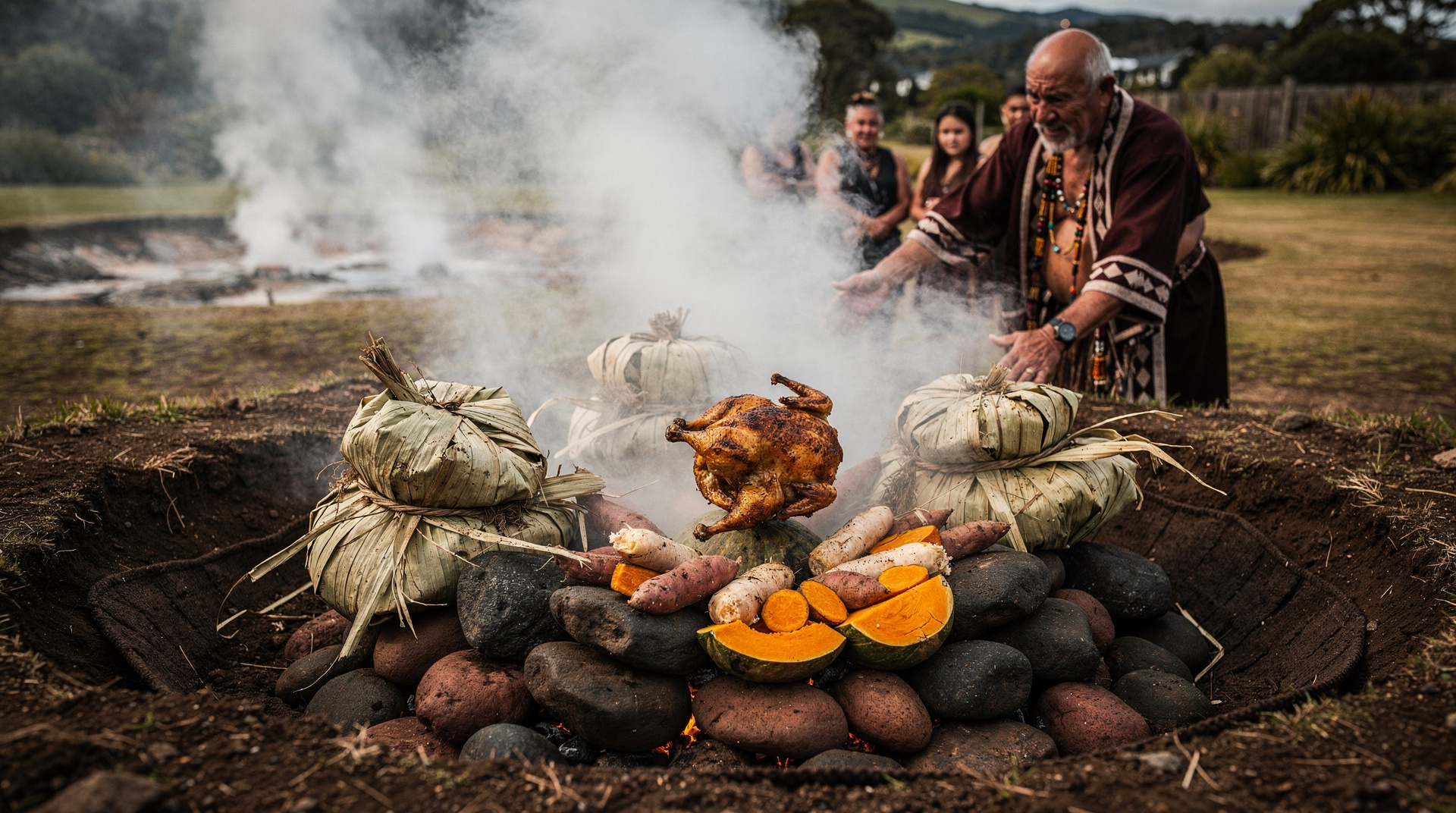
| Hangi | Hah-ngee | Earth oven / the feast cooked in it | Food wrapped in leaves and slow-cooked underground in heated stones; see the hangi experience guide |
| Kumara | Koo-mah-rah | Sweet potato | A staple crop brought from Polynesia; appears on almost every New Zealand menu |
| Paua | Pah-oo-ah | Abalone | A large shellfish with iridescent shell; common in NZ seafood; the shell is used in carvings and jewelry |
| Kina | Kee-nah | Sea urchin | A delicacy — strong flavour, not to everyone’s taste |
| Kōura | Kaw-rah | Freshwater crayfish / rock lobster | Kaikōura town is named for it |
| Rewena | Reh-weh-nah | Potato-starter sourdough bread | A distinctly Maori bread made with a fermented potato starter |
| Pikopiko | Pee-kaw-pee-kaw | Native fern shoots | Eaten as a vegetable, increasingly on fine-dining menus |
| Kawakawa | Kah-wah-kah-wah | Native pepper tree | Leaves used in karakia and cooking; common in rongoā (traditional medicine) |
| Manuka | Mah-noo-kah | Tea tree | Manuka honey is internationally famous; also used for rongoā |
| Harakeke | Hah-rah-keh-keh | Flax | Used for weaving (raranga); the leaves of the harakeke plant represent the whanau |
| Tuna | Too-nah | Eel | A significant food source and cultural symbol; tuna taniwha (eel spirits) feature in tradition |
| Inanga | Ee-nah-ngah | Whitebait (juvenile galaxiid fish) | Whitebait fritters are a seasonal New Zealand delicacy; inanga is the species name |
| Kore | Kaw-reh | Nothing / void | Also the cosmic void in Maori creation narrative — important cultural reference, not only food-related |
| Hakari | Hah-kah-ree | Feast / celebratory meal | The formal feast that follows ceremony |
Culture, beliefs and customs — the words that carry weight
These are not tourist-brochure words. They are concepts with philosophical and spiritual depth. I have used some of them throughout this site and in the marae etiquette guide, but they deserve their own definitions here with the caveat that a glossary entry cannot do justice to a living tradition. What follows is a starting orientation.
| Te reo | Pronunciation | Meaning | Cultural weight |
|---|---|---|---|
| Marae | Mah-rah-eh | Traditional meeting ground and ceremonial complex | Not a building — a living community space; see marae etiquette |
| Wharenui | Fah-reh-noo-ee | Meeting house / carved house | The central building of the marae; its structure represents an ancestor |
| Wharekai | Fah-reh-ky | Dining hall | Separate from the wharenui; where food (noa) is consumed |
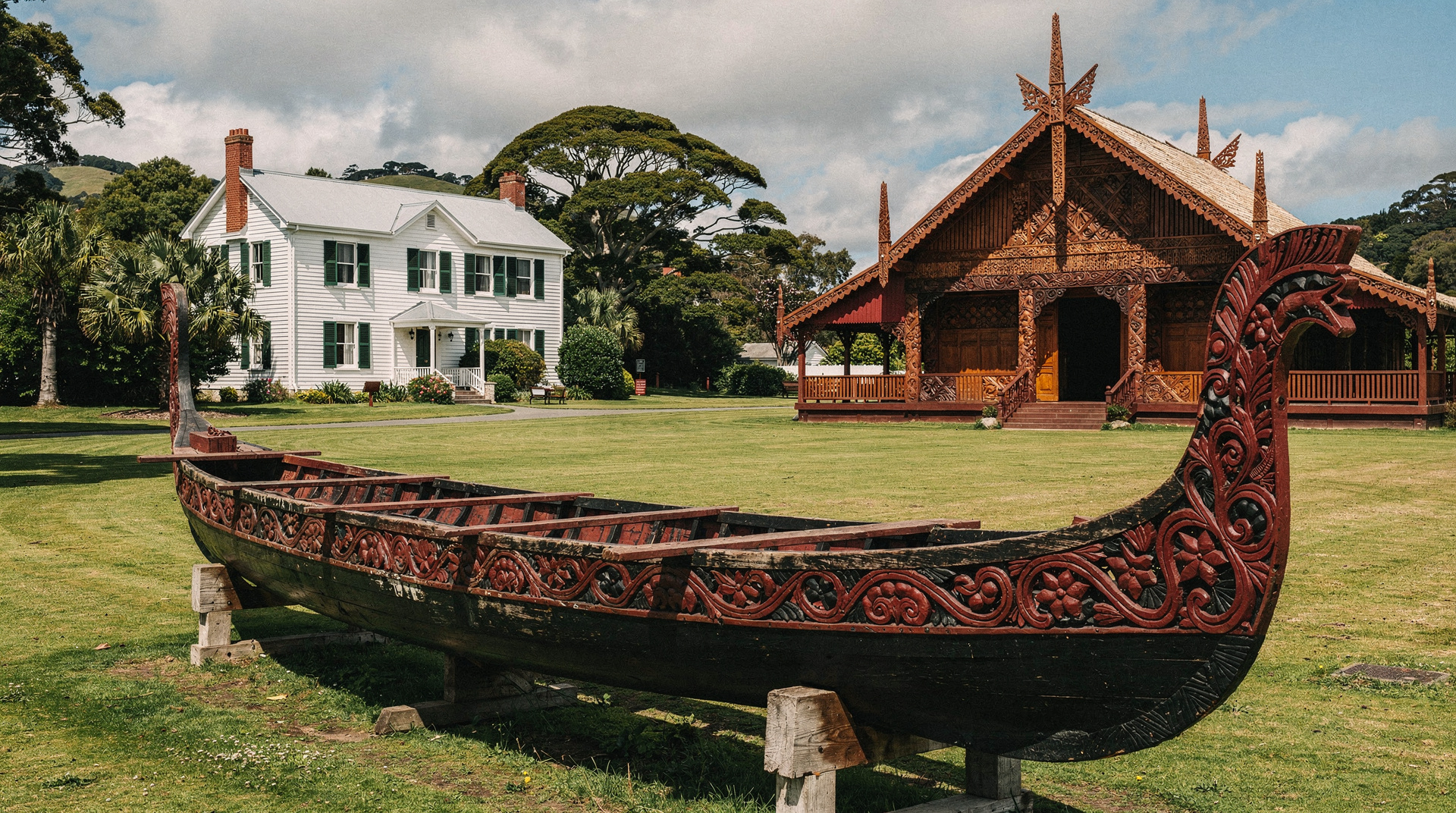
| Waka | Wah-kah | Canoe | The great voyaging canoes that brought Maori ancestors to New Zealand; genealogical lines trace back to specific waka |
| Waka hourua | Wah-kah hoh-roo-ah | Double-hulled voyaging canoe | The type used for trans-Pacific navigation |
| Powhiri | Paw-fee-ree | Formal welcoming ceremony | The protocol for receiving visitors onto a marae |
| Karanga | Kah-rah-ngah | The vocal call that opens a powhiri | Made by senior women; not performed casually |
| Whaikorero | Fie-kaw-reh-roh | Formal speech-making | Part of the powhiri; follows the karanga |
| Waiata | Why-ah-tah | Song / to sing | Songs that follow speeches to consolidate them; also everyday singing |
| Hongi | Haw-ngee | The pressing of foreheads and noses in greeting | The sharing of breath (ha); one of the most meaningful cultural gestures |
| Haka | Hah-kah | Ceremonial posture dance | Not only war — haka are performed to welcome, to mourn, to celebrate, to challenge; the All Blacks haka is a specific haka called Ka Mate |
| Kapa haka | Kah-pah hah-kah | Group performing arts | Competitive cultural performance combining haka, waiata, poi, titititorea |
| Koha | Kaw-hah | Gift / donation | The visitor’s reciprocal contribution; given freely, not as payment |
| Tapu | Tah-poo | Sacred / restricted / under spiritual protection | One of the most important concepts in Maori culture; a person, object, or place that is tapu is set apart and must not be violated; the English word “taboo” derives from it |
| Noa | Naw-ah | Common / free from restriction | The opposite of tapu; food is noa, which is why it cannot enter the tapu wharenui |
| Mana | Mah-nah | Prestige / authority / spiritual power / standing | A person’s mana is their accumulated authority and spiritual weight; it can be built or diminished by actions |
| Manaakitanga | Mah-nah-ah-kee-tah-ngah | Hospitality / the ethic of care for guests | The host’s obligation to look after visitors before themselves; a core Maori value |
| Mauri | Mah-oo-ree | Life force / vital essence | Every living thing has mauri; mauri can be strengthened or damaged |
| Mauri ora | Mah-oo-ree oh-rah | Life force be well | A greeting and affirmation; used increasingly as a closing toast |
| Atua | Ah-too-ah | Spiritual being / ancestor deity | Includes figures like Tane (forest/birds), Tangaroa (sea), Rongo (cultivation), Whiro (darkness) |
| Papatūānuku | Pah-pah-too-ah-noo-koo | Earth Mother | The personification of the earth; in creation narratives, she and Ranginui (Sky Father) are the primordial parents |
| Ranginui | Rah-ngee-noo-ee | Sky Father | The sky, personified |
| Taniwha | Tah-nee-fah | Water spirit / guardian spirit | Can be protective or dangerous; associated with rivers, lakes, and dangerous places |
| Taonga | Tah-aw-ngah | Treasure / something of value | Physical taonga (carvings, greenstone, weavings) and intangible taonga (te reo Maori itself is a taonga); protected under the Treaty |
| Korowai | Kaw-raw-why | Cloak (traditionally of feathers or flax) | A korowai is one of the most significant taonga; presented to mark high status |
| Ta moko | Tah maw-kaw | Traditional Maori tattooing | Deeply personal; each moko encodes genealogy, rank, and identity; not to be replicated as decoration |
| Raranga | Rah-rah-ngah | Weaving | The art of flax weaving; a skilled practice with its own protocols |
| Whakairo | Fah-ky-raw | Carving | Particularly the carving of the wharenui |
| Tino rangatiratanga | Tee-naw rah-ngah-tee-rah-tah-ngah | Self-determination / sovereignty | The term used in the Maori text of the Treaty of Waitangi; politically significant |
| Karakia | Kah-rah-kee-ah | Ritual incantation / prayer | Used to open and close activities, sanctify food, mark significant moments |
| Tohu | Taw-hoo | Sign / omen / symbol | Also used for macron (tohu — the mark) |
Time, seasons and ceremony
| Te reo | Pronunciation | Meaning | Notes |
|---|---|---|---|
| Matariki | Mah-tah-ree-kee | The Pleiades star cluster / Maori new year | A public holiday in New Zealand since 2022; celebrated June-July (date varies by year); see the Matariki festival guide |
| Mahuru | Mah-hoo-roo | Spring | September-November in New Zealand (southern hemisphere) |
| Raumati | Rah-oo-mah-tee | Summer | December-February; peak tourist season |
| Hotoke | Haw-taw-keh | Winter | June-August; ski season, Fiordland at its most dramatic |
| Koanga | Kaw-ah-ngah | Spring (alternate term) | Used regionally |
| Ra | Rah | Sun / day | |
| Po | Paw | Night | |
| Wiki | Wee-kee | Week | From English “week” — many modern te reo words adapt English |
| Hui | Hoo-ee | Gathering / meeting | ”Hui” is used in standard NZ English: “we had a hui about it” |
| Tangihanga | Tah-ngee-hah-ngah | Funeral / mourning ceremony | A tangihanga (or tangi) can last several days; visitors may be invited |
| Poroporoaki | Paw-raw-paw-rah-kee | Farewell ceremony | The formal goodbye |
| Hakari | Hah-kah-ree | Celebratory feast | The meal that follows ceremony |
| Wero | Weh-raw | Challenge / warrior challenge | The formal challenge issued to visitors before a powhiri; a warrior places an object at the visitors’ feet |
| Waitangi Day | Why-tah-ngee day | 6 February — national day | Commemorates the 1840 signing of the Treaty of Waitangi |
| Anzac Day | (English) | 25 April — remembrance | Uses the Maori concept of manaakitanga in its community gatherings |
Regional dialect differences you’ll notice
Te reo Maori is not perfectly uniform across the country, and noticing the variation is part of understanding how alive the language is. The clearest example for visitors is “wh”: most North Island dialects pronounce it as “f” (Whanganui = “Fanganui”), while some South Island and lower North Island speakers, particularly in Ngāi Tahu contexts, use a softer “w” sound instead — both are correct, and hearing the difference between a Rotorua guide and a Ngāi Tahu-affiliated guide in Christchurch or Dunedin is a small but real marker of the country’s linguistic diversity.
Ngāi Tahu dialect also favours “k” where northern dialects use “ng” in a handful of words — most visibly, the iwi’s own name is sometimes written Kāi Tahu in South Island contexts. Neither form is more “correct” than the other; they reflect distinct tribal and regional traditions rather than error.
How to use these words without overstepping
There is a distinction between respectful use and appropriation, and it is worth naming directly.
Do try: Kia ora, haere mai, ka kite, ae, kao — these are in everyday New Zealand use, appreciated from visitors, and carry no cultural restriction.
Do pronounce correctly: An attempt with correct pronunciation is more respectful than a confident mispronunciation. If you have read this far, you can pronounce Kia ora, Rotorua, and Aotearoa well. That alone sets you apart from most visitors.
Do ask: If you are at a marae visit or cultural experience and want to know more about a word’s meaning or usage — ask. Maori people overwhelmingly welcome genuine curiosity. The question “what does that word mean?” is never rude.
Be careful with: Tapu, mana, tohunga, ta moko, rangatira — these carry specific cultural weight and should not be thrown around casually. Using “mana” to mean “cool” (common in some NZ English slang) is not wrong, but be aware of its full register.
Do not: Appropriate iwi-specific terminology that you have not been invited to use. Each iwi has dialect variations, specific terms for their own traditions, and words that belong to their specific ceremonial context. The glossary here is a broad national baseline — it does not include the full depth of any one iwi’s knowledge.
On te reo revitalisation: Te reo Maori was actively suppressed in New Zealand schools until the 1970s. The language’s current health — it is now in a much stronger position than a generation ago — is the result of decades of sustained community effort, including the kōhanga reo (language nest) movement that began in 1982. When you learn a few words and use them respectfully, you are, in a small way, participating in that revitalisation.
Where to hear and learn te reo in context
The most effective way to hear te reo Maori used naturally is through cultural immersion. A formal cultural experience at Rotorua’s cultural village or a powhiri at Waitangi gives you a live context for the words you have read here — the karanga, the whaikorero, the waiata all happen in sequence and you can track the terms as they unfold.
Online resources worth bookmarking:
- Te Aka Maori Dictionary (maoridictionary.co.nz) — the authoritative online dictionary with audio pronunciation for every entry
- Te Wiki o te Reo Maori — the annual Maori Language Week (held in September) with free resources
- Te Ao Maori News (teaomaori.news) — news in te reo Maori and bilingual content
- Kupu app — point your phone camera at an object and get the te reo Maori word for it; made by Te Papa
Putting the glossary to work on a trip
A vocabulary list sticks best when you meet the words in a real setting. Three kinds of place are especially good for that: museums, cultural evenings and the landscape itself.
Museums. The Auckland Museum guide and the Te Papa guide both show how te reo sits alongside English in exhibit labels, so you can practise reading waka, taonga and whakairo in context. If you would like a live performance on top, our museum performance review explains what the show is like. To book one, a Maori cultural performance inside the museum is the simplest way to hear waiata and see haka in the same visit.
Cultural evenings in Rotorua. Rotorua is where most visitors first hear karanga, whaikorero and waiata in sequence. Our Mitai Maori Village review, the Te Puia evening review and the Te Puia guide explain what each format feels like. If you want the whole evening built around food, a Maori cultural dinner in Rotorua lets you meet words like hangi, hakari, manaakitanga and kai in the setting they belong to. The hangi feast guide covers what to expect from the meal.
Under the stars. Many te reo words for the sky and seasons, from Matariki to ra and po, make more sense after dark. Lake Tekapo is a natural place for that, and a Maori astronomy evening at Lake Tekapo connects the star lore in the time-and-seasons table to the real night sky. Read the Lake Tekapo guide and the Matariki 2026 blog post beforehand.
Words you will meet on the map
Once you start reading signs, the vocabulary above keeps turning up. In the far north, Cape Reinga and the Ninety Mile Beach guide are good places to practise reading place names. Further south, Rotorua, Taupo and Tongariro National Park show how roto, wai and maunga turn up on the same road. In the Southern Alps, Aoraki Mt Cook is the clearest example of a dual name, and the Mount Cook guide uses both. The Stewart Island guide does the same for Rakiura, and the Rakiura Track guide is worth reading with the glossary open.
If you want a wider plan around the language, the first-time visitor guide and the Waitangi Treaty Grounds guide fit naturally alongside this page.
Mitai Maori Village: Cultural Experience and Dinner Buffet
Three-hour evening experience at Mitai Maori Village — powhiri welcome, haka, waiata, hangi feast, and nocturnal bush walk. A grounded, community-run experience that brings many of these words to life.
From from NZD 165 / USD 99 / EUR 91
Frequently asked questions about Te reo Maori glossary — the words you’ll see in New Zealand
Is te reo Maori dying out?
No — and this is one of the most important corrections to make. Te reo Maori faced genuine endangerment through the 20th century, when speaking it in schools was prohibited and social pressure drove it from public life. But since the kōhanga reo movement began in 1982, the language has been in sustained revival. Today there are over 185,000 speakers and growing, kura kaupapa immersion schools in most major cities, te reo on radio and television (Radio Waatea, Maori Television, Te Ao Maori News), and the language appears in every branch of government. It is an official language of New Zealand with legal standing. The work is ongoing, but the trajectory is recovery, not decline.
Should I learn te reo before I go to New Zealand?
Learning ten to twenty words before you arrive is enough to make a genuine difference. You do not need a course or fluency — you need correct pronunciation of the place names you will visit and a handful of greetings. The te reo basics guide will get you there in thirty minutes. If you want to go further, the Pimsleur Maori audio course or an online kōrero Maori resource can give you conversational basics in a few weeks.
How do I say “thank you” correctly?
The most natural option is kia ora — it means hello, thank you, and “good health” simultaneously. For a more specific “thank you” you can say “kia ora koe” (kee-ah oh-rah kaw-eh) — literally “good health to you.” Both are correct. Maori culture traditionally emphasised reciprocity through action (koha, manaakitanga) rather than verbal thanks — the words have absorbed that warmth.
Are place names pronounced “right” by Pakeha New Zealanders?
Honestly, not always. Some place names have been anglicised for over a century and the Maori pronunciation is rarely heard in casual use. Wanganui (often said “Wonga-noo-ee” by locals rather than “Fanganui”) is a well-known example. Taupo is frequently said “Taw-poh” rather than “Tah-oo-poh.” The trend in New Zealand media and official use has moved firmly toward more accurate pronunciation, particularly with place names restored on maps and signage. Visitors who make the effort to use closer-to-correct pronunciation are usually met with appreciation, not correction.
Why do some letters have lines over them?
The line over a vowel is called a macron (tohutō in te reo). It indicates a long vowel — held for roughly twice the duration of a short vowel. Māori (with macron on first a) is subtly different from a short-a pronunciation. Tāhuna (the Maori name for Queenstown) has a long first vowel. Macrons are now standard in official New Zealand usage and appear in all major dictionaries, school resources, and government publications. In informal writing they are often dropped — which can occasionally cause confusion, since the same letters with and without a macron can indicate different words.
What does Aotearoa mean?
The most common translation is “Land of the Long White Cloud.” The literal breakdown: Ao = cloud / world, tea = white / clear, roa = long. The full phrase appears in traditional oral literature referring to the clouds above New Zealand visible from arriving waka on the ocean horizon. Alternative readings exist — some scholars translate it more closely as “Land of the Long Bright World” or “Long Bright Cloud World” — but the “long white cloud” translation is the one universally used and understood.
What is the difference between iwi, hapu, and whanau?
These three terms describe nested levels of kinship. Whanau is the extended family unit — parents, siblings, aunts, uncles, cousins, grandparents, anyone connected by blood or by adoption into the family. Hapu is a sub-tribe — a cluster of whanau who share a common ancestor and identify as a community unit; hapu are the politically active unit in traditional Maori society. Iwi is the tribe — a cluster of hapu sharing broader common ancestry and identity. There are approximately 60 recognised iwi in New Zealand. Ngai Tahu, for example, is the dominant iwi of the South Island; Ngapuhi is the largest iwi in the North Island. When someone says “which iwi are you from?” they are asking about this genealogical connection.
Is it okay to get a ta moko (traditional Maori tattoo)?
Ta moko is not decorative tattooing. Each moko is a personal record of genealogy, rank, accomplishments, and identity — it is a sacred identifier that belongs to a specific person and their whakapapa (genealogy). Non-Maori getting ta moko is generally considered cultural appropriation. Some Maori tattoo artists offer “kirituhi” — surface-inspired designs for non-Maori that draw on Maori aesthetic tradition without encoding specific genealogical meaning. If you are interested, seek out a Maori artist and have a direct conversation about what is appropriate. Do not get a ta moko-style tattoo from a non-Maori artist without this conversation.
Why do North and South Island guides sometimes pronounce words differently?
Both are correct — te reo Maori has regional dialect variation, the same way English does. Most North Island dialects pronounce “wh” as “f,” while some South Island and Ngāi Tahu speakers use a softer “w.” Ngāi Tahu dialect also uses “k” in places where northern dialects use “ng.” If you notice a Christchurch or Dunedin guide’s pronunciation differing from what you learned in Rotorua, it reflects genuine regional and tribal tradition, not an error on either side.
Can I use a translation app instead of learning any of this?
You can, and the Kupu app and Te Aka Maori Dictionary are both genuinely good tools — but they’re better as supplements than substitutes. An app tells you what a word means after you’ve already seen it; the point of learning the vowel sounds and twenty or so components here is that you can read and roughly pronounce an unfamiliar place name in real time, on a road sign or a menu, without stopping to look anything up. Use both: this glossary for the patterns, an app for the specific words that come up.
Rotorua: Te Puia Guided Tour with Traditional Hangi Lunch
Te Puia cultural centre with hangi lunch — geothermal park, live kapa haka, and the world's largest collection of working geysers.
From from NZD 139 / USD 83 / EUR 77
Expand your knowledge
This glossary gives you the working vocabulary. For deeper cultural context, the guides below go further:
- Te reo Maori basics for travelers — pronunciation rules, essential phrases, place name meanings
- Marae etiquette for visitors — how to behave at a powhiri, what tapu means in practice
- Maori culture overview — history, arts, living culture from arrival to today
- Matariki festival guide — the Maori new year, now a public holiday
- Hangi experience guide — the earth oven feast, who does it well, what to expect
- Waitangi Treaty Grounds — where the Treaty was signed in 1840; essential context
- Rotorua guide — the best place in New Zealand for immersive cultural experiences
Related guides
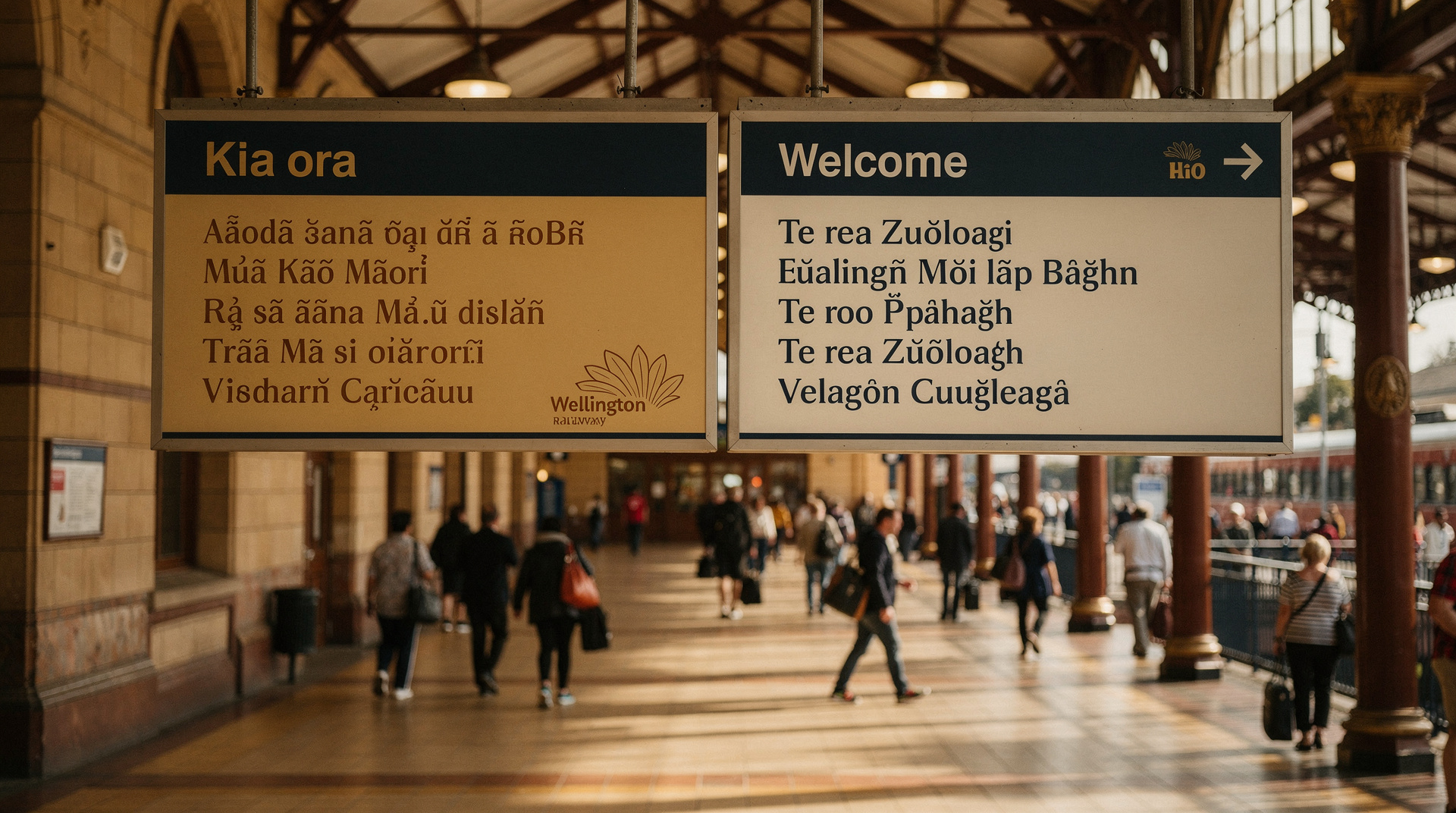
Te reo Maori basics for travelers
Practical te reo Maori guide: vowel pronunciation, 40+ essential phrases, place name meanings, and everyday Maori words woven into New Zealand English.
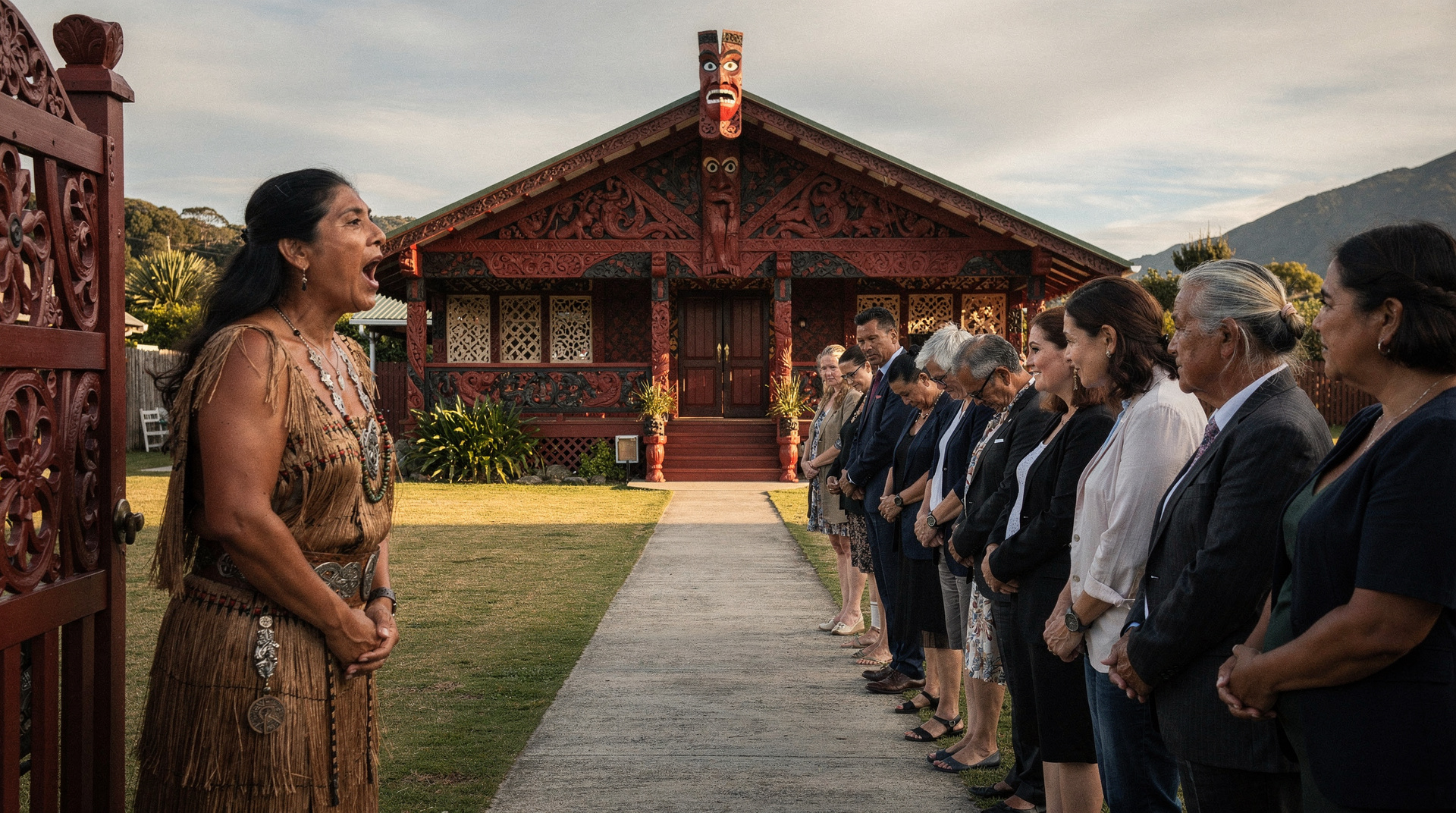
Marae etiquette for visitors
Marae etiquette: powhiri protocol, hongi greeting, shoes off, what not to do, and how to be a respectful guest at a Maori meeting place.
Maori culture overview — what every visitor should know
Respectful introduction to Maori culture for visitors: tangata whenua, Te Tiriti, tikanga basics, language, cultural experiences.
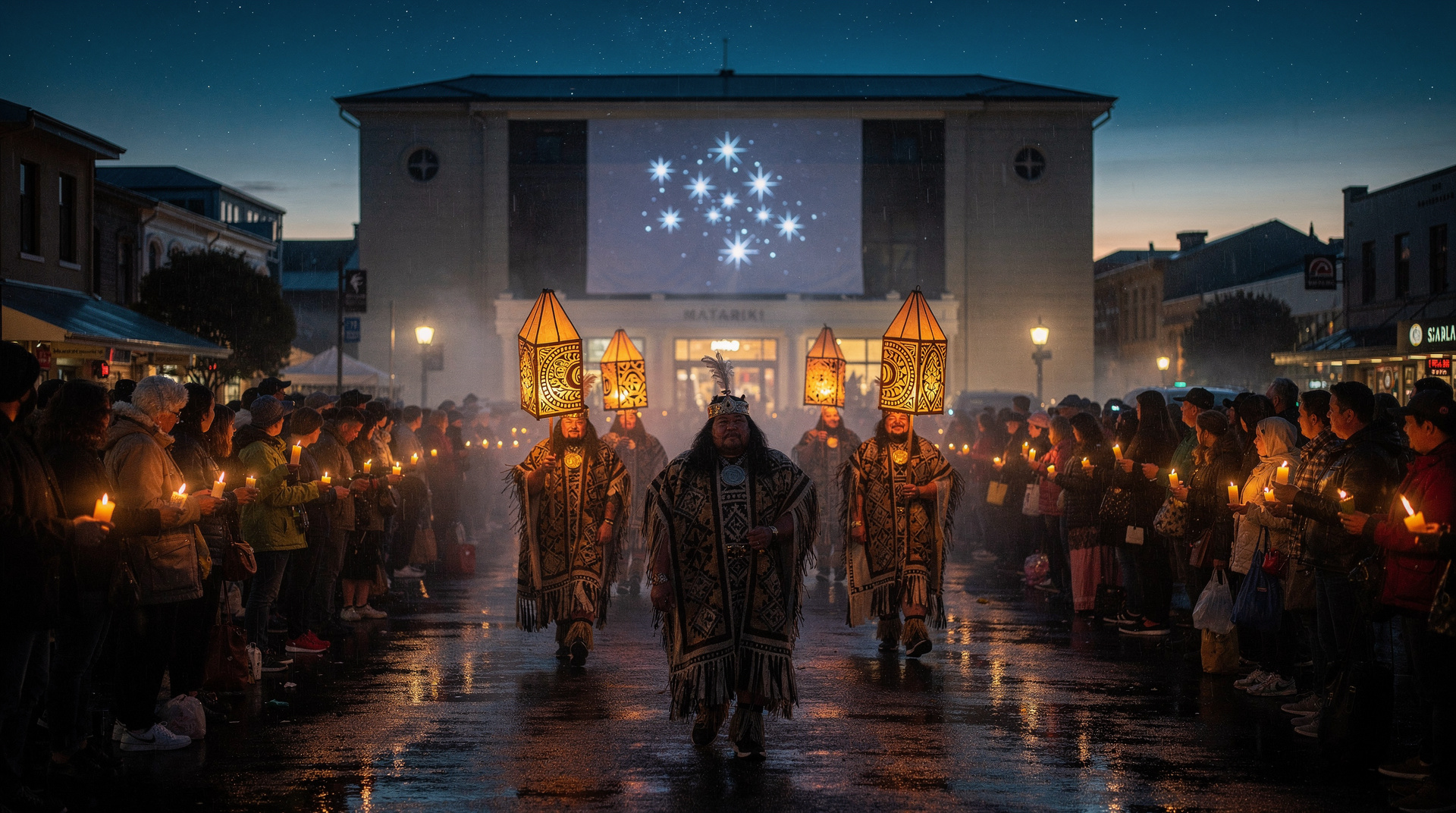
Matariki festival guide — New Zealand's Maori New Year
Matariki is the Maori New Year and New Zealand's newest public holiday. Guide to the star cluster, 2026 dates (10 July), events across NZ.
Hangi experience in New Zealand
A hangi is a traditional Maori feast cooked in an earth oven. Best operators in Rotorua, prices NZD/USD/EUR, cultural context, and te reo glossary.
Waitangi
Waitangi Treaty Grounds: where the Treaty of Waitangi was signed in 1840. Maori cultural performances, waka taua, and the waitangi museum. NZD/USD/EUR.