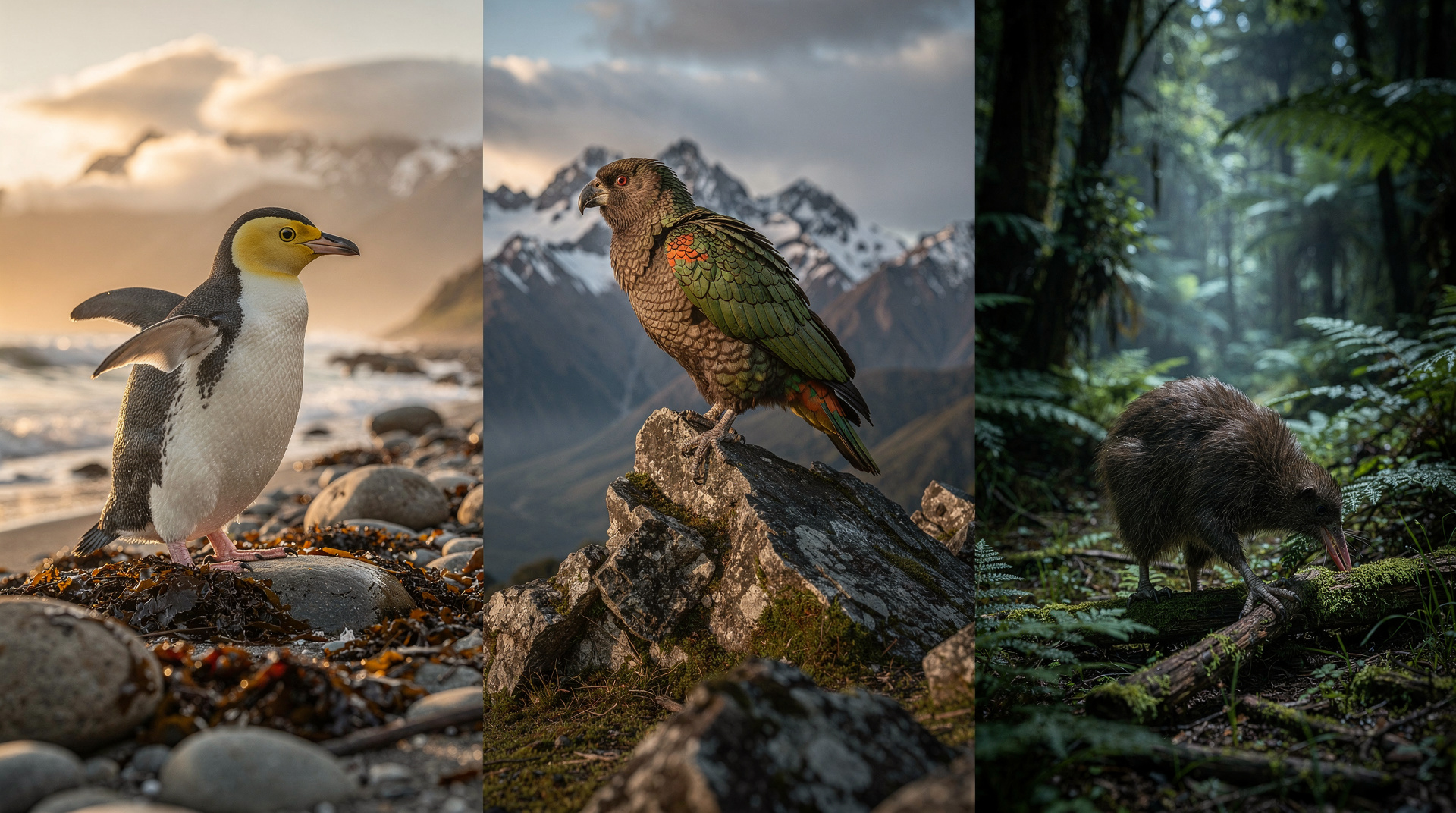
Wildlife in New Zealand — kiwi, penguins, whales, and more
Where can I see kiwi in the wild in New Zealand?
The best spots for wild kiwi sightings: Stewart Island/Rakiura (most reliable, guided night walks), Northland forests, and Haast Pass area on the West Coast. In captivity, kiwi houses exist at Auckland Zoo, Zealandia (Wellington), and Rainbow Springs (Rotorua). Wild sightings are never guaranteed — expect to spend 1-3 hours on a guided night walk for a 50-80% success rate at good spots.
New Zealand wildlife — why it matters and what to expect honestly
New Zealand separated from Gondwana around 85 million years ago. The result is one of the most unusual wildlife assemblages in the world — the top predators were eagles and falcons (no land mammals), birds evolved to fill niches occupied by mammals elsewhere, and many species became flightless or ground-nesting. Then humans arrived (Māori around 1280 CE, Europeans from 1769), bringing rats, stoats, possums, and cats — and triggering one of the largest extinction events in recorded history.
What remains is extraordinary but fragile. Many of NZ’s iconic species — kiwi, yellow-eyed penguin (hoiho), kākāpō — exist in small, actively managed populations. The wildlife encounters that are genuinely meaningful in NZ come from understanding this context, not from a zoo-level expectation of guaranteed sightings.
This guide covers where to go, what to realistically expect, and how to book the experiences that are worth the effort.
| Where | Stewart Island, Otago Peninsula, Kaikoura, Bay of Islands, Zealandia |
| Cost | Free (fur seals, Ohau Point) to around NZD 195 (whale watching) |
| Time needed | A dedicated wildlife day per region, or spread across a South Island loop |
| Booking | Guided walks/tours essential for kiwi, whales, albatross; seals are free and self-guided |
| Best time | Year-round for most species; check the seasonal table below |
Kiwi — NZ’s national symbol
Kiwi are nocturnal, secretive, and in steep decline (from approximately 100 million pre-human contact to around 68,000 today, losing an estimated 2% per year in unmanaged areas). They are also remarkable creatures: warm-blooded, with whisker-like facial feathers, nostrils at the tip of a long bill, and a surprisingly loud call that carries through the forest.
Where to see kiwi
Stewart Island/Rakiura (most reliable wild encounter): Stewart Island has approximately 20,000 kiwi — the highest density of wild kiwi in NZ. Guided night walks depart from Oban (the main village) and have success rates of 70-90% on clear nights. The kiwi on Stewart Island are Brown Kiwi (tokoeka) and are unusually active because there are fewer introduced predators on the island than on the mainland. Stewart Island wild kiwi encounter — 2.5-hour guided night walk, cost NZD 85-115 (USD 51-69 / EUR 47-63).
Tiritiri Matangi Island (Auckland): A predator-free sanctuary island in the Hauraki Gulf, accessible by ferry from Auckland. Kiwi are present (Little Spotted Kiwi — one of the rarest subspecies) alongside kōkako, takahē, and many others. Daytime island visits are possible with guided walks; kiwi are heard and occasionally seen. Tiritiri Matangi Island day trip from Auckland — NZD 65-90 (USD 39-54 / EUR 36-50).
Zealandia, Wellington: The world’s first fully predator-fenced urban wildlife sanctuary, 225 ha of restored native forest in a valley near Wellington. Tuatara, kākāriki, kiwi, wētā, and many other species can be seen. Evening guided kiwi encounters available (NZD 95 / USD 57 / EUR 52). Daytime admission: NZD 23-29 (USD 14-17 / EUR 13-16).
Rainbow Springs, Rotorua: A wildlife park with a nocturnal kiwi house. The guaranteed-viewing environment is informative but more of a zoo experience than a wildlife encounter. Good option if Stewart Island or Tiritiri Matangi aren’t on your itinerary.
West Coast (Haast Pass area): Some DOC huts in the Haast and Westland areas are in active kiwi habitat. Unguided sightings are possible after dark but not reliable.
What makes kiwi difficult to see in the wild: They avoid light, move quickly through dense undergrowth, and their calls (a repetitive rising whistle from males, a lower rasping sound from females) are easier to hear than the birds are to see. A guided walk in the right habitat is the only realistic approach.
Penguins — three species, three experiences
NZ is home to more penguin species than anywhere else on earth. The three most commonly seen:
Yellow-eyed penguin (hoiho)
The world’s rarest mainland penguin — around 1,700 breeding adults remain on the NZ mainland, primarily on the Otago Peninsula and the Catlins. They are solitary (unlike social species that form colonies) and return to their nest sites in late afternoon from individual beach landings.
Where to see them: Otago Peninsula (Sandfly Bay, Penguin Place, Papanui Inlet), the Catlins (Curio Bay, Roaring Bay), and the Moeraki/Katiki Point area on the SH-1 coastal highway north of Dunedin.
How to see them: Guided hides at Penguin Place or the Royal Albatross Centre hide at Taiaroa Head allow views of birds returning to nest sites from 4pm-dusk. Dunedin Otago Peninsula guided penguin reserve tour — NZD 80-120 (USD 48-72 / EUR 44-66) per person.
Read more: Yellow-eyed penguin guide.
Critical rule: Approaching or disturbing yellow-eyed penguins — blocking their path from the beach, getting too close, using flash photography — stresses the birds. Guided hides keep appropriate distances. Never stand between a hoiho and its nest.
Blue penguin (kororā)
The world’s smallest penguin, widespread around NZ coasts. Two main viewing locations:
Oamaru Blue Penguin Colony: A managed colony at the Oamaru Harbour waterfront. Penguins return to their nesting boxes (maintained by the colony management) each evening at dusk. Grandstand seating allows views of the beach crossing. Extremely reliable viewing — 200+ birds on good evenings. Oamaru blue penguin colony evening viewing — NZD 35-50 (USD 21-30 / EUR 19-28). Read the full Oamaru penguin guide.
Taiaroa Head, Otago Peninsula: A smaller colony at the base of the Royal Albatross Centre headland. Viewing is less reliable than Oamaru but combines naturally with the albatross visit. The Otago Peninsula and little blue penguin tour (Taiaroa Head) covers both.
Fiordland crested penguin (tawaki)
One of the rarest penguins — less than 3,000 breeding pairs. Found on the remote beaches of Fiordland, the West Coast, and Stewart Island. Rarely seen on standard tourist itineraries. DOC researchers occasionally allow accompanied visits to breeding beaches. If this is a priority, contact DOC’s Southland/Fiordland offices directly.
Whales — the Kaikōura phenomenon
Kaikōura sits on a unique marine geography: the Kaikōura Canyon drops to 1,000 metres just a few kilometres offshore, bringing deep-water species within reach of small boats year-round.
Sperm whales: Kaikōura is one of the very few places in the world where sperm whales can be reliably observed from shore-based boats year-round. Male sperm whales feed on giant squid in the canyon. Whale Watch Kaikōura has operated since 1987 and has one of the best success rates for marine mammal viewing of any commercial operation globally (they offer a partial refund if no whales are seen — it’s rarely invoked).
When to go: Year-round, but summer (November-March) has calmer seas. Winter whale-watching (June-August) is possible but sea conditions can be rougher — sea sickness medication recommended.
Cost: NZD 165-195 (USD 99-117 / EUR 91-107) per person for a 2-2.5 hour boat tour. Kaikōura whale watching cruise (2 hours) .
Alternative — whale watching by air: Seaplane and helicopter whale-watching operates from Kaikōura Airport. Better for photographs (you can see the full whale outline from above), shorter (20-30 minutes), but higher cost (NZD 160-220 / USD 96-132 / EUR 88-121 per person). Read the Kaikōura day trip guide for combining whale-watching with seals and dolphins.
Other whale species at Kaikōura: Humpback, blue, pygmy blue, southern right, and orca whales pass through seasonally. Dusky dolphins (hundreds at a time) and New Zealand fur seals (on the rocky shore) are reliably present year-round.
Royal albatross
The Northern Royal Albatross (Toroa) has its only mainland colony in the world at Taiaroa Head on the Otago Peninsula, 30 km from Dunedin. The albatross have a 3-metre wingspan and are fully visible from the Royal Albatross Centre hide — they nest on the open headland, allowing close views without disturbing the birds.
Season: Albatross are present at Taiaroa Head year-round. Breeding adults are most visible September-March (egg-laying through chick fledging). Chick fledging (December-March) sees the young birds taking their first flights.
Booking: Via the Royal Albatross Centre — timed entry, NZD 35-50 (USD 21-30 / EUR 19-28) per adult. Tours include the centre’s education display and hide viewing. Can be combined with the blue penguin viewing (different times of day — albatross viewing daytime, penguins at dusk). Read the royal albatross guide.
Dunedin city, Otago Peninsula, and albatross guided tour — combines the albatross centre with Otago Peninsula sealife and city sights. NZD 85-120 (USD 51-72 / EUR 47-66).
Dolphins
Bay of Islands (Northland)
Bottlenose and common dolphins are resident in the Bay of Islands year-round. Swim-with-dolphins tours (Dolphin Discoveries, Mack Attack) operate from Paihia. Dolphin encounters are not guaranteed (they are wild animals and the boats can only follow them, not approach if they move away), but success rates are high. Read the dolphin swim Bay of Islands guide for booking details and what to expect.
Kaikōura
Dusky dolphins at Kaikōura are present in groups of hundreds year-round and are among the most acrobatic and approachable dolphin species anywhere. Swim-with-dolphin tours operate year-round (weather permitting); success rates are extremely high. The experience of swimming in a 200-strong dolphin pod is extraordinary.
Akaroa (Banks Peninsula, Christchurch)
Akaroa Harbour is home to the world’s smallest and rarest dolphin — the Hector’s dolphin (māui). Swim-with-Hector’s tours operate from Akaroa township. Strict approach protocols apply (the DOC permit system limits the number of swimmers permitted near the dolphins). Read the Akaroa dolphins guide.
Fur seals
New Zealand fur seals (kekeno) were hunted nearly to extinction but have recovered strongly. They now haul out on rocky shores around most of the South Island coast and on the Kaikōura Peninsula.
Best locations:
- Ohau Point, Kaikōura: A large, accessible colony on SH-1, 25 km north of Kaikōura town. Hundreds of seals on the rocks and in the water; a small waterfall at the back of the beach is used as a nursery (pups “play” in the waterfall pool). Free access.
- Cape Palliser, Wairarapa: The North Island’s largest fur seal colony. Accessible via a drive from Wellington (2 hours each way).
- Otago Peninsula: Seals visible from the Otago Peninsula road and accessible beaches near Sandfly Bay.
Safety: Don’t approach within 5 metres. Fur seals are fast and can bite. They are protected under the Marine Mammals Protection Act — harassment is a criminal offence.
Other notable wildlife
Tuatara
Ancient reptiles (not lizards — their own order, Rhynchocephalia, unchanged for 225 million years) surviving only in NZ. Found on predator-free offshore islands (Stephens Island, Matiu/Somes Island) and in captivity at Zealandia (Wellington) and Auckland Zoo. Wild viewing requires special access to offshore islands — visit Zealandia for the easiest tuatara encounter.
Kākāpō
Critically endangered (approx. 250 individuals) flightless parrot — the world’s largest and most unusual. Found only on predator-free islands (Codfish Island, Resolution Island, Anchor Island). No public access — these are active conservation breeding sites.
New Zealand sea lion (rāpoka)
More endangered than fur seals. Found primarily on the Otago Peninsula, the Catlins, and the sub-Antarctic islands. Occasionally haul out on Dunedin beaches in winter. Do not approach.
Short-tailed bat (pekapeka)
One of NZ’s two native land mammals (the other is the long-tailed bat). Largely nocturnal. Seen at Zealandia and in intact forest, particularly in Northland and the West Coast.
Building a wildlife-focused itinerary
The single best concentration of wildlife in New Zealand is the Otago Peninsula near Dunedin — royal albatross, yellow-eyed penguins, fur seals, sea lions, and Hector’s dolphins are all within 30 km of each other, making it possible to see five species categories in one or two days without long transfers. Kaikoura is the best single-site marine experience, combining sperm whales, dusky dolphins, and fur seals in one town. If Stewart Island fits your South Island route, allow at least two nights — the ferry crossing from Bluff and the guided night walk both need buffer time for weather, and rushing the island reduces your kiwi encounter odds.
For visitors building a South Island loop, a practical sequence is Christchurch → Kaikoura (whales, dolphins, seals) → onward to Dunedin via the Otago coast → Stewart Island as a dedicated extension if time allows. North Island visitors short on time should prioritise Zealandia in Wellington, which delivers kiwi, tuatara, and multiple bird species in a single predator-free valley without the logistics of an island crossing.
Real costs
| Experience | Location | Cost (NZD) | USD | EUR |
|---|---|---|---|---|
| Wild kiwi guided walk | Stewart Island | NZD 85-115 | USD 51-69 | EUR 47-63 |
| Kiwi viewing (nocturnal house) | Zealandia, Wellington | NZD 95 | USD 57 | EUR 52 |
| Tiritiri Matangi day trip | Auckland area | NZD 65-90 | USD 39-54 | EUR 36-50 |
| Whale watching (boat) | Kaikōura | NZD 165-195 | USD 99-117 | EUR 91-107 |
| Royal albatross centre | Otago Peninsula | NZD 35-50 | USD 21-30 | EUR 19-28 |
| Yellow-eyed penguin guided | Otago Peninsula | NZD 80-120 | USD 48-72 | EUR 44-66 |
| Blue penguin evening | Oamaru | NZD 35-50 | USD 21-30 | EUR 19-28 |
| Dolphin swim | Bay of Islands / Kaikōura | NZD 95-130 | USD 57-78 | EUR 52-72 |
When to go for wildlife
| Species | Best months |
|---|---|
| Sperm whales (Kaikōura) | Year-round; calmer seas Nov-Mar |
| Royal albatross (nesting) | Sep-Mar |
| Yellow-eyed penguin | Year-round; breeding Oct-Feb |
| Blue penguin (Oamaru) | Year-round; peak chick watching Dec-Jan |
| Kiwi (Stewart Island) | Year-round (best in dry months, Sep-Apr) |
| Humpback whales (Kaikōura pass-through) | May-Jul northbound, Nov southbound |
| Gannet colony (Muriwai) | Sep-Mar |
| Dusky dolphins (Kaikōura) | Year-round |
FAQ
Is it true that New Zealand has no native land snakes or land mammals (except bats)?
Correct. New Zealand has no native land snakes and no native land mammals except two bat species. The absence of predatory mammals meant birds evolved to fill those niches — hence kiwi, kākāpō, and many other ground-nesting species. The introduction of rats, stoats, ferrets, cats, and possums since human settlement is the primary driver of NZ’s bird extinctions.
Can I photograph wildlife with a flash?
Never use flash near penguins, kiwi, or seals. Flash can startle or disorient them. Yellow-eyed penguins are particularly sensitive — disturbing a nesting bird can cause nest abandonment. At night-time kiwi encounters, guides use red-light headlamps that are less disturbing to the birds.
What is predator-free 2050?
New Zealand’s national goal to eliminate introduced mammalian predators (rats, stoats, possums) by 2050. Significant progress has been made on offshore islands and in urban sanctuaries like Zealandia. The programme involves large-scale trapping, poison (1080, a compound naturally occurring in plants) drops in forests, and breeding of endangered birds. If you encounter DOC 1080 warning signs in forests, it means poisoning operations are or have been active — dogs must be kept away.
Where is the best place for wildlife photography?
Otago Peninsula gives the most concentrated wildlife photography in a small area: royal albatross in flight, yellow-eyed penguins, New Zealand sea lions, fur seals, little blue penguins, and Hector’s dolphins — all within 30 km of each other and accessible in one or two days. Kaikōura is the best single-site marine wildlife photography location.
Related guides
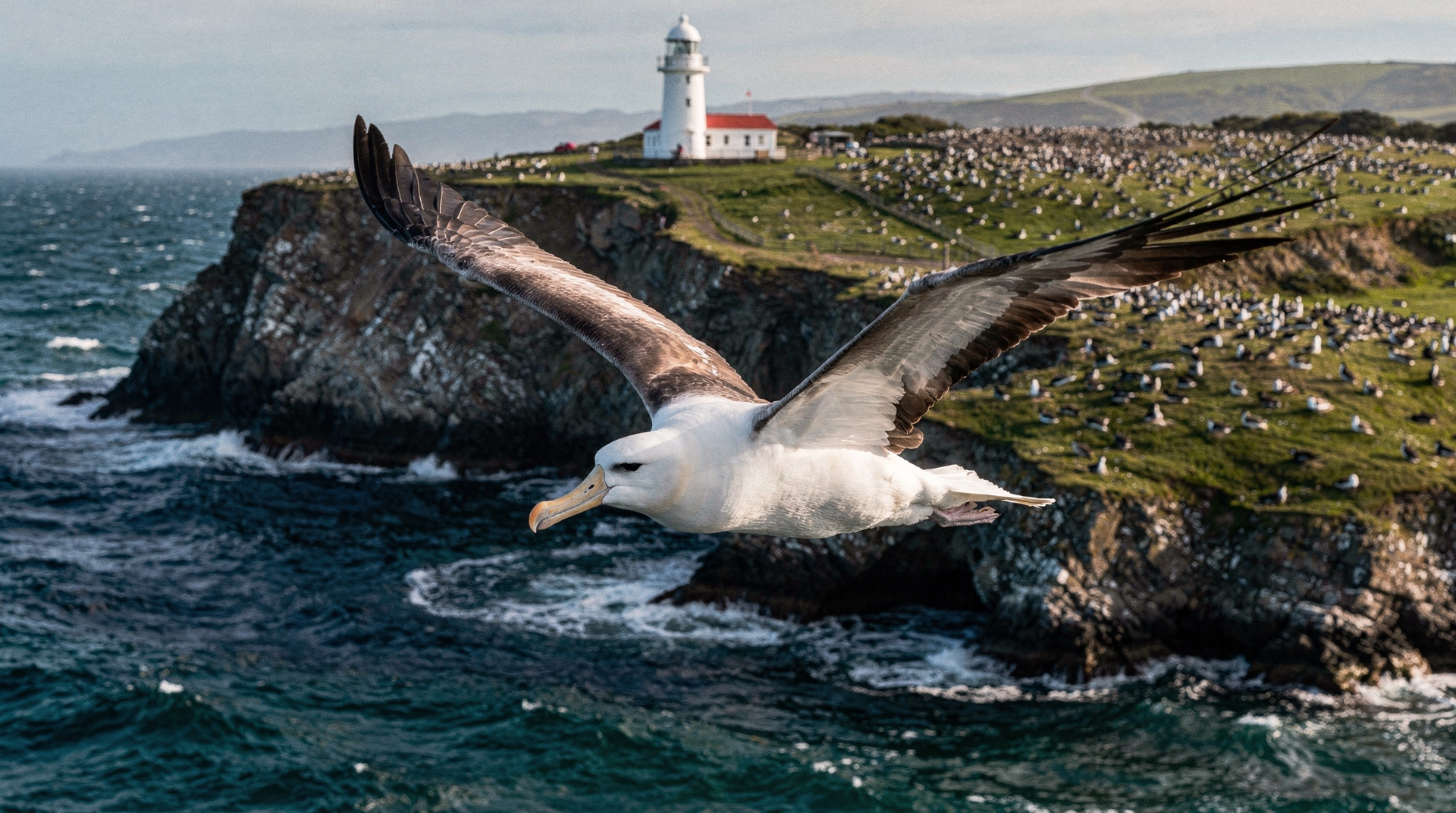
Royal albatross colony at Taiaroa Head
Taiaroa Head on Otago Peninsula hosts the world's only mainland royal albatross colony. Tours, prices (NZD/USD/EUR), best months, and what to expect.
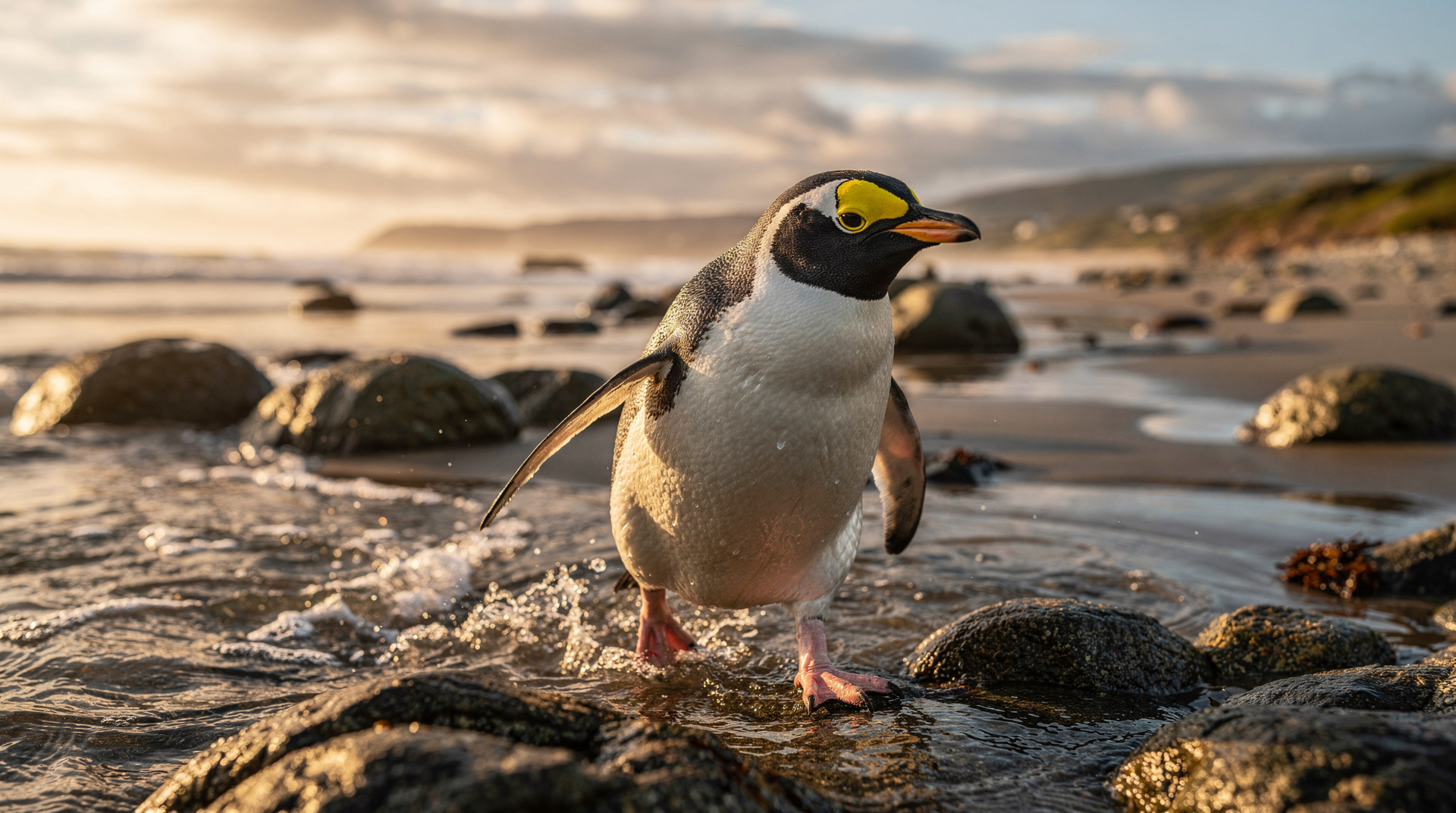
Yellow-eyed penguins on the Otago Peninsula
Hoiho (yellow-eyed penguin) are the world's rarest penguin. Where to see them wild on Otago Peninsula, ethical viewing hides, prices, and best timing.
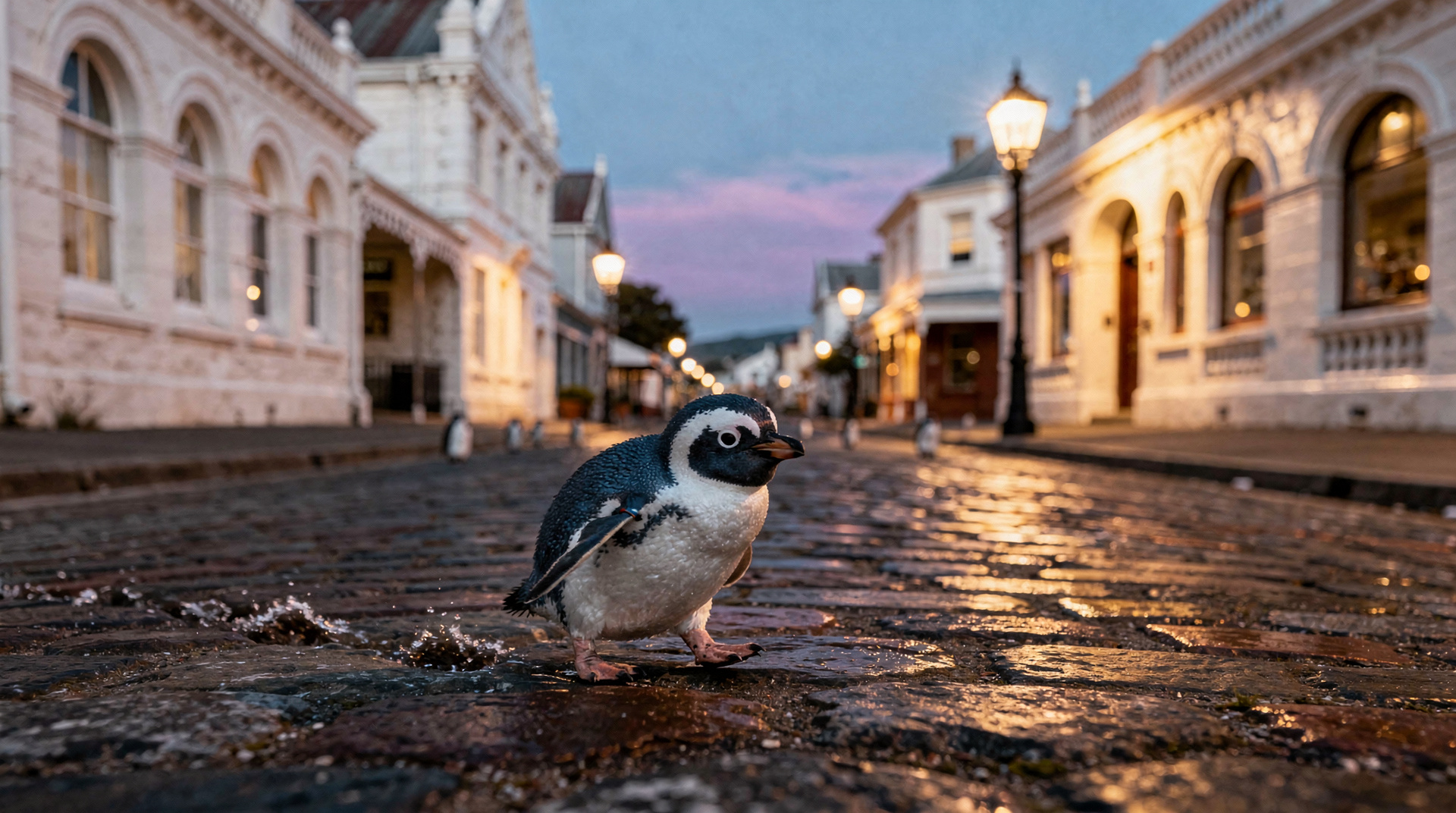
Blue penguins in Oamaru
Oamaru's little blue penguin colony is the most accessible in New Zealand. Evening viewing times, prices (NZD/USD/EUR), booking tips, and ethical guidelines.
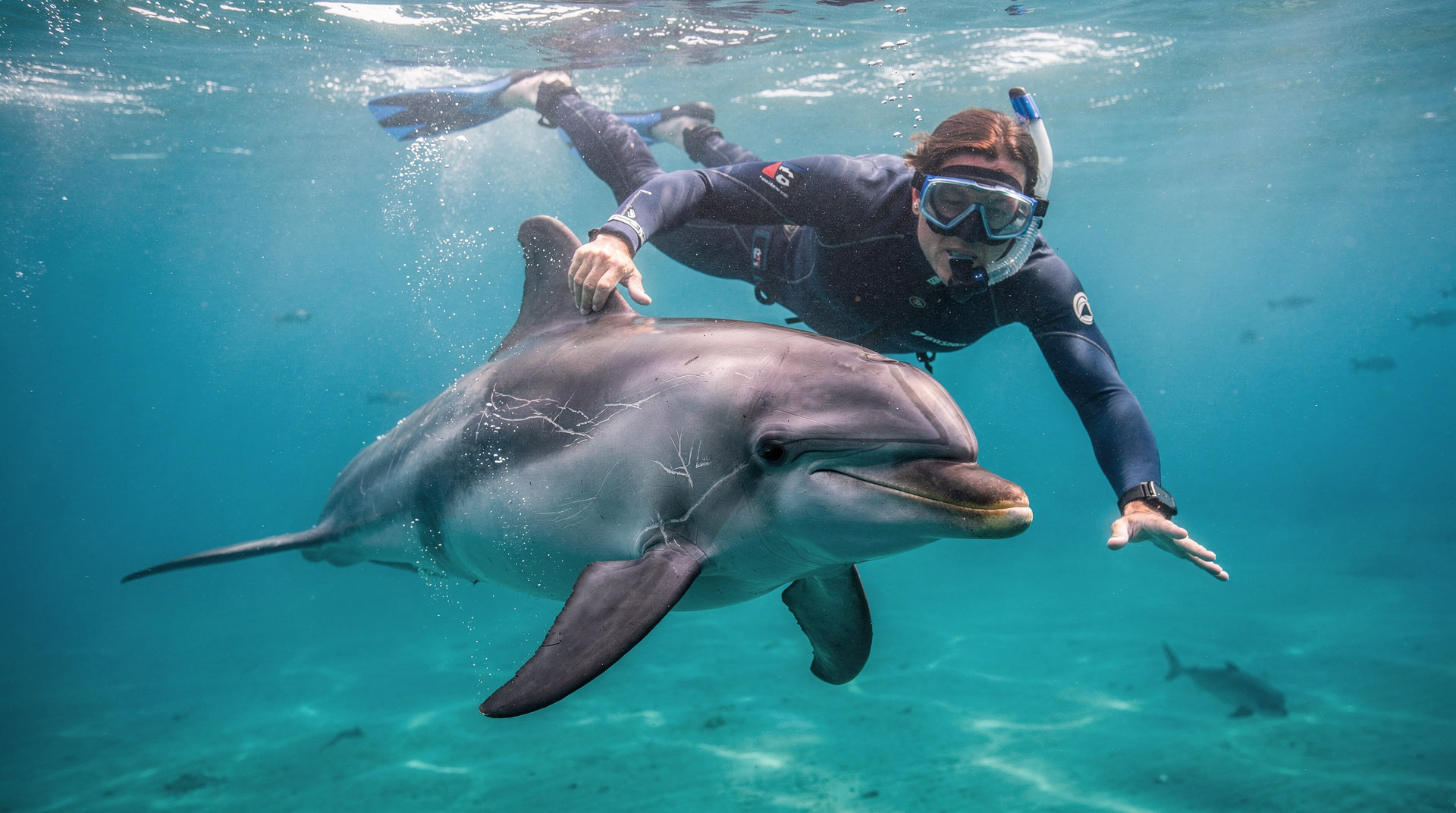
Dolphin swim in the Bay of Islands
Swimming with bottlenose dolphins in the Bay of Islands: DOC-permitted operators, best months, ethical restrictions, and prices (NZD/USD/EUR).
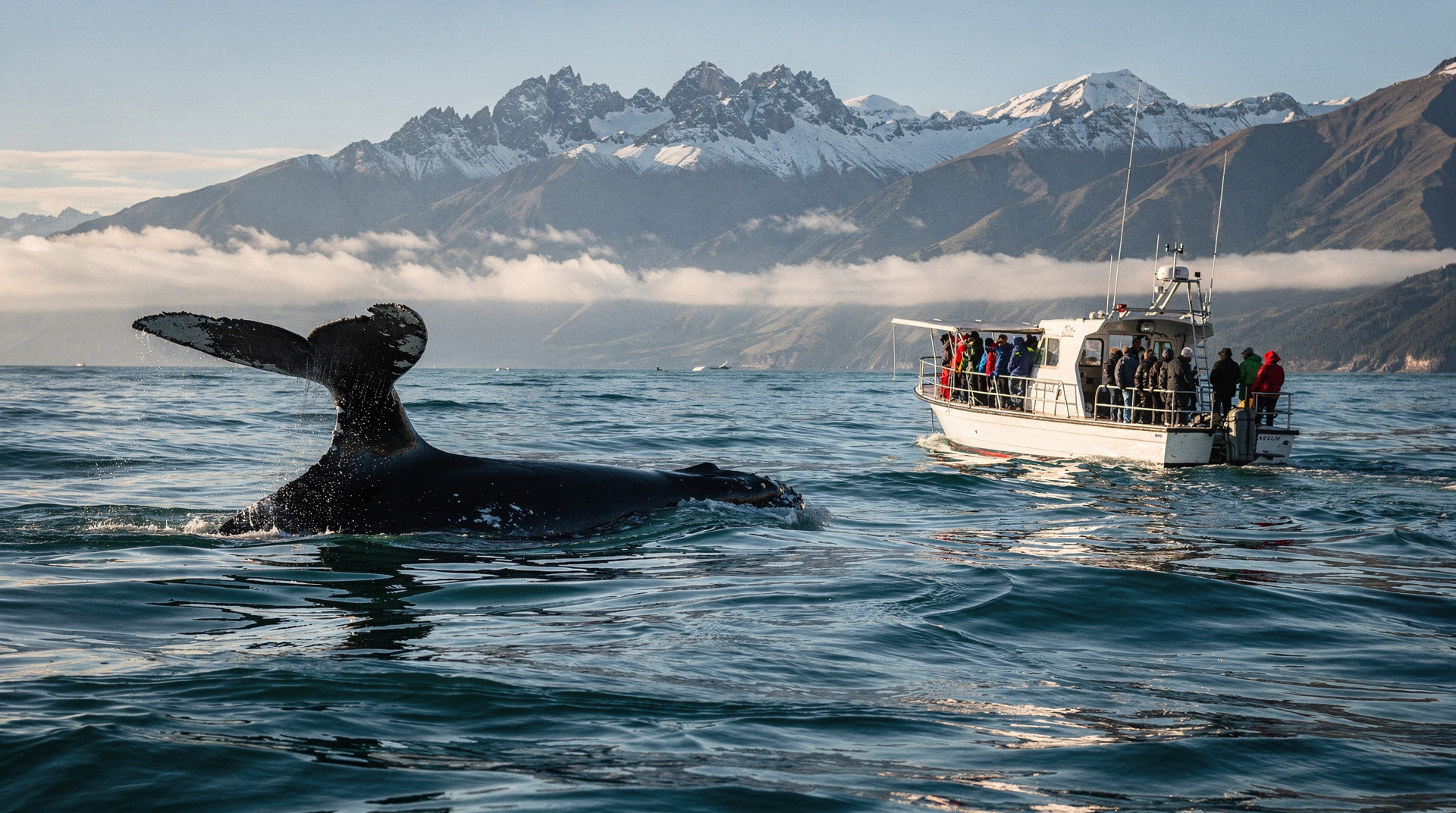
Kaikoura day trip from Christchurch
How to do a Kaikoura day trip from Christchurch: 1.5-hour drive, whale watching cruise, sperm whales year-round, costs in NZD/USD/EUR, and what to book ahead.
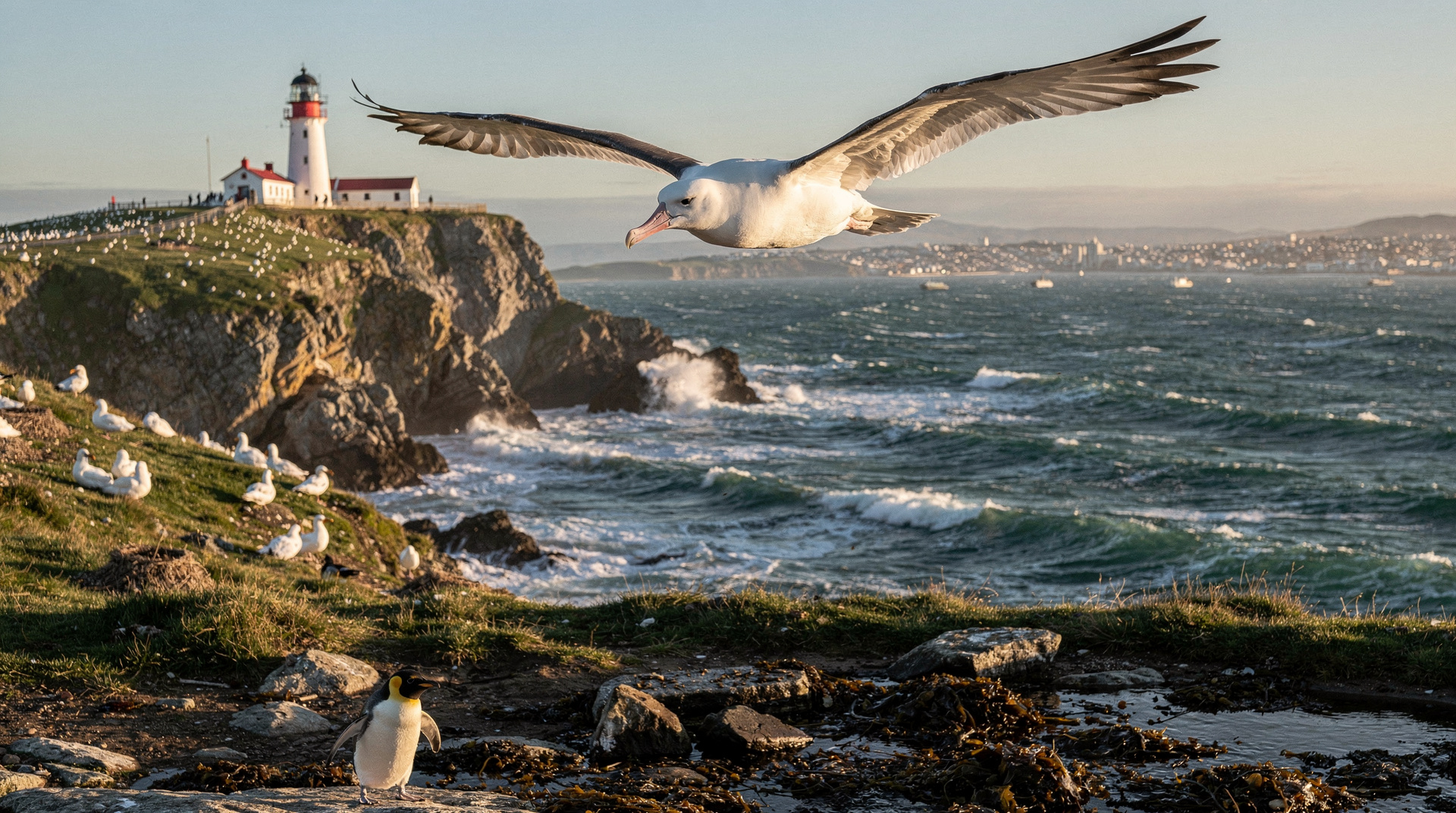
Otago Peninsula
Honest Otago Peninsula guide: albatross colony, yellow-eyed penguins, Larnach Castle — real NZD/USD/EUR prices and the best wildlife timing advice.
Last reviewed: