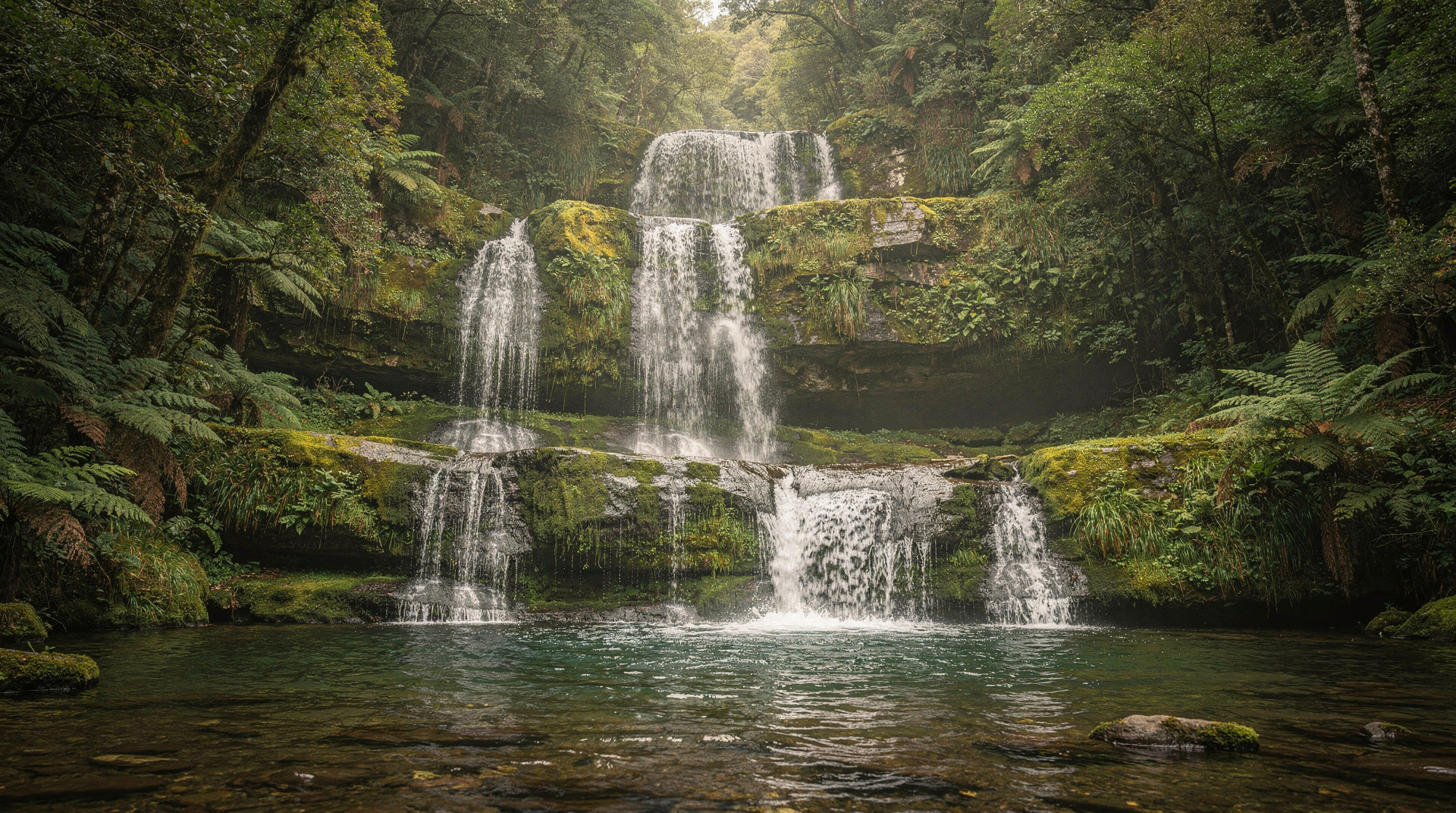
Hidden corners of the Catlins — New Zealand's least-visited southern coast
Drive past Balclutha and the world empties out
The Catlins Coast. Southland. The stretch of New Zealand’s southern coastline between Balclutha in the east and Invercargill in the west. State Highway 92, which sounds efficient and isn’t — it winds through farmland and forest and coast for 160 kilometres, and the GPS will confidently tell you it takes three hours and will be wrong by at least half.
There are no towns of any size. There are a petrol station in Owaka (get fuel when you see it) and a café in Papatowai and a pub in Waikawa that keeps its own hours. There are no traffic jams. There are Hooker’s sea lions — which are critically endangered and not found outside New Zealand and its subantarctic islands — sleeping on the beach at Cannibal Bay, which is a beach you reach via a gravel road through farmland and then on foot across dunes.
I went in October, which is early spring in the southern hemisphere. The kākāpō — the flightless nocturnal parrot that doesn’t live in the Catlins but whose conservation backstory I kept thinking about while looking at everything that’s managed to survive in this landscape — was somehow present by association. The Catlins has that quality: it makes you think about rarity, about what persists at the edge of things.
| Where | Southern coast, between Balclutha and Invercargill |
| Time needed | 2 full days minimum, 3 to go slower |
| Best time | October to April |
| Getting there | Self-drive on SH92, or a guided coast tour from Invercargill |
| Wildlife | Hooker’s sea lions, yellow-eyed penguins, Hector’s dolphins |
Curio Bay and the fossil forest
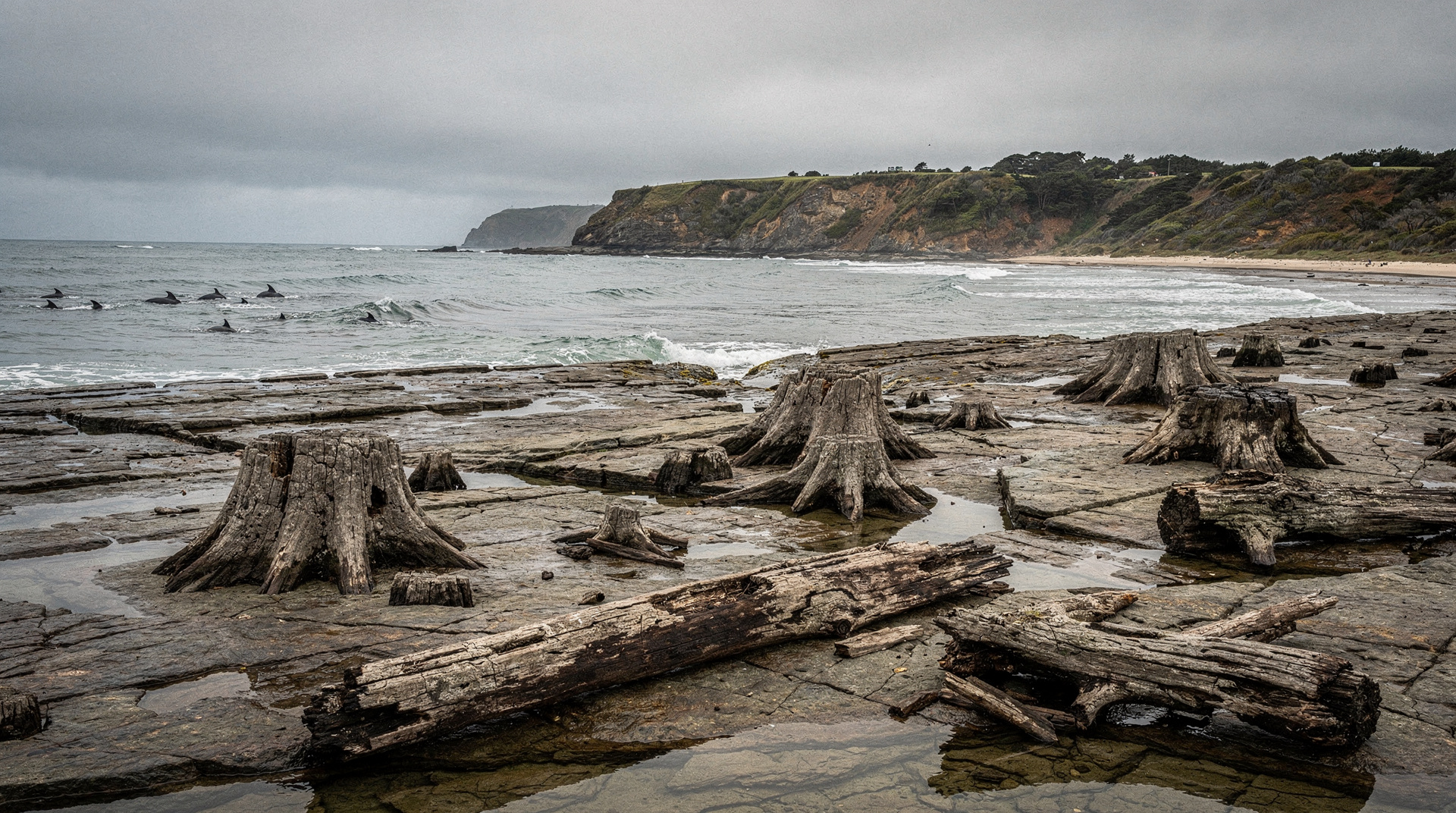
Curio Bay is the first major stop heading west from Balclutha on the Catlins route. The petrified forest exposed at low tide in the bay is 180 million years old — Jurassic-era wood, silicified, preserved in the rock platform. It’s the best accessible example of this geological phenomenon in the Southern Hemisphere, and it costs nothing to visit, and there are usually fewer than 20 other people there.
The interpretation board at the car park explains the Jurassic forest. A brief walk across the rock platform at low tide (check tidal times; the forest is underwater at high tide) gives you fossilised tree stumps, root systems, and log sections in extraordinary preservation. The scale is difficult to absorb.
At Curio Bay, between September and March, Hector’s dolphins sometimes come into the bay. These are the world’s smallest marine dolphins, endemic to New Zealand, found nowhere else. They’re not guaranteed — nothing wildlife in the Catlins is guaranteed — but the bay is known habitat and the sightings are frequent enough to justify time sitting on the cliffs above.
Adjacent to Curio Bay: Porpoise Bay, where yellow-eyed penguins (hoiho) come ashore at dusk to their nesting sites in the dune flax. Yellow-eyed penguins are one of the world’s rarest penguins. You observe from a distance — the DOC guidelines are clear and the locals are serious about them — but the penguins’ indifference to the fading light and the complete quiet of that coast at dusk is its own experience. Our Catlins beaches guide covers Curio Bay and Porpoise Bay alongside the coast’s other beaches in more depth, including which are swimmable and which are wildlife-only.
Nugget Point
Nugget Point (Tokatā) is the east end of the Catlins — a dramatic headland with a lighthouse and, on the rocks below, a congregation of wildlife that should not be possible in one view. Sea lions, fur seals, elephant seals, yellow-eyed penguins, shags, and on some visits (October is good), Hooker’s sea lions.
The lighthouse walk is 30 minutes return. The view from the headland lookout — the Nuggets, a series of rocky stacks in the surf below — is one of those views that photographs badly because the three-dimensional quality of the rocks and water doesn’t compress into two dimensions. The sound is partly responsible: wind, surf, and the barking of seals below.
Nugget Point is reached via a gravel road from Owaka. Allow two hours minimum — the walk, the wildlife observation, the involuntary standing still because it’s that kind of place.
Cathedral Caves
Cathedral Caves are open around low tide, for two hours either side. The sea caves are enormous — the main chamber is 30 metres high, reached via a 20-minute boardwalk through coastal forest. They’re on private land; a modest entry fee applies (around NZD 8 / USD 5 / EUR 4 per adult in 2024).
What the photographs don’t convey is the sound. The swell moves into the cave even on calm days and produces a sub-bass resonance that you feel in your chest. The arched entry, the cathedral quality of the interior — the name is accurate.
Visit mid-morning at the lowest point of the tide window for maximum access and light. The timing matters: arrive two hours after low tide and you’ll be ankle-deep in the entry.
McLean Falls
McLean Falls is the Catlins waterfall that doesn’t require the same effort-to-reward calculation as some of the others. A 45-minute return walk through podocarp forest leads to a two-tiered cascade of 22 metres. The forest is dense and dark and smells of earth. In October, the undergrowth includes lancewood and ferns and the occasional weka working through the leaf litter.
New Zealand has a lot of waterfalls. McLean Falls is in the category that justifies the detour specifically because the walk through the Catlins forest is as good as the falls themselves. The landscape here hasn’t been cleared for farmland; the native bush is intact.
Why nobody comes here
The Catlins’ obscurity is explained partly by location (it’s at the far end of the South Island, with no particularly famous landmark to anchor it as a destination), partly by road quality (the route is mostly sealed but not fast), and partly by the absence of the infrastructure tourists generally expect.
There’s no curated visitor experience. The wildlife is where it is and when it is. The caves require tidal planning. The roads require attention. The petrol stations are not frequent.
This is, of course, the precise quality that makes the Catlins what it is. The Catlins coast guided tour from Invercargill is the option for those who want the region with logistical support — a guide handles the timing of tides and wildlife and petrol and gives you the natural history interpretation that’s worth having. For independent travellers, the self-drive is entirely manageable with a Catlins map, a tidal chart from the DOC website, and a full tank — our Catlins self-drive guide has the full route with distances and stop order.
Pairing the Catlins with Dunedin
Most people drive the Catlins as a link between Invercargill and Dunedin rather than a there-and-back trip, and that’s the right approach — doubling back adds a full day for no real benefit. From the eastern end at Balclutha, Dunedin is under an hour further, which makes it a natural next stop: Dunedin’s Scottish heritage and the Otago Peninsula’s albatross and wildlife colonies extend the same wildlife-and-history theme the Catlins opens up, without repeating it. If you’re deciding how to split time between the two, Dunedin rewards at least a full day on top of the Catlins’ two to three.
Practical notes
When to go: October to April gives the best wildlife and weather. Winter is cold and some facilities reduce hours.
Time needed: Two full days minimum to do the major stops without rushing. Three days allows you to sit still at Curio Bay at dusk.
Accommodation: Limited but adequate. Owaka has a motel. Papatowai has a DOC campsite that’s superb. Self-contained campervan freedom camping at Curio Bay is available.
Fuel: Fill up in Balclutha before entering from the east, or in Owaka once inside the region. Don’t rely on the few pumps on the route being open.
Wildlife etiquette: Keep 20 metres from sea lions and penguins. These aren’t fenced wildlife parks. Hooker’s sea lions can move quickly on land and have been known to respond aggressively to people getting between them and the water. The DOC guidelines exist for reasons.
Related reading
Related guides
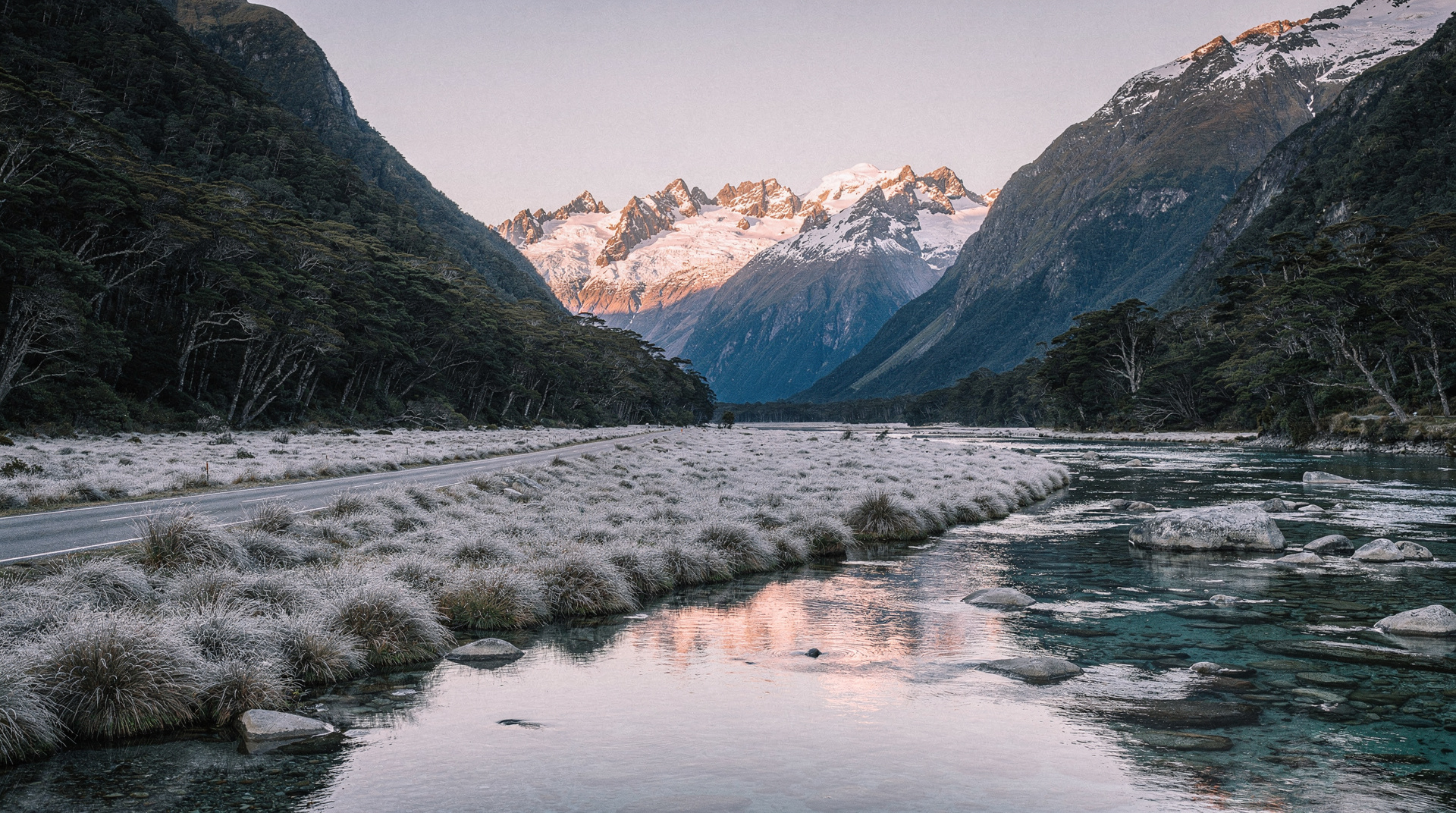
Southland
Honest Southland guide: Invercargill, The Catlins wildlife coast, Bluff oysters, gateway to Stewart Island/Rakiura. NZD/USD/EUR costs and practical logistics.
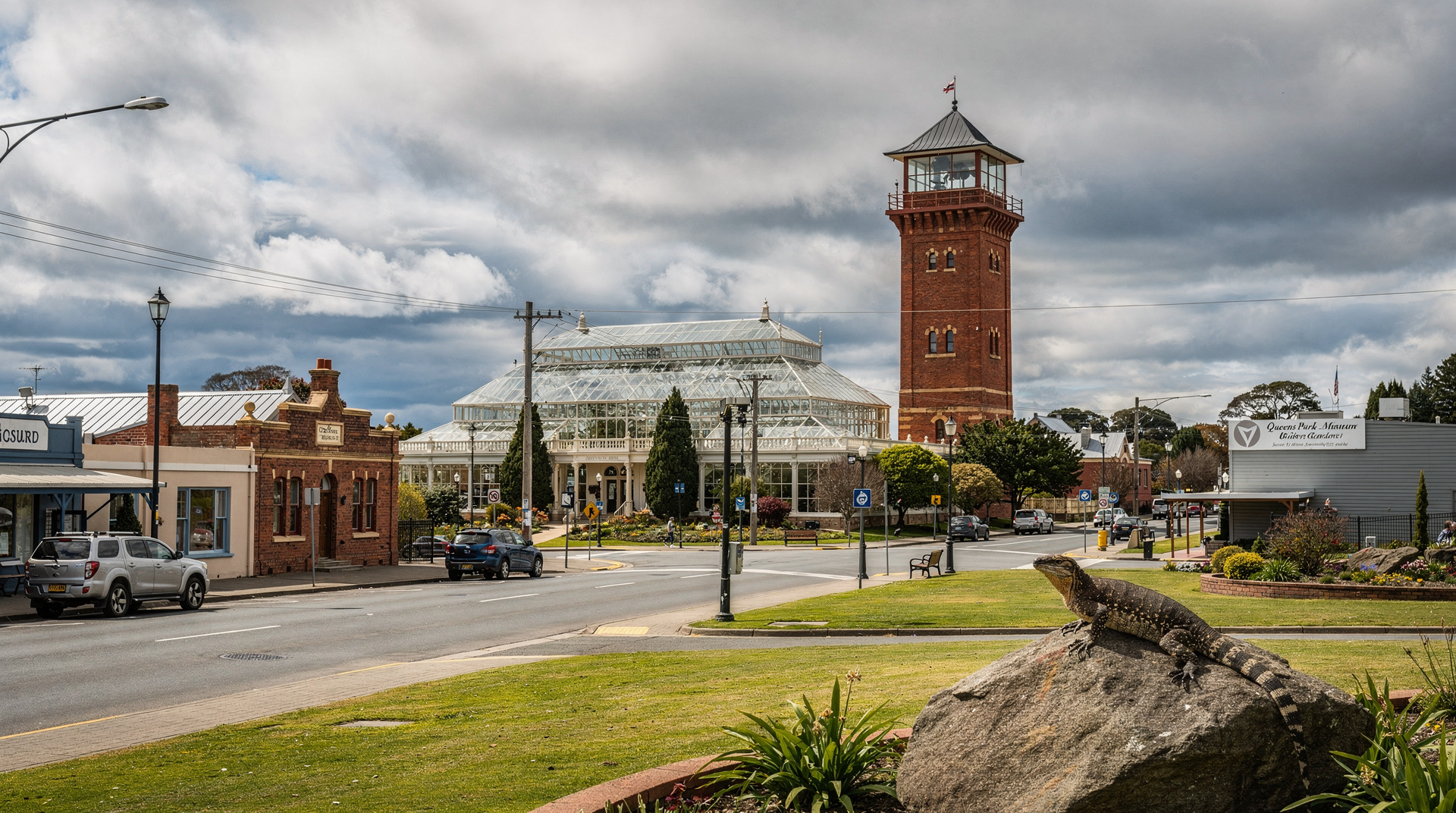
Invercargill
Invercargill: New Zealand's southernmost city, gateway to Stewart Island and the Catlins. Honest half-day guide with real costs NZD/USD/EUR.
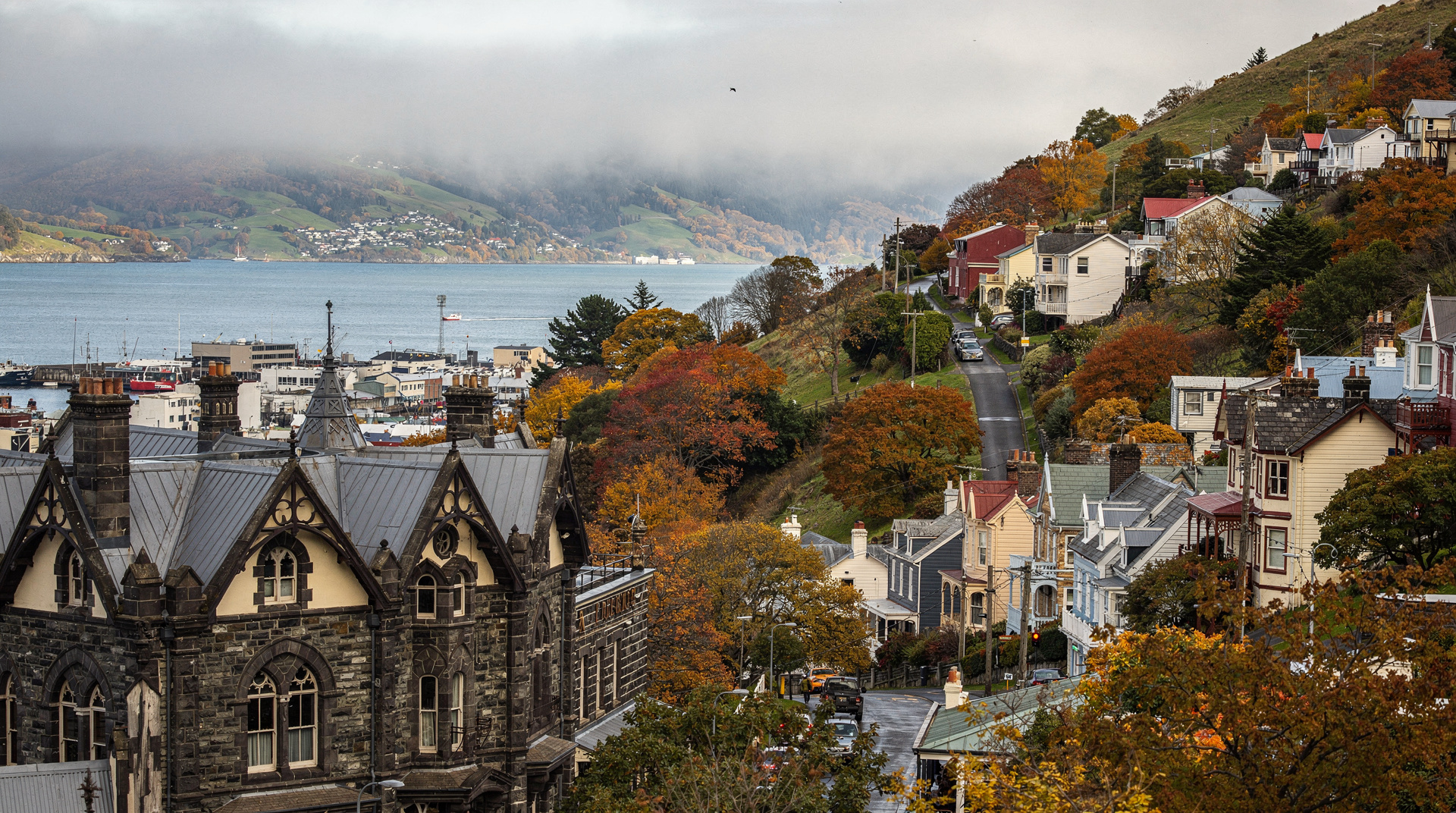
Dunedin
Honest Dunedin guide: Otago Peninsula wildlife, Larnach Castle, Baldwin Street — real NZD/USD/EUR prices and 2 days done right in NZ's Edinburgh.
The Catlins self-drive guide — 2 to 3 days along New Zealand's forgotten coast
Drive The Catlins in 2-3 days: Nugget Point, Cathedral Caves, Curio Bay petrified forest, yellow-eyed penguins. Tide times, where to stay, real costs.
Published: