Matariki becomes a public holiday — what it means for travellers in New Zealand
The morning of 24 June 2022
New Zealand woke up to its first Matariki public holiday. The legislation — the Te Kāhui o Matariki Public Holiday Act 2022 — had passed in April, making Matariki the world’s first public holiday based on a lunar Maori calendar event. The date changes year to year, tied to the first new moon that follows the rising of the Matariki star cluster (the Pleiades) above the horizon before dawn. In 2022, that date was 24 June.
| First observed | 24 June 2022 |
| Basis | Lunar Maori calendar, heliacal rising of Matariki (Pleiades) |
| Always falls on | A Friday, creating a long weekend |
| Best programme (visitors) | Rotorua (Te Puia) |
| Nature | New year celebration, not a commemoration |
For travellers in New Zealand on that day, the practical effect was the same as any public holiday: some businesses closed, some reduced hours, public transport ran on holiday schedules. But the cultural register was different from Waitangi Day or Anzac Day. Matariki is not a commemoration. It’s a new year celebration — an occasion for reflection on those who died in the past year, for giving thanks for the present, and for looking ahead to the future.
What Matariki is
Matariki is the Maori name for the Pleiades star cluster and also for the period surrounding the cluster’s pre-dawn rising, which occurs in late June or early July. The exact date varies by approximately two to three weeks across years, depending on the lunar calendar and the astronomical event.
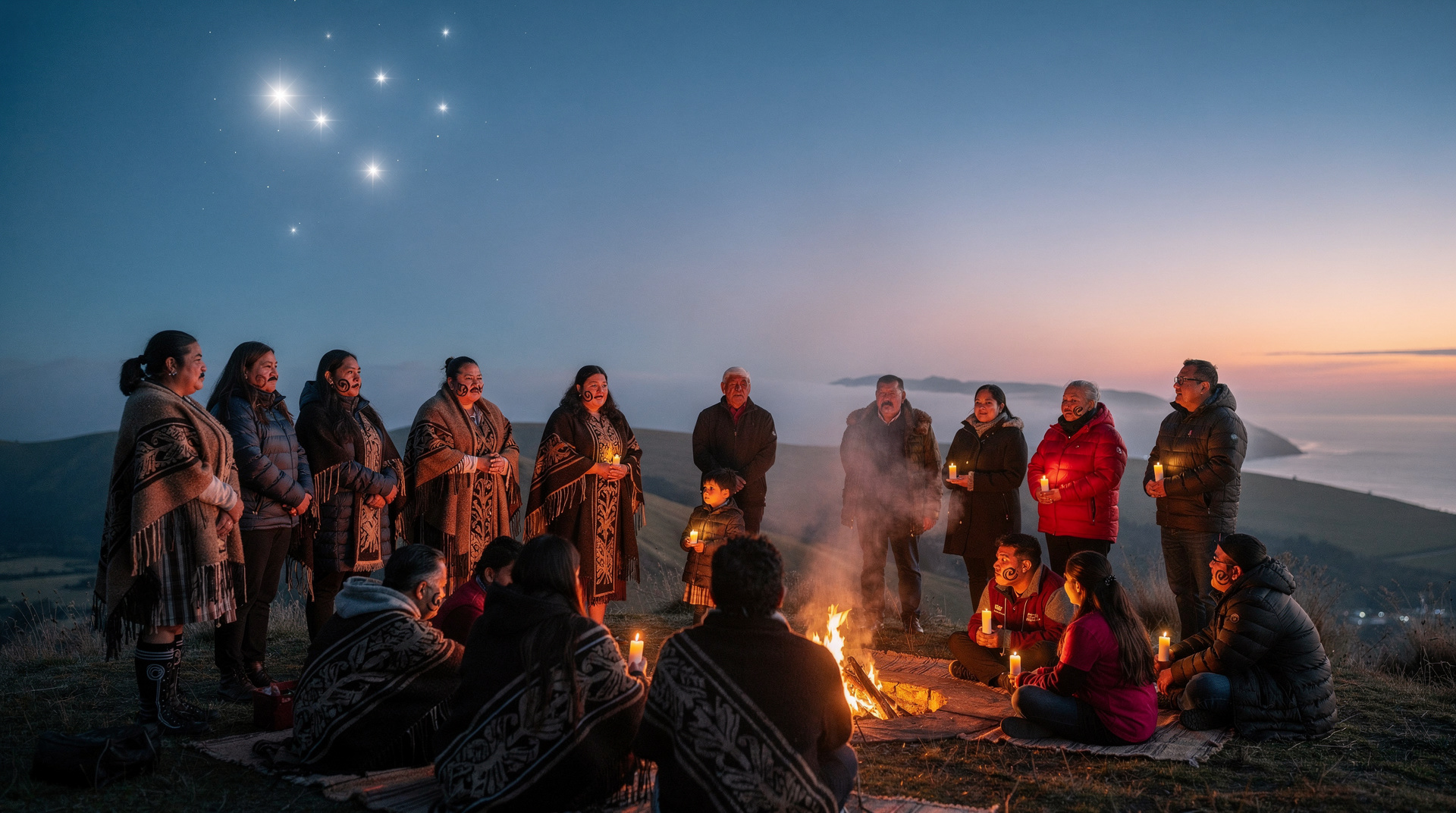
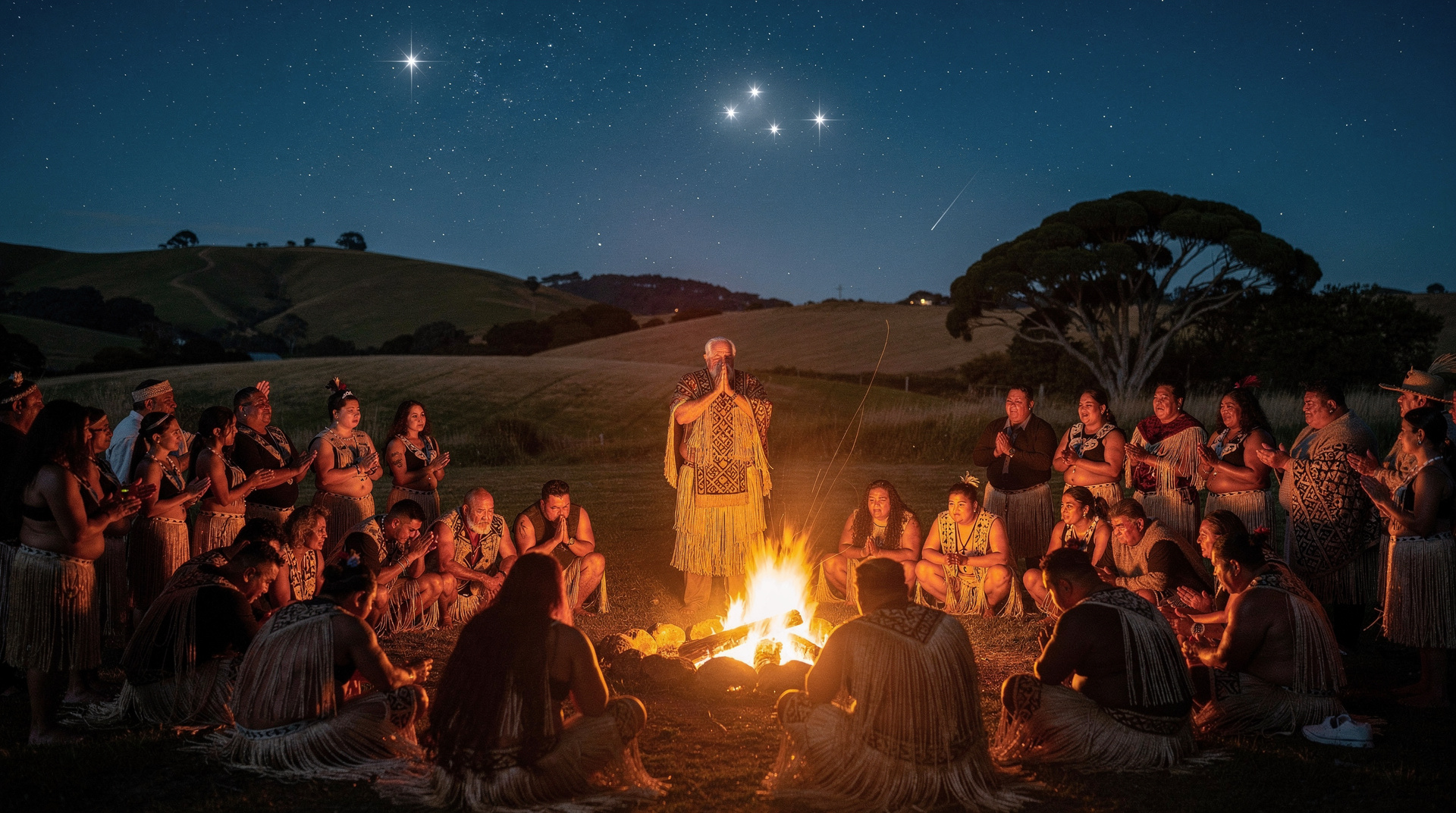
Traditional Matariki practice involved coming together as whānau (family) and iwi (tribe) to observe the stars, to remember ancestors who had died, and to celebrate the harvest. Different iwi had different Matariki traditions; the celebration was not uniform across New Zealand before colonisation suppressed many aspects of Maori cultural life in the 19th century.
The contemporary revival of Matariki as a public cultural event has been building since the 1990s. By the 2010s, Matariki events were widespread across New Zealand — festivals, performances, gallery exhibitions, lantern ceremonies. The decision to make it a public holiday formalised what had already become a genuine cultural occasion.
The nine stars of Matariki each have specific associations: Matariki herself is connected to health and the environment; Pōhutukawa is associated with the dead; Tupuānuku governs food grown in the ground; Tupuārangi governs food gathered from above. The full system is complex and iwi-specific, but the broad framework of the cluster as a navigational and calendar tool — and as a signal of the new year — is widely shared.
What 2022 looked like
The first Matariki public holiday was observed with a mixture of cultural seriousness and genuine celebration. Auckland’s waterfront hosted public events. Wellington’s Te Papa ran special programmes. Rotorua, with its strong Maori cultural infrastructure, held ceremonies and performances. Across the country, marae opened for community events.
For visitors, the most meaningful experiences were in places with strong iwi connections — particularly Rotorua, where cultural institutions including Te Puia ran Matariki-specific programmes, and in Northland, where Waitangi was an important observance site.
The Te Puia hangi lunch experience in Rotorua ran on Matariki with particular significance — a hangi being both a traditional cooking method and a communal gathering. If you’re in Rotorua around the Matariki period, the Te Puia programme is the most substantive iwi-led cultural experience available to visitors.
Matariki and travel planning
The holiday has practical implications for anyone travelling in New Zealand in late June or early July. Prices for accommodation — particularly in Auckland and Wellington — spike around the Matariki long weekend, as domestic tourism surges. Book accommodation well in advance if Matariki falls on a Friday (which 2022’s did not, but subsequent years have varied).
The dates for reference:
- 2022: 24 June (Friday)
- 2023: 14 July (Friday)
- 2024: 28 June (Friday)
- 2025: 20 June (Friday)
- 2026: 10 July (Friday)
All dates fall on Fridays, giving New Zealand a three-day weekend. This is deliberate under the legislation — the Act requires Matariki to be observed on the Friday following the new moon after the star cluster’s heliacal rising, which means it always creates a long weekend.
What visitors can experience
Matariki events in 2022 spanned from community marae gatherings (some open to visitors, many not — observe protocols and ask first) to large public festivals in major cities. The Auckland Matariki Festival, centred on the waterfront, featured light installations, performances, and public ceremony. Wellington’s Te Papa ran extended evening programmes.
What distinguishes Matariki from tourist-marketed Maori cultural experiences is that it belongs to the people who observe it. The most meaningful encounters are likely to be spontaneous or community-organised rather than ticketed. If you’re invited to a marae event during Matariki, treat the invitation with appropriate respect — follow the lead of your hosts, observe the tikanga (customs) around the welcome and the kai, and listen more than you speak.
The commercialised versions are still worth knowing about. Rotorua’s cultural institutions do Matariki well — thoughtfully, with substantive content rather than performance-only packages. Wellington’s Matariki Festival has grown significantly year on year.
Why this matters for New Zealand’s identity
Making Matariki a public holiday was a political and cultural act of some significance. New Zealand had previously had only one culturally specific public holiday — Waitangi Day, which commemorates the signing of the Treaty of Waitangi and which has often been contested and uncomfortable. Matariki is different in register: it’s a celebration, not a commemoration.
The decision signals something about how New Zealand understands its identity in the 21st century. Increasingly, the dual heritage — Maori and Pakeha — is understood not as a problem to be managed but as a characteristic to be expressed. Matariki, observed on a date that varies with the lunar calendar rather than fixed to a Gregorian date, is a small but meaningful assertion of that.
For visitors, it’s an opportunity to experience a cultural observance that is genuinely New Zealand’s own — not imported, not performed for tourists, but alive and evolving.
How the holiday has evolved since 2022
Each Matariki since 2022 has been noticeably bigger than the last. Rotorua’s programming in particular has deepened year on year, and Te Puia’s dawn ceremony now requires advance registration where in 2022 it was a smaller, more informal gathering. Auckland’s festival has expanded its footprint across the CBD and waterfront each year, and Wellington’s Te Papa has built out a consistent annual programme rather than a one-off. For the most current picture of where to go and what to expect, the Matariki 2026 guide has the up-to-date detail — including confirmed 2026 dates, booking windows, and city-by-city comparisons.
Why the founding year still matters for planning
Understanding that Matariki began as a genuinely new institution — not a rebrand of an existing event — explains why the programming keeps changing: organisers are still building the template. If you’re visiting during a Matariki period, treat published event listings as provisional until closer to the date, since programmes are still being finalised even a few years in. This is different from an established fixed-date holiday like Waitangi Day, where the format is settled and predictable.
Related reading
Related guides
Maori culture overview — what every visitor should know
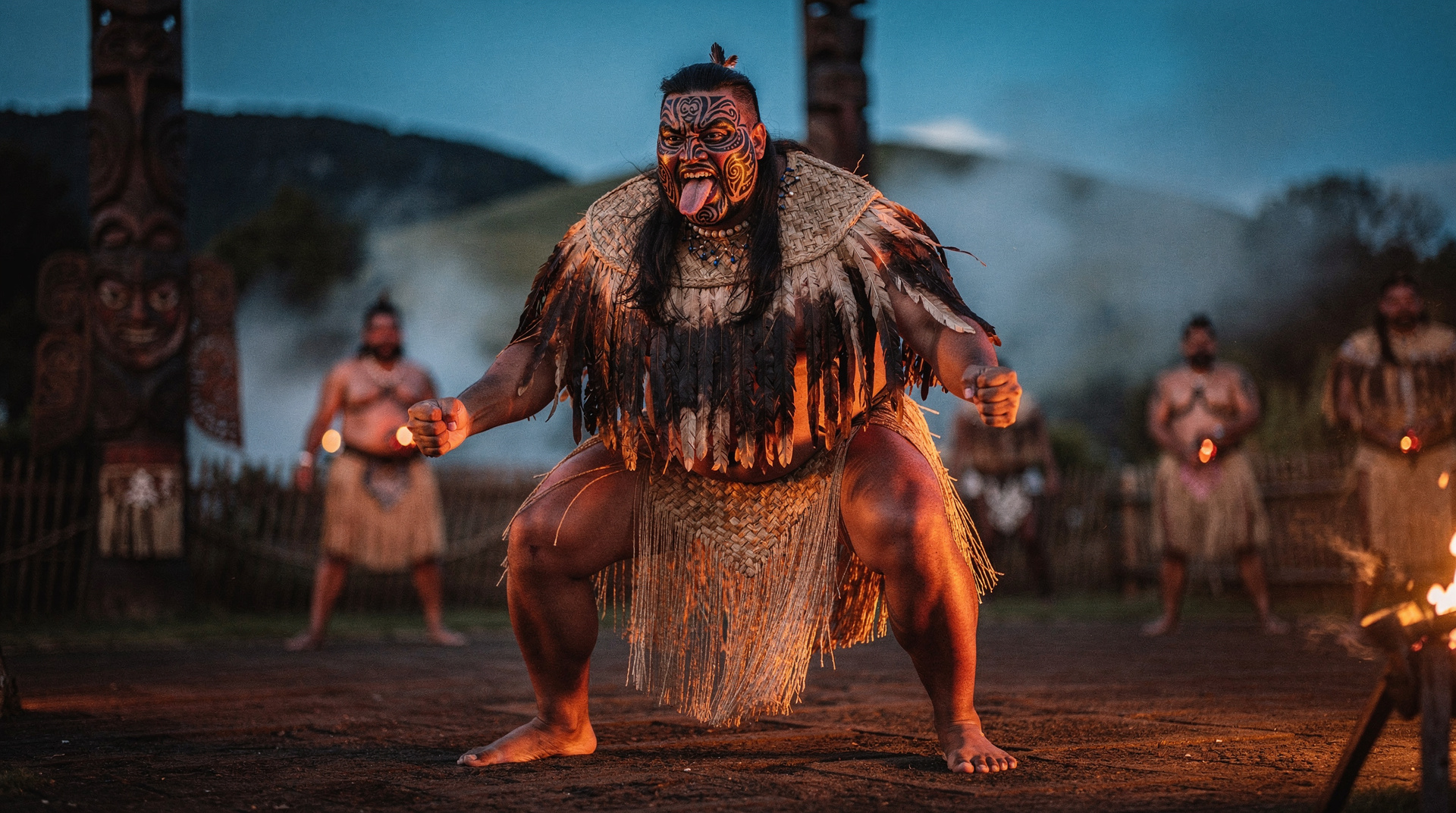
Respectful introduction to Maori culture for visitors: tangata whenua, Te Tiriti, tikanga basics, language, cultural experiences, and how to engage honestly.
Marae etiquette for visitors
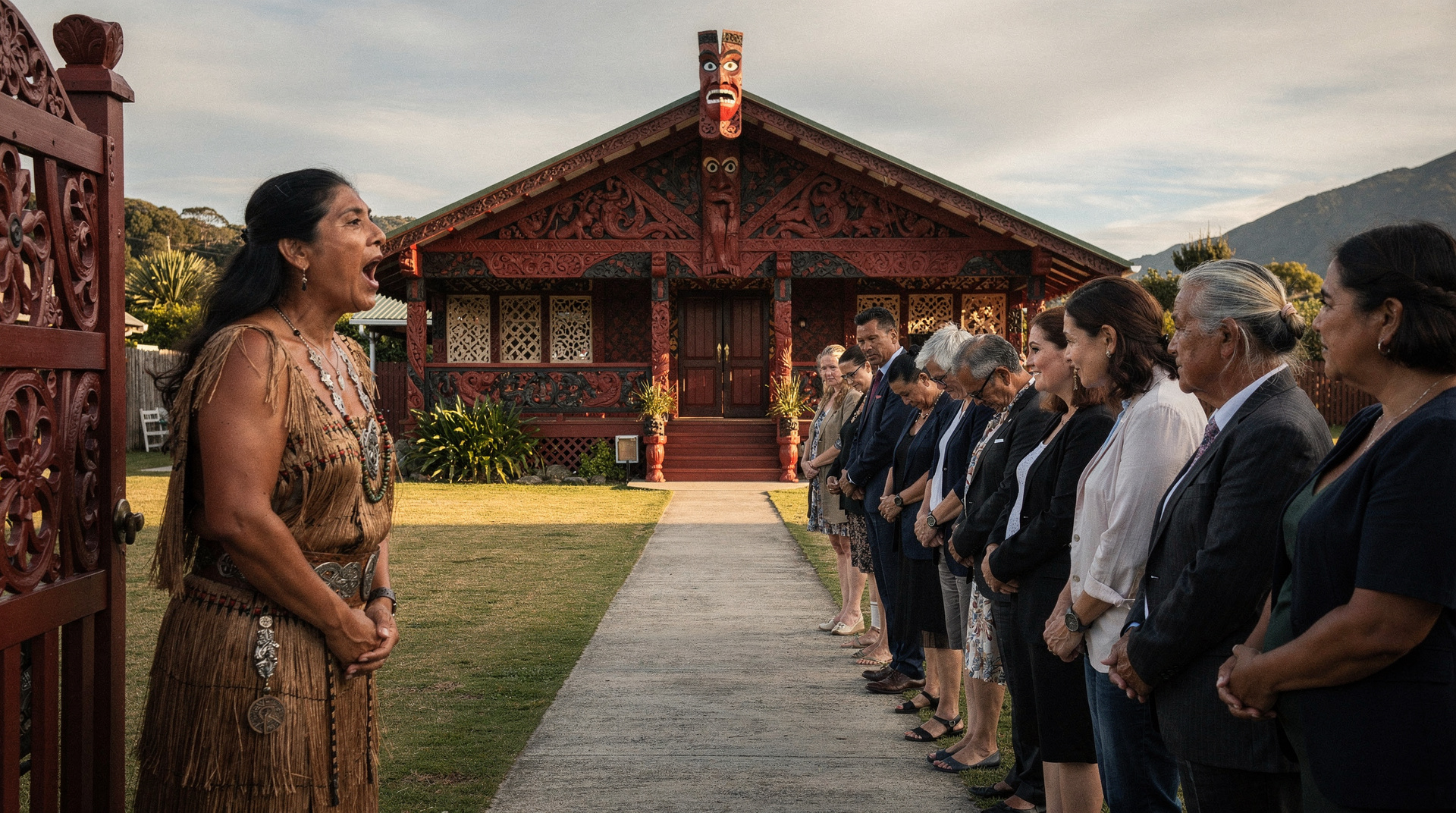
Marae etiquette: powhiri protocol, hongi greeting, shoes off, what not to do, and how to be a respectful guest at a Maori meeting place.
Te reo Maori basics for travelers
Practical te reo Maori guide: vowel pronunciation, 40+ essential phrases, place name meanings, and everyday Maori words woven into New Zealand English.
Matariki 2026 — where to celebrate New Zealand's Maori new year
Matariki falls on Friday 10 July 2026. Where to celebrate New Zealand's Maori new year — Rotorua, Auckland, marae — and what to expect as a visitor.
Published: