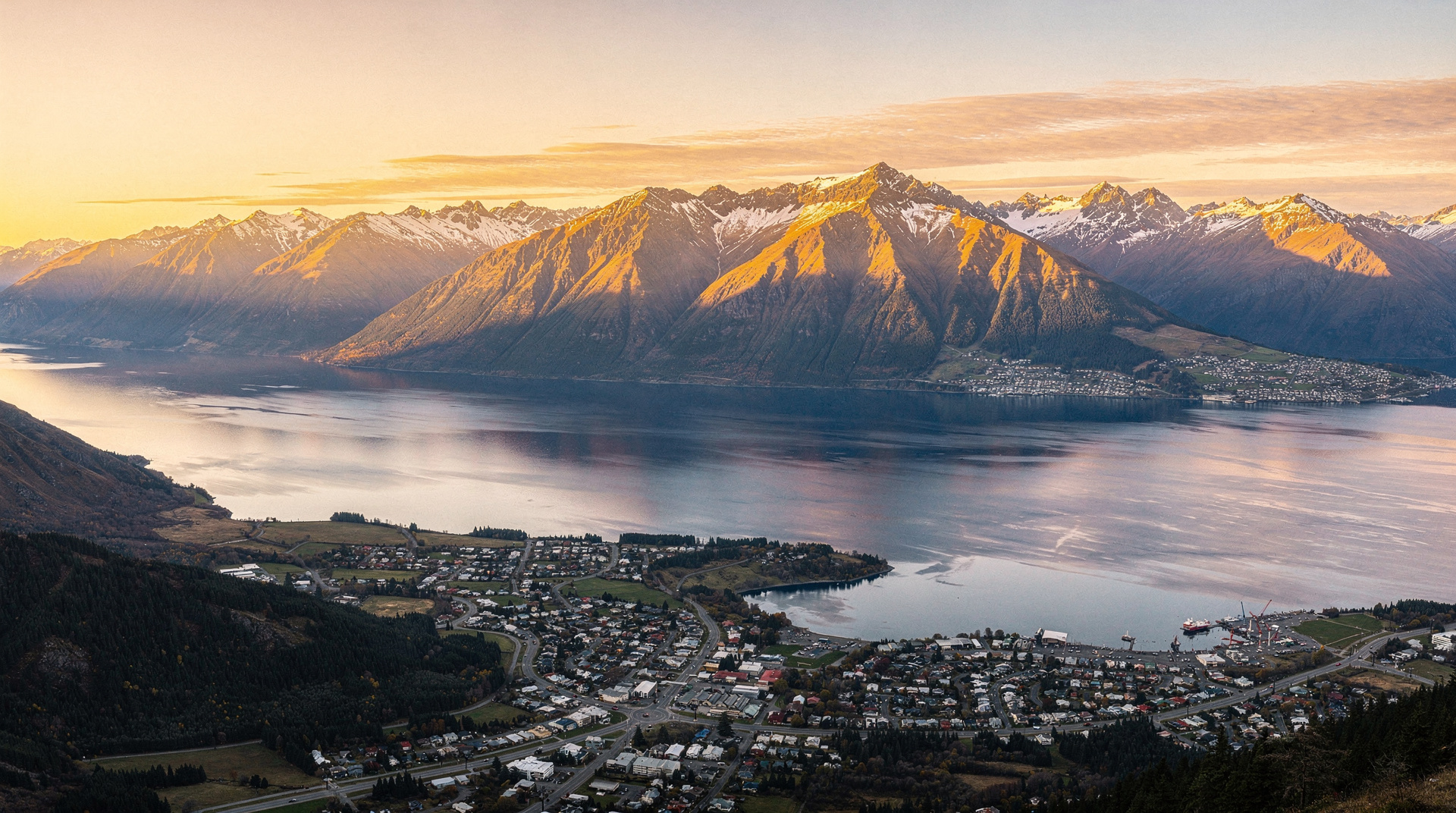
Plan a trip to New Zealand — the step-by-step workflow
Where do I start when planning a New Zealand trip?
Pick your dates first (it determines everything). Then decide how many days (minimum 10, sweet spot 14). Then pick your priority island. Then book NZeTA, flights, and the 5 things that need 6-month lead times: Great Walk huts, Milford Sound cruise, Cook Strait ferry in peak, Stewart Island flight, AJ Hackett Nevis if you're committed.
| Minimum time | 10 days; 14 days is the sweet spot |
| Cost | around NZD 150–300/person/day mid-range, all-in |
| Book 6+ months out | Great Walk huts, Milford Sound cruise, Cook Strait ferry (peak), Stewart Island flight |
| Getting around | Self-drive is the default; see Decision 7 below |
| Best time | Dec–Feb peak; Mar–Apr and Sep–Nov shoulder for fewer crowds |
How this guide works
Think of planning a New Zealand trip like building a house. You can’t lay the roof before the foundations — each decision unlocks the next. Get the sequence wrong and you’ll spend weeks reorganising instead of anticipating. Get it right and the whole thing clicks into place in two or three focused sessions.
This guide is structured as 12 sequential decisions. Work through them in order. By the time you reach Decision 12 — your pre-departure checklist — everything will already be sorted, and you’ll actually be able to enjoy the anticipation. I’ve planned this trip many times for myself and for hundreds of readers who wrote in afterward. The order below is the one that causes the least backtracking.
One honest caveat before we start: New Zealand is not a destination you can do justice to in five or six days. If that’s all you have, do one region well rather than attempting the whole country. That’s not gatekeeping — it’s just maths. The roads are slower than the GPS says, the distances are bigger than the map implies, and the best experiences reward the people who linger.
New Zealand consistently ranks in the top five destinations people name when asked “where do you most want to go before you die” — and once you’ve been, you’ll understand why. The country packs mountain ranges, glaciers, geothermal fields, Pacific coastlines, wine country, and world-class adventure sports into two islands the size of the UK or Japan. There is, genuinely, nowhere else on earth quite like it. But that density of experience also means that the planning window — the order in which you make decisions — is longer and more sequential than most comparable destinations. This guide exists precisely to compress that process into something you can actually action.
Use it actively. Every section ends with a clear decision or action. The FAQ at the bottom answers the questions that routinely appear in reader emails. And the three actions at the very end are your literal starting point for today, right now, once you’ve finished reading.
Decision 1 — When you can travel
Your travel window shapes every other decision — which walks are open, which ski fields are running, how crowded things will be, and what flights will cost. New Zealand operates on Southern Hemisphere seasons, which catches Northern Hemisphere travellers off guard every time.
Summer (December–February) is peak season. Everything is open — Great Walks, glacier hikes, white-water rafting, wine harvest in Marlborough. School holidays around Christmas and New Year push prices to their annual high. Book flights and popular accommodation six to twelve months ahead. The North Island is hot and humid; the South Island spectacular.
Autumn (March–May) is my personal recommendation for most travellers. ✓ Worth it Crowds drop sharply after Easter, prices come down, and Central Otago turns into a painting — the poplars around Arrowtown and the vineyards around Cromwell go amber and gold in April. Weather is still generally stable. Great Walks remain open through April. This is the window I consistently steer first-timers toward.
Winter (June–August) splits the country. Queenstown and Wanaka come into their own as ski destinations — Coronet Peak, The Remarkables, Cardrona, Treble Cone. Fiordland gets spectacular rainfall that fills every waterfall on the Milford Road. But the Tongariro Alpine Crossing can close on short notice due to snow and ice, some Great Walk huts are unstaffed, and Westland glaciers get fogged out for days at a time. If skiing is your priority, winter is the right call. If you’re after a summer-style highlights trip, push to spring instead.
Spring (September–November) is the underrated shoulder season. ◆ Hidden gem Prices are still lower than summer, lambs are everywhere in the paddocks, ski fields may still have late runs, and wildflowers hit Mackenzie Country in October and November. The Great Walks open progressively from late October. Spring is particularly good for the West Coast — Franz Josef and Fox glacier flights have clear weather and shorter queues.
Key dates to build around:
- Matariki (Māori New Year public holiday): Friday 10 July 2026
- Waitangi Day: 6 February
- Anzac Day: 25 April — accommodation fills in the days before and around these dates, particularly in Auckland, Wellington, and Queenstown.
- Christmas and New Year (22 December–8 January): treat this like peak Paris in August. Book or avoid.
A note on the NZ weather reality: New Zealand’s weather is notoriously changeable, particularly in the South Island and particularly in Fiordland. The Milford Road receives 9,000mm of rain per year. The West Coast averages 5,000mm. This is not a reason to avoid these places — quite the opposite, the rain feeds the waterfalls and keeps the vegetation extraordinary. But it does mean you need buffer days in your itinerary for weather cancellations on helicopter tours and glacier hikes. More on this in Decision 9.
For a full month-by-month breakdown, read our best time to visit New Zealand guide.
Decision 2 — How long
This is the decision people get most wrong. They see the map, notice that New Zealand is roughly the size of the UK or Japan, and assume two weeks is plenty. It is — but only if you choose your scope carefully. Here’s how the maths actually works.
7 days ✕ Too rushed for both islands
Seven days in New Zealand means one island, one region done well — or a panicked blur of long drives and half-seen sights. If you only have a week, pick either Queenstown and Fiordland (South Island) or Auckland–Rotorua–Bay of Plenty (North Island). Don’t try to do both. For a structured week, see our 7-day New Zealand itinerary.
10 days ✓ Viable with focus
Ten days gives you one solid island plus a brief foray into the other. A good 10-day structure: fly into Christchurch, drive the South Island highlights (Kaikoura, Marlborough, Abel Tasman), cross to Wellington on the Interislander, spend two nights in Wellington, fly home. Or reverse it going north-to-south. See our 10-day New Zealand itinerary.
14 days ✓ The sweet spot
Fourteen days is the sweet spot. You can do both islands, hit the three or four unmissable experiences on each, and still have a full rest day built in. The classic loop: fly into Auckland, drive to Rotorua, take the ferry from Wellington to Picton, drive to Queenstown via Christchurch, fly home from Queenstown. Our 14-day New Zealand itinerary maps this out with realistic driving times and accommodation recommendations.
21 days ★ The full picture
Three weeks unlocks the places most visitors never see. You can add Fiordland properly (overnight in Te Anau, Doubtful Sound as well as Milford), explore the Coromandel Peninsula, drive the West Coast in full, include Stewart Island/Rakiura, and maybe add a few nights in Rarotonga on the way home. See our 21-day New Zealand itinerary.
A brief word on itinerary scope: Some travellers come to New Zealand wanting to include the Realm — the Cook Islands, Niue, or even Tokelau. These are extraordinary places and entirely worth including on a longer trip. Rarotonga is 3.5 hours from Auckland by direct Air New Zealand flight. If you have 21+ days and want a Pacific island extension, tacking 5 nights in Rarotonga onto either end of your NZ trip is one of the best combinations in Pacific travel. For the Realm standalone, see our Cook Islands travel guide. Niue and Tokelau are for a different kind of traveller entirely — read our Niue guide and Tokelau guide if you’re curious.
For a detailed comparison of 7, 10, 14, and 21-day options with realistic day-by-day templates, read our guide: how many days do you need in New Zealand?
Decision 3 — Which island(s)
This is the question every planner circles back to. The short answer: if you have 10 days or fewer, pick one island and commit. If you have 14 or more, do both — but know which gets the majority of your time.
North Island vs South Island
| Dimension | North Island | South Island |
|---|---|---|
| Best known for | Rotorua geothermal, Hobbiton, Bay of Islands, te reo Māori culture, Wellington arts scene | Queenstown adventure, Milford Sound, glaciers, Aoraki/Mt Cook, Marlborough wine, alpine scenery |
| Driving | More traffic around Auckland; roads generally faster | Slower and more winding — especially Lewis Pass, Haast, and the Milford Road — but jaw-dropping |
| Climate | Warmer, more humid. Auckland rarely frosts. Northland subtropical. | More variable. Fiordland gets 8m of rain/year. Canterbury can be arid. Otago frosts in winter. |
| Māori culture | Much richer concentration — Rotorua, Waitangi, Tāmaki Makaurau (Auckland) | Present but less concentrated — Ōtautahi (Christchurch), some in Dunedin |
| Best season | Year-round; avoid Auckland Christmas crowds | Oct–Apr for most activities; Jun–Aug for skiing |
| For first-timers | Good if Hobbiton or Māori culture is a priority | The South wins for 'wow factor' per kilometre driven |
| Internal flying | Auckland is the hub — easy to fly in/out | Christchurch or Queenstown — open-jaw flights work well |
Verdict: First-timers with 14+ days: prioritise the South Island (more dramatic landscapes per km), but don't skip Wellington and Rotorua on the way through the North. One island only? South wins on raw scenery; North wins on cultural depth.
On the Realm and outer islands: Stewart Island/Rakiura is technically part of the South Island grouping geographically but feels entirely different — wilder, emptier, with kiwi walking around in broad daylight in Mason Bay. It’s worth a 2–3 night detour from Invercargill if you have 21 days. The Chatham Islands (Rēkohu) are for the genuinely adventurous — no GYG tours, irregular air links, and extraordinary birdlife. Both sit at the southern boundary of the main NZ land mass and reward the travellers who seek them out. Read our Stewart Island/Rakiura guide and Chatham Islands guide for context.
If the North Island wins your time, the far north deserves a place on the shortlist. The Bay of Islands is the obvious base, and a full-day cruise around the islands is an easy way to see it without planning every detail. Pair it with the Cape Reinga destination page and the Waitangi destination page to see how much a few days in Northland can hold. Travellers weighing it against the east coast of the Coromandel can read Bay of Islands vs Coromandel.
For a full comparison including specific experiences on each island, read North Island vs South Island: which should you visit?
Decision 4 — Style of trip
Different trip styles require completely different logistics — especially around transport and accommodation booking order. Nail down which profile fits your group before you go any further.
Classic road trip is what most independent travellers do: rental car, a mix of motels and holiday parks, freedom to adjust the plan. ✓ Worth it Works best for 14–21 days. See the 14-day classic itinerary.
Family trip means playground rest stops factored in, Hobbiton and Waitomo as anchors, Kelly Tarlton’s in Auckland, and shorter daily drives. ✓ Worth it Kids are well catered for in NZ. See our family New Zealand itinerary.
Honeymoon / couples — Queenstown, Wanaka, wine country, and a luxury lodge or two. Budget accordingly (NZD 500+/night is not unusual at the top end). ★ Splurge See our honeymoon in New Zealand guide.
Backpacker / budget — hostels, BBH or YHA network, Naked Bus or Intercity coaches where they still run, and hitching between them. ✓ Worth it New Zealand’s hostel network is genuinely excellent; budget NZD 80–120/day.
Campervan — the romantic choice, and genuinely great for 14+ days with two people. Factor in campsite fees (DOC campsites from NZD 8/night; holiday parks NZD 40–65/night with power). See our campervan New Zealand guide.
Adventure-focused — structure your itinerary around the Tongariro Alpine Crossing, a Great Walk, Milford Sound, glacier heli-hike, and Queenstown activities. These have booking lead times — see Decision 8.
Without a car — harder but possible. Rotorua and Queenstown are very accessible by organised tours from Auckland and Christchurch respectively. For a no-driving option, see New Zealand without a car. From Auckland, a guided day trip to Rotorua is the simplest way to taste the geothermal North Island without a rental car; the Rotorua day trip from Auckland guide explains what to expect, and the intercity bus guide covers the coach alternative.
If you are still choosing between a hired car and a driver, self-drive vs guided tour and private tour vs self-drive lay out the trade-offs, and the self-drive itinerary shows what a car-based route looks like in practice.
Decision 5 — Visa and entry
NZeTA (New Zealand Electronic Travel Authority) is mandatory for most passport holders, including citizens of France, Germany, Italy, Spain, Portugal, the Netherlands, and most European countries. UK, Australian, and most Pacific Island passport holders are exempt (Australians can live and work in NZ indefinitely; this is not relevant for most tourists reading this).
The NZeTA costs NZD 23 (approximately USD 14 / EUR 13) plus a mandatory International Visitor Levy (IVL) of NZD 100 (approximately USD 60 / EUR 55). It’s valid for 3 years and multiple entries. Apply via the official Immigration NZ NZeTA page or the NZeTA app. Processing is usually under 72 hours but apply at least 2 weeks before departure.
✓ Apply early Do not leave the NZeTA for the airport — you cannot board without it and the check-in desk cannot process it.
Working Holiday Visa — if you’re aged 18–30 (or 35 for French and German citizens, with some variation by country), a Working Holiday Visa is worth considering even for a long holiday. It costs more upfront but removes the 3-month continuous stay limit and lets you work to extend your trip. Valid for 12 months.
Cook Islands and Niue — no visa required for most nationalities; stays up to 31 days (Cook Islands) or 30 days (Niue). Rarotonga is only a 3.5-hour flight from Auckland.
Tokelau — requires a special permit from the Tokelau National Council. Access is by supply ship from Samoa — a 4-day journey each way. Worth mentioning because readers ask.
For the full visa flowchart and NZeTA application walkthrough, read our NZeTA visa guide.
Decision 6 — Flights and arrival airport
Where to land matters more than most people realise, because it determines your entire routing logic.
Auckland (AKL) is the default for most routes from Europe, North America, and Asia. Flying in via Los Angeles or Singapore is the most common path for European travellers. Auckland works well if you’re starting in the North Island or doing a classic north-to-south loop.
Christchurch (CHC) is a strong alternative if your priority is the South Island. Some Singapore Airlines routes land here. If you fly AKL inbound and CHC outbound (or reverse), you avoid doubling back.
Queenstown (ZQN) receives direct flights from Sydney, Melbourne, Brisbane, and Singapore (seasonal). Flying into Queenstown and departing Auckland is a clean south-to-north itinerary with no backtracking.
Open-jaw routing — the single biggest efficiency win in New Zealand trip planning. Flying into one city and out of another saves 2–4 days of duplicate driving. Auckland in, Queenstown out (or vice versa) is the most popular pairing. Auckland in, Christchurch out saves the full South Island doubling-back problem if you’re short on time.
✓ Open-jaw is worth the premium Most airlines price open-jaw at little or no premium over a return ticket. Check both options before booking.
Domestic flights — Air New Zealand and Jetstar operate between all major centres. Auckland–Queenstown takes 2 hours and often costs NZD 89–149 booked 6–8 weeks ahead. Book domestics after confirming your itinerary outline. For a comparison of domestic carriers, see Air New Zealand vs Jetstar domestic.
From the UK — most efficient routing is via Singapore (Singapore Airlines, direct to Auckland) or Los Angeles (Air New Zealand direct). Expect 24–26 hours total travel time.
From continental Europe — Singapore hub (Singapore Airlines via SIN) or Dubai hub (Emirates via DXB to AKL) are the primary options.
Decision 7 — Transport mode
This is the decision that most shapes the character of the trip. There is no universally right answer — it depends on group size, trip length, budget, and how much you value flexibility vs simplicity.
Self-drive vs campervan vs guided tour vs public transport
| Dimension | Rental car + accommodation | Campervan |
|---|---|---|
| Flexibility | Very high — change plans daily | Very high — sleep wherever you park |
| Best for | Any group size; couples, families, solo | 2 people, 14+ days, off-peak season |
| Daily cost (per vehicle) | NZD 60–120 rental + NZD 60–120 accommodation | NZD 140–200 rental + NZD 8–65 campsite fee |
| Break-even vs car + motel | — | Usually 14+ days for 2 pax; rarely worthwhile for 1 or 3+ |
| Driving difficulty | Standard — NZ drives on the left | Harder — campervan handles are tricky on narrow roads |
| Weather dependence | Low — you always have a warm bed | Higher — campsite quality varies wildly in rain |
| Spontaneity | Good if not peak season | Excellent — free camping legal at many DOC sites |
Verdict: Rental car + accommodation wins for most first-timers, especially in peak season. Campervan makes sense for experienced travellers on 14+ day trips in spring or autumn. Guided tours work well if you don't want to drive at all — see below.
Guided tour — operators like Contiki, Intrepid, and G Adventures run small-group circuits. ✓ Great for solo first-timers You trade flexibility for logistics handled, a ready-made social group, and often better access to DOC huts and park permissions. The Intrepid 15-day South Island tour is a consistent reader recommendation.
Public transport and organised shuttles — Intercity coaches connect major towns. Shuttles run to trailheads (Tongariro, Milford). Feasible but slow — factor double the time for any given leg. See New Zealand without a car.
Driving rules — New Zealand drives on the left. Speed limits are 100 km/h on open roads. Most European, UK, Australian, and North American licences are valid for up to 12 months without an International Driving Permit, as long as you carry your original licence. See the New Zealand Transport Agency licence rules before assuming yours qualifies.
One logistical point that trips up everyone: most rental car companies in New Zealand do not allow you to transport your hire car on the Cook Strait ferry between Wellington and Picton. You will need to return the car in Wellington, foot-passenger the ferry, and pick up a new rental in Picton or Blenheim. This sounds annoying but is actually seamless — the ferry terminal at Picton has rental car desks. The exception is if you’ve booked a specialty campervan or 4WD that explicitly permits ferry transport. Confirm in writing with your rental company before booking the ferry.
For the full breakdown of rental car types, insurance, and road conditions, read our driving in New Zealand guide.
Decision 8 — Book the 5 things that need 6 months
This is the section most people discover too late. New Zealand is not a country where you can show up and sort things out on arrival. The following five bookings sell out months ahead in any peak season. Miss them and you’ll spend your trip looking at things you meant to do from the outside.
1. Milford Sound overnight cruise — the standard day cruise is memorable. The overnight cruise is transformative. You wake up inside the fiord at dawn with the waterfalls running and the dolphins surfacing. Cabins are limited and fill up fast, especially January–March.
Milford Sound: Overnight Cruise with Water Activities
Wake up inside the fiord. Kayaking, swimming, wildlife watching. Limited cabins — book early.
2. Great Walk huts via DOC — all 11 Great Walks require hut or campsite bookings in season (October–April). The Milford Track is the most oversubscribed — DOC opens bookings in May and the peak weeks sell out within hours. The Routeburn, Kepler, and Abel Tasman Coast Track follow a similar pattern. Book directly at doc.govt.nz the morning bookings open. Set a calendar reminder.
If you’ve missed out on Great Walk huts, alternatives exist: the Tongariro Alpine Crossing is a day walk (no hut booking required), and the Paparoa Track on the West Coast often has more availability than the Fiordland walks.
Tongariro Alpine Crossing: Premium Guided Hike
The world's best one-day walk. Guide included — essential if you're not an experienced tramper.
3. Cook Strait ferry in peak season — the Interislander and Bluebridge ferries between Wellington and Picton are essential if you’re driving between islands (you cannot transport a rental car on the ferry in most standard rental agreements — check before booking). Peak season sailings on weekday mornings fill up. Book your preferred time slot 4–6 months ahead. Foot passenger + campervan bookings are particularly tight.
4. Stewart Island Flights — the 20-minute hop from Invercargill to Halfmoon Bay on Stewart Island Flights operates with a tiny fleet. Seats are limited and weather cancellations happen. If Stewart Island/Rakiura is on your list, book the flights as soon as your dates are confirmed.
5. AJ Hackett Nevis Bungy (if you’re committed) — the 134m Nevis is New Zealand’s biggest bungy jump. It’s not the kind of thing you book on the morning — slots go, and the wait if you walk in is often hours. If you know you’re doing it, book online as soon as your Queenstown dates are confirmed.
Queenstown: Nevis Bungy — Australasia's biggest bungy at 134m
The Nevis needs a scheduled slot. Walk-ins wait for hours. Book it before you leave home.
Hobbiton Evening Banquet Tour — technically a sixth thing. The Hobbiton Banquet Evening (evening tour with multi-course dinner and unlimited Green Dragon Inn beverages) is available a few times weekly and sells out months in advance. If that’s on your list, book it now.
Hobbiton Movie Set: Guided Tour Ticket
Book your Hobbiton slot before your flights. Standard daytime tours often sell out 6–8 weeks ahead in peak season.
A note on the Waitomo Glowworm Caves: Waitomo is often combined with Hobbiton on a long day trip from Auckland, and it’s genuinely extraordinary — the caves are UNESCO-listed and the glowworm grotto is unlike anything else in the world. Day tours from Auckland to both Hobbiton and Waitomo run 12–14 hours total. If that’s the plan, book the combined tour early — it consistently sells out in peak season. The caves themselves are open year-round and less weather-dependent than outdoor experiences.
If you would rather not drive that loop yourself, a combined Hobbiton and Waitomo day trip from Auckland hands the logistics to someone else. For the details of each stop, see the Hobbiton visiting guide, the Waitomo glowworm caves guide and the comparison of Hobbiton from Auckland vs Rotorua.
On the Tongariro Alpine Crossing: this deserves special mention because so many people misplan it. The Crossing is a 19.4 km day walk across volcanic terrain — past active craters, emerald lakes, and the summit plateau of Mt Ngauruhoe. It’s rated one of the world’s best day walks and can be done independently with a shuttle.
But you cannot drive to the Mangatepopo carpark independently — private vehicles are prohibited, so you must book a shuttle or join a guided group. The walk requires an early start (usually 7:00am departure) and 6–8 hours of solid walking. Check weather forecasts the night before — the Crossing closes on short notice in high winds or snow, which can happen in any month. If it closes on your planned day, the shuttle operators usually rebook you for free.
Tongariro Alpine Crossing with Shuttle Transfers
Mandatory shuttle to the trailhead. Book in advance — the Crossing is one of New Zealand's most popular day walks.
Decision 9 — Map your itinerary day by day
Now that the anchor bookings are in place, sketch your full itinerary. The principle: work outward from your fixed dates.
Step 1 — Place your fixed bookings on a calendar. Great Walk dates, Milford Sound overnight, Hobbiton — these are your stakes in the ground. Everything else wraps around them.
Step 2 — Add travel days. Remember the 30% rule: if Google Maps says 2 hours, budget 2 hours 40 minutes. Stops, petrol, wrong turns, photo moments, slow trucks on the West Coast — it all adds up. The Milford Road from Te Anau is 2 hours each way with no passing lanes. The Haast Pass is 4 hours of concentration. The Tongariro Alpine Crossing needs an early start — 6:00–7:00am from your accommodation.
Step 3 — Build in a rest day every 5–6 days. This sounds wasteful until you hit Day 10 of an 11-day sprint and realise you’ve seen everything through the windscreen. A half-day in Wanaka, a morning reading on the Queenstown waterfront, a long lunch in Marlborough wine country — these are the memories you’ll actually carry home.
Step 4 — Use the sample 14-day template as a baseline:
| Day | Location | Notes |
|---|---|---|
| 1 | Auckland | Arrive, recover, Viaduct Harbour |
| 2 | Auckland | City day: Sky Tower, museum, waterfront |
| 3 | Rotorua | Drive 3h, arrive afternoon, hangi dinner |
| 4 | Rotorua | Te Puia, Wai-O-Tapu, Polynesian Spa |
| 5 | Hobbiton → Hamilton | Tour morning, drive south, overnight Hamilton |
| 6 | Wellington | Drive 2h, ferry option or state highway south |
| 7 | Wellington | Te Papa, Cuba Quarter, evening ferry |
| 8 | Marlborough / Nelson | Ferry to Picton, drive west, wine tasting |
| 9 | Kaikoura | Drive south, whale watching, seal colony |
| 10 | Christchurch | Drive 2.5h, city recovery day |
| 11 | Lake Tekapo / Mt Cook | Drive 3.5h, Mackenzie Country |
| 12 | Queenstown | Drive 3h, settle in, evening Queenstown |
| 13 | Milford Sound / Fiordland | Day trip or fly-cruise-fly |
| 14 | Queenstown departure | Activities morning, fly out afternoon |
The reality of the Wellington ferry crossing: The Interislander and Bluebridge ferries run between Wellington Harbour and Picton, crossing Cook Strait. The journey takes 3 hours 30 minutes. It is genuinely beautiful — you exit Wellington Harbour through the heads and then cruise the Marlborough Sounds for the final hour. In calm weather, the crossing is lovely. In a southerly swell, it can be rough enough to empty half the passenger lounge.
Take seasickness tablets if you’re prone, eat a light breakfast, and book a seat on the upper deck for the Sounds section. Morning sailings (7:00–8:30am) leave Wellington freshest and arrive in Picton in time for a full driving day south. Evening sailings work if you want a final afternoon in Wellington. The ferry is a genuine highlight of the trip — don’t rush it by booking the first available slot without checking the crossing conditions forecast.
For the full day-by-day template with accommodation and driving notes, see our 14-day New Zealand itinerary.
Decision 10 — Book accommodation in the right order
Accommodation booking order matters more than most guides let on. Book in the wrong sequence and you’ll either overpay or lose your preferred dates.
Book these first:
- Holiday parks in peak season (if campervanning) — sites with power hook-ups in Queenstown, Taupo, and Franz Josef fill 6–8 weeks ahead in January. For campervans, power sites are essential for the heating.
- Anchor hotels in Queenstown and Milford Sound area — these are the bottleneck locations where options are few and prices spike.
- Wellington nights around a ferry crossing — Interislander sailings are often morning departures, which means you need a Wellington hotel the night before.
Book these second:
- Rotorua accommodation — well supplied, but book the hangi experience lodges (Mitai, Te Pa Tu) early as they include dinner and run on specific nights only.
- Christchurch — good supply; rarely a problem even 2 weeks out except public holiday weekends.
- Auckland — book early only for Christmas–New Year and major events (Warriors NRL games, Rugby test matches).
Leave these until last:
- Kaikoura, Nelson, Blenheim, Taupo — good supply year-round except peak summer.
- West Coast highway towns (Hokitika, Greymouth, Haast) — limited options but also limited demand outside January.
For hostel and holiday park recommendations by region, read our New Zealand accommodation guide.
Decision 11 — Book activities in the right order
After accommodation, work through activities in descending order of scarcity:
Book immediately once dates are confirmed:
- Milford Sound cruise (any format — day, overnight, fly-cruise)
- Hobbiton (if evening banquet, even more urgency)
- Tongariro Alpine Crossing shuttle if going independent
Book 4–8 weeks ahead: 4. Glacier heli-hike at Franz Josef or Fox — slots are limited by helicopter capacity and weather windows. Books out in Jan–Feb.
Franz Josef: 2.5-Hour Glacier Hike with Helicopter Transfer
Helicopter up, crampons on, walk the ice. Weather-dependent — book early to maximise rebooking options.
- Rotorua Māori cultural evenings — Mitai, Te Pa Tu, and Tamaki run on set nights. Mitai is the strongest cultural programme; Te Pa Tu is the most theatrical.
Book 2–4 weeks ahead: 6. Queenstown adventure activities (sky diving, jet boating, Ledge Bungy) — more flexible than Nevis but still needs booking 7. Whale watching in Kaikoura — weather dependent, cancellations happen, but they’re good at rebooking 8. Abel Tasman water taxi and kayak — books out in January but available most other times with 1–2 weeks notice
Book whenever (usually fine without advance booking): 9. Auckland harbour cruises, Sky Tower, Kelly Tarlton’s 10. City walking tours in Wellington, Christchurch, Dunedin 11. Most winery tours in Marlborough and Hawke’s Bay 12. Akaroa dolphin swimming — book 3–5 days ahead in peak season
On Rotorua cultural evenings — the honest verdict: Rotorua has three main Māori cultural experience operators. Te Pa Tu is the newest and most theatrical — a full forest-to-feast experience that includes a pōwhiri, traditional games, and a hāngi dinner that’s genuinely excellent. Mitai Maori Village is the most educationally rich — iwi-led, with a genuine focus on te reo and tikanga rather than performance, and the eel-lit river procession is stunning.
Tamaki Maori Village is the most commercial and highest-volume, but still puts on an entertaining and informative show. My recommendation: choose Te Pa Tu or Mitai rather than Tamaki, and don’t try to do two on the same evening. The cultural experiences run for 3–4 hours and include dinner. They’re not cheap (NZD 120–190 per person) but they’re one of the most distinctive experiences New Zealand offers, and they generate significant revenue for the iwi communities that run them.
Mitai Maori Village: Cultural Experience and Dinner Buffet
Iwi-led evening in traditional village setting. The river canoe arrival and hāngi buffet are the standouts.
For detailed activity recommendations by region, use the hub pages: things to do in New Zealand, adventure activities, Māori culture experiences.
Decision 12 — Pre-departure checklist
The final decision is really a checklist. Run through these in the last 2 weeks before departure.
Documents and entry:
- NZeTA approved (check status in the app — a yellow “pending” the night before is a problem)
- Passport valid for at least 6 months beyond your return date
- IDP (International Driving Permit) if your licence is in a non-Roman script, or check the NZTA rules for your nationality
- Travel insurance with medical evacuation cover (rescue helicopter from a South Island trail costs NZD 5,000–15,000 without cover)
- Printed copies of key bookings (Great Walk receipts, ferry booking, overnight cruise confirmation) — DOC hut wardens and ferry check-in staff will ask for these
Money and connectivity:
- Notify your bank of travel dates
- NZD cash for DOC huts, small cafes on the West Coast, and campsite fees at remote DOC sites that don’t take card
- eSIM or local SIM card organised — Spark and One NZ have the best rural coverage; Skinny is cheapest for data in cities. Most international SIM readers recommend Skinny for short trips.
- Power adaptors — New Zealand uses Type I plugs (same as Australia), 230V, 50Hz. European and UK adaptors required.
Health and gear:
- Packing list completed — sunscreen (NZ UV index is brutal), sandfly repellent (West Coast and Fiordland — not optional), waterproof layers
- Any prescription medications in original packaging with a doctor’s letter
- Biosecurity declarations understood — New Zealand customs are strict. Declare all food, plant material, and dirty boots. Fines are real.
What the whole thing actually costs
This is what a 14-day mid-range trip costs per person, sharing a room, in 2026. Not the optimistic estimate — the realistic one.
14-day mid-range New Zealand trip — per person
Based on two travellers sharing costs. Exchange rate: 1 NZD ≈ 0.60 USD ≈ 0.55 EUR. Correct as of May 2026.
| Item | NZD | USD | EUR | Verdict |
|---|---|---|---|---|
| International flights (return economy) Europe–Auckland return. Book 6–12 months ahead for best fares. | NZD 2,200–3,600 | USD 1,320–2,160 | EUR 1,210–1,980 | ✓ Worth it |
| NZeTA + IVL Mandatory for most European passport holders. | NZD 123 | USD 74 | EUR 68 | ✓ Worth it |
| Rental car (14 days) Economy compact, full coverage insurance. Price is per car split between 2 pax. | NZD 1,100–1,800 | USD 660–1,080 | EUR 605–990 | ✓ Worth it |
| Accommodation (14 nights) Mid-range motels and 3-star hotels. Per person sharing. Budget NZD 160–250/night for the room. | NZD 1,400–2,800 | USD 840–1,680 | EUR 770–1,540 | ✓ Worth it |
| Food and drink Breakfast self-catered, lunch cafe, dinner restaurant. NZD 50–70/day/person is realistic. | NZD 700–1,000 | USD 420–600 | EUR 385–550 | ✓ Worth it |
| Key activities (Milford cruise, Hobbiton, Tongariro, Rotorua cultural) 4–5 major paid activities. Milford Sound cruise is ~NZD 150–200 alone. | NZD 800–1,400 | USD 480–840 | EUR 440–770 | ✓ Worth it |
| Cook Strait ferry (Wellington–Picton) Per person foot passenger. Car transport is extra and usually prohibited by rental agreements. | NZD 95–160 | USD 57–96 | EUR 52–88 | ✓ Worth it |
| Domestic flights, fuel, and contingency Fuel for 14 days approx NZD 250–350 at current prices. Buffer for weather cancellations and spontaneous decisions. | NZD 400–700 | USD 240–420 | EUR 220–385 | ✓ Worth it |
Total realistic budget per person (mid-range, 14 days): NZD 6,800–11,600 / USD 4,100–6,960 / EUR 3,750–6,380.
The wide range reflects flight costs (the biggest variable), whether you eat out every night vs self-cater, and how many major paid activities you pack in. For a budget breakdown, read our New Zealand budget guide.
The 7 mistakes that ruin first trips
These aren’t edge cases. I hear versions of each one in reader emails every month.
1. Trying to do both islands in 7 days. ✕ Skip The drive from Auckland to Queenstown without any stops is 24+ hours. With the ferry crossing, you’re burning 2 full days on logistics. You will see everything through a windscreen and remember none of it. Pick one island.
2. Under-budgeting by 30–40%. ✕ Skip New Zealand is expensive. Petrol is around NZD 2.40–2.70/litre. A basic pub meal is NZD 25–35. A DOC campsite with power is NZD 40–65/night. Budget enthusiastically.
3. Not booking the Milford Sound cruise in advance. ✕ Skip The Milford Road is one of the most dangerous in New Zealand — you drive 2 hours each way on a single-lane road through 45 avalanche-prone tunnels and you get there to find the cruises are full. This happens. Book online before you leave home.
4. Driving the Milford Road and back in one very long day from Queenstown. ⚠ Tourist trap It’s 5 hours driving each way plus the cruise. You’ll spend 13 hours in a car and on a boat, arrive back at midnight, and be exhausted. Instead: spend a night in Te Anau the evening before, do the Milford morning cruise fresh, drive back to Te Anau for a relaxed dinner. For the logistics, read how to visit Milford Sound from Queenstown.
5. Ignoring sandflies on the West Coast. ✕ Skip They are not optional context. Franz Josef, Fox Glacier, Haast, Lake Mahinapua — sandflies swarm at dawn and dusk. No repellent means no peace. DEET-based repellent at 40%+ is what works.
6. Booking a campervan for a 7-day trip with one person. ✕ Skip The economics don’t work. A campervan costs NZD 140–200/day to rent. A motel costs NZD 90–130/night. As a solo traveller, you absorb the full campervan cost with none of the shared savings. Rent a car and stay in motels.
7. Relying on Google Maps ETAs. ✕ Skip The GPS assumes open highways. NZ has very few. The road from Te Anau to Milford Sound averages 40–45 km/h due to curves, stop-offs, and tunnel queues. The Haast Pass is similar. Budget an extra 30% on top of every Google estimate.
Decision 13 — Where multi-day hikes fit in your plan
If a Great Walk or a multi-day track is on your list — and for a large share of first-time visitors, it should be — this decision needs to happen alongside Decision 8, not after it. New Zealand’s Great Walks (Milford, Kepler, Routeburn, Abel Tasman Coast Track, and others) run a centralised DOC booking system that opens for the following season roughly six months ahead, and the popular huts on tracks like the Milford Track sell out within days of release. If a Great Walk is a priority, check the DOC booking-opening date for your travel season before you lock in flights.
Not every multi-day walk needs that level of advance planning, though. The Queen Charlotte Track in the Marlborough Sounds is privately managed rather than DOC-run, has a lodge-to-lodge water taxi network that carries your bags, and can usually be booked with a few weeks’ notice outside peak summer. The Abel Tasman Coast Track sits somewhere in between — DOC-managed but generally easier to book than the Great Walks proper, especially if you’re flexible on which nights you walk.
The practical sequencing: decide whether a Great Walk is a must-do before you finalise your travel dates, not after. If the answer is yes, your dates get built around the hut availability, not the other way round. If a Great Walk isn’t essential, the private-operator tracks (Queen Charlotte, and several others) give you the multi-day walking experience with far more schedule flexibility.
Money-saving tactics that don’t feel like sacrifice
New Zealand’s cost is real (see the budget breakdown above), but a few adjustments cut meaningful money without cutting the experience:
- Shift 2–3 nights to shoulder season if your dates are flexible. Accommodation and rental car prices in March–April or September–November run 20–30% below the December–February peak, and the weather is often just as good.
- Cook more than you plan to. New Zealand supermarkets are well-stocked and motels/holiday parks almost always have at least a kettle and often a full kitchen. Two self-catered dinners a week instead of restaurant meals meaningfully changes the weekly total.
- Book the free or near-free highlights deliberately. Roy’s Peak, the Rob Roy Valley Track, most DOC short walks, and many geothermal viewpoints cost nothing — build these into your itinerary rather than treating every day as a paid-activity day.
- Choose one splurge, not five. A Milford Sound fly-cruise-fly or a glacier heli-hike is worth the premium price; trying to do five premium experiences in one trip is where budgets blow out. Pick the one or two that matter most to you and self-drive/self-cater around them.
Trip-shaping templates by traveller type
Classic 14-day first-timer: Auckland → Rotorua → Wellington (ferry) → Picton → Kaikoura → Christchurch → Lake Tekapo → Queenstown → Milford Sound → fly home. Full itinerary →
10-day South Island focus: Fly into Christchurch, drive to Kaikoura and Marlborough, head south via Lake Tekapo and Aoraki/Mt Cook to Queenstown, 2 nights Queenstown with Milford Sound day trip, fly home from Queenstown. Full itinerary →
7-day couples’ weekend (Queenstown base): Fly into Queenstown, day trip Milford Sound, Wanaka day, Arrowtown winery lunch, AJ Hackett Nevis, fly home. Tight but achievable. Full itinerary →
21-day deep-dive: All of the classic 14-day route plus the Coromandel Peninsula, Abel Tasman Coast Track, Stewart Island/Rakiura, and Doubtful Sound alongside Milford. Optional extension to Rarotonga on the way home. Full itinerary →
Family 14-day: Auckland (Kelly Tarlton’s, Sky Tower) → Waitomo Glowworm Caves → Hobbiton → Rotorua (Te Puia, luge, Polynesian Spa) → Wellington (Te Papa) → ferry → Kaikoura (whale watching) → Christchurch → Queenstown (gondola, Skyline luge). Full itinerary →
Frequently asked questions about Plan a trip to New Zealand — the step-by-step workflow
How long does NZeTA processing take?
Usually 24–72 hours, but it can occasionally take up to 14 days. The official guidance says to apply at least 3 days before departure — I’d say apply at least 2 weeks before to leave room for any problems. You’ll receive the approval by email; there’s nothing physical to carry, but airlines check at check-in.
Can I drive on my foreign licence?
Yes, for up to 12 months from the date of arrival, provided your licence is current and in English or accompanied by an official translation (or an International Driving Permit). NZ doesn’t require an IDP for most European nationalities — but confirm on the NZTA website for your specific country. Remember: New Zealand drives on the left.
How much cash do I need in NZD?
Not much. New Zealand is extremely card-friendly — tap-to-pay works even at farmers’ markets and some DOC sites. Keep NZD 100–200 in cash for very remote DOC campsites, some farm gate stalls on the West Coast, and tipping at your discretion. There are ATMs in every town of any size.
What’s the luggage allowance on domestic Air New Zealand flights?
Economy fares with checked baggage allow one bag up to 23 kg. Many budget fares are carry-on only — a 7 kg carry-on limit applies. If you’re checking hiking gear, poles, or a wetsuit, you’ll need a bag that includes checked luggage or purchase it separately. Jetstar is stricter and cheaper. Check at booking.
What power plug adapter do I need?
New Zealand uses Type I plugs — the same as Australia and some Pacific Island countries. This is different from the UK (Type G) and Europe (Type C/F). Voltage is 230V/50Hz, so most modern electronics (laptops, phone chargers) are dual-voltage and just need a physical adapter. Buy one before leaving — it’s 70% cheaper at home than at NZ airports.
Do I need to tip in New Zealand?
No, tipping is not expected or customary. Service staff are paid a living wage. Rounding up to a nice number on a credit card terminal is appreciated but never assumed. You will not receive worse service for not tipping — this is not the United States.
What’s the etiquette around Māori culture?
Arrive at a pōwhiri (formal welcome ceremony) with respect — don’t speak during the karanga (call) or hongi (greeting with pressed foreheads and noses). Photography in wharenui (meeting houses) usually requires explicit permission. Never sit on a table in a Māori context (it’s food-related and tapu). When a guide shares te reo Māori terms, listen — they’re not performing, they’re teaching. See our Māori culture guide for a fuller introduction.
What mobile network works best across New Zealand?
Spark and One NZ (formerly Vodafone) have the widest rural coverage. In remote areas — Fiordland, Haast Pass, the East Cape, much of Stewart Island — there is no coverage from any network. Download offline maps (maps.me or Google Maps offline) and save DOC track information before you leave mobile range. Skinny Mobile (Spark’s budget brand) offers good city and highway coverage and is the cheapest option for a short prepaid SIM.
Is it safe to drink tap water everywhere?
Yes, in all towns and cities. Tap water in New Zealand is generally excellent quality. At remote DOC huts and backcountry sites, use the supplied stream water with a filter or tablets — giardia is present in NZ backcountry waterways despite the pristine appearance.
When does DOC open Great Walk hut bookings?
Bookings for the following season typically open around mid-year (the exact date is announced on the DOC website each year), roughly six months before the walking season starts. Popular huts on the Milford and Routeburn Tracks can sell out within days. If a Great Walk is a priority, check the DOC site for the current opening date as soon as you start planning, and be ready to book the moment the window opens. Less time-pressured multi-day options, like the privately managed Queen Charlotte Track, can usually be booked with a few weeks’ notice instead.
How do I handle the White Island / Whakaari situation?
Whakaari/White Island has been inaccessible to commercial tours since the eruption on 9 December 2019, which killed 22 people. Legal proceedings are ongoing and the island remains off-limits. Do not book any “White Island tour” — there are no legitimate operators. If you’re in Whakatane and want to understand the context, the Whakatane Museum and GeoNet both have good resources. See our Bay of Plenty guide for what to do in the region instead.
Your first 3 actions today
You’ve read the guide. Here’s the actual starting point — not a vague list of things to think about, but three concrete actions you can complete this week.
1. Pick your travel window. Open a calendar. Mark your realistic departure and return dates. If it’s peak season (Christmas–New Year), note that you need to act within the next month to get any of the competitive bookings. If you’re travelling in autumn or spring, you have a little more time but not unlimited.
2. Check your NZeTA eligibility. Go to immigration.govt.nz right now and confirm whether your passport nationality requires an NZeTA (most Europeans do) or is exempt (Australians, most Pacific Islanders). If you need one, apply today. It’s NZD 23 + NZD 100 IVL and takes 5 minutes to apply. Don’t leave it to the last week.
3. Read the first-timer’s guide. Before you plan any more detail, work through our complete first-time New Zealand guide. It covers the practical realities — road speeds, food costs, safety, cultural norms — that shape whether a trip feels like a dream or a grind. It’s the companion to this planning guide; together they cover everything you need.
Then come back here, start at Decision 1, and build your trip one decision at a time. New Zealand is worth doing properly.
Related guides

First time in New Zealand
Complete first-timer's guide to NZ: costs, logistics, Maori culture, what to book early, and how to structure 7–21 days.
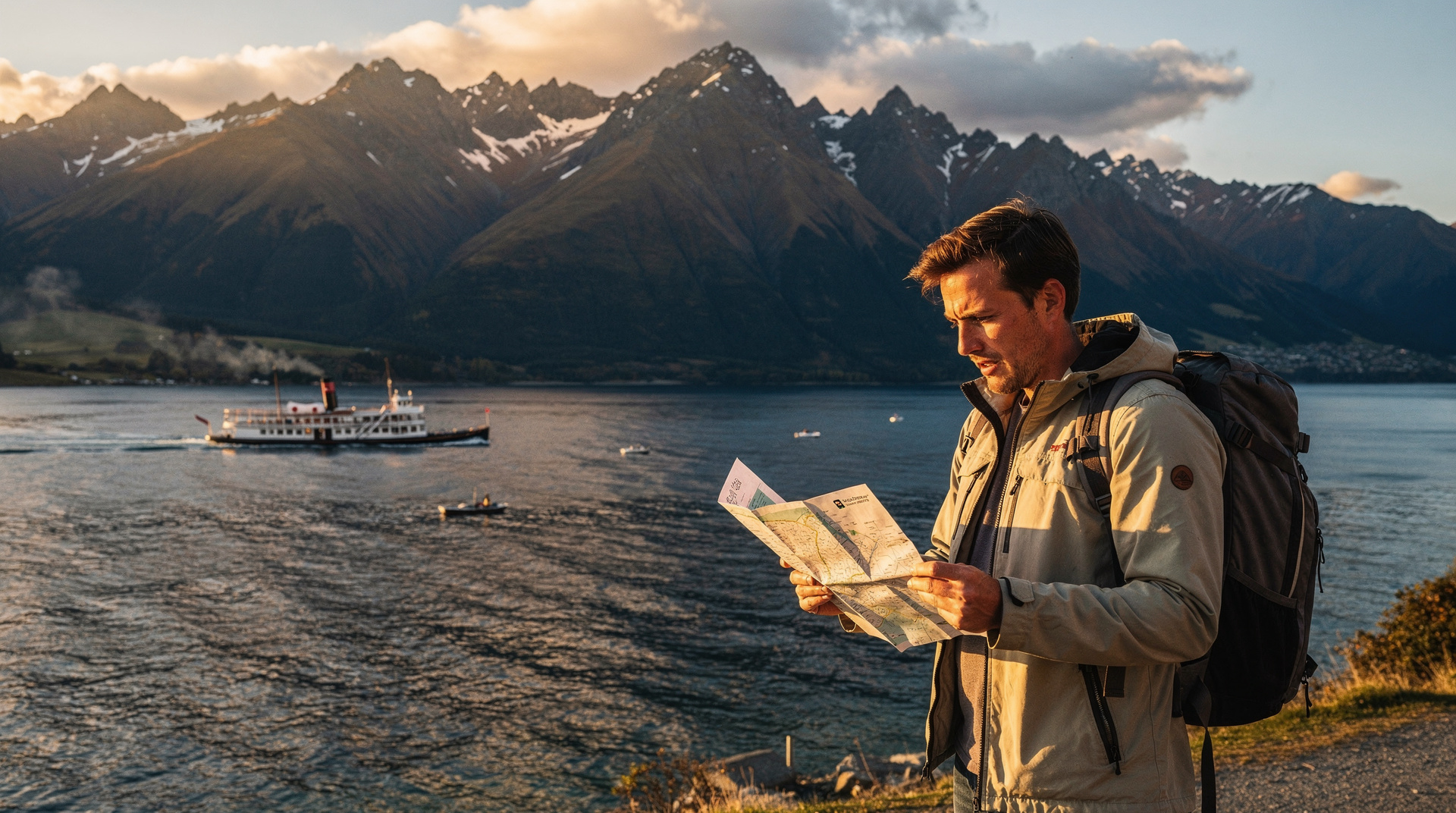
How many days do you need in New Zealand
7 days, 14 days, or 3 weeks? Honest guide to how much time you need for New Zealand, island by island, with sample day-counts by priority and travel style.
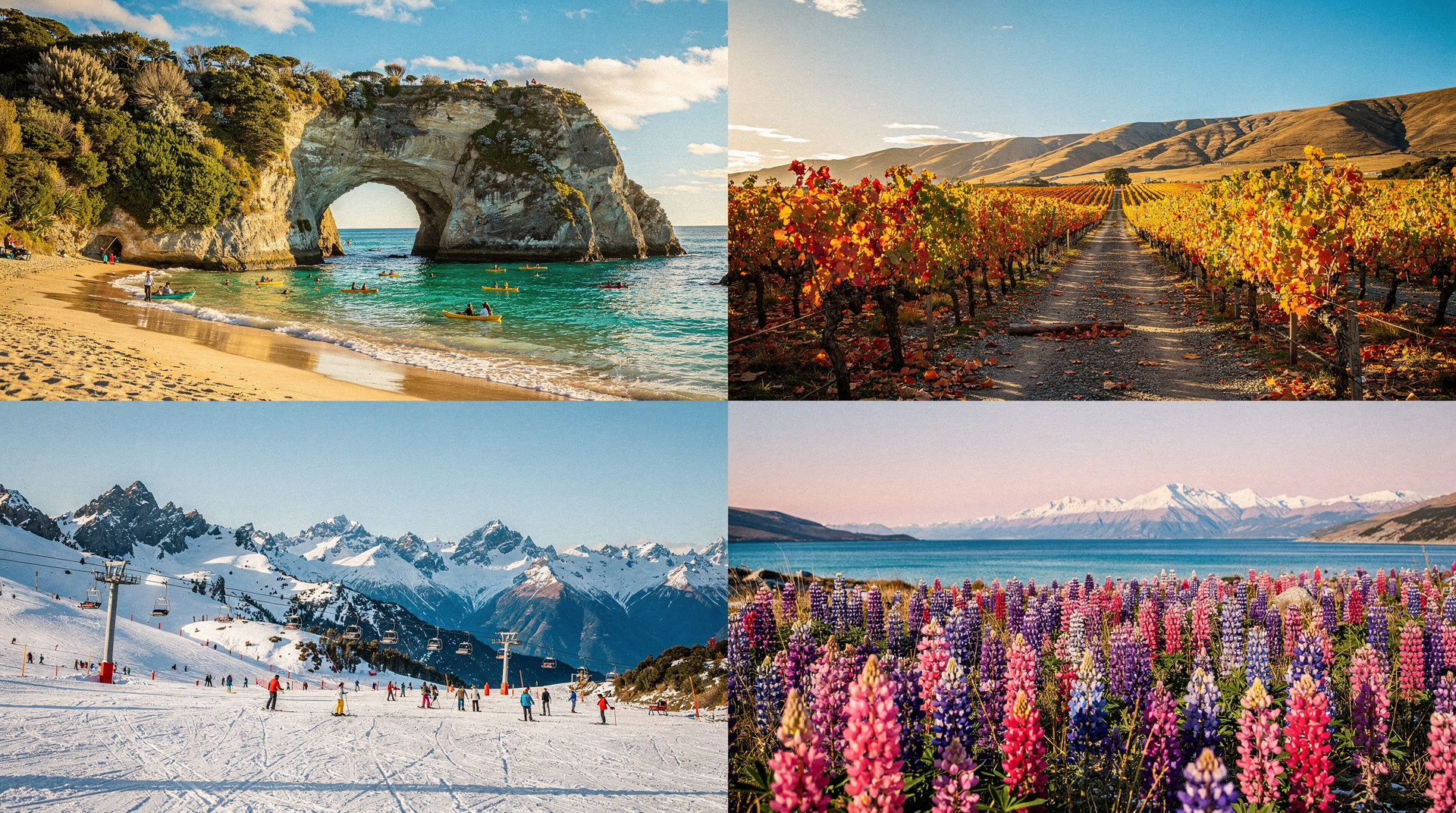
Best time to visit New Zealand
When to visit New Zealand: honest breakdown by season, region, and activity type. Summer is not always best.
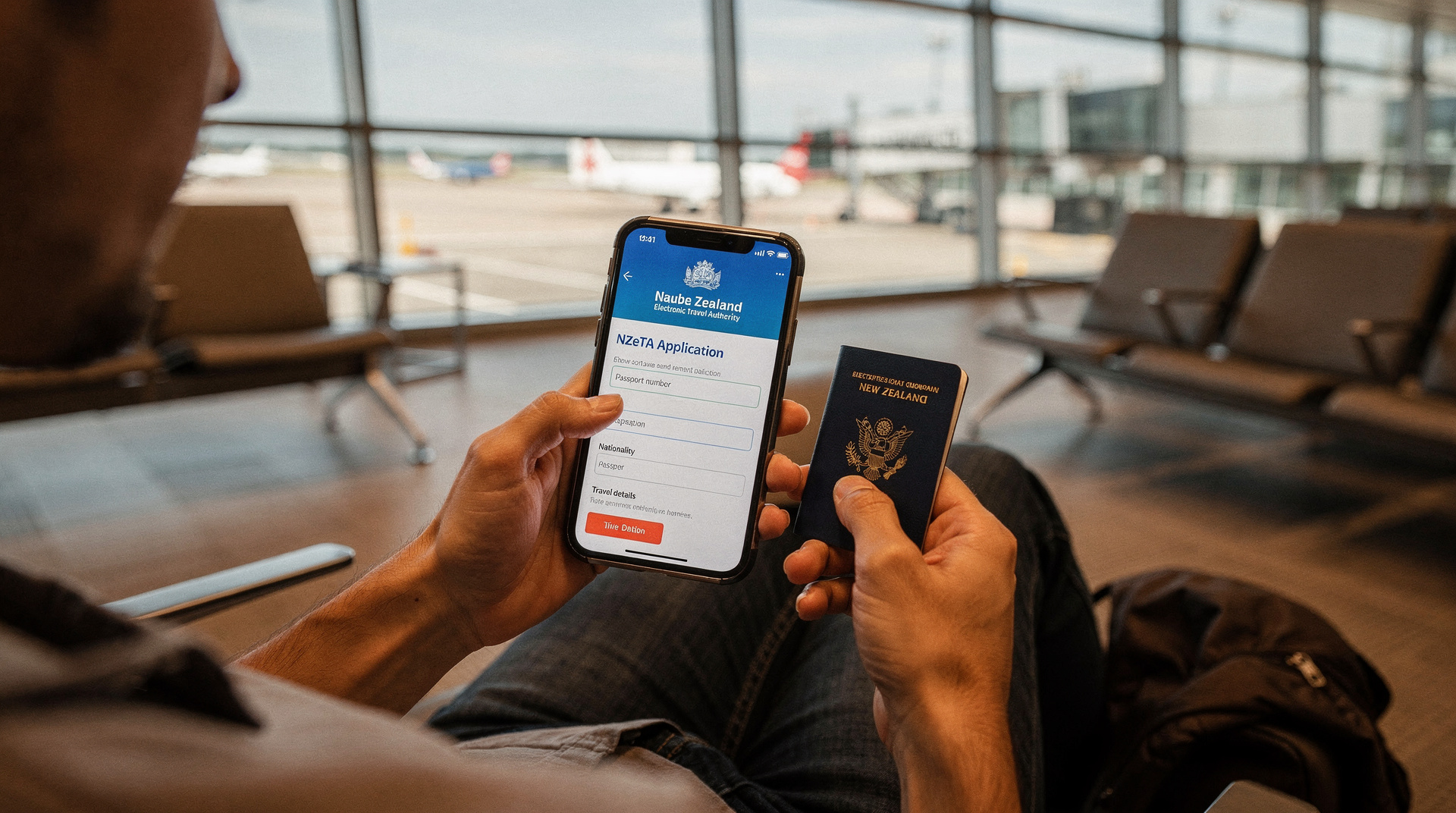
NZeTA visa guide (by nationality)
Complete NZeTA guide: who needs it, costs (NZD 23 + IVL 100), validity, and a per-nationality table for FR, DE, IT, ES, PT, US, CA, UK.
14-day New Zealand itinerary — both islands, grand tour
Honest 14-day NZ grand tour: Auckland, Bay of Islands, Hobbiton, Rotorua, Wellington, ferry, Kaikoura, Christchurch, Queenstown, Milford.
Packing list for New Zealand
Practical NZ packing list: layers for 4-season weather, hiking essentials, biosecurity musts, and what NOT to bring through customs.