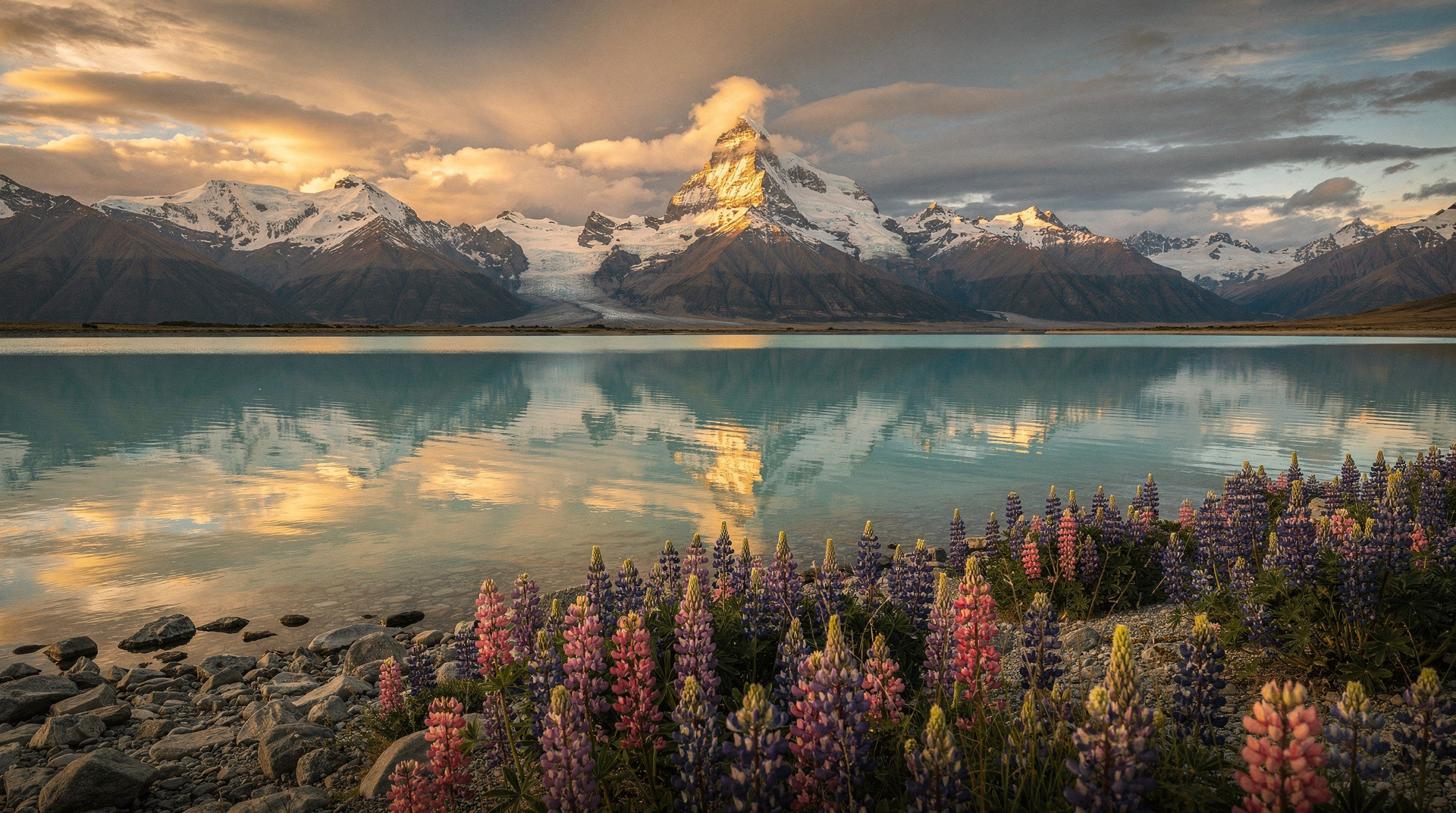
The ultimate New Zealand travel guide — honest, complete, current
How do I plan a New Zealand trip from scratch?
Allow 14-21 days minimum. Pick which island gets priority. Book Great Walk huts six months ahead. Add 30% to every Google Maps drive estimate. Budget NZD 250-400/day mid-range. Book NZeTA before your flight. Land in Auckland, fly out of Queenstown (or vice versa) — never the same airport twice.
Start here: what this guide is actually for
This guide is for people who have decided to visit New Zealand and are now staring at a blank calendar, wondering where to begin. It is not a highlights reel. It is not a bucket-list compilation. It is the planning document I wish I had handed every international visitor before they booked a single thing — and in 12 years guiding Great Walks and running itineraries across both islands, I have seen the same planning mistakes repeated by visitors from every country.
The three most common mistakes, in order of damage to your trip: booking too few days and trying to cover both islands in eight days (you will spend every day driving and arrive exhausted at every stop); trusting Google Maps drive times without adding the 30% buffer every NZ road actually demands; and arriving in December expecting an easy booking window for Great Walk huts, ferry crossings, and the Milford Sound cruise — all of which fill up months in advance.
The five numbers that matter before you book anything: 14 (minimum days for a satisfying both-island trip), 6 (months ahead you need to book Great Walk huts), 30% (add this to every GPS drive estimate), NZD 23 + 100 (cost of the mandatory NZeTA visa), and 3 (the number of ferries per day crossing Cook Strait, of which you want to be on the morning one if you’re driving a campervan).
How long do you actually need
There is no honest version of New Zealand that fits in a week. Seven days gives you one island done properly — either the geothermal-Hobbiton-Wellington circuit of the North Island, or the glaciers-Queenstown-Fiordland sweep of the South. It is a good trip. It is not a New Zealand trip in the full sense.
Ten days is the minimum for both islands without feeling cheated. It requires a domestic flight to bridge Wellington and Christchurch (or Christchurch and Auckland), which costs NZD 80-150 / USD 48-90 / EUR 44-83 on Air New Zealand or Jetstar and saves you two full driving days. Even then, you are moving fast.
Fourteen days is the sweet spot. It is enough time for Auckland (1-2 nights), the North Island interior (Rotorua, Taupo, Tongariro, 4-5 nights), Wellington (2 nights), the ferry crossing, and the South Island (Marlborough or Nelson, West Coast glaciers, Queenstown, Fiordland, 6-7 nights). You can do one Great Walk. You are not exhausted at the end.
Twenty-one days is for people who want to go deep. It adds Northland and Bay of Islands, time on Waiheke Island, the full West Coast, Wanaka alongside Queenstown, a proper Fiordland overnight, possibly Stewart Island/Rakiura. If you can take three weeks, take three weeks.
| Trip length | What you can do honestly | What gets cut | Great Walk possible? |
|---|---|---|---|
| 7 days | One island, 3-4 key stops | Entire other island | Day walk only |
| 10 days | Both islands, highlights only | Depth, West Coast, Wanaka | Unlikely without reshuffling |
| 14 days | Both islands, one anchor experience | Stewart Island, Northland, Wanaka depth | Yes — one |
| 21 days | Both islands with depth, Realm | Minor items only | Yes — two |
For a granular breakdown by trip length, see the how many days in New Zealand guide and the 7 vs 10 vs 14 days comparison. If you are settled on 14 days, the 14-day New Zealand itinerary lays out the day-by-day routing with accommodation notes and drive times.
When to go — the real answer
New Zealand sits in the southern hemisphere. December, January, and February are summer. June, July, and August are winter. Every travel article written from the northern hemisphere gets this backwards at least once, and visitor expectations suffer for it.
The short answer: December through March is the most popular window for a reason — Great Walks are fully open, weather is at its most reliably warm, and Fiordland is at its most accessible. But “most popular” means highest prices and biggest crowds, especially on the South Island. The honest ranking of when to visit:
✓ January–FebruarySummer peak. Warm across the country, Great Walks open and operating, long daylight hours (sunset past 9pm in the south). The downside: Queenstown, Milford Sound, and Hobbiton at maximum capacity. Book accommodation and activities three to six months ahead. Still the right choice for first-time visitors who want reliable weather.
✓ March–AprilThe best-kept secret in NZ travel planning. Autumn foliage in Central Otago and Wanaka is spectacular (peak colour: late April). Crowds drop sharply, particularly after Easter. Great Walks remain open through April. Temperatures are still comfortable. Prices ease slightly, though popular lodges in Queenstown remain expensive. My personal preference for most visitors, especially those over 35 who want atmosphere over beach days.
✓ October–NovemberSpring shoulder season. Temperatures rising, lambs in every paddock, ski fields closing (Ruapehu late October, Queenstown fields late October to November). Great Walks open for the season from late October. Fewer crowds than summer but increasing. A good window for families wanting outdoor activities without December prices.
✓ May–September (for the right visitor)Winter in New Zealand is dramatically under-rated. Queenstown runs at full throttle for ski season — Coronet Peak and The Remarkables are genuinely excellent ski fields, and Wanaka adds Cardrona and Treble Cone. Fiordland receives its most rainfall in winter but is also at its most dramatic — waterfalls multiplied, mist on the walls of Milford Sound, no crowds on the cruise. Great Walk huts are open off-season (standard backcountry fees apply, huts are unstaffed). The catches: some Tongariro tracks are snow-closed, and coastal Northland is cool enough to feel like a different country.
✕ July school holidays (NZ)If you are coming to ski, July is ideal. If you are not skiing, avoid Queenstown in late July — New Zealand’s school holiday crowds combine with Australian ski tourists to produce a price and crowd spike that lasts three weeks.
✓ Matariki (mid-June to mid-July)Matariki — the Maori new year, marked by the rising of the Pleiades star cluster — became an official New Zealand public holiday in 2022. In 2026, Matariki falls on Friday 10 July. It is observed with dawn ceremonies at significant sites, cultural events, and regional festivals. The long weekend creates a domestic travel spike; book accommodation in Rotorua, Wellington, and Auckland for this weekend well ahead.
For a full month-by-month analysis, see best time to visit New Zealand. For the specific summer vs winter trade-offs, see NZ in summer vs winter.
North Island or South Island — or both
✓ Both, if you have 14+ daysIf you are forced to pick one: South Island for first-time visitors who want landscapes. Fiordland, the Southern Alps, Franz Josef, Aoraki/Mt Cook, Central Otago — the South Island concentrates New Zealand’s most dramatic scenery in a relatively compact circuit. Queenstown is the adventure capital of the world by general consensus, and Milford Sound is one of those places that is genuinely as extraordinary as people say.
North Island for first-timers who want culture and geothermal. Rotorua’s geothermal parks are a unique geological experience found nowhere else on earth. Waitomo Caves are surreally beautiful. Hobbiton requires no apology — it is a world-class production. Wellington has the best cultural infrastructure of any city in the country. And Bay of Islands offers a maritime experience that the South Island cannot match.
| Dimension | ||
|---|---|---|
For a detailed breakdown by traveller type, see North vs South Island New Zealand, North vs South for families, and North vs South for couples.
The 12 regions and how to think about them
New Zealand is divided into regions that don’t always correspond to how visitors actually travel. This is the honest mental map.
Northland and Bay of Islands. The subtropical tip of the North Island. Bay of Islands is maritime NZ at its finest — 144 islands, dolphin encounters, the Waitangi Treaty Grounds. Cape Reinga is at the very top, where the Tasman Sea meets the Pacific. Not every itinerary needs Northland, but visitors with 16+ days shouldn’t skip it. See the Bay of Islands destination guide.
Auckland Region. New Zealand’s largest city (1.7 million people) is the main international gateway. It is not the highlight of most itineraries. Give it 1-2 nights: Waiheke Island wine tour is the standout, the waterfront is pleasant, and Sky Tower is worth looking at from the outside. The mistake is staying three nights in Auckland when you should be in Rotorua. See the Auckland destination guide.
Waikato — Hobbiton and Waitomo. The region between Auckland and Rotorua holds two of New Zealand’s most popular attractions: the Hobbiton Movie Set at Matamata and the Waitomo Glowworm Caves. Both are on the direct drive south from Auckland. Both are worth it. See Hobbiton guide and Waitomo guide.
Bay of Plenty — Tauranga and Rotorua. Tauranga is a beach city; Mount Maunganui’s surf beach is the best in the North Island. Rotorua is the geothermal heartland — Te Puia, Wai-O-Tapu, Polynesian Spa, and the most accessible Maori cultural experiences in the country. Essential for any North Island routing. See the Rotorua destination guide.
Central North Island — Taupo, Tongariro, Whanganui. Lake Taupo is the caldera of a supervolcano — the largest lake in Australasia. Tongariro National Park holds the Tongariro Alpine Crossing (New Zealand’s most popular day walk) and the volcanic peaks made famous by Lord of the Rings. Whanganui River is a Great Walk by canoe. See Tongariro Alpine Crossing guide.
Hawke’s Bay and Wellington. Hawke’s Bay (Napier and Hastings) is art deco architecture and excellent wine; it rewards visitors who make the detour. Wellington is essential: Te Papa Tongarewa, Weta Workshop, the cable car, and the best restaurant scene in New Zealand outside Auckland. The Cook Strait ferry departs here. See the Wellington destination guide.
Marlborough and Nelson-Tasman. The gateway to the South Island. Marlborough produces 85% of New Zealand’s Sauvignon Blanc — the Marlborough wine region guide is the reference. Nelson-Tasman holds the Abel Tasman Coast Track, the sunniest corner of New Zealand. See the Abel Tasman Coast Track guide and Marlborough wine region guide.
West Coast. The wild west. Franz Josef and Fox Glaciers descend closer to sea level than any glacier outside the polar regions. Punakaiki’s Pancake Rocks are worth the detour. This coast is remote, occasionally impassable in rain events, and genuinely extraordinary. See the Franz Josef Glacier guide.
Canterbury. Christchurch (rebuilt magnificently since the 2011 earthquake) is the South Island’s main city. Mount Hutt is the best ski field in the country for intermediate skiers. Kaikoura offers whale watching that is arguably the world’s most reliable. Aoraki/Mt Cook is four hours away. See the Christchurch destination guide.
Otago — Queenstown, Wanaka, Dunedin. Queenstown needs no introduction. Wanaka is 45 minutes away and offers everything Queenstown does minus the bachelorette parties. Dunedin is the most architecturally interesting city in the South Island, with the Otago Peninsula wildlife — royal albatross, yellow-eyed penguins — 30 minutes from the city centre. See the Queenstown destination guide and Wanaka destination guide.
Fiordland. The southern wilderness. Milford Sound and Doubtful Sound are the two most dramatic fiords. The Milford, Routeburn, Kepler, and Hollyford tracks are among the finest multi-day walks in the world. Te Anau is the base. This region alone justifies the international flight. See the Milford Sound guide and Fiordland destination guide.
Southland and Stewart Island/Rakiura. Invercargill is the most southerly city, and Stewart Island/Rakiura is 30 minutes by plane or 1 hour by ferry. The island has 245 km of tracks, 90% native bush cover, and the best wild kiwi spotting on earth. For the right visitor, it is unmissable. See the Stewart Island guide.
Visas, money, getting in
NZeTA — mandatory for most visitors
The New Zealand Electronic Travel Authority (NZeTA) replaced visa-free entry for 60+ countries in 2019. If you hold a passport from France, Germany, Spain, Italy, Portugal, the UK, US, Canada, or most European nations, you need an NZeTA before boarding. The exceptions are Australian citizens, who do not need an NZeTA or visa.
How it works: Apply online at nzeta.immigration.govt.nz or via the official app. Fill in personal details, upload a passport photo, answer health and character questions. Approval usually comes within 72 hours but can take up to 72 hours — do not apply the night before departure.
Cost (2026):
- NZeTA application fee: NZD 23 / USD 14 / EUR 13
- International Visitor Levy (IVL): NZD 100 / USD 60 / EUR 55
- Total: NZD 123 / USD 74 / EUR 68
The NZeTA is valid for two years from date of issue, allows multiple entries, and permits stays of up to 90 days. A single application covers the duration of validity. See the complete NZeTA visa guide for edge cases (dual citizenship, prior criminal records, health conditions).
Working Holiday Visas are available for 18-30 year olds (35 for Canadian and some other nationalities) from eligible countries including France, Germany, Italy, Spain, Portugal, UK, and US. The visa allows 12 months of work and travel in New Zealand and can be extended to 23 months under some employer-sponsored arrangements. See the Working Holiday Visa guide.
Money in New Zealand
New Zealand uses the New Zealand Dollar (NZD, NZ$). As of 2026, the approximate exchange rates are:
- 1 NZD ≈ 0.60 USD
- 1 NZD ≈ 0.55 EUR
- 1 NZD ≈ 0.47 GBP
ATMs (called “ATMs” or “cash machines”) are widely available in cities and larger towns. In very small towns (population under 1,000) and some remote areas, cash is essential — the West Coast highway between Greymouth and Haast has stretches where there is no ATM for 100+ km.
Visa and Mastercard are accepted almost universally. American Express is accepted by major chains. Tap-to-pay (contactless) is standard. Surcharges for card payments (typically 1.5-2.5%) are legal and common — always ask before paying.
Currency exchange: Banks offer reasonable rates. Airport exchange desks have the worst rates in the country — exchange only enough to get from the airport to your accommodation, then use an ATM. Wise (TransferWise) and Revolut cards offer near-spot-rate exchange and are worth having for a multi-week trip.
For a detailed breakdown of banking, tipping (not expected but not offensive), and managing money on a long trip, see the currency and money guide.
SIM and mobile data
New Zealand has two main mobile networks: Spark and One NZ (formerly Vodafone). Coverage is good in cities and on main highways. Remote areas — particularly the West Coast south of Hokitika, Fiordland, and parts of Northland — have patchy or no coverage. Do not rely on mobile navigation in Fiordland without a downloaded offline map.
For visitors: A prepaid SIM from Spark or One NZ costs NZD 30-50 with a good data allocation. Available at airports, supermarkets, and petrol stations. eSIMs are available from both networks and from third-party providers. See the best eSIM for New Zealand guide for provider comparisons.
How to get around
Self-drive is the default. New Zealand is built for it. The roads are well-maintained, driving is on the left, and the distances between key stops are manageable. A standard rental car costs NZD 60-120 / USD 36-72 / EUR 33-66 per day depending on season, vehicle type, and company. Book in advance for summer (November to March), when vehicles are scarce and prices spike.
| Dimension | ||
|---|---|---|
Driving rules for international visitors: New Zealand drives on the left. International licences from France, Germany, Spain, Italy, and Portugal are accepted without a translation requirement — present your home licence alongside a translation or international permit if requested, though in practice it is rarely asked for. Speed limits: 100 km/h open road, 50 km/h urban. Strict drink-drive limits (50mg/100ml blood alcohol). Campervans over 6m require more care on narrow mountain roads — check width restrictions on the Milford Road and some West Coast routes.
The Cook Strait ferry connects Wellington to Picton (North Island to South Island). Two operators: Interislander (government, larger vessels, NZD 65-130 / person) and Bluebridge (private, often cheaper, NZD 45-99 / person). Crossing time: 3h30 in calm conditions. Book ahead in summer and on long weekends. For campervans, book the ferry before you book anything else — campervan slots on morning sailings fill months ahead. See the complete Cook Strait ferry guide.
Domestic flights are the time-efficient alternative for visitors who can sacrifice the scenery of the ferry crossing. Wellington to Christchurch is ~45 minutes on Air New Zealand (NZD 80-150 one-way). Auckland to Queenstown is 2 hours (NZD 120-200). Both routes have multiple daily departures. Booking 6-8 weeks ahead gets you reasonable fares; last-minute fares are punishingly expensive. See the domestic flights guide.
Intercity bus (Intercity, Naked Bus) covers most destinations and is the cheapest option for solo backpackers. Journey times are significantly longer than driving. Wellington to Christchurch by bus requires the ferry plus a 4-hour drive from Picton — a full day of travel. The North Island Hop-On Hop-Off Pass offers good value for budget travellers who want flexibility without a rental car.
For a full comparison of transport options across both islands, see self-drive vs guided tour in NZ, campervan vs car rental, and driving in New Zealand.
What you will actually spend
The following figures are per person per day for a standard trip, based on 2026 pricing. New Zealand is not cheap. It has been one of the most expensive destinations in the Asia-Pacific region for a decade. Budget accordingly before you fall in love with the idea and then resent the reality.
Cost breakdown
Per person daily budget — 14-day mid-range trip, NZD/USD/EUR (2026)
| Item | NZD | USD | EUR | Verdict |
|---|---|---|---|---|
| Backpacker (hostel dorm + intercity bus + self-catered) | 80-120 | 48-72 | 44-66 | ✓ Worth it |
| Mid-range (motel or mid hotel + rental car + mix of restaurant/self-catered) | 250-380 | 150-228 | 138-209 | ✓ Worth it |
| Luxury (boutique lodges + premium tours + helicopter experiences) | 650+ | 390+ | 358+ | ★ Splurge |
| Campervan (hire + petrol + holiday park — 2 people split) Per person cost assuming 2 sharing; vehicle hire NZD 120-220/day + park fees NZD 35-55/night | 140-200 | 84-120 | 77-110 | ✓ Worth it |
| NZeTA visa (one-off cost per person) NZD 23 application + NZD 100 IVL; valid 2 years | 123 | 74 | 68 | |
| Milford Sound cruise (budget day cruise) One-off cost; essential for any South Island trip | 75-120 | 45-72 | 41-66 | ✓ Worth it |
| Hobbiton Evening Banquet Tour Premium experience; standard guided tour is NZD 130 | 230 | 138 | 127 | ★ Splurge |
| Great Walk hut (per night, Great Walk season) DOC booking required; campsites NZD 32-45/night | 102-135 | 61-81 | 56-74 | ✓ Worth it |
For detailed strategies on managing costs, see New Zealand on a budget and, for the opposite end, NZ luxury itinerary.
The 10 things to actually book in advance
These are the bookings that determine the shape of your trip. Leave them late and you are choosing from leftovers.
1. Milford Sound cruise. Book three to six months ahead in summer (December-March). The cruise is non-negotiable — it is the only way to see the fiord from the water, and it is the best way. The small-boat cruises offer the best wildlife viewing but have the fewest seats.
Milford Sound: Nature Cruise on a Modern Catamaran
2. Great Walk huts. DOC opens bookings in June for the following season. Abel Tasman Anchorage hut, Milford Track, and Routeburn Track fill within days. If Great Walks are on your list, set a calendar reminder for June 1 and log into doc.govt.nz at 8am NZT on the opening day.
3. Hobbiton Evening Banquet Tour. The standard guided tour (NZD 130) is also worth booking ahead in summer. The Evening Banquet Tour (NZD 240) has the smallest group sizes and the best atmosphere — it sells out six to eight weeks ahead in peak season.
Hobbiton Movie Set: Guided Tour Ticket
4. Cook Strait ferry — campervan slot. If you are in a campervan, the large-vehicle morning sailing from Wellington fills months ahead. Book this before you book any other accommodation. If you are in a standard car or foot passenger, three to four weeks ahead is adequate outside of summer.
5. Franz Josef or Fox Glacier heli-hike. Helicopter glacier experiences are weather-dependent and cancellation rates are high — but they also sell out their weather-window slots in summer. Book ahead and plan a rest day on either side so you can rebook if cancelled.
Franz Josef: 2.5 Hour Glacier Hike with Helicopter Transfer
6. Tongariro Alpine Crossing shuttle. The Crossing requires a shuttle because you cannot return to the same carpark (it is a one-way traverse). Multiple operators run shuttles from National Park Village, Taupo, and Turangi. In summer, shuttles on peak days book out. Book your shuttle when you book your accommodation in the area.
7. TranzAlpine train. The Christchurch to Greymouth scenic train runs once daily in each direction. It is one of the great train journeys and books out weeks ahead in summer. Reserve when you settle your South Island dates.
8. Domestic flights. Air New Zealand and Jetstar fares increase sharply close to departure. Six to eight weeks ahead gets you mid-range fares. Three months ahead in summer gets the best fares. Last-minute (under 10 days) is expensive.
9. Queenstown fine dining. Queenstown is small and its best restaurants — Rata, Amisfield, Botswana Butchery — have 2-4 week waitlists in summer. Book before you leave home.
10. Stewart Island/Rakiura flights. Stewart Island Express (the small plane) has 9 seats and one or two flights per day from Invercargill. In summer, seats go fast. The ferry (Foveaux Express) is larger but rougher — 1 hour in good conditions, potentially miserable in bad.
The 10 things people overpay for
✕ AJ Hackett SkyJump AucklandNZD 290 for 11 seconds of freefall from Auckland’s Sky Tower. The bungy experiences in Queenstown — particularly the Nevis Bungy at 134m — are more dramatic, better value, and in a more beautiful setting. Skip the Auckland SkyJump unless you are specifically not visiting Queenstown.
✕ Full-day Milford Sound coach from QueenstownThirteen hours on a coach for three hours at the destination. It is a long day and an exhausting one. The better option is to stay overnight in Te Anau (1.5 hours from Milford), do the cruise rested, and drive back. Alternatively, fly one way — the Queenstown to Milford scenic flight is itself extraordinary. See the Milford Sound from Queenstown guide.
✕ Auckland Sky Tower observation deck aloneNZD 32 for a view that the free Mount Eden lookout matches on a clear day. The SkyWalk (NZD 165) and SkyJump are different propositions — they include the tower view. But paying just for the observation deck when a 20-minute drive to a volcano gives the same view is hard to justify.
✕ Pre-paid Tongariro Crossing shuttle on fog daysThe Crossing is extraordinary in clear weather and a miserable slog in cloud and rain. Operators are generally good about cancellations for safety reasons (not visibility). Check the MetService alpine forecast the night before. Do not pre-pay non-refundable shuttles for a weather-dependent experience.
✓ Rotorua Tamaki Maori VillageOften described as “commercial” — but it is well-produced, educational, and the hangi dinner is genuinely good. The more authentic iwi-led experience is Te Puia (geothermal park run by Te Arawa iwi). Both are worth doing if you have two nights in Rotorua; if you have one night, Te Puia wins.
✕ Queenstown Skyline gondola + luge as main activityThe gondola is worth the price for the view and for access to the Skyline restaurant at sunset. The luge is fun for families with children. For adults looking for the signature Queenstown experience, the NZD 35 for a gondola-only ticket is the right call; skip the luge add-on (NZD 49-65) unless you have children in tow.
✕ Peak-season Weta Workshop tickets bought on the dayWeta Workshop in Wellington sells out its small-group design studio tours weeks ahead in summer. Same-day tickets are rarely available. Book online before your trip — it takes 10 minutes and the studio tour (NZD 45 / USD 27 / EUR 25) is the best behind-the-scenes experience in New Zealand.
✓ Milford Sound overnight cruiseAt NZD 350-450 / USD 210-270 / EUR 193-248 per person (bunk accommodation), the overnight Milford Sound cruise sounds expensive until you consider what it includes: dinner, breakfast, full day on the fiord, kayak access from the vessel, and — crucially — Milford Sound after the day-trippers leave. The dawn light on the walls is the best thing I have seen in 12 years guiding in New Zealand.
Itineraries by trip type
New Zealand suits multiple travel styles, and the right itinerary depends on who you are travelling with, what you care about, and how many days you have. Below are the trip profiles covered in depth on this site.
Classic New Zealand — 14 days. Auckland → Rotorua → Taupo/Tongariro → Wellington → ferry → Picton → West Coast → Queenstown → Fiordland. The standard first-timer circuit. See the 14-day New Zealand itinerary.
Efficient two-island — 10 days. Uses domestic flights to bridge the islands. Auckland → Hobbiton → Rotorua → Wellington (fly to Christchurch) → Queenstown → Milford. Tight but achievable. See the 10-day New Zealand itinerary.
Deep dive — 21 days. Adds Northland, Coromandel, Hawke’s Bay, Wanaka, Dunedin, Otago Peninsula, and Stewart Island/Rakiura. The trip for people who return to the office and immediately book the next one. See the 21-day New Zealand itinerary.
Family New Zealand. Structured around shorter driving days, interactive experiences (Waitomo, Hobbiton, Te Papa, Antarctic Centre Christchurch), and accommodation with kitchen access. See the New Zealand family itinerary.
Honeymoon New Zealand. Waiheke Island → Bay of Islands (fly) → Queenstown → Wanaka → Fiordland overnight cruise → Aoraki/Mt Cook stargazing. See the New Zealand honeymoon itinerary.
Luxury New Zealand. Lodges, helicopter access, private wine tours, Amisfield dinners, Blanket Bay or Matakauri in Queenstown. See the NZ luxury itinerary.
Backpacker New Zealand. Hostels, Naked Bus pass, Great Walks in off-season, Couchsurfing in smaller towns. See the NZ backpacker itinerary.
Campervan New Zealand. The classic circuit in a 2-berth campervan, holiday parks, freedom camping where legal. See the NZ campervan itinerary.
Adventure New Zealand. Tongariro Alpine Crossing → bungy in Queenstown → heli-hike Franz Josef → Routeburn Track → Shotover Jet → skydive. See the NZ adventure itinerary.
New Zealand without a car. For visitors who prefer public transport, shuttles, and guided experiences. See the NZ without a car guide.
Great Walks circuit. Planning two or three Great Walks in a single trip — the Tongariro Northern Circuit, Abel Tasman, and Routeburn combination is the most achievable in 14 days. See the Great Walks planning guide.
The 5 mistakes first-time visitors make
1. Trusting Google Maps drive times. New Zealand roads are narrow, winding, and frequently one-laned on bridges. Google Maps calculates time at 100 km/h on a hypothetically straight road. The reality is 80 km/h on good stretches, 40-60 km/h on mountain passes and West Coast highways, and unforeseeable delays behind a campervan that cannot be passed for 20 km. Add 30% to every estimate. Add 50% for the Haast Pass, the Milford Road, and the Coromandel Peninsula.
2. The summer/winter calendar inversion. Visitors from Europe and North America book “summer” travel in July and August — New Zealand winter. A July booking for beaches, Great Walks, and glacier hikes in Fiordland will disappoint. If you are thinking warmth and long days, you want December through February. If you want ski fields and dramatic Fiordland, July-August is correct.
3. Both-island ambition in too few days. Attempting South Island: Christchurch → West Coast glaciers → Queenstown → Milford → Dunedin in 6 days produces 5-6 hour driving days with slivers of time at each destination. Either cut the South Island in half (Queenstown-Milford only, or Christchurch-glaciers-Queenstown only) or add days.
4. Milford Sound in a day from Queenstown. The coach journey to Milford and back from Queenstown is five hours each way with a two to three hour cruise in the middle. It is thirteen hours door to door. The alternative — overnight in Te Anau, drive to Milford (1.5 hours), cruise at your leisure, drive back — is more expensive on accommodation but infinitely better as an experience.
5. Staying too long in Auckland CBD. Auckland’s downtown is functional but not remarkable. The experiences that make Auckland worth two nights are offshore: Waiheke Island for wine, Tiritiri Matangi for wildlife, or the volcanic landscapes of Rangitoto. Anyone who spends three full days in Auckland’s city centre is losing three days they could spend in Rotorua or on a Cook Strait ferry watching New Zealand’s coastline unfold.
Trip-shaping decisions in order
The sequence matters. Make these decisions in order and the planning becomes straightforward.
Step 1 — Dates. What season will you be in New Zealand? October to April for warmth and Great Walks. June to August for ski. Autumn (March-April) for value and crowds. This determines everything else.
Step 2 — Days. How many actual days in New Zealand, excluding arrival and departure? Adjust expectations to match. Under 10 days: pick one island. 10-13 days: both islands, compressed. 14+ days: full circuit.
Step 3 — North Island anchors. Which of these will you include: Hobbiton, Waitomo, Rotorua, Tongariro Alpine Crossing, Wellington? If all five, you need 6 days on the North Island minimum. Each cut gives you a day back.
Step 4 — South Island anchors. Which of these will you include: Abel Tasman/Nelson, West Coast glaciers, Queenstown adventure, Milford Sound, Wanaka, Dunedin/Otago Peninsula, Aoraki/Mt Cook? A complete South Island is 8-10 days; prioritise accordingly.
Step 5 — Arrival airport. Land in Auckland if your North Island anchors outweigh your South Island list. Land in Christchurch if you are prioritising the South and have fewer North Island days. The classic move is arrive Auckland, depart Queenstown — or vice versa — and never double back.
Step 6 — Transport mode. Rental car (flexibility, most locations), campervan (best for 2+ pax over 10 days, self-contained accommodation), small-group tour (best for solos and structured itinerary needs), or intercity bus pass (budget backpackers with flexible dates).
Step 7 — First three bookings. NZeTA (do this immediately once dates are set — minimum 72 hours before travel). Great Walk hut if applicable (opens June for following season). The one activity you cannot miss — Milford Sound cruise, Hobbiton Evening Banquet, Franz Josef heli-hike — whatever it is, book it before the accommodation.
FAQ — the questions everyone asks
Is New Zealand better than Australia for a first trip from Europe?
Different, not better or worse. Australia is larger, warmer, and more beach-oriented. New Zealand is more compact, has more dramatic mountain and fiord scenery, and the driving distances are smaller. A two-week Australia trip barely scratches the surface; a two-week New Zealand trip can be genuinely comprehensive. If you have two weeks and you want depth over breadth, New Zealand wins. If you want warmth and iconic cities plus reef, Australia is the right call. Many visitors do both on the same long-haul trip — Doha/Singapore or Auckland/Sydney one-ways are often the same price as a return.
Can I get by with 7 days in New Zealand?
Yes, but accept the limitation. Seven days done right — one island, three or four key stops, no rushed driving days — is a good trip. The mistake is treating seven days as a both-island trip and spending every day in transit. Choose one island and go deep. The 7-day North Island itinerary and 7-day South Island itinerary are the reference points.
Is driving on the left difficult?
For most visitors from continental Europe, it takes half a day to stop making instinctive errors. The main danger is roundabouts — New Zealand uses them constantly, and the yield-to-the-right rule operates opposite to what most European drivers expect (here, you yield to traffic already on the roundabout, entering from the left side). Give yourself an hour in a carpark before joining a motorway. Automatic hire cars are strongly recommended — manual left-hand-drive requires rewired muscle memory.
What mobile data plan do I need?
A Spark or One NZ prepaid SIM with 10-15GB is adequate for most visitors on a two-week trip. Use offline Google Maps (download both island maps before you leave the city — files are around 400MB each) for driving. Some remote areas have zero coverage — parts of the Milford Road, the West Coast between Haast and Fox Glacier, and the Coromandel eastern coast. See the best eSIM for New Zealand for provider comparisons and eSIM options.
Should I tip in New Zealand?
Tipping is not expected and not required. New Zealand has a living wage structure, service staff are paid fairly, and the culture of tipping was never imported from North America. Rounding up at a restaurant that has given exceptional service is appreciated but never assumed. Tipping tour guides is common (NZD 10-20 / USD 6-12 after a multi-day Great Walk guide experience) but not a social obligation.
What power plug do I need?
New Zealand uses Type I plugs — the same angled-prong format as Australia. Voltage is 230V at 50Hz. All modern electronics (laptops, phone chargers, cameras) are dual-voltage and only require a plug adapter, not a voltage converter. Adaptors are sold at all New Zealand airports and most convenience stores.
What are the weather extremes to know about?
New Zealand has four distinct climate zones in a small space. Northland (subtropical) can reach 30°C in summer. Fiordland receives 6-8 metres of annual rainfall — the highest in any inhabited area of the southern hemisphere. Canterbury can have 35°C summers and severe frosts in winter. The West Coast is consistently wetter than the east coast (the main ranges intercept all westerly moisture). The mountains can receive snow in any month. The lesson: always carry a waterproof layer regardless of season or region.
When is Matariki in 2026?
Matariki falls on Friday 10 July 2026. It is a public holiday in New Zealand. Accommodation in Auckland, Rotorua, and Wellington will be at a premium over that long weekend. Cultural events — dawn ceremonies, lantern festivals, concerts — are held across the country. If you are visiting in early July, building Matariki into your itinerary is genuinely worthwhile.
What is the correct Maori cultural etiquette?
The fundamental principle is manaakitanga — hospitality, respect, and care for others. In practice this means: wait to be welcomed before entering a marae (meeting house); follow the lead of your host on a powhiri (welcome ceremony), including whether to hongi (press noses, the traditional greeting); do not sit on tables or pillows (connected to the head, which is tapu/sacred in te ao Maori worldview); do not use food and drink in a sacred space; and acknowledge the land and tangata whenua (people of the land) when you are on it. In everyday interactions, a cheerful “kia ora” (hello/cheers) is always appreciated and correct.
How do I say Maori place names correctly?
Te reo Maori is phonetically consistent: every vowel is pronounced (a as in “father”, e as in “pen”, i as in “feet”, o as in “more”, u as in “moon”). Wh is pronounced as “f” in most dialects. Ng at the start of a word sounds like the “ng” in “singing” — so Ngāi Tahu is “ngai-TAH-hoo”. Aoraki is “ah-oh-RAH-kee”. Whakaari is “fah-KAH-ree”. Whanganui is “fah-nga-NOO-ee”. No pronunciation guide is needed — just attempt it. New Zealanders appreciate the effort and will gently correct without embarrassment.
Is New Zealand safe for solo travellers?
Yes, genuinely — New Zealand ranks consistently among the safest countries in the world for solo travel, including for women travelling alone. Violent crime against tourists is rare. The real risks are environmental rather than social: unpredictable alpine weather, strong rips at unpatrolled beaches, and driving fatigue on long, winding roads.
Solo travellers should register intentions for backcountry walks (the free Outdoor Intentions system via adventuresmart.org.nz), carry a Personal Locator Beacon for remote tramping, and take the same sensible precautions on solo road trips (share your route, avoid arriving at remote accommodation after dark) that apply anywhere. Hostels and backpacker circuits are well established and social, making solo travel genuinely easy logistically as well as safely.
Where the North Island / South Island split trips people up most
Two anchor decisions cause more re-planning than anything else in this guide, so they’re worth isolating. First: whether to see Milford Sound as a day trip from Queenstown or to base in Te Anau for a night. The coach day trip from Queenstown is 13 hours door to door for roughly 2-3 hours at the fiord; overnighting in Te Anau turns the same experience into a relaxed half-day.
Second: whether the West Coast glaciers (Franz Josef, Fox) fit a 10-14 day itinerary at all — they require a genuine detour off the direct Christchurch–Queenstown route via Arthur’s Pass or the TranzAlpine, adding at minimum a full extra day each way. Neither decision has a universally correct answer; both depend entirely on how many total days you’re working with, which is why Step 2 (days) in the sequence above has to come before Step 4 (South Island anchors).
Spending extra days well: the Far North and the south
If your plan stretches beyond the classic circuit, the question becomes where the extra days earn their keep. For many travellers the answer is the Far North. The Bay of Islands destination guide covers the region as a whole, and the small waterfront town of Russell and the Waitangi area are the two bases that make sense for most people. If you are only tempted by a single day out of the city, the Bay of Islands day trip from Auckland shows what that looks like and what it costs you in time on the road.
On the water, the choice is mostly about pace. A relaxed full day out among the islands by boat suits visitors who want to see as much of the bay as possible without organising anything themselves, while the Bay of Islands cruise guide and the sailing in the Bay of Islands guide help you decide between a larger vessel and something quieter. Those who care most about marine life should read about the dolphin swim in the Bay of Islands and the Hole in the Rock review before committing. If whales are the priority, whale watching in Kaikoura versus the Bay of Islands sets out the trade-offs.
The cultural anchor of the region is the Waitangi Treaty Grounds guide, and it deserves real time rather than a rushed stop. Pair it with the Maori culture overview and the marae etiquette guide so that you arrive knowing how to behave. Travellers who go all the way north can add Cape Reinga, though it is a long day and worth treating as its own excursion.
Down south, the same logic applies. Visitors torn between bases for the fiords will find the Te Anau versus Queenstown comparison useful, and the Milford Sound versus Doubtful Sound guide answers the question every first-timer asks. On the West Coast, Franz Josef versus Fox Glacier is the decision that matters, and the TranzAlpine train guide shows how the scenic railway can connect the coast to Christchurch. Those who cannot pick between the two lakeside bases of Otago should read Queenstown versus Wanaka.
Wine lovers heading to the north of the country can also fold in an wine tasting day around Kerikeri , a gentler alternative to a day on the water and one that works when the weather turns.
Before you commit: the practical reading list
A few supporting guides save more planning time than they cost to read. The plan a trip to New Zealand guide walks through the same decisions in a checklist form. The packing list for New Zealand matters more than it seems, because the weather can change within a single day. If you are nervous about the practicalities, is New Zealand safe is a calm and factual read, and the driving in New Zealand guide is worth reading before you collect a rental car. Travellers who prefer to keep their own timetable can look at the NZ self-drive itinerary, and anyone still unsure the trip is worth the long flight can read why New Zealand is worth the flight and 7 things I wish I’d known before visiting NZ.
Where to go from here
If you have read this far, you are ready to move from orientation to planning. The sequence I recommend:
Start with the first-time New Zealand guide. It expands on the planning decisions above with more granular detail on accommodation types, the best entry points by nationality, and the most common first-timer itinerary mistakes.
Then pick your itinerary. The 14-day New Zealand itinerary is the right starting point for most visitors. Adjust from there based on your trip length and priorities.
Then apply for your NZeTA. Do not leave this until the week before you travel. The NZeTA visa guide walks through the application step by step, including how to handle dual citizenship and prior travel to countries that might complicate the character declaration.
Milford Sound: Overnight Cruise with Water Activities
New Zealand rewards the visitor who plans ahead — not because spontaneity is impossible, but because the experiences that define the country (the fiords at dawn, a Great Walk in clear weather, the glacier underfoot with nothing but ice and silence above) require bookings, and bookings require lead time. Do the planning now. The country does the rest.
— Hayden Lockyer, Wanaka
Related guides

First time in New Zealand
Complete first-timer's guide to NZ: costs, logistics, Maori culture, what to book early, and how to structure 7–21 days.
How many days do you need in New Zealand
7 days, 14 days, or 3 weeks? Honest guide to how much time you need for New Zealand, island by island, with sample day-counts by priority and travel style.
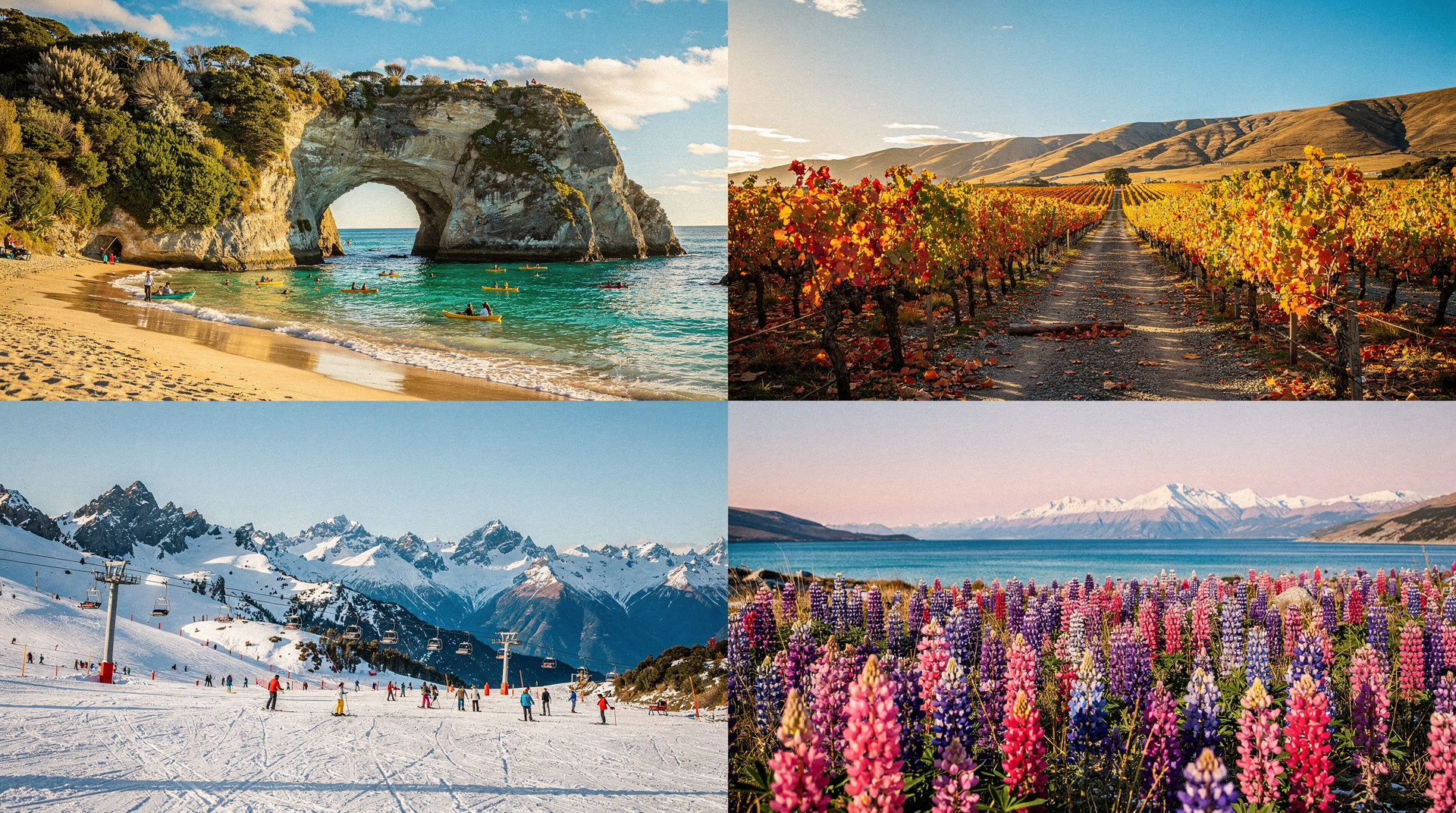
Best time to visit New Zealand
When to visit New Zealand: honest breakdown by season, region, and activity type. Summer is not always best.
14-day New Zealand itinerary — both islands, grand tour
Honest 14-day NZ grand tour: Auckland, Bay of Islands, Hobbiton, Rotorua, Wellington, ferry, Kaikoura, Christchurch, Queenstown, Milford.
10-day New Zealand itinerary — both islands by air
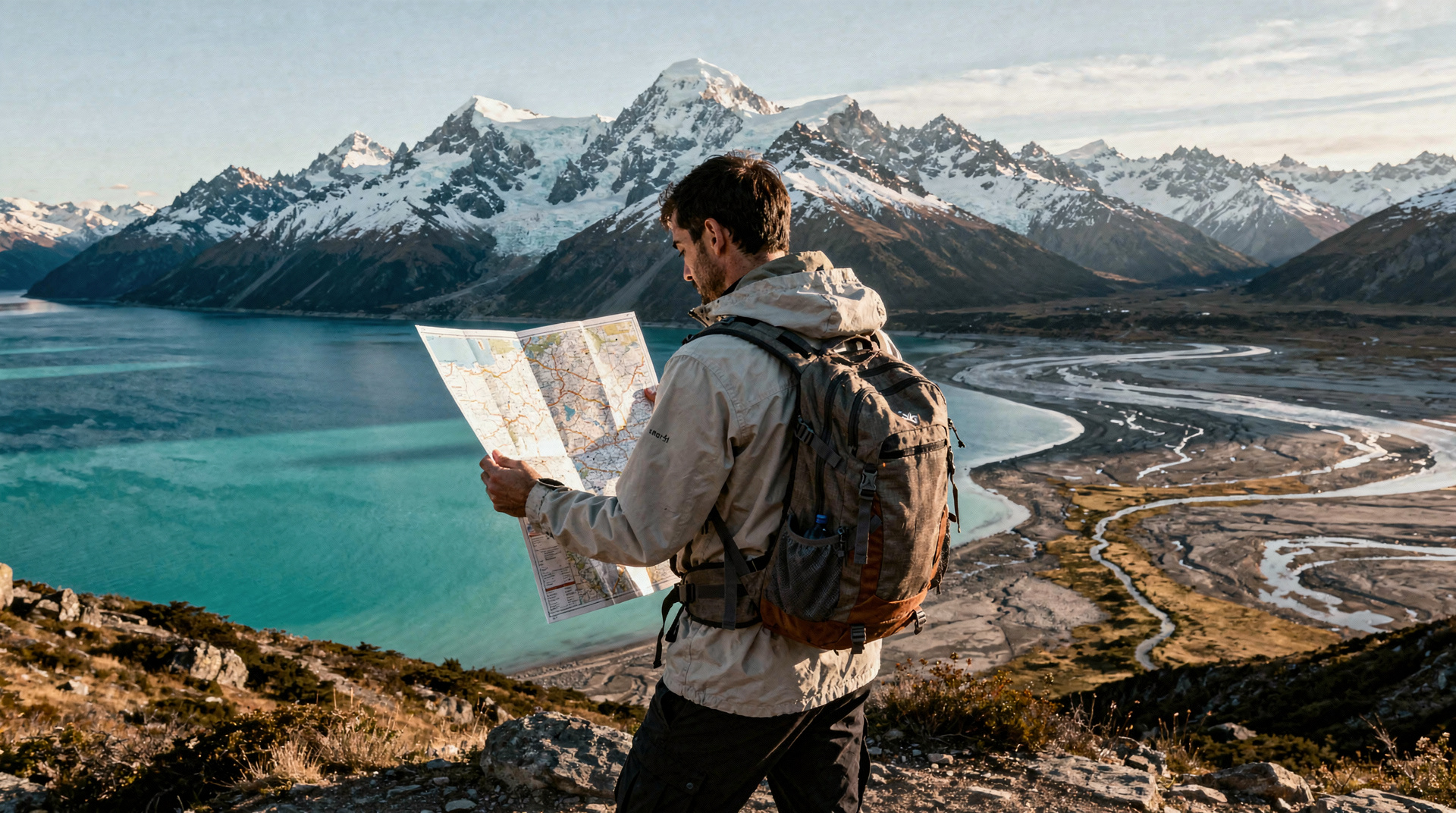
Auckland → Rotorua → Wellington → fly to Queenstown → Milford Sound. Compact 10-day NZ loop with real costs in NZD, USD, and EUR.
NZeTA visa guide (by nationality)
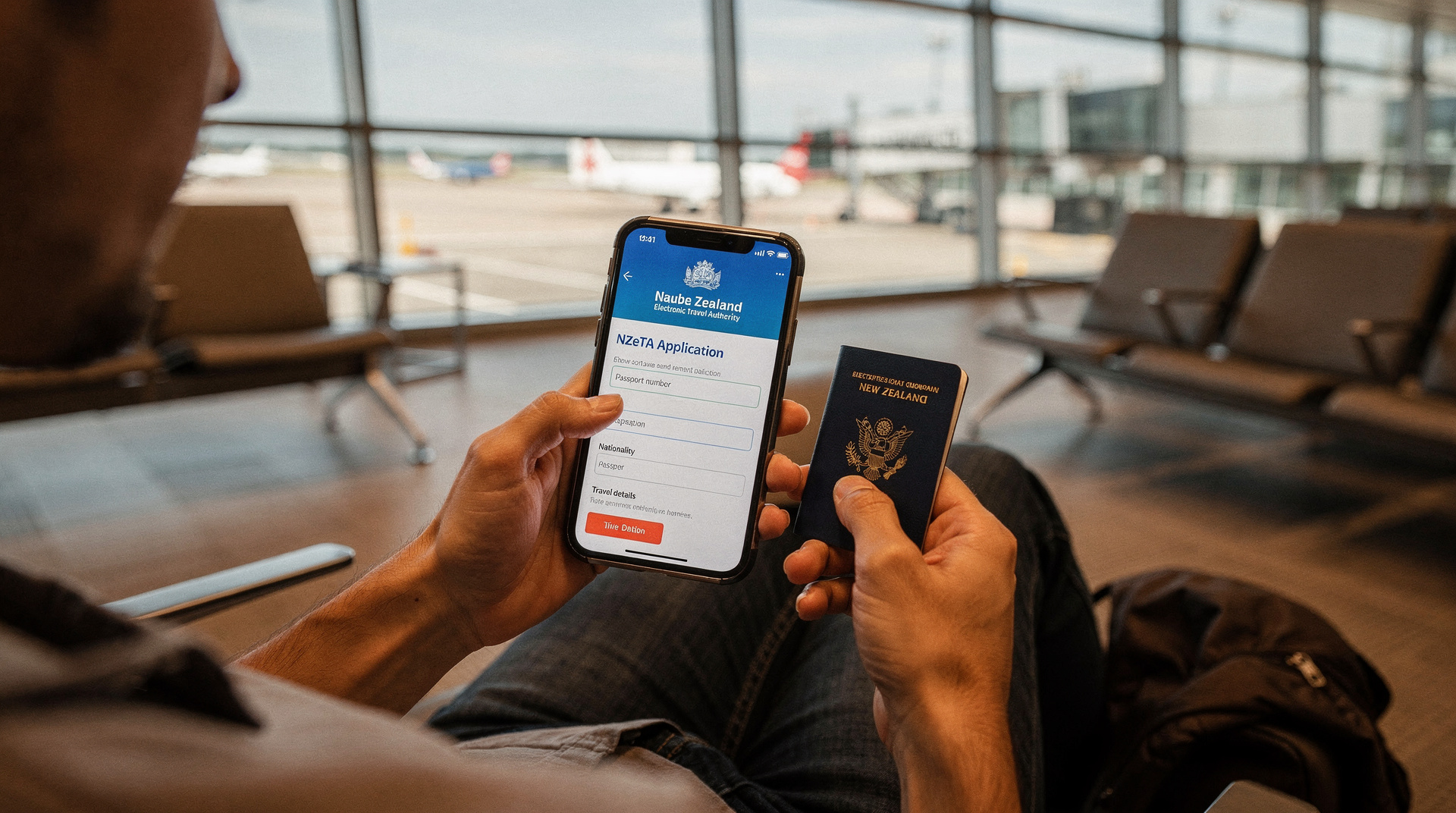
Complete NZeTA guide: who needs it, costs (NZD 23 + IVL 100), validity, and a per-nationality table for FR, DE, IT, ES, PT, US, CA, UK.